21 May 2017 | Non categorizzato
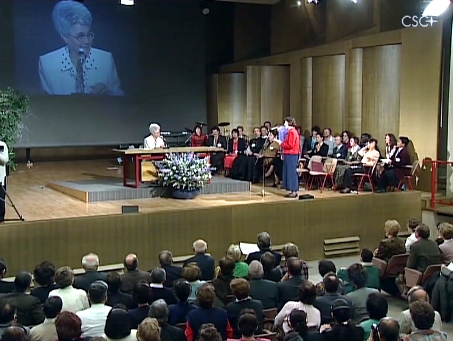
In this 500th anniversary year of the Reformation, there has been new drive towards Christian unity, from the historic meeting at Lund in Sweden to the Pope’s recent journey to Egypt. The Focolare Movement is increasing its commitment to what is known as the “dialogue of life” or “dialogue of the people”. This was reaffirmed in the Ottmaring Declaration (21.02.2017) and its outworking happens daily in the efforts of thousands of Christians throughout the world. The 59th “Ecumenical Week” ended recently at Castel Gandolfo (9th-13th May) with 700 participants from 69 countries and many parts of the world. 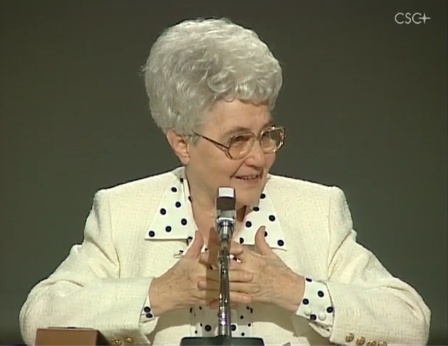 Chiara Lubich was asked about this kind of dialogue on the 4th April 1997 in the context of an ecumenical gathering and she replied spontaneously: “Veronica, an Anglican focolarina from Great Britain asks what our specific contribution to the unification of the Churches could be. Our contribution should be seen in the context of the whole field of ecumenism. We know that there is the dialogue of charity, which is very important. It probably goes back to the times of Athenagoras, when Pope Paul went to visit Athenagoras and Athenagoras went to see Pope Paul. The dialogue of charity helps us to feel that we are brothers and sisters and that we help one another. Then we pray together, which is a dialogue with God, a dialogue that goes through God. This too is very important especially during the Week of Prayer for Christian unity. In addition, you all know that there is the theological dialogue, carried out by experts; that too is going ahead despite the fact that some people say ecumenism is not going ahead. Instead, it is going ahead. We bring a new kind of dialogue. It is the dialogue of the people. It arose out of the spirituality [of unity] that we live in all the various Churches; there are members of 300 Churches who are in the Movement. This dialogue was generated by our spirituality because it is communitarian, it binds us to one another; it brings us together. If I love you and you love me, what is established between us? Jesus in the midst. But then Jesus unites us, as St Paul says, “What can separate us from the love of Christ?” (Rm. 8:35) Likewise, we say, “What will separate us?” Charity unites us. Christ himself unites us. No one can separate us if we go ahead with our spirituality. Therefore, by living this spirituality in the various Churches – Catholic, Anglican, Lutheran, Methodist, and so on – without even thinking about it, a people was born. It flowered from this spirituality, which generates a people. Then what happened? What happened was that by living the spirituality together, by getting to know one another, by loving one another and growing in our mutual love, we discovered that we have things in common, that we are already one family, that we are already a Christian people. I have baptism, and so does Veronica, and so do you. I have the Old Testament and you do too. I have the New Testament and you have it too. Then we have the Councils and many other things in common. If we have all this in common, why don’t we come together into one family and into one people? This is our characteristic contribution, which is essential. On the other hand, we are not the ones who bring it. It is a charism from heaven for our times, which are ecumenical times. It is the charism of unity, which has very much to do with ecumenism.” Source: The Chiara Lubich Centre
19 May 2017 | Focolare Worldwide
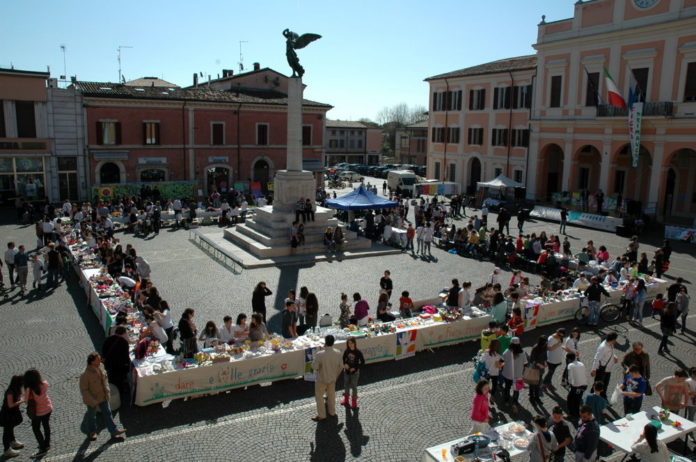
“We asked the mayor of Savignano sul Rubicone to send a message of fraternity by adding some color to a public space,” say Matteo and Giosuè, Italian members of Youth for a United World. “They gave us an underpass connecting the main road to the train station. We created a mural where we wrote, next to the bridge that symbolizes the city, ‘Let’s bridge’ and “Global citizens” in a number of languages, with the help of a number of migrant kids who came through.” The result was a collective work, a visible sign of peace. The mural project was also an opportunity to make contact with the head of the Ravenna mosque, Imam Mustapha Soufi (president of the European Islamic Conference of Imams). After three months of work the underpass was inaugurated with two mayors and a member of European Parliament who, just three days after the terrible events in Brussels (this was March 2016), had asked to participate in this type of project, one promoted by kids that instils hope in a peaceful future. The underpass became a symbolic place. Matteo and Giosuè are both “ambassadors of peace,” an honorary title bestowed on them by Universal Circle of Ambassadors of Peace, headquartered in Geneva, which has the goal of spotlighting all those who work for peace, especially young people and children ages 6 to 18. For a number of years, they have organized a spring fair in their region, together with other young people. This is a Young for Unity project that, in collaboration with schools, associations and local governments, hopes to create activities promoting peace and fraternity. “Last July,” continues Matteo, “together with 50 members of Young for Unity, we went to World Youth Day. Pope Francis concluded his words with ‘May God bless your dreams.’ There are so many dreams that we want to achieve, especially to be builders of a world of peace and fraternity.” After an earthquake struck central Italy, they felt called once again. Among the many ideas was one to put on two dinners in Modena and Cesena to raise funds. “We got close to 100 kids involved and served 350 people at table, raising more than 4,000 Euros.” The dinner at Cesena included Imam Mustapha, who asked them to come and meet young Muslims to start on a path for peace at the Ravenna mosque, one of the four official mosques in Italy. They were warmly welcomed on January 22. They took off their shoes as they entered, and the girls covered their heads. They sat in a circle, girls to one side, boys to the other. “We started playing a quiz game on the Bible and Quran – there are so many things in common. We are not so different, and all of us wanted to build a more united world. At noon we stood up and, holding hands, we had a minute of silence to ask God for the gift of peace.” After a meal of cous cous prepared by the Muslim mothers, the group had a guided tour of the mosque and a moment of dialogue. “Peace is made by the young,” says the imam, “we must unite and change our way of thinking in order to bring down the walls of prejudice.” Their Muslim friends asked to be able to visit a Catholic church next. “It feels fantastic,” concludes Giosuè. “To build peace we need to respect each other and not be afraid of differences. How can we not think of those Muslim kids that we meet at school or perhaps come across on the street? They too are our brothers, builders of peace together with us, and not terrorists like the media wants us to believe.”
17 May 2017 | Non categorizzato
Since 2005, World Telecommunication and Information Society Day, instituted by the United Nations Telecommunications Agency (UIT), is celebrated every year on 17 May. The goal is to enhance the contribution that such tools as the Internet and information technologies can give to society, to the economy, to the progress of humanity. Depending on the way they are put to use, these tools have the potential to enrich global society.
