17 May 2017 | Non categorizzato
“There are questions in life that are truly difficult to answer: why does death, war, violence, separation or the gap between rich and poor exist? I would often talk with my university friends about these. I studied languages and literature at the University of Porto, in the north of Portugal – but no one seemed to be able to ease my concerns.
One day someone mentioned the Gospel and proposed I try living it. I couldn’t believe what I was hearing and objected. I know a lot of people who profess their Christianity, like I do. But after 2,000 years, things haven’t changed much. Yet given that finally someone was actually listening to me, I vented my doubts and judgements and went on for a bit. When it was time to say goodbye, the person only had space to say ‘Try it!’
In Porto I live in an apartment with other girls. That day I was the only who stayed home because I was studying for an exam. A poor lady knocked at the door. My first reaction was to get rid of her quickly, but I was held back by that ‘try it,’ which would pop up and challenge me every once in a while. We didn’t have much at home, but I found something to give the woman. “A bit later my mother called. She was in town for her medical checkup, and wanted to see if I was around: she had a bag of fruit and meat for us. My heart was full of joy, not just because that God-given food would feed us for a whole week, but because this confirmed that the Gospel is true. That small thing that I had just given to that woman had just come back to me hundredfold, just like the promise, ‘Give and you will be given.’
And so my new relationship with Jesus began, and got stronger every time that I tried to recognize him in each person I found myself next to. For my birthday I received a pair of fur gloves. I was hoping to get them for some time, since it gets icy at times here. Then I saw a woman shivering from the cold on the bus – what if I gave her my gloves? I did what I was thinking. This time I was jumping ahead a bit, since Jesus had already given me a hundredfold with that gift, so I could give my gloves to someone who needed them more than I did.
I was going to class when a lady carrying a baby stopped me. She was crying. I didn’t want to be late, I thought to myself, trying to get going. But inside I thought, ‘How can I say I love a God I don’t see and not love my neighbor that I do?’ (Jn 1:20). I looked at my watch and resisted the urge to leave. I stopped and got interested in her situation: she told me she had just left her child in the hospital doing quite poorly. She and her husband were living in two squalid rooms with their eight children.
I couldn’t do much right then and there, but I promised her I’d visit. That same day I told other young people and families from Focolare how I had gotten to know her. Each of them offered to help in whichever way they could. Together we provided the basic necessities (food, clothing, things for the house) and organized turns to help the children with their homework and play with them so their mother could be with their brother at the hospital.
At the same time we tried to understand how to let the city know about the situation and request better living space. A couple of weeks went by, and finally the much-awaited town truck arrived to move them to public housing. The privilege of taking the youngest child to their new home fell to me, and I will never forget that bus trip. The little one slept peacefully in my arms, unaware of the changes I’ve been seeing ever since I started living the Gospel.
Now those big questions, which are still there, have found some answers. I know now that taking the first step not only involves other people giving of themselves, but can even influence society.”
16 May 2017 | Non categorizzato
15 May 2017 | Non categorizzato
May 15 is celebrated each year as International Family Day, proclaimed by the United Nations General Assembly in 1994. This year’s theme is “Mothers and Families: Challenges in a Changing World” and it focuses on the Important role of mothers for families and communities in the world.
15 May 2017 | Non categorizzato
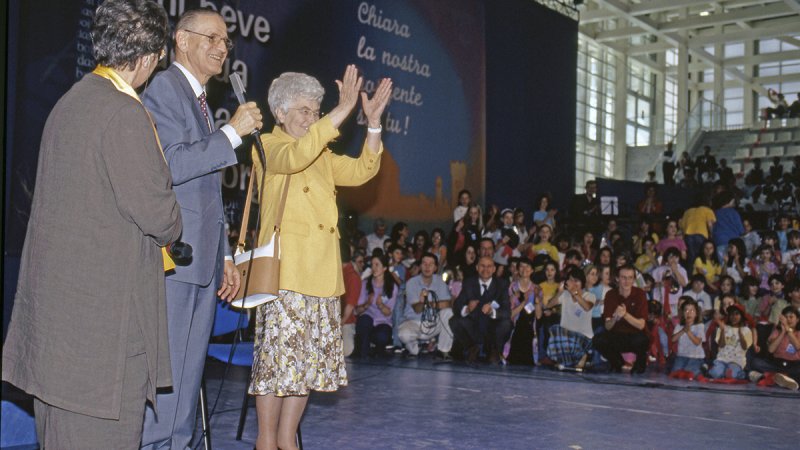
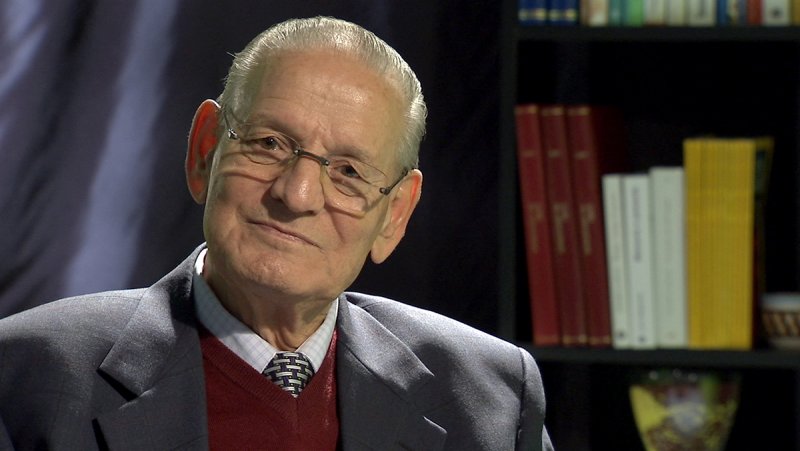 It was the end of 1945 in Trent, Italy, when the war had just ended. Marco was 19 years old and going through a very deep spiritual crisis. A friend who belonged to a community of Men Religious had invited him to a meeting. A young woman, a little older than himself, “spoke about God with such fervour and conviction that there wasn’t any room for doubts,” he later recalled. That young woman was Chiara Lubich who was joined by a group of girls who, like her, had chosen God as their ideal in life. In no time, Marco became the first young man to follow her. He was the first focolarino. The Tecilla family were simple folk, his father a baker, his mother a nurse, one sister and three brothers. With the Great Depression of 1929, his father lost his job. “I remember him covering himself with a mantle in the cold winter months,” Marco recounts, “and me accompanying him from one bread shop to the next, knocking on doors and asking for work, or basket of bread to feed ourselves. I later discovered that as he held on to my hand, with the other hand he counted the beads of his Rosary.” In January 1943 his father died. War broke out and the bombardments began on Trent. The Tecilla family fled to the mountains. Marco avoided the call to arms by signing up for civil service. Meanwhile,he was hired as an operator at the Trento- Malè Railway. His sister, Maria, began to attend a lot of spiritual retreats and to collect clothing for the poor. The family – and Marco – thought she was “over doing it” – until he received that invitation from the friend who belonged to the Men’s Religious community and Marco’s encounter with God-Love.
 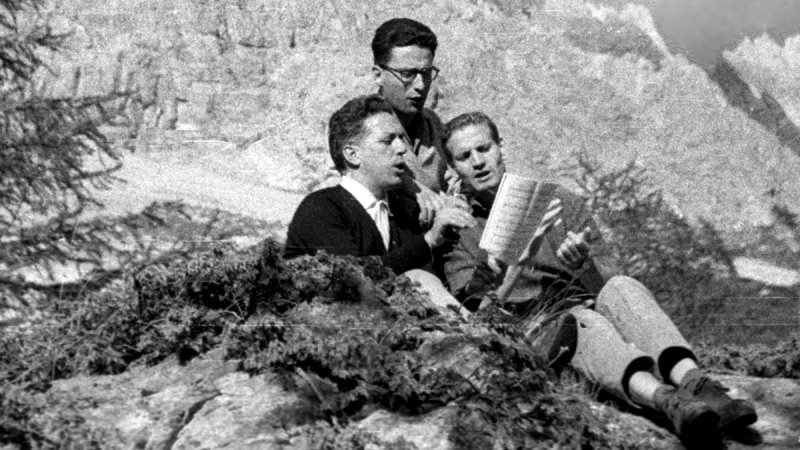 From the moment he met Chiara and the first group of young women, he went often to do odd jobs at the “little house” in Cappuccini square, where the women focolarine lived. He was drawn by the supernatural atmosphere that he found in that place. “One evening,” he recalls, “I had to work a little longer than usual, to finish up some repair work. Chiara was working on some sewing, sitting at the table nearby. Without warning she turned to me and said: “If Jesus were to come today, he would be Jesus 24 hours a day, whether working, praying, eating, resting . . . in today’s world he’d be an electrician like you . . .” Marco was quite struck by “this new vision of the Christian life. I saw a new horizon opening before me, overflowing with light. When I left the “little house” the sky was all dotted with stars. A new life began for me and I had to turn the page and abandon myself to the arms of the God who had manifested himself to me as LOVE.” Marco felt that Jesus was calling to him: If you want to be perfect go and sell what you have and give it to the poor; then, come and follow me. Following Jesus, that’s my path.” On the evening of November 27, 1948 the first men’s focolare was begun with Livio who had also been added to the group. Marco never imagined that in the years to come he would be moved thirty times! The nascent Movement spread quickly all over the world and Marco would move to many cities in Italy . . . In 1953 to Innsbruck, in 1958 to Uruguay, Argentina, Brazil and Chile; in 1960 to Trieste, Italy, and then beyond the Iron Curtain in Zagreb. On November 22, 1964 he was to the priesthood and returned to Brazil until 1967, returning again until 1971. Then he was in southern Italy and Milan, Padua and finally Trent after 31 years away. That is when he found the land for the new Mariapolis Centre in Cadine and took part in the project that Chiara Lubich launched in 2001: Trento Ardente. At the end of that year, Chiara wanted him at the Centre of the Movement in Rocca di Papa, Italy, where he would live out the last years of his life. “His joy was always hard to contain when he came to Loppiano to give lessons on the Spirituality to members of the schools,” recalls Redi Mghenzani who lived with Marco for 20 years, “ [He showed special care and attention] when it came to the new generations of men and women focolarini. He leaves us a trail of light that will never be extinguished.” “Marco sowed love in many parts of the world,” recalls focolarino Armando Droghetti, who accompanied Marco during the final years of his life,” that love which allowed unity to be born among people from all social and cultural backgrounds, as many of the numberless visitors from this past month had said; especially from last year when a series of small strokes affected him in different ways. But as everything seemed to be failing in Marco (his voice became weaker and weaker, his legs were somehow blocked) the situation pushed all of us, beginning with Marco, to supplement our mutual love. Based on this spiritual life and an ever more intense unity in our focolare, even the unexpected crisis of May 8th didn’t catch Marco and us off guard. During a brief upturn in his condition he remarked with great certainty: “I only need to be purified.” He would welcome the doctor with those shining eyes that seemed to wrap everyone in love. And this was also the impression of many who went to say their final goodbye. They said that beyond a sense of orphan hood because of his departure, what Marco had prepared them for by saying I’m nothing and God is everything. Only in Him do we live” – was even stronger. Focolare president, Maria Voce, highlighted that “Marco that mark of radicalness of the early times of the Movement, along with his strength and faith in the charism of unity with the purity of his Gospel live.” In an interview that was released on March 31, 2008, a few days after Chiara Lubich died, Marco stated: “As long as I have a bit of breath, my wish is to be able to give my all to the new generations. I’m sure that whoever comes after us will do greater things than we did, precisely because of the richness that is transmitted by the charism of unity, which will never ever die.”
14 May 2017 | Non categorizzato
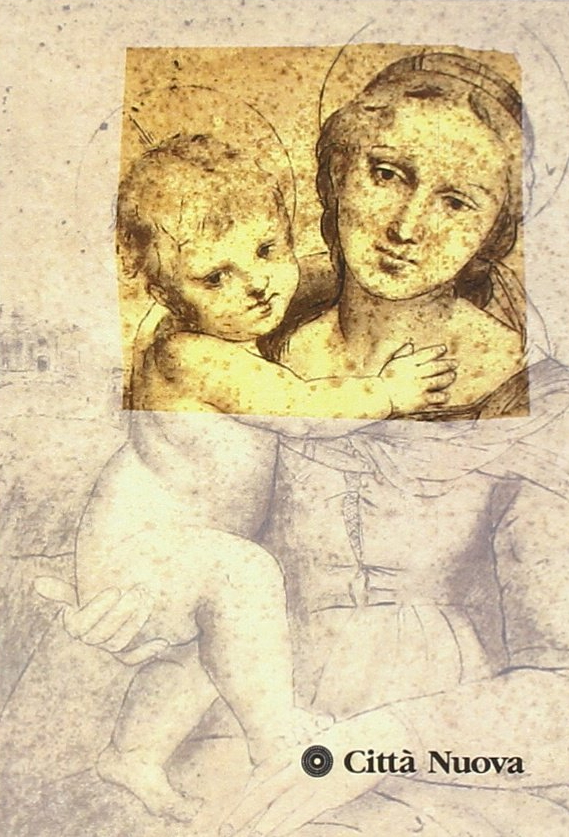 Mary was the most exemplary mother. Therefore, she became and remains forever the model of maternity. Not only was her heart a worthy temple for her Son’s divinity, but also for his humanity, because, whereas he was Man in his perfection, she was not only a woman, but the Woman who lived a double life; that is, an entirely human and divine life, all for the Lord God and all for the Son and, through him, all for humanity. This is how she teaches that the life of the spirit and the life of the flesh can be lived in harmony, in holiness and chastity with one as the custodian of the other. The double life enclosed above all the joys of divinity – the love of the Spouse, the Holy Spirit – and the sufferings of humanity – privations, indecencies, persecutions and finally the slaughter of the cross. From Mary women in general and mothers in particular, and all rational beings, should learn to acquire the wholeness that makes us fully alive Because if you neglect the spiritual element or you neglect the material element – you tumble into error, whether it’s towards humanity or towards divinity. Mary took and gave the proper ranking to that double reality, just the God-Man had done. She was the Virgin and she was the Mother, and she always dissolved suffering into love. She was the strong woman and because God was with her, she had divine strength. She was such a strong example that she has forged millions of human beings, especially mothers of course, who, with Mary were fortified in God, becoming the servants of his will, never giving in to every urge, like people who are empty of the Holy Spirit. “If God is for us, who can be against us?” Mother Frances Cabrini was so fond of these words, and she modelled herself on the Virgin Mother. Also many illustrious martyrs and millions of unknown victims of misery, persecution, wars and disgrace: humble women and men have enclosed their pain inside their hearts as they look towards Mary. Mary forever remains a source of energy: mother of a love that is stronger than death. Saint Bernard says that God wants us to have all things through the hands of Mary, Mary Mother of Grace and Mother of Mercy. Some would argue that Jesus is the mediator of all graces. True enough, but Jesus is our brother, flesh of our flesh, made so by Mary. And turning to him by way of Mary is to place between him, the offended one, and us, the offenders – our mother. Thus a chain is formed in which Mary listens to the sinner. Jesus listens to Mary, the Father listens to Jesus, and the Holy Spirit flows through the relationships. Jesus came to us through Mary: we go to Jesus by the same way; like a river of life that flows from God to [us] and back to God from us. Christians claim their kindship with Christ by way of their Mother’s lips, their kinship with God. Mother of God and my Mother, Medieval spirituality exclaims. And this was translated into verse by the Italian poet, Silvio Pellico[1]. Comforting Virgin, Hope of the afflicted, You are our mother and, together, Mother to our Salvator! Through Mary the human community becomes a family circle where the life that circulates is the life of God.” From Igino Giordani, Maria modello perfetto, (Rome: Città Nuova, 1967; 2012), 81-85; 108-109. [1] Silvio Pellico (1789 – 1854): Italian writer, poet and patriot, famous for writing Le mie prigioni.
