13 May 2017 | Non categorizzato
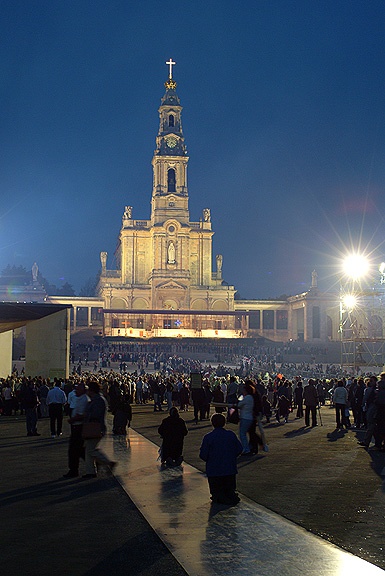
While Portugal welcomes the Holy Father in Fatima, we are highlighting an excerpt of an article of by Chiara Lubich published in the Roman Observatory, in 1984, on the occasion of the Family Jubilee. The Fatima event, Chiara affirmed, calls us to conversion and faithfulness to the Gospel, and also to the family. “[…] When the Pope [John Paul II − editor’s note] read the act of consecration of humanity to Mary, he began with these words: ‘The family is the heart of the Church. Today, from this heart ensues a particular prayer of consecration to the Heart of the Mother of Jesus.’ And so, from heart to Heart in this intense communion, that was created with the Eucharistic celebration, from the heart of the universal Father, arose almost a cry, filled with concern for the needs of humanity, the prayer of consecration to the Virgin Mary, asking her to take special care of the human family. The Pope was there, on kneeing in front of the white image of Our Lady of Fatima. In that moment the thought of many of us present went back to May 13 1981, the day of the assassination attempt. […] Now St. Peter’s Square was packed to the very brim. Next to him before Our Lady of Fatima, like a flower that blossomed from his suffering and blood, all the families of the Church were symbolically gathered like a sign of all the families of the world. At the moment of the world’s consecration to Mary, the Holy Father, as the supreme Pastor, could therefore count not only on the communion of all the Pastors of the Church, “constituting a body and a college”, but also on the full adhesion of the children of the Church, represented by many families of many countries. […]And in the prayer with which he concluded his homily – prayer which he composed for the 1980 Synod that had the family as its theme of study – he asked this grace: “May the love enhanced by the grace of the sacrament of marriage be stronger than any weakness and any crisis that our families sometimes experience.” All these important coincidences and expressions help us to gather the profound meaning of this consecration has to bring all Christian families to live – with the help and example of Mary – the luminous and fascinating plan of God on the family in all its expressions: marriage love, according to the divine plan, sign of Christ’s love for the Church up to the total gift of self; paternity and maternity, as the participation to the fertile love of the Creator; peace and harmony in overcoming all the tensions and difficulties as fruit of an always alive and tireless charity intent on keeping the spiritual presence of Christ in the family and, with Him, the unity of thought and action; an openness of communion and service towards other families. […] The message of Fatima that calls everyone to conversion and faithfulness to the Gospel, becomes the answer of the consecration of the family, a commitment of renewal so that the face of the Church may shine more. In the Christian family the Church is the “family of God” a welcoming dwelling place for all the lost children who are called back to the house of the Father and invited to enter through the maternal heart of the Mother of Jesus.
Chiara Lubich
(Osservatore Romano 25.03.1984)
12 May 2017 | Non categorizzato
https://youtu.be/FZLJ_xLw9dk
12 May 2017 | Senza categoria
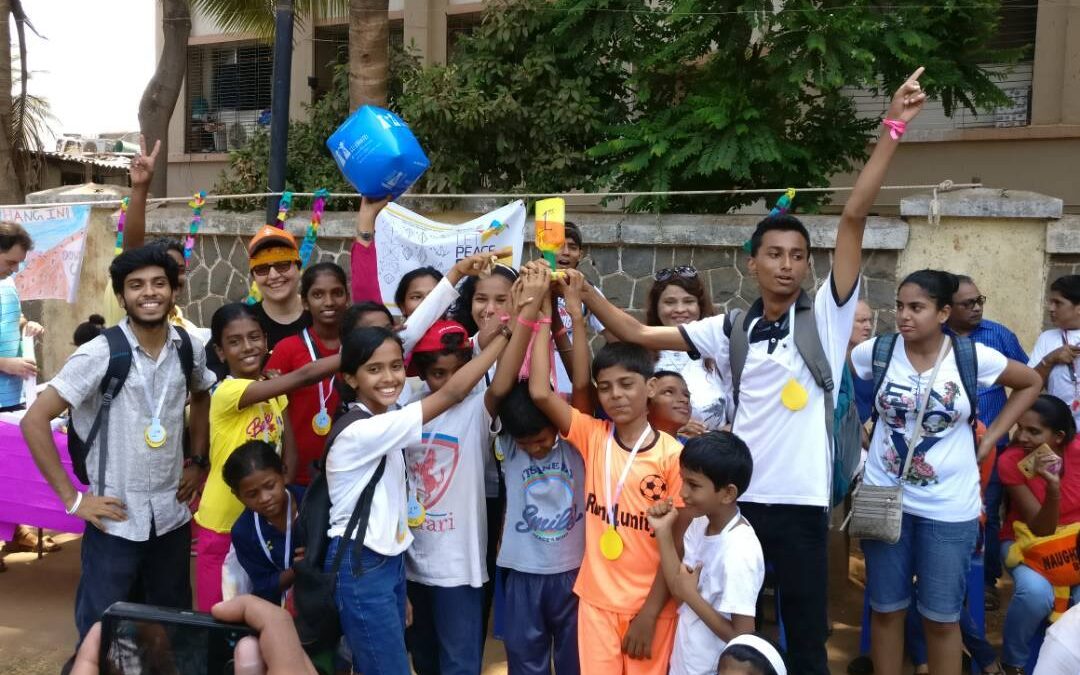
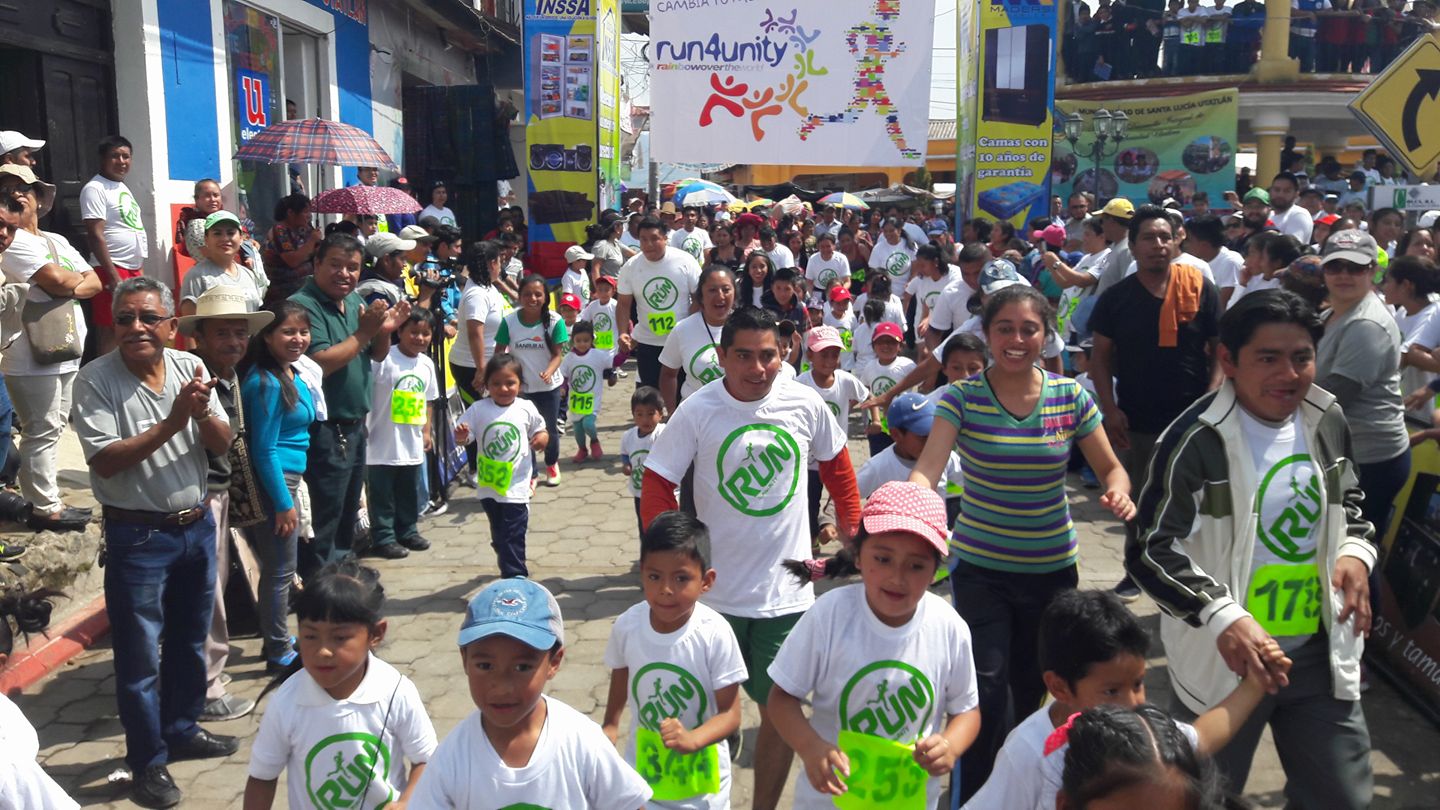 The race flowed through time zones from East to West with a message of brotherhood for the world. It’s Run4Unity, the annual relay race organized by the teenage members of the Focolare Movement. With a time difference of five hours, in Sopron, Hungary, the race charged through the border with Austria where young people from a refugee camp were on their way to meet up with the runners. Jumping over 10 time zones between Mexicali, Mexico and Calexico, USA, a hundred teenagers converged on the wall that separates their two nations. On this day hatred and racism don’t have a country. The race concluded World Unity Week, seven days of projects and events in favour of peace and unity among peoples: from Ecuador and its humanitarian emergency after the earthquake, to Medan, Indonesia, with a concert for peace, to Goma in the Democratic Republic of the Congo and the Amani Music Festival, three days of music-making and dancing for peace. There was a meaningful video message from teenagers in Aleppo, Syria, to their peers in Argentina. Run4Unity is a multi-staged journey that cuts through the planet’s most controversial border crossings between the hours of eleven and twelve o’clock local time. On foot, on a bike, on roller-skates, in boats or standing silently in prayer – once again this year it was the most against-the-current race there has ever been, a prophetic sign of the unity that will one day be ours. In this race willing hearts mattered more than quick feet. Each stop along the way provided sport events solidarity projects, presentations of experiences of active citizenship in places where solitude, poverty and marginalisation are prevalent – all of it to show that a united world is still possible, despite worrying tensions.
 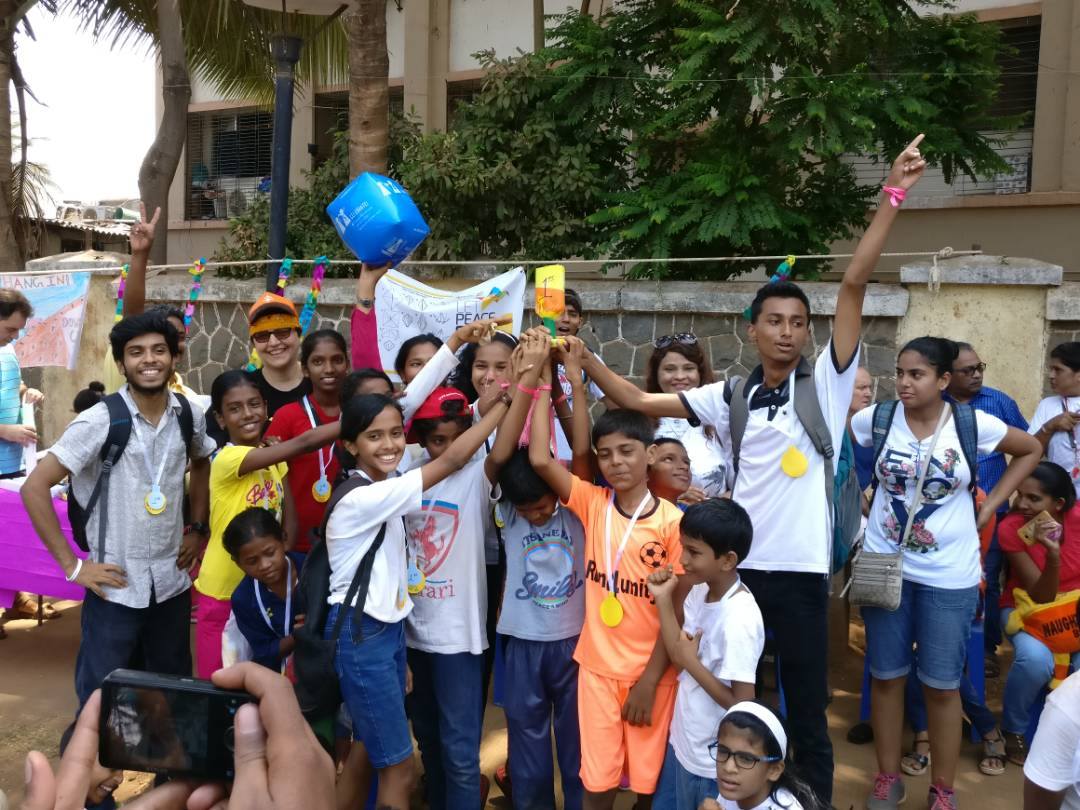 In Penang, West Malaysia, Run4Unity was a Unity Walk, an 8km trek that drew in 1200 people of all ages and belonging to different ethnic, cultural and religious groups: Hindus, Muslims, Sikhs, Christians and Buddhists. In India the race expressed its desire for peace as it flowed through downtown New Dehli, from Gandhi to Smirti where Mahatma Gandhi was murdered in 1948 and is now a sacred site, then on to the India Gate monument that is dedicated to soldiers who never returned from war. In Dresden, Germany, Run4Unity was held as part of the Pulse of Europe event, which was meant to encourage citizens to listen to the heartbeat of Europe. In Columbus, USA, Run4Unity was held at a centre for at risk people. It included games, messages of peace and sharing the Golden Rule. Then they cleaned the streets and shared sandwiches with the homeless. In Santa Lucia Utatlàn, Guatemala, the race was an opportunity for a multi-cultural event that brought together a thousand people from different ethnic groups, including youngsters from the Maya community of Quiché. In Iglesias, Italy, Run4Unity took on a rather different form: Disarmament Awareness. There are two bombs and weapons factories in the region, which produce arms to be used in today’s wars. Teenagers around the globe imagine a different kind world, one without wars, walls and hatred. Their message has also gone viral online. Radioimmaginaria, the first European radio station run exclusively for and by teenagers, dedicated live direct coverage of the Run4Unity events around the world. Because, they say, “at fifteen years of age you’re allowed to imagine the world of the future.”
![Celebrating a Europe of Hope in Malta]()
11 May 2017 | Focolare Worldwide
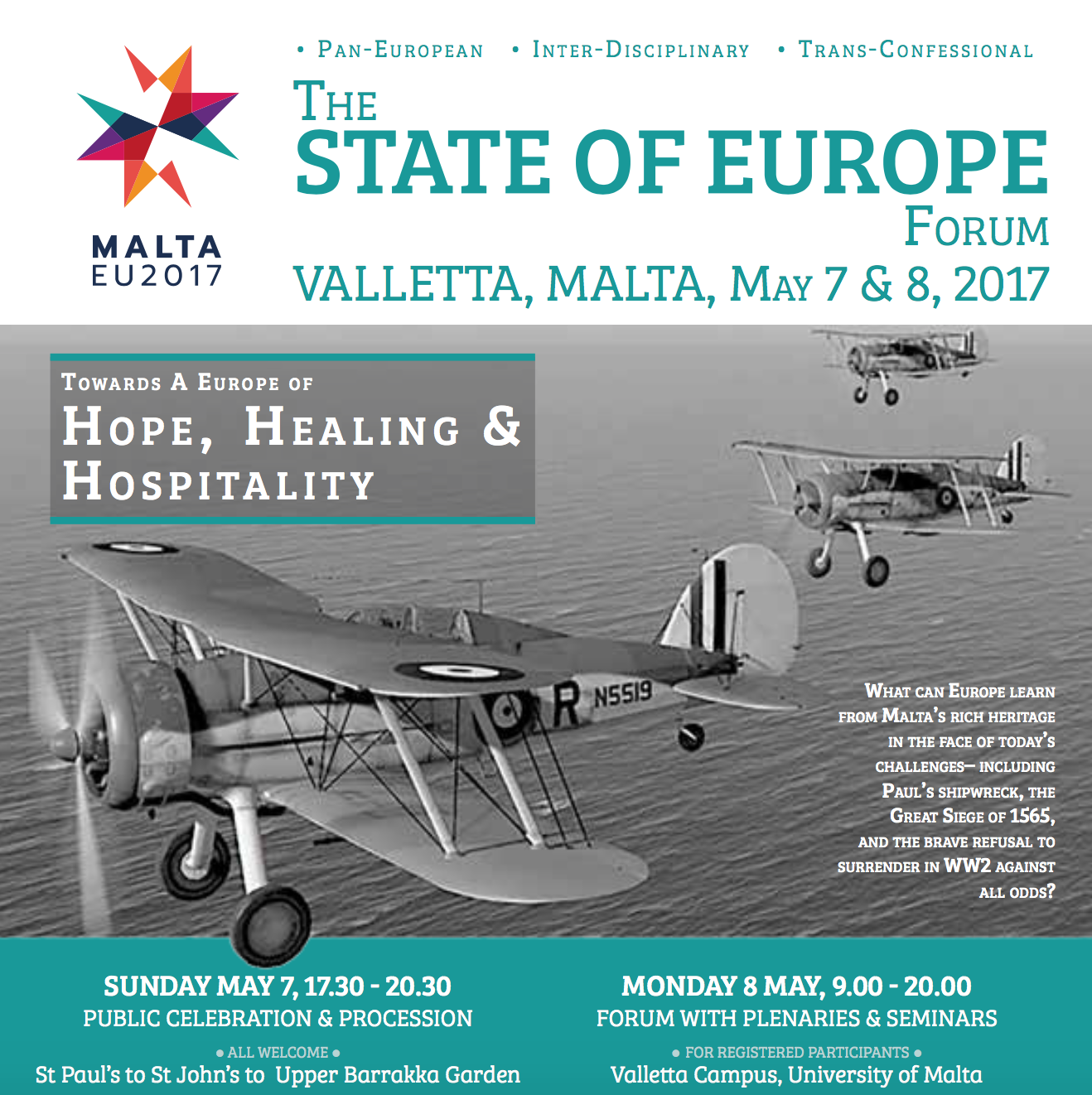 Malta is the largest island in the archipelago that shares its name. It is located in the central Mediterranean Sea between Sicily, Tunisia and Libya. It was the head of the Council of the European Union for the first time in its history in 2017. The island, whose symbol is the eight-cusped cross, signifying the eight Beatitudes, pertaining to the Knights of Malta, is closely situated to the tragedies that occur daily in the blue tomb that the Mediterranean Sea has become for those crossing between Africa, the Middle East and Europe in a desperate search for a new chance at life. On one of its other shores another shipwreck had found safe port after fourteen days adrift. One of the passengers was Saint Paul on his way back to Rome in around AD 60. According to tradition the ship carrying him and another 264 passengers was sunk by a storm, and everyone on board swam to shore. After some time he was invited to stay at the house of Publius, the Roman governor of the islands, whose father Paul cured of a serious flu. The governor converted to Christianity and became the first bishop of Malta. Europe’s Christian roots were the focus of discussion in Malta’s capital of Valletta on the 7th and 8th of May during a forum titled Towards a Europe of Hope, Healing and Hospitality. The goal of the forum, which is held each year by the European Union in the country of the presidency, is the promotion of dialogue according to the foundational inspiration of Robert Schuman. On the first day, after the opening events at the Anglican Cathedral, there was an artistic performance and a prayer titled “Hope”. Then a procession led through the streets of Valletta to the Roman Catholic Co-Cathedral of Saint John where some words were offered by Archbishop Scicluna and Maria Voce. The Focolare president offered a reflection on “Healing and Reconciliation”.
 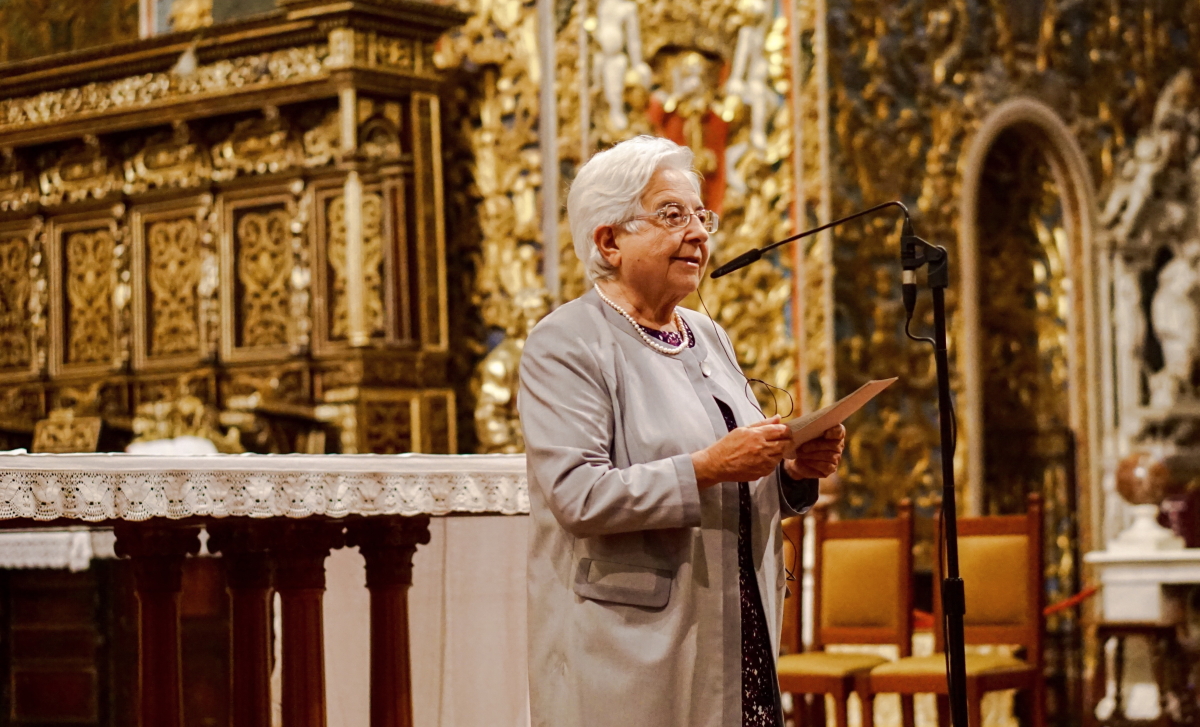 On the anniversary of that “community of peoples” that Schuman envisioned in 1950, proposing the historic coal and steel community to avoid all forms of war between France, Germany and any country who would later join the community, Maria Voce asked what the inspirational spark might have been behind such an extraordinary gesture that was intended to bring reconciliation to populations overwhelmed by the most horrible conflicts ever seen up until then. Who had inspired Schuman, Adenauer, De Gasperi – all Christian statesmen who are considered the founding fathers of Europe? The answer is obvious: “We want to think that the ideas and the strength to build Europe came from God who had shown his love for all people by suffering an infamous and atrocious death, God had identified with all the pains of humanity, including the ones deriving from violence and wars.”
 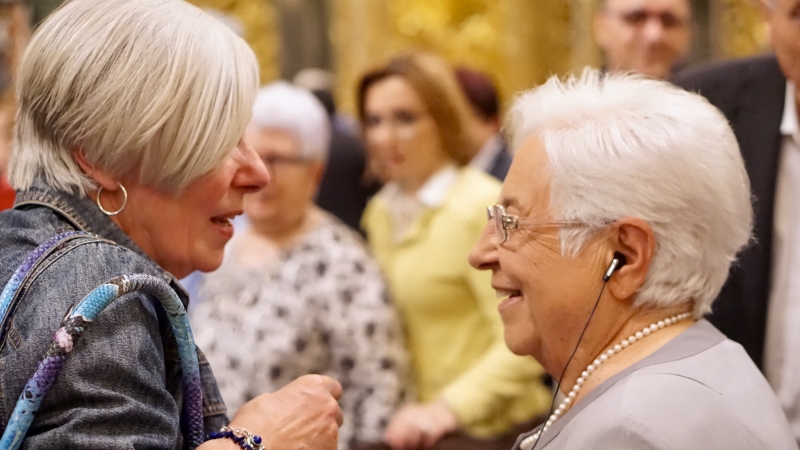 With regard to the culture that could emerge when there is profound reconciliation, Maria Voce quoted Chiara Lubich: “Every person can have a contribution to give – in any field: science, art, politics, communications, and so on. And they will be more efficacious if they work together with others who are united in the name of Christ: it is the continuation of the Incarnation and, it is in this way, that what could be called a culture of the Resurrection spreads through the world.” But for this to happen, “a path towards full and visible communion is asked of us, Christians, knowing that this will be decisive for the unity of Europe and for serving humanity better.” Recently, this path began to unfold further stages, in Lund, Sweden, Lesbos, Greece, and Cuba. “In a multi-cultural and multi-religious Europe there is need for a new capacity to dialogue, dialogue that can be based on the Golden Rule that is found in every religion on earth.” How significant to be saying these things precisely in the safe port of Malta in the midst of the Mediterranean, in the hope that this blue tomb will again become “Mare Nostrum” where Europe, Africa and the Middle East can find a peaceful route.
![Celebrating a Europe of Hope in Malta]()
10 May 2017 | Non categorizzato
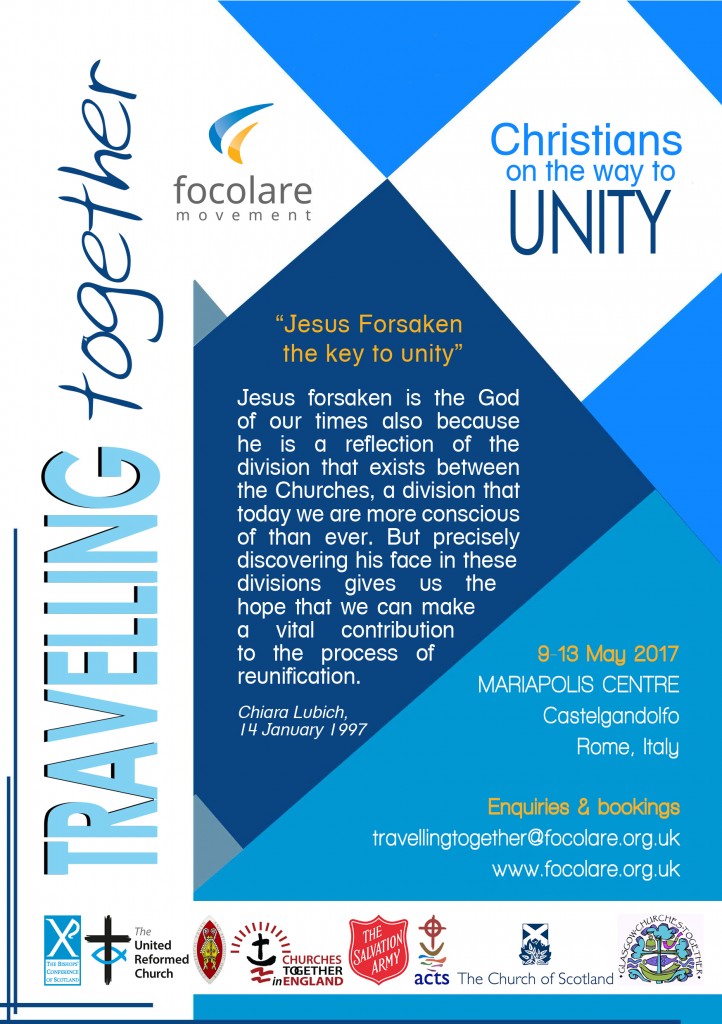 “Unity among Churches requires heroes, heroes in faith, heroes who face history, heroes who are humble in spirit”. Pope Tawadros II said these words in Alexandria, Egypt in 2015, when celebrating the first Day of Friendship between the Orthodox Coptic Church and the Catholic Church. During his recent visit to Cairo, Pope Francis repeated the same thought when he said, “In the light of God who wishes us to be ‘perfectly one’ it is no longer possible to take refuge behind the pretext of differing interpretations, much less of those centuries of history and traditions that estranged us one from the other”. The Pope also spoke about “an already effective communion that grows daily”, the mysterious and ever present fruits of “a genuine ecumenism of blood”, and the importance of progress in our ecumenical journey because “static ecumenism does not exist”. Christians inspired by the Focolare spirituality of unity are convinced of this because of the experience lived in these last years. The 59th Ecumenical Week, to be held at Castelgandolfo, Rome from the 9 to 13 May 2017, blends into the current ecumenical trend, which brings to the foreground gestures, words and statements of Church leaders and also initiatives of Christians in different parts of the world. 700 Christians hailing from 40 countries and belonging to 70 Churches and ecclesial Communities are expected to attend. During this “Ecumenical Mariapoli”, as many prefer to call this event, living together, sharing, spirituality and reflection will take place,and it will be a new step towards “the dialogue of life” and “the ecumenism of the people”. In fact, Chiara envisaged the “dialogue of life” as the typical contribution of the spirituality of unity towards full, visible communion among Churches . It is of utmost importance that people are well prepared ecumenically. Fully aware of the many steps still to be taken and with respect towards all Churches, we try to delve deeper into the common heritage that already unites us. The title of this ecumenical meeting is: “Walking together. Christians on the road to unity”. Its focal point will be a central theme in the spirituality of unity: Jesus crucified and forsaken: the God of our time, foundation for a spirituality of communion. It will be enriched by moments of reflection, dialogue and testimonies of people from different parts of the world, While the 500 years since the Lutheran Reformation are being celebrated in the ecumenical field, among the main speakers, one will find: Bishop Christian Krause, former President of Lutheran World Federation; Rev. Dr. Martin Robra of the World Council of Churches in Geneva; Bishop Brian Farrell, Secretary of the Pontifical Council for Promoting Christian Unity and Maria Voce, President of the Focolare Movement.
  A special moment has been entrusted to His Most Rev. Eminence Zervos Gennadios, Orthodox Archbishop of Italy and Malta. He will be speaking about: “50 years after the first meeting of two protagonists of dialogue: Ecumenical Patriarch Athenagoras I and Chiara Lubich “. The programme also includes participation in the General audience with Pope Francis at St. Peter’s Square, a visit to St. Peter’s Basilica and to St. Paul Outside the Walls Baslica and common prayers at the St. Domitilla and St. Sebastian Catacombs. This 59th Ecumenical Week is also meant to manifest the Focolare’s renewed ecumenical commitment, expressed recently in the Ottmaring Declaration, which promises to do all that is possible “so that all our activities, initiatives and meetings, both internationally and locally, will be sustained by this open, brotherly behaviour among Christians, while we entrust to God the hastening of our Churches’ journey towards celebrating in the one chalice”. Press Release
