5 Apr 2017 | Non categorizzato
For the day dedicated to the care of our planet an Earth Village was opened yesterday at Villa Borghese in Rome by Earth Day Italy and the Focolare Movement. A series of events have been scheduled for April 21st through 25th including workshops, testimonies, presentations of projects and discussions. Yesterday, some young people met with several witnesses from the early days of the Focolare Movement. On April 24th there was a presentation of Jesús Morán’s new book, Fedeltà creativa. La sfida dell’attualizzazione di un carisma”.
4 Apr 2017 | Non categorizzato
Born with a rare illness that caused lacerations in her flesh and enormous suffering throughout her life, Daniela passed away in 1986 at the young age of twenty-four. She belonged to the Gen group in her hometown of Novara, Italy. Her diary reveals the secret that sustained her in the most difficult moments: the choice of Jesus crucified and abandoned, which transfigured every suffering into love. On March 23, 2017 Pope Francis recognized her heroic virtues and declared her “Venerable”. The Focolare Movement rejoices with her parents, brothers and all who had the privilege of knowing her.
4 Apr 2017 | Focolare Worldwide
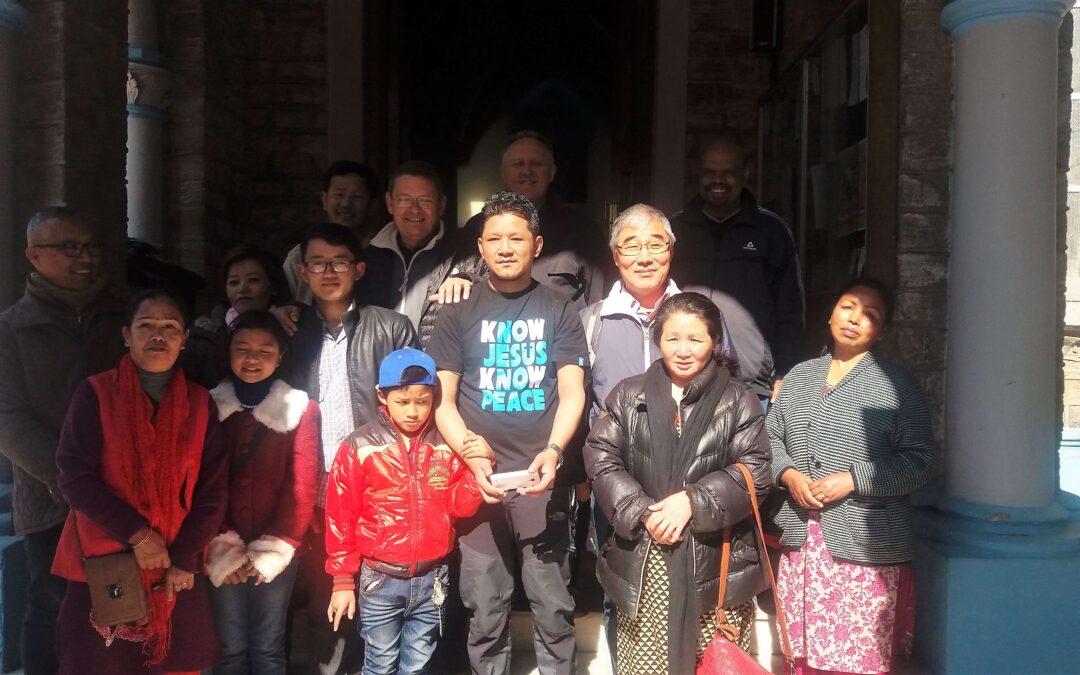
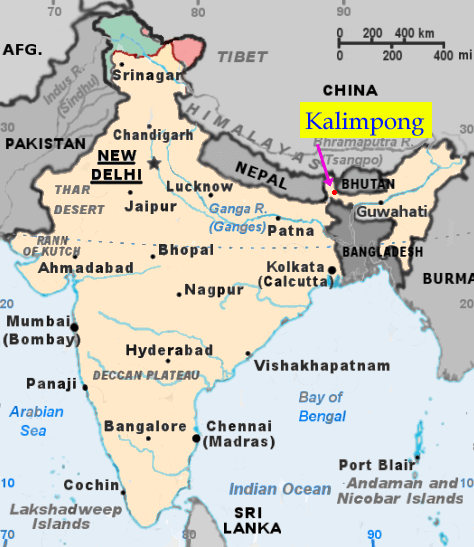 The Kalimpong focolare in West Bengal, India, opened September 9 when three focolarini moved to the house offered by Monsignor Stephen Lepcha, bishop of the Darjeeling diocese. At an altitude of 1,250 meters above sea level, Kalimpong is at the center of the diocese. The other major cities (Darjeeling, Kurseong, Siliguri, Sikkim) can all be reached within a couple of hours, as can the countries of Nepal and Bhutan. “Ever since the beginning of June we had been traveling to that region to search for a house that would be good for a focolare centre,” says Vivek from India. “The bishop offered us the one in Kalimpong. “While we were waiting the past few months, there were a number of opportunities to meet groups of young people in schools and parishes, families, priests, men and women religious, as well as others involved in interreligious dialogue. We offered everyone the spirituality of unity that we try to live. “The bishop, in fact, considers the Focolare Movement, along with his own spirituality, a ‘need of the hour’ to renew the Christian community in his diocese and the fabric of relationships in local society.”
 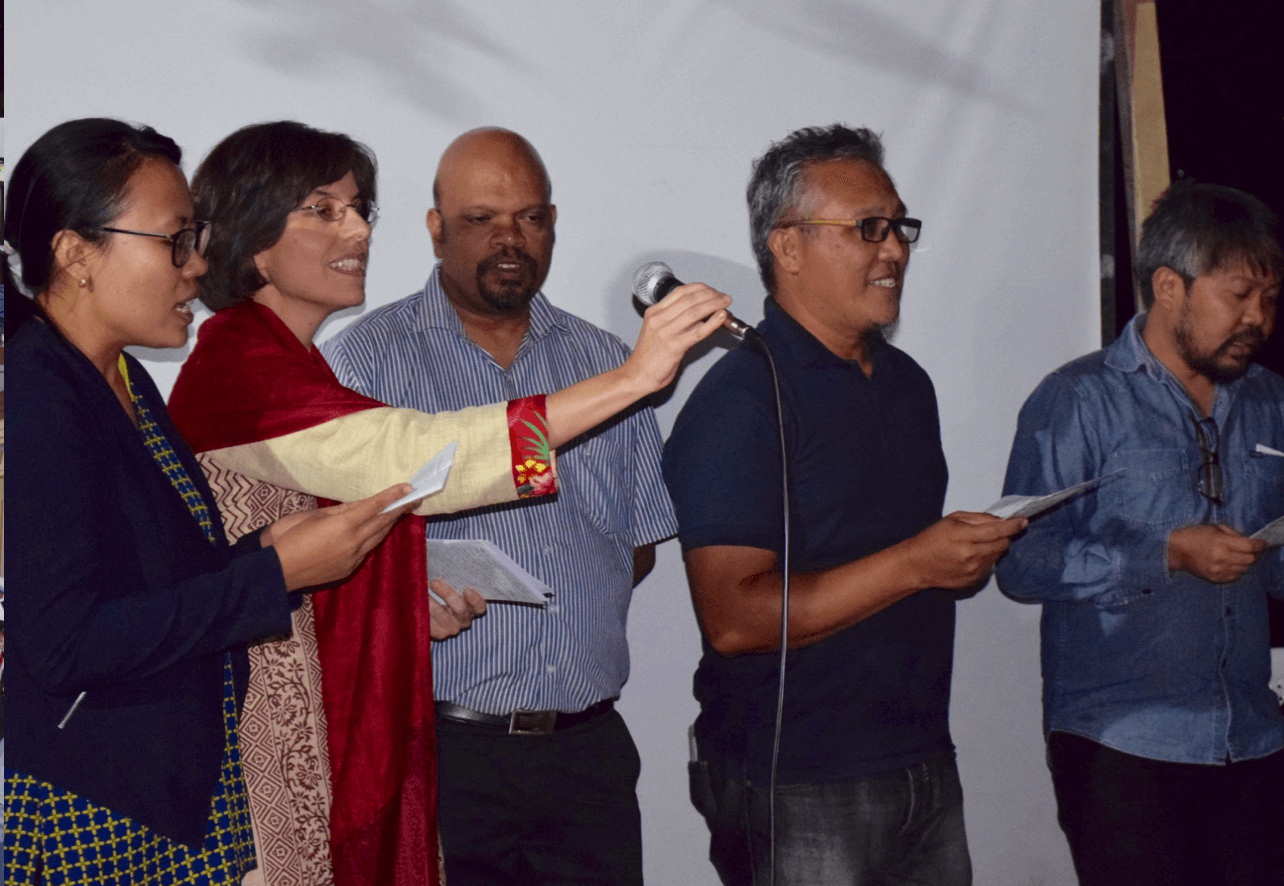 “There was a lot of hospitality as soon as we opened the focolare,” adds Rey, who is from the Philippines. “Both our Focolare community in India and local people filled us to the brim, with goods of every kind for the focolare and food for the first few days. For us it was a sign of God blessing this new project.” The night before inaugurating the new focolare house, the women focolarine of Dehli brought rosaries that had been blessed by Pope Francis. “Having received these presents, one of us thought of giving his to someone else. Another of us did not like that idea, and the situation became a bit tense. What to do? We certainly could not begin the focolare the next day if there was not unity and harmony among us. “So stayed together past midnight in order to clear up the misunderstanding. In this way we reestablished unity and the spiritual presence of Jesus in our midst, which is worth much more than all the various preparations, even if those need to be done well too.”
 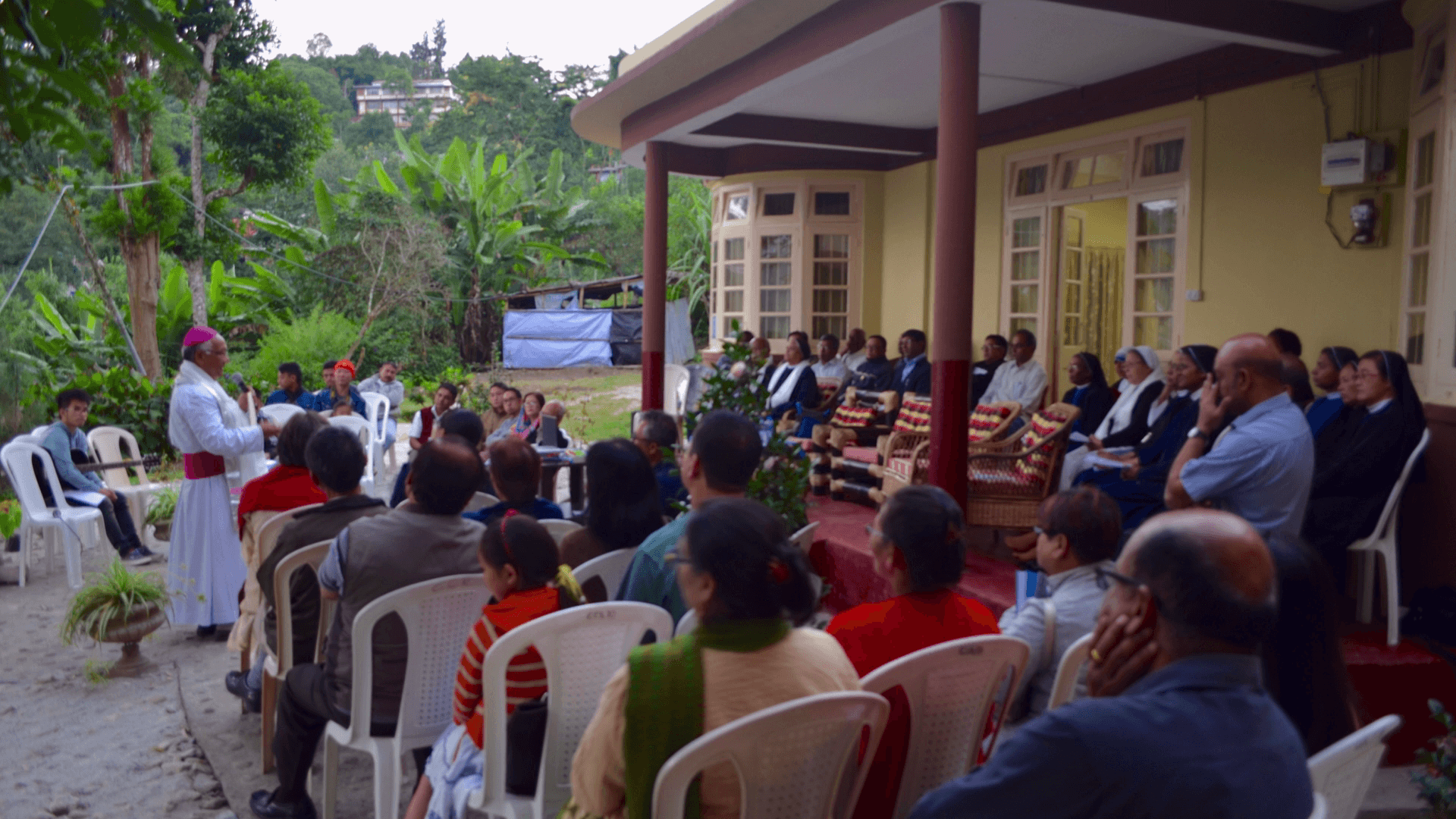 During the inauguration, the Apostolic Nuncio said he hoped “that the new focolare house may be an instrument in God’s hands to fulfill the ideals and the spirituality of the Focolare Movement.” The bishop gave his blessing to the close to 50 people present, emphasizing the focolare’s contribution in the field of interfaith dialogue and its witness to the Gospel through life. In January two of the focolarini were invited by Monsignor Vincent Aind, of the nearby diocese of Bagdogra, to present some spiritual points at a retreat for priests. “The theme was around Jesus’ public ministry, particularly his attitude toward foreigners. It was an opportunity to propose our dynamic way of building relationships in society based on the Gospel.”
 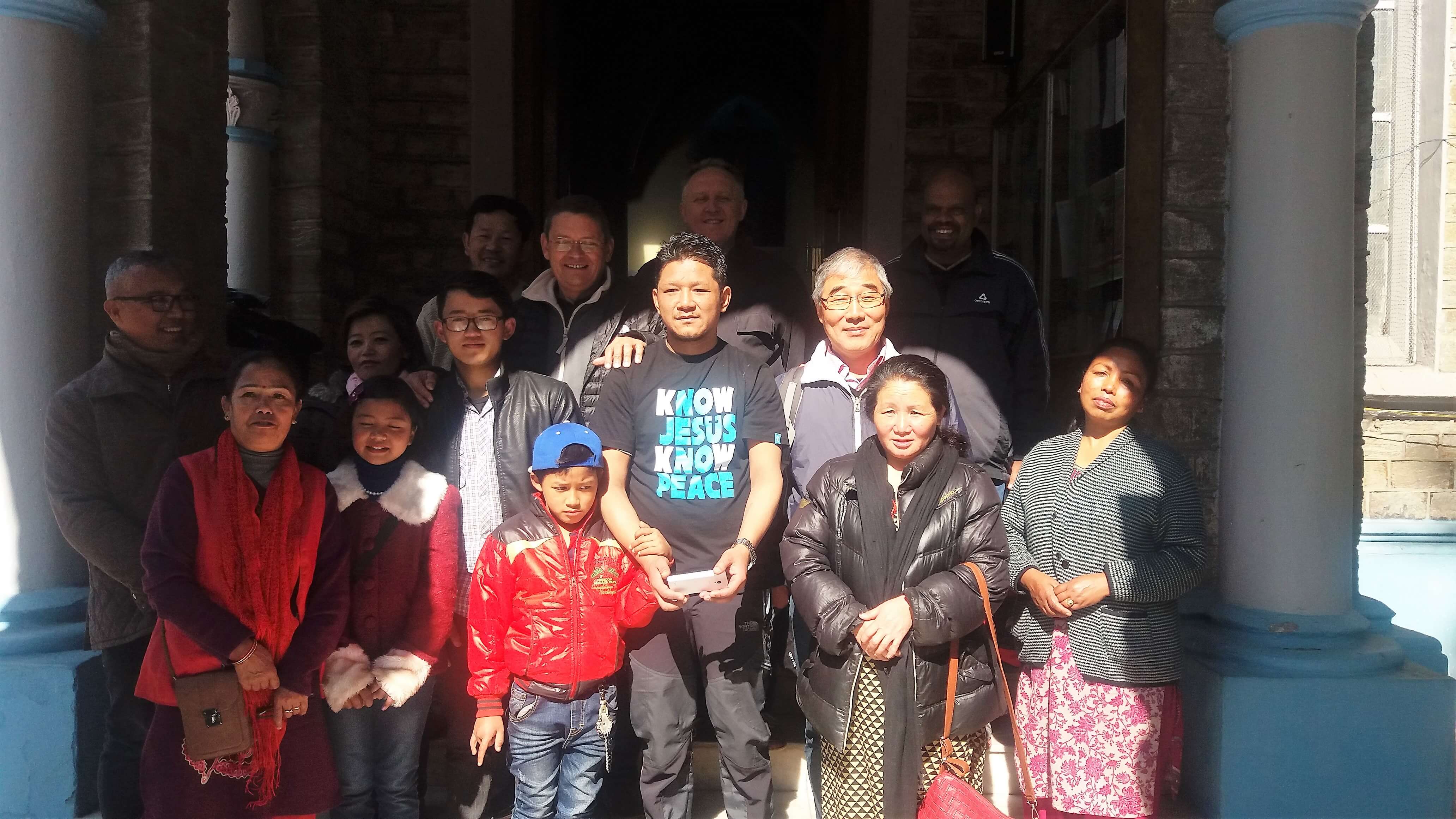 “These last few months we have been giving training sessions to students on leadership and developing character in schools that are nearby and in the surrounding hills,” write Vivek, Rey and Jonathan Lara, who is also from the Philippines. “Lately we’ve been asked to give some training sessions for teachers. There are many opportunities to offer our spirituality to youth and children through these sessions. “It is a challenge for us to understand together how best to proceed in bringing the light of the Gospel to these fertile mountain lands.”
3 Apr 2017 | Non categorizzato
Hundreds of thousands of teenagers leading the worldwide sports relay race. Boys and girls from different ethnic groups, cultures and religions race together to bear witness to their
commitment to peace and to promote a way to reach this peace : the
Golden Rule. The race is promoted by the
Teens for Unity of the
Focolare Movement. It takes place every year on
the first Sunday of May from 11:00 am to 12:00 noon (in the different time zones), during the “United World Week” which is part of the
United World Project. It’s an event that in previous years has involved over 100,000 teenagers in various cities of every corner of the globe.
The baton passes from one time zone to the next making it also an opportunity for exchanges between the places involved.
At different latitudes, sporting events, acts of solidarity and experiences of active citizenship get under way, especially in places where solitude, poverty and marginalization prevail. Personalities from the world of sport and culture, and civil and religious authorities take part in some cities. The website
http://www.run4unity.net helps in preparations for the event and in real time collects the contributions from the
social networks . The many messages, photos and videos received show the number and type of ideas in the pipeline in countries around the world.
Organize Run4Unity in your city! Download Run4Unity description:
PDF PPT
3 Apr 2017 | Focolare Worldwide, Senza categoria
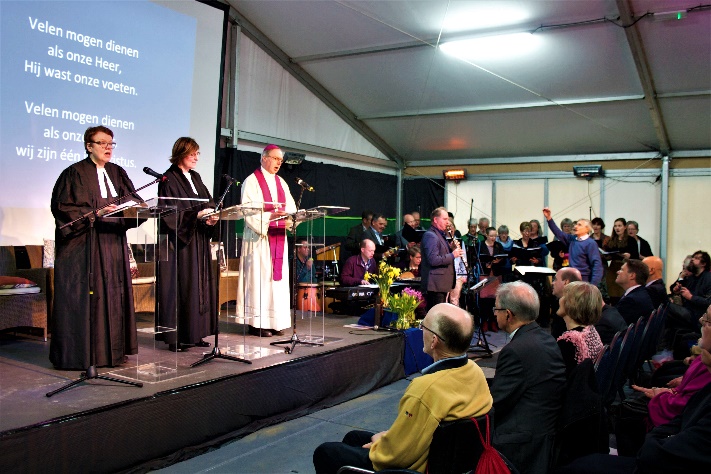
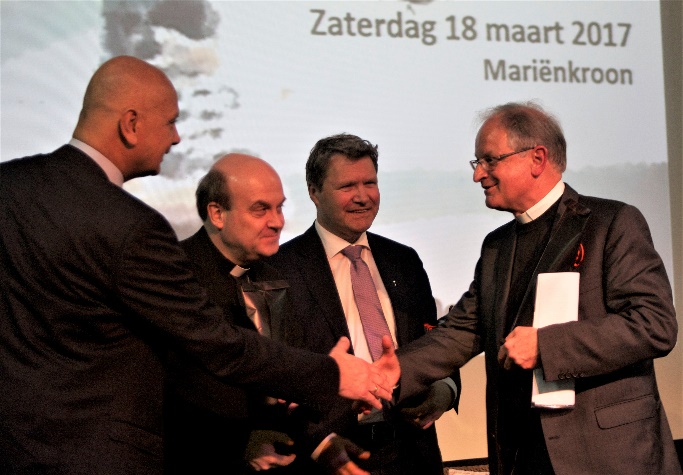 After the historic encounter between the World Lutheran Federation and the Catholic Church last October in Sweden, the 500th anniversary of the Reform has given rise to ecumenical events around the whole world. The March 18th On the Way to Unity Meeting was promoted by the Catholic Athanasios en Willibrord Association for Ecumenism and the Focolare Movement. The date chosen was meant to coincide with the departure of Chiara Lubich, whose commitment to Christian unity is famous. The encounter took place at the Focolare’s Marienkroon village, a hundred kilometres from Amsterdam. Three hundred and eighty people including prominent leaders of several Christian denominations attended. The event showed a people on the way, as the title of the event wished to express. A broad tent was set up that was filled to the brink, until an addition was added for the overflow crowd. The five-hour event included reflection, meals, testimonies, songs and artistic presentations. The highpoint was the moment of common prayer. The large turnout and the fraternal atmosphere created among all, including the leaders of the Churches, made the day seem historic as the director of the Catholic Association for Ecumenism, Geert van Dartel, affirmed. But it was also an “ecumenical feast,” one of the participants remarked. “Unity in diversity is not something that we can ‘fabricate’ on our own, but it is a gift from God,” warned Catholic Luther scholar, Hubertus Blaumeiser from the Focolare’s international Abba School centre for studies. Looking back at Lund’s ecumenical agenda, he cited a few words from Chiara Lubich: “The music gets written in Heaven.” It’s up to us to learn how to read that music. In any case, he went on, from the moment that Jesus gave his life for everyone on the cross, unity has been a given. Our task is to respond to that. This explains the first of five “ecumenical imperatives” that were signed in Lund, which recommend that we always begin from the perspective of unity and never separation. But what must be done so that this unity becomes concrete in the midst of oftentimes difficult situations after years of division? Placing ourselves behind the Triune God of Jesus, we are all called to an exodus,” said Blaumeiser, to go out of ourselves and learn to “think and live with the other as our starting point,” and that is “not only at the level of individuals, but also at the level of entire faith communities.” Ultimately, ecumenism is a process to be carried out with Jesus: from death to resurrection. “Unity begins wherever one has the courage to face the difficulty, to enter in with Jesus into the wounds of separation, welcoming one another even when that can be tiresome and difficult. The “ecumenical imperatives” say that we have to let ourselves be changed by the encounter with the other and thereby seek the visible unity [of Christians] and bear witness to the power of the Gospel together. The president of the Dutch Catholic Bishops Conference, Bishop Van den Hende; the General Secretary of the Protestant Churches of the Netherlands, Dr Reuver; and National Coordinator of the Pentecostal Community, Peter Sleebos, responded to those ideas. Commenting on the orientations that were described, they expressed further motives and thoughts, drawing on their own faith traditions. In the afternoon ecumenical testimonies were presented that illustrated what Chiara Lubich liked to call the “dialogue of life”. This was followed by an open discussion with the presenters. One participant commented: “This Saturday we managed to ‘play’ the beautiful notes of the music that is written in Heaven ‘together’.” “This meeting,” declared Pastor René De Reuver to the Catholic Journal, “was very special. I experienced the presence of Christ in the enthusiasm, in the communion and in the passion for union in Him. This doesn’t take away the differences, but leads us to enrich one another mutually.”
