Jorge Zocheib
- Data di Morte: 03/04/2017
- Branca di Appartenenza: Focolarino
- Nazione: Brazil

Chiara Lubich, when speaking to a group of young people gathered in Loppiano for their course of formation, revealed the secret of her long experience in dialogue: to listen to others in a profound and sincere way, patiently and without hurry, in order to get to know them and to appreciate them in their cultural diversity. This is the way which encourages others also to listen, and is therefore the basis for a fruitful dialogue. https://vimeo.com/155508846
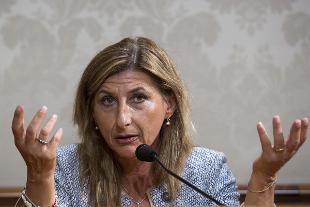
Lampedusa Mayor Giuseppina Nicolini was awarded the UNESCO’s peace prize along with French NGO SOS Méditerranée for “her great service to humanity and her constant commitment in saving countless migrants and refugees and receiving them on the Italian island and in other parts of Italy”. The mayor will be present for the 1st May activities in Loppiano and at the Youth for a United World Meeting, to be held also in Loppiano.
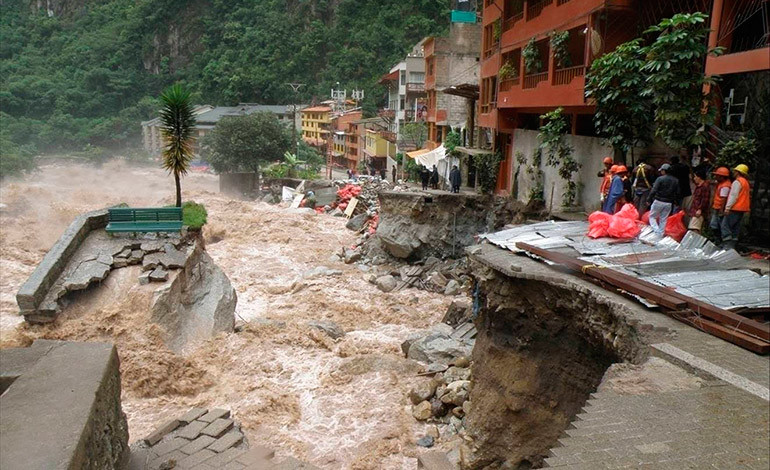
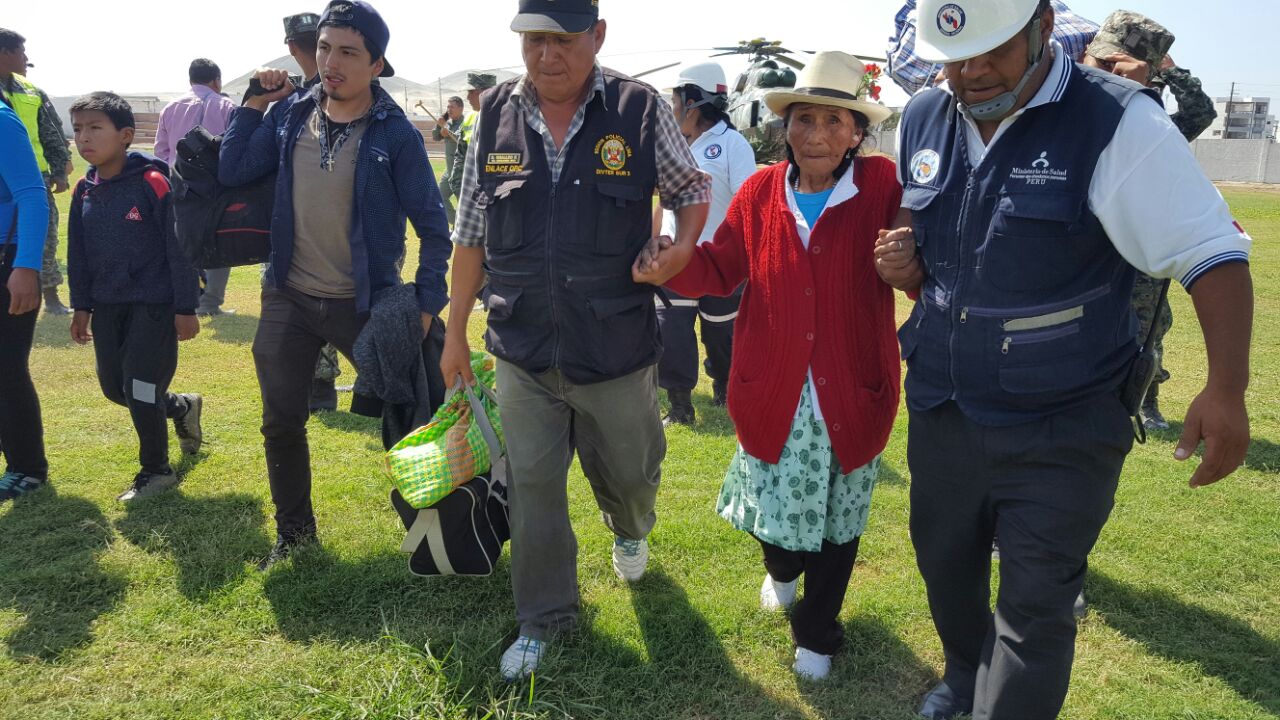 In the face of “the environmental disaster that struck Peru (…) we believe in God’s love, and pray together for the victims, entrusting those suffering from so many difficulties and discomfort“.This was what Maria Voce, Focolare President, wrote to the community of the Movement in the South American country struck by violent storms and floods. Some days before, the Pope had prayed during the Angelus, ensuring his support for the population. “The phenomenon known as the ‘coastal Niño‘, they wrote from Perù, “has produced a 10° rise in the usually cold waters of the Pacific. Combined with a mass of hot air coming from the Caribbean, it has caused a thickening of enormous masses of vapour that condensed over the Andes, in the central zone of Perù, provoking continual rains, that were also real outbursts of rain and violent storms. An enormous mass of water poured over the coastal cities. The figures today report hundreds of deaths and dispersed people, over 200 wounded, and almost 800,000 people who lost their homes or suffered damages. The Government was unprepared and was delayed in the first interventions, but is now in full action.” “But what is surprising is the fantastic reaction of the public and private institutions and especially the members of the community,” they continued. There would be no end to the reports of real solidarity and charity outflowing from the heart of man in moments like this. In the meantime, not only relief aid was sent by the nearby countries: Ecuador (in part struck by similar events in the south of the country), Colombia, Chile, Bolivia, Argentina, Paraguay, Brazil, Uruguay, and the USA; over a 100,000 dollars came from the Pope! Town halls, supermarkets, parishes, institutions of various Christian churches and of other religions have created Collection Centres for basic essentials, nonperishable food, cleaning products, blankets, etc. Also the Focolare opened a Collection Centre in Lima. “Some families of the community,” they said, “were struck by the floods, especially to the north of the country. In particular, one of our very poor communities close to Lima, suffered intense rains for which they were not prepared, since for 60 years it had not rained in that area. The nuns of a nearby community, who helped in our adoption project, say that many of our children are homeless, but are all alive…”. There is very little electricity throughout the country and water is lacking. A 70-year-old man had a stroke but there was no way of bringing him to the hospital about 50 km away… The benevolence of the members is impressive and immediately generates reciprocity. We sent help to a family in Chulucanas, whose house roof and walls were damaged, but we found out that with other families of the parish and the Movement, they started to help others with greater needs.”
Ten years from its founding, Sophia University Institute expands from one course on Fundamentals and Prospectives of a Culture of Unity, to three distinct Master’s Degrees: Economic & Political Sciences, and Trinitarian Ontology & Culture of Unity. A programme that offers young people from around the world, an inter-discplinary and trans-disciplinary education focused on innovative sectors of social and civil economy, communion, participatory policies and their relationship to theology and philosophy. “With the addition of the new academic titles, Economic and Political Sciences and Trinitarian Ontology,” president of Sophia University Institute, Piero Coda, says that “Sophia offers students an academic degree which joins together the unitarian sense of the human adventure with a scientific degree that contributes to the total development of the individual and society.” Benedetto Gui, Coordinator of the Economy and Management Department, adds: “Among the novelties is the addition of the English language for several of the courses in the Economic and Political Sciences Degree programme.” He continues: “In an age when young people don’t have the courage to propose ideals to live by, Sophia seeks to found its vision of the world on a deep-rooted respect for the human person, including his or her culture, religion and views – and to look towards a world without hatred, war, oppression exlusion, or superiority over others. In the field of economics this doesn’t mean having a recipe ready to be imposed, but looking beyond today’s dominant reductive vision of economics and economic realtions, even though scientific reasearch is demonstrating the inadequacy of such a vision.” The students at Sophia come from 30 countries and belong to different religions. The Institute offers them a course of study that joins learning – through listening, discussing, reading, attending lectures – to real life. Applying the logic of openness to others as the very method for approaching learning which creates community life in the classroom, corriders and residences where students have an extraordinary intercultural experience. Gui continues: “What we strive to bring about together with the students is, on the one hand, the acquisition of those skills that one would expect to find in any graduate in the field of economics and, on the other hand, a deeper understanding of that economic vision which I mentioned before, through the examination of new lines of research and contact with economic projects that put that vision into practice . . . topics that are often neglected in university settings.” Once they’ve completed their studies, how do the students approach the work world? “Recruiters are well aware that knowledge of the subject is not enough to make a young person a valid member of an organisation. The ability to dialogue with the bearers of other types of knowledge is also necessary, knowing how to collaborate and to assume responsibilities. Our experience thus far has shown us that our students are appreciated not only for their academic preparation, but also for other skills that the experience at Sophia is particularly adept at developing in people. Be careful though: Education shouldn’t be be geared towards finding a job. It should also promote the growth of the human person and develop a capacity for personal and group intitiative which is also a precious contribution towards society.”