20 Mar 2017 | Non categorizzato
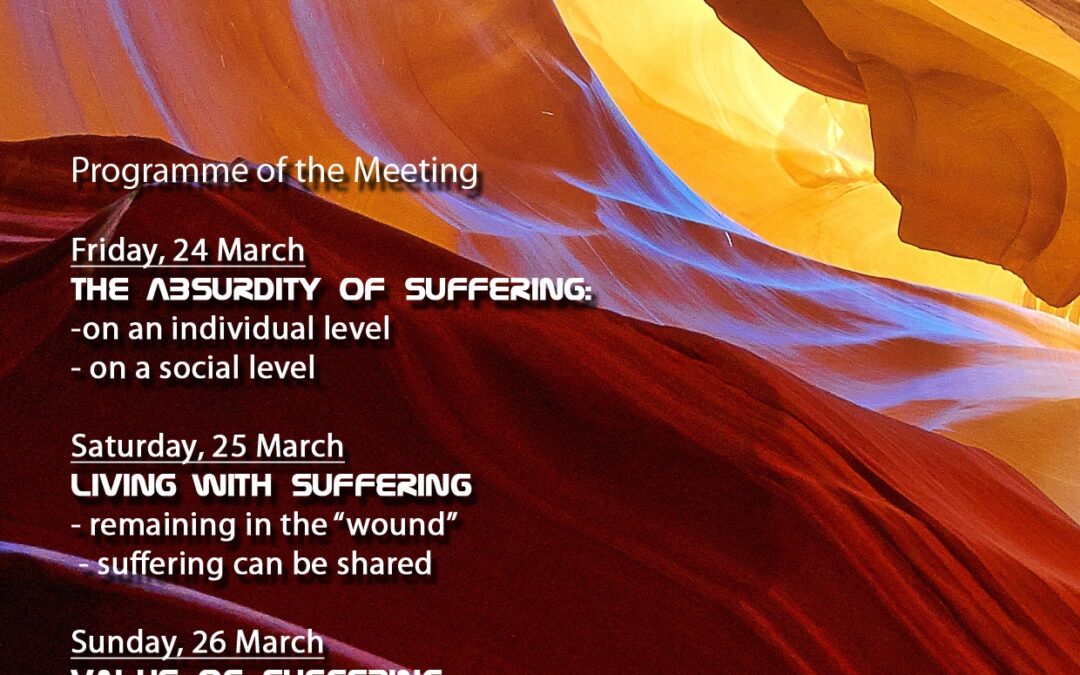
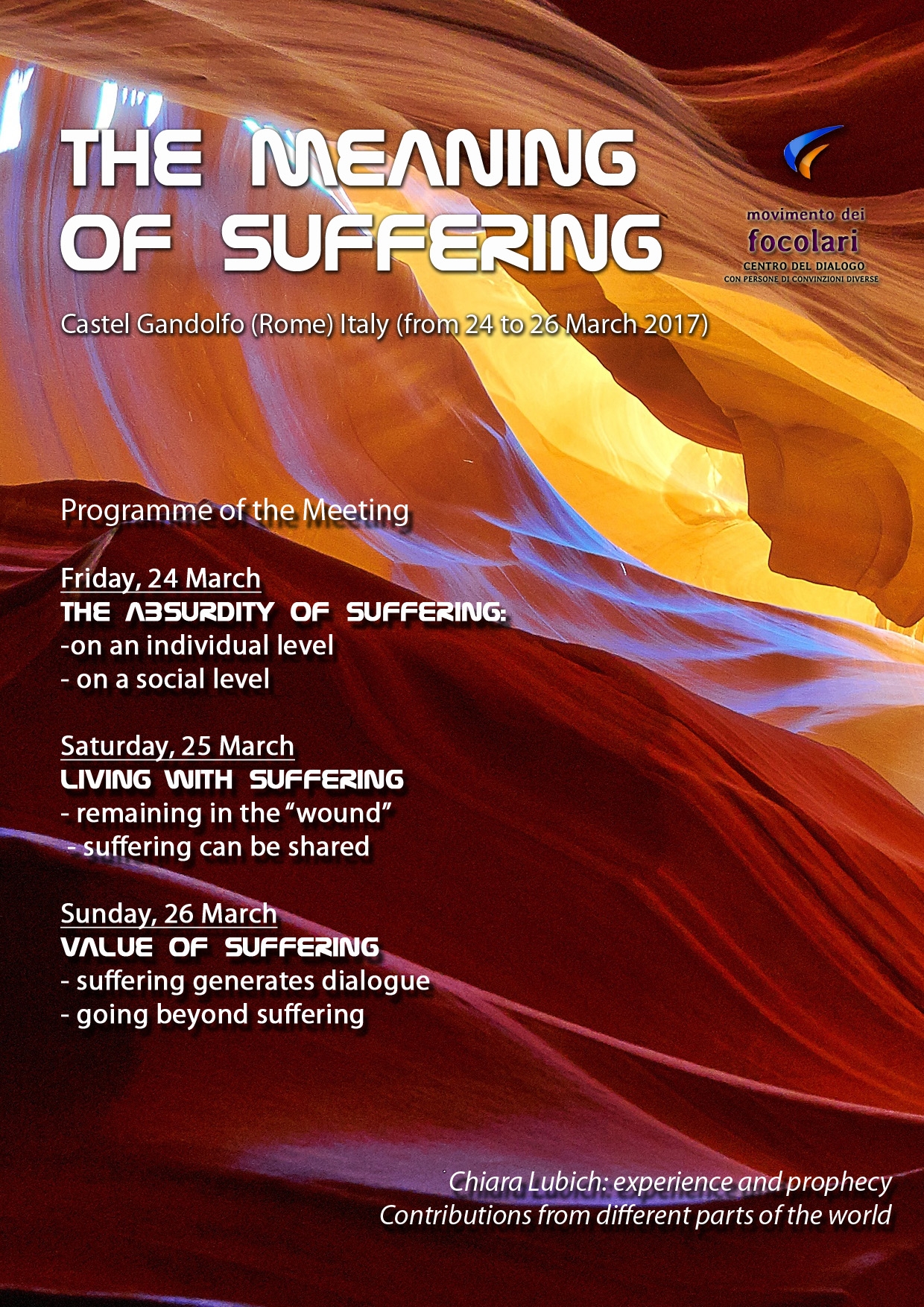 Agnese Fermo is a mathematics professor from Milan, Italy; she is married and has two children. She is also a member of the International Commission of the Centre for Dialogue with people of the Focolare that have no religious affiliation. We asked her to tell about her experience of the past several years engaged in this open dialogue and to present the upcoming conference titled “Is there meaning in suffering?” “I attended the international gatherings on this dialogue at Castel Gandolfo and other gatherings where we went deeper into the spirituality of the Movement. Right from the start we perceived the importance – for each one of us – of this communitarian experience that Chiara Lubich was offering to us. Dialogue, besides being an expression of the gift of diversity, was also a tool that enriched our thinking. I’ve belonged to the “dialogue group” in Milan for about 15 years. The need and desire that each of us had for dialogue made us feel that we were necessarily part of the human experience of a whole sector of humankind, and carriers of part of the truth through the relationships that we were building. But this experience couldn’t remain enclosed in a group: it was the trace of a path for each one of us to follow, besides for the Movement itself. We felt like we had to step out of structured groups, especially after Chiara left us. In Milan this has taken place, but with the many people with whom we’ve shared this experience – both members and non-members of the Movement – the relationship has remained deep and real. Regarding the upcoming conference titled Is there meaning in suffering? I believe I can say that we haven’t fixed any particular goal. I think this is because of the need we feel to give space to dialogue, not so much in the sense of comparing thoughts on the theme itself (there’s a lot of literature on this topic! And it’s often avoided as a topic). Rather, we’d like to create a space in which we can welcome people that have such a different religious sense towards life, a space capable of giving enough breathing room to this other portion of humanity that we represent, we who have different religious convictions. But there is also the desire to offer a communitarian experience, even if only for three days, to live within a dimension of mutual freedom beyond affiliation, in which each one of us can offer their our experience and innermost feelings on such a delicate topic as suffering. Personally, I wouldn’t know what the meaning of suffering is. I haven’t found an answer that has been able to express the mystery contained in that question. As I wonder about it whenever I visit the women’s prison, made me discover the value of my presence in that place as a time of sharing made up of mere moments, of the solitude that marks the pain of those women that I encounter. From them I’ve receive precious gifts and discovered the value of the embrace that that sharing contains which, although brief in time, brings to life our being [gifts] for each other. Knowing how to ‘stay inside the wound’ – which for me, means to say, being called to accept whatever life has in store for me in that moment – there’s submission in front of what you can’t avoid, [submission] to the suffering that we’re all asked to go through.”
19 Mar 2017 | Non categorizzato
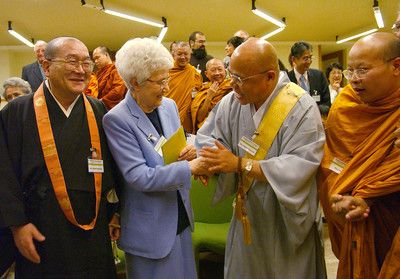
The founder of the Focolare Movement died at Rocca di Papa on the 14th March 2008 at the age of 88 after a long illness. In the telegram of condolence sent by Pope Benedict XVI, he mentioned “her constant commitment for communion in the Church for ecumenical dialogue and brotherhood among all peoples”. He also thanked the Lord “for the witness of a life spent hearing the needs of people today” and expressed the wish “that all those who knew her and follow in her footsteps should keep the flame of the charism alive”. Chiara Lubich’s charism focuses on unity in the human family. It would be a dream if it were not founded on firm faith in the love of God the Father for his children, and on the words of Jesus, “May they all be one”. This charism has much to say to the world today as Maria Voce said to Adriana Masotti. A. – Yes, indeed. It almost has more to say today than when Chiara first proclaimed it. At the time, there was of course the tragedy of war and many painful situations, but there was not the disunity that seems to be spreading so much in the world today. This disunity cries out for the lifestyle brought by the charism of unity God gave to Chiara. We are discovering its relevance more and more. Q. – One of the definitions made of Chiara Lubich was a “woman of dialogue” and dialogue is a subject talked much about in many places today. However, often it does not happen or people do not know how to do it. What did dialogue mean to Chiara and how does the Focolare Movement practice this dialogue? A. – Dialogue was a lifestyle for Chiara, which meant considering every person she met as a brother or sister. Chiara did not want to dialogue; she wanted to love people who were her brothers and sisters; and that is why she was so happy to meet people. She shared what was in her soul and then these brothers and sisters spontaneously responded with the same openness. That is how dialogue began. It is the same for us today; we try to have this attitude towards whomever we meet. We try to do as Chiara did, to be always open, without looking at differences and distinctiveness of any kind except as a way to create an enriching encounter, because it is a meeting with a brother or sister who has something to give us, whatever their ethnicity or religious faith, whatever their social background or age. Q. – So the Movement is convinced that dialogue is the best tool to resolve the many conflicts in the world today. A. – Of course! There is no other way. Why? Because dialogue is love, and if dialogue is love it can truly change the state of the world. It can bring peace to places at war. D. – At the beginning of her spiritual experience, Chiara was strongly aware of humanity’s cry of suffering and she decided to take on and bear this suffering herself. What does the Movement Chiara founded do with regard to the many divisions the world is experiencing at present? R. – The Movement wants to have the same faith as Chiara, a faith based on the cry of Jesus forsaken. Chiara certainly understood that cry as the moment when the Son of God suffered the most, but it was also when He loved us the most. Precisely because he loved us the most, in that moment he re-established the unity that was broken between God and humankind and among people. Therefore, there is no other way of reaching unity than by passing through suffering. However, this suffering is filled with love because it is part of giving one’s life for others. So, considering all the sufferings of the world today, whether at a personal level or at the level of society, peoples or nations, the Movement tries to recognize His countenance in these, to see in them a God who died. But He is also a God who rose again and who can therefore rise above all these sufferings. D. – This translates into many practical activities … R. – Precisely. Perhaps they start with a simple act of love by a family who saw that another family was experiencing a similar difficult situation, and who took upon themselves the difficulties of another family with a disabled child. This created a network of solidarity among many families and involved the local town council. They realized that by loving the countenance of Jesus forsaken in that suffering, something changed. This is what we see. Wherever we are, in places where there is war, our people try to love enemies as well as friends. Goods are shared among all the families without looking to see which ethnic group or religion they belong to… We see this continually in many relationships that change and we see new communities building up that are connected among themselves and spreading more and more. Source: Vatican Radio
18 Mar 2017 | Focolare Worldwide
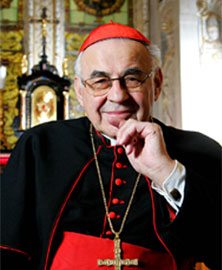 As a child, he dreamt of being a pilot, but an attraction to the priesthood stuck with him from the time he was eleven. He was born on May 17, 1932 in Lisnice, the Province of Pisek in Southern Bohemia. From 1952 to 1953 he was a worker. In 1960, following his graduation, he worked as an archivist but soon abandoned that occupation to study theology. In 1968 he was ordained to the priesthood. During a visit to East Germany in the 1960s, he met a layman and some priests who were living the spirituality of the Focolare Movement. He was taken by the presence of Jesus among this group of Christians, a presence that He promises when two or more are united in His name (see Mt 18:20). That experience of communion would accompany him for the rest of his life. His pastoral work in Ceské Budejovice annoyed the Communist State system, and in 1971 he was transferred to a parish in Selva Boema. Seven years later, because of his popularity especially among young people, his permission to carry out his priestly ministry was revoked. “I lost my license. I can’t say mass anymore,” he explained to his parishioners. “I preached and talked about the cross and recommended that we carry it; now is the moment for me to carry it.” Officially returned to the lay state, Chiara Lubich accepted his request to enter the focolare in Prague that was opened in 1981. He found a job as a window-washer that lasted for 10 years. He would often say: “I can’t preach or share the sacraments in public, but when I look at the cross I realize that Jesus who is the one and only High Priest could hardly even talk when he was on the cross, and his hands were nailed in. I became convinced: ‘Now, you’re close to the High Priest’ and I embraced Jesus Forsaken. It was the spirituality of the Focolare that guided me in this direction. I felt the power of which Isaiah 53 speaks: ‘The man of suffering’ (…) I lived for a long time of this light: everything that was ugly could serve for my edification. I realized, without exaggerating, that those ten years of washing windows had been the most blessed years of my life.” He would often repeat: “I hold it to be a miracle that God spread the spirituality of unity in the Socialist world where everything was under surveillance. He always knows the ways in.”
 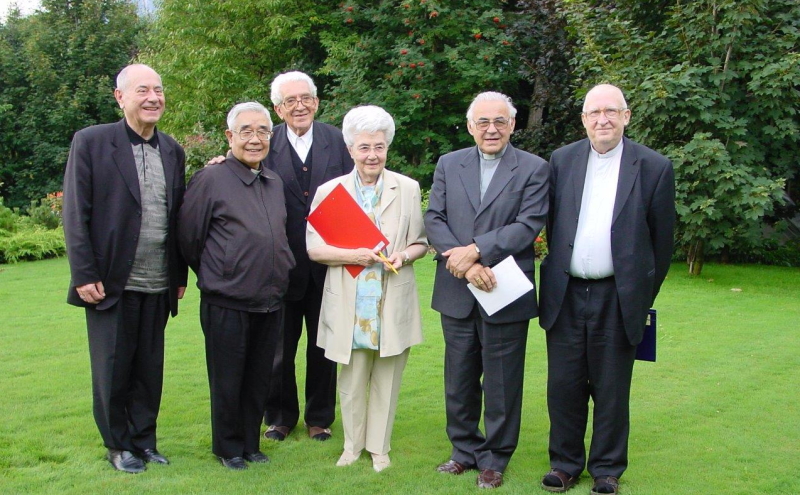 With the Velvet Revolution in 1989 he became pastor again. In 1990 he was named bishop of Ceské Budejovice and, in the following years, Archbishop of Prague. From 1992 to 2000 he guided the Czech Bishops Conference and from 1993-2001 becamse President of the Council of the Bishops Conferences of Europe. On November 26, 1994, he was created cardinal. Following the death of Bishop Klaus Hemmerle in January 1994, who began the branch of the Bishop Friends of the Focolare Movement, the foundress invited Archbishop of Prague to assume the role as moderator of that branch of the Movement. He succeded Bishop Hemmerle who had been a great theologian and charismatic figure. It seemed too demanding to him, but Chiara Lubich assured him: “Don’t be afraid, Your Emminance, you won’t be alone. You’ll go ahead as a body.” The cardinal carried out this task for 18 years, convoking and supporting numerous international meetings of bishops from both the Catholic and other Churches, which were held in Castel Gandolfo, Italy, Istanbul, Jerusalem, Beirut, Augsburg, Wittenburg, London, Geneva, El Cairo, just to name a few. The membership of the Bishops in the Work of Mary is entirely spiritual and does not interfere in any way with their duties as bishops, as established by the Church. They find that the spirituality of unity is “in profound harmony with the episcopal charism. It reinforces the effective and affective collegiality and unity with the Holy Father, among the bishops, and helps them to actualize the teachings of the Second Vatican Council on the Church-Communion.” This is written in their rule of life for the “Bishop Friends of the Movement” which was recognized by John Paul II and approved by the Pontifical Council of the Laity in a letter dated February 14, 1998. Also the heads of several other Christian Church’s have expressed their appreciation for this initiative. See also: News.va – Telegram of condolences for the death of Cardinal Miloslav Vlk
18 Mar 2017 | Non categorizzato
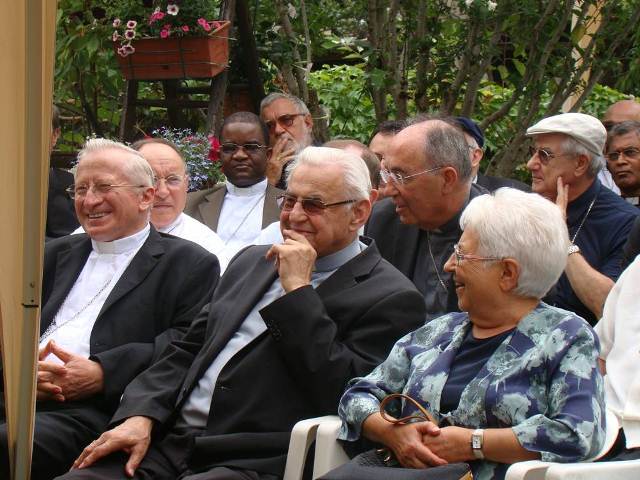
Today, 18 March, Cardinal Miloslav Vlk, Emeritus Archbishop of Prague, passed way. He was 86 years old. For 18 years, he was the moderator of the group of bishops who adhere to the spirituality of unity. The Focolare Movement expresses deep gratitude for his life.
18 Mar 2017 | Focolare Worldwide
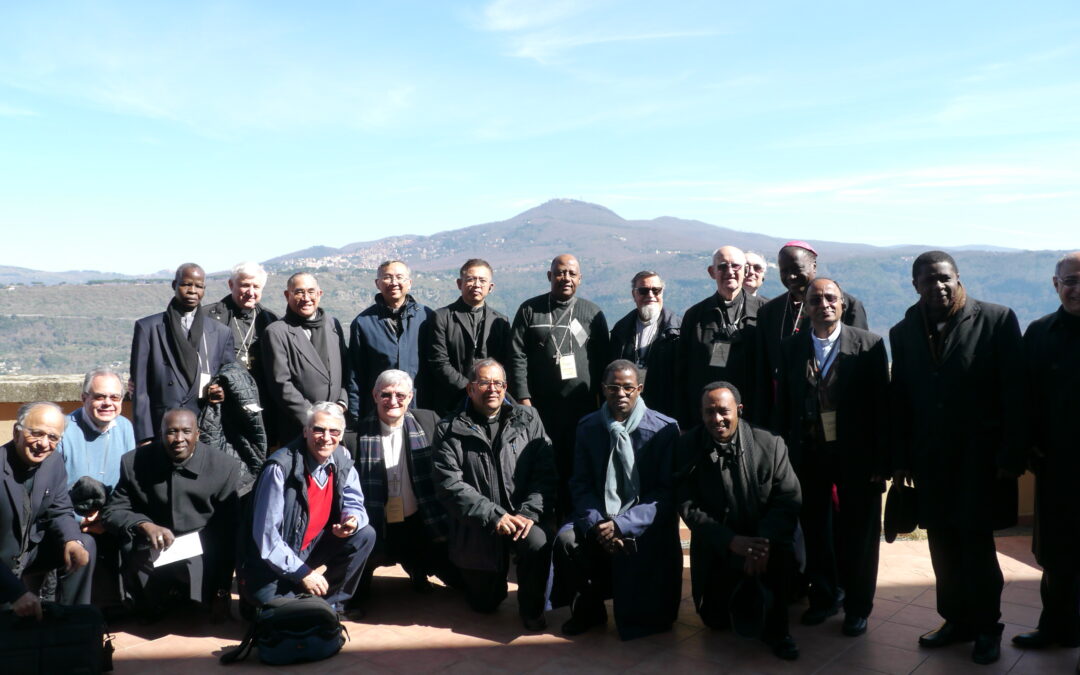
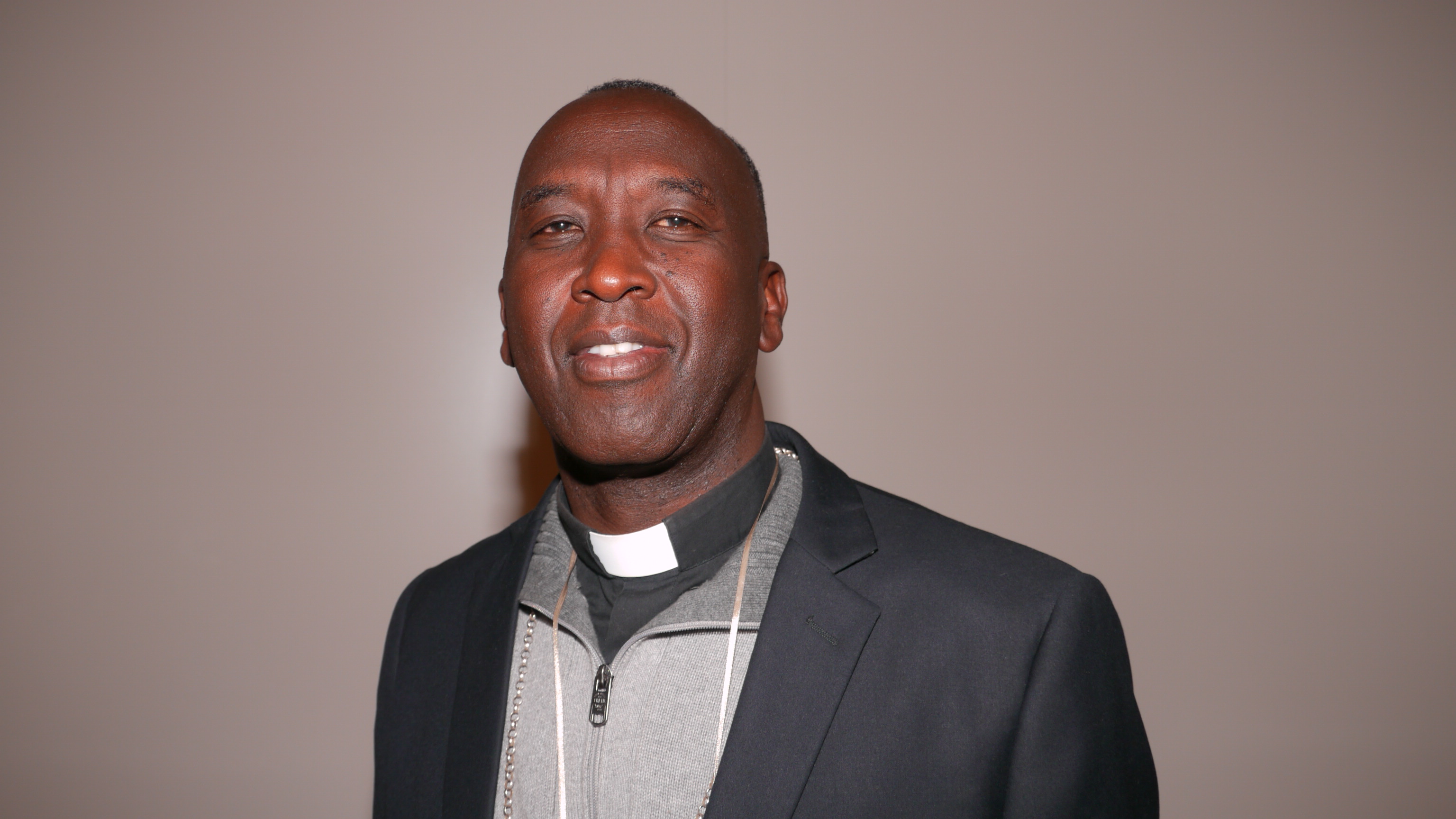 Our diocese of Lodwar – Bishop Dominic Kimengich recounts – is situated in Turkana County (Kenya), bordering with Uganda, South Sudan and Ethiopia. It is 700 km away from Nairobi. The travelers who come to us have to ensure that there is a police escort along the route, so as not to encounter bandits and robbers in the frequent raids. Due to climactic changes, it has not rained for a long time, with the terrible consequence of the shortage that has affected the entire Turkana area. Sixty percent of the population still live the nomad lifestyle and up to now have survived by raising camels, sheep, goats, donkeys and cattle. Now that there is no food or pastures for the cattle, they are forced to migrate to nearby countries. Given that this is a zone of confines, the many conflicts between bordering tribes battling for survival provoke the death of many innocent people, among which are women and children. In the diocese we have a huge refugee camp called Kakuma, with almost 200,000 refugees coming mostly from South Sudan, where the situation is worsening each day. But many also come from Somalia. We find ourselves in a very difficult situation since not even the inhabitants of Lodwar have enough food and water. Many children have even stopped going to school for lack of food. In 1985 when I was in the seminary, someone told me about the Focolare spirituality, but once a priest I was assigned to a parish where it was difficult to keep in contact with the Movement. It was only when I became a Bishop that I was able to attend some meetings in Nairobi. In 2012, to celebrate the 50th year of evangelisation, we thought of inviting the bishops of the surrounding dioceses: Uganda, South Sudan, Ethiopia and other four dioceses in Kenya, to speak about peace and reflect on what we can do. Ten Bishops attended and we got together for three days, a meeting which is now held every year. We can say that every time we would meet, the conflict was reduced. Once I went to visit Bishop Markos of Ethiopia, who is also present in this congress and from the unity built also with the other bishops, we find the strength to bring ahead our ministry in such a troubled land.
 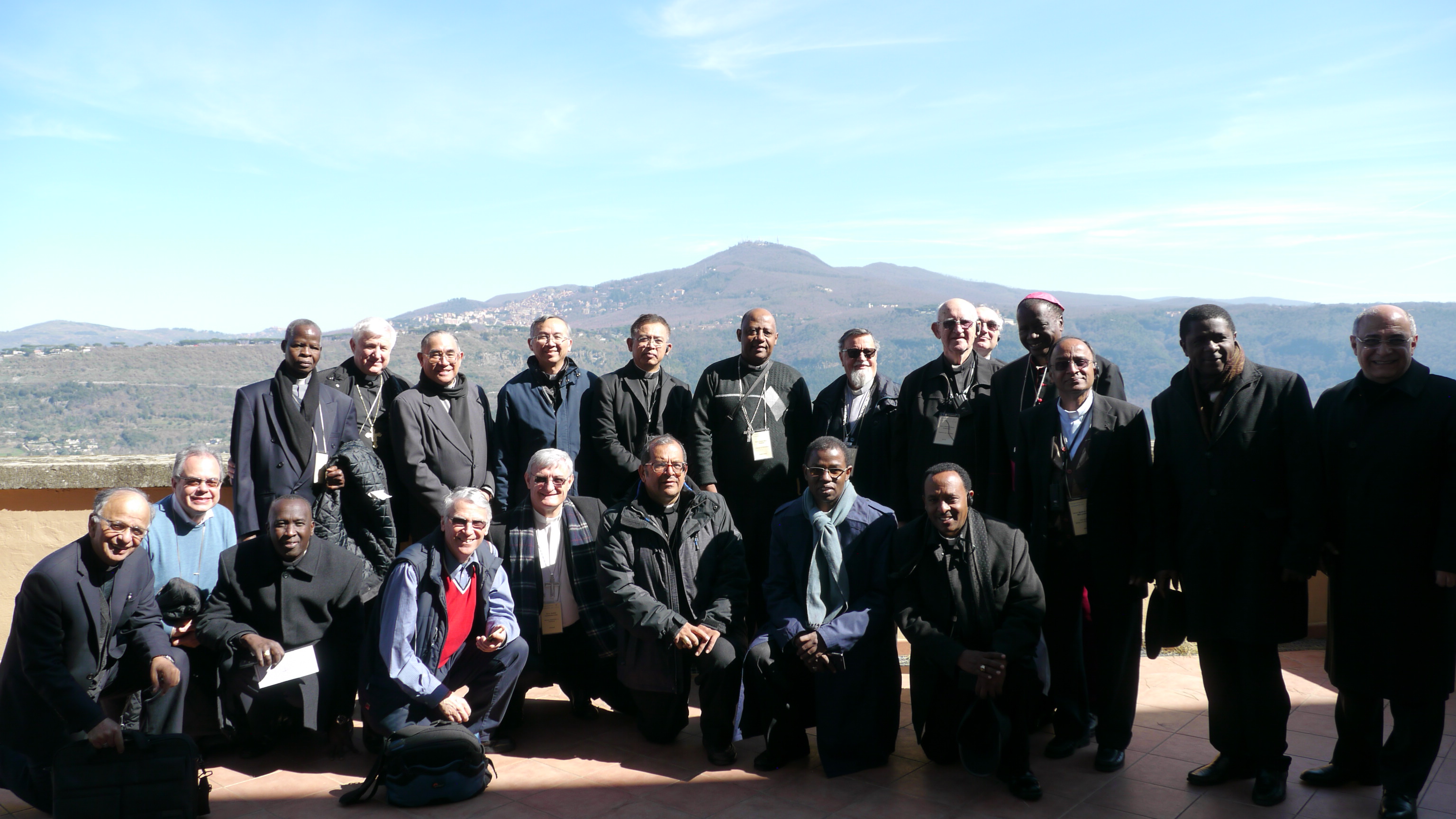 Here in Castel Gandolfo it’s so wonderful to be able to share our own experience with bishops of the whole world and together go deeper into the charism of unity, which teaches us in a practical way on how to live – also as bishops – a genuine love in the spirit of fraternity. Participating in this Congress was a big testimony of God’s love for me and of how He wants us to love one another as Jesus loved us. The theme chosen for this year is greatly in line with the reality of my life and of the territory I come from. It is only seeing things from the point of view of Jesus crucified and abandoned that we can hope in a world where people can learn to live in peace, sharing what they have up to the point of embracing one another as sons of the same God the Father. As I prepare to return to my diocese I can testify with certainty that I am not the same person as before. I feel strengthened by unity with my bishop brothers. In unity in Jesus Forsaken, I know that I am not alone in that part of Kenya in facing the many difficult situations. Jesus is with me, and is very close. I also know that I can count on the prayers of the whole Movement. I am very grateful to God who made all this possible.
