17 Mar 2017 | Non categorizzato
On the early morning of March 16, 2017, the earthly journey of Gianni Caso came to an end. He was a focolarino, jurist and magistrate, columnist for Città Nuova magazine and, for many years, responsible for Communion and Law. A short biography will be published soon.
17 Mar 2017 | Focolare Worldwide
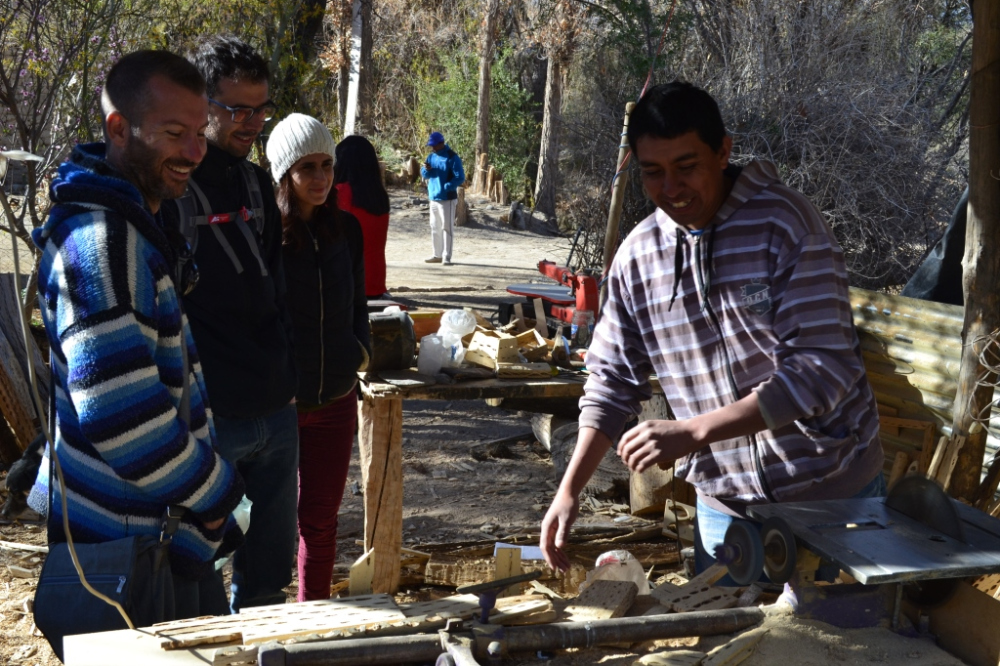
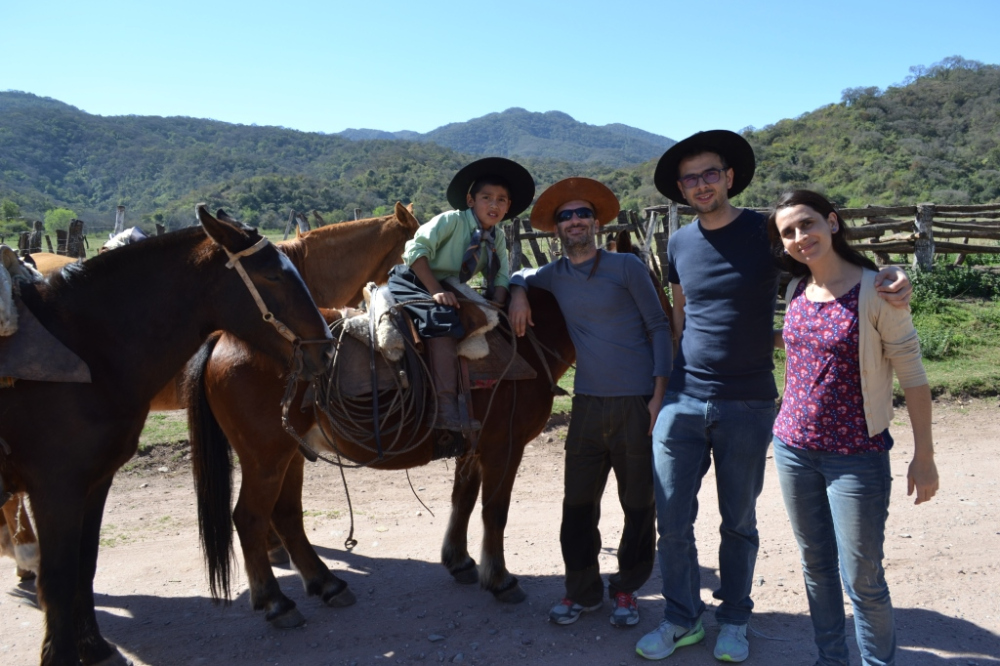 The solidarity tourism project that the Ministry of Tourism of Salta, Argentina has been promoting for six years supports small communities in the cities of Salta, Jujuy and Catamarca in the north of the country. It is enhancing the region’s natural resources in order to save the cultural richness and diversity that is linked to local history. At the same time, it offers professional training for the production of products related to the sectors of tourism, housing, transport and the sale of handicrafts and food products (jams, liqueurs, honey, and more). This has helped to avoid the migration of populations from rural areas to urban ones, preventing the increase of poverty areas in the big cities while protecting small communities that have a rich culture that is disappearing.
 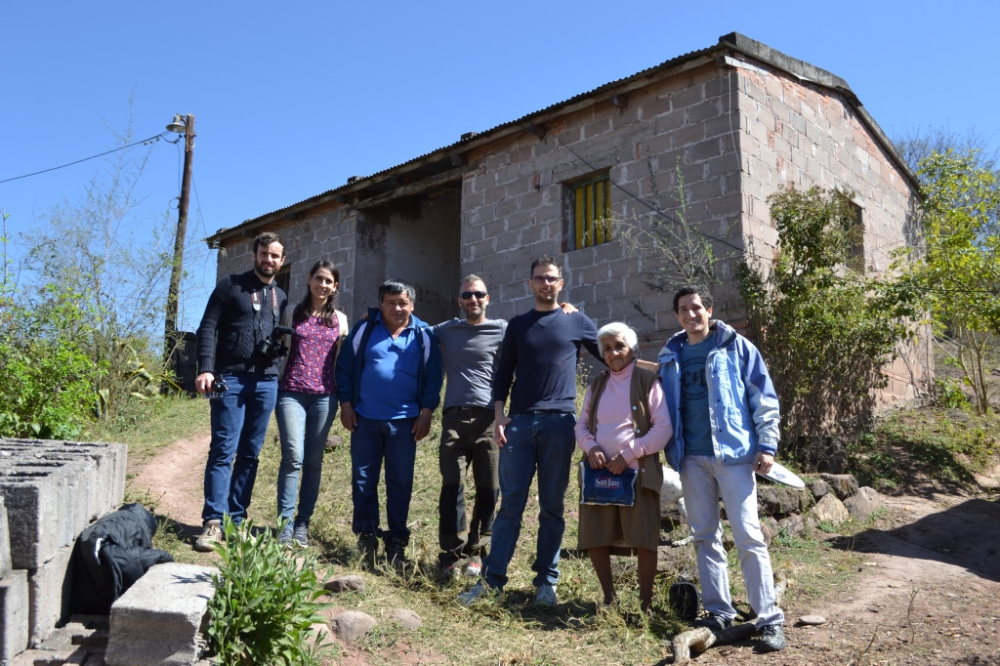 “What distinguishes this experience of development from other types of experiences,” sociologist Virginia Osorio from the Sumá Fraternidad explains, “are the words “communion” and “dialogue”. Communion, because each actor has put his or her own talents and resources in common for the development of the project; dialogue, because throughout the development process, there was strong interaction between the different components who were often in conflict with one another. Difficulties were never lacking, but the strategy used to overcome those difficulties was to work in squads and practice active listening among parties: the local community, the State, businesses and other types of civil organisations.” She went on to say: “The result of this experience has been the birth of a new product and of a new kind of consumer. It’s not the idea of tourism that we have been used to. In this experience there is the added value of contact with the rich cultural wealth of small rural communities and, in several cases, of the descendents of indigenousness peoples. This type of tourism creates encounter among people among people.” Stefano, a young Italian tourist who participated in the programme, reports: “I feel like for some people travelling is like looking at the world from a glass box. We travel in search of our Western standard, with our comforts, our certainties and securities. We go to “consume,” as if visiting places was like stopping to have a drink and then throwing the cup away. Many photos are taken, many souvenirs are bought, you eat at some local eatery and the game is over! A nation is not made of monuments and souvenirs, but of people that can offer hospitality, sharing their homes, their dinner tables, their music: this is the real way to travel! ‘Share’, Argentina!” The family of María José e Pablo from Argentina recount: “We liked this idea of vacation, taking walks, getting to know sites, but most of all the opportunity to meet these ‘human sites’ that at times are hidden in the background of the postcards … which allowed us to enter into the local reality of those communities. We had the strong feeling throughout this experience of breaking free from our scheme of things and filling our life with those people whom we now hold in our heart; experiencing the profound and tranquil rhythm of those places, and the scenery of many places we passed through on our trip. Now, as we return to the city, we look at daily life differently, with new eyes.”
16 Mar 2017 | Focolare Worldwide
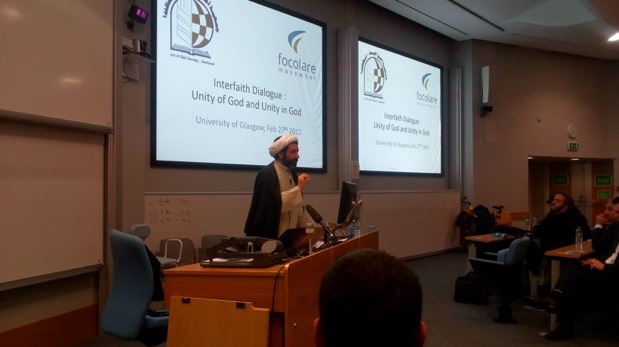
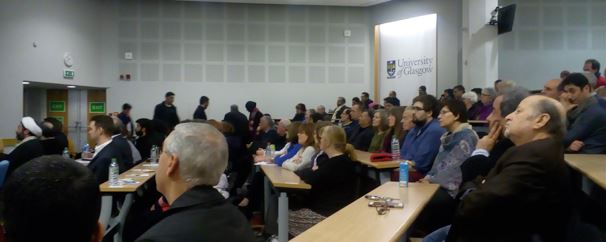
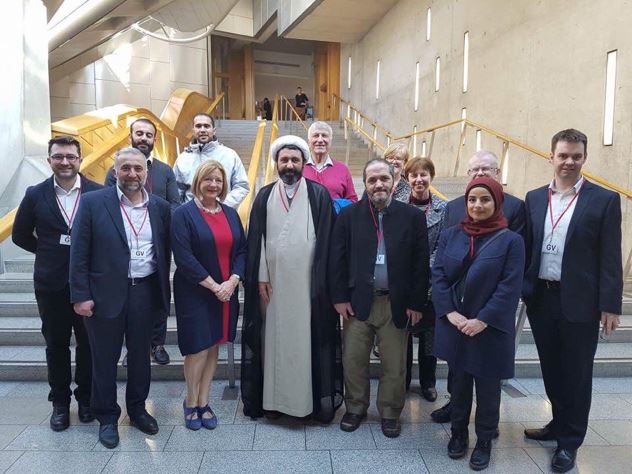 The University of Glasgow, founded in 1451, is one of Scotland’s four ancient universities. In this prestigious place, which educated seven future Nobel winners and heard Albert Einstein demonstrate his theory of relativity, the Focolare Movement and the Islamic society Ahl Al Bait organized an open lesson on interfaith dialogue and unity on 27 February. The evening was entitled “Unity in God and unity of God”. It featured a renowned figure of the Shiite world, Dr. Mohammad Ali Shomali, director of the International Institute of Islamic Studies at Qum, Iran, who currently is at the helm of the Islamic Centre of Great Britain. There was also Professor Paulo Frizzi, teacher of theology and the practice of interreligious dialogue at the Sophia University Institute at Loppiano, near Florence, Italy, where he coordinates the Sophia Global Studies research and training center. The following day, Dr Shomali was to lead a discussion before members of the Scottish Parliament.
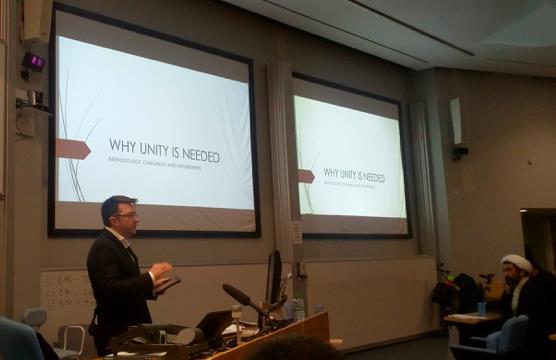
  The longstanding friendship between Sophia University Institute and the Shiite academic brought about a dialogue and research project last summer that involved a group of Christian and Muslim scholars, with the suggestive title “Wings of Unity.” “I presented the methodology and atmosphere that our institute promotes, where we work with an academic approach that is integrated, where experience and application is placed alongside the theory,” explains Frizzi. “For example, a course on interreligious dialogue is taught by three of us with different academic backgrounds and experience, yet we try to develop a common program through reciprocal listening, sort of a journey of unity in which we co-teach the lessons and the students play a lead role.”
  Wings of Unity, explains the Sophia professor, provides a physical space to dialogue, where on one hand students can deepen their understanding of what “unity in God and of God” means, clarifying elements of difference and those held in common. On the other, they can explore the ways in which unity can be tangibly lived, healing wounds and resolving differences. “Too often interfaith initiatives only touch on the questions of the few, without a tangible impact. This is a delicate moment we live in, and we have to take into account the transition towards an uncertain new world order, where greater interconnectivity and interdependence sit alongside painful divisions that fracture the unity of society. Globalization has probably failed in its attempt to build sustainable community, as multinational institutions fail to guarantee a safe space where cultures and religions can meet without the risk of losing themselves. “This may be true, but on the other hand there is experience, commitment and dialogue welling up that, in contrast, enriches neighborhoods and unifies communities. It begins deep down and helps us all think once again of unity amid diversity.” As Pope Francis states in Evangelii Gaudium, dialogue happens in a world that is not a pyramid (where some are at the top over many others) nor a sphere (without any distinguishable sides), but instead multifaceted, where all parts converge together while maintaining its own individuality. Dr Shomali intervenes with some words about identity: “If we reflect on how religions developed, we realize that one question has always been present: How can we keep people together, convincing them that, if we stay in the circle, we are better off?” The concept of identity caused us to distance ourselves from each other, in as much as we expressed not “who we are,” but rather “who we are not” – a model of identity based on fear and exclusion. If it ever worked in the past, it was because the world was quite segmented, without great opportunities to meet as people of different faiths, ethnic groups or cultures. This is no longer the case in a world in which identity is more fragile and nuanced. Because of this, holds the Shiite scholar: “We need a new understanding based on what we can offer and what we can appreciate in others. To relate is essential. I cannot be a good Muslim or Christian – or a good Iranian or Scot – if I don’t know how to relate with others and include them in my identity.” The very concept of identity, therefore, needs a rethink. “The human body has different organs, each with its own function. None of these, moreover, survives on its own.” He concluded: “When I read the Quran, I see that this is God’s plan. In his creation and revelation, God showed us the way toward unity.”
https://vimeo.com/207664744 https://vimeo.com/207664387
15 Mar 2017 | Non categorizzato
15 Mar 2017 | Non categorizzato
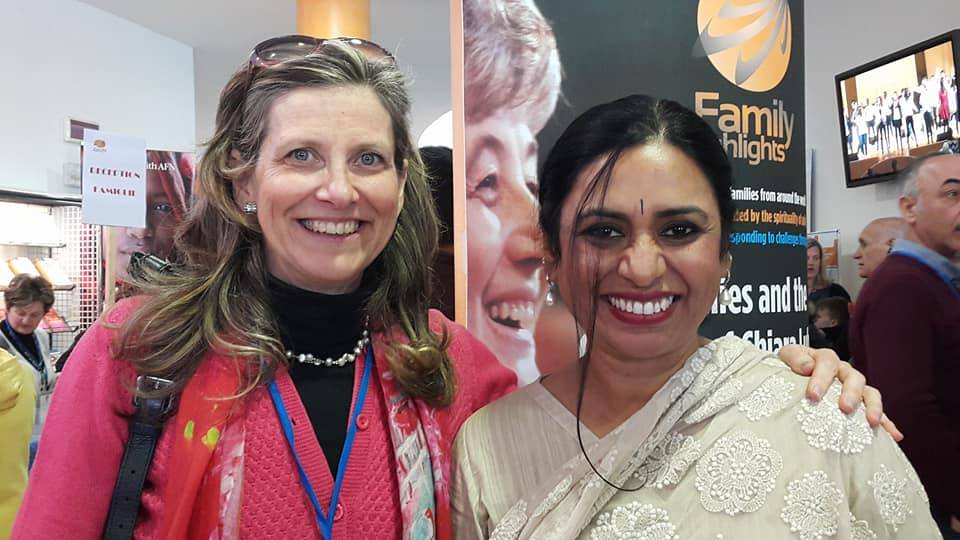
 “Married life is like a boat,” said a family from Peru, “If you’re paddling by yourself, it’s tiring and you don’t get anywhere. Together you need to learn the art of reciprocity.” “We came because we feel the need to grow our family life and help others,” added a couple from Cameroon as they arrived at the FamilyHighlights meeting, which was held March 10-12 in Loppiano, Italy. The event, which marked the 50th anniversary of New Families, welcomed close to 1,000 families of different cultures and religions from 50 countries. It was connected to other gatherings worldwide held in memory of the ninth anniversary of Chiara Lubich’s passing. “Loving others as yourself, loving everyone, being the first to love, becoming one with others” –simple rules that the families of the international Loreto School emphasized as they welcomed everyone. This “art of loving” gives families the strength to renew themselves through trust, forgiveness, accountability, creativity, hospitality. These are seeds of communion that can even shed light on painful, challenging and traumatic situations. They show that “anger and distress do not have the last word,” said Gianni, who coordinates a group of 50 people who are separated. People’s stories and activities surfaced during the lively exchanges during the six workshops. One was for 150 children; other workshops were dedicated to couple dynamics in the various stages of life, educating children, and hospitality and solidarity with the disadvantaged in difficult situations. There were a few families from Syria, who found positive energy to face the fear and many difficulties caused by war. “That flower, which we attached at the end of the event, we’re also bringing it symbolically to other families and to everyone around us as a sign of fraternity and hope,” they said. In her address, Focolare President Maria Voce invited those present to be mothers and fathers of humanity, personally contributing to “sustain and encourage universal fraternity.” Families, despite the imperfections and fragility that they share with the human condition, can offer the world a light and love that heals when they themselves have been renewed. Sharing from a number of groups, as well as the activities for couples, whether they were young, in crisis, separated and remarried, or widowed gave witness to the 50-year efforts of New Families on five continents. There were also projects and activities to support children and meet the needs of the most vulnerable. “Continue everything you are doing, and don’t get discouraged when it’s difficult or it seems like you’re all alone,” urged Voce. Families are called to respond to social issues, even by simply looking at the world through the eyes of a child, Dr. Vinu Aram explained. She is director at Shanti Ashram, with which the Focolare has had a close friendship and collaboration that has benefited many children and families in India through AFNonlus. “The effort that you are making here,” comments Fr. Paolo Gentili, who directs the Italian church’s family pastoral office, Ufficio Nazionale per la Pastorale della Famiglia, “contributes to build a church that is attentive to the good that the Spirit sows in the midst of weakness.” To do this is to “write Amoris Laetitia on the living pages of history.” After these many years, the need emerged to establish an advanced study center that is both international and interdisciplinary, a marriage of life and thought. This has begun as part of the Sophia University Institute, with the aim of deepening the understanding of family in the light of Chiara Lubich’s charism. “We need to move from the question, ‘Does someone love me?’ – our primal need for love –to ‘Am I loving someone?’ – which is the will to love,” said Professor Michele De Beni to a group of academics from various fields during FamilyHighlights. He is one of the coordinators of the study, “The pact of reciprocity in family life.” “The challenge of reciprocity,” he concluded, “is the founding premise of the group that, before it starts any research, it identifies with.” Giovanna Pieroni
