1 Mar 2017 | Non categorizzato
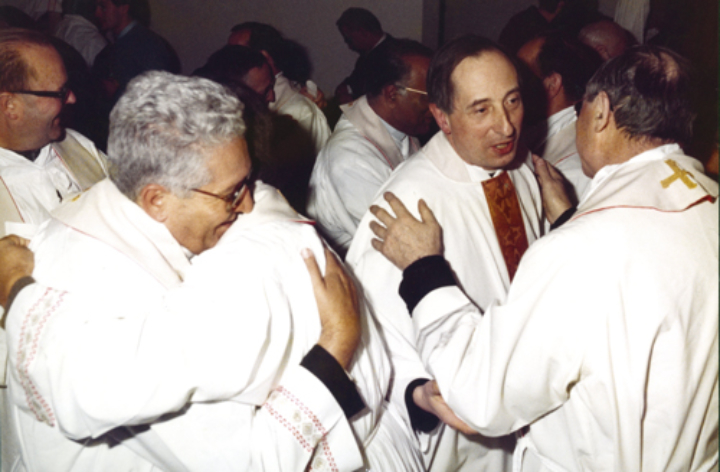
Klaus Hemmerle played an essential part alongside Chiara Lubich in introducing the life of communion among the bishops who follow the spirituality of unity. We present some passages taken from his book, Klaus Hemmerle, La luce dentro le cose (The Light Within Things,) published by Città Nuova (Rome, 1998). “Even after the radical conversion of our life that takes place once and for all in Baptism, all of us are unceasingly in need of converting. Even in those cases where the baptized does not separate from God, the claims that life makes on him and the temptations of daily life are likely to chain him to his own ego so much that the unique Word that the baptized has become thanks to the grace of Christ, sails along and is modified and cracks. The wound inflicted on God’s life in us is in constant need of healing” (p 82). “Forgive us our debts as we forgive our debtors.” Jesus is a realist. He knows our weaknesses. He never judges, nor does he ever say: Whatever way you live is the same. He calls us to repentance, to conversion, to constantly begin again. He forgives us and invites us to forgive others. Our friendship with him runs aground if our life is not this constant conversion” (p 73). “For each one of us, today, a cross is waiting that we are to carry along with us.” But it has to be carried this very day! Otherwise it is the cross that carries us, and then we feel totally oppressed, tormented and annihilated, and we never realize that it was the cross that carried us away. But if we ourselves have the courage to take up the cross, then it becomes the most precious thing in the world” (p 89). “When the disciples see the great and powerful God in Jesus, they are not able to find him. They have to bow down to the ground, to look into the dust: Jesus is there, washing the feet of those who are his own. Self-giving, abasement, service, mature awareness of the banality of human needs, becoming little, renouncing, the endurance of total giving, not appearing, hiddenness – all of these qualities that have absolutely nothing to do with the radiant splendour of God, lie at the deepest central core of the cult and worship we offer to God – the Eucharist” (p 101). “Someone like me who continues to fail every time, cannot but live on God’s forgiveness. But this forgiveness proves itself in fraternal pardon. This is the underlying substance of God’s forgiveness, it rebounds onto the community in which we link up to that mercy that makes us ever free and new so that we can be sons of the Father with the Lord, the only Lord – in the midst of them” (p 74).
28 Feb 2017 | Focolare Worldwide
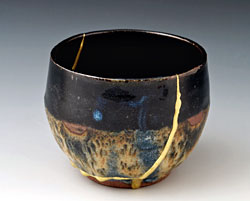
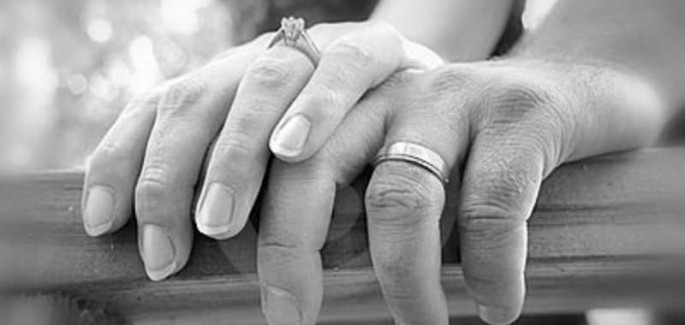 Federico: An Italian and Uruguayan: what are the chances? Yet we happened to meet, seven years ago, at a Latin American center in Rome. I was there to give a hand running things, she to speak her language a bit. Our eyes met and we started to build a home together. Economic constraints, however, pushed us to leave the big city for my parents’ small village, especially because one of our greatest wishes was about to come true: our son was on the way. There was much happiness, but the stress of the birth and the rapid life changes didn’t give us any time to breathe. Laura: As if that were not enough, my mother, who was taking care of my invalid father and my little brother, became seriously ill. I needed to immediately go to Uruguay for at least a couple of months, especially because time was running out for my mother to get to know our little one. In the meantime, Federico and I were living on two different planets: me shut in at home with the child, he always out to escape the tension between us. Whenever our eyes met there was only anger, exhaustion, misunderstanding. As I left I told him, “When I come back, we’re either going to break up or stay together forever.” Federico: Our hearts became as distant as the physical separation. The months flew by, she didn’t return, and I found myself on a different path. To be honest with her, I felt I had to tell her that I didn’t want to get back together and that perhaps she should stay there where she was. Laura: It hurt a lot, even though I expected it. I gathered my strength, put aside my suffering and decided to return to Italy, knowing that I had little chance. In fact, when I got back home, he didn’t want to hear anything about living with me. Federico: One day I confided to my brother what was happening, and he told me about a couple that had a lot of experience who could help us. The idea didn’t seem that convincing at all, but in the end, for the good of the child, I accepted. “Perhaps they can help us separate without touching off a war,” I said to myself. It was an afternoon at the end of May. In the garden where we met, the cherries were ripe, and everything spoke of hope and peace. Yet in our hearts opposing feelings were rebelling. The man’s strong handshake and the delicate face of his wife gave me shivers along my spine. I saw that Laura, too, was moved. We talked with them for a half-hour. That night I left behind everything and returned home. As I entered, tears ran down my face, but my soul seemed to fly. Maybe I could do this! Laura: When I saw Federico come back I couldn’t believe it. Our next appointment with that couple was at Loppiano (near Florence), where we met other friends of theirs, couples who were having difficulties like us. But the change in us had already begun. At the course organized by New Families of the Focolare Movement, the first thing they talked to us about – almost like a game – was the Japanese art of kintsugi, where a broken ceramic vase is not thrown away, but glued together with gold. Doing so, it becomes even more valuable. The new atmosphere we were breathing in there was renewing us without us realizing it. We understood that forgiveness was the gold that could put us together again, and we asked it of each other. We found the strength to give of ourselves to each other. Federico: It was a mix of the spirituality of unity, which the course was based on; advice from experts; and the support from the other couples that strengthened our desire to be reborn again as a couple and gave us a fundamental push to change. Ever since, each day we tell each other that we’re ready to start again, without taking anything for granted and making the effort to step in each other’s shoes. Laura: After two years we got to the point where we were able to make an important decision: to get married in Church, so that Love par excellence could watch over our life together and continue flowing forever. Now we are expecting our second child in July. Truly the love of God knew how to write straight on our crooked lines!

27 Feb 2017 | Non categorizzato
Watercolour © A.M Baumgarten
27 Feb 2017 | Non categorizzato, Word of
for ages 4-8 | for ages 9-14 | for ages 15-17 | MP3 Audio | Print
We can live like the first Christians and witness in our lives to God’s overwhelming love. If we, his followers, are truly reconciled among ourselves, we can speak convincingly of God’s reconciling love for the world. “Be reconciled to God” (2 Cor 5:20). All over the world, there are blood-soaked wars. They seem endless, and they embroil families, tribes and peoples. Twenty-year-old Gloria told this story: “We got news of a village that’d been burnt down. Lots of people lost everything. With my friends I collected some useful things: mattresses, clothes, food. We set out and after an eight hour journey we met all those people in such terrible need. We listened to them, dried their tears, hugged them and tried to comfort them. One family told us, ‘Our little girl was in the house they burnt down. It felt like we were dying with her. Now, through your love, we have the strength to forgive the men who did this!’” The Apostle Paul also experienced this kind of forgiveness, and it completely changed his life. He, the very one who was persecuting Christians,1 met God’s free-given love. It came in a completely unexpectedly way as he was travelling. God then sent him out in his name 2 as an ambassador of reconciliation. This is how Paul became a passionate and credible witness to the mystery of Jesus who died and rose again. He spoke of Jesus who had reconciled the world to himself so that everyone could know and experience a life of communion with him and one another.3 Through Paul the Gospel message reached and fascinated even pagans, those thought to be furthest from salvation: “Be reconciled to God!” he said. Despite our failings that discourage us or the false certainties that fool us into thinking we have no need, we too can meet God’s mercy. His love is so excessive! We can let it heal our hearts and in the end set us free to share this treasure with others. Like this we will give our contribution to God’s plan of peace for all humanity and the whole of creation. This plan overcomes the contradictions of history, as Chiara Lubich suggests in this passage: “On the cross, in the death of his Son, God gave us the highest proof of his love. Through Christ’s cross, he reconciled us to himself. This fundamental truth of our faith is fully relevant today. “It is the revelation all humankind awaits. Yes, God is close to all people with his love and he loves each person passionately. Our world needs to hear this proclamation, but we can proclaim God’s love if first we proclaim it, again and again, to ourselves — until we feel surrounded by this love, even when everything would make us think the opposite.… All our behaviour should make this truth credible. “Jesus said clearly that before bringing our offering to the altar we should be reconciled with a brother or sister if they have anything against us (see Mt 5:23-24) … So let’s love one another as he loved us, without being closed or prejudiced, but being open to welcome and appreciate the positive in our neighbour, ready to give our lives for one another. This is Jesus’ main command, the mark of Christians, valid today just as it was at the time of Christ’s first followers. Living this word means becoming reconcilers.” Living like this we will enrich our days with acts of friendship and reconciliation: in our own family and among families, in our own Church and among Churches, in every civil and religious community to which we belong. Letizia Magri
- See Acts 22:4 ff.
- See 2 Cor 5:
- See Eph 2:13 f
26 Feb 2017 | Non categorizzato
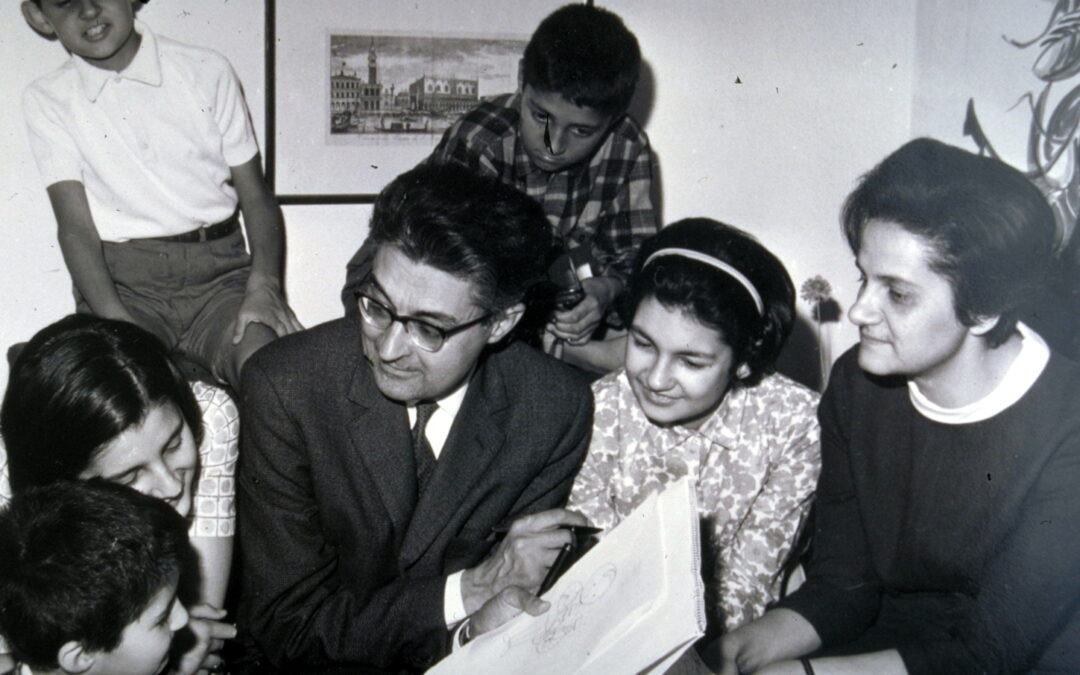
 How important was it for you to meet Chiara Lubich, what impact did it have on you and your family, and what were the effects of your relationship with her and her spirituality? Danilo: “In the environment where Anna Maria and I were raised, traditional customs were of great importance. The family was present, but it was united more often due to social customs. Upon meeting Chiara we understood that being Christians entailed a choice, above all. That’s why we suffered a lot to free ourselves from the mentality of those times, and the attachment to our roles, circles, and professional titles. I had undertaken the career of an engineer, but to live the Gospel completely, we started to host the poor, and practice the communion of goods. All these things were a scandal, since they broke away from the customs of a bourgeois city. So my parents didn’t understand our decisions and were against them. I remember that once, I had gone to speak in a mountain town since I was also the diocesan president of the Catholic men. I was suffering and torn inside. Right after that I went to Church and found myself before a statue of Jesus Forsaken. I immediately and clearly understood that facing such painful moments is also part of our being Christians.”
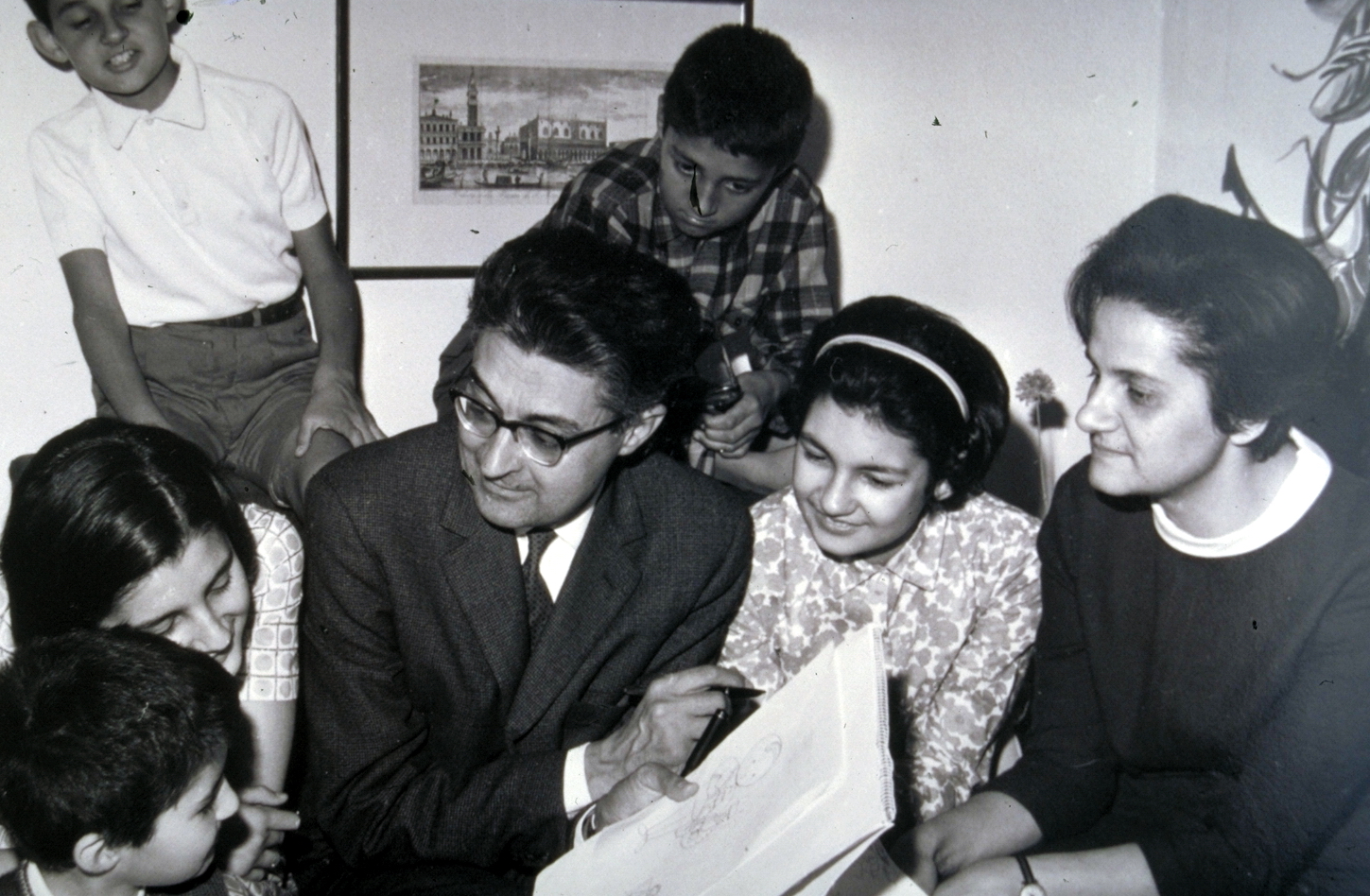
The Zanzucchi family
Giovanna Pieroni
