10 Feb 2017 | Non categorizzato
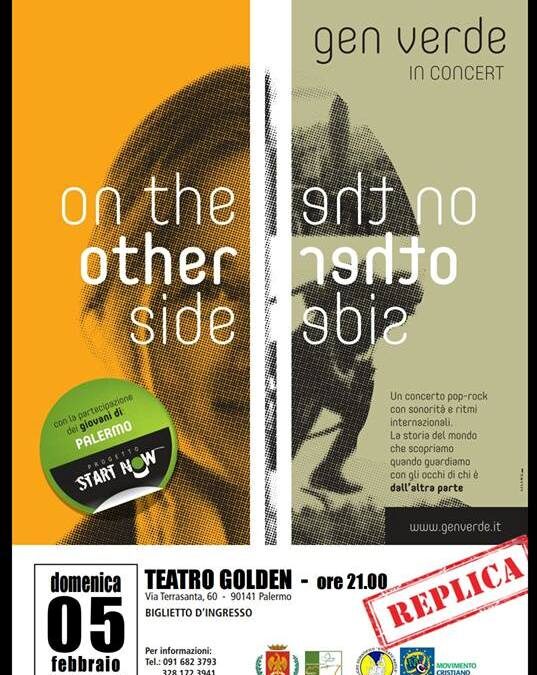
 “Fulfilling, happiness, courage, family, unique experience, listening, diversity…” These were some of the keywords left behind in their comments by the teenagers from Liceo Basile school. They were also the main actors in three shows and workshops that kept them involved from January 31st – February 5th in Palermo, Italy. “Now, it’s as if I’ve become one of them, someone with a great ideal, believing that love really can overcome everything and that our hearts don’t have borders,” Irene writes. Ernesto Basile Scientific High School is considered an institutional outpost in Brancaccio, which is the quarter where Father Pino Puglisi had worked. He was murdered by the mafia in 1993 and is now a Blessed. There are social problems in the region and the problem of education is always an open question: the school drop-out rates are far from the national average. For this reason the many projects that are carried out by the school often represent the only way out. They focus on cultivating an awareness in the younger generations that they belong to a community. They also intend to give witness to a better lifestyle that goes against the norm, and to provide the opportunity to reflect on personal choices that can lead in a wrong direction.
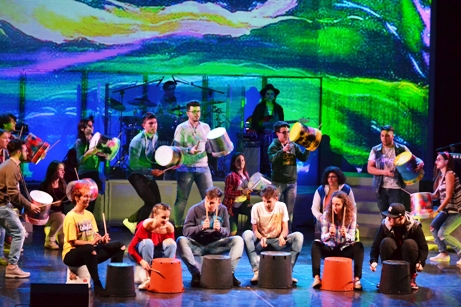
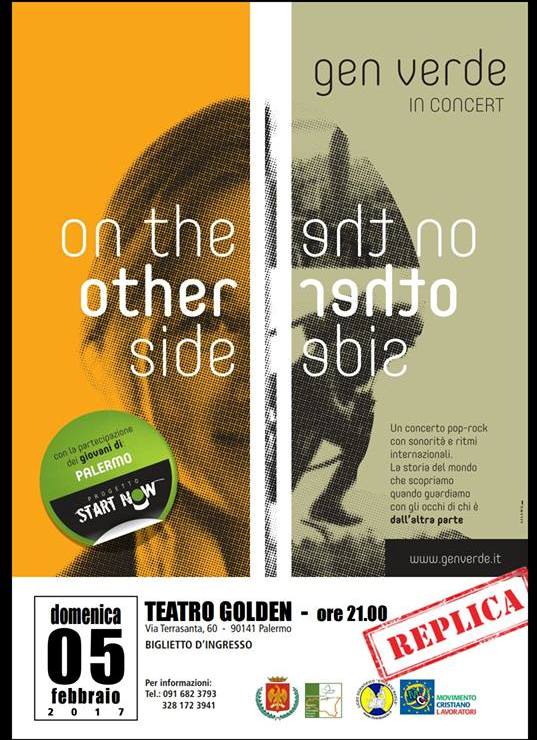
 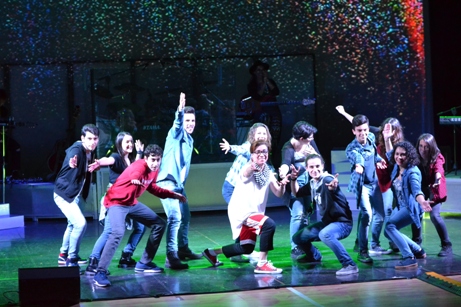 The almost accidental encounter with Gen Verde last May ignited a desire in the young people to make the Start Now project happen in their own school, just as it had in several European and Asian cities. “Tons of enthusiasm” for this event. The workshops that involved hundreds of young people were places to experience their own creativity and discover their own talents. They did side by side with the band members as actors, sharing in the different artistic experiences with mutual listening and respect. PalaOreto, February 3. The young people stepped on stage with Gen Verde in front of a crowd of thousands of teenagers from the schools in the neighborhood. It happened again on the following Sunday at the Golden Theatre.
  Excited but secure in their performance, they gave the best of themselves in the choreographies, songs, dances and theatre in a way that drew in the audience. Above all, they lived an experience that was unique unto itself, an experience that doesn’t conceive of “walls” and that lifted up the differences and diversity, showing how marginalization can be overcome. “The day after had a sense of nostalgia, but now it was different: It had the sense of a challenge! Good Start to all off us, small warriors on the outskirts!” wrote a teacher on her Facebook page, who helped promote the event. That’s the dream of those who interact with these young people every day, standing against marginalization and uneasiness with creativity and positive stimulation, helping others to not remain closed in their own everyday environments, promoting an inclusive environment at school that embraces all the sides of a person.
9 Feb 2017 | Focolare Worldwide
I was about to finish high school. I have been fascinated by Africa ever since I was a child, and especially when I would listen to the tales of my uncle, a missionary in Congo. I didn’t like the bourgeoisie lifestyle of Belgian society, and the poverty and social injustices diffused in the world. I was interested in the philosophy of Julius Nyerere (whose beatification process is now underway), the first President of Tanzania. His concept of Ujamaa (in Swahili meaning ‘being a family’) was at the base of the socioeconomic development policies which in Tanzania had brought about the construction of a pacific coexistence between tribes and ethnic groups, after Great Britain had granted independence. His thoughts were based on African traditions and examples of the first Christian communities described in the Acts of the Apostles. I applied to enter the White Fathers congregation, not so much due to a vocational choice, but because they worked in Tanzania. We agreed to do a year of acquaintance. Once I got to their mother house at the Lovanio University (Belgium), without their knowing it I had started to take part in an extremely leftist Maoist group. We would organize initiatives in favour of the third-world countries and for the independence of Angola and Mozambique. During a demonstration, the police found my name on one of the fliers and came to interrogate me. I thought that it would be better to change my path completely. Furthermore I was disappointed in my friends, since only I was paying the price of our actions. Instead, the spiritual director invited me to stay and meet a group of students that held monthly meetings in the convent. I had seen them fleetingly, and they seemed to have their minds in the clouds; they spoke of Jesus and the Gospel. But I accepted the invitation. The first time I participated in one of their meetings, I listened in silence. They recounted of how they tried to put the Gospel into practice. In the end they asked me what I thought. «The Gospel has existed for two thousand years, and the world is still full of injustice, exploitation and oppression.» One of them answered: «If you want to change the world, start from yourself.» I didn’t know how to reply. I asked, «From where?» He put the “Word of Life” of that month in my hand: «Do not judge and you will not be judged.» The next day, as much as I tried, I found myself always judging the others. This was not my piece of bread. I went back to meet them, to say that it was impossible not to judge. They exhorted me not to get discouraged and to try again after every failure. I returned home, and prayed to Jesus in the Eucharist: «If You want me to live in this way, help me, since I can’t do anything alone.» When the school year passed, I was sure that the Fathers would ask me to leave. Instead they told me that they had noticed a change in me, and if I wanted, I could start in the novitiate. Through frequent contact with those youths, the gen who lived the communion of good among themselves, and with the help of the Focolare director in Belgium, I found my path and became a missionary. Living for the others gave immense joy and this was how I discovered the great ideal of unity of Chiara Lubich and the Movement. Before leaving for Africa in 1982 I was ordained a priest. The biggest challenge was that of seeking deep dialogue with the local people and practising the art of “making yourself one.” I studied their language and the local culture, to make the people’s customs my very own. I experienced that in the light of the Gospel, all that is beautiful, good and true is raised to a higher level, and the rest slowly disappears.
8 Feb 2017 | Focolare Worldwide
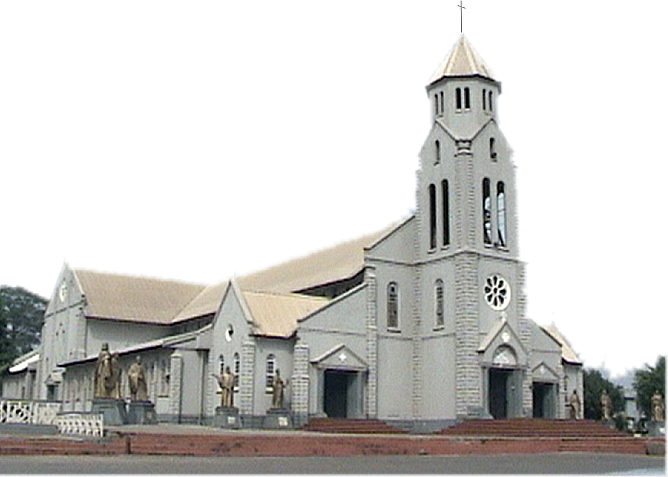 From Onitsha, Nigeria, a report about a prayer service that was held in the churchyard of the Basilica of the Most Blessed Holy Trinity, on January 23 with over a hundred Evanglicals, Pentecostals, Catholics and members of autonomous churches, along with two bishops and several priests of different churches in Nigeria. The event was promoted by the Focolare and included representatives from the CCN (non-denominational churches), OAIC (churches and organisations begun in Africa), PFN (Pentecostal churches), CSN (Catholic Church) and ECWA/TEKAN (Evangelical Churches from the west of Africa and Ghana). Some gathered with the music groups, others prepared the programme booklet and others decorated the churchyard. The teaching was given by an Anglican Pastor who like a “clarion call that would wake up the Christians of Nigeria from their sleep” invited us all to “live as the followers of Christ and to work of unity in diversity.” “We prayed with one soul and one mind,” one girl commented. “I felt the warmth of the Spirit in our midst.” A young man: “Watching people from different churches praying together for unity and peace gave me the certainty that unity will happen, because Jesus himself had asked the Father that all would be one.” From the Focolare’s ecumenical town in Ottmaring, Germany, on the Week of Prayer for Christian Unity, a gathering was held that included 7 Swedish Lutheran pastors, 4 Anglicans, one English Reformed pastor and 7 Catholic priests. The theme was presented by Lutheran bishop Ake di Skara from Sweden, who highlighted how today Jesus is still drawn to the wounds and darkness of humanity, in order to bring it light. With this in mind everyone moved to the nearby Nazi concentration camp of Dachau, which is an emblematic symbol of the mystery of Jesus Forsaken. There were also several visits to significant sites for the Lutheran faithful in Augsburg, concluding with a break at the Catholic church dedicated to St. Moritz, with its striking image of Christ the Saviour who illuminates the world’s darkness. In an atmosphere of such deep sharing, the liturgical celebrations throughout the week took on an altogether unique sacredness. In the end there was a unanimous desire to: “return to the world where Jesus Forsaken is waiting for me.” “The Church has to be where the wounds of the people are to be found.” “When I get home the first thing I’ll do will be to visit the Lutheran pastor next door.” In Matera, Italy, we met up with Cinzia who, since she embraced the spirituality of unity, has been promoting an ecumenical process in her parish in collaboration with a Lutheran pastor: “They’re beautiful evenings and filled with much joy,” she recounts, “in which what comes to light is not what divides us, but what unites us. An ecumenical choir was born from the 1997 Week of Prayer for Christian Unity, which accompanies the different cultural and humanitarian projects we do together. This year, in collaboration with the associations and movements in the city, we held a march for peace and unity with 300 people from different Christian denominations and from other religions. It was another opportunity to experience the ecumenism of life and to express that deep desire for brotherhood that goes beyond the distinctions.” The parish of Santa Maria in Pesaro, Italy, shares an ecumenical friendship with the Orthodox Cathedral of Resita, Romania, thanks to the parish priests and several lay people who live the spirituality of unity. “This year,” one Romanian Orthodox teenager recounts, “we wanted to take a further step. The young people wanted to be involved in the formation of the children, so we began a course in Pesaro for Catholic and Orthodox animators together where we experience our unity in diversity.” In Cochabamba, Bolivia, the Week of Prayer for Christian Unity was also celebrated by the different movements, including the Focolare. Members of the Anglican, Methodist and Catholic Churches took part in an ecumenical prayer service, with the emeritus bishop who remembered the 500th anniversary of the Reformation and invited everyone to embrace mercy and a renewed commitment to work for unity. See also: Ecumenismo: Settimana dell’unità Settimana dell’unità a L’Avana
7 Feb 2017 | Non categorizzato
Head of the Class Ever since I heard such new things about God-Love I can’t be disturbing at school, doodling at my desk. The teacher even noticed the change in me and appointed me head of the class. Now it’s difficult for me to point out my classmates bad conduct, because I try to see Jesus in them and feel bad when they are punished. One day, since I didn’t, another student went to report three of us. To avoid their punishment, I convinced the teacher to let them clean the classroom, and after class I went to help them. Since then, little by little, the atmosphere in class is beginning to improve. (Victoria – Uganda) Fundraising When I learned that the father of a large poor family needed emergency surgery and didn’t have the money for the operation, some friends and I began a fundraiser with our colleagues at work. When we had the money, I accompanied the father to hospital and paid for the medical treatment. The operation went well. I don’t know who was happier, the family or us! I think that small gestures such as these also help contribute to peace. ( N. Y.- Jordan) In the airport At the baggage control there was a passenger in front of me who was quite upset because he had to leave behind a jar of jam. “Well, at least don’t throw it out, because it’s special!” When I got through baggage control that same person told me that the jam had been made by his mother for her grandchildren. “All her love is in those bottles,” he added. After a silent pause: “Why does the world have to be goverened by fear? Yes, I understand, with all that’s going on . . . but even the social infrastructure itself instills fear and mistrust. Where has the beauty gone in life?” I didn’t have answers, only the same questions. Meanwhile, a little girl was smiling as she passed in front of us in a wheelchair. We looked at her and that happy little face completely silenced us. All you need is a smile and even an aiport gets lit up. (C. M. – Austria) Praying together I was in the oncology department for examinations and treatment. It was an opportunity to love others with small concrete gestures and sharing in their suffering. That day my roomate – a stocky farmer of rude appearance – was about to undergo chemo. Just then he received news from the doctor and nurse that his son had died and the man’s therapy was postponed so that he could return home. I watched as his body bent beneath the tremendous shock. When we were alone and he was preparing his bag and weeping, I gathered my courage and with gentleness and respect asked him if he ever prayed. When he said yes, I invited him to pray the Our Father together for his son. It struck me as I watched that 73 year-old man join his hands and pray. And I thanked God that I dared to ask him to pray together. (Pablo – Philippines)
4 Feb 2017 | Non categorizzato
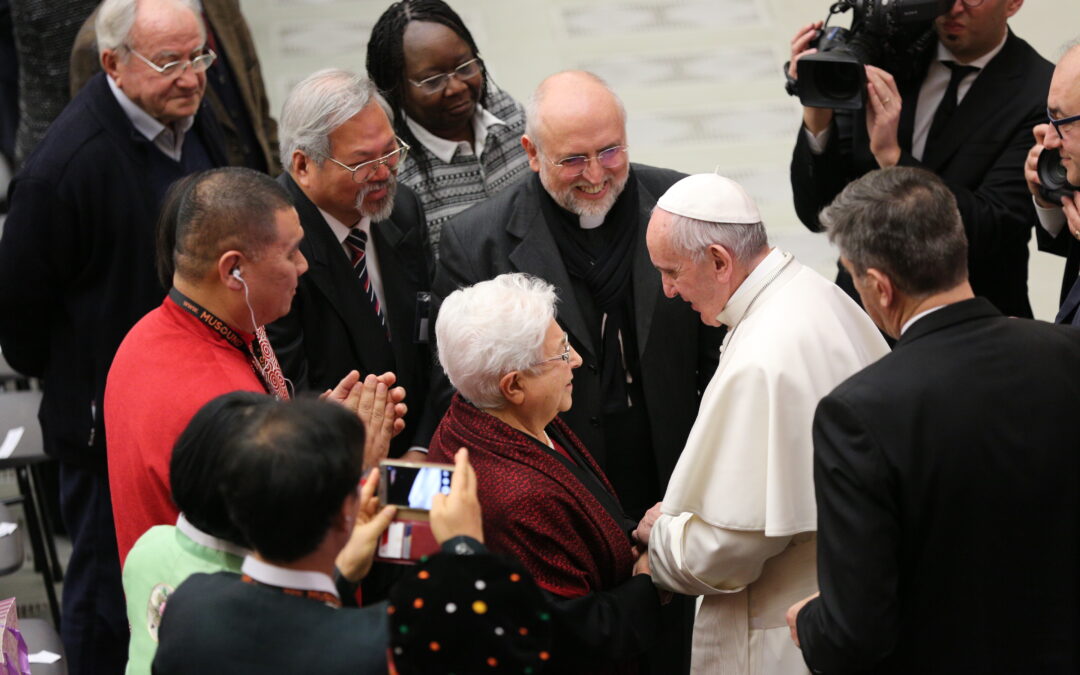
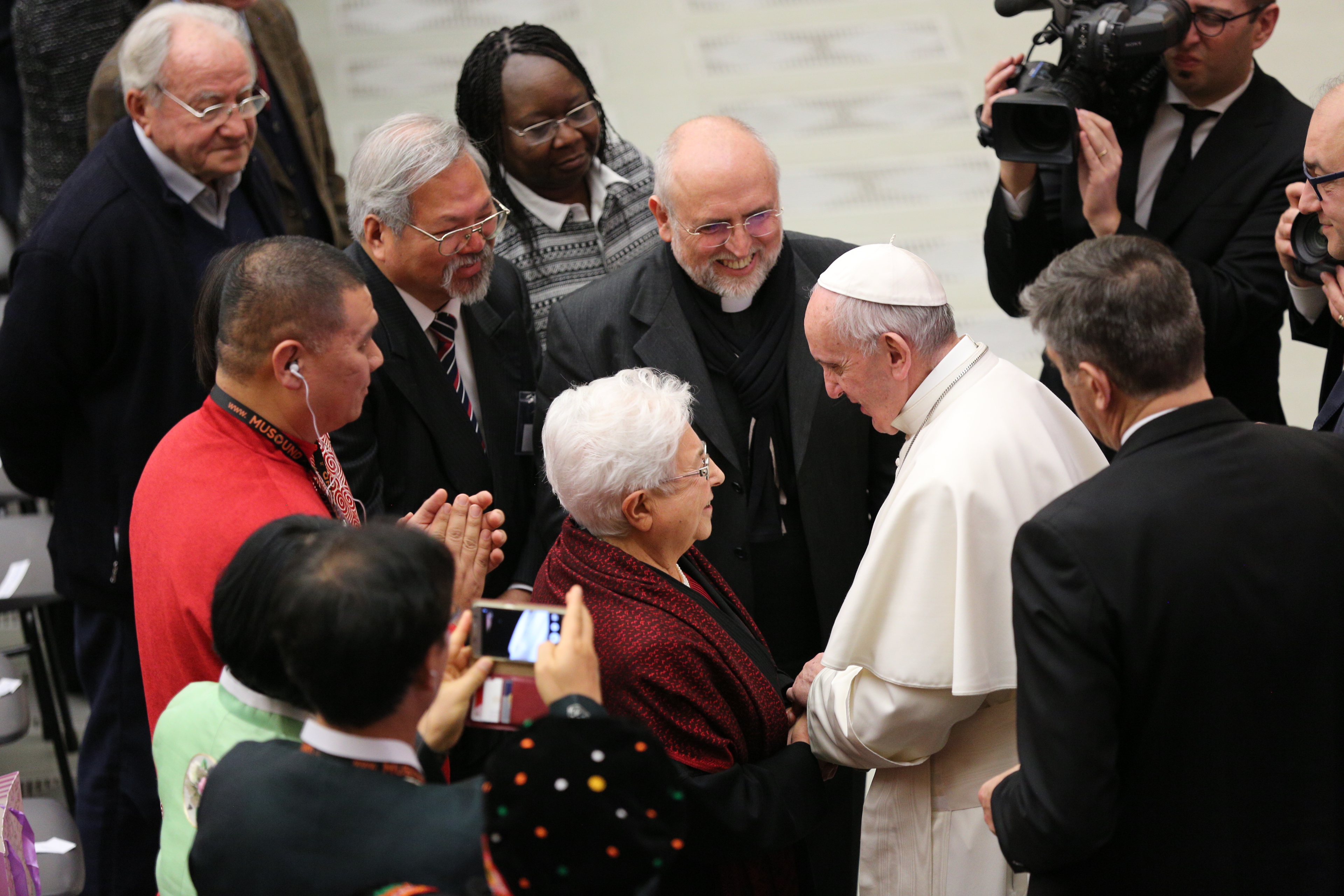
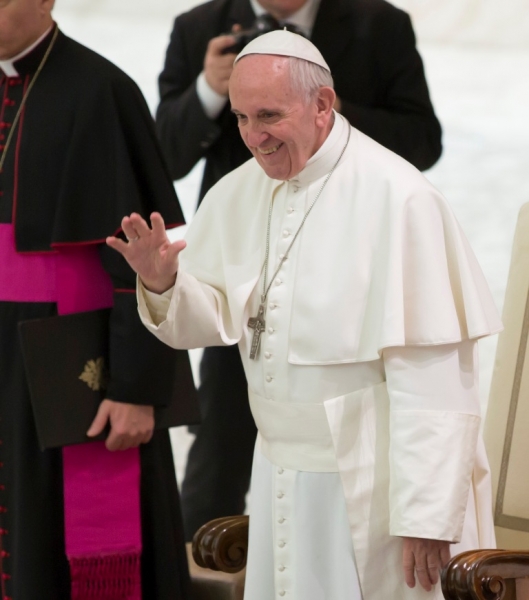 “Economy and communion. These are two words that contemporary culture keeps separate and often considers opposites. Two words that you have instead joined, accepting the invitation that Chiara Lubich offered you 25 years ago in Brazil, when, in the face of the scandal of inequality in the city of Sao Paulo, she asked entrepreneurs to become agents of communion”. Pope Francis said these words in his welcoming speech to 1200 entrepreneurs, young people and scholars who came together to celebrate the 25 years of life of the Economy of Communion. In the opening sentence of his address he said that he was pleased to welcome representatives of a project “in which I have been genuinely interested for some time”. “With your life you demonstrate that economy and communion become more beautiful when they are beside each other. Certainly the economy becomes more beautiful, but communion is also more beautiful, because the spiritual commnuion of hearts is even fuller when it becomes communion of goods, of talents, of profits”.
 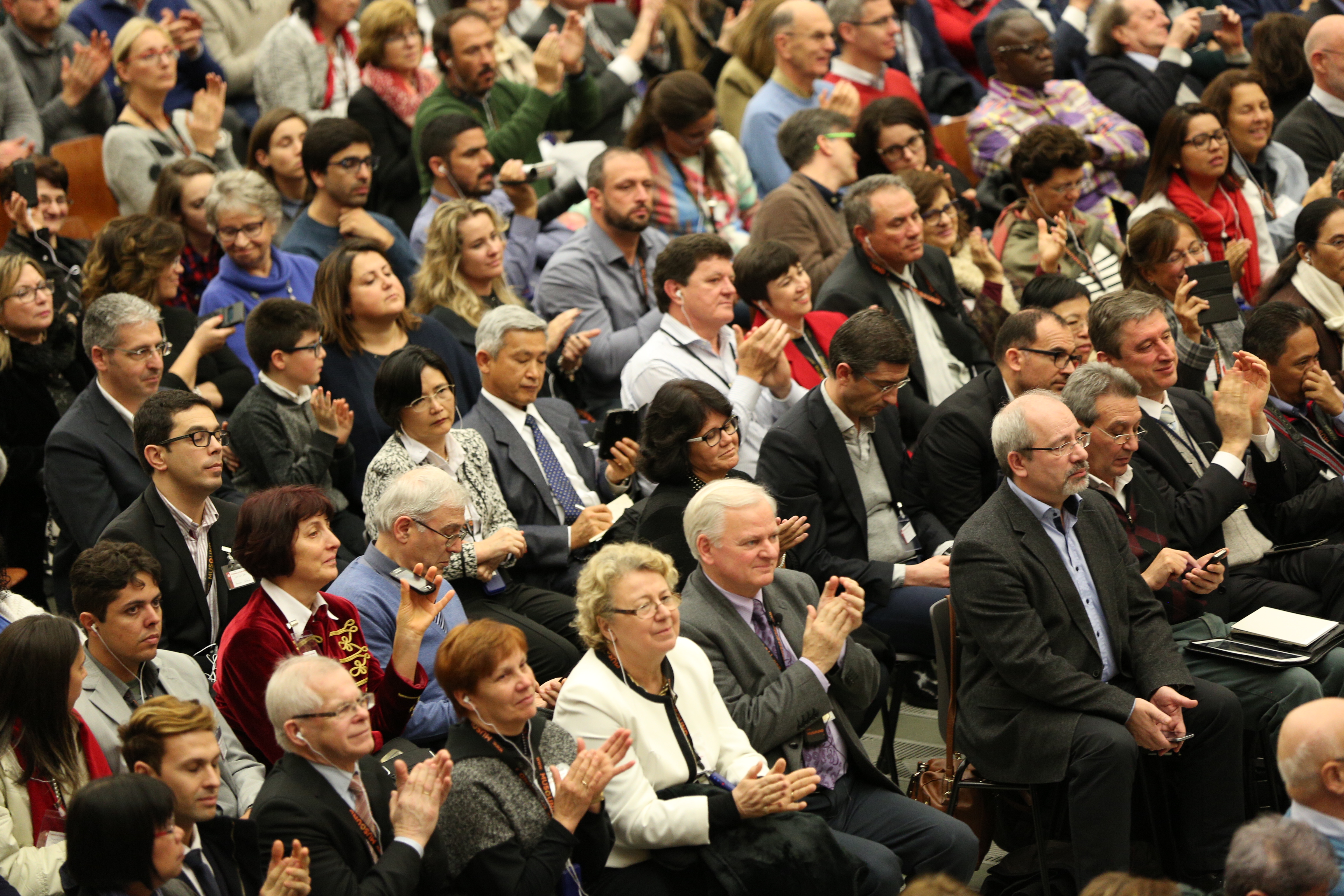 In his message to the extremely attentive gathering, Pope Francis expressed hope and recommendations on three main points. The first concerns money. “It is very important that at the centre of the economy of communion there be the communion of your profits. The Economy of Communion is also the communion of profits, an expression of the communion of life”. “Money”, he said “becomes an idol when it becomes the aim (…). It was Jesus who defined money as a ‘master’: ‘No man can serve two masters”. And he continued: “Thus, one understands the ethical and spiritual value of your choice to pool profits. The best and most practical way to avoid making an idol of money is to share it with others, above all with the poor (…). When you share and donate your profits, you are performing an act of lofty spirituality, saying to money through your deeds: you are not God, you are not lord, you are not master!” The second concerns poverty. “The principal ethical dilemma of this capitalism is the creation of discarded people, then trying to hide them or make sure they are no longer seen (…). Aircraft pollute the atmosphere, but, with a small part of the cost of the ticket, they will plant trees to compensate for the damage created. Gambling companies finance campaigns to care for the pathological gamblers that they create. And the day that the weapons industry finances hospitals to care for the children mutilated by their bombs, the system will have reached its pinnacle. This is hypocrisy!”. Faced with this abominable situation “the Economy of Communion, if it wants to be faithful to its charism, must not only care for victims, but build a system where there are ever fewer victims, where, possibly, there may no longer be any. As long as the economy still produces one victim and there is still a single discarded person, communion has not yet been realized; the celebration of universal fraternity is not full”.
  The third point concerns the future. «These 25 years of your history say that communion and business can exist and grow together” , an experience limited to a small number of businesses when compared to the world’s great capital, “but the changes in the order of the spirit and therefore of life are not linked to big numbers. The small flock, the lamp, a coin, a lamb, a pearl, salt, leaven: these are the images of the Kingdom we encounter in the Gospels (…). It is not necessary to be in a large group to change our life: suffice it that the sale and the leaven do not deteriorate (…). Salt does not do its job by increasing in quantity – instead too much salt makes the meal salty – but by saving its ‘spirit’, its quality”. While recalling the time when there were no refrigerators and the mother dough was shared to make bread, the Pope encouraged the Economy of Communion entrepreneurs “not to lose the active ingredient, the ‘enzyme’ of communion”, by living “reciprocity”. “Communion is not only the sharing but also the multiplying goods, the creation of new bread, of new goods, of new Good with a capital ‘G’”. He invited those present to: “Give it to everyone, firstly to the poor and the young (…). Capitalism knows philanthropy, not communion”. At the end of his speech Pope Francis said: “You already do these things. But you can share more profits in order to combat idolatry, change structures in order to prevent the creation of victims ‘ and discarded people; give more of your leaven so as to leaven the bread of many. May the ‘no’ to an economy that kills, become a ‘yes’ to an economy that lets live, because it shares, includes the poor, uses profits to create communion». «I hope you continue on your path, with courage, humilty, and joy…, continue to be the seed, salt and leaven of another economy: the economy of the Kingdom, where the rich know how to share their wealth, and the poor are called “blessed”. This new awareness makes one look ahead with joy and a renewed commitment. Press Releases
