4 Feb 2017 | Non categorizzato
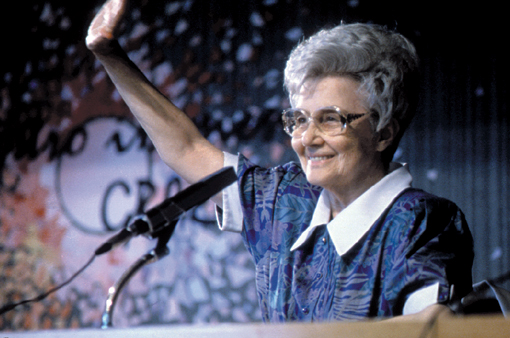
“You know that the idea of the Economy of Communion has awakened latent energies in many of us (from the youngest to the oldest). It has prompted important and demanding decisions and shown ways of making what seemed unbelievable dreams come true. You also know it has triggered the mechanism of “giving” so that almost everyone, we can say, is committed in offering services, prayers, energy and money; in offering to move, to give land, homes and jewellery. You know too that seeds of promising business enterprises, aimed at sharing part of their profits with those in need, are already blossoming like a new springtime everywhere. You know that places in which “new people” will be trained are rising up as if by magic and that the little towns are multiplying. Now, in order for everything to grow and mature, we must strengthen this virtue of “giving”, so that it becomes a habit for us. The enthusiasm with which the Economy of Communion began has to remain alive within us and grow. We must not disappoint the great hopes and expectations of the needy, as well as the explicit and often enlightened words of encouragement from religious leaders, economists, business people and other experts. We must keep the Economy of Communion alive in all its aspects, until there is no longer anyone in need among us. Then, there will be a surprising reality that is both human and divine: a whole “body of people” will proclaim God to the world and reveal his presence in history to many, as someone said referring to our project. … So “giving”. … Let’s give always, giving a smile, understanding, forgiveness or a listening ear; let’s give our intelligence, our will and availability; let’s give our time, talents and ideas (every idea is a responsibility); let’s give our actions, experiences and skills; let’s give our goods which we review periodically so that nothing accumulates and everything circulates. Giving: let this be the Word that allows us no respite. We want to live it for the glory of God and to bring back the spirit and practice of the early Christians, who “were of one heart and soul … there was not a needy person among them”. (Acts 4:32-34)” Chiara Lubich (Taken from a telephone conference call with the focolare communities in different parts of the world, 23rd April 1992).
3 Feb 2017 | Focolare Worldwide, Senza categoria
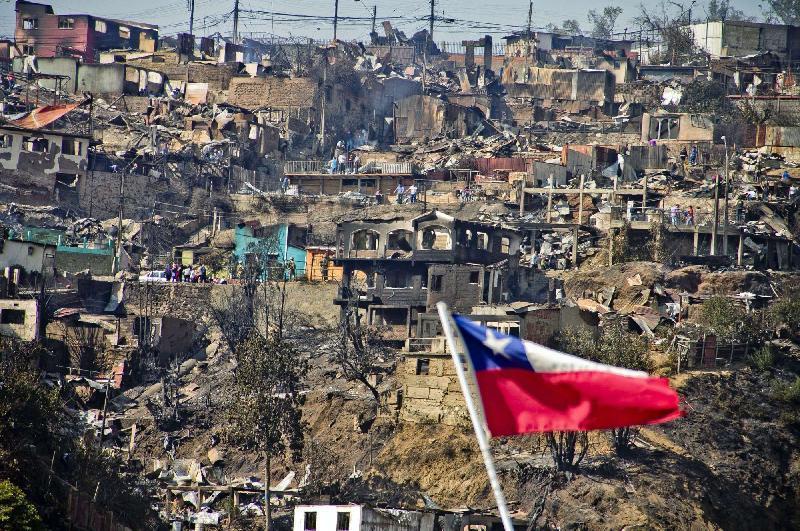
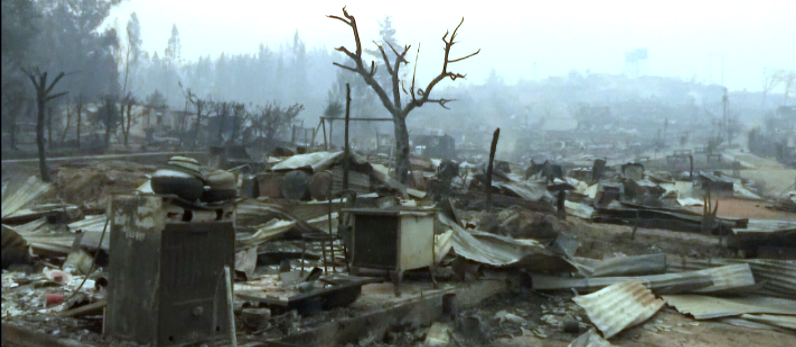 It has been a month since central south Chile has been gripped by wildfires that have swept away half a million of hectares of forest land. Eleven have died and 1,100 have been displaced. Thousands of homes have been burned, mostly in Santa Olga 500 km south of Santiago, a region of 5000 inhabitants that was completely destroyed. The causes of the catastrophe vary: a heat wave with historic temperatures, the dry weather, the intense drought and the winds that have fed the hundreds of fires that broke out in the Andes, backbone of the Americas. It happened within the mountain chain between the Pacific and the Andes that makes the geography of this land very difficult to travel. Some forty air tankers and helicopters and more than 4,500 fire fighters were not able to control so many fronts. Two fully equipped air giants are also at work against the fire: a Boeing 747 Supertanker capable of spreading about 70,000 litres of different liquids, and an Ilyushin-76 that was made available by the Russian government and is capable of launching 30 tons of water. Fire crews have been sent from Argentina, Colombia, Brazil, Peru, Spain, Portugal, France and Venezuela. The number of natural disasters between 2010 until now has been striking, beginning with the 8.8 earthquake followed by a tsunami that caused 535 deaths and millions of Euros in damage. At least three large volcanic eruptions followed all that. In 2015 a new earthquake registered 8.4 on the Richter scale . . . In 2014 and this year wildfires struck the areas around Valparaiso, a port city 115 km from the capital. There were many victims and damages into the 4 millions. It seemed impossible, but in 2015 there was the flooding of the Atacama Desert, the most arid place on earth. The mire carried away entire villages, roads, bridges and 28 people. And now there are more wildfires fanned by the drought… There will be time for investigations into the cause and, in some places, fraud has not been ruled out. But now is time for action. The flames have not been able to devour the solidarity that has been set in motion in so many ways: collections of basic goods, the Hogar de Cristo organization that has launched a 1.8 million dollar fundraiser for rebuilding, and others who have taken on the cost of the Supertanker. One mother who coordinates a collection among families said: “They’re our brothers and sisters, we have to help.” Only a few houses have been left standing in Santa Olga, but a Chilean flag appears over the smouldering rubble, an unfailing sign in the midst of the destruction. It stands for rebuilding and turning to nature again for a place to live, work and fulfil dreams. These souls will work hard with that age old patience of those who create their own history with sweat and tears, enveloped in a natural environment that has nothing to offer them. Alberto Barlocci Latest news from Focolare communities in regions that were hit by the wildfires Marilyn and Juan report: “It’s already been 19 days since, with the help of countries from around the world, we have been fighting against wildfires in south central Chile where many Focolare communities are located. Now, after a superhuman effort, because of the strong winds more than 80 wildfires that are still burning are reigniting fires that had already been put out. Several villages where many Focolare families are found have been completely evacuated. For several nights locals along with firefighters and volunteers keep watch in order to keep the fire from growing. There are so many experiences of solidarity especially for people who are on the ground, like Manuel and Silvia, Volunteers from the Focolare who live in Chiguayante, an area completely surrounded by the fire. They were forced to evacuate their house because of the impending danger. Together with their children and neighbours they risked their own lives to “clear” the land so that the fire wouldn’t be able to spread. Even though the situation is now under control, there is always a danger that the wind will change direction. Victoria, Jorge and their three children live in Tomè which is also in danger. With their children and other young people they collected basic goods to share with people who have lost everything, and took those goods to the most isolated regions where it is difficult for help to arrive. Father Alex from the Russian Orthodox Church and a great friend of the Focolare, lives in Hualqui, a small village. He celebrates the Holy Mass in Chiguayante where his community is located. The fires took his village with great force and blocked the roadway so that he had to return on foot to assist the people who were still gripped by fear. There have also been experiences of solidarity in the Focolare communities that are far from the fires. The linked up on whatsapp and in just a few days truckloads of help arrived. We are seeing the great capacity of the people to respond in the face of difficulty with resilience and very touching acts of solidarity. It’s powerful to see the beaming smiles of all the people who have helped, and to feel that there is truly “more joy in giving than in receiving.”Before every action, we renew the unity among ourselves so that we will be more prepared to love the people that are in need. Every night at 22:00 we united in prayer to ask for the miracle of rain, and many others unite with us in this prayer.”
2 Feb 2017 | Non categorizzato
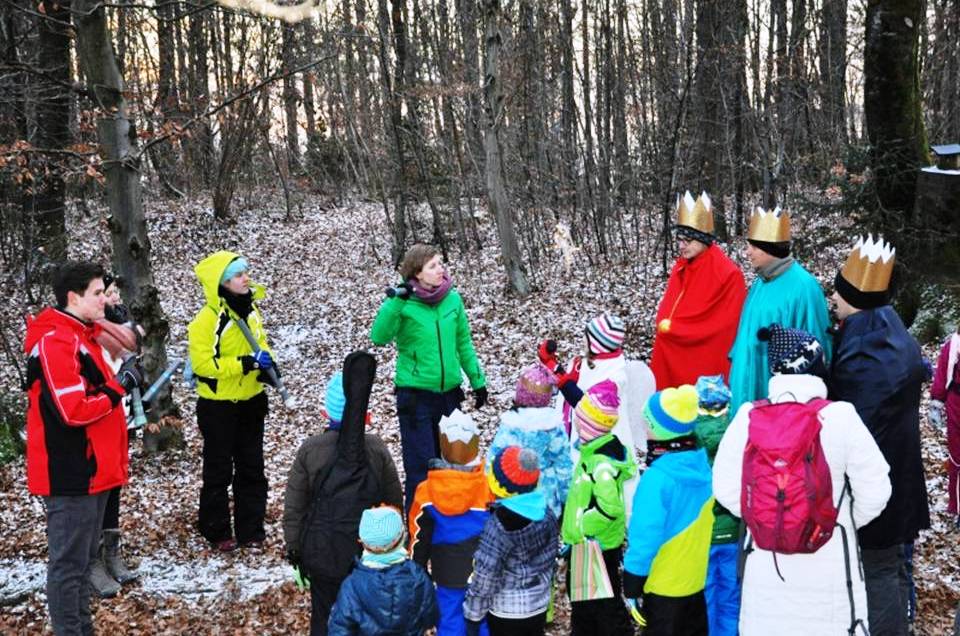
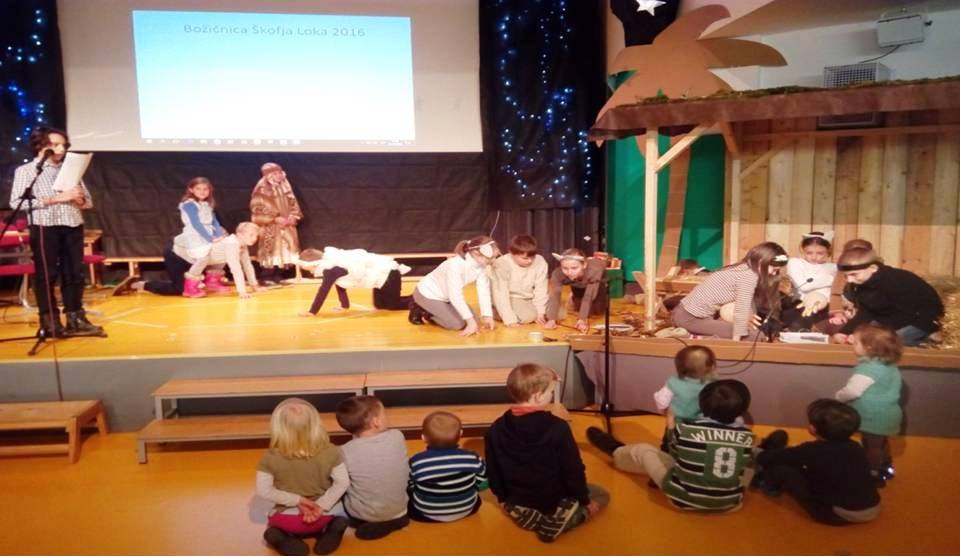 In Slovenia, the Christmas atmosphere is felt already in the first days of December. Many in the Focolare community have learned to make advent wreaths which they sell and then allocate the revenues to social purposes. The feast of St. Nicholas is on 6 December and he goes around with sacks full of gifts on this day. It is an occasion in which families in need are able to experience the fantasy of Divine Providence, through the collection and redistribution of all the surpluses of many families. In the exchange, some detach themselves from objects they are attached to sentimentally, which become gifts for the others, and everyone experiences the typical joy that arises from ”giving.” And while some members of the various communities deliver the proceeds of the wreaths to humanitarian actions in the territory, as they do every year, the Youth for a United World gather at the Arche (the Movement of Jean Vanier) for a unique sharing experience. In other districts, they visit the centre for single mums, bringing joy and warmth to all. The dates of these initiatives are first published on Facebook, extending the invitation to other youths to go out together to gather and distribute gifts. The smaller ones instead organise themselves in the streets to offer the little statues of Baby Jesus, that they have handcrafted themselves. It is not a sale, but an awareness campaign to bring the focus to the real protagonist of Christmas. But many leave offerings which they devolve to poor children. This is why they choose the big malls as the location for their campaign, as well as the homes for the aged, of relatives and next-door neighbours, and the midnight masses. In one of the towns, also the mayor went to visit. In a shopping centre, the Gen 4, and bigger kids (Kids for Unity) held a Christmas flashmob, giving a hand to the smaller ones who were thus able to distribute their 125 statuettes. In 18 Slovenian districts, there was also a fixed date for Christmas preparations. The entire community gathered together, with the participation of around 1,300 people, among whom was also a bishop. One of the communities wanted to pass the Epiphany together, and went to visit Baby Jesus in an old church on the hill. The group was accompanied along the trails in the woods by the Magi who also wanted to follow the star. Along the way they came across Herod who begged the Magi to return to him once they had found the Child. But suddenly an angel appeared to invite them to take another route home. This was exactly what the whole group did, choosing an alternative path. After this real-life staging, nobody would ever forget how Baby Jesus was saved from the anger of Herod. Of great significance were the Christmas stage plays held in the two Slovenian kindergartens, which drew inspiration from the educational games of unity: “Sun Ray” of Škofja Loka and “Jurček” in Grosuplje. The latter was held in the city’s Cultural Centre. Though many of those present declared to be agnostics, the intense atmosphere engaged them all. They followed the stage play of the Nativity of Jesus with great attention and in the end many joined in the children’s songs, and no longer wanted to leave.
1 Feb 2017 | Non categorizzato
Theme of the Meeting of Bishops, Friends of the Focolare Movement: «If the world knew Him …» Jesus abandoned on the cross: fundament of the spirituality of communion key to a “culture of encounter” For info: segves@focolare.org – and tel.. 06 947 98150
1 Feb 2017 | Non categorizzato
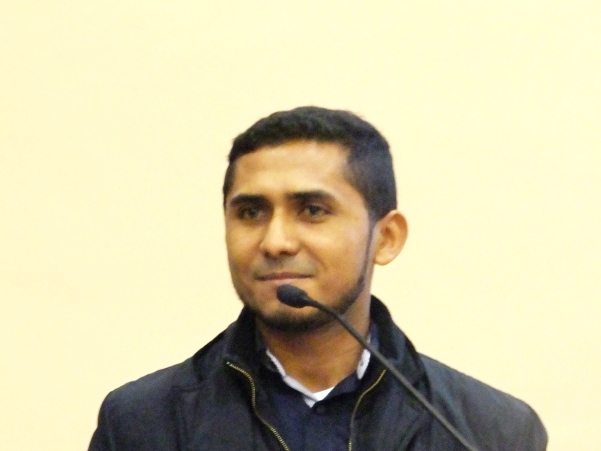 Brazil is a land of contradictions, the emblem of joy, hospitality, folklore, music, pristine nature, beaches, luxorious forests and metropolises oon the one hand. But on the other, like many countries in the world, Brazil is a land of contrasts, criminality and social inequality. Drug traffiking in the city represents a real wound on society that inevitably leads to armed conflicts. In addition, the murder rate among women is high, prostitution, lack of health care, child labour, low level of education, and the spread of slave labour generates high levels of inenquality as in the favellas and in the outlying districts of big cities. Health care and education are not garunteed and young people can’t look forward to an education and a job. Few escape the clutches of cime, thanks mostly to a few public policies and the work of social aid organizations such as parishes and Christian church groups that are really the only ones who have the fate of the poor at heart. Even in my own city with its 800,000 citizens, children between the ages of 13 and 17 have been mudered because of their involvement with drugs. My desire to love my neighbor, to give myself especially to the people that have been rejected by society, led me to be involved for five years, in the spirit of the Focolare, with a social project years in the diocese of Teresina: “The New Youth Community Centre.” The project, which is geared towards at-risk children and teenagers, tries to provide alternative opportunities. Eighty children and teenagers (betweeen the ages of 5 and 17) attend music, dance and theatre classes. They receive tutoring and are provided with hot meals, since they often don’t find food in their homes. Their lives change when they come into contact with people who welcome and care for them. I also tried to be involved, listening to many young people who have shared their suffering with me. One boy told me about his drug problem and asked me to help him out of the tunnel. Another told me how he steals in order to get money. We often involve the professionals who work there, such as psychologists and social workers. Now many of the children are grown, they study and have found honest work. Others continue to arrive in search of an opportunity at a better life, of being loved and cared for. One of them who had been abandoned by his father, called me “Dad” and so I took on this role One boy had suffered various forms of violence and neglect. We found a way to channel his energy, by introducing him to judo, and that changed him for the better. He became a source of pride for all of us who had helped him. But one day he didn’t show up at the centre. We learned that he had become involved in some ugly ways and, one day, as he sat in front of his house was murdered. He had just turned 15. It was a big suffering for all of us, also for me because of the friendship we had built. Many other teenagers suffer the same fate. The project foresees also moments of training for educators and young people, according to the Chiara Lubich‘s spirituality, with monthly meetings of the Word of Life. What I got out of this experience is that continuity is required for recovering these boys, working in synchrony with the State, public institutions of education and health, with civil society, and with the church. To win this challenge we need to create networks and dialogue at every level: personal, group, community, all the way to the highest levels of society. But it all begins with me, moving beyond myself and going out to encounter the many peripheries. We’ve already begun.
