30 Jan 2017 | Non categorizzato
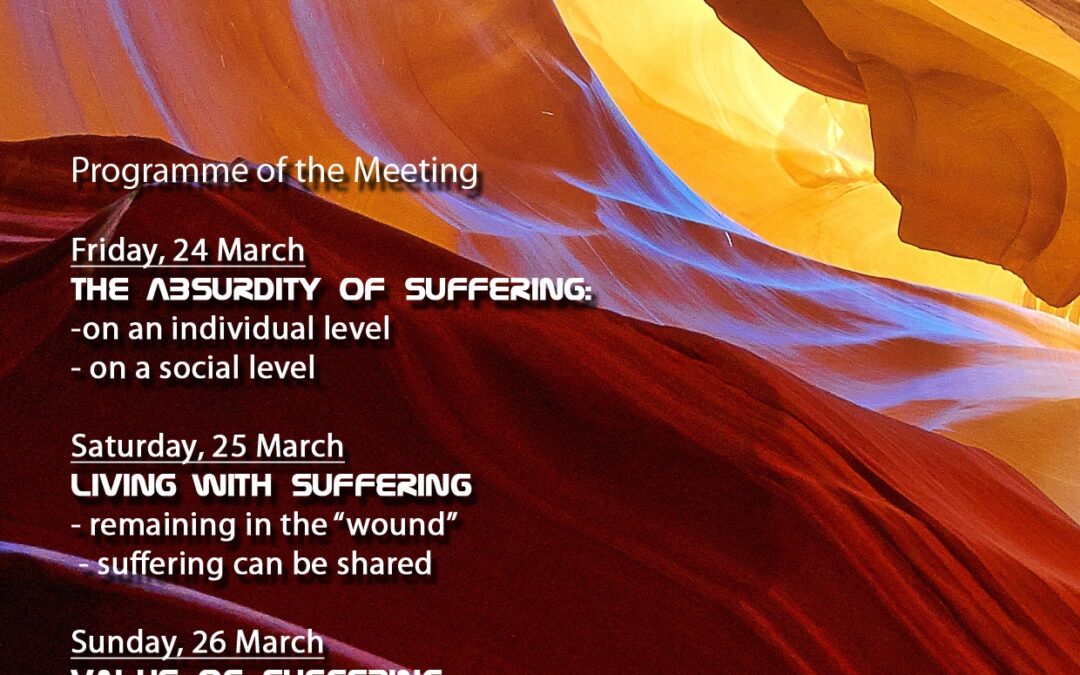
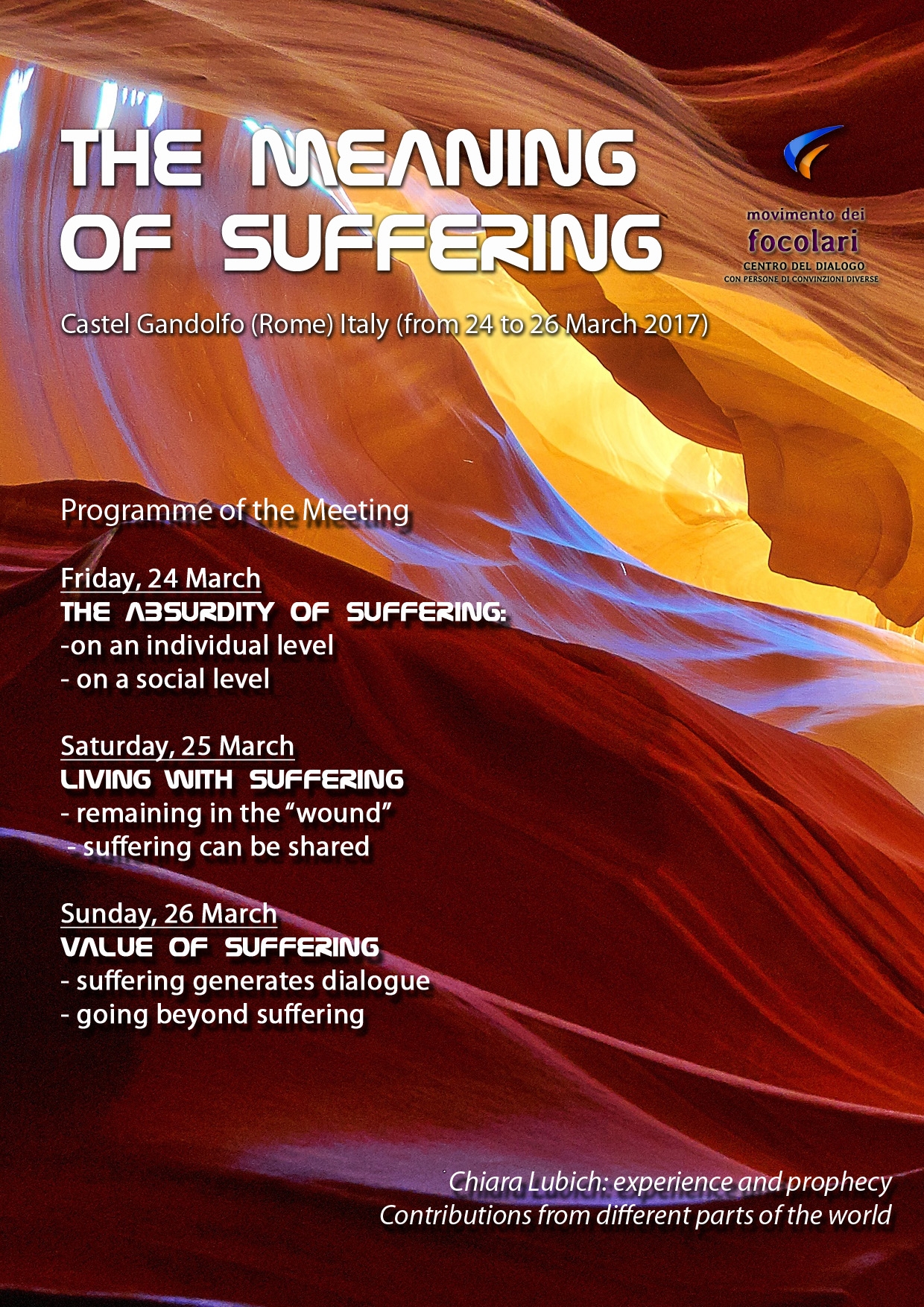 The program will focus on these themes: The absurdity of suffering on an individual and social level Living with suffering The value of suffering There will be input from various geographic regions and from various disciplines: psychology, medicine, philosophy, art, through personal experiences given by people of different age-groups. Bookings can be made through the Centre for Dialogue with Persons of no Religious Affiliation Focolare Movement, Via Frascati 306, 00040 Rocca di Papa (Rome), Italy Email: centrodialogo@focolare.org Tel: +39 06 94798-343
30 Jan 2017 | Non categorizzato
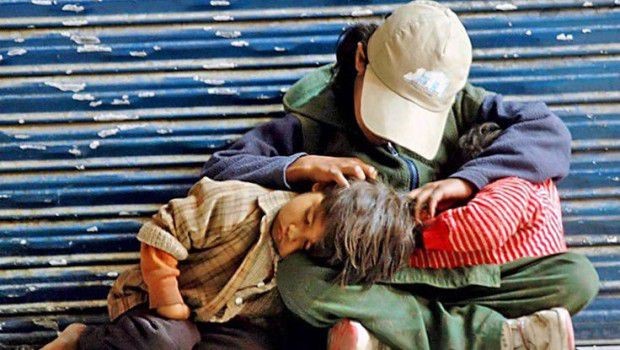
Eight people own as much as the poorest half of the world’s population. This is what Oxfam Report 2017 says. Runaway inequality is condemning hundreds of millions of people to poverty and highlighting the iniquity of the current economic system. In this complex situation, the Economy of Communion may be considered as a prophetic sign. It originated in May 1991, in Brazil as a reaction to the scandalous situation of the favelas that surround the city of San Paolo. Chiara Lubich invited a first group of entrepreneurs to set up businesses that follow the market laws and produce profits “which would be freely put in common”. Its aim is to help the poor, create jobs and promote the culture of giving as an alternative to the culture of having. Since then, 25 years have passed. And on Saturday, February 4, 2017, 1100 people involved in the Economy of Communion (EoC) will meet Pope Francis at Paul VI Hall. The majority of them are entrepreneurs, men and women, who chose communion as away of life, personally and also in the running of their businesses. They will be joined by students, scholars and professors, who, through research and academic activity, aim at laying a theoratical foundation to the inspiration economy/communion . These participants come from different countries and various backgrounds, and this shows that the EoC can establish itself in any geographical and cultural environment, rich and poor. Many participants will come from the continent of Asia: China, Korea, the Philippines, Hong Kong, India, Malaysia, Singapore, Thailand and Vietnam. Africa will be presented by participants from Burkina Faso, Burundi, Cameroon, Ivory Coast, Ethiopia, Uganda, Nigeria and the Democratic Republic of Congo. Entrepreneurs from North and South America will come from 11 different countries, namely, Argentina, Bolivia, Brazil, Canada, Chile, Cuba, Mexico, Panama, Paraguay, Uruguay and USA. European participants are many and they come from 20 different countries. Oceania will be present with Australia. Maria Voce, the president of the Focolare Movement together its General Council will also be present. These participants want, first of all, to thank Pope Francis for his teachings and actions that highlight the dignity of the poor and the excluded. At the same time, this assembly would like to present to the Pope some fruits of the EoC, that has been facing challenges and crises that afflict the world since its very start. Today, the EoC animates industrial parks in Europe and Latin America, generates a life of communion in more than eight hundred companies, helps several thousands of people in need and sees to the education of their children, develops a cultural reflection that contributes towards rethinking about economic practices such as reciprocity, gift, gratuity and the idea of market. New projects are also being carried out:
- an international network (Economy of Communion Incubating International Network – EOC-IIN) with hubs in industrial parks (and also in other places) to support young entrepreneurs. These hubs are already functioning in Cameroon, Portugal, Croatia, Mexico and Brazil. 100 young people living in vulnerable situations are being trained through a successfully run partnership in which social and civil economy organizations are involved. Workshops are currently taking place in Portugal and Mexico to train youth in an entrepreneurship “of communion”. Collaboration with academic institutions is also present as, e.g. with the University of Puebla (Mexico) for the development of projects for an indigenous community.
- An Observatory on Poverty that gathers information about the best practices in the struggle against poverty and develops an approach inspired by the values of communion and reciprocity.
These and other topics will be dealt with during the three working conferences to be held from 1-5 February at the Mariapolis Centre of Castelgandolfo (Rome). Tracks and projects for 2018-2020 will be defined. “If we decide to look at the world with the poor and the discarded” says Luigino Bruni, economist and international coordinator of the Economy of Communion, “we cannot stay on the pedestal; we have to come down and be with the victims, we have to fight for them, fight with them. In return, we will get new eyes, we will see things others do not see; sometimes we see horrible things; other times we see things of infinite beauty. The EoC has been doing this for 25 years. If it wants to survive, it must keep on doing it every day, better and more”. Press release Edc online
30 Jan 2017 | Non categorizzato
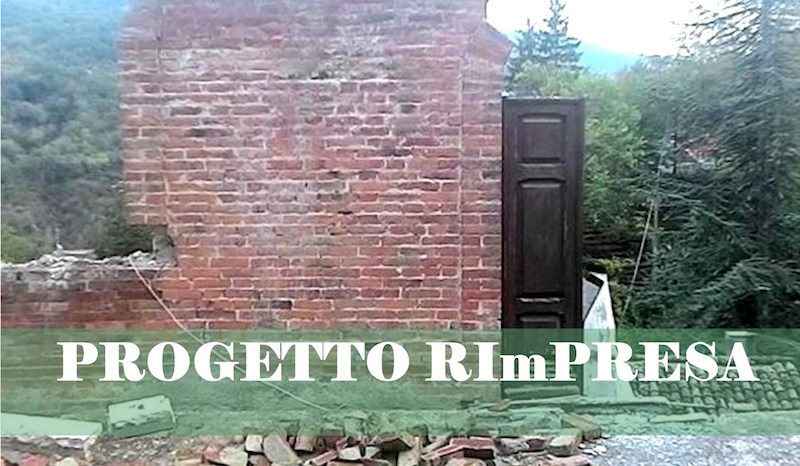
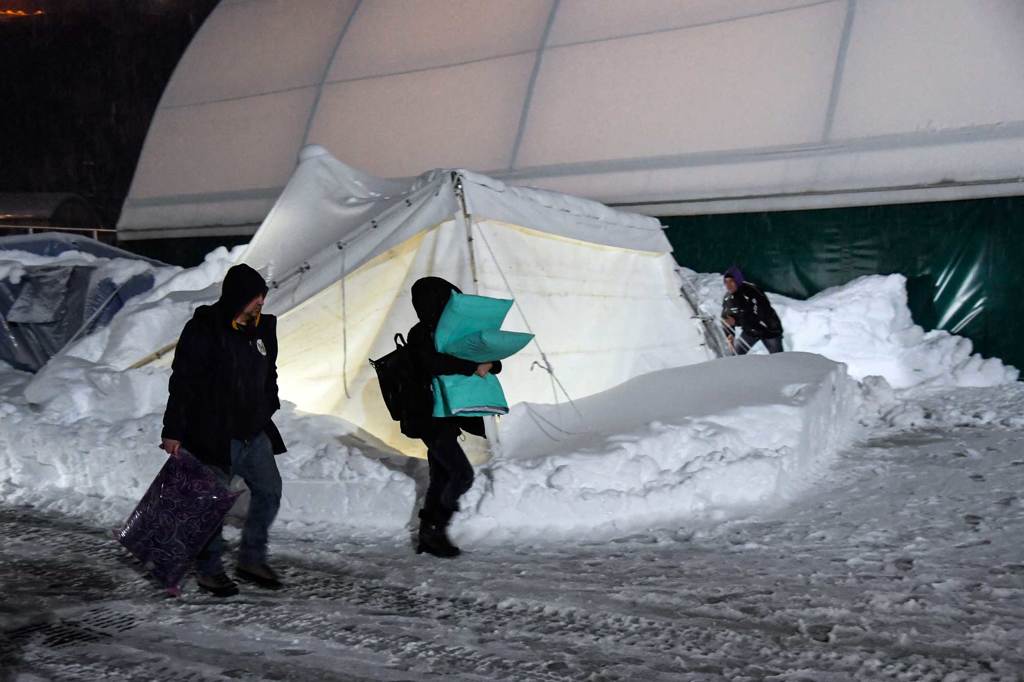 “It’s like being in a war. There are police, civil protection agencies, the Red Cross, and so on. Last night we had supper with a family of six, whose sons are boys scouts with our son. Their house is damaged and their sleeping under the canopy. Our family has grown, but also our hearts. From a tank of gas for those who were without energy to shovelling out a neighbour after the snowfall, we are having an experience of brotherhood. Up until ysterday we were among the ones asking for help. Then the lights came on and we turned out attention towards those who are in need. At the end of our lives we won’t be asked whether we were believers, but whether we were credible!” These are the reports coming to us from our friends that were hit by the latest earthquake which, since last August 24th has been shaking Italy, which is now covered in a thick blanket of snow. The earthquakes have been followed by other earthquakes that have caused avalanches, landslides and loss of life. That was the case for the fire fighters who raced to the hotel that was buried in snow, or the civil volunteers who are here from alll over Italy. The RImPresa Project is also focusing on a particular aspect of the seemingly endless emergency, that is, the support network that for several months has been providing logistical support along the ancient Salaria way, to many small rural centres whose economies are based mainly on agriculture raising livestock. The RImPRESA project, which is promoted by the AMU, the AIPEC Business Owners Association, AFN Onlus, Planetary Embrace, B&F Foundation and the Focolare Movement is now in full operation. There are suppliers, raw material businesses, machinery and provisional infrastructure companies, 4 (GAS) purchasing groups from other Italian cities who are all working to create a user and consumption base outside the areas affected by the earthquake. The eighty families involved so far will soon be able to buy the products from the companies through an IT platform that will send their order. The products will be delivered once a week. The intent of GAS – far from providing welfare – is to encourage a reciprocity and involvement by all the participants. The project includes the creation of a “Reciprocity Fund” from which the selected families will receive a grant for the restart of their production activities. They in turn will agree help support businesses, once the condition of their own businesses allow it. For more information: www.amu-it.eu See: Earthquake in Italy: three hours under the rubble “Toulouse for Italy” Concert Christmas among earthquake victims in Centra Italy
28 Jan 2017 | Non categorizzato, Word of
The word ‘heart’ makes us think of affections, feelings and passions. However, for the bible writers it meant much more. Together with the spirit, the heart is the centre both of life and of the person; it is the place where decisions are made, the place of our inner life, our spiritual life. A heart of flesh is docile to the word of God and allows itself to be guided by the word, giving rise to “peaceful thoughts” about others. Instead, a heart of stone is closed in on itself and is unable to listen or be merciful. Do we really need a new heart and a new spirit? It is enough to look around and see the violence, corruption and wars that are caused by hearts of stone which are not open to God’s plan for creation. If we look honestly within ourselves, we can see that we are often motivated by selfish wants. Does love truly guide our decisions? Are we guided by what is good for others? Seeing our impoverished humanity, God was moved to compassion. He knows us better than we know ourselves and he knows we need a new heart. He promised this to the Prophet Ezekiel, thinking not only of individuals but of all his people. God’s dream is to recreate one large family of peoples, as was his original intention, which is guided by the law of mutual love. History has often shown that while, on the one hand, we cannot fulfill God’s plan on our own, on the other He has never tired of getting involved, to the point of promising that he himself would give us a new heart and a new spirit. He kept his promise to the full when he sent his Son on earth and when he poured out his Spirit on the day of Pentecost. A community began – the first Christian community in Jerusalem – which was an icon of humankind living as “one heart and one soul”. All of us, you who are reading or listening to this commentary on the Word of Life and I who am writing it, are called to be part of this new humanity. Moreover, we are called to edify this new humanity around us, bringing it into the places where we live and work. What a great mission has been given to us and how great is God’s trust in us! Instead of feeling depressed at seeing how corrupt society seems to be; instead of resigning ourselves to evils that are bigger than us, and shutting it all out as if we were not concerned, let’s widen our hearts “according to the measure of the heart of Jesus. How much work that means! Yet this is the only thing necessary.” This is what Chiara Lubich asked us to do and she went on saying: “It means loving everyone we meet as God loves them. And since we live in time, we must love our neighbors one by one, without holding in our heart any left-over affection for the brother or sister met a moment before”. Let’s not trust in our own strength and abilities, which are inadequate, but let’s trust in God’s gift to us: “A new heart I will give you, and a new spirit I will put within you.” If we respond willingly to the call to love each person, if we allow ourselves to be guided by the voice of the Holy Spirit in us, we will become living cells of a new humanity, builders of a new world, in the great diversity of peoples and cultures. Fabio Ciardi This month we will be living this Word, which was chosen by an ecumenical group in Germany, together with brothers and sisters of various Churches, so as to let God’s promise accompany us during the whole of this year in which we are commemorating the 500th anniversary of the Reformation.
28 Jan 2017 | Non categorizzato
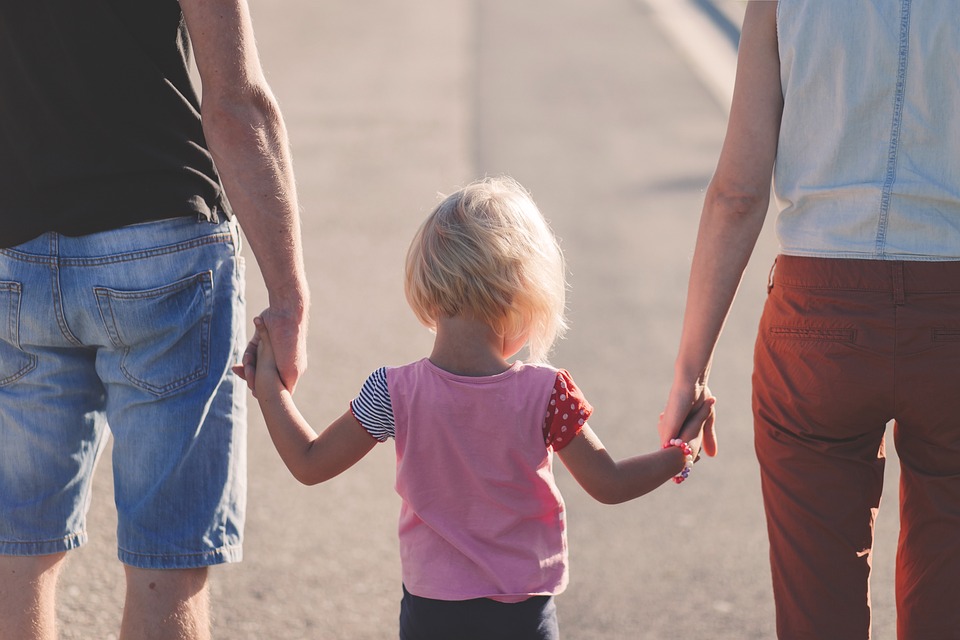
“The miracle of the house of Nazareth repeats itself in some way in every Christian home, if it ”generates” Christ among men. The Council called the family a “Domestic Church,” and Church stands for living together in love, and thus in God, a coexistence which has the Lord as its centre. Starting off from this awareness, the home – every Christian home – becomes a blossoming of new moral and physical life for society, and is also a heating system to vivify the environment. As the Council teaches us, “the physical and moral life of humanity, and even more so the real expansion of God’s Kingdom, depends on the fullness of health and spiritual life of the family.” So –Paul VI says– “through marriage and the family, God has wisely united two of the greatest human realities: the mission of transmitting life and mutual love, and the legitimacy of man and woman.” Never has a poet elevated conjugal love to such sublime heights. Here the religion of Christ is really expressed also as poetry, placing the family centrally – at the source – of sociality. There is life if there is love, the first condition of conjugal union. And if the spouses love one another, they are the «cooperators of the love of God the creator and his interpreters,» says the Council. If they know this, upon marrying each other they undertake to fulfill a mandate of regal priesthood, a great mystery as St. Paolo defined it. In loving one another they sanctify themselves and donate God who is love, and are his testimonials. If two spouses love one another, it is a sign for the people that they are really Christians and live God’s life. The old world got converted upon seeing how the Christians loved one another, starting from their homes. If they loved one another then their religion was true, and God was in them. In loving one another spouses create their happiness and build their sanctity. The home becomes a temple – Paradise. Love is the secret of the strength of families, and their concord is the solution of the trials of existence. Without love, the family and existence itself fail. So sanctity is seen to be the health of the spirit, which acts also on the physical, while it overflows like a pure wave of healing in all folds of society. So from a Christian home, the people of God ensue.”
