27 Jan 2017 | Non categorizzato
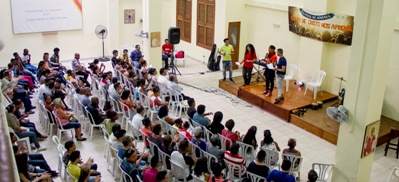
The celeb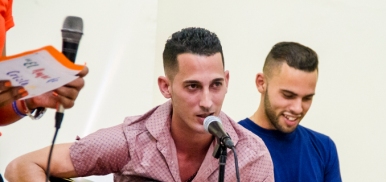 ration of the “Week of Prayer for Unity of Christians” at Havana was highlighted by a particular moment, the Ecumenical Youth Festival, at its third edition. Created with the aim of encouraging a more active participation of the youth in the ecumenical movement, the festival project began to take shape and became an annual meeting of young Christians of Havana. The “Week of Prayer” was enlivened by the youth sectors of the Focolare Movement, Community of Sant’Egidio and Council of Churches of Cuba. Inspired by this year’s “Christ’s love compels us” (2 Cor 5, 14-20), which was also the festival’s motto, the programme of dance, music, and drama staged in this edition saw the participation of about 150 youths of various communities of different Christian denominations. The meeting began on Sunday, 22 January, in the Headquarters of the Community of Sant’Egidio, in the historical centre of the Cuban capital. The representatives of the Cuban Council of Churches also took part in the event, along with Bishop Juan García, Archbishop of Havana, who in his brief greeting, encouraged the youths to see themselves as members of a sole body, a sole family. This year, the event was characterised by a family atmosphere which was tangible in all the various activities. It was not only a show where every church or community performed its piece of the festival. But it was an event accomplished by people who considered one another more and more as brothers, thanks to the relationship established during the years, between one festival and the other, through meetings, dinners, celebrations and mutual help. The group that led the festival was composed of Catholics, Baptists and Pentecostals; the choir was formed by youths of various churches, and accompanied the songs presented by a Catholic. The theatre piece was created by a Pentecostal youth and performed by a group of Catholic girls. «The desire and decision to live unity is already a reality,» one of the participants said. At the end of the programme, the idea that spontaneously came up was the decision “to hold the next festival in a public theatre.” This expressed the desire to testify before others, about the experience of unity concretely lived. From Havana, 22 January 2017
25 Jan 2017 | Non categorizzato
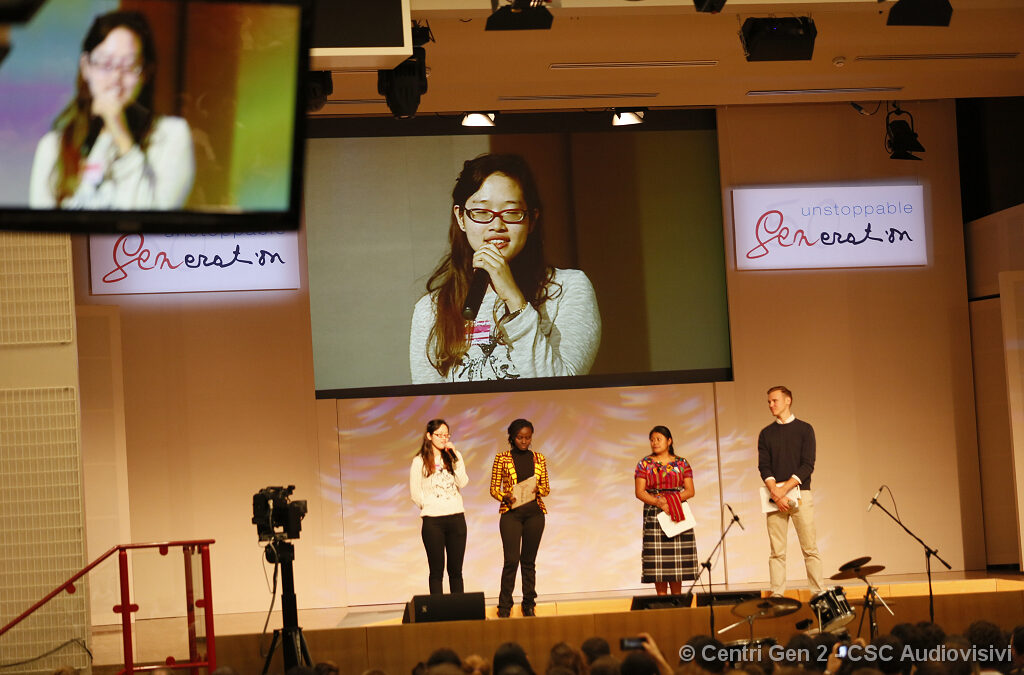
 “I lost my father when I was six years old. He died during the war,” says Ivona from Croatia. “That was a hard time in my life that caused me to become closed in myself. In 2003 I met the Focolare Movement and I experienced an atmosphere of love and joy, and I found the strength to face everything and love life even when it was difficult. On New Year’s Eve, at the age of 13, had a fainting spell and ended up in hospital. While waiting for the results of the tests, I suddenly noticed a small rosary in my hand. When I think of it now, I believe that it may have been a sign from God because of what I would have to go through. I was diagnosed with a form of emotional epilepsy resulting from the trauma of my father’s death. I cried for two night. One evening as I was praying the rosary, I felt that I wasn’t alone, that Jesus understood my pain. I seemed to understand the meaning of Chiara Lubich’s words about the moment of Jesus’s abandonment on the cross: ‘What is His is mine and nothing else. Universal suffering is His and therefore mine . . . What hurts me is mine . . . Mine is the suffering of the soul beside me – that’s my Jesus.’ From that moment on my life went ahead in peace and joy, but mostly I was living it with Jesus. Through the illness, I experienced that Jesus Forsaken has illumined every darkness, as Chiara says, and accompanied every solitude. I accepted my illness and felt loved by Him.”
 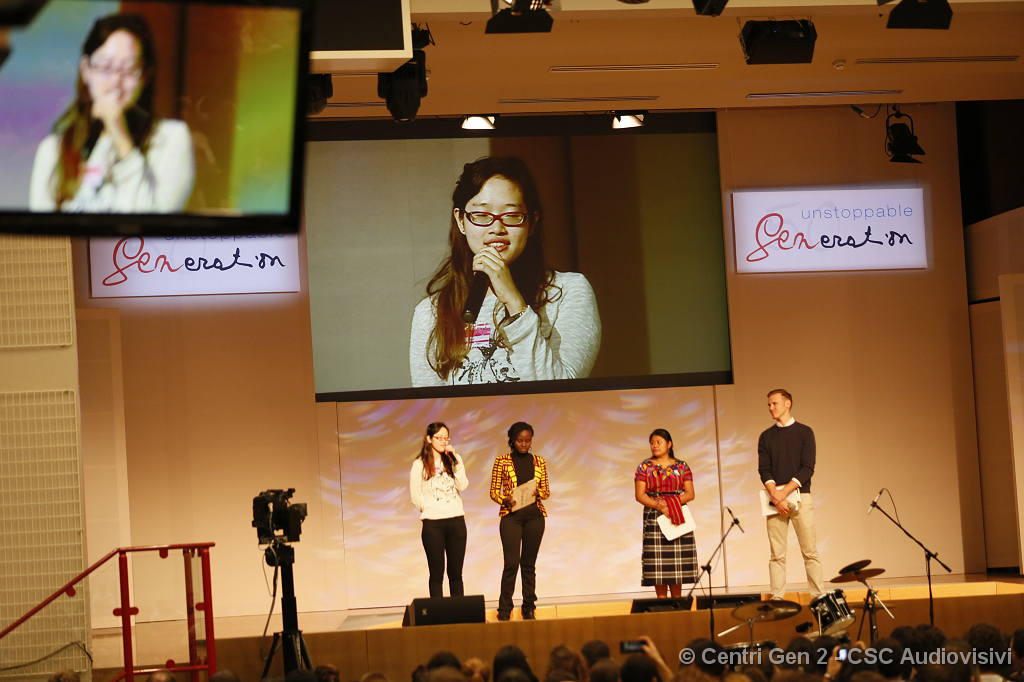 “I’m Zin from Myanmar and I’m a Buddhist Gen. I’ve been at the Gen School in Montet, Switzerland since September. Whenever I tell people that I’m a Buddhist, they all ask me what it’s like to live with the other Gen who are all Christians. It’s easy for me to accept that we follow different religions. It’s only when the other Gen pray or go to mass that I realize there’s a difference. In all the rest we’re the same – sisters living in the same house. We like to love one another in accordance with the way that each one of us understands Love: in Buddhism it’s mostly a matter of compassion, politeness and forgetting oneself. For Christians it’s ‘love of neighbhbour’, ‘love of enemy’ ‘mutual love’ ‘love for Jesus Forsaken’. While noting the diversity in our manner of expressing love, striving to ‘be love’ as our common goal leads us to experience unity.” “I’m Lilia Mayrleny from the Maya Kaqchikel ethnic community in Guatemala, originally from the Patzun people. I’m a Kaqchikel/Spanish bilingual early childhood teacher. Kazchikel is my native language. My country is multi-cultural and bi-lingual. It’s multi-cultural because it’s comprised of four different cultures: Maya, Garifuna, Xinca and Ladino; and it’s multi-lingual because we speak 22 Maya languages. I met the Focolare Movement at the Gen4 meetings when I was a child. I try to bring the ideal of unity into my daily life. I study at university thanks to my parents who also live the Focolare spirituality and support my studies. This is a great conquest, because not all women in my community are able to pursue their studies because of the sexist culture we live in. In Maya culture things like truth, the rule of law, love and respect are cherished. At times I felt very alone without any answers to my questions. But, by trying to live the Gospel I discovered that sorrows and pain, disapointments and doubts, weaknesses, unexpected surprises and all the trials of life, including deception are the many different guises of Jesus who suffered the abandonment on the cross. Whenever I manage to recognize and love him, the difficult situations are transfigured and peace blossoms in me.”
24 Jan 2017 | Non categorizzato
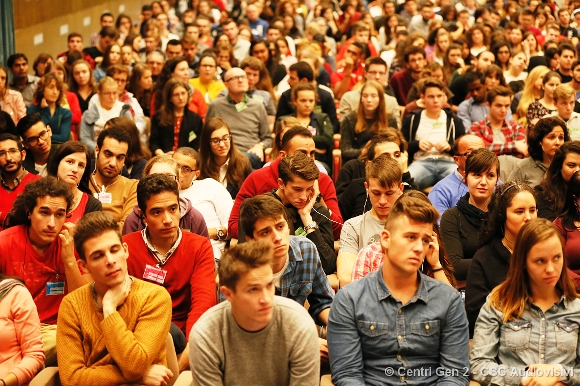
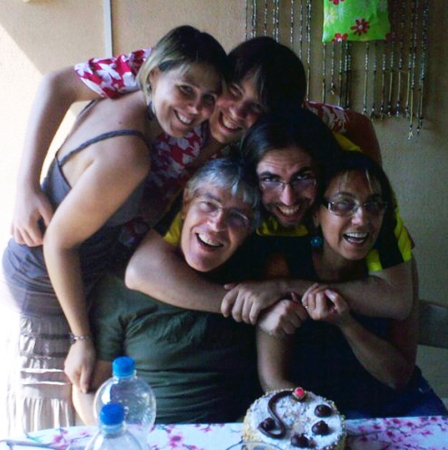 Fiorella: “Right from the start I found that Andrea was an atheist and very popular with the girls. I decided in my heart that it was better to let him go. But then in the disco I always found myself in his arms.” Andrea: “Fiorella was really one of the many. Before telling her – to my own great surprise – that I might actually love her, two years went by.” Fiorella: “I was aware that the relationship wasn’t going anywhere. There wasn’t dialogue and we didn’t make any plans. I had become Andrea’s shadow, without personanlity or dreams. Disappointed I decided to leave him. To evade him, I changed jobs and moved to another city, but I soon began to feel alone and full of sadness. One morning, nearly desperate, I found myself in the doorway of a small church, yelling out why to that God whom I had left for some time. When I job contract ended, I returned home to my relatives. A few days later, a friend whom I hadn’t seen in a while couldn’t wait to talk to me about God, and invited me to a several-day gathering with people who were trying to live the Gospel. As I stepped into the hall I was struck by a sign they had hung: “God is Love”. I wondered how God could love someone like me with my heavy make-up, heels size 12 and fiery red hair. But right from the first day I felt his presence, I knew that I had discovered what I was always looking for, and I ran to pour out all my miseries in the confessional with the intention of beginning to live the Gospel. After that first “Mariapolis” the Eucharist became the vital force of my life.” Andrea:”Fiorella was changed. Now she talked, but what’s worse – at least from my point of view back then – she talked about God. Trying to be tollerant, I decided not to dump her, but I was jealous of this God who was stealing her from me. I was struck by her serenity, her enjoyment of life, her renewed love for me that filled my heart. And what if she really loved me? Surprised at myself I even reached the point of asking her to marry me, even with the understanding of doing it in church. Afterwards, an accident at work left me immobile. The only diversion was visiting those families that Fiorella began to get together with. As soon as I could, I decided to visit one of them to find out the reason for this interest in me. We talked about everything, even the faith until three o’clock in the morning. I was fascinated. “These people are serious about it!” I said to myself, I want to live like them too. I want to be the first to love too.” One Saturday I found the sink filled with dishes. Fiorella was out at work. I closed the blinds so my neighbors couldn’t see me and began to wash the dishes to show her my love in a concrete way. I even tried to iron, although it took me two hours to press one shirt. And as I did all this I began to notice a certainty blossoming inside me: God exists, God is Love. With this new faith I suddenly felt the need to pray. I told Fiorella and suggested we do it together. With a bit of embarrassment and the lights turned off, each of us on our own side of the bed, that night we prayed together for the first time.” Fiorella: “After twelve years of milestones and setbacks new beginnings and many joys because of the new love that was growing between us, and with the birth of our two children, Maria Giovanna and Ivan, we received an invitation to move to Honduras to help support the nascent Focolare community. Jesus was asking our family to follow Him, giving up our house, our job, our relatives. A totally unknown world was awaiting us in Tegucigalpa with different customs, language and culture, along with the difficult life of the Honduran people who were knocking at our door each day. We entered so deeply into “making ourselves one” and being immersed in their lives in a deep experience of inculturation. The fruits of evangelization were many: vocations, marriages convalidated, families put together again, people coming back to God and the growth of brotherhood. After eight years we left behind a community that had been built piece by piece, based on concrete love that we tried to show and drew in our children into who, in the meantime, had become three. Andrea: “In fact, our on Juan Diego was born while we were in Honduras. We named him in honour of the Virgin of Guadalupe to whom we continue to entrust the so generous people that changed our life.”
23 Jan 2017 | Focolare Worldwide, Senza categoria
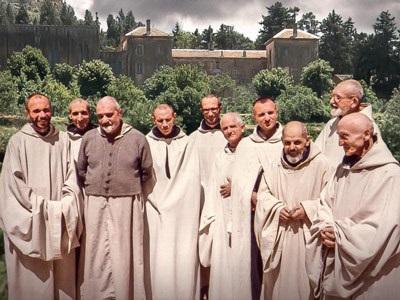
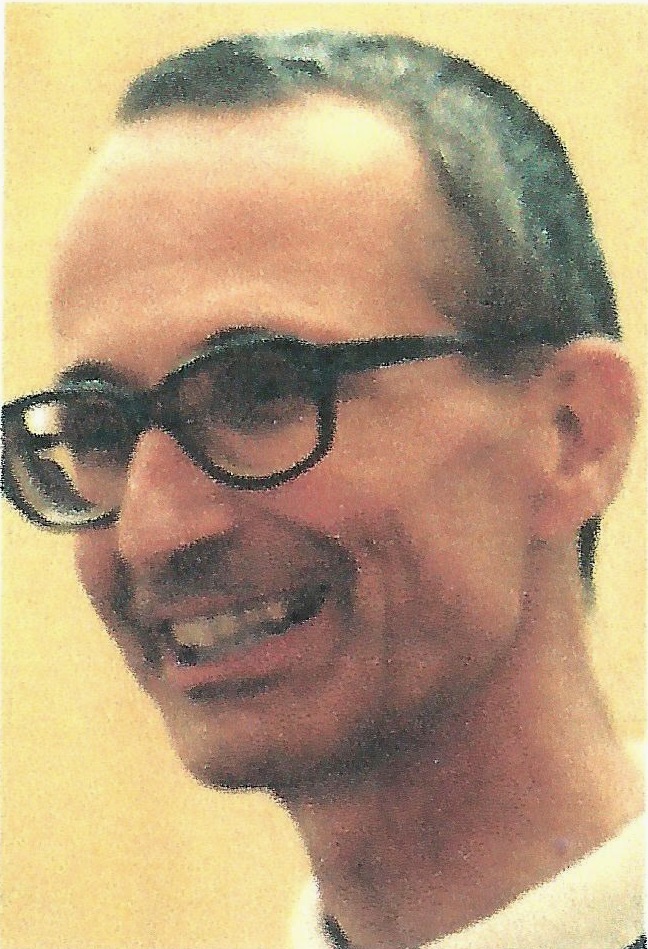 I came across a letter of Fr. Christian de Chergé a few days ago, on his 20th death anniversary. Christian was the Prior of the community of Trappist monks of the monastery of Nostra Signora dell’Atlas in Tibhirine (90 km from Algiers). In 1996, he and six other monks were kidnapped and then killed. On 1 August, Bishop Pierre Claverie, the Bishop of Orano was killed. That was really a “black decade,” as people called the civil war that exploded in the1990s. The monks were French and like the other “foreigners” were the direct targets of the “ mountain brothers,” name that referred to all those who had gone into hiding to take up their arms following the annulment of the 1992 elections. The Islamic Salvation Front, a political party that was dispersed and declared illegal, was about to win the elections. In my mind I often see their smiling faces, during those moments we lived together. We all took part in that particular vocation of the Church in that country, to which we felt we had been sent to testify to the Gospel, at the service of those people. It was a simple, poor Church, but its testimony shone in the hearts of many friends, mostly Muslims. Already then in Algiers, 99.99% of the population followed Islam. The Archbishop of Algiers, Paul Desfarges, said that, “The Church is for the people, a Church of Encounters.” But going back to the letter of 3 December 1994, it seemed to me like meeting Christian once again, or one of the monks in our focolare house in Tlemcen, where they used to spend a night, to then resume the journey towards the monastery they were about to found in Fèz, Morocco. Those were evenings of intense dialogue and joy of getting together, feeling like brothers and of sharing and understanding, in this mutual commitment toward the people that hosted us. Even if we had different callings, our hearts beat in unison. That atmosphere of danger surrounding us, encouraged us to go ahead. In fact, there was talk about a possible momentous departure of the members of the focolare of Tlemcen, which then did not occur. And Christian had written: «We all thought that you would stay longer to testify to a convivial offer, a boundless sharing of life, and a friendly openness that enables our hearts to vibrate in unison beyond the barriers of religious affiliations. You made the message of the Gospel your very own and you have deeply imprinted this message among us. And we rejoice with you for this greater humanity which your Charism has given to our Church. It was such a joy to meet at your “focolare” house. Many monks were able to make use of your hospitality when they passed through on their way to Fez. All of us still savour the thought of experiencing it all again! In these times we all need to be able to count on this “fire” kept alive in the common room. It will be a bit colder at Christmas if you will no longer be here… Our lives are in God’s hands… and our motives to remain, conform to those that have allowed us to live here. For you, as for us, the situation has not changed. THANKS once again to each of you and our fraternal communion today and for always. Christian». We had talked about the courage to remain… but for those who, like us had lived that harsh situation in person, I would rather speak of the courage to remain faithful to a calling and share it with a section of humanity, which we already felt an integral part of. It was a Fidelity of love. In the hearts of those who knew the monks, Bishop Claverie, or the other nuns and religious killed in those years in Algiers, they continue to speak to us of the Gospel lived and deep friendships with a people they had made their own. Giorgio Antoniazzi
22 Jan 2017 | Non categorizzato
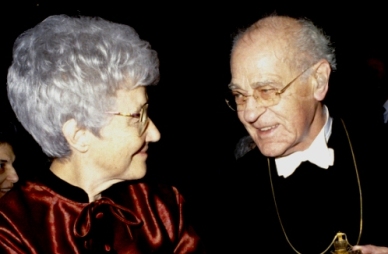
Chiara Lubich visited Germany in 1998, from 1st November to 13 December, spending time at Aachen, Münster, Augsburg and then in Berlin at the invitation of the Evangelical Church community. In her address, part of which is published below. We present several excerpts from her speech given on November 19th at the the Berlin Memorial Church, in which she indicates the law of love as the royal road to Christian unity and dialogue with all believers. “The plain fact is that if we Christians now, at the dawn of the third millennium, take a good look back at our 2000 years of history and particularly at the last millennium, we cannot fail to be saddened by what we see: a painful succession of misunderstandings, arguments and conflicts. These have caused many rips and tears in the “seamless robe of Christ”, which is His Church. And whose fault is this? Without doubt, countless historical, cultural, geo-political, social factors have played their part …. But could it also be due to a weakening among Christians of their characteristic unifying bond of love? I think so. In fact, when we try to address the painful situation we find ourselves in, we must keep in mind the guiding principle of our common faith: God Love who calls us too to love. In these our times it is God Love who, in some way, must return once more to reveal Himself also to the Churches we are part of. It’s true that we can’t really know how to love others unless we have experienced being deeply loved ourselves, unless all Christians are convinced of how much God loves us. He loves us as individual Christians and also as Church. He loves the Church in so far as it has been faithful to God’s plan for it, but also – and herein lies the wonder of God’s mercy – He loves the Church even when it has not corresponded to that plan and has allowed divisions to occur, as long as now it is seeking for full communion with the other Churches. This is the consoling conviction that led John Paul II, trusting in the One who can draw good from what is bad, to reflect: “Could it not be that the divisions have also been a way which has led and is leading the Church to discover the many treasures contained in the Gospel of Christ and in the redemption he brought about? Perhaps such a wealth would not have come to light otherwise.” So, belief in God who is Love, also for the Church. But if God loves us, we cannot remain inert in the face of such divine benevolence. As true sons and daughters, we must respond to His love with love, individually and as Church. Perhaps we can say that the Churches over the centuries may have hardened somewhat within themselves against the relentless tide of indifference, of misunderstanding, if not of actual hatred between them. So now we need a supplement of love in each one; we would need, in fact, a whole tidal wave of love to invade all Christianity. Love towards the other Churches is what we’re talking about here, together with mutual love among the Churches: a love that enables each one to be a gift for the others, so that it is possible to hope in a Church of the future which is one, in which one alone is the truth, expressed in many ways, observed from different perspectives, made even more beautiful by the variety of interpretations. It’s not that any of the Churches would have to “die” (as some may think), rather each one will have to be “reborn” in unity. And to live in this Church of the future, in full communion, will be such a wonderful, miraculous reality, that it cannot fail to be noticed by the whole world.” More Chiara Lubic Center
