11 Jan 2017 | Focolare Worldwide
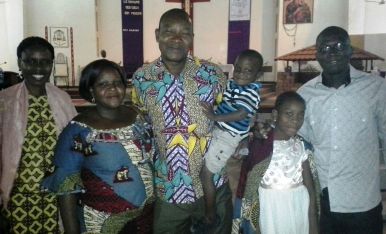
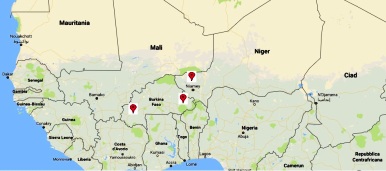 “We’ve just completed our journey that took us from Bobo-Dioulasso to Dorì, the most northern city of Burkina Faso; and then it was on to Niamey in Niger. The objective was to respond to the community that has gathered in the Focolare spirit to share experiences and the first fruits of life that have begun to spread in these lands of the Sahel.” This is how focolarini Aurora and Pascal from the focolare in Bobo Dioulasso begin their recount. Bobo Dioulasso is the second largest city in Burkina Faso and the headquarters of the local Focolare Movement . Burkina with its 17 million inhabitants (50% Muslim, 30% Christian and 20% traditional religions) is one of the poorest countries in the world, along with nearby Niger. “We reached Niamey, the capital of Niger, where we were welcomed with much joy by the community, including Archbishop Laurent Lompo who became a priest, he says, because of the first Mariapolis he attended. Archbishop Lompo is a real shepherd, close to his people and very concrete in his love. He shared with us his many experiences of friendship and dialogue with Muslims who make up 93% of the population of 10 million people. The relationship of the Christians with the Muslim world is a challenge, especially after January 17, 2015 when Islamist extremists burned more than 70 Christian churches following the Charlie Hebdo attacks in Paris.” “Archbishop Lompo suggested that we also visit a woman in Hawa who had once attended Focolare events but now, for family reasons, had become a Muslim. Surprised and moved by our visit, she told us about her family and the beautiful hours together in the Mariapolis. When she heard that there would be another Mariapolis in the area, she promised that she would start preparig to be there. It was so beautiful to see in her and so many other Muslims that we met, their joy at being able to live in the City of Mary (Mariapolis) the experience of mutual love.” “Lastly, we visited a small community in Niamey; such deep people, desirous to live the Gospel and go forward in the experience of unity. Maybe our visit encouraged them on that path. One of them said to us in the name of everyone else: “It’s true that here in Africa we have to live so many difficult situations, but with the spirituality of Chiara Lubich we learn to love others, taking on their suffering and pain. How much I want this ideal of brotherhood to invade the Church and our country’s society!” Aurora De Oliveira and Pascal Pontien Ntawuyankira
10 Jan 2017 | Non categorizzato
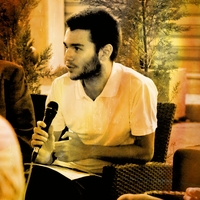
Piotr, what made you choose to enroll in Sophia? Many factors are involved. During high school I had the fortune to meet a philosopher from Turin by the name of Costanzo Preve, who introduced me to philosophical studies, an interest that arose from the attraction I felt for politics. His Hegelian-Marxist philosophical approach opened my eyes to social totality which likewise made the choice of my university studies very challenging; I could not make up my mind between economics, politics and philosophy. Towards the end of high school, a professor spoke to me about Sophia, even though it offered only Master’s courses. Finally, in order to have a diploma that would give me more job possibilities, I chose the three-year degree in economics in Genoa. But this choice was not really satisfactory… My dissatisfaction with the “mainstream” syllabus plans of many courses made me join the international network called “Rethinking Economics” to promote economic, methodological and interdisciplinary pluralism in the university methods of teaching economics, and the founding of a local seat for the network. Concurrently, and in an independent way, I continued my musical and philosophical studies. Besides, I had become a journalist and am part of the editorial staff of the paper “Termometro Politico” (Political Thermometre) and for some months now, direct the ecclesial debate magazine Grandsons of Maritain. In short, along the years I had read some essays of the Rector Piero Coda and had asked him if I could visit Sophia. I came twice, before enrolling. And every time my “Sophian” vocation became increasingly evident. What course have you decided to undertake and how have the first months in Sophia been? I chosen Trinitarian ontology, also because it gives me the chance to benefit from the agreement with Perugia University for the dual diploma, so as to achieve, besides that of the Vatican, also an Italian Master’s in philosophy specializing in didactics, which will, in the future give me the chance to teach in high schools. In these first months almost all of us have attended the same courses in philosophy, theology, politics and economics, which will enable us to start our studies on a common basis. This interdisciplinarity in my case, was not at all a surprise, but a conscious choice. From the academic viewpoint, Sophia’s level is very high and has given me the chance to deepen the course themes I am personally interested in. At the end of August I started to live in the residence, exactly two floors above the university facilities, together with 9 boys of all continents – from Argentina to China, from Germany to Tanzania, and across countries like the Lebanon. It is an excellent coexistence, well organized even in the housework: I immediately felt that we are brothers, in our little daily concerns. How about your projects? I can’t say much about this, since at this moment, new paths are opening out before me; the medium-term objective is to obtain my degree, but for my thesis I am considering various themes, and as oftentimes occurs, probably none of these will be the definitive one. Later, I may consider a Doctorate, but time will tell. I would like however to carry on with my journalistic activities, and, from the employment point of view, I would not really mind teaching, or find a job in the publishing sector. I don’t really want to set any limits to the Spirit who could inspire me to take other paths. Source: IUS online
9 Jan 2017 | Non categorizzato
https://vimeo.com/192601012 Copyright 2016 © CSC Audiovisivi – All rights reserved
8 Jan 2017 | Senza categoria
Migrants We watched the first disembarkations in our cities. Today the initial receptions were moved to the courtyard in front of the municipal gym next to our home, and so from my balcony I could watch the long lines of migrants with bare feet or in singlets and shorts, waiting to pass through the first checkpoint. Suddenly it became very windy and the temperature dropped. I could no longer stand still. I had to do something for these brothers already harshly put to the test. I went out and noted an acquaintance among the members of the surveillance team, and learned from him that they were short of clothing. I returned home, and with my husband, put together what we thought could be useful, and after a few trips, delivered all to his friend, to be distributed. Also other acquaintances who we had notified, added other clothing. It had started to rain, but almost all had now received some clothing. Many smiled at us saying “grazie” (thank you in Italian), perhaps one of the few words they knew. Raffaella (Italy) Fund gathering When I found out that the father of a big and poor family needed an urgent operation but did not have the means to pay for it, I felt Jesus was prodding me to do something. With some friends, I made the effort to start raising funds, involving also our colleagues at work. Once I gathered the necessary amount, I accompanied the sick man to the hospital, and paid for the relevant treatment. The operation was a success. I can’t say if the joy of that family was greater than ours. I think that also small gestures contribute to building peace. N. Y. (Jordan) Neighbours The neighbour in front of our house was sick and needed many treatments. Her husband had gone on pension ahead of time to take care of her. My husband and I felt we had to do something and became their friends. While conversing with them one day, we ended up talking about our faith. We found out that she had stopped going to Church due to the incorrect behaviour of some priests; the husband instead, did not have much time for anything else due to work. When I recounted how God had come into my life, my neighbor started to ask many questions, and deduced that perhaps, illness itself could be a bridge that God was offering to her, as a means to move away from the heavy and sad atmosphere reigning in that house. She also started to give more care more to her looks. One evening her husband confided: «There is no medicine that can give serenity, and for some time now we are exploiting this asset». L. M. (France) BY: Oreste Paliotti
7 Jan 2017 | Focolare Worldwide, Senza categoria
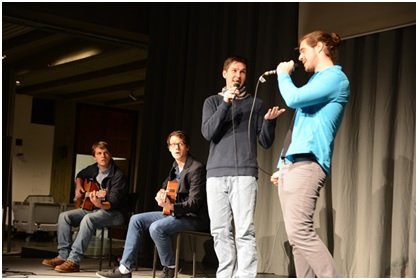
An enriching evening of classical, dance, pop, contemplative, jazz, a musical and a buffet. The fourth edition of the benefit concert was promoted by the Focolare’s Youth for a United World in Vienna and by young people from Mor Efrem of the Syro-Orthodox community. Two hundred people showed up in spite of the freezing night temperatures of December, to support Syrian refugees. The “Singing Voices Choir” comprised of young people that included some Spanish speakers wished everyone a “Feliz Navidad” with song and dance. David Watzl presented Aktion Weitblick, a project that offers aid to refugees inside Europe and on its borders. He had spent two weeks at a refugee camp in Turkey where, with a group of volunteers from Aktion Weitblick, he organized afternoon games for children, classes in hygiene and many other activities. The Ishtar Syrian Dance Group brought the concert to a close with lively eastern dance that got the whole audience moving. Afterwards, a tasty buffet provided an opportunity for actors, visitors and refugees to mingle and know one another, and to plan future projects. The evening ended in a warm and fraternal atmosphere. Compiled by Young for Unity, Vienna, Austria
