28 Jul 2015 | Non categorizzato, Word of
Love is the fulfilment of our life, the one secure guiding principle we can follow. The whole of Christian ethics is contained in these words. Human behaviour, if it wishes to be according to what God thought when he created us, and so genuinely human, must be animated by love. If our ‘walk’ (which stands for our life) is to reach its objective, it must be guided by love, the summary of the entire law. The apostle Paul is speaking to the Christians in Ephesus when he makes this exhortation. It is the conclusion and summary of what he has just written to them about the Christian way of life: going from the old self to the new self, being true and sincere with one another, not stealing, knowing that we are forgiven, doing what is good, in a word ‘walking in love’. It would be useful to read the couple of sentences that give us these incisive words which will be with us throughout the month: ‘Therefore be imitators of God, as beloved children. And walk in love, as Christ loved us and gave himself up for us, a fragrant offering and sacrifice to God.’ Paul is convinced that our every move must be modelled on God’s way of behaving. If love is God’s distinguishing feature, it must be also for his children. They must imitate him in this. But how can we know God’s love? For Paul it is extremely clear. God’s love is revealed in Jesus, who shows how and how much God loves. The apostle experienced it at first hand: Christ ‘loved me and gave himself for me’ (Gal. 2:20), and now Paul reveals this to everybody so that it may become the experience of the whole community. ‘Walk in love’ What is the measure of Jesus’s love which should be the model for our love? It, we know, has no limits, no exceptions, no partiality. Jesus died for all, even his enemies, those who were crucifying him, just as the Father in his universal love makes his sun shine and his rain fall upon all, good and bad, sinners and righteous alike. He knew how to care above all for the little ones and the poor, the sick and the excluded. He loved his friends with intensity. He was particularly close to his disciples… His love spared nothing and went to the extreme of his giving his life. And now he calls all to share in his same love, to love as he has loved. This call could scare us, because it demands too much. How can we be imitators of God, who loves everyone, always, taking the initiative? How can we love with the measure of Jesus’s love? How can we live ‘in love’, as this Word of Life asks of us? It is possible only if we ourselves have first had the experience of being loved. In the expression ‘walk in love, as Christ loved us’, the word ‘as’ can also be translated ‘because’. ‘Walk in love’ Walking means acting, behaving, which means to say that everything we do must be inspired and moved by love. But perhaps it is not by chance that Paul uses this dynamic word to remind us that we learn by loving, that there is a whole road to go before reaching the wideness of God’s heart. He uses other images to point out the need for constant progress, such as the growth of infants to adulthood (see 1 Cor. 3:1-2) or races in the stadium to win a prize (see 1 Cor. 9:24). We are always a work in progress. Time and constancy are required to reach our goal, without giving up in the face of difficulties, without ever letting ourselves be discouraged by failures and mistakes, ready always to start again, without giving in to mediocrity. Augustine of Hippo, perhaps thinking of his own painful journey, wrote: ‘You always dislike what you are, if you want to reach what you are not yet. In fact where you feel at ease, you stop, and you say, “That’s enough,” and like that you sink. Build up continuously, walk ahead always, go forward without ceasing; do not pause long on the way, do not look behind, do not leave the track. The one who goes not ahead, stays behind.’ ‘Walk in love’ How can we walk most swiftly upon the way of love? Since the invitation is given to the whole community (the word ‘walk’ is in plural form), it is a good idea to help one another. Indeed, it is sad and tough to go on a journey alone. We could start by finding the opportunity to declare to one another again (with our friends, families, the members of the same Christian community) our will to walk together. We could share our positive experiences about how we have loved, so as to learn from one another. We could share with someone able to understand us the mistakes we have made and our slips along the way, so as to be corrected. Prayer together too can give us light and strength to go ahead. United among us and with Jesus (who called himself the Way!) in our midst we will be able to travel along the whole of our ‘Holy Journey’. We will sow love around us and we will reach the goal: Love. Fabio Ciardi
28 Jun 2015 | Non categorizzato, Word of
These words conclude Jesus’s ‘Farewell Discourse’ to his disciples at the last supper, on the eve of his being handed over to those who were to put him to death. They had had an intense conversation in which Jesus had revealed the inner truth about his relationship with the Father and the mission the Father had entrusted to him. Jesus is about to leave the earth and return to the Father, while his disciples will remain in the world to carry on his work. They too, like him, will be hated, persecuted, even put to death (see Jn 15:18, 20; 16:2). Theirs will be a difficult mission just as his had been. Jesus is well aware of the difficulties and the trials his friends will have to face. He had just told them: ‘In the world you will face persecution’ (Jn 16:33). Jesus is speaking to the apostles gathered around him for the last supper, but he is thinking of all the generations of disciples who would follow him throughout the centuries, including us. It’s so true! Even while joy is spread all along the path we follow, there is no lack of ‘persecution’ and sufferings. We experience uncertainty about the future, job insecurity, poverty and sickness, suffering as a result of natural disasters and wars, violence at home and among nations. There are in addition the persecutions that come as a result of being Christians: the daily struggle to be faithful to the Gospel, the feeling of impotence before a society that seems indifferent to the message of God, mockery, scorn and sometimes open persecution by those who do not understand or oppose the Church. Jesus knows about ‘persecutions’ having experienced them at first hand. ‘Take courage; I have conquered the world!’ This statement, which is so decisive and confident, looks like a contradiction. How can Jesus say that he has conquered the world when a few minutes later he is going to be imprisoned, whipped, condemned, killed in the cruellest and most shameful manner? More than having conquered, it looks as if he was betrayed, denied, reduced to nothing, and so defeated – utterly. What is the nature of his victory? It came about, certainly, in the resurrection. Death cannot hold him. His victory is so powerful that he makes us share in it too. He makes himself present among us and he takes us with him to full life, the new creation. But even before that, his victory was the very act of his greatest love in giving his life for us. He, in defeat, triumphed fully. Penetrating every corner of death, he freed us from all that oppresses us, and he transformed all that is negative in us, our every darkness and pain, into a meeting with him, with God, Love, fullness. Paul, whenever he thought of Jesus’s victory, seemed to go mad with joy. If Jesus, he would affirm, had faced every setback, including even the supreme challenge of his death, and he had won, then we too, with him and in him, can overcome every difficulty, and indeed, thanks to his love, we are ‘more than conquerors’: ‘For I am convinced that neither death, nor life … nor anything else in all creation, will be able to separate us from the love of God in Christ Jesus our Lord’ (Rom 8:38-39; see 1 Cor 15:57). We are invited by Jesus, therefore, to fear nothing anymore: ‘Take courage; I have conquered the world!’ These words of Jesus, which we will keep in mind for the whole of this month, can fill us with trust and hope. However tough and hard may be our circumstances, we have the certainty that Jesus has already made them his own and overcome them. Even if we do not have his inner strength, we have him himself who lives and struggles in us. We can say to him when we feel crushed by difficulties, trials or temptations, ‘If you have overcome the world, you will know how to overcome this “persecution” I am going through. To me, to my family, to my colleagues at work what is happening seems like an impossible hurdle. It feels to us as if we can’t make it. But with you among us, we will find the courage and the strength to face it, until we come to be “more than conquerors”.’ It is not a matter of having a triumphalist vision of Christian life, as if it were easy and everything had been sorted out. Jesus is victorious precisely in the moment that he lives his drama of suffering, injustice, forsakenness and death. Perhaps we too, at times, like Jesus and the martyrs, will have to wait for Heaven’s response before we see a full victory over evil. Often we are scared of speaking about Paradise, almost as if the thought of it were a drug stopping us facing the difficulties with courage, an anaesthetic to lessen the pain, an excuse not to have to fight against injustice. The hope of Heaven and faith in the resurrection are instead a powerful spur to look squarely at every problem, to support others in their trials, to believe that the final word belongs to love that conquers hate, of life that defeats death. So every time we come across a difficulty of any sort – be it personal, or of the people around us, or of those we hear about in different parts of the world – let’s renew our trust in Jesus, present in us and among us, who has overcome the world, who makes us share in his own victory, who opens up Paradise where he has gone to prepare a place for us. In this way we will find the courage to face every trial. We can overcome everything in he who gives us the strength. Fabio Ciard
25 Jun 2015 | Non categorizzato
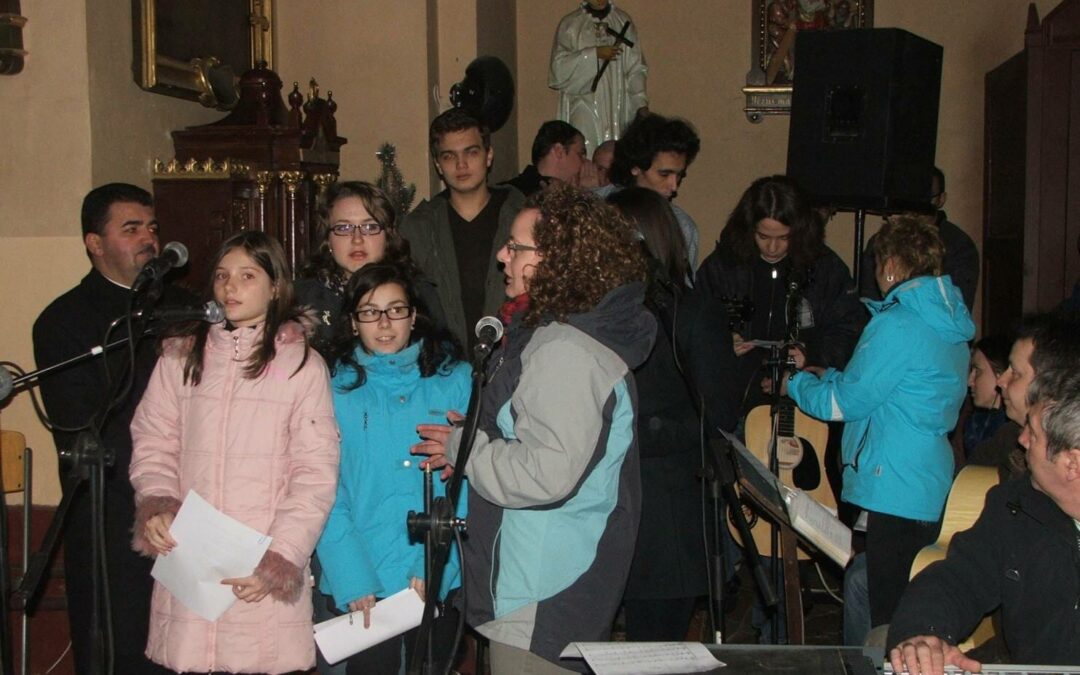
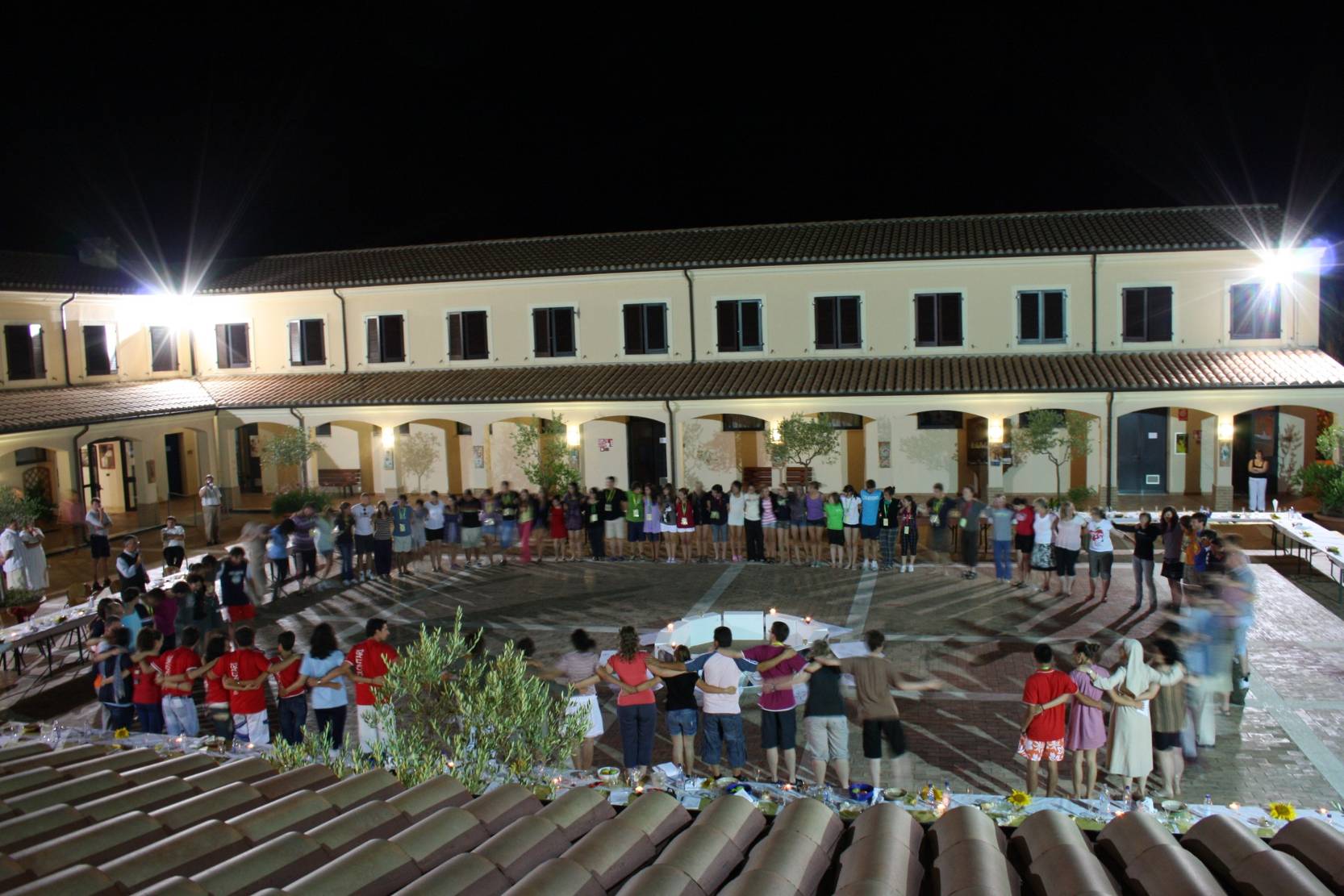 “The Bishop had assigned me to work in the council for ecumenism and dialogue. Fifteen years ago, when a priest-friend of mine from the nearby diocese of Fano came up with the proposal of an inter-diocesan project to promote Ecumenical Twinning between European parishes, I had said no.“As Fr. Giorgio Paolini recounts, this hesitation was soon resolved when he recalled that in London in 1996, Chiara Lubich launched an invitation to live an “ecumenism of the people,” an “ecumenism of life” (video). “So I resumed my contacts with my friend from Fano and together with other priest-friends we threw ourselves into the ecumenical twinning experience.” The first parish they contacted was the Orthodox parish of Fr Nicu in Romania. «The fraternal relationship among us generated an educational cooperation between the youth of the Diocesan Movement of the Marche region and his youth, and which spread out in concentric rings with the sharing of the Word of Life and the spirituality of unity between the Catholic and Orthodox youth through frequent meetings. The two important yearly meetings each year were held at Christmas in Rumania and in summer in Italy Then came the annual experience of the Ecumenical Youth Meeting in Loreto, organised together with the Head of the John Paul II Centre of Montorso (Loreto), who had proposed the creation of an ecumenical camp with all the youth contacted through the ecumenical twinning, but also open to all, to allow us to share the mutual wealth of our churches of origin. This year, from 29 July to 4 August, the seventh edition will take place and which foresees the participation of over 200 Orthodox and Greek Catholic youth from Rumania, Lutherans from Denmark and Sweden, Anglicans from England and Catholics from Italy.”
 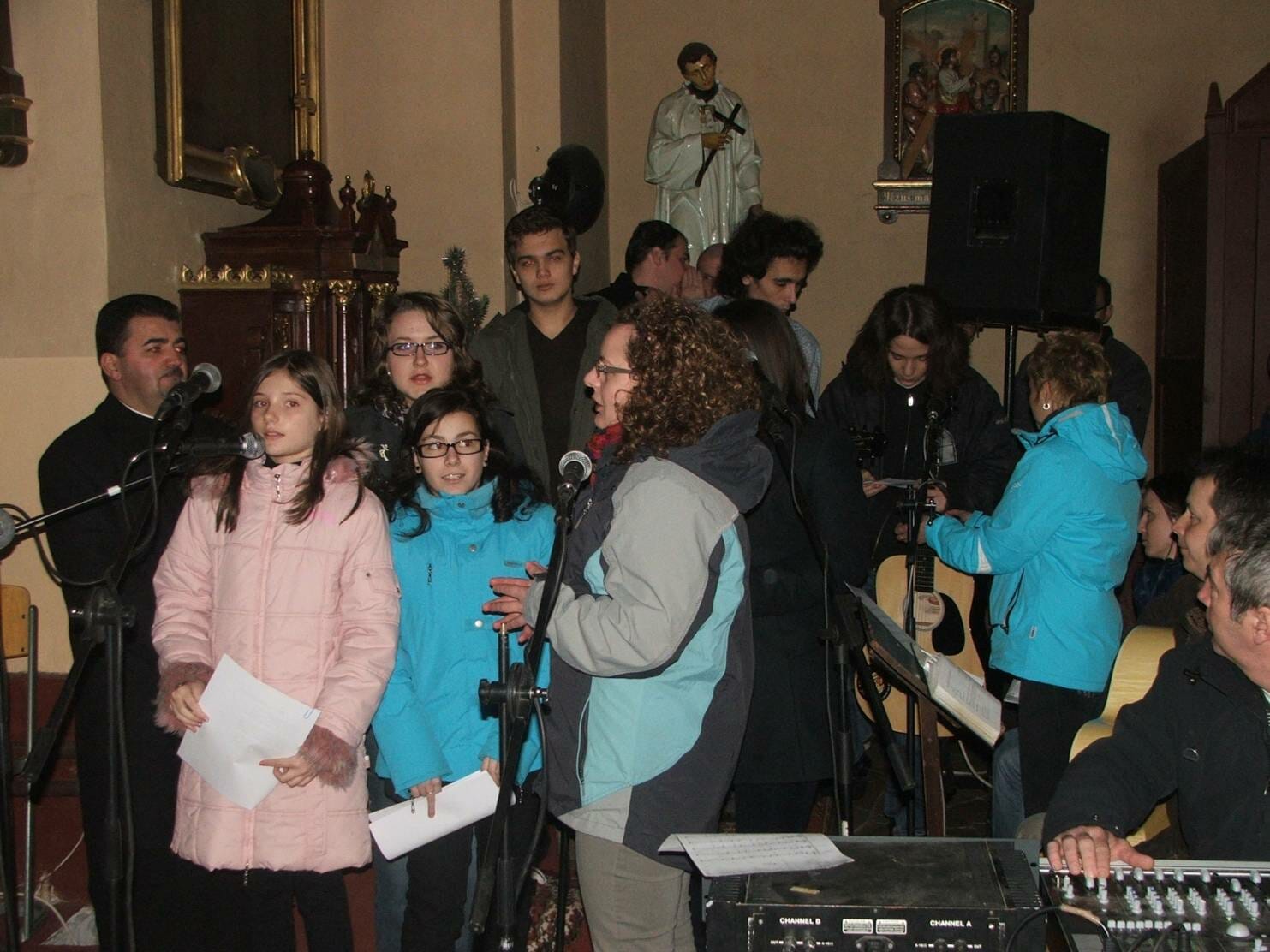 Lastly, the promotion of the “culture of dialogue” among the youth. In January this year, during the Week of Prayer for Unity of Christians, for example, the parish of Borgo Santa Maria hosted around 20 Rumanian boys and girls of a parish it is twinned with. Together with the Italian youth of the Ecumenical Meeting, they then met with the students of four high schools in the provinces of Pesaro and Urbino. Barbara, spokesperson for a family of the parish continued with the story: “In a world oppressed by wars, divisions and terrorism, these boys and girls wished to propose and offer a message of joy and hope, and certainly a new culture of relationships and encounter that help us to comprehend that in the diversity of others we can discover that richness which brings unity and not division. After watching a film and listening to the testimonials of the youth, the Ecumenical Meeting broke up into groups to get to know the Romanian youth better, through a question-and-answer session. Despite language difficulties they did their best to communicate with one another. As a family we participated in these meetings as observers, but we feel that we have to thank all those who believed in this project, and continue to do so. I thank the parish priests and the Deans of the high schools, but above all God, who in his immense love made us come across such youth, motivated and determined to change things. They can count on our support and we have faith that they will be able to involve more and more young people, and create a better world where all can live in peace and harmony.”
24 Jun 2015 | Non categorizzato
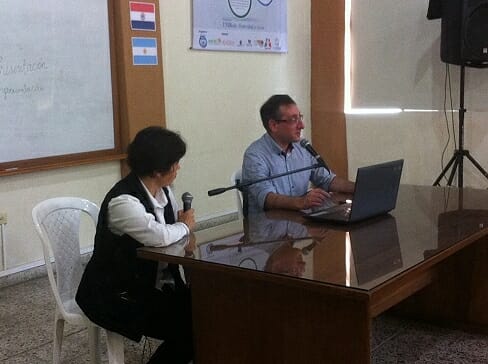 In 2013 the Colombian city of Medellín, with its 2.4 million inhabitants, was recognised as the city that achieved the most rapid modernisation process in the world, also due to the developments undertaken over the last years, like for example, the drop in carbon dioxide emissions, creation of cultural areas, and reduced criminality. The Mundo Mejor Foundation operates in Medellin and due to this was chosen as the seat of the 3rd UNIRedes Seminar, that was held from 3 – 7 June. There were representatives of over 30 organisations from Brazil, Mexico, Argentina, Bolivia, Paraguay, Venezuela and Colombia, with the addition of other 10 countries that participated via streaming. During this seminar the various social organisations inspired by the spirituality of unity accepted the challenge to strengthen their joint efforts. Anabel Abascal, member of the Coordinating Committee affirmed: “As social associations members of the UNIRedes believe that, in society today, working within a network is the only way in which we can call attention to universal fraternity which is our source of inspiration.” The discussions of the four-day meeting revolved around the tools available to be able to best respond, with daily work, to the great social challenges. Susana Nuín, of the Episcopal Conference of Latin America (CELAM) illustrated the Regional Church’s viewpoint, by presenting the 4-crossroads for social intervention: care of nature, building of peace, migration and social justice. An Italian Professor, Giuseppe Milan, expounded on intercultural pedagogy based on the spirituality of Chiara Lubich – a pedagogy that recognises and takes upon itself the sufferings and needs present in social diversity. Milan affirmed: “The principle of education is fraternity, education of universal-men who centre on dialogue to build new societies. The methodology is the art of loving. Accepting all and respecting the different cultures.” The other themes undertaken were related to the institutional consolidation of the organisations and network management. To this end, Francesco Tortorella of AMU (Action for a United World), explained how the projects are designed, starting from the funding phase up to direct participation of the protagonists. To conclude, the working groups formed a new Coordinating Committee and the various working commissions that will have to pursue the various UNIRedes objectives: develop new communication strategies to intensify communion and diffusion of the various actions, giving visibility to the hope of diffusing the small, but important changes our actions generate in the lives of people; achieve a greater impact in the local public policies; weave new bonds of cooperation between organisations; work in such a way so as to give the beneficiaries of the project an active, leading role; incentivise reciprocity; promote social volunteer work as a strategy to improve the management of organizations and form a new humanity. The various discourses of the 3rd Seminar can be view via streaming and in the web page Sumá Fraternidad.
18 Jun 2015 | Non categorizzato
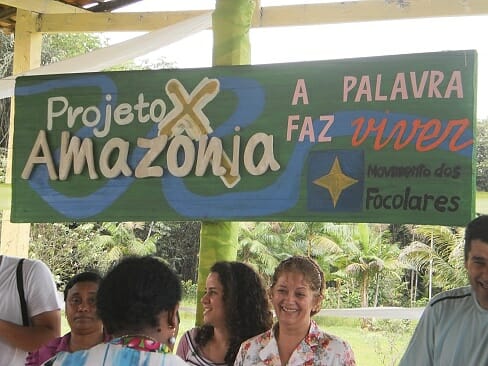
Raimundo is a hairdresser and Edilene, an anesthetist and public administration clerk. So to take interest in the environment is not exactly their line of expertise. But in the face of the environmental and cultural invasion they are undergoing, together with other families with whom they share Christian ideals, they started to pose some questions to themselves. What heritage would we be leaving to our children? How can we diffuse our vision to a society that seems to be unaware of this destruction? How can we go against the current? They have been married for 29 years, and have three children and three grandchildren.They live in Abaetetuba (Parà – Brazil), an «island» that covers Igarapé-Miri, Moju and Barcarena, three cities that were famous in the 1980s for the mining and industrial settlements. Many families had left their fields to work for the multinational companies, and settled down in the suburbs, nurturing new areas of poverty, with the illusion of a wealth they never reached. The impact of these industries on the environment was devastating, to say the least. It had started with the indiscriminate felling of the açaizeiros (a regional native plant) to extract the palmito which was exported, depriving the families of an essential nutriment. The industrial residues dumped in the rivers had caused a visible reduction of fish and prawns, while atmospheric pollution reduced the production of fruits remarkably. This happened at a local level. But the effects of the deforestation had a repercussion at global levels.The Amazon, in fact is a region where everything is mega in size, like its extension (occupying over 50% of the entire Brazil), its biodiversity, its forests and volume of sweet waters. But with the deforestation underway, all these precious resources run the risk of completely losing their efficacy. It was not easy to see what had to be done. But Raimundo and Edilene could count on an element to make the difference: unity with the other families and the strength deriving from letting God guide them in their choices in life. So they made a joint decision to transform with their own resources, a grazing field of 34 hectares into a fruit grove. For trees, they chose the typical varieties of the region that were more at risk of extinction, and at that point, some of these were no longer known by the youth. They worked hard and with great enthusiasm to create in Abaetetuba, an area for the preservation of local biodiversity. The fruit grove, now producing edible fruits of 166 native species with two African species, makes up a collection of a unique genre: a wealth that offers an alternative to the region’s sustainable future. The area called Radini, in honor of their children, Raisa, Radi and Raoni, is often visited by internationally famed researchers and environmentalists, actors, singers and also bishops and common folk but especially the youth. In fact, the site offers theoretic/practical lessons on biodiversity and conservation of the environment,with the distribution of informative material. Even after the awards and acknowledgements received – like the important recognition in 2012 given by the Goeldidel Parà Museum – the site is now the subject of newspapers and magazines in the region. Edilene and Raimundo are always surprised to see the interest of so many people, some of whom feel the urge to follow their example and become, as they like to define themselves, “environmentalists with a heart.”
See reportage on page 47 of the journal Amazonia Viva http://issuu.com/amazoniaviva/docs/43_av_mar_2015_web_ok/1
