
Among the street children
In the Mexico City Focolare, Pope Francis’ invitation to “go forth” can be seen in the face and heard in the voice of Reina Cruz. Originally from El Salvador, she serves a community that shares the Word of Life in difficult situations, just a few kilometers outside the Mexican capital. In the group there are both dealers and users, and those who have decided to befriend them. The focolarine carry the pope’s voice to the periphery, as he has often invited us to, to suburbs that are difficult, poor, made up of millions who, thanks to their work, are able to hear the words of the Gospel for the first time. Reina admits it is not easy. “Going into an environment where 13- and 14-year-old kids practically live without any family, we feel that we can at least bring our presence. Their activity has even spread to more remote areas, such as visiting Xavierian missionaries in the Santa Cruz forest, a visit made even more intense because it was Holy Week and Easter. In these often-forgotten corners of the world, the young women present the Focolare spirituality. By now it has spread to 182 countries in the world, with centers in 87, including Mexico, where there are close to 110,000 members. Setting their sights on befriending their brothers and sisters, which is typical of the movement founded by Chiara Lubich, these Mexican groups have entered into various social environments. They have been encouraged by Pope Francis’ visit to Loppiano on May 10 to continue on the path started by Lubich, a Servant of God. “A dozen of us,” says Reina, “went to visit Santiago de Anaya, Actopan, in the state of Hidalgo, the heart of Mexico.” Without expecting anything in return, not even interest in their spirituality, they have begun working with the Missionaries of the Divine Word. Their one objective is to offer points for the community to reflect on daily: the word of God and its effects on our lives as committed laypeople. The phenomenon of drug dealing and abuse among teens sounded the alarm for members of the Focolare, driving them to listen to difficult experiences and share the Gospel message with kids who live on the street alone. “On May 6, for example, there were two girls aged 14 and 17 who came up to tell us tearfully about how drug use was growing among their friends.” The older one had been thrown out of her mother’s house, Reina remembers, and she was desperate after ties with her mother had been cut. What to do? How to help? For those who follow Chiara Lubich, healing issues and wounds in the family is part of the task of accompanying others. The challenges continually grow in line with a society whose values are ever more fragile, with weak family ties that at times can even be completely absent. As a result, their presence ends up being the only reference point for people who, as they grow, need a ledge to cling to and not risk drowning in drugs or despair. This is why listening is so important, they explain at the Focolare in Mexico City, as is prayer and spiritual meetings to renew lives in God. The goal remains unity, and this is an opportunity to rise from poverty and walk toward dignity. The dialogue with the local priests helps them to act together, avoid divisions, and look at development projects such as an economy of communion. It is a journey taken together with the Virgin Mary, a mother who never abandons her own children, “not even those who are most alone.”
New rector of PLU
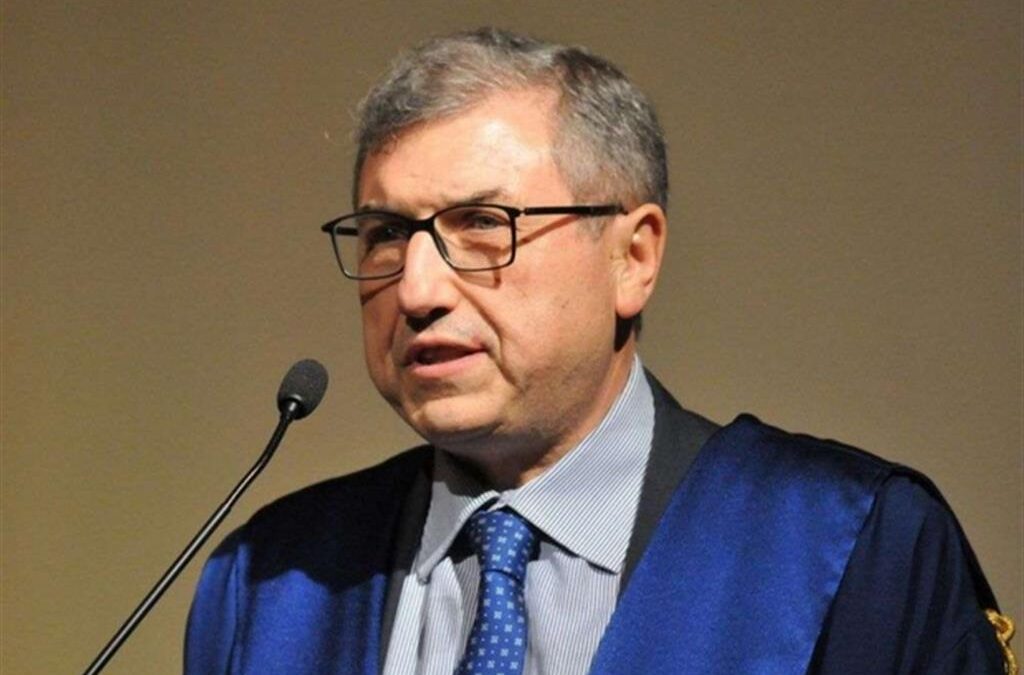
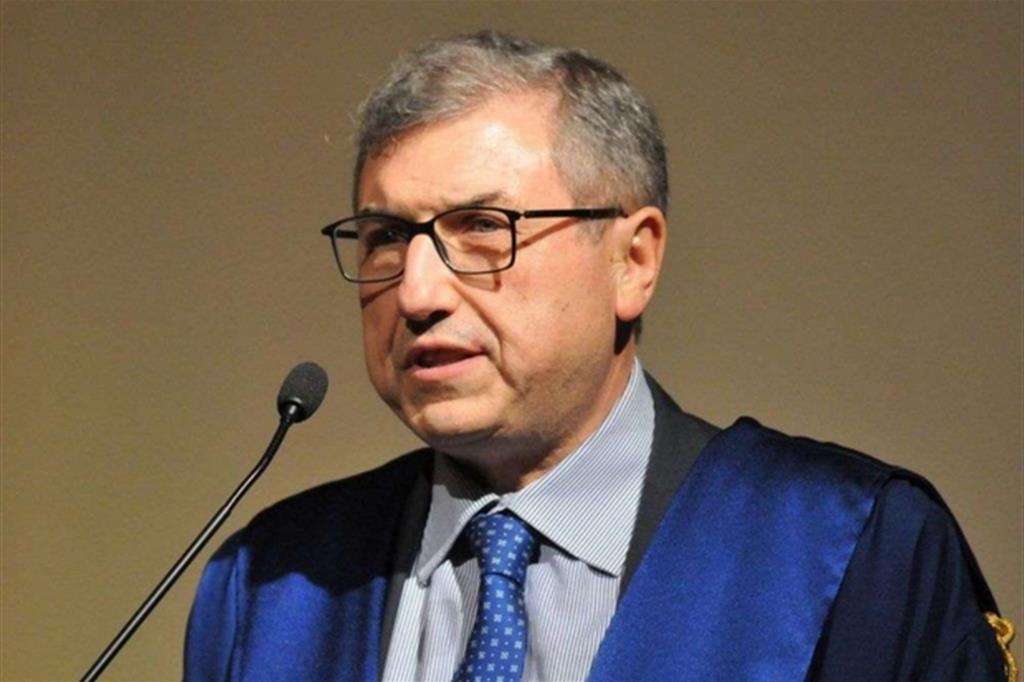 There is great satisfaction also in the Sophia University Institute of Loppiano. The new Rector of the Pontifical Lateran University (PLU), recently appointed by Pope Francis, is also a “visiting professor” at the University Institute. Vincenzo Buonomo, jurist and canon lawyer, from 1 July will be the first ever layperson to guide the pontifical university, and succeeds Bishop Enrico dal Covolo. Born in 1961, married and father to two children, Buonomo has a longstanding bond with the University, first as a student, with a doctorate in Utroque Iure and also a specialisation in International Law with a Preparatory Diploma for the Diplomatic Career, after which he became a full professor from 1984 to 2001. He was the Dean of the Civil Law Faculty from 2006 to 2012, and is currently the coordinator of the Doctorate studies of the same Faculty. In 2007 Buonomo covered the role of office manager of the Holy See’s permanent observer at the UN Food and Agricultural agencies (FAO, IFAD, PAM), with which he started working in 1983. From 2000 to 2005 he was moreover, consultor of the Commission for Dialogue with Muslims at the Pontifical Council for interreligious dialogue. Since 2014, he has been the councilor of the State of the Vatican City.
Living the Gospel: Blessed are the peacemakers
The cake Family life is not always straight forward. An argument can break out when you least expect it. Last weekend we were in the car on our way to visit friends. My wife had spent a whole day in the kitchen preparing a really special cake. Just as we were about to arrive I realised I had missed the turning to their road and I put my foot down hard on the brakes. As the car came to a sudden halt, the cake propelled forward onto the floor. A heated “discussion” ensued. I wanted to make the point that the cake had been left in the wrong place where it could fall, as in fact it had done. However, I managed to stop myself and instead I apologised. Eventually the tension eased, and when we arrived at our friends’ house, bearing no gift and with our clothes covered in cake, we were nevertheless in harmony with each other. Enrique – Spain Someone less fortunate I had just got off the train when a youth pushed passed me, chased by three men shouting «Stop thief!». They caught up with him and started to beat him. On seeing this I rushed in and tried to shield him. He was just a young boy, he looked about 16 years old. Curled up on the ground he tried to say in broken Italian that he had stolen food because he hadn’t had anything to eat for days. When the police arrived, he explained that he was a refugee from Congo, where all the members of his family had been killed. I asked to be allowed to accompany him to Accident and Emergency. “You have saved my life,” he said along the road, “you are my Italian mother!” He was diagnosed with cranial trauma and three broken ribs, and admitted into hospital. As he didn’t have the clothing he needed, I went to buy some for him. On my return, someone asked me why I was going to so much effort for a stranger, and for a thief at that! I replied without hesitation, «I’m a Christian and it’s my duty to help a neighbour who is less fortunate than myself». Anna Maria – Italy A bessing denied G.’s life ended in the most shameful and miserable way, following a night of alcohol and prostitutes. At that was not all. The night before he died, he had taken his fifteen year old son into this dark world to, as he said, teach him how to “be a man”. When I was called to bless his dead body, I immediately responded that he did not deserve the Church’s blessing. I felt I was doing the right thing in the name of justice and in order to give a good example. However, afterwards I didn’t feel at peace in myself. I thought of the man’s widow and children. Was I right to deny them this small comfort? Didn’t I only know the man’s story superficially? And yet I had set myself up as his judge, in the place of God. After a sleepless night, I made a decision. I went to visit the man’s family, to ask their forgiveness and to make arrangements for a Mass for the repose of the soul of their loved one. Maybe this gesture brought a little peace to them. E. P. – Italy Aquiline nose Among my group of friends, we always talk about things like fashion and make up and so on. One day, one of the girls started mocking me, saying I had an “aquiline” nose. This made everyone laugh. I rushed away, feeling humiliated and I stayed in a bad mood for days. My family saw the state I was in, but nothing they could do could make me feel better. Then one evening my sister invited me to go with her to a meeting of people who base their actions on the Gospel. I agreed and when I got there, I felt as if I had entered another world, one in which important things really had value and not just banalities like the shape of a nose or of a dress. Since then, I have experienced profound peace within me. I now feel truly myself. C. K. – Poland
Extraordinary guests
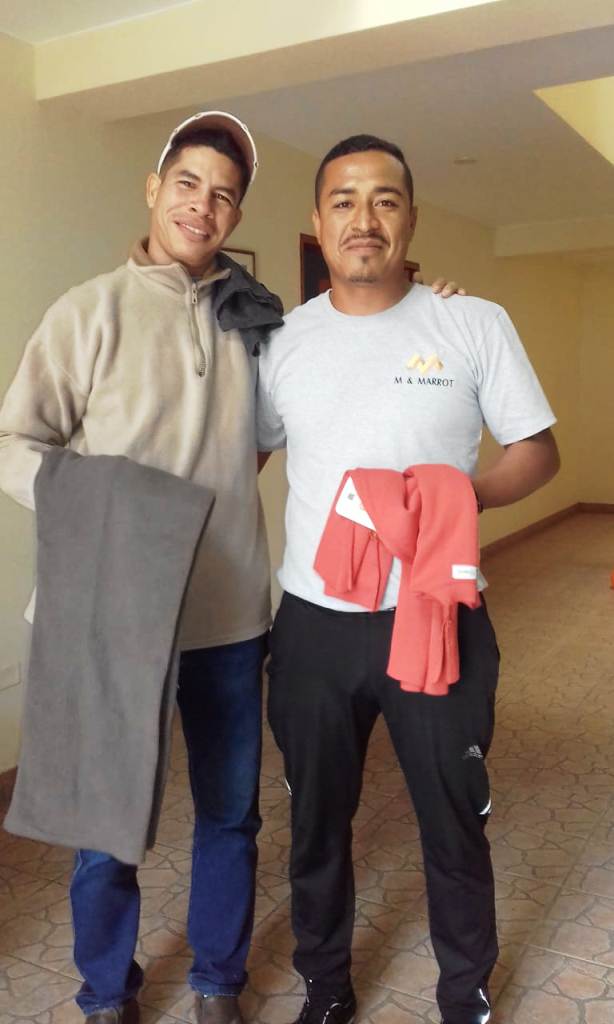 “The influx of immigrants at the border is growing by the hour. The economic crisis that is bringing the country to its knees brings pain both to those who stay and those who decide to flee.” The words of Silvano Roggero, a Venezuelan and son of Italian immigrants, show the drama that an entire people is living through. For the last three years he’s been living in the Focolare center in Lima, Peru. “Despite enormous difficulties caused by the sudden and unexpected entry of hundreds of thousands of people, the neighboring countries, with the usual generosity of these lands, are attempting to take them in. I have personally witnessed one of the many dramas that today’s ‘humanity at the periphery’ is living through. “Just yesterday the director of a school in the peninsula of Paraguaná, in the north of Venezuela, wrote to me. Something different is happening in the office there: a number of parents have come to withdraw their children. They have been forced to leave.” It’s an exodus of biblical proportions, caused by an extremely serious economic and social crisis, one that is overturning the makeup of an entire country. Inflation has skyrocketed, and food, medicine and raw materials are running out. “In December 2017, Ofelia and Armando from the Focolare community in Valencia (the third-largest city of Venezuela), moved to Lima. At first they managed an early childhood center. “Then Ofelia had a dream: find somewhere to offer a preliminary welcome to the swarms of people arriving after travelling seven days over land. We’re talking about close to 300,000 Venezuelans arriving in Peru over the last year and a half! “Ofelia and others,” continues Silvano, “organized a welcome dinner in the Focolare for a small group of Venezuelans. Some already had heard of the movement, but there were some who did not know anything about our group. Our guests came from different parts of the city, some as far as an hour or two away. They find it difficult to get around in this metropolis of almost 10 million inhabitants.” It seemed like a drop in the ocean, but what motivated them was to welcome these people as if they were Jesus in person who turned up at the door. “As you can imagine, faced with their difficult situations, we did not have preconceived solutions. We had no idea where to begin even, although what we could do was offer them a hot meal and listen. Chiara Favotti