27 May 2018 | Non categorizzato
Holding my position I’m Albanian. After searching long and hard, I found a job as a hospital nurse in Macedonia. One day, trying to stay true to my religious principles, I refused to take part in an abortion procedure. My colleagues were quite surprised, since in doing so I risked being fired. Despite knowing that our family, which depends on my salary, would have hurt because of this, I held my position. After a few days, the head of the hospital privately declared his admiration for what I did. He too wanted to challenge the practice of abortion, but dared not risk his position. S. E. – Macedonia Raising chickens We wanted to start a business to meet the needs of the poor. Putting together some of our resources, we started to raise chickens for their eggs. Our first employee was a 20 year old who I later discovered was dishonest. One time, in fact, he disappeared with a large number of eggs. He had been the only one absent that day. Each time I decided to fire him, however, I stopped myself. “Firing him is easy,” I told myself. “Wouldn’t be better to help him?” I asked God’s help, and I tried to put trust in that young person. A few months ago, many of the chickens were dying, and the veterinarian couldn’t understand why. That young man, observing them, noticed it was because the nests were placed wrong: the chickens who went to lay were not protected from the others’ pecking. We changed things, and there haven’t been problems since. P. L. – Cameroon Night shift A colleague of mine covers the night shift at the digital center of a bank where I work. In the latest of many setbacks, he telephoned me in a panic and asked me to run over to help. Even if it took a lot to leave home and my family, I decided to go and give him a hand. Before anything I tried to take in and absorb his anger, and little by little he calmed down. Together we tried to gather all the data that had gone missing. At that point my job was done, but I thought of Jesus’ words, “If anyone forces you to go one mile, go with him two miles.” I proposed that he go home for the night, telling him that I’d cover the rest of the shift. When he responded that he preferred to stay, I stayed with him until midnight. Beyond my tiredness, I also felt a great joy. F. S. – Switzerland Communication breakdown After years of marriage, my wife and I got to the point of not being able to communicate. Anything we tried to say to each other in order to clarify how we felt, or why we did things, seemed to pour gas on the fire, to the point that we threw in each other’s face that we had really never shared anything. Our life was filled with days of hell. So much so that our children, even if they had already left home, noticed this intense awkwardness as well. One day, when I was feeling particularly overwhelmed inside, I asked God for help. A short while later, as I was looking through a magazine on the tram, an article caught my attention about the importance of trusting each other. That was exactly what I needed! I understood that, instead of analyzing actions and words, I needed to restore faith in my wife, showing that I believed in her. I tried this, and my change in attitude bore fruit. After days of silence, my wife and I have begun a new dialogue. F. T. – Hungary
24 May 2018 | Non categorizzato
https://vimeo.com/271706391 (2403M) Copyright 2018 © CSC – P.A.F.O.M. – All rights reserved
“Two weeks ago we were with the Pope in Loppiano. Two weeks have gone by and we ask ourselves, “Did it really happen?” It really did! It did not only happen, but now we have something to do. So at the moment I am asking myself, “Have we fully understood what actually happened?” Maybe we are discovering it a little at a time, as we understand his wonderful talk better, because the Pope challenged us. He said we are at the beginning of our journey, at the start of Loppiano, at the start of everything, we might say. This being at the start means that we must look ahead, that we must do something to move forward. And the Pope told us what to do: we must transform society – he said some very strong things – we must not content ourselves with fostering relationships between individuals, in families, between different groups and peoples, but we must even get together to beat the challenge of this society which is going wrong and needs the Gospel, which is in extreme need of seeds of Gospel life that then grow and transform it. We really feel we are at the start, and we truly are at the start, but we cannot stop, precisely because in saying this the Pope gave us this challenge and said, “You can do it”. He also told us how to do it, because he said, “… by handing on to others the spirituality of ‘we’, this ‘culture of we’”, which can foster a global alliance, a universal alliance, a new civilisation, a civilisation born from this ‘we’. He also said that the charism is a powerful help and encouragement for us. The charism is a gift of God, so we mustn’t feel proud about having received this charism, but with the humility he reminded us about, we must be aware of the charism and do all we can to hand it on to society around us. This is a long and tough path, but the Pope said, “We need women and men who are fit for this”. So, do we want to respond to the Pope’s appeal? I think we do, and that we will give the whole of ourselves as we discover, there where we are, how to transform society around us. I think this is the commitment we are taking up today and that will last our whole lives.”

24 May 2018 | Non categorizzato
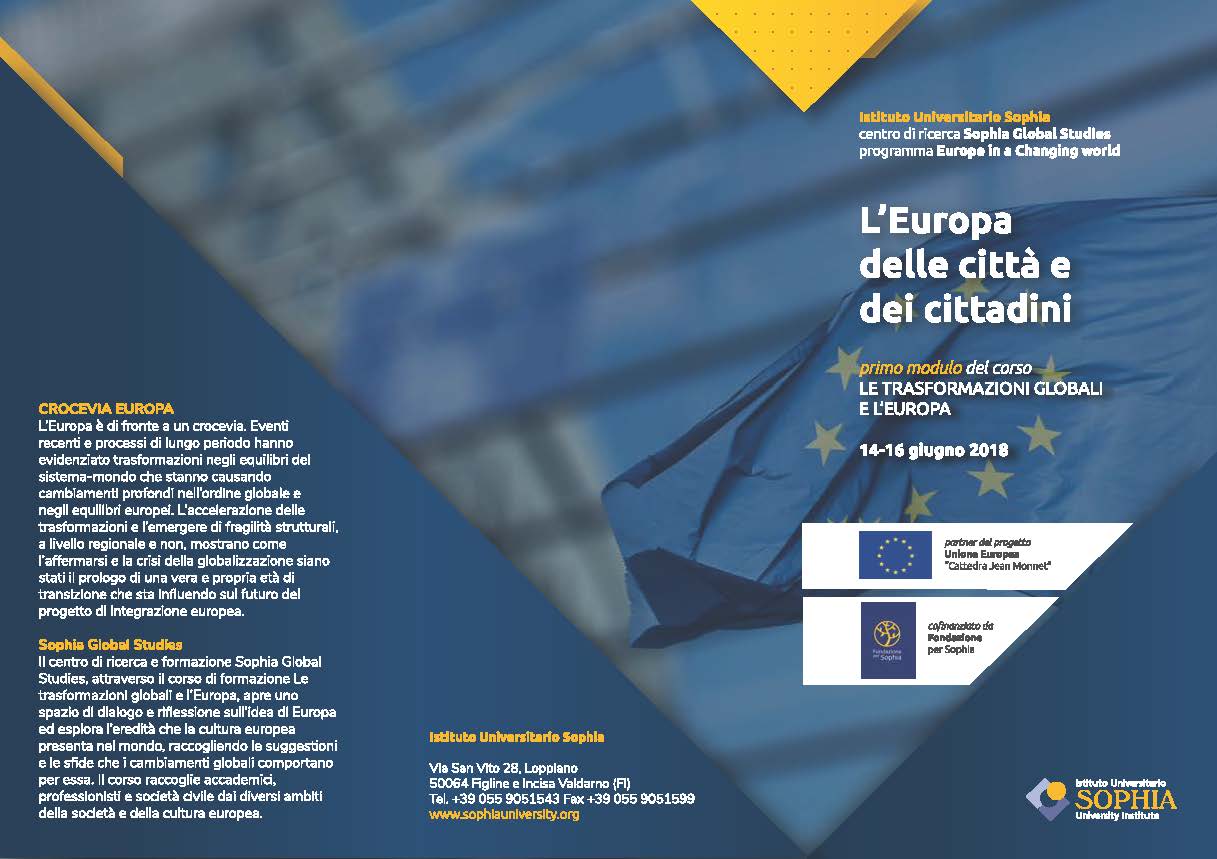 Next June, the Sophia University Institute will inaugurate the course. The 18-hour course, conducted by Léonce Bekemans, Jean Monnet Chair Ad Personam of “Globalization, Europeanisation and Human Development,” proposes the study of the role of cities as workshops of integration and citizens as the foremost actors in the process of the European project relaunch. The lessons will present the state of the integration process, reflecting on concepts such as independence, inclusion and European citizenship. Particular focus will be set on the revolt against governance systems and their local and regional dimensions. The course will be opened with an introductory paper of Romano Prodi entitled: “Europe today. What Europe in the future? The course module addresses professionals, primary and secondary school teachers, scholars, administrators and communication operators. Professors and school directors may make use of the Teacher’s Card (MIUR 170/2016). 15 scholarships are at the disposal of young people up to 30 years of age. For information and registration www.sophiauniversity.org, globalstudies@iu-sophia.org.
23 May 2018 | Focolare Worldwide
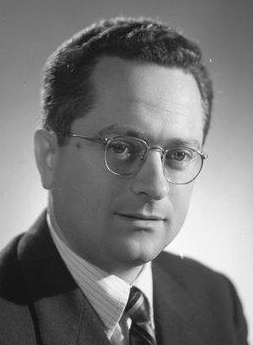 In 1956, invited by his parliamentary colleague, Igino Giordani, Tommaso Sorgi participated in the first Mariapolis held in Fiera di Primiero (Trent, Italy). He was married to Assunta, whom he tenderly loved and who bore him 4 children, but there in the Dolomites, he had gone alone only to please his friend. In fact, he thought that the event would not be so overwhelming. Instead, it was a bolt of lightning. “The encounter with the charism of unity – he recounted– renewed Christianity in me, the interior life and perhaps also the physical one, the sense of existence. Before, I saw my neighbour as a collective name, a group without bearing a single countenance, and was thus nobody. Now my neighbour is a brother or sister who exists or who passes me by.” And while Tommaso was still in the mountains, he made this resolution: “Jesus, I want to be yours, the way You want me to be, dispose of me as you wish.” Born in the province of Teramo on 12 October 1921 from a family of artisans, he graduated with top grades. He became an esteemed professor of sociology in the University of his city, a town councilor (1946-1964), a provincial councillor (1960-1964), and president of the United Institutes and Hospitals (1953-1972). His intelligence and spirit of service with which he played his public role, earned him the trust and votes of the people. In his political life – he was in Parliament from 1953 to 1972 – he stood out for his sensitivity for the weaker classes, stressed in putting in practice what he had learned in the Mariapolis. He wrote: “I am experimenting that we can “live Mary” also in the rowdy world of politics.”
 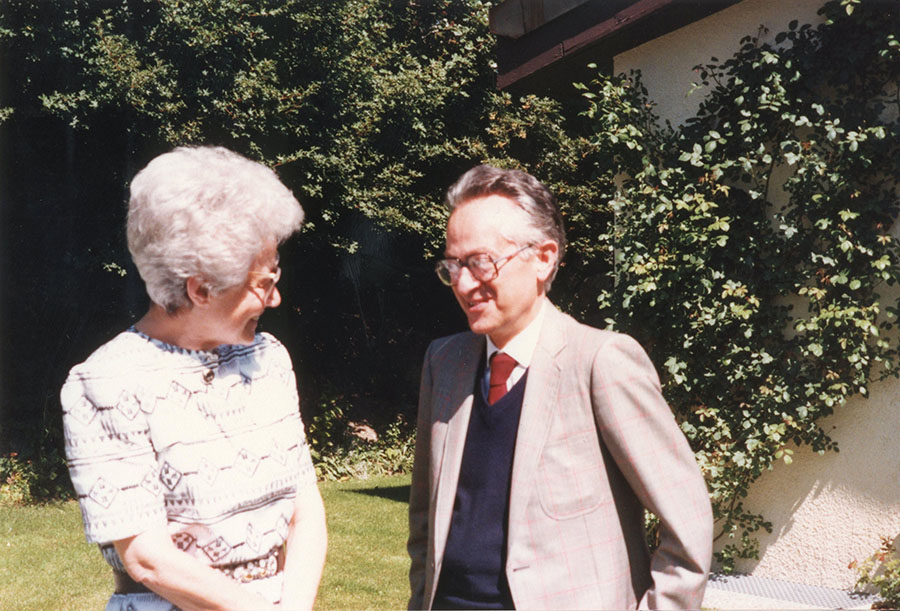 In 1985 with Assunta who also became a married focolarina, he moved to the Center of the Movement to create the “Igino Giordani Centre,” a task which gave him the chance to deepen and bring to light the multifaceted spiritual and human features of his friend and his life model, now a servant of God. Drawing inspiration from the Word Chiara Lubich had given him as a spiritual motto: “Stand up and walk” (John 5.8), he dedicated himself to the development of the New Humanity Movement, with many initiatives among which was the “Triple Pact” – moral, programmatic, participative – elaborated to favour the interaction between the elected and the voters, and the Appeal for the Unity of Peoples, presented to the UN in 1987. There is a long list of his books and essays that range from sociology to the history of Christianity, and from political theory to the figure and thought of Igino Giordani. Leafing through the stages of his long life (96 years), what stands out is the constant striving towards holiness, fully lived in unity with Assunta – who went ahead to the Other Life in 2014 – and the final, vigilant waiting for “the total encounter” with God who called him to Himself last 24 April. At the funeral, among the many testimonials, his daughter, Gabriella spoke significant words on behalf of her siblings: “We thank you for the love you gave us, the efforts offered to civil society with competence, honesty and passion, your commitment to the service of the Church and humanity in the Work of Mary in a vision of the united world and for having transmitted to us a great ideal and for your coherence in a life that pushed you to recuse the privileges of the mandates and prefer giving than having. Thanks for the many gifts we received, of which we were not always aware, but which today acquire new value and depth for us, our children and grandchildren.” The Focolare Movement worldwide joins the family in raising thanks to God for the example of the figure of this great man, brilliant politician, simple focolarino donated to God, in the certainty that he has been welcomed into the immensity of His love.

22 May 2018 | Focolare Worldwide
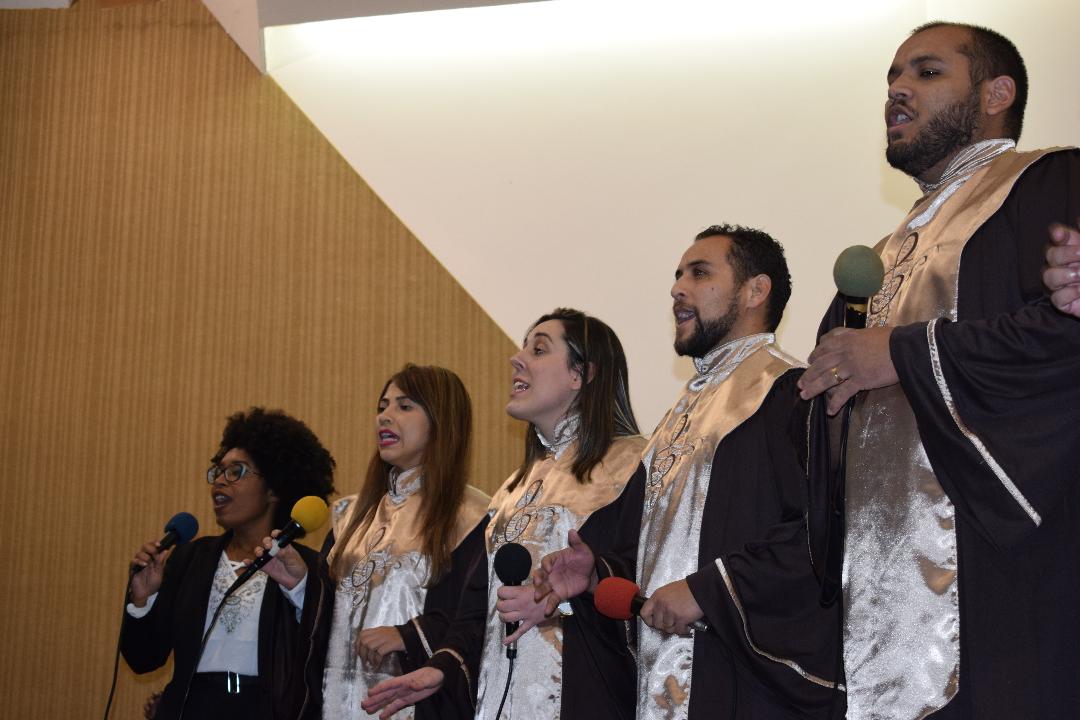 On May 16th, the 18th edition of the Noite Musical ecumenica was held at the Focolare’s Mariapolis Centre in San Leopoldo, Brazil on the occasion of the Week of Prayer for the Unity of Christians. Marina Silva, who is in charge of the Mariapolis centre, explained: “The evening of music was just one of many moments of communion among choirs from different Christian churches within the framework of the ecumenical dialogue that we work on every day.” The event gathered 400 people in a joyful and fraternal atmosphere. They came from the 7th Day Adventist churches, the Evanglical Lutheran Church, the Catholic Church, Baptist Church, JUAD, Missionaries of the Risen Christ and the Emmanuel Community of Praise and Adoration. The Integracion Choral also participated with its senior citizen singers. The theme was The hand of God unites us and liberates us” (Ex 15:1-21). Over the years, the Ecumenical Evening of Music has brought toghether 5 thousand people.
