
22 May 2018 | Focolare Worldwide
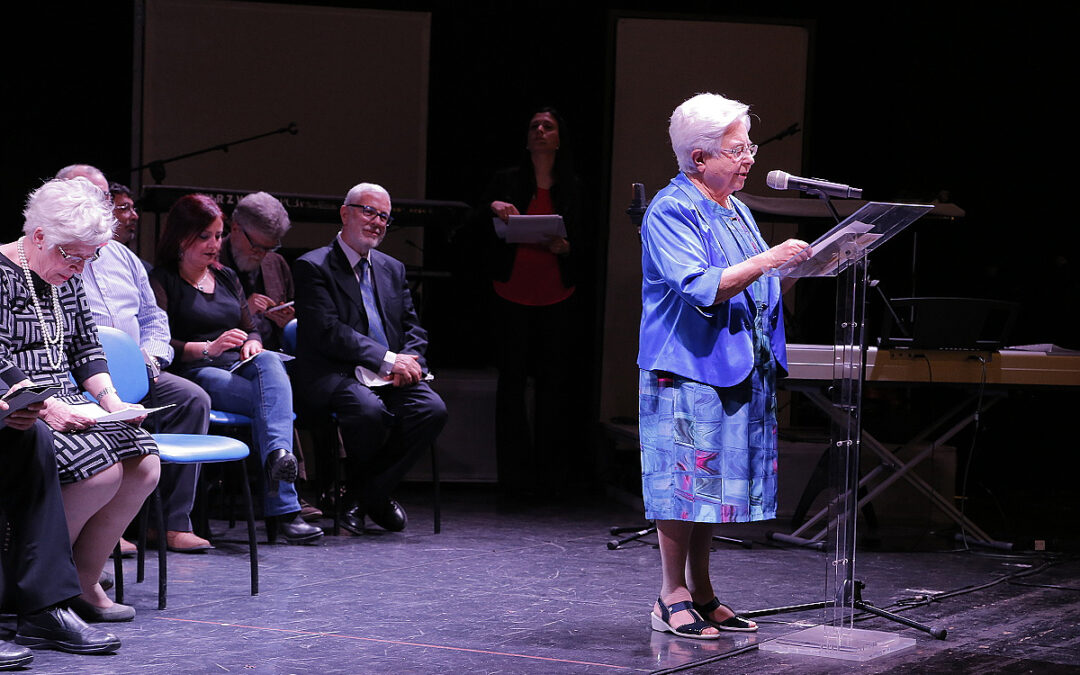
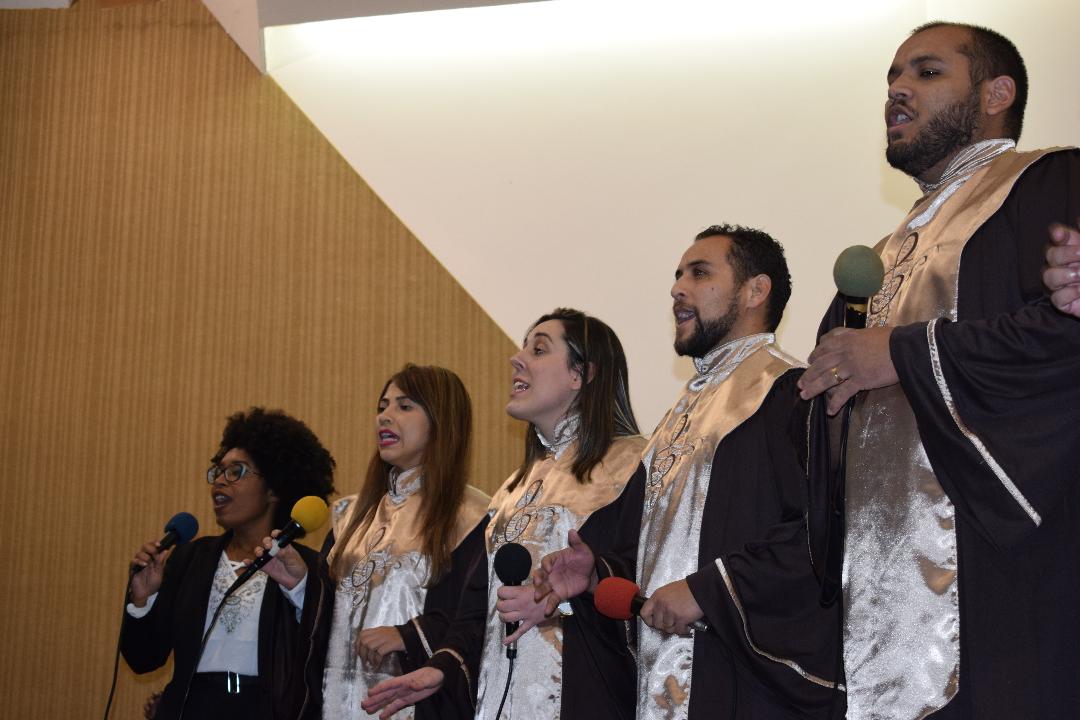 On May 16th, the 18th edition of the Noite Musical ecumenica was held at the Focolare’s Mariapolis Centre in San Leopoldo, Brazil on the occasion of the Week of Prayer for the Unity of Christians. Marina Silva, who is in charge of the Mariapolis centre, explained: “The evening of music was just one of many moments of communion among choirs from different Christian churches within the framework of the ecumenical dialogue that we work on every day.” The event gathered 400 people in a joyful and fraternal atmosphere. They came from the 7th Day Adventist churches, the Evanglical Lutheran Church, the Catholic Church, Baptist Church, JUAD, Missionaries of the Risen Christ and the Emmanuel Community of Praise and Adoration. The Integracion Choral also participated with its senior citizen singers. The theme was The hand of God unites us and liberates us” (Ex 15:1-21). Over the years, the Ecumenical Evening of Music has brought toghether 5 thousand people.
22 May 2018 | Focolare Worldwide

Photo: Federico Patti

Photo: Federico Patti
21 May 2018 | Non categorizzato
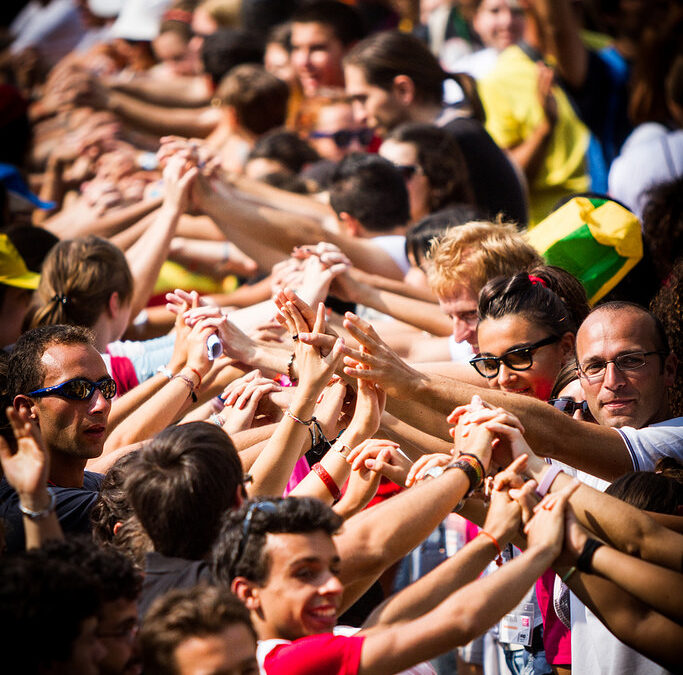
“I went to Budapest because my aunt suggested it and I trusted her. She was special, and had always been there for me throughout my most difficult years. My problems flared up when I started high school. This new phase of my life was very demanding. I started to experience the problems of adolescence, some of my friends were going off track and I didn’t feel understood by my family. Maybe I tried to grow up too quickly. I got to know a boy who I felt was my only real friend. And even so, inside I seemed to be always on the brink of anguish. I became more and more isolated, except for the rare moments when someone would listen to my silences and, without posing many questions, simply share in something of what I was going through. By the time the school year ended, I had very few friends and was always arguing with my family. I was also losing weight. I had been trying to hide my eating disorder but it was taking hold of me more and more. It was making my life joyless, draining it of all colour, light and love. I had turned inwards and imposed a state of near total solitude on myself. This was the moment when my aunt, who is a member of the Focolare Movement, invited me to go with her to Loppiano, the Focolare town in Tuscany. I thought to myself, “three days staying who knows where, without school or studying, far from the confines of my normal life; three days in which I can just concentrate on hiding food! Why not?” Actually, it proved to be a kind of caress which reached through my defences. Everywhere we went, I was included and welcomed with respect and delicacy. Someone, after listening to me for a long time, told me about Chiara Lubich. Afterwards I realised that I had somehow stopped thinking about myself and my problems, and – most amazingly – I’d stopped thinking about food! I felt free. As I travelled back home, I ardently wished I could always live like this, like being part of one big family. But the complexities of daily life soon threatened to bring me down again. 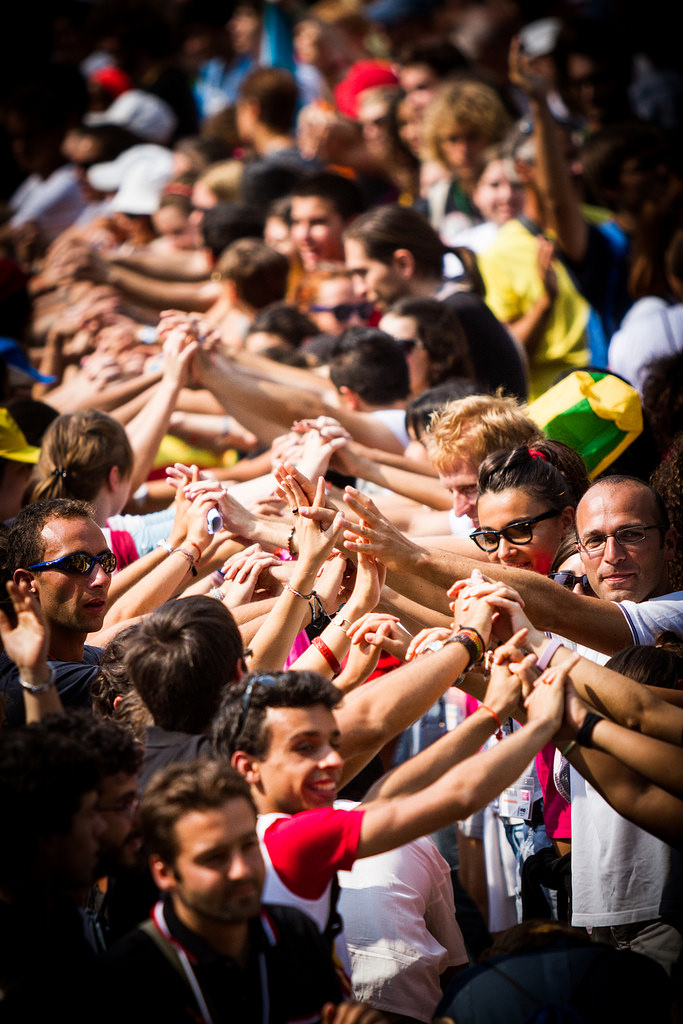 In fact, I hid behind my books while continuing to fill my head with calculations and ways to deceive those around me. I lost even more weight. My family didn’t know what to do with me. But I knew someone was praying for me. I began to go to Sunday Mass, with the excuse of taking a walk or just to get out of the house. I had always believed in God but for the first time I began to consider the possibility that Jesus could understand me and welcome me without condemning me. However, during the next two years at school, things continued to get worse. I became more and more intolerant of my family and other people. I did not respond well to the psychological therapy I was receiving. I continued to weave a web of lies and go my own way. The only time I felt any relief was during the summer holidays when I went far away from home with friends. But the summer was short and I couldn’t go on just feeling fine one month in the year. So at the end of the summer of 2012, my aunt made a new suggestion: to go to the Genfest in Budapest. I agreed and set off with five other young people from my city, including a girl from my class. It was an emotional roller-coaster for me. All those thousands of young people expressing themselves as one. It really was a bridge, not only between countries and cultures, but also a bridge between me and a new life I could embrace. I saw this sea of faces – 12,000 of them – of people ready with me to share in the beginning of a new life. I was part of the “flashmob” on the bridge over the River Danube, each of us writing a personal message on a scarf to exchange with someone from another country. I took part in the peace march. I even took part in the lunch queues. I felt part of an experience of unity, I could go anywhere because anywhere I would be at home. This time when I went back I was with my classmate and together we got in touch with the Focolare community in our home town. By now I knew that I wanted to walk the path of Jesus. It wasn’t going to be easy, my problem with food had very deep roots and the tensions within my family would not just disappear. But I felt I too was a bearer of a new light. Living the words of the Gospel one by one, I found I could begin to take control of my life. Giving of myself wholeheartedly to others, I began to discover how God loves me immensely and has a great plan on my life.”
20 May 2018 | Focolare Worldwide
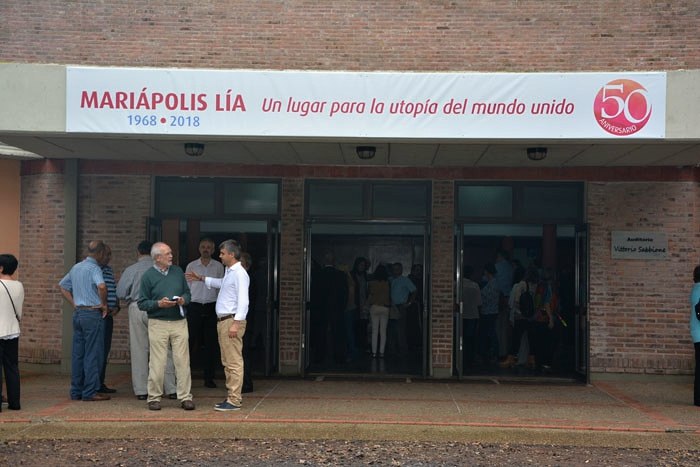 It began as a dream, just as every other Focolare town had. In 1950, Switzerland, after contemplating from a mountain above the Benedictine Abbey of Einsiedeln, Chiara Lubich had the idea that one day the spirituality of unity would produce something similar: “A small town with all the elements of a modern city: houses, churches, schools, shops, businesses and other services. A community of people from diverse backgrounds joined by Jesus’s new commandment: ‘Love one another as I have loved you.’” Her dream came true, first in Loppiano, Italy, then in another 24 small towns. Mariapolis Lia is one of them in the middle of the Argentine Pampas. Carlos Becaria, who is co-responsible for the town, was a member of the first group of pioneers: “There wasn’t anything yet. But there was a prophetic inspiration. Vittorio Sabbione, one of the first focolarinos, said to us: “You’re here because you chose God. Discomforts won’t be lacking, so you’ll have to keep Jesus on the Cross in mind. I’m not offering you anything ready-made: you have to build it all for yourselves. We stayed because we believed in that dream.”
  Mariapolis Lia is named after Lia Brunet (December 25, 1917 – February 5, 2005), one of the first companions of Chiara Lubich, invited by her to become a pioneer and take the charism of unity to the Latin American continent. A woman of Trent, like the foundress of the Focolare, she was labelled a revolutionary because of the radical way they lived the Gospel on a continent marked by so many social problems. Obviously, she never imagined as she gave a strong push to the Mariapolis in Argentina, that one day it would bear her name. “Lia”, just like Loppiano in Italy, which was recently visited by Pope Francis, strives to be a tangible sign of a dream that is coming true: a more fraternal world renewed by the Gospel. Currently 220 people live in Mariapolis Lia, but it welcomes hundreds of visitors throughout the year, mostly young people for long or short stays. Nearby stands Solidaridad Business Park, inspired by the Focolare’s Economy of Communion Project.
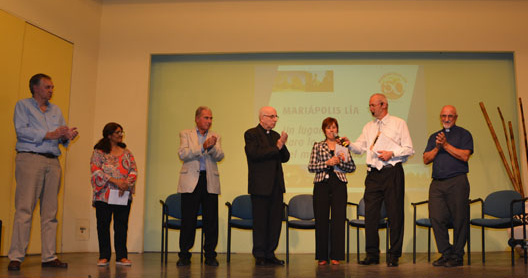
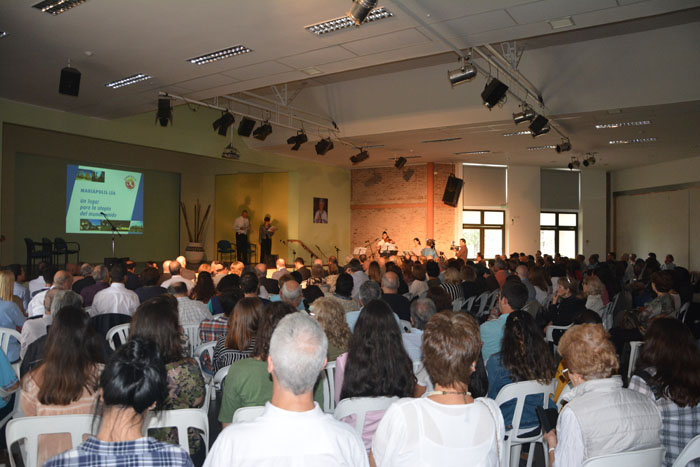
 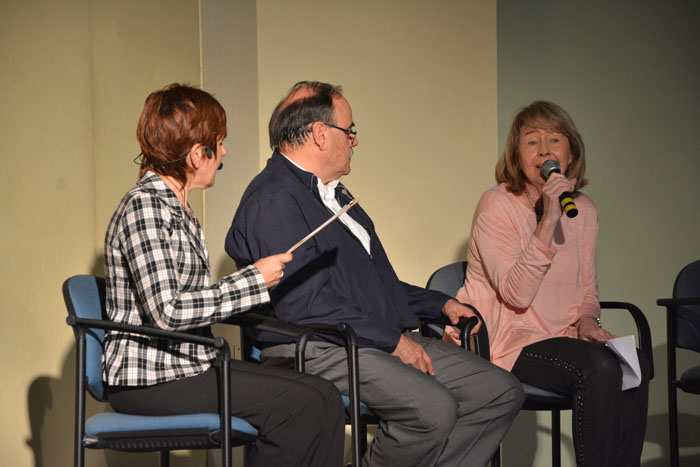 More than 250 people took part in the celebrations at the end of April, which will continue during the 50th anniversary year of the Mariapolis’s founding. They will be attended by Church leaders, representatives from the Movement, Christian Churches, Jewish faithful and people with no religious affiliation. “We got there at night,” recalls Marta Yofre, one of the first young women to arrive on at the threshold of the Mariapolis. I was feeling a sense of powerlessness, but also one certainty: Our Lady would be the one to build it.” Nieves Tapia, founder of the Latin American Centre for Learning and Solidarity Service, attended the training school for young people in the 1980s: “Here I learned to love the other country as my own and to enlarge my heart to all of Latin America.” “Without realizing it, I was given the gift to experience as something normal, what was actually totally revolutionary: love for neighbour.” For Arturo Claria, a psychologist, UNESCO Master in Culture of Peace, what he experienced in the Mariapolis twenty years ago “is a mark that I will never be able to erase, a living demonstration that love transcends life.” The Bishop of Mercedes-Lujan, Augustin Radrizzani: “It’s moving to realize what significance it has had for our country and for the world. It unites universal peace and brotherly love, illumined by the grace of this ideal.” Eduardo Leibobich from the Hebrew Organization for Inter-Confessional Dialogue, recalled the numerous “Peace Days that were held by the Mariapolis. Methodist pastor Fernando Suarez from the Ecumenical Movement of the Human Rights of People With Different Convictions: “I extend an invitation to join forces. It’s too beautiful the ideal of a free and equal human race, made brother and sister by respect and by mutual love.” Gustavo Clariá
19 May 2018 | Non categorizzato
The Christian celebration of the outpouring of the Holy Spirit upon Mary and the disciples of Jesus is celebrated at Pentecost, that is, on the fiftieth day of Easter. We read in the Acts of the Apostles: “When the day of Pentecost came, they were all together in one place. Suddenly a sound like the blowing of a violent wind came from heaven and filled the whole house where they were sitting. They saw what seemed to be tongues of fire that separated and came to rest on each of them. All of them were filled with the Holy Spirit and began to speak in other tongues as the Spirit enabled them.” (Acts 2:1-4). Chiara Lubich wrote when referring to the charism of unity: “The Holy Spirit is the gift that Jesus gave to us so that we might be one as He and the Father are one. Of course, the Holy Spirit was in us to begin with, since we were Christians; but here there was a new illumination, a new manifestation of the Spirit among us, which made us participants and actors in a new Pentecost, along with those ecclesial Movements renew the face of the Church.”
