14 May 2018 | Non categorizzato
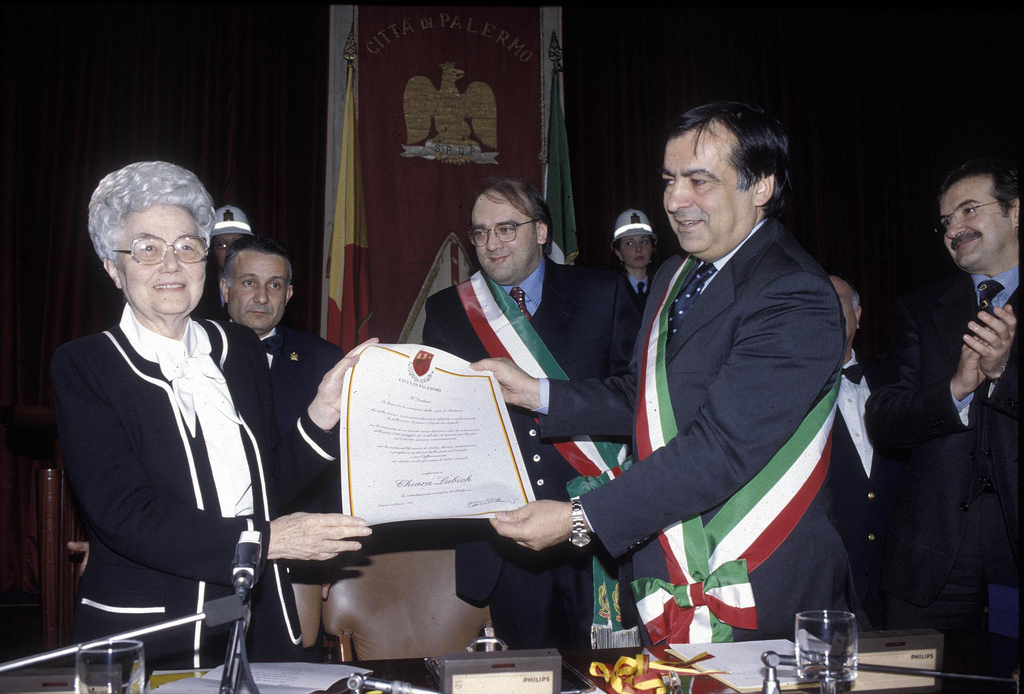
20 January 1998: Chiara Lubich is awarded the honorary citizenship of Palermo
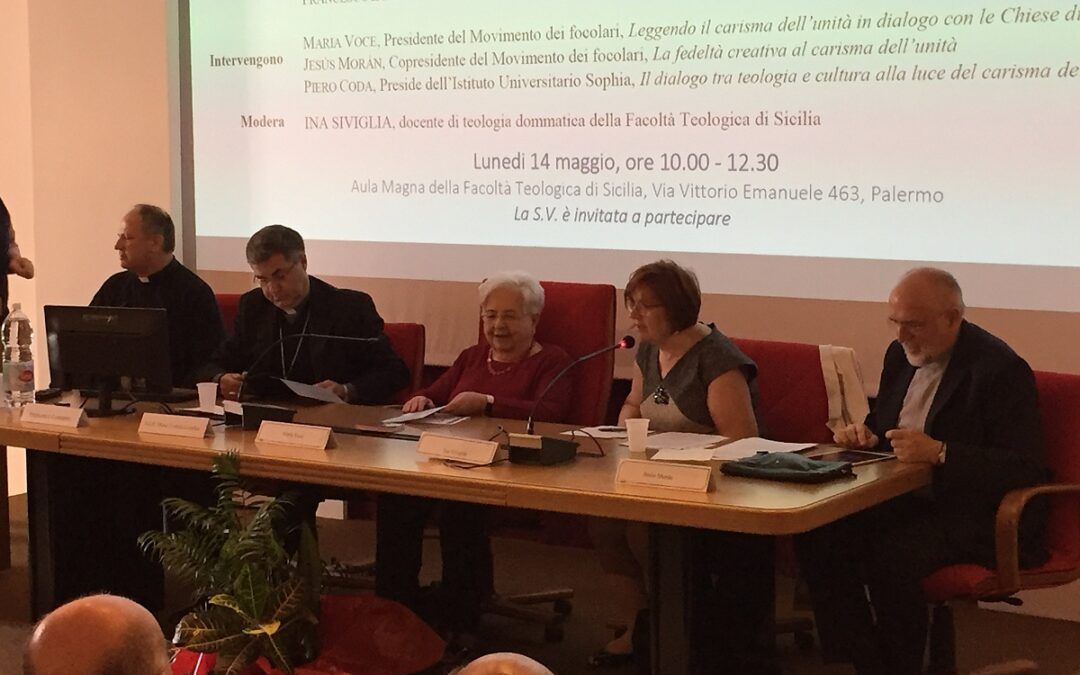
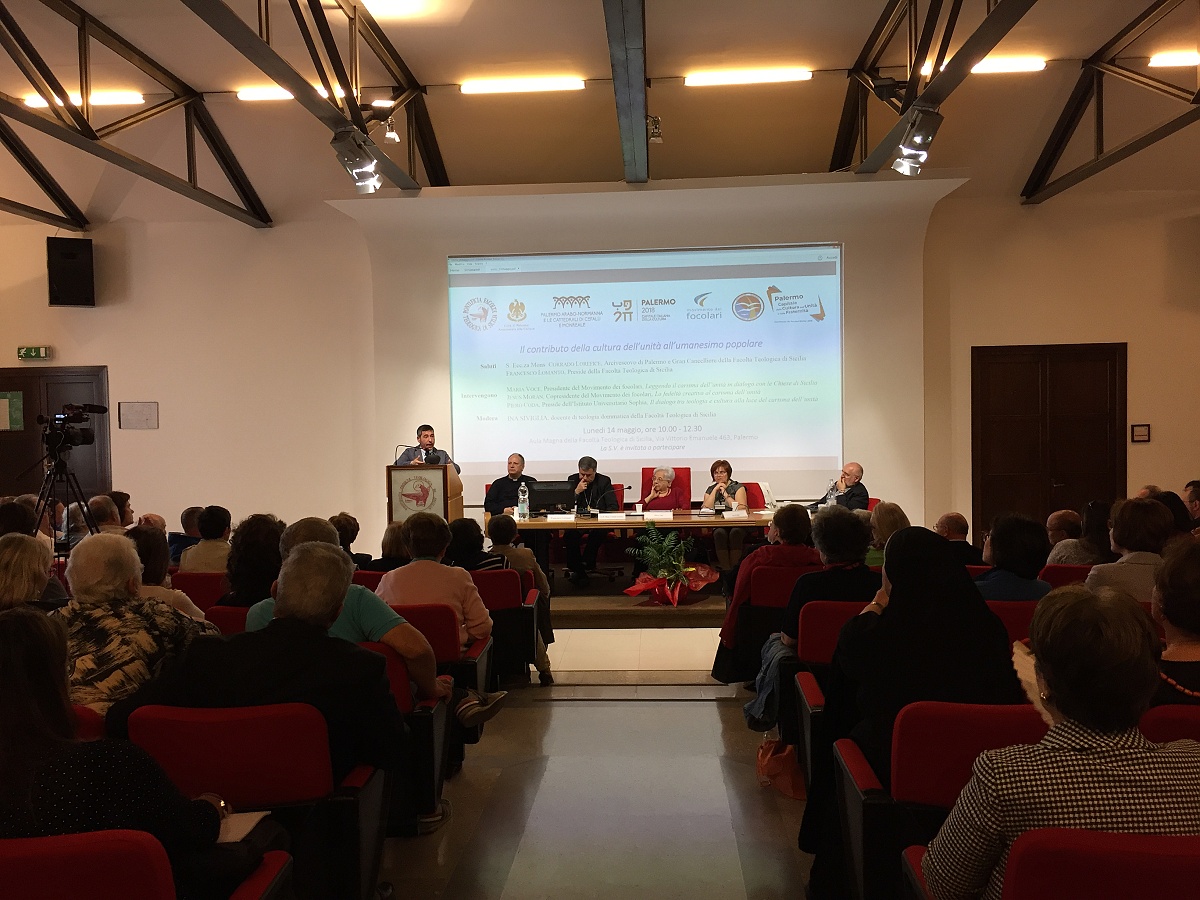 Maria Voce went on to say: “Chiara Lubich left an indelible mark with her efforts in favour of communion in the Church, for ecumenical dialogue and for brotherhood among peoples. As far back as the 1940s Chiara expressed her longing in words that were charged with zeal and urgency. “Look around: we’re all brothers [and sisters] – no one excluded!” This was how she exhorted us “to live out our universal brotherhood in one only Father: God who is in Heaven.” This was a plan that could be carried out in every city, but a plan that found particularly fertile ground in Palermo, a place “of encounter over the centuries among peoples, cultures and different civilizations,” a plan rooted in “the values of diversity, acceptance and solidarity.” What has this charism contributed to the Universal Church and to the individual Churches in Sicily and beyond? Maria Voce responded: “With the charism of unity, a “new way” has been opened in the Church,” a spirituality that is in perfect harmony with the Second Vatican Council. “From this spirituality of communion we have seen communion blossom within the Church among the different ecclesial Movements that enrich it, among the variety of ancient and modern charisms. We have seen how useful it is in contributing to the unity of Christians and opening dialogue with people of other religions, which represents one of the most urgent and challenging frontiers of the third millennium. And these are things that are also experienced at the level of the local Church.”
 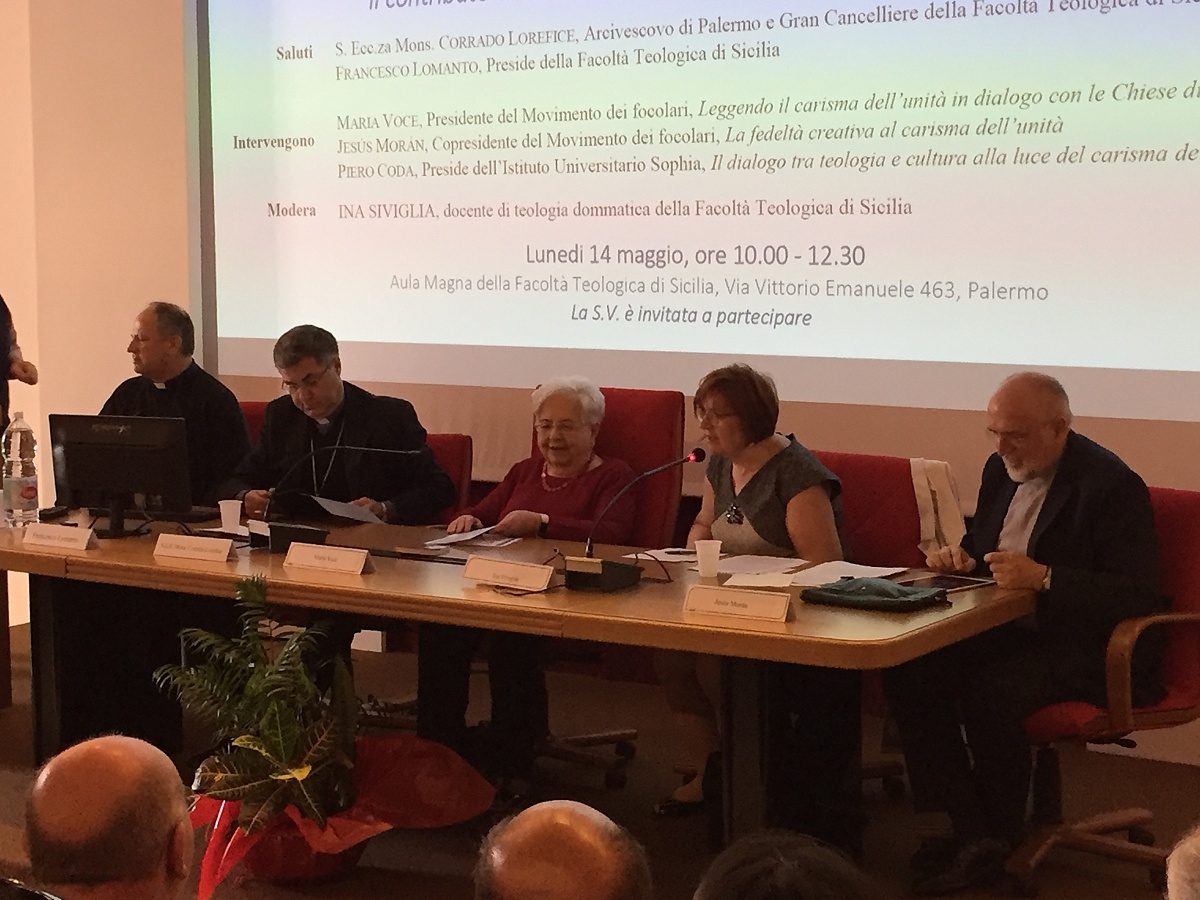 “Despite the many emergencies in recent years – indeed, because of them – the Movement in Sicily is deeply focused on witnessing to unity and building it among the members of the human family wherever that family may be threatened. This is the way they respond to Chiara’s appeal when she urges all of us to “build a new culture that would be a culture of human rights, a culture of law and order, a culture of love, a culture of life and never of death.” Maria Voce went on the say: “I think I can say something has already begun towards that goal. Certainly there is still a long road ahead, but it is a goal that with the entire Movement we renew today: to do our part at creating that ‘new civilization’ which contains all those values that are often trampled on . . . and to grow more and more – as Chiara says – all our Christian brothers and sisters, without leaving out the other religions, without leaving out anyone.” In so doing, we will truly be able to give life to a ‘culture of unity’ which Chiara more than once defined as the ‘culture of the Resurrection’.” Read full speech

14 May 2018 | Non categorizzato
While preparations are underway for the 9th world meeting of families, to be held from 21 – 26 August 2018 in Dublin, Ireland, on the theme, “The Gospel of the Family: joy for the world,” the International Day of Families, instituted in 1994 by the United Nations General Assembly, will be celebrated on 15 May all over the world. Given the difficulties the family today encounters in carrying out its functions, we hope that the Day will serve to promote policies and actions in support of the family, recognizing its essential role as the “first cell” of society. “Saving the family,” wrote the politician and writer, Igino Giordani, considered by Chiara Lubich to be the cofounder of the Focolare Movement, “means saving civilization. The State is composed of families; if these degenerate, also the State falters.” And he continued: “The spouses become cooperators of God in giving life and love to humanity. Love which is from the family expands to the professions, the city, the nations and humanity.”
14 May 2018 | Non categorizzato
A Conference will take place in Trent, Italy focusing on the Historical Roots and Intersection between Antonio Rosmini and Chiara Lubich. This event is promoted by the A. Rosmini Centre for Study & Research, University of Trent and by the Chiara Lubich Centre. It will have a two-fold aim: it will provide an opportunity to learn more about two great figures from Trent from the last two centuries; it will also help prepare in an original and unexpected way for the centenary of the birth of the foundress of the Focolare (1920 -2008.) The conference will take place on May 24 in the Specchi Hall in Casa Rosmini and on May 25 in the Conference Hall of the Caritro Foundation.
13 May 2018 | Focolare Worldwide
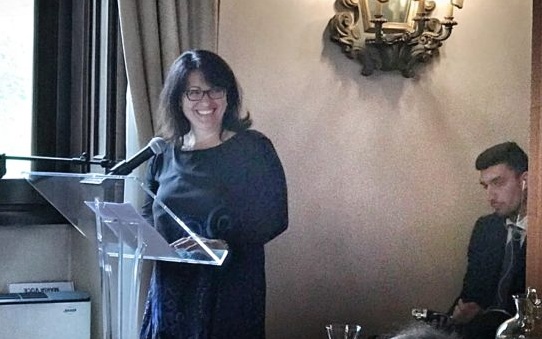 She lives and works in the province of Genoa, in a city of the North West, a very pleasant area between the sea and the mountains. Her role as president of one of the consortia of the social enterprise network with about seven hundred employees in the social service sector, welfare and job placement for disadvantaged people and regional representative of AIPEC (Italian Association of Entrepreneurs for an Economy of Communion) have in no way diminished her spontaneity and simplicity. Her testimony was closely listened to during a conference at the Italian Embassy in the Vatican, on May 3, 2018. The title of her talk was “Chiara Lubich and the Economy of Communion”: “I wanted to do a job that would be useful to others. As soon as I graduated, I won a public competition as an educator for the social integration of disabled children. I felt useful, but the job was paid by the hour and the contract was temporary. There were other girls in the same predicament as me, who had the same desire to develop themselves in the field of social service. One of them told the rest of us about some people who had been working in a cooperative for several years caring for disabled people. Meeting with them was definitive. They gave us a work space where we could work, dedicated time to us and offered their experience. That’s how our cooperative began, from a gift, from a gracious gesture that we embraced and then replicated. We later learned that that gesture was rooted in the Economy of Communion. This way of living that comes before the work, has marked and characterized the style of our own company.”
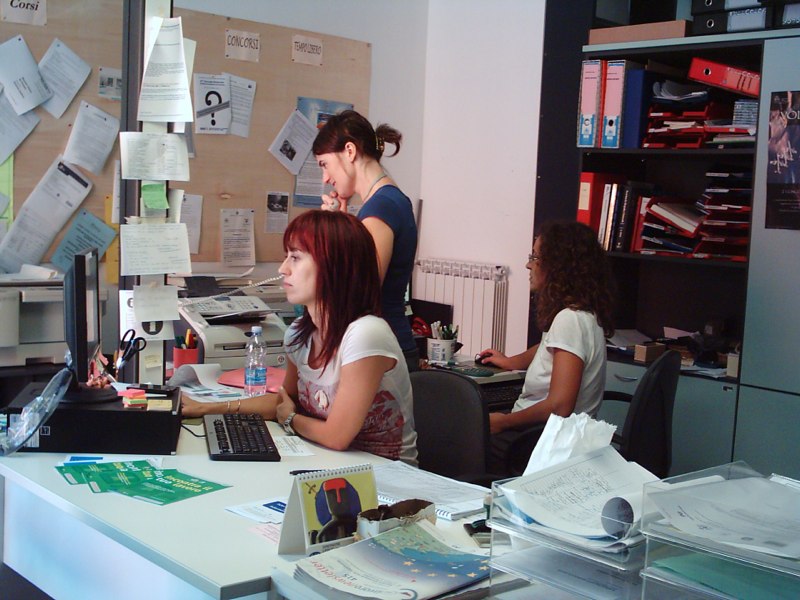
Photo © 2018 Il Sentiero di Arianna
© 2018 Il Sentiero di Arianna
12 May 2018 | Non categorizzato
is a divine word. If this word were ever uttered by the Lord God, and people were to apply it to all its possible applications, we would see the world suddenly come to a halt, like a film, and start again in reverse. Countless people would on the wide path to perdition would turn around in their tracks, convert to God and take the narrow path. Families torn apart by quarrels, chilled by misunderstandings and scorn and deadened by divorce would get back together again. Children would be born into an atmosphere of human and divine love, and new men and women would be forged for a more Christian tomorrow. Factories often upheld by slaves and steeped in an atmosphere of boredom if not of blasphemy, would become places of peace where everybody did their job for the good of everyone. Schools would break beyond the limits of science, making all forms of knowledge footstools for eternal contemplation learnt at school through a daily unfolding of mysteries that could be intuited from small formulae, natural laws and even numerals . . . And the parliaments would be transformed into meeting places for people who are motivated not so much by each one’s positions, but by the common good, without any deceiving of lands or countrymen. In, we’d see the world become more good. Heaven would be wondrously poured out over the earth, and the harmony of creation would be a framework for the harmony of hearts. We’d see… What a dream! It seems a dream! And yet You didn’t ask for less when you prayed: “You will be done on earth as in Heaven”. Chiara Lubich Source: Chiara Lubich, L’unità, compiled by Donato Falmi and Floernce Gillet (Rome: Città Nuova, 2015), originally published in Chiara Lubich, Frammenti, (Rome: Città Nuova, 1963 and 1992), p. 53-54.
