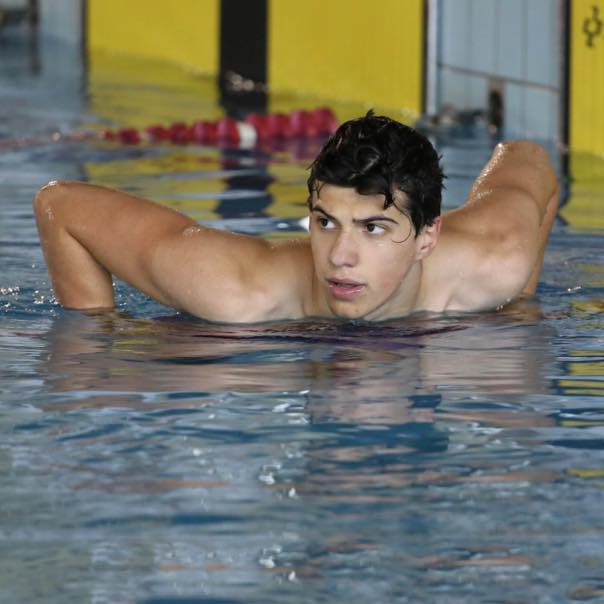
Simon the Shark
Simon Barlaam

Simon Barlaam
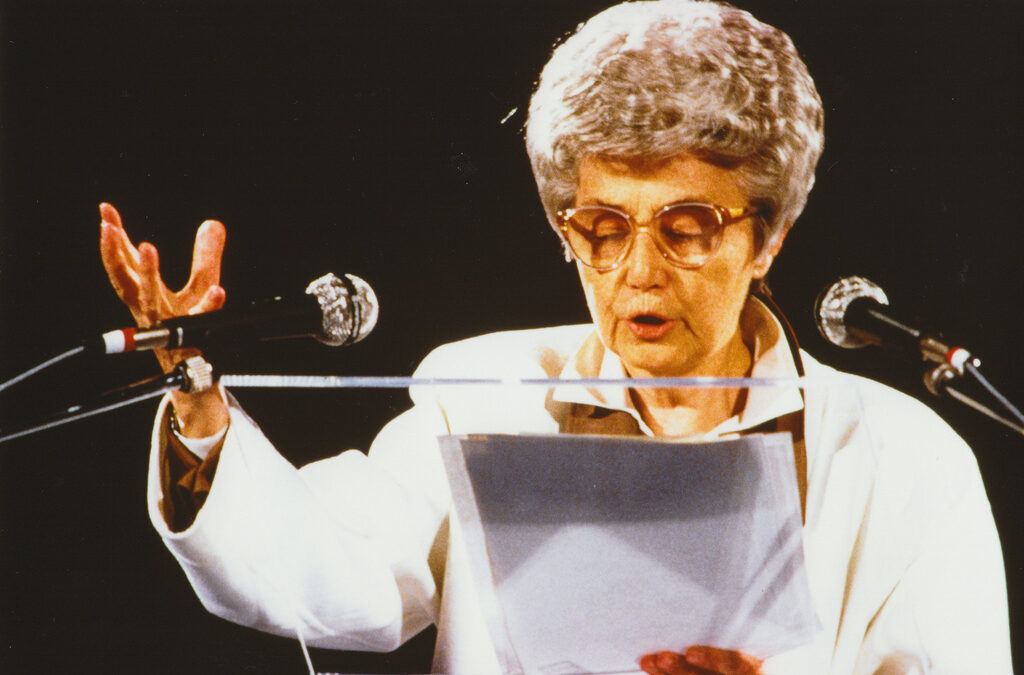
 The unity of the world. My dear young people, is our attention so distracted by the events we are immersed in day after day, that we do not see how our age is characterized by tension, by wars, by guerrilla warfare, even by the threat of nuclear destruction, by disunity of all kinds, by acts of terrorism, kidnappings, by all kinds of evil, all generated by the lack of love and mutual understanding among people? Do we not see that to speak of unity today is almost like speaking of a utopia? … But, thank God, these are not the only characteristics of our times. There is something more we have to consider. […] The world is undoubtedly moving towards unity. Unity is its destiny or, better still, it is God’s plan for the world. […] We will answer your questions not only with words but, after this Genfest, with life. We will walk with determination along the various roads that offer solutions to the divided world by uniting it. The various roads, to give a few examples, are the roads to unity among generations, among ethnic groups and nations, between east and west, between north and south; the road to unity among Christians of various denominations, among the faithful of different religions; the road to unity between rich and poor through a communion of goods; between nations at war in order to reach peace; the road to unity also between humankind and nature; the road to unity with those who are indifferent, with the lonely, with those who suffer in any way at all; the road to development, to progress; the road to unity among various spiritual movements, among lay associations; among persons of different ideologies and cultures and so on. As you can see, some of these are roads that young people have already taken because they feel naturally inclined to do so. They want to walk along these various ways, by first situating themselves squarely in the Way par excellence. […] the way that is Christ. He said of himself, “I am the Way”.[1] What must we do to be grafted onto this Way which will enable us to bear fruit as we go along the other ways? We must be Jesus, another Jesus. […] By living the word, all the Christian life sowed in us at baptism will fully blossom. Young people of all Churches and Christian communities will be able to join us in living this word. The word in many of its expressions (this has been our experience) is accepted also by young people of other religions and by those in good faith who consider themselves atheists. The word will shape all of you into one block, making you strong and unbreakable. […] If you are faithful, if you spread throughout the world as many other Jesus, so to say, then the program, “That all may be one”, will not be a dream; it will be a reality. And your contribution will bring us closer and closer to this reality. A springtime will blossom in the world. We will see miracles. Christ’s words will be fulfilled in you, “Whoever believes in me will do the works I do and greater works than these”.[2] Extracts from Chiara Lubich’s talk at the Genfest in Rome 30th March 1985 [1]. John 14:6. [2]. John 14:12.
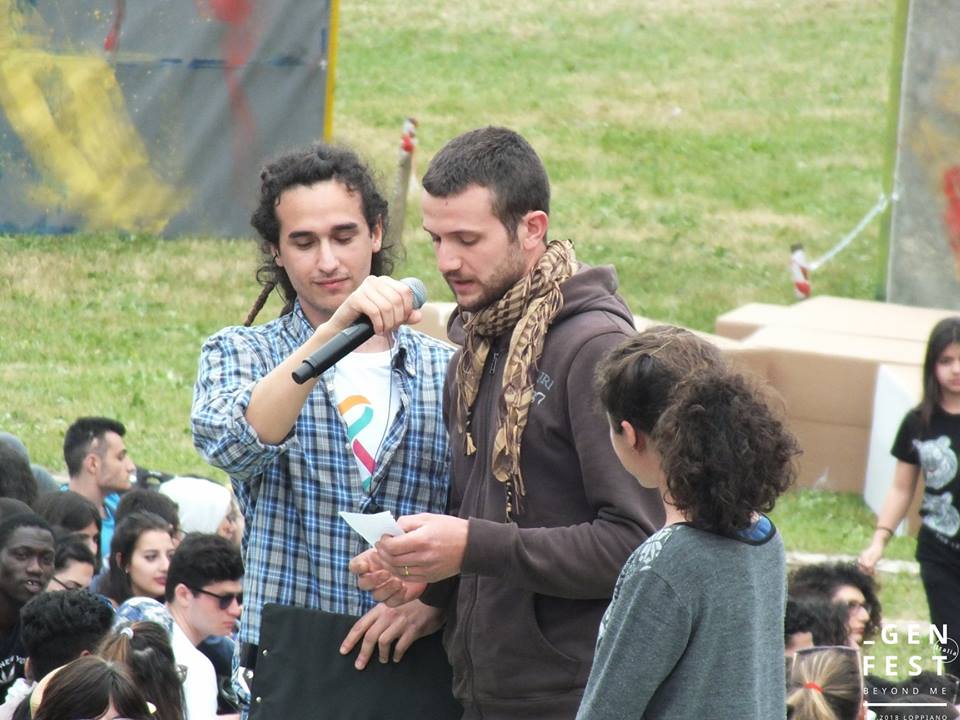 “My family is Christian and refuses to kill or carry weapons,” says George, a young Syrian from Homs. We’re in Loppiano, the Focolare international town near Florence, Italy where hundreds of young people from all over country have gathered for a meeting that include testimonies, sharing and much festivity. This year the event was held in anticipation of the much larger international Genfest, which will be heldnext month in Manila, Philippines (http://y4uw.org/it/events/genfest-2018/). The May 1st gathering was the Italian edition where 3700 young people took part in a one-day celebration of fraternity with reporting on projects, social action, personal experiences in which people came face to face with the personal dramas and pain of humanity. As in the case of George and Michael who left everyone breathless with their description of what they have been experiencing for years years in Syria. “We’ve seen many people die,” says George. “For a period of time I even had to carry a knife to protect myself, to defend myself in case of danger. Years of hatred, death and loss of dignity had emptied my heart and I began to think that love didn’t exist. Only the Mariapolis was able to remove this thought from my mind (several days spent living in the light of the Gospel, an annual gathering of the Focolare). After that Mariapolis I never carried a knife again and decided to start responding to hatred with love.” The final appeal to the young people was strongly embraced: “Don’t complain about your life. It’s beautiful, you just don’t realize it.”
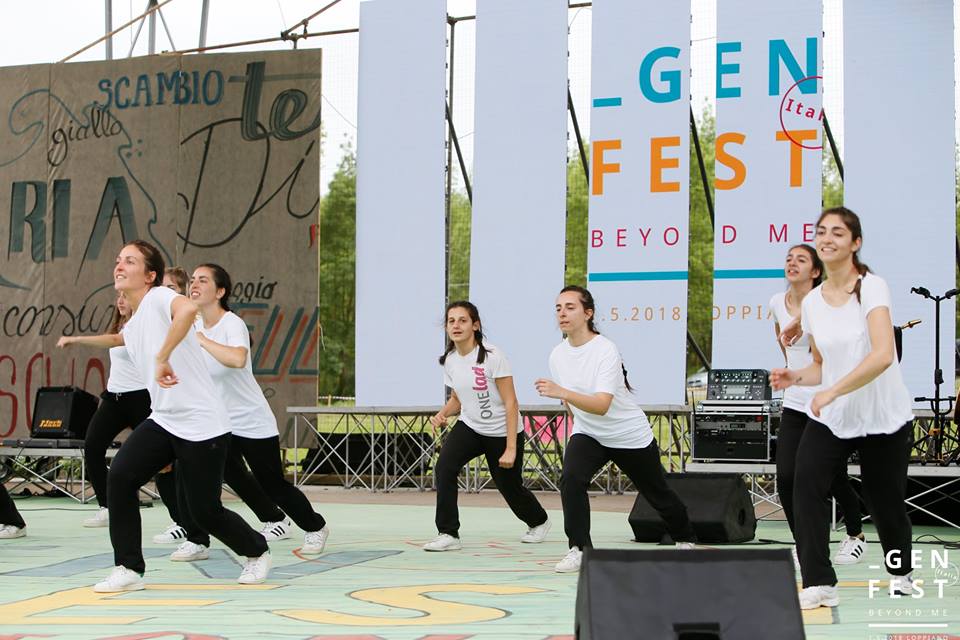
 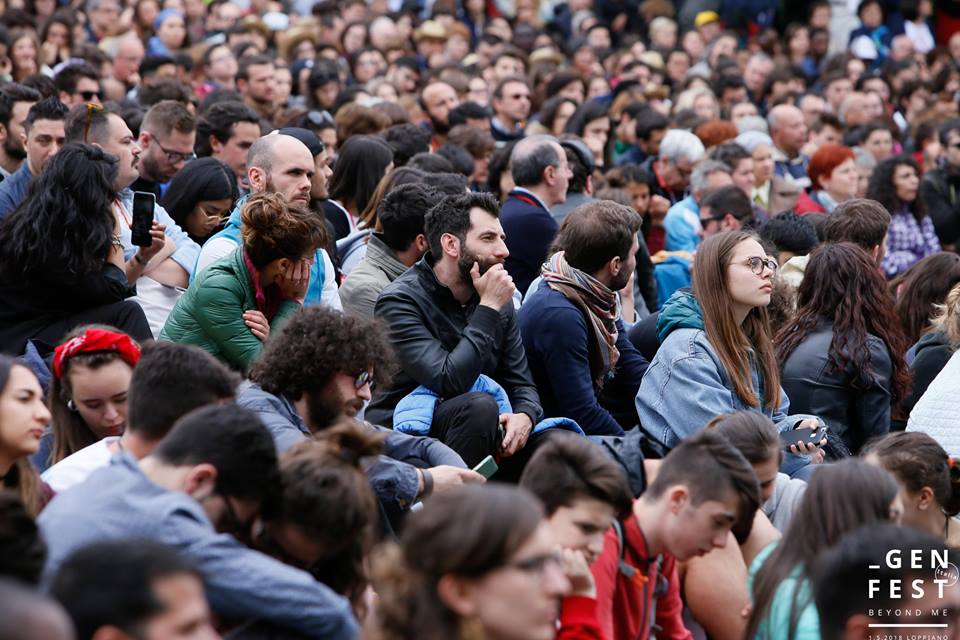 The conducting thread of the event, which was entitled “Beyond Me”, was the desire to go beyond one’s limits and boundaries in order to bring about a personal and, especially, a social change. Roberto Spuri and Elena Sofia Ferri bore witness to this as they told about the experience of the earthquake in Central Italy; Alessio Lanaloni and Maria Chiara Cefaloni, with their efforts for a disarmed economy; Alessandra Leanza, with the experience of volunteering with Rom children in Sardinia. And Marco Voleri, the internationally renowned tenor and founder of “Sintomi di Felicita” which promotes public awareness of multiple sclerosis; Simone Barlaam, para-olympic swimming champion at the Mexican world games. Michele Tranzuilli, author of the book Una buona idea and promoter of the bridge with Africa YouAid; Sara Fabris, painter. Projects. All the stories that were told at Genfest-Italy were connected to concrete experiences: an association, a social project, which anyone could “adopt” in the coming year. This was the call to action that was launched at the end of the event with an invitation to each young person to choose a project and replicate it everywhere else. To facilitate their work, the associations that are actively engaged in the cities of Italy posted links on the United world project website, according to region. Genfest Italy concluded with a city that “flying” city, a city that was depicted in the final choreography that was based on a meditation by Chiara Lubich: “One City Is Not Enough:” “For God, one city is too little. He made the stars, guided the destiny of Time. With God you can see farther, to everyone’s country, to the whole globe. At the end of life let us not have to regret that we loved too little.” Loppiano is getting ready to welcome Pope Francis on May 10th, and it wasn’t by chance that a group of young people from Nomadelfia was at Genfest Italy bringing the greetings of their community, which will also be visited by Pope Francis on the same day. As we prepare to welcome him our friendship is growing and intensifying. Source: www.cittanuova.it Flickr photo gallery
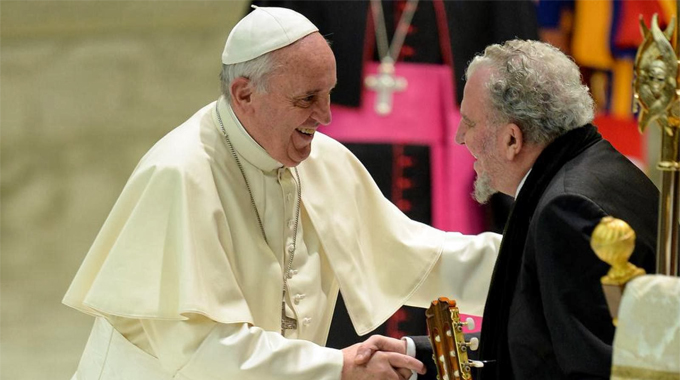
On May 5, at Tor Vergata (Rome), Pope Francis will meet the members of the Neocatechumenal Way gathered for their international meeting. The occasion will mark 50 years of the presence of the Way in Rome. 150 thousand participants from 134 nations are expected to attend. The Pope will send out 36 new “missio ad gentes” groups that will take the Gospel into secularized areas or in regions with Christian minorities. Francis will also bless the 20 communities, that are part of parishes of Rome, which have already concluded this form of Christian initiation. The meeting, which will end with the singing of the “Te Deum”, will be led by the international core group of the Neocatechumenal Way, composed of Kiko Argüello, Fr Mario Pezzi and Ascensión Romero.
“The path of a prophecy”. On the tenth anniversary of the death of Chiara Lubich, founder of the Focolare Movement, a conference was held on 3rd May promoted by the Italian Embassy to the Holy See in conjunction with the Sovereign Military Order of Malta, and in collaboration with the Focolare. It was an opportunity for a reflection on the economy in the light of the charism of unity. Mgr. Giovanni Angelo Becciu, the Vatican Deputy Secretary of State, Maria Voce, president of the Focolare Movement, Luigino Bruni, professor of Economics at the LUMSA University of Rome, Leonardo Becchetti, professor of Economics at the University took part of Rome Tor Vergata, and Simona Rizzi, president of the Tassano Servizi Territoriali Consortium. In her speech, Maria Voce said that the Focolare Movement “would not achieve its vocation if it did not implement the first page of the Christian social doctrine, the prayer of the Magnificat in which among other things it says: “He filled the hungry with good things and sent back the rich empty-handed“. The Economy of Communion, born from an inspiration of Chiara Lubich, has given life to a social action model, in dialogue with contemporary culture, particularly in the field of economy, both locally and internationally.