19 Apr 2018 | Focolare Worldwide
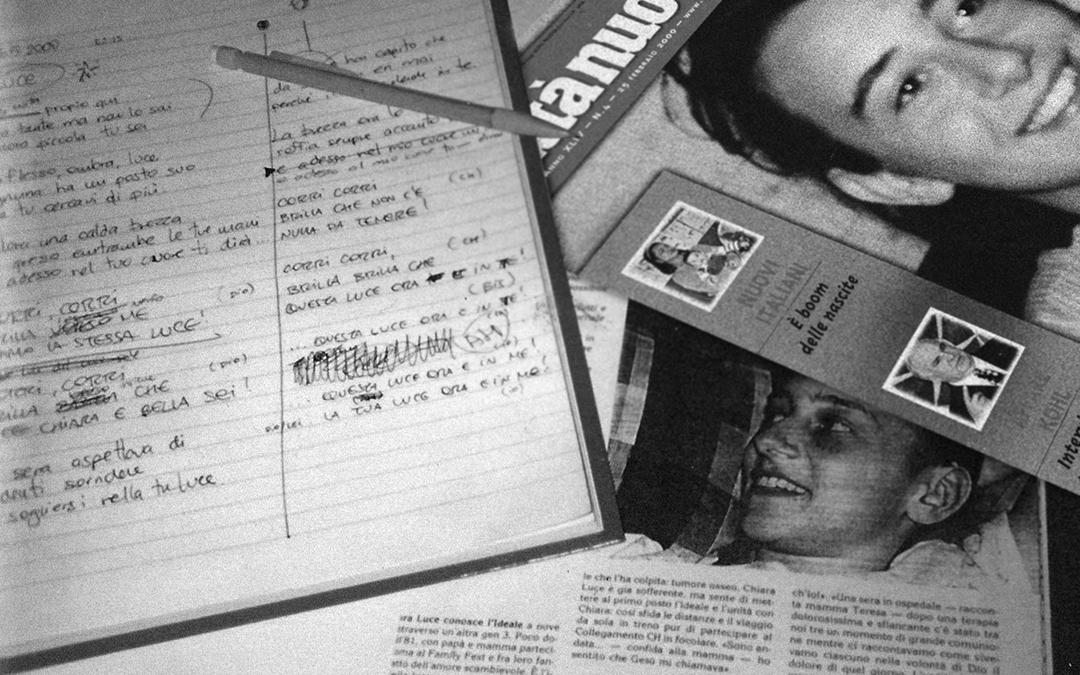
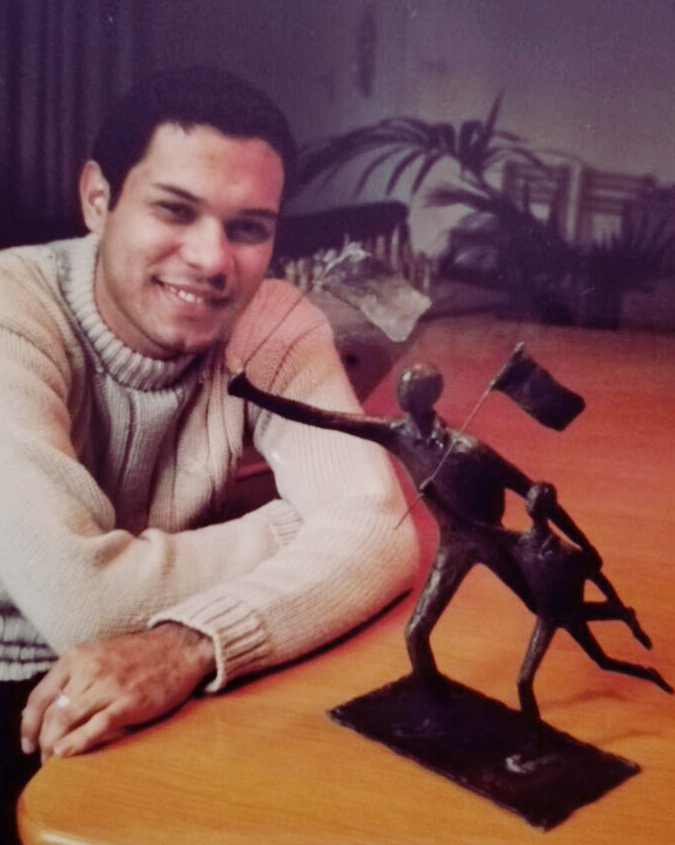 “Eighteen years have passed but the effect of that event still moves all of us who were there. I arrived in Rome on December 1999, a few months before. For me it was the start of a new period during which I worked as a graphic technician at the international Gen Centre, in preparation for the Genfest. I would never have imagined what surprises were in store for me that year! One day in February while I was strumming on my guitar, I thought of Chiara “Luce” Badano, a gen like us, who died 10 years earlier, and in her last moments of life had offered her pain for the success of the Genfest. I still can’t explain how I got the inspiration to compose a song dedicated precisely to her: “Run, run, tell me there’s nothing to fear. Run, run, shine, shine since your light is now in me.” I couldn’t but entitle the song: “Luz”, light. The next day in Loppiano, there was a series of meetings with the group in charge of the music. We had to choose four official songs for the Genfest. A bit nervous, I proposed also that song, and sang it in front of everyone. “Light” was chosen and since then, up to this day, it has been translated into various languages, and has become the symbol of an experience which many young people have made their own, following the example of Chiara Badano, who in 2010 had been proclaimed blessed. After some time her parents, Maria Teresa and Ruggero, upon hugging me said, “You found the best way to make her known, since one who sings, prays twice!”
 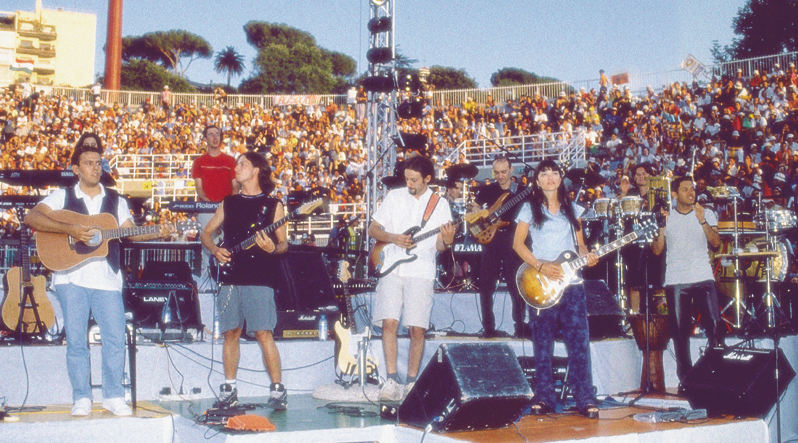 That Genfest, the first organized entirely by us youth, was a real challenge, an experience of maturity and unity among us. When the time came to choose a logo, I proposed the motion of a wave which would continue through time. And another gift was that also that logo was chosen! All was ready on 17 August. Early that morning we were already onstage for the sound check and the last details. Before the start, 25,000 people were queueing to enter the Stadium. Three, two, one… with a percussion of various rhythms and a subtle and unceasing sound, like a heartbeat, finally what we had prepared for months began. It was a varied programme to demonstrate to the youth worldwide that unity is possible. At around 6.30 pm it was my turn, with a song I had composed in Costa Rica four years earlier (“A smile is enough”). The story of Chiara “Luce” Badano was presented as an example of holiness at the mere age of 18, while images of her luminous and smiling face was projected on the big screen, creating an absolute silence in the audience. We seemed to be living a moment of eternity. Immediately after, the first chords of “Luz” resounded. Lastly, the most expected moment was the proposal of Chiara Lubich: “The idea of a more united world, for which many young people are battling, will not be just a utopia, but will become with time, an immense reality. And the future is above all in your hands.” Then came the launching of “Project Africa.” But it didn’t end there. We still were waiting for the big meeting of the World Youth Day with John Paul II, on 19 and 20 August in the nearby field of Tor Vergata. It was another historical day with two million young people, despite the heat of the day and cold of the night which didn’t wipe out their joy of being together. Also unforgettable was the Pope’s exhortation: “Do not be afraid of being the saints of the Third Millennium.” Before returning to Costa Rica, in December that year I had the chance to greet Chiara Lubich in person and give her a memoir of that magical experience lived that year: a tiny booklet. But the gifts didn’t end there for me: after many years I met Tina, an Austrian girl, who like me had participated in that Genfest. She has now become my wife!”.
Sandro Rojas Badilla
Listen to: “Basta un sorriso” Listen to: “Luz” Photo: Sandro Rojas Badilla
19 Apr 2018 | Non categorizzato
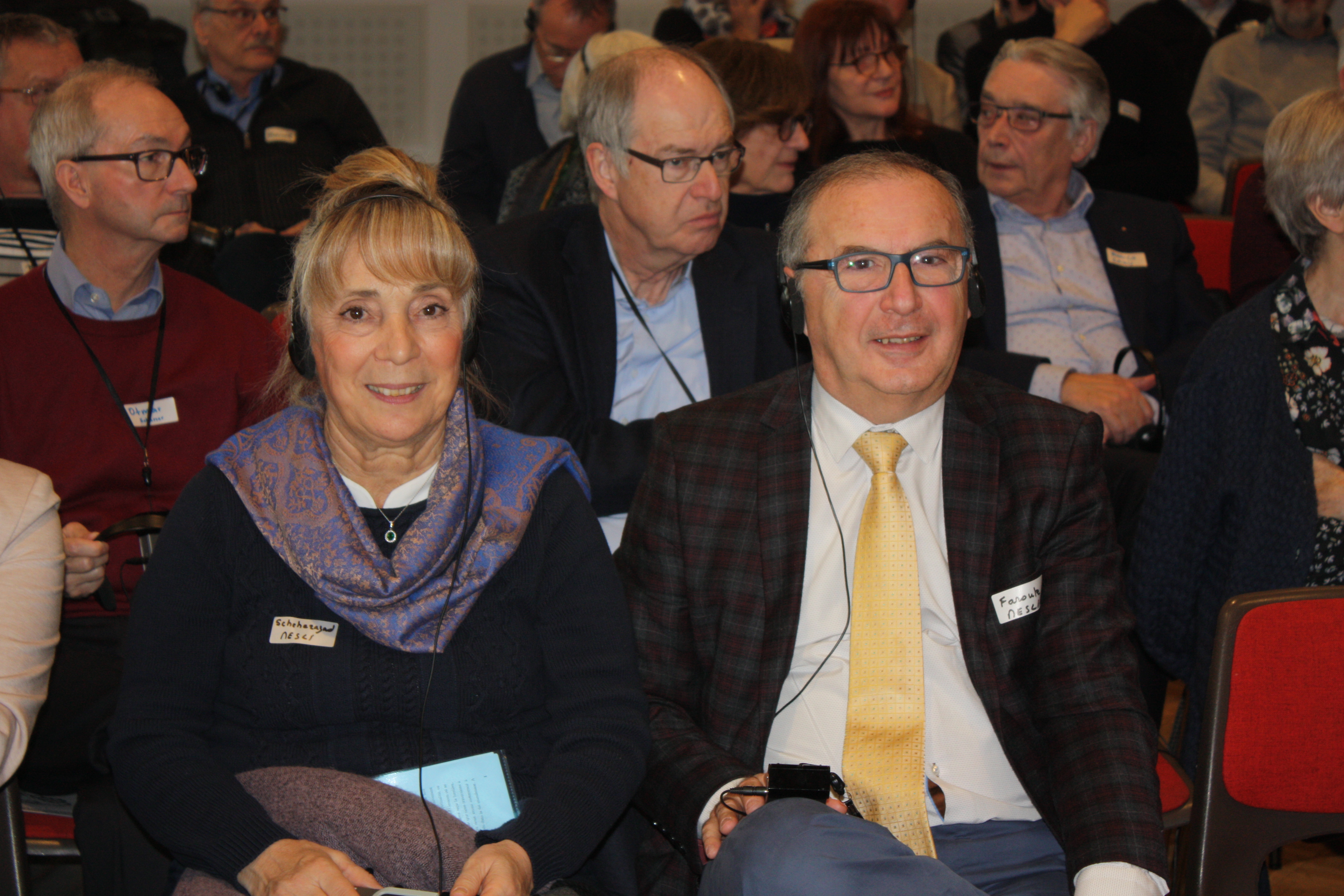 “We were born in two traditionally conservative families from Tlemcen, an ancient city, the cradle of Arab-Muslim culture,” says Farouk. “We’ve been married 42 years, have three children and two grandchildren. “During the first year we were married, like many couples, we discovered that we had very different personalities, and this caused friction between us. “Meeting the Focolare Movement helped us understand that we needed to start on the path to true love. This experience showered us with God’s love and helped us take early steps toward each other. We really wanted to learn all about the spirituality of unity deeply, to the point that our lives began to be between Orano, where we live, and Tlemcen, where the Focolare center is. “We started sharing our Muslim faith and understanding how to embody the spirituality of unity within our beliefs. A small community took shape around us at Orano, where our house became a gathering place, a “beacon,” as Chiara Lubich herself named it. “Many Muslims met the Focolare, and we started to share more and more, nourished and enriched by a supernatural love. In the early 1990s, the guerilla war in our country reminded us of the similar circumstances when the movement was born, and that same discovery of God as the ideal of our lives.”
 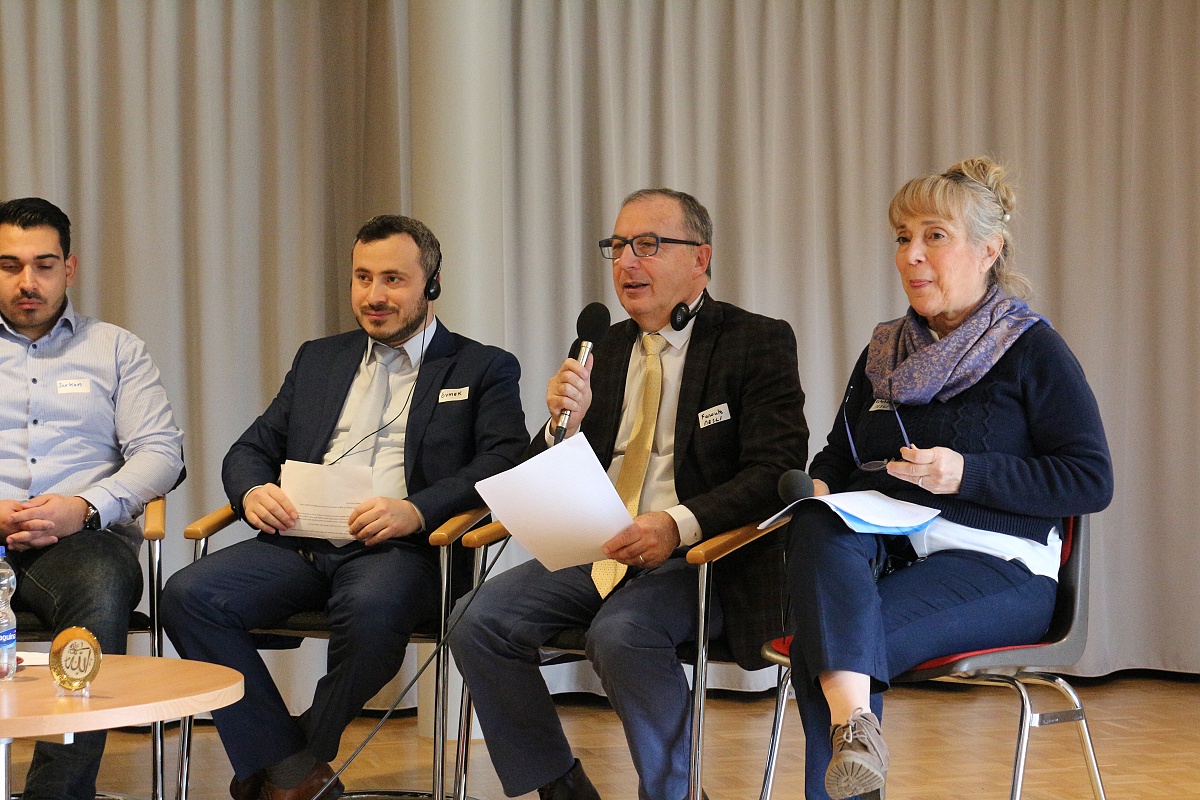 Schéhérazad continues: “We went through a pretty turbulent stage when our children were teens. We tried to debate and dialogue with them, but above all, love them. We can now say that with the two eldest we were able to create a relationship based on sincerity. “In the Focolare community I heard experiences about the love of God. Little by little I learned to trust faithfully in God, in his mercy. “Taking up this spiritual path freed me from my ego and fear in my relationships with people. The commitment to put God in the first place in our lives is certainly personal, but we chose to live it as a family. “Realizing one’s own limits and those of the other is a never-ending exercise. We need to constantly begin again, ask for forgiveness and start again.” “In Islam,” explains Farouk, “prayer is a solemn moment. Our prayers didn’t used to be that regular before, and each of us prayed alone. Now we try to pray together, out of love, not obligation. “In Algeria there are many sub-Saharan young people who come to study. Some come to the Focolare. We try to meet their needs, since they often don’t feel integrated socially. “One of these young people, who is Christian, lived with us for a year and a half. We built a relationship so profound that he considered us his second parents. We often gave him our car so he could go to Mass.” “In the Focolare community,” says Schéhérazad, “there is a sincere exchange, with out any misunderstandings about faith. Any introduction is done with respect for everyone, with love that has no agenda, with no intent to convert the other, but instead to help them be more authentically themselves. “When we meet a Christian, for us it is natural to see him as a brother to love. We are not made to compete, but to work on a common project. Building unity cannot be taken for granted; it is a commitment that needs to be constantly renewed. “Together, Muslims and Christians, we can go toward the unifying One. In our life, thanks to Chiara Lubich, we have understood that this unifying One can be reached when at least two of us love each other, ready to give our lives for each other.”
18 Apr 2018 | Non categorizzato
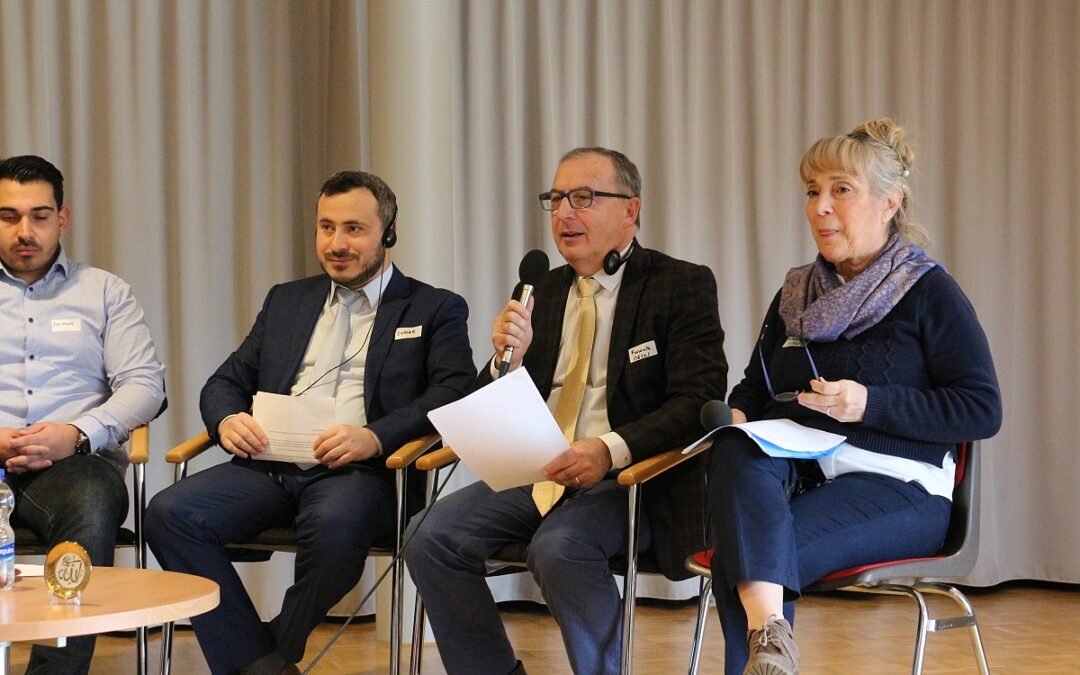
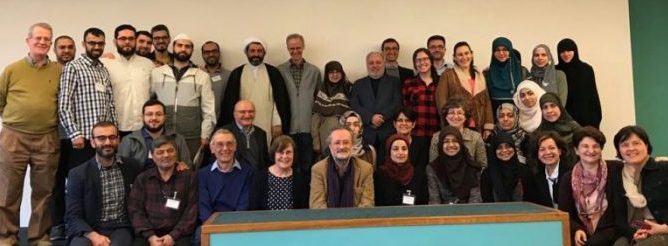
It will be discussed on Saturday, April 21, from 16 to 19 pm, within the wider context of a conference promoted by the Focolare Movement. The title of this event is“Together as a sign of hope. Christians and Muslims journeying together in the light of the charism of unity” and it will take place at the Mariapolis Centre in Castel Gandolfo, Rome from the 19 to 22 April. About 600 Christians and Muslims are expected to attend. In a social context, particularly in the western world, marked by fear, prejudice and distrust that build barriers and by ideas that nourish clashes and divisions, witness of a shared commitment between Christians and Muslims, launches a message that goes against the current and sows seeds of hope. These Christians and Muslims unit for peace, solidarity, development and harmony among peoples of different faiths, cultures and traditions. It is possible to live together in harmony, respect, solidarity and peace. It is also possible to work together, share common objectives and cooperate to achieve them, without weakening one’s identity and heritage of values, while exercising a fair and frank confrontation that strengthens mutual understanding and respect, and giving preference to that which unites over that which divides. The driving force of this journey is the charism of unity of Chiara Lubich. On May 18, 1997, in her speech at the Malcolm X Mosque in Harlem, where she made a pact to work for unity and peace together with Imam Wallace Deen Mohammed and the Muslim community present, she said: “Here I have experienced profound fraternity. Its beauty is so remarkable that it can only be God’s work. He has really made us one family for his plans”. While speaking about the underlying principle of this journey of communion, she explained: “The so-called Golden Rule – ‘Do not do to others as you would not have them do to you’ – is common to almost all religions, even if with different versions. This Golden Rule is enough to guarantee our bond of love with each neighbour, and this love would be enough to make humanity become one family”. In the wake of that experience and of initiatives launched in various countries to promote Islamic-Christian dialogue, the coming event at Castelgandolfo aims at being a step foward in the journey towards universal brotherhood and a sign of hope for humanity. “Religious education is attention to peace” says Adnane Mokrani, a professor at the Pontifical Gregorian University and at the Pontifical Institute for Arabic and Islamic Studies (PISAI) and president of Cipax, who will be present at the conference. “With such an approach, there would be no divisions, but there would be solidarity, collaboration, unity among people of different faiths, called to work together for the common good of humanity and to serve everyone without any distinction”. Maria Voce, President of the Focolare Movement, Cardinal Jean-Louis Pierre Tauran, President of the Pontifical Council for Interreligious Dialogue, Abdullah el Radwan, Head of the Islamic Cultural Centre of Italy, Izzedin Elzir, Imam of Florence and president of UCOII, Piero Coda, Dean of the Sophia University Institute and Mohammad Shomali, director of the London Islamic Centre will be among the speakers during this open gathering. Numerous experiences of dialogue and fruitful collaboration will be shared as fragments of unity to be multiplied.
18 Apr 2018 | Non categorizzato
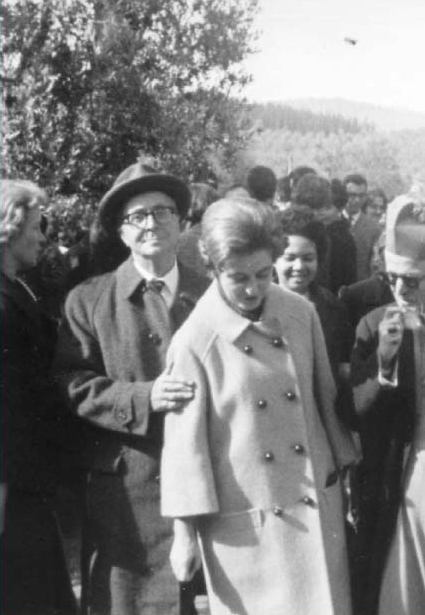
20 April 1979 – Like every Christian, my love goes to the Lord in every moment and I contemplate Him with respectful fear. At times, however, I take chances since it never represses my calling as a jokester. And this morning at Mass an invocation suddenly popped into my mind: “You are the Omnipotent.” And immediately after my weak poetic side looked for a rhyme: “I am ‘nopotent’.” Then, I thought that if I’m nothing, by receiving God into myself, I take on Divine value. 5 November 1979 – I’m often taken by thoughts of death, but they don’t come in darkness and sorrow. Death comes as a light that shows our greatness and the beauty of life, and of its Author who could be anything but a most benevolent father. Looking at certain periods in life was hard, crude, desolate: the misery, the mourning, the wars, the betrayals, the meaninglessness… But contemplated as a whole, life appears a prodigy – a demonstration – of God’s fatherliness: 86 years of life, the wounds of battle that kept the war ever present, the political battles, the financial problems, the misunderstandings both inflicted and undergone, the physical weakness, etc. But seen as a whole, it appears a defeat of death to me, a joyful and necessary operation in which I was given to do more good than bad and have feelings of extraordinary successes, friendships, journeys, mystical elevations, lessons of wisdom and faith. I never stop thanking the sharer of so many good thing that were, given to me so freely. So even amid the shadows and the sorrows, life was beautiful for me, a gift worthy of its Creator. And my daily observations, reasonings and verifying has proven to me the truth of the religious faith that has always enlightened me and made me want to live. Life is truly beautiful, and its beauty shows the absurdity of politics and the personal behaviours of those who have worked to make it ugly (war, terrorism, exploitation, hedonism, greed, lust) and all the deformations and lacerations intended by stupidity the intelligence of the world’s Enemy. Source: Igino Giordani, Diario di fuoco, Città Nuova, Rome, 2005 (1980), pp.238-240. Brochure: On the anniversary of his death, the Centre named after him has published a brochure about the life of Igino Giordani and his spiritual journey. For information: info@iginogiordani.info Giordani on Facebook
17 Apr 2018 | Focolare Worldwide
“Leadership for Peace” is the theme of the 12th edition of the World Peace Forum from 19 to 22 April. The International Forum links and gathers hundreds of young activists and promoters in the respective countries and actions for peace. After the recent editions in Cairo (Egypt), Florianapolis (Brazil) and Madaba (Jordan), this year Toronto (Canada) will host the event with an extensive programme of debates, studies and analyses for development, exchange of good practices, conflict resolution models, and identification of common values and strategies to create a chain of leaders motivated in building world peace. Forum 2018 particularly addresses directors, public and private administrators, teachers, educators, NGO presidents, religious leaders and government agencies, activists, and members of movements that operate in favour of dialogue, peace and disarmament. For information: www.worldpeaceforum.org
