23 Feb 2018 | Non categorizzato
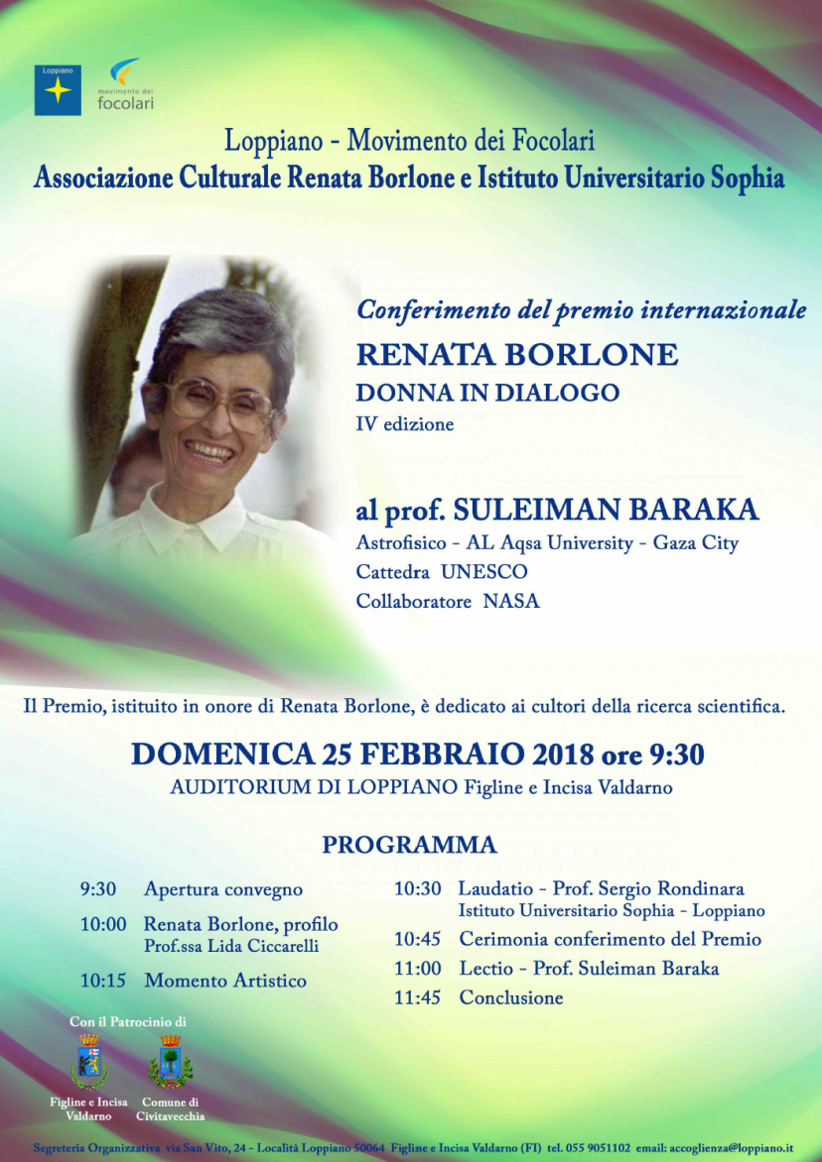 The “Renata Borlone Prize” will be awarded to Prof. Suleiman Baraka, a native of Gaza and an internationally renowned astrophysicist on Sunday 25 February, in the Auditorium of the International Centre of Loppiano (Florence), in the presence of the representatives of the scientific world and civil authorities. Now on its 4th edition, the Prize was instituted by the Cultural Association bearing the same name, to honour the memory of Renata Borlone (1930-1990), who for over 20 years was co-director of the town of Loppiano and is now a Servant of God. Full of human and spiritual values, Renata nurtured a special passion for science, intended as the privileged tool for the construction of unity of the human family. The Prize’s Scientific Committee conferred this recognition to Prof. Baraka for “his scientific research which focuses on human values and peace”. The awardee stated “This prize in honour of Renata Borlone who worked for the good of society – is a further incentive and encouragement to place science and its beauty at the service of humanity, promote peace among peoples, and enable the young generations to open their horizons to hope, despite the difficulties and obstacles they may have to face.”
23 Feb 2018 | Non categorizzato
Chiara Favotti
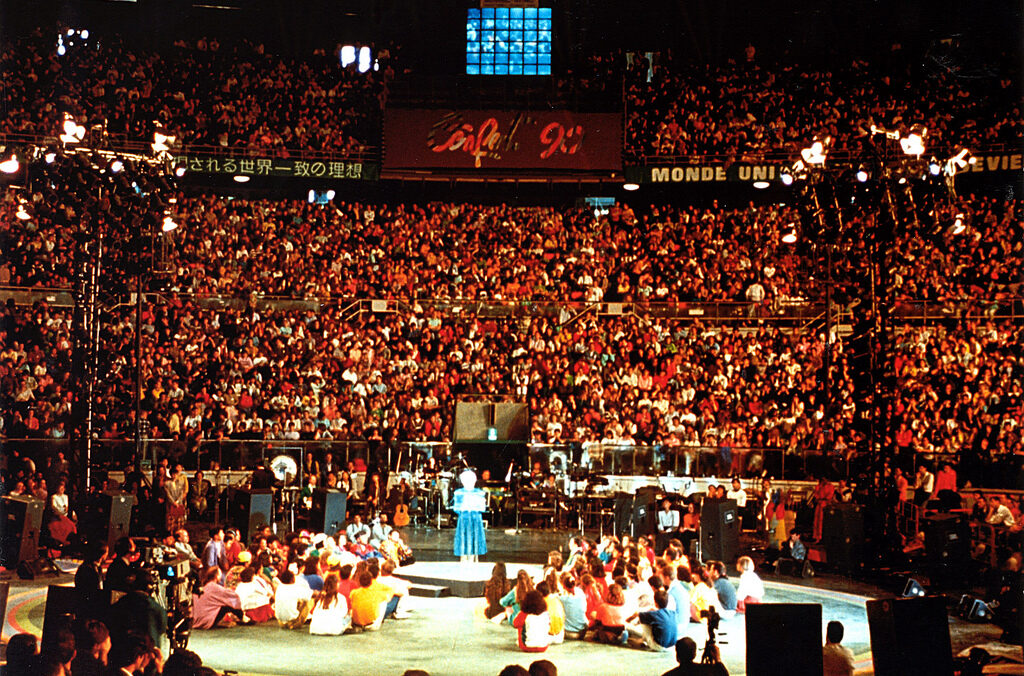
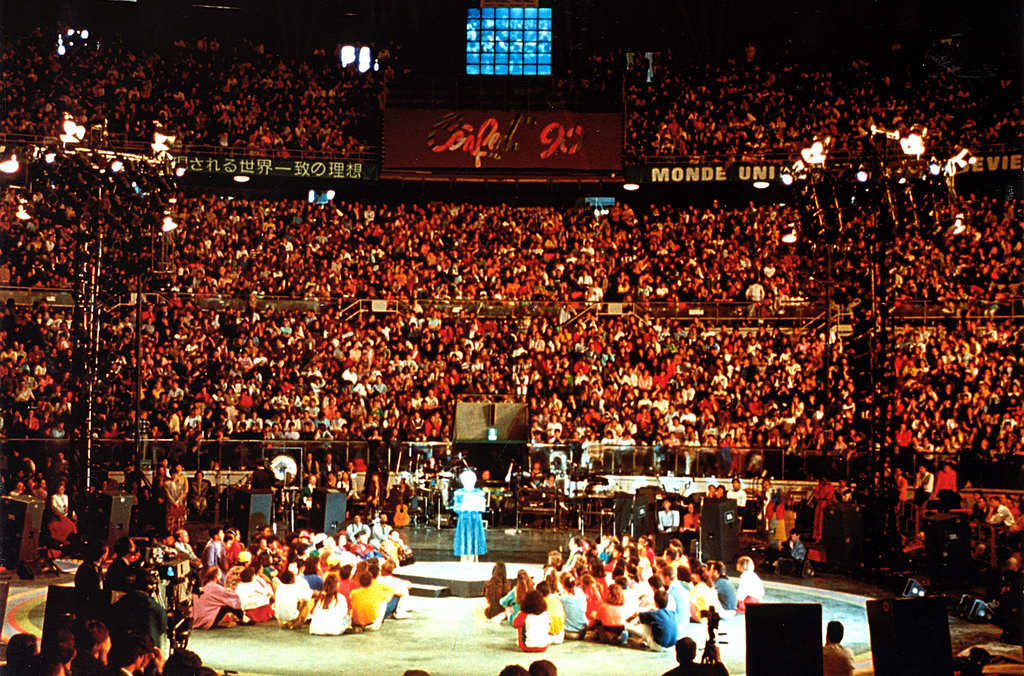 During adolescence, going with the Gen and the young people from the united world project, and the any experiences we shared, opened my heart far beyond the walls I knew. It made me hope and think big, of a truly united world. It wasn’t a fantasy, but a new way of thinking, of moving in a new direction, taking little steps, but made of real and authentic brotherhood. I took part in the 1990 Genfest with them. It was an unforgettable experience. For the first time, there was an explosion of happiness, young people from east and west looked in each other’s eyes and squeezed each other’s hands as television cameras broadcasted the scene in the Paleur Stadium to millions of television viewers around the world. We were given a mandate: to bring love back into the world. “Friendship and kindness aren’t enough,” said Chiara Lubich. “Philanthropy isn’t enough, neither are solidarity or non-violence. We have to change from being people focused on their own small interests, to being small daily heroes who are at the loving service of their brothers and sisters in every neighbor.” The next year I left for Moscow. The iron wall that separated East and West may have fallen, but at a great price, pulverizing ideals and an entire social system. There were no winners, nor losers, only the disillusioned, suffering and widespread poverty. It was clear to me: It’s not enough to bring down a wall to create a free and just society. Now, those words that I heard at the Genfest are the only way forward for me: “Only in harmony with each other and forgiveness toward each other can you build a real future.”
Chiara Favotti
22 Feb 2018 | Non categorizzato
At the mechanic’s I had brought my car to the mechanic’s for a small repair. The young mechanic said he would call me when it was ready. After six hours, no phone call came. I went to the workshop and strangely he pretended not to remember the job to be done and went on to serve other clients. After waiting for an hour he returned with the bill. It was exorbitant for such a small job. Being black, I felt this was evidently an act of discrimination. I paid, but anger and sharp pain got hold of me. When I was about to explode, I stopped to think and wonder how I could live the Gospel in a moment like this. I calmed down and patiently explained the facts to the person in charge. He listened to me and got the message, and ordered a reimbursement. That reimbursement seemed to me like the fulfilment of the promises of the Gospel. Welile – South Africa
Hunger and thirst for justice I was a revolutionary, and hungered and thirsted for justice and I said it in a loud voice, everywhere I went. At a certain point I found an answer in God, and for him, I left everything. One day I was asked to speak in a factory, but now there was a difference: it was no longer I but Jesus who spoke through me, because I tried to find love in my brothers. Looking at all those restless faces on the revolt, thirsty for justice, I got the confirmation that only love can achieve the miracle of changing people, their ideas, and the structures. This love is God in us and among us. Maria Teresa – Brazil Change of plans With my husband’s consent, I thought of enrolling in a course that would have been useful for my work. I was enthusiastic, because I saw that slowly the difficulties smoothed out and all seemed to confirm that I was on the right road. I had started to gather the necessary documents when I discovered I was pregnant, and this confused me. I would have wanted to set aside my project for some time. Upon reading the Gospel with my husband, we understood that God had other plans for us and we prepared to welcome the baby with joy. D.T.B. – Croatia The trump card I am a sales agent. One day I entered the office of a big company to present my products to the head of the purchasing office. Since he showed very little interest, I prepared to leave his office. But during that brief meeting I noticed that I was dealing with a person in suffering. I was already at the door when I felt I had to go back and simply asked: “Are you sure you’re feeling ok?” Wide eyed he asked me: “Why are you asking this?” I answered that I just had that sensation, greeted him again and left. The next day, I received a phone call from him. “I want to thank you, because after you left, your question rang in my mind. So that evening I went to my doctor who confirmed that I could have collapsed at any minute and there was immediate need to intervene with a strong therapy.” That same day, the company made a big order. So I not only found a big client, but had also helped a person to feel better. Putting love before all else in our actions is always the trump card. From Focolare website www.flest.it – Italy
21 Feb 2018 | Non categorizzato
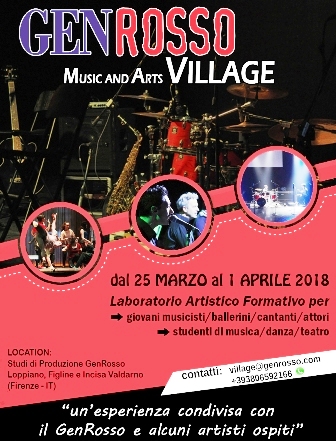
The GEN ROSSO (INTERNATIONAL PERFORMING ARTS GROUP) is presenting the 1st edition of the Gen Rosso Music and Arts Village, a residential in-depth artistic experience with the sharing of values in the light of the charism of unity. The project addresses young professionals and students preferably from 18 to 30 years of age, in disciplines such as music, dance, singing and theatre. The didactic method is designed and handled by Gen Rosso tutors having the qualified artistic capacities and experience. The program will include the study of specific themes. Exchange of experiences, dialogue sessions and practical labs will be exhibited in a final performance. The evening sessions will be enriched with interesting artistic contributions. The first edition of the Village will take place from 25 March (arrivals in the afternoon) to 1 April 2018. A participation certificate will be issued at the conclusion. Gen Rosso, through the Village secretariat, is at everyone’s disposal for further information and all the documentation needed for enrolment. (limited number). Contacts Secreteriat VILLAGE: +39 0558339821 (9.00-13.00, Italian time) Franco Gallelli cell +39 3806592166 Email secretariat VILLAGE: village@genrosso.com
21 Feb 2018 | Focolare Worldwide
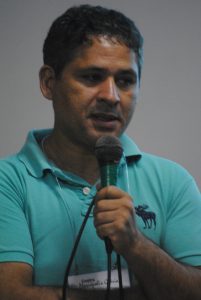
Guaramiranga, with 7,000 inhabitants, is a small city of the Northeastern state of Ceará in Brazil, which boasts a highly diversified natural environment at the Atlantic coast where there are also the most beautiful beaches in the world, and with an interior full of lagoons, and water courses populated by mangroves, jungles and forests. About 100 kilometers from the coast, it is the seat of two important cultural events: the international “Jazz and Blues” and the more local “Northeastern Theatre Festival.” Here lives Almir, a “volunteer of God” of the Focolare Movement. Some years ago, pushed by the desire to do something for his city, he decided to run for the post of Town Councilor. After his election he was asked to assume the councillorship for Culture and Tourism, an important role since most of the city’s economy rotates around tourism, cultural events and exhibitions. The role is very challenging and above all, Almir is full of ideas. However, it was not an easy choice: “I lengthily pondered on the mayor’s request to assume this position. In fact I was thinking of running again, since after a year and a half there would be a reshuffling of the town council, and I doubted that the proposal aimed at limiting me politically, due to my ideas in advocating clarity and transparency. On the other hand, the area of culture and tourism was undergoing a difficult moment: many small hotels and shops were about to close and the personnel would have been fired. I felt the suffering of those brothers who could have lost their jobs, and of the owners who would have had to close ship. So after talking with some friends, I accepted the challenge.” Almir started to work on the new assignment with passion, mobilising the entrepreneurs and inhabitants. He launched a participation course with some citizens, involving them in the promotion of touristic events to give a new impulse to the city and boost the economy’s upturn. Also the inhabitants of the rural districts were involved in a project for the upholding of local traditions with new cultural initiatives in the territory. In short, the city saw the growth of touristic flows, the birth of new businesses, hotels and hostels and the creation of new jobs. “Other two challenges” – Almir explained – “were the relaunching of the Town Theatre in the city’s historical centre, and the revival of the Food Court, the square dedicated to restaurants. In this case, the difficult rapports between the restaurant owners negatively influenced the events held in the city. I asked myself how we could go about creating relationships of fraternity and collaboration in that place. I started by going to visit them, creating friendly relations with each of them, and trying to understand the problems and smoothing out the tensions. At first I found a lot of resistance, but I didn’t give up. In the end, I was able to build a “team,” to such a point that today these people have become friends and cooperate with one another. It seemed like a miracle to see these businessmen, who were enemies at first, relate with each other in a friendly and supportive way.” «Today, due to family issues, I am no longer involved in the public administration, but I participate in the political life with the conviction that in trying to concretise the words of the Gospel, we can find the strength to meet the necessities of one’s people and one’s own community.” Chiara Favotti Source: Movimento dos Focolares Brasil (our translation)
