2 Feb 2018 | Focolare Worldwide
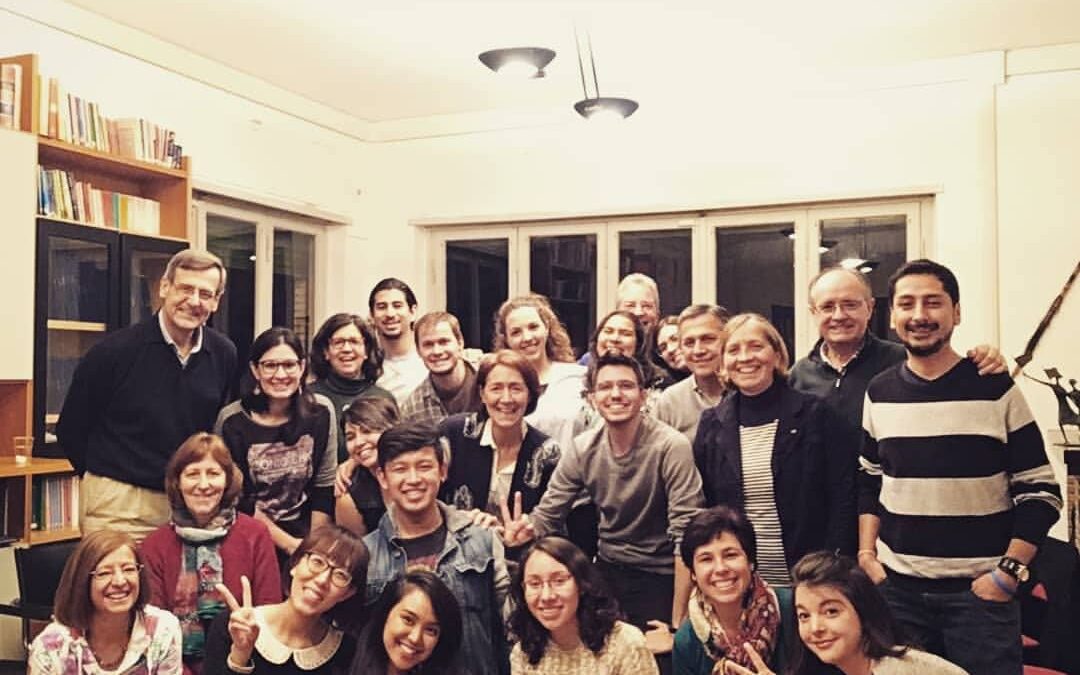
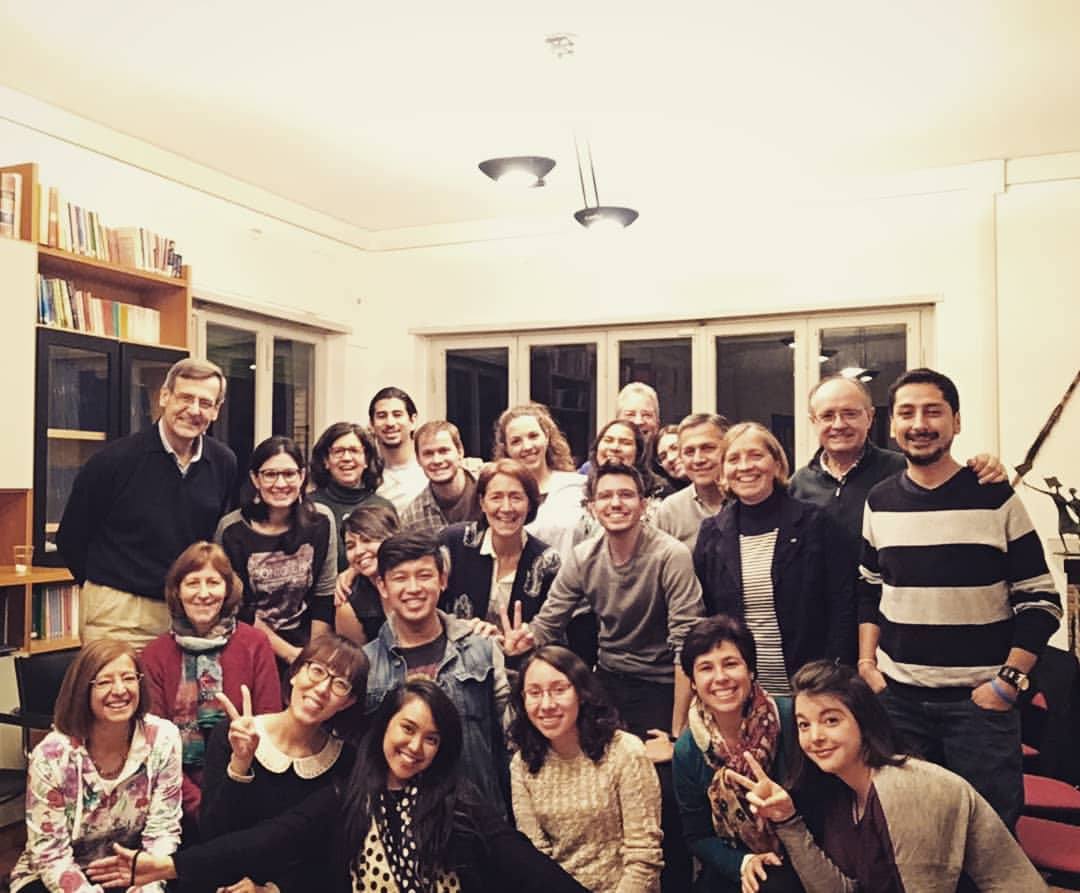 “I’m working in Italy working with some other young people my age for the upcoming 2018 Genfest in Manila.” Preparations are in full swing for the first Genfest ever held outside Europe. Nelson joined the international group of teenagers who were already at work, ever since he arrived in Italy in 2017 – first in Loppiano and then at the international Gen2 centre near Rome where we are interviewing him. “I come from El Salvador, the least expansive but most populated country in Central America. It’s a beautiful place, but has recently been hit by a civil war that lasted for 12 years and ended in 1992, leaving the country completely destroyed.” Nelson explains; “After the end of the war, many families found themselves looking for a place to settle and many parents emigrated, leaving their children with relatives or anyone who would take them in. But in the midst of the overall bewilderment, this resulted in an entire generation of boys and teenagers who were left without guidance or direction, or even anyone to show some genuine interest in them. To that was added the complication of getting the money earned outside the country to its destination in El Salvador. Many of these boys were left deprived of everything and began to leave school and roam the streets, seeking in delinquency the attention that they hadn’t found anwhere else. In short, recruiting adolescents, some of them quite young, they formed into many criminall groups who became more and more rooted and dangerous, each with its own name and symbolism, rituals and gestures.” “To uproot what seemed at first a simple problem to solve, the government launched a plan, which was also very violent, inprisoning anyone with a tatoo. The result was an unprecedented escalation of ferocious violence from the gangs that began to kill for no reason, to threaten more and more young people, forcing them into their groups. Before moving to Italy, I worked in San Miguel at a Salesian school which was dedicated to more than a thousand students who come from outside the city every week. Many of them have serious family problems, or parents enlisted in criminal groups, or even worse, they themselves are on the verge of joining. I taught physical education. One day, during swimming class, a boy wanted to jump into the pool without removing his shirt, even though that was against the rules. He was nervous and afraid. So I took him aside so that I could talk to him alone. I asked him the reason why. He told me that he had had himself tattooed with the symbol of a group, and didn’t want anyone to know. I gave him permissioin to get into the water with the shirt on, but afterwards, in class, I returned to the topic and we began to talk about ways of finding alternatives to criminality. Then, for the rest of the year, we tried to explain to him all of us together, that there’s always a way out, another way to live, far from violence. A few months later I saw him proudly wearing a work uniform, he had managed to leave the group which, thanks be to God had left him in peace. Now he’s providing for his family. ‘Thanks Prof. Thanks to all of you who helped me to realize that I could be a different person from what I started out to be. Thank you mostly for helping me to change the direction of my life.’” Chiara Favotti

1 Feb 2018 | Non categorizzato
An Immediate Response We bought firewood and kerosene for the winter, in early summer. But it was already autmn and we didn’t have the money for the heating. One day, talking among ourselves in the family, we said: “The Eternal Father knows our needs and the important thing is trust in Him.” We hadn’t even finished saying it, when our friend arrived with an envelope full of money from a collection that had been taken. It had never happened to us before, to receive such a quick answer from God who cares for his children! I.S. – Serbia From the Dentist There was a boy in our community with very bad teeth, but being from a poor family he couldn’t afford to get them fixed. One day, we took him to a dentist, but when we got to the dentist’s office, we realized that all the patients were wealthy people. Trustin in Providence, we went in anyway. After the visit, the doctor asked us if we could afford such a costly procedure. We explained that we and our friends had held held a sale to help cover the expenses. The doctor became curious and wanted to know more. “You can pay me what you have,” she concluded. As we were leaving, she called us back and said: “You know, I’m going through a lot of problems and I thought I could do it for free, if you pray for me.” That’s what we did. Some time later the doctor told us that our presence brought a note of peace and joy to her work. G.B. – Pilippines Meetings in Jail Aware that there were many lonely people who needed someone to accompany them, we decided to go and visit the patients in a hospital, prisoners and teenagers in an orphanage. We brought toys and clothes for the orphans. Then we said: Why not use the means of communication to reach out to the most people possible? We obtained a half hour of radio time from a local radio. Many listeners were listening to our programm. When we went back to the jail, they welcomed us saying that, after listening to our radio program, they were waiting for us to come. Usually kids like us aren’t allowed into the jail, but they made an exception for us. With songs and dances, we shared our expeirences of living the Gospel, with men and women detainees, a dozen or so guards. They invited us to come back again. The local newspaper covered the news of this encounter in the jail. A group of friends – Uganda Illness When I learned that Monique had ALS disease, even though we hadn’t seen one another for two years, I went back to get in touch with her and see if there was anything I could do. We had been greatly in love, but for various reasons had drifted apart. Monique’s simple faith clashed with my agnosticism. Being at her side as she accepted the new situation with peace and serenity, I went through a complete change of mentality. A Christian would call it conversion. By the time her illness reached the terminal stage, I found myself completely changed. I’m not saying that I found the fith, but the respect for Monique had created a new space in my. J. M. – France
31 Jan 2018 | Focolare Worldwide
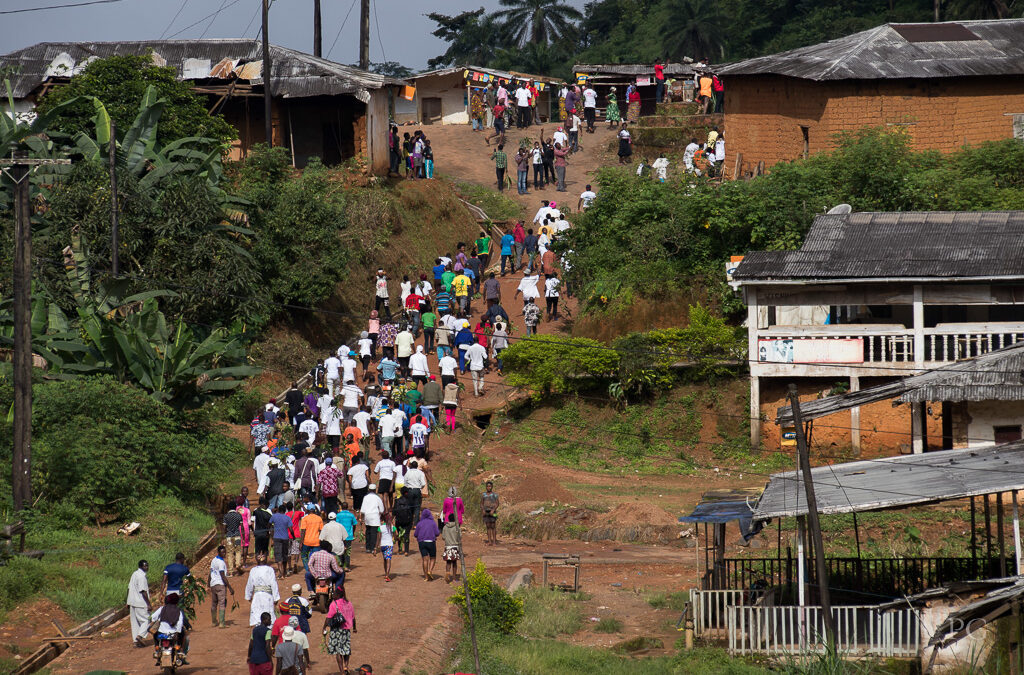
 Cameroon, in the equatorial region of West Africa, is composed of two groups of regions that speak French and English respectively. The differences between them are not limited to language, but also some aspects of public administration. An escalation of violence is threatening the country of 23 million people livining within a territory of 475 thousand square kilometers. Raphaël Takougang, a Cameroonian lawyer and member of the Focolare, who now lives in Italy, explains: “The francophone part became independent on January 1, 1960. For the English-speaking part there was a referendum on October 1, 1961 to decide whether or not to join neighbouring Nigeria, which was already Anglophone, or stay with Cameroon. The northern part of this region chose to join Nigeria, the south preferred to stay with Cameroon. Thus was born a Federal Republic with two states, East Cameroon and South Cameroon, each with its own institutions – Parliament, government, legal systems – and others at the federal level. On May 20, 1972, another referendum resulted in the United Republic of Cameroon. In 1984, a small change in the Constitution removed the word “united” and, from then on, the country has been called the Republic of Cameroon. Ever since 1972 the malaise has been growing among the Anglophones who are a strong minority in the country, and there is even a name for it: the Anglophone problem.
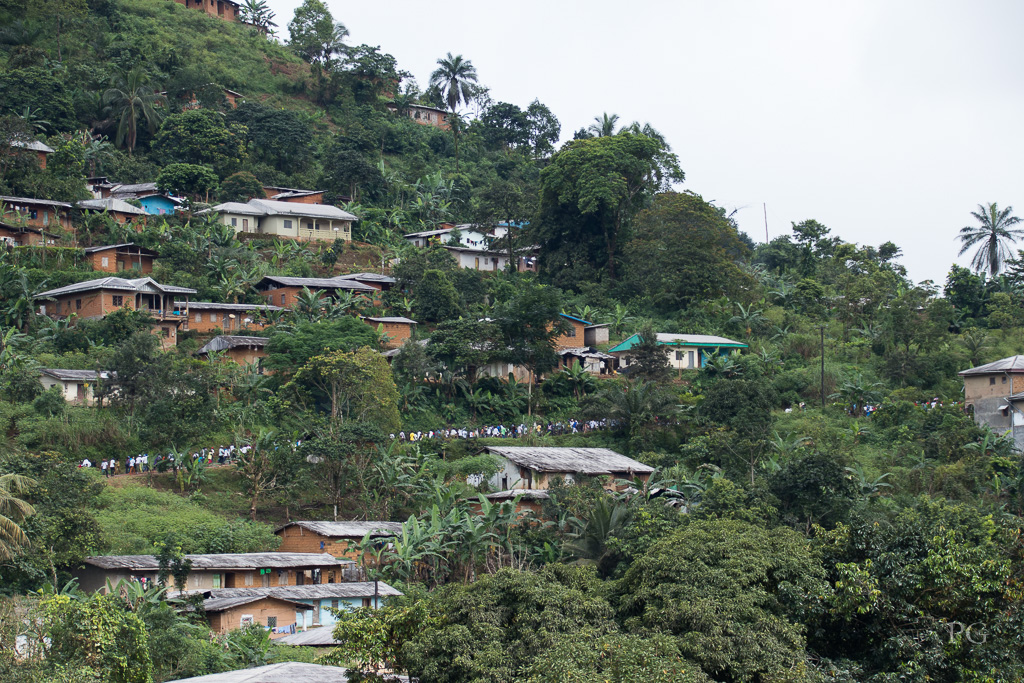
 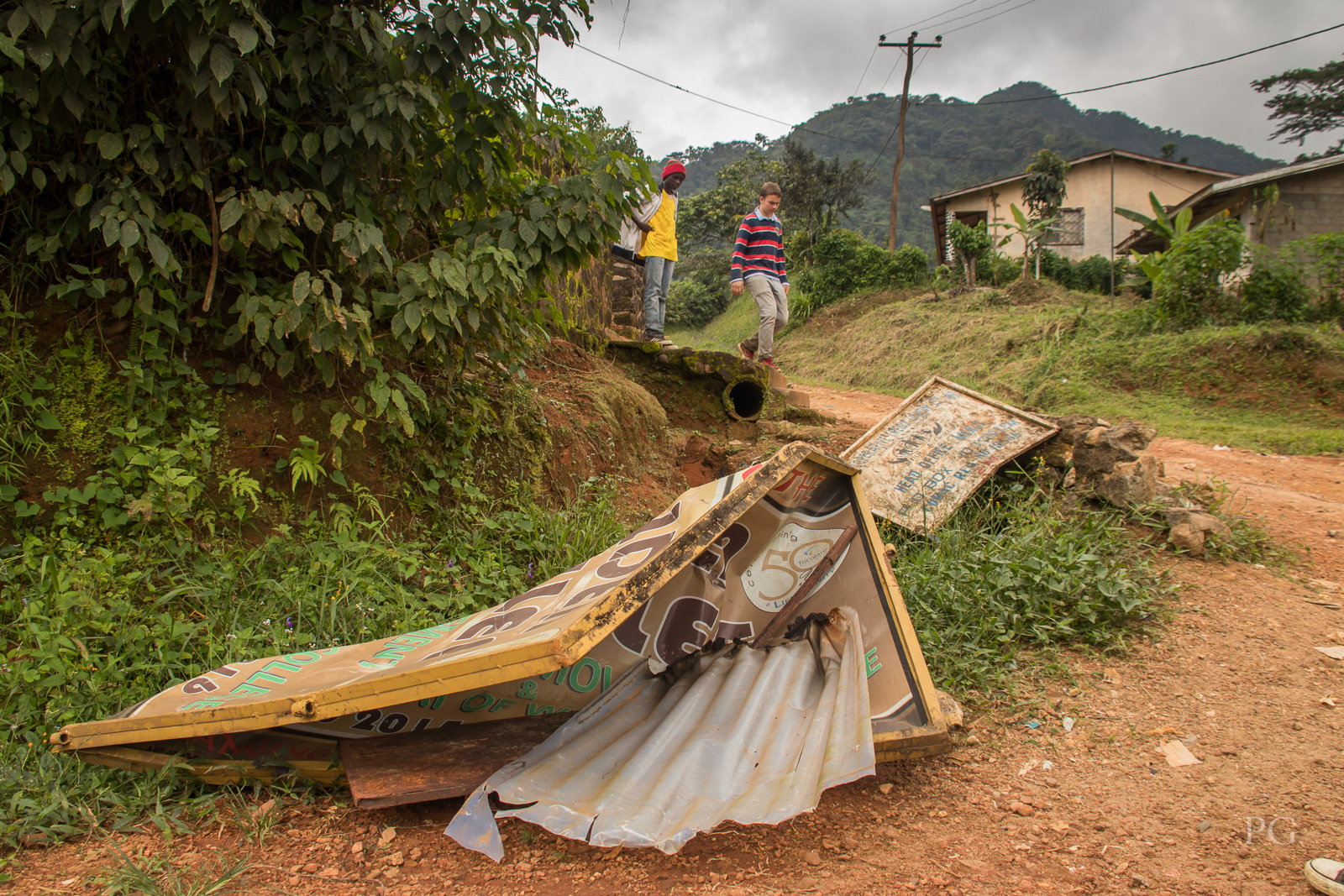 Ever since 2016 the crisis situation in the Anglophone region set off a series of strikes, first against teachers, then against lawyers. The people of the Mariapolis in Fontem, in the very heart of the Cameroon forest, explain: “While on the one hand the bishops had always encouraged dialogue, the boycotting of educational and justice institutions had an unexpected result on the crisis, which worsened with an escalation of strikes also among commercial businesses and transportation systems, in accordance with a strategy known as “Dead City.” No students showed up for the beginning of the last year school year. Despite the threats of reprisals against transgressors, here and there, some schools courageously opened their doors and others followed their example. The OLSW College in Fontem also resumed classes.” The Mariapolis in Fontem was born from the testimony of concrete love of some doctors, who arrived there in 1966, after the local bishop appealed to Chiara Lubich to take care of the Bangwa people, who were suffering from a very high infant mortality rate that was leading to their extinction. In a short time, thanks to the contribution of people from all over the world, Fontem equipped itself with schools, a hospital and other service facilities. Since then, the Bangwa people and several other neighbouring peoples have set out on the path of fraternity, which can be seen now in other citadels that have begun on the African continent. With its 80 thousand citizens, Fontem is a meeting and training place for people from all over Africa and the world. Here they experience how the exchange and collaboration among men and women of different races, cultures and traditions can bear fruits of brotherhood even in regions battered by conflicts.
 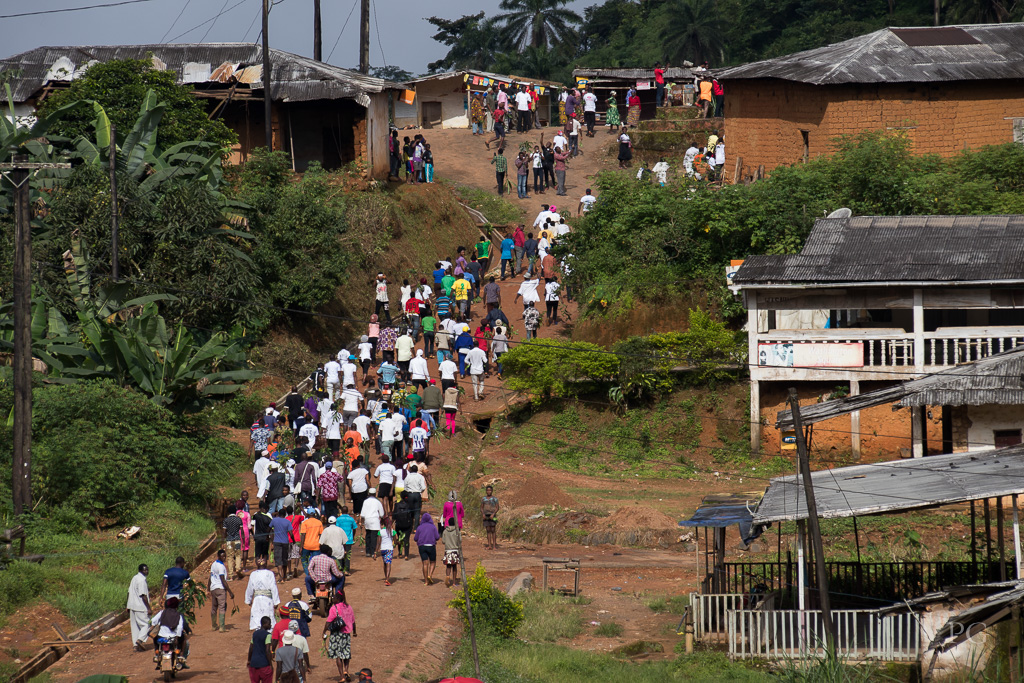 “The Catholic college in Fontem suffered an attack,” the locals have reported, “but many people of the village have come to help students and teachers, even at the risk of their own lives. With the approach of the anniversary of the aforementioned referendum, of October 1, which is such an historical date for the Anglophone region of Cameroon, violent demonstrations were feared, and the Focolare community organized prayer groups that included people from other regions of the country and from abroad. There has been no loss of life in Fontem. Every occasion is good for building relationships with the various civil, traditional and ecclesial authorities. We try to help those near to us to go beyond the fears, to create family moments, starting from those closest to us, who are often confused by the many voices and the media. The young people have organized “talent show” evenings and the “Sports for Peace” event to promote a more positive spirit “. “All during this period, even in the midst of difficulties – they conclude – the life of the Focolare community has continued. We hope that this challenge of love for all will enable us to discern and to act for the good of our country “.
31 Jan 2018 | Focolare Worldwide
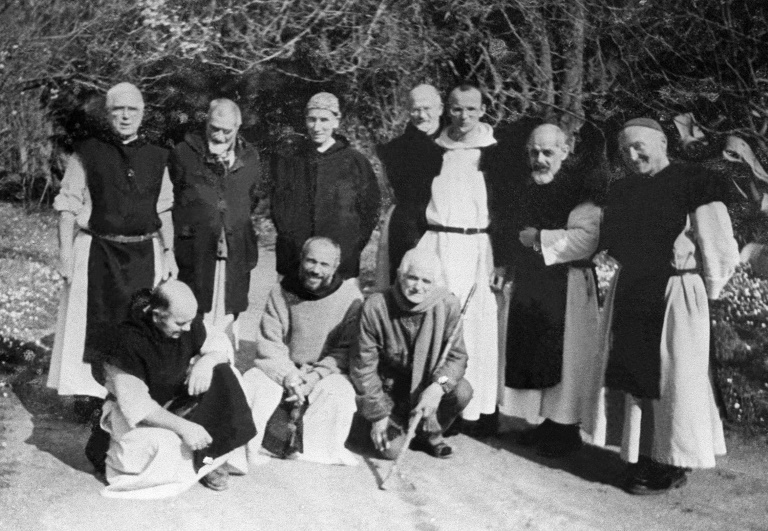
The Vatican has promulgated the decree attesting to the martyrdom of the 7 monks of Tibhirine, among whom Msgr Pierre Claverie, Bishop of Orano, and the other 11 male and female consecrated religious, killed between 1994 and 1996 during the Algerian civil war which caused the death of thousands of innocent people among which journalists, writers, Imams and common folk. A movie entitled “Of Gods and Men” was made about the 7 Trappist monks who were abducted from their abbey of Our Lady of Atlante (80 km from Algiers) and slain in still obscure circumstances. These vicissitudes reached their peak in August 1996, when the Dominican Bishop of Orano, fervid defender of the reconciliation between Muslims and Christians, was killed together with his Muslim driver, by a bomb at the entrance of his house. The spokesman of the French Bishops’ Conference said “They are martyrs of love because they loved up to the end, giving their lives for their Algerian friends. For us it is a sign that love is not vain and will triumph.” The Algerian bishops commented “Our Church is rejoicing” associating to their homage “the thousands of people who were not afraid to risk their own lives for their fidelity in the faith in God, their country and their conscience.”
30 Jan 2018 | Non categorizzato
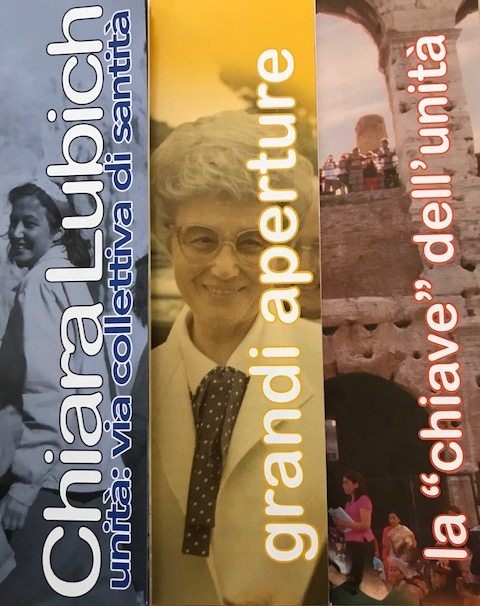
In the framework of the Cause of Beatification of the Servant of God Chiara Lubich, which opened on 27 January 2015 in the Diocese of Frascati, a practical brochure with all-encompassing contents on the figure of the Founder of the Focolare Movement has been released, and is momentarily available in Italian. The new publication aims at illustrating, in a simple communicative language, her intense life and the numberless works and initiatives she promoted. It is structured in three parts: Chiara and the charism of unity; the “great openings or dialogues in the ecumenical, interreligious and contemporary cultural fields; and her spiritual insight into the mystery of “Jesus Forsaken,” which she understood, lived and proposed as the “key” to achieving unity with God, and among peoples. The idea of preparing a biographic Profile arose from the need to divulge some of the intense work of the “collection” which the Postulation of the Cause of beatification of Chiara is doing, starting from what she said about sanctity, and of how she lived it and proposed it to all, starting from the letters she wrote in the early years of the movement. The drafting of the text was shared along all the phases of elaboration, not only by the members of the Postulation but also by experts, friends, elderly and the youth. Those who wish to receive one or more paper copies may address: Postulation of the Cause of Beatification of Chiara Silvia Lubich Focolare Movement Via Frascati, 306 – 00040 Rocca di Papa (RM) – Italia Telefono +39 06 947 981 39 – Cell. +39 389 343 9529 E-mail: postulazionechiaralubich@focolare.org
