18 Jan 2018 | Focolare Worldwide
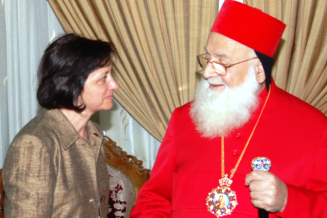
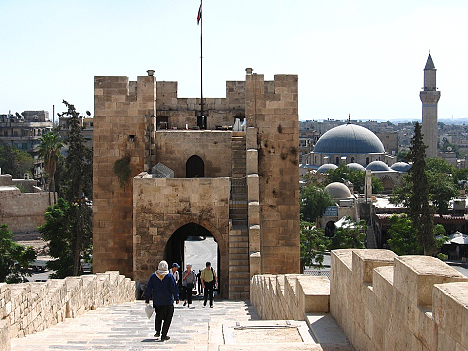 Mirvet Kelly’s grandfather was a deacon: “I remember going with him every Sunday to the Syro-Orthodox Divine Liturgy. I was proud to watch him all dressed in white as he recited his portion of the prayers at the altar.” There are several Christian Churches in Homs, Syria, where Mirvet grew up: Armenian Apostolic, Greek Orthodox and various Catholic Rites, Maronite, Melkite and Syro-Catholic. Before the war, even though we were linked to our own Churches, the faithful attended other Churches without any problem. “As I grew older,” she went on to say, “a lot of things changed: Grandfather died and the Divine Liturgy seemed long and outdated. I was the only Christian at school in the midst a lot of Muslims. At Christmas and Easter I’d be the only one absent and, when I returned, I was bombarded with questions: ‘Why are there so many Churches? Why was your Jesus crucified and rising from the dead on different dates in different Churches? Some friends and I decided to no longer belong to one Church or another, but to be Christians and that’s all. Like many of them, I stopped going to my own Church.” A
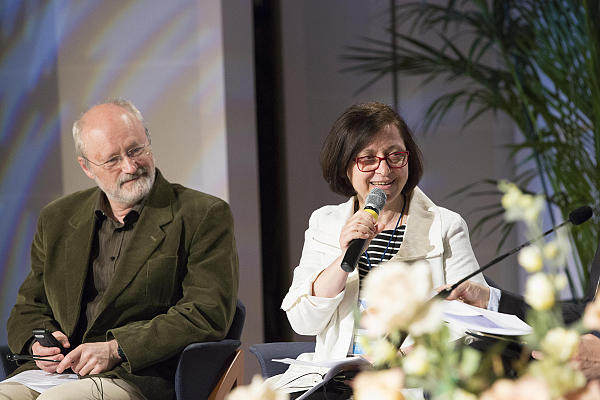 fter a while, Mirvet met a group that was trying to live the Gospel according to the Focolare spirituality. “Through them, I discovered that God is the Father of everyone and that we’re all loved by Him as sons and daughters. My life began to change. Every time I tried to love, going to visit an elderly person or a poor person, for example, my heart would be overcome with peace and joy. One day, I came across a sentence in one of Chiara Lubich’s writings: ‘We should love the other person’s Church as our own.’ Not only did I not love the other person’s Church – I didn’t even love my own Church, which I had criticized and abandoned. At that point, Mirvet’s life, which was already very fruitful both personally and ecumenically, took a new leap. She felt God calling her to give herself entirely to Him. “In the Focolare communities I’ve lived in,” she explained, “I found myself to be the only Orthodox among Catholics of all ages, countries, languages, cultures, Churches and ways of thinking. Trying to live in unity with all the different ideas about things is always a challenge, because each of us has her own tastes and ideas down to the smallest details. But when we try to appropriate the other person’s reality as our own, we experience that the differences become an enrichment. We often pray for each other’s Churches, in an ongoing growth in the faith and in the relationship with God. And almost without realizing it, we bring the fruit of our communion into our respective Churches, to our jobs and into our daily lives. It seems like a drop in the ocean, but even the tiniest steps united to those of many others in the world, can make a difference. In the countries of the Middle East where I lived, for example, I saw priests helping people, without ever asking what Church they belonged to. They did projects to help out different Churches, to help them meet their needs whether they were Christian – or even Muslim. Last year, Catholics and Orthodox celebrated Easter on the same day. Two Syrian friends who now live in Vienna, Austria, recently reported to me how they and many other Syrians have been helped by a parish priest and some Catholic women focolarini to look for a house, medicine and work. They formed a group in which they live and help each other to share their common Christian experience. In the United States there are more than fifty Syro-Orthodox Christians who meet regularly, once in the Orthodox churches and once in the Catholic churches. They experience that God is always with us and that we have to pray, to live and to love so that Jesus’s testament ‘that all may be one’ is fulfilled as soon as possible.”
17 Jan 2018 | Non categorizzato
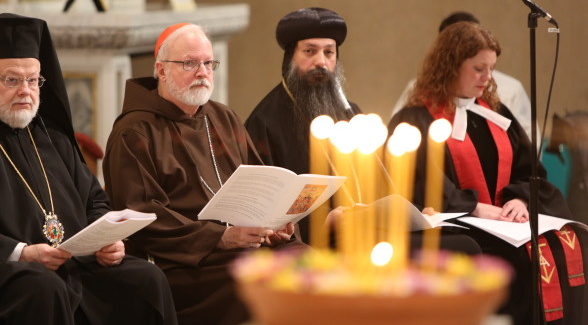
The Week of Prayer for Christian Unity has been celebrated for 110 years. It was an ecumenical initiative held between the feasts of Saint Peter on January 18th and the Conversion of Saint Paul on January 25th. It was first promoted by Reverend Paul Wattson, founder of Graymoor in New York. In the Southern Hemisphere it is celebrated during the Season of Pentecost. The event has a precedent in Scotland, in 1740 with a Pentecostal Evangelical preacher who invited all to a day of prayer for unity. The same invitation was extended by the Ecumenical Patriarch of Constantinople, Joachim III in 1902. In 1894 Pope Leo XIII encouraged an Octave of Prayer for Unity. During the Second Vatican Council the Catholic Church highlighted prayer as the soul of the Ecumenical Movement. In 1966, the Pontifical Council for the Promotion of Christian Unity and the Faith Constitution of the Ecumenical Council of the Church called for the joint preparation of the official texts for the Week of Prayer, a task that has been entrusted for over thirty years to different local ecumenical teams. For 2018, the Churches of the Caribbean were chosen, and the team was comprised of Roman Catholics, Baptists, Anglicans, and Methodists. The Focolare Movement is committed to promoting this important event, which is in accordance with Jesus’s prayer to the Father “that all may be one” (Jn 17:21).
17 Jan 2018 | Focolare Worldwide
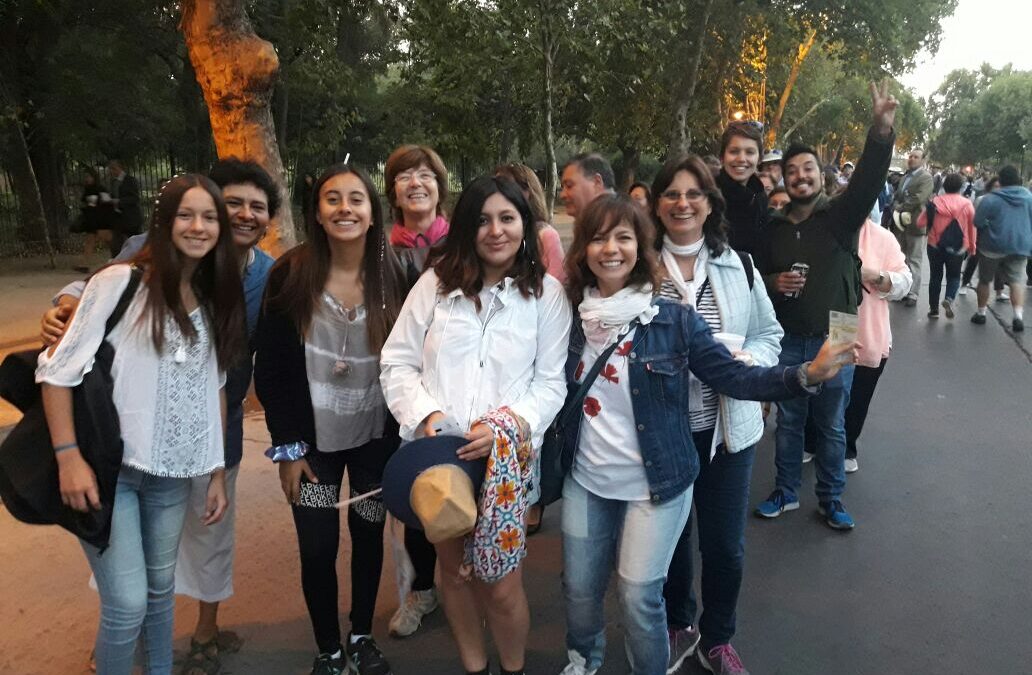
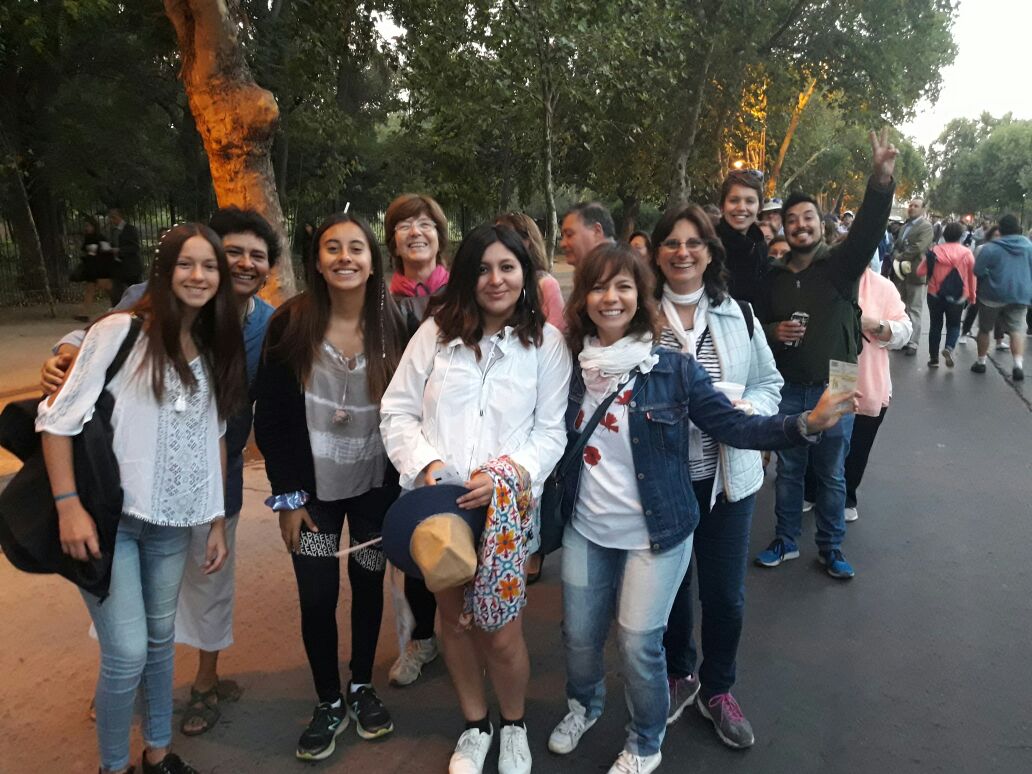 It is the second day of Pope Francis in “their” land, after he landed in the evening of 15 January at the Airport of Santiago, to start a journey that in two weeks will touch base with two South American countries. “I want to look into your eyes, face to face,” he had said before setting out on his journey. About 15,000 volunteers are at work, offering their talents, time and commitment, to provide a fundamental service in the various events that will be held during the first lap in Chile. “This experience breaks the limits of a task we are entrusted with: in fact, it is the sincere expression of a commitment which will mark our lives forever,” some of them said. “In contrast with the apathy expressed by some of the media, the youths of Chile offer a note of enthusiasm and emotion for the Pope’s arrival,” well expressed by the song composed by Claudio González Carrasco, of the Focolare community in Temuco (southern Chile). Welcomed by the outgoing President, Michelle Bachelet, the Pope then proceeded towards the Apostolic Nunciature, where he will stay during this first lap. Among the many fundamental moments of the journey in Chile, will be the meeting with Chilean mapuches populations, who are battling to safeguard their own identity, and the Mass of 17 January for the indigenous populations of the region.
16 Jan 2018 | Non categorizzato
“Various circumstances had pointed out that we could no longer remain in Venezuela, our country. Armando had been fired and a letter from Perù had sparked a glimmer of hope. It seemed that God was calling us there.” With these words Ofelia and Armando started to recount their adventure, forced to leave behind their already adult sons Daniel and Felix, to find a home, work, and a future for all in another country. “Without a dime we started to prepare ourselves. We also received a sum to allow us to cover the costs of the journey. It’s traumatic to leave one’s own country. Our daughter had already left for Peru in October, but at the frontier they had taken away her PC and money. On this premise we headed off for the border.” Armando and Ofelia left everything but brought along a photo of Domenico Mangano: a person of great faith, committed to the Focolare community in central Italy, and a pugnacious politician who died in 2001 and for whom cause for beatification had been initiated recently. “We asked him to take care of our journey.” «Crossing the border incredibly did not cause any particular difficulties. We crossed over almost as if we were invisible, and a young woman, like an angel, instructed us on what we had to do. After just one check on our baggage we passed, without the pressing crowd that had amassed at the border the days before. We could hardly believe it. We thought that it was due to the help of Domenico, and once again we entrusted ourselves to him. Due to a slight mishap we arrived in Quito and spent the night in the women’s Focolare house. Some members of the local community brought us to dinner and a walk in the day time. After a journey of seven days, we finally got to Lima.” In Lima, Ofelia and Armando were hosted in the house of Elba and Mario, besides receiving clothing, a food bag and cash. “We visited both focolare houses, and went to Centro Fiore to help prepare Christmas lunch which the communities of Lima offer to girls saved from white slavery, and are guests of the nuns. They were happy. We also met again, Silvano and Nilde, who had left Venezuela before us. Everyone received us with love, and we felt like a real family.” “On Christmas day a family invited us to their home and after lunch we went for a walk. Now we pray to the Lord to help us find a house and a job. We have undergone so many experiences and we know that Domenico and Chiara Lubich continue to help us from above. “One night, while we were sleeping,” continued Ofelia “a barefooted girl holding a babe in her arms knocked on our door. It was not our house, but we decided to open just the same, since it seemed that Jesus himself was asking our help. It was the neighbour on the floor above, whose husband was drunk and maltreating her. She told us that up until then she had never dared to knock on another door of the condominium, but that she had seen us some day earlier while we were going down the stairs, and in her heart thought that she could trust us. And now there she was before us. Armando went to speak to her husband, while I tried to console the young woman. A few days later she was able to return to her apartment and now Armando and that man are continually in contact. We are overjoyed in having loved Jesus in that family. As to us, God will guide us to understand what he wants from us.” But with a renewed hope: “We are certain that the detachment from our family, our country and friends, will bear fruit.” Gustavo Clariá
15 Jan 2018 | Non categorizzato
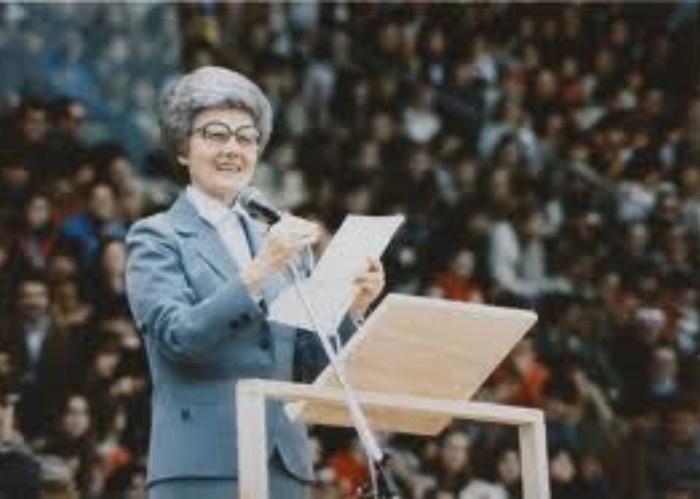
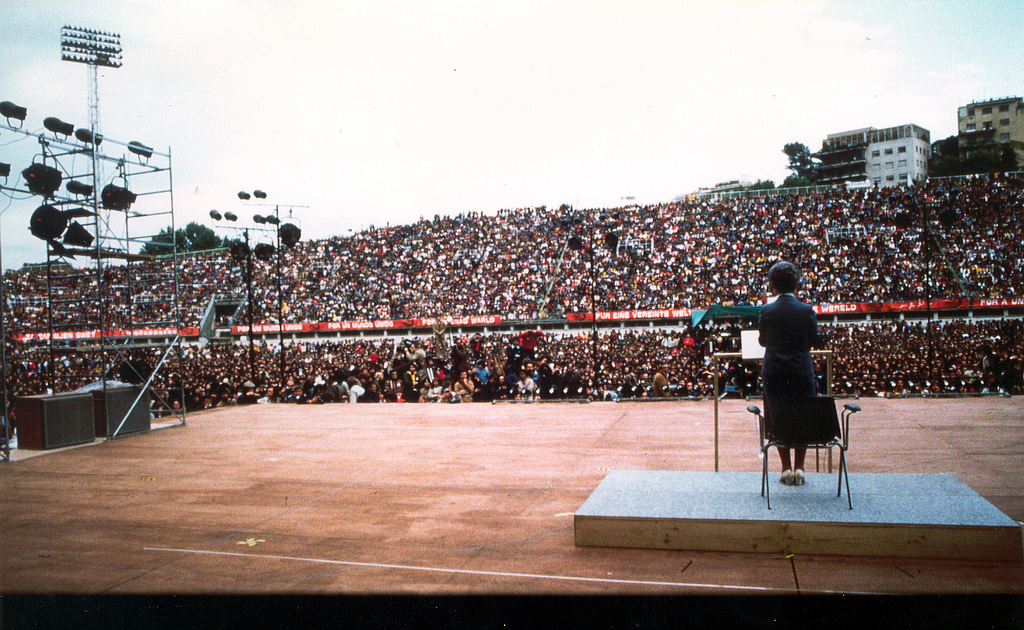 I was born and grew up in Macau, a former Portuguese colony is now part of Continental China, where I got to know the Ideal of unity at a Mariapolis. Macau is a small city that can be visited in few hours, so the invitation to take part in a Genfest in Rome, with thousands of young people from around the world – really appealed to me, even though I didn’t have least idea of what it was. We had just begun to live this ideal of unity, with other young people and a few women focolarini who often came to visit us and bring us the news and the concrete life of the Gospel that is lived in the Movement around the world. That world that I had known only through my geography lessons, but that now, with the Ideal of unity, had become smaller and nearer. Just arrived in Rome, several days earlier, we found ourselves in a house with lots of young people from Philippines, Hong Kong, Australia, Latin America…. How could I live with all of them? We Asians were a bit shy and, not knowing the language, we didn’t know how to communicate. Instead, there was no need to talk in order to understand one another, because we had same joy in common and from the very first, there as a very strong mutual understanding among all of us. After only a couple days, we already felt like we were one family. Then we learned that the title of the Genfest was: For A United World. The Genfest was going to be held at an open stadium, so I remember us praying a lot that it wouldn’t rain. Hundreds of buses from Europe were awaiting us. We learned that Chiara Lubich (whom I had not yet met in person) wanted the Genfest to be a moment of God. More than to the fest, Chiara brought us to the essential.
Chiara Lubich
