13 Jan 2018 | Non categorizzato
Foto: Pixabay
12 Jan 2018 | Non categorizzato
© Osservatore Romano
11 Jan 2018 | Focolare Worldwide
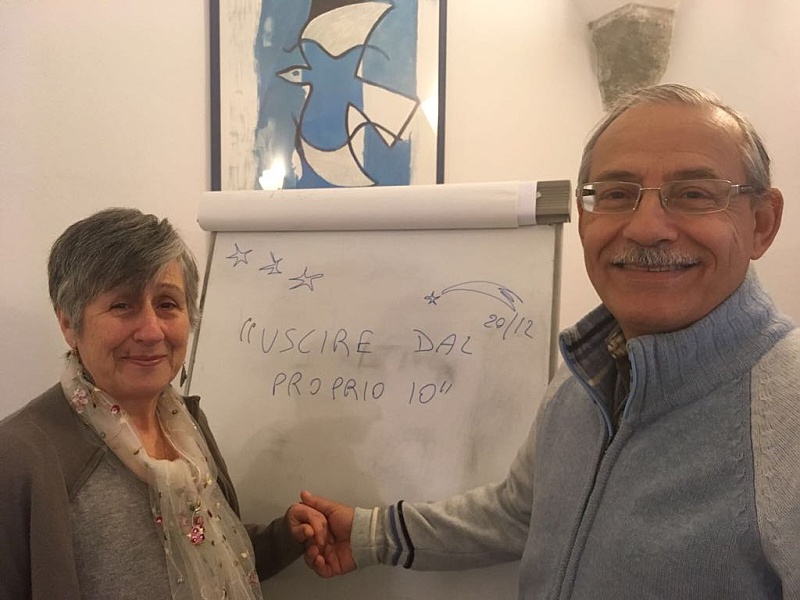
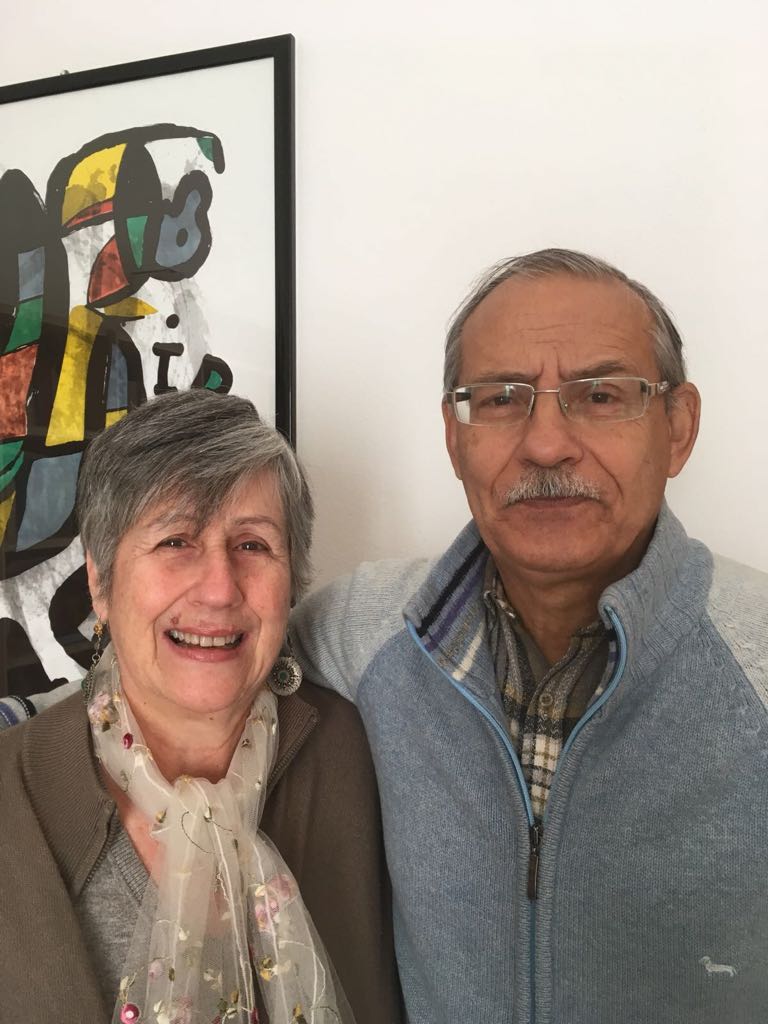 Rosy and Leo Prisco are from Naples, Italy. He’s a railroad worker and she’s an accountant. They’re retired. Their story began 40 years ago at a time when couples who opted for a civil ceremonies were very few. They were agnostics and went to city hall for their wedding. They were so different from each other that no one was betting on their staying together. At the birth of their first child they had a doubt: Should they baptize him or not? They spoke with the parish priest. “For us, adamant Marxists and agnostics, it was unthinkable that a priest should welcome us in such a warm, friendly and open way. Father Salvatore didn’t express a single judgement towards us regarding our situation as a couple, but he became a friend to the point that we were even able to tell him about our constant fighting. Yes, because it was easy to be a revolutionary when we were outside the house, inside the house I was the one doing all the cooking and cleaning. I remember how – to get Leo to listen to me (I was a bit crazy, but at least it worked sometimes!) – I’d do what we did when we held protests on the town square: I’d hang signs on the kitchen walls that said: ‘You’re a tyrant,’ ‘You’re treading on the equality of women,’ and so on. Father Salvatore introduced us to other couples. They were also having problems but had learned to dialogue, and they also had a secret: apologizing and beginning again. We began doing the same, which helped to improve our relationship one day at a time. Meanwhile, Father Salvatore agreed to celebrate Francesco’s baptism and, six years later, the baptism of Nunzio.” “Thanks to Father Salvatore and the other families,” Leo explains, “we had an encounter with God and with God’s love and, little by little, the desire grew in us to be children in accordance with God’s heart.” We came to realize that even though we had turned our backs on him, He never stopped speaking to us, because He is Love. Just as He had in 1993, inside a mortuary room at a hospital. There, by chance, we had come across the pain of two parents whose little angel, a boy of three years, had died. That was a powerful message to us. What if that happened to us? They were the same parents that we met again at a Focolare meeting, invited by Father Salvatore. Yet, from that pain of theirs three family homes were opened for children in difficulty.” For Rosy and Leo, who in 1995 said their yes in the Sacrament of Marriage, finding Gino and Elisa within the context of the Focolare appeared to be no small coincidence. “Right away a bond was established,” Rosy recounts, “which led us to offer our full-time help as foster parents in a home for families who came to stay at Casa Sorriso for longer or shorter time periods, depending on their family situations.” “This experience,” Leo confides, “gave us an awareness of being merely instruments in God’s hands, and being able to be of help wasn’t a matter of having any special gifts. Today, as then, we’re not the perfect family. We just want to place ourselves at the service of Jesus in the people we meet. Like those little Russian children that we took into our home: a relationship that continues until today now that they’re adults.” In the beginning of 2017, already retired, they wanted to celebrate the 50th anniversary of the New Families Movement by being actively involved in some of the celebratory events. They also took part in a meal for young people. The year came to an end, but not their determination to give more. Last October they moved to Loppiano, planning to stay until July and be able to follow things more closely: practical things like transportation for the families that go there from around the world.
10 Jan 2018 | Focolare Worldwide
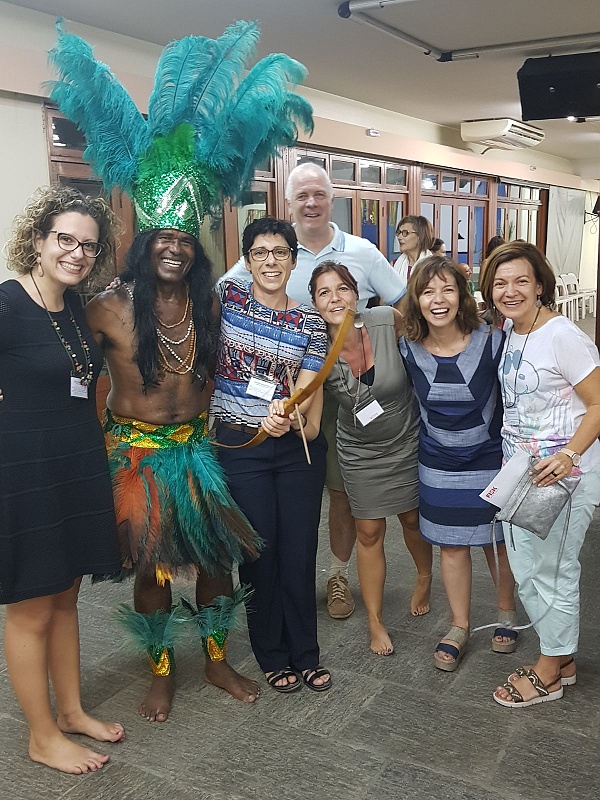 A warm summer atmosphere of the Southern Hemisphere was the framework of an encounter with the sociology of Latin America, which some of the participants described as “dazzling”. Every time we love, every time we give, it’s Christmas, claims the book “Love in the Time of Globalization”, written by Social-One Secretary, Silvia Cataldi, researcher at La Sapienza University of Rome, along with Vera Araujo and Gennaro Iorio who wrote Toward a new conception of sociology (Città Nuova, 2015). Sociologists pondered that same agape dimension during study sessions and in workshops.
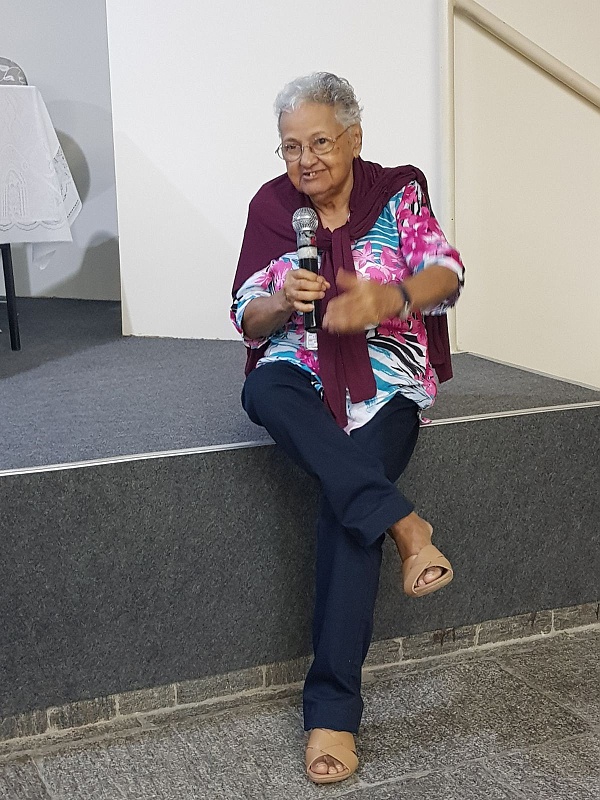
Vera Araujo
9 Jan 2018 | Non categorizzato
On its 50th birth anniversary, the international Gen Verde band has recorded “TURN IT UP!” “It is an invitation,” they said, “to raise the volume of unity.” And this calls for a concrete, universal love that is able to take the initiative. This idea has toured the globe with the group, echoing in squares, schools and homes throughout the world. It has contaminated many and has become a life commitment. “As the year is about to end,”he artists added, “the idea has returned ’in a million hues’, sung by numberless voices, and danced with the fantasy of different peoples. And these 465 boys and girls from 31 cities of 21 countries in 5 continents are the protagonists of the video clip, ‘TURN IT UP!’ with their passion, enthusiasm and joy.” https://youtu.be/DKoodP6IYqg?t=40
