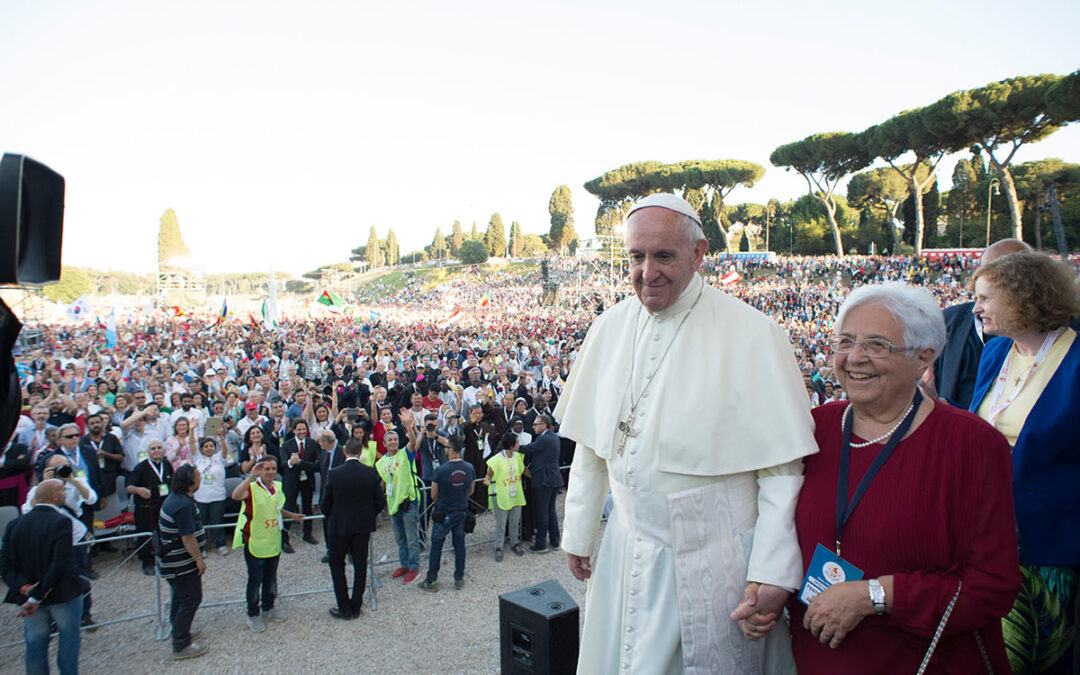
Maria Voce: “Space, not payback”
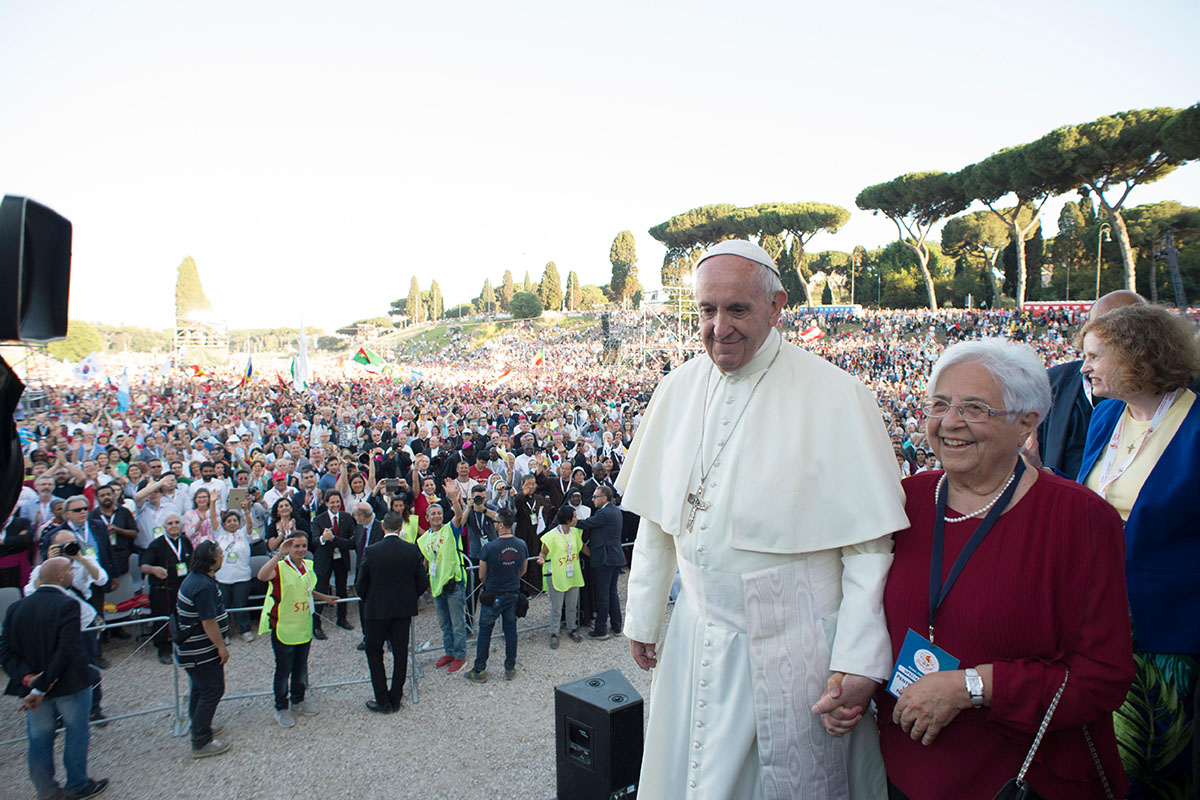
© Osservatore Romano

© Osservatore Romano
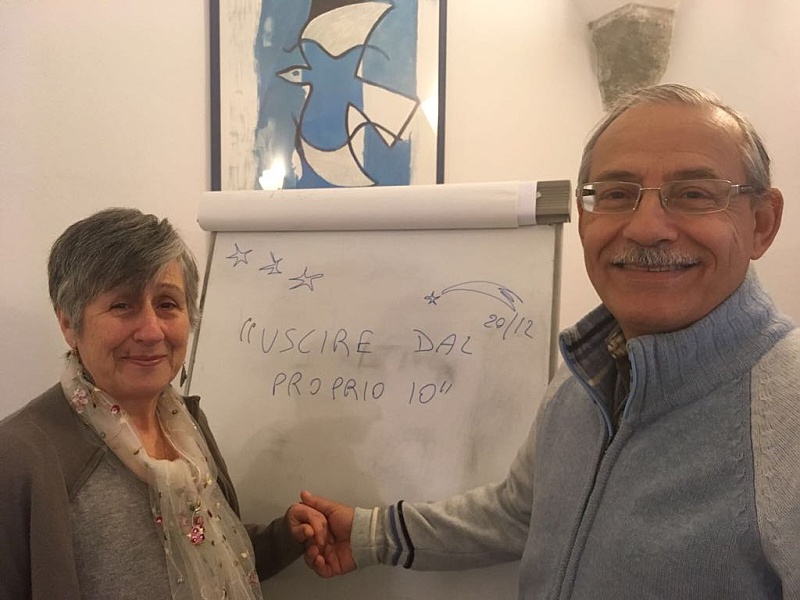
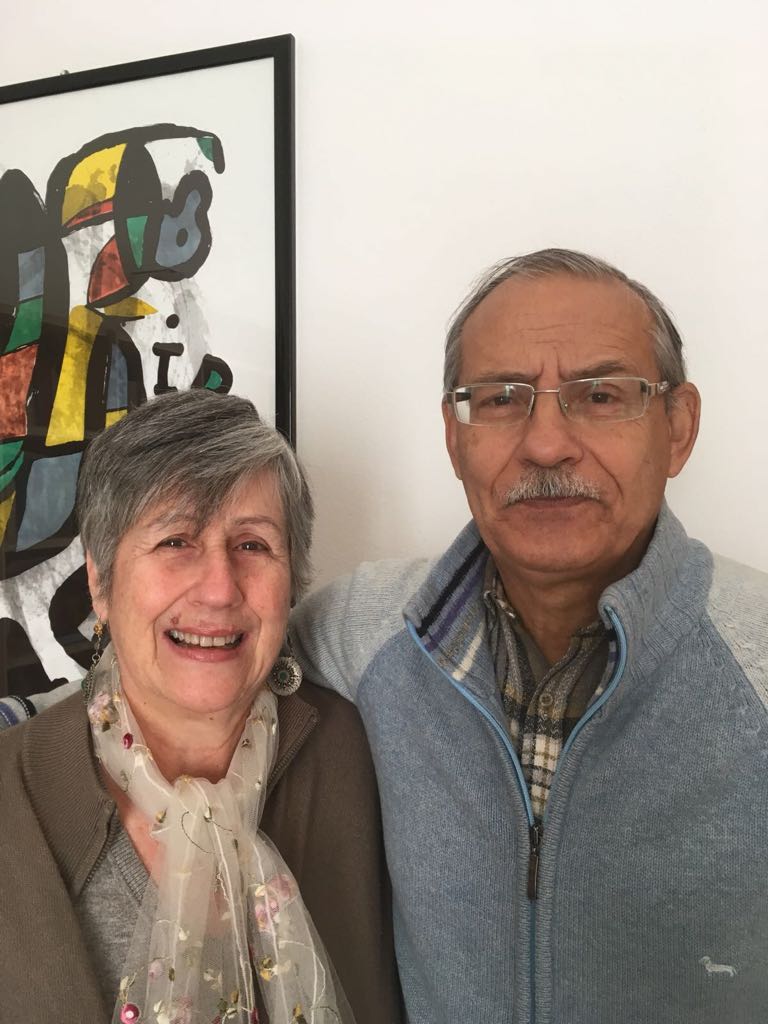 Rosy and Leo Prisco are from Naples, Italy. He’s a railroad worker and she’s an accountant. They’re retired. Their story began 40 years ago at a time when couples who opted for a civil ceremonies were very few. They were agnostics and went to city hall for their wedding. They were so different from each other that no one was betting on their staying together. At the birth of their first child they had a doubt: Should they baptize him or not? They spoke with the parish priest. “For us, adamant Marxists and agnostics, it was unthinkable that a priest should welcome us in such a warm, friendly and open way. Father Salvatore didn’t express a single judgement towards us regarding our situation as a couple, but he became a friend to the point that we were even able to tell him about our constant fighting. Yes, because it was easy to be a revolutionary when we were outside the house, inside the house I was the one doing all the cooking and cleaning. I remember how – to get Leo to listen to me (I was a bit crazy, but at least it worked sometimes!) – I’d do what we did when we held protests on the town square: I’d hang signs on the kitchen walls that said: ‘You’re a tyrant,’ ‘You’re treading on the equality of women,’ and so on. Father Salvatore introduced us to other couples. They were also having problems but had learned to dialogue, and they also had a secret: apologizing and beginning again. We began doing the same, which helped to improve our relationship one day at a time. Meanwhile, Father Salvatore agreed to celebrate Francesco’s baptism and, six years later, the baptism of Nunzio.” “Thanks to Father Salvatore and the other families,” Leo explains, “we had an encounter with God and with God’s love and, little by little, the desire grew in us to be children in accordance with God’s heart.” We came to realize that even though we had turned our backs on him, He never stopped speaking to us, because He is Love. Just as He had in 1993, inside a mortuary room at a hospital. There, by chance, we had come across the pain of two parents whose little angel, a boy of three years, had died. That was a powerful message to us. What if that happened to us? They were the same parents that we met again at a Focolare meeting, invited by Father Salvatore. Yet, from that pain of theirs three family homes were opened for children in difficulty.” For Rosy and Leo, who in 1995 said their yes in the Sacrament of Marriage, finding Gino and Elisa within the context of the Focolare appeared to be no small coincidence. “Right away a bond was established,” Rosy recounts, “which led us to offer our full-time help as foster parents in a home for families who came to stay at Casa Sorriso for longer or shorter time periods, depending on their family situations.” “This experience,” Leo confides, “gave us an awareness of being merely instruments in God’s hands, and being able to be of help wasn’t a matter of having any special gifts. Today, as then, we’re not the perfect family. We just want to place ourselves at the service of Jesus in the people we meet. Like those little Russian children that we took into our home: a relationship that continues until today now that they’re adults.” In the beginning of 2017, already retired, they wanted to celebrate the 50th anniversary of the New Families Movement by being actively involved in some of the celebratory events. They also took part in a meal for young people. The year came to an end, but not their determination to give more. Last October they moved to Loppiano, planning to stay until July and be able to follow things more closely: practical things like transportation for the families that go there from around the world.
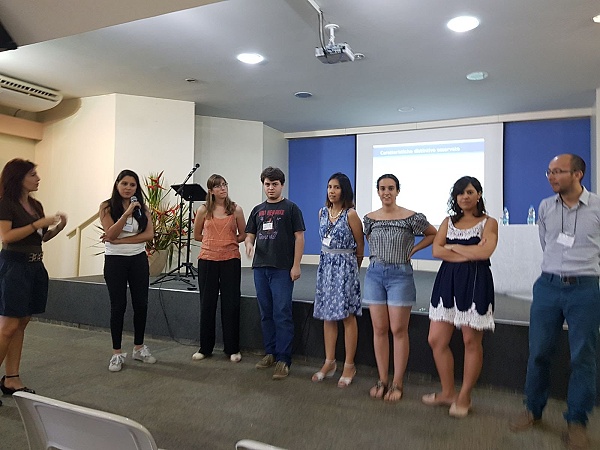
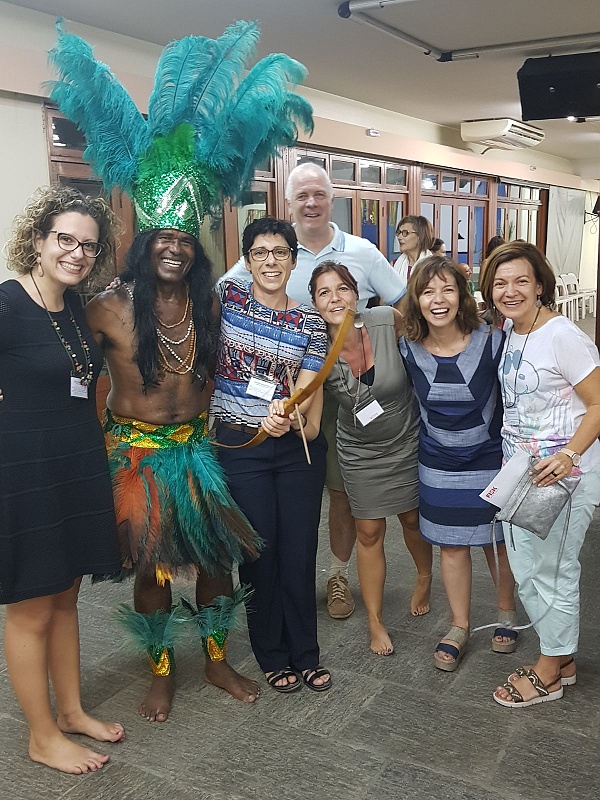 A warm summer atmosphere of the Southern Hemisphere was the framework of an encounter with the sociology of Latin America, which some of the participants described as “dazzling”. Every time we love, every time we give, it’s Christmas, claims the book “Love in the Time of Globalization”, written by Social-One Secretary, Silvia Cataldi, researcher at La Sapienza University of Rome, along with Vera Araujo and Gennaro Iorio who wrote Toward a new conception of sociology (Città Nuova, 2015). Sociologists pondered that same agape dimension during study sessions and in workshops.
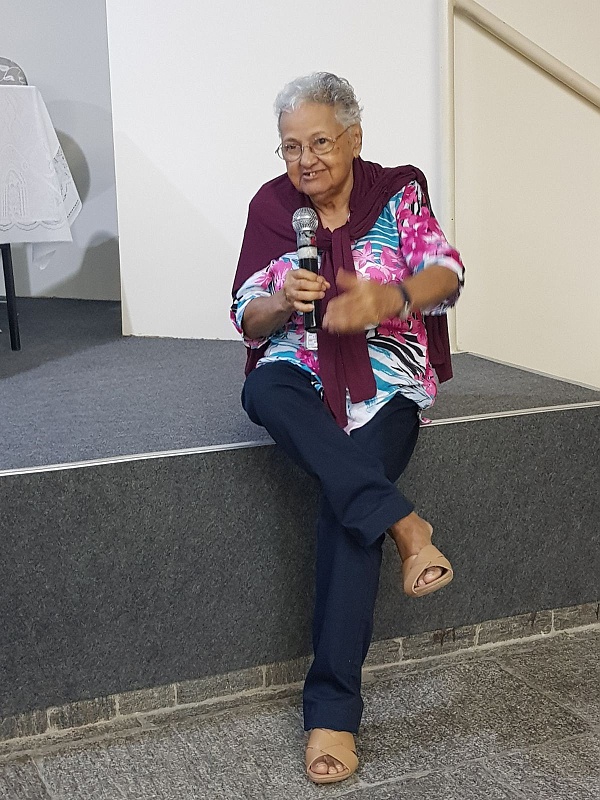
Vera Araujo
One Brazilian student and social worker commented: “The summer school was a confirmation for me of the importance of interdisciplinary approaches. I’m a social worker in contact with suffering people who have had their human dignity taken away. A new understanding of what it means to be a human person generates new practices that can activate dormant aspects of human nature.” A professor from Recife: “Agape is not only a sociological concept, but crosses over into the fields of philosophy and metaphysics. I saw that love is at work in your group too. From this standpoint, a loving and generous dialogue has been started.” Giuseppe Pellegrini, from the University of Padua: “The encounter with the Latin American culture is always enriching. For me, it’s a way to know my own country better. The need of testing our categories and concepts, the ability to read the social reality and its changes were some of the most stimulating elements I found here. At a distance of thirty years from my first experience in Brazil, I felt the same vibrations, the same energy that animates this very diverse people in the ways of manifesting communitarian life. The effort put forth by so many people that live according to the ideal of Chiara Lubich has produced genuine and respectable fruits in Latin American life. Agapic behavior is one manifestation of mutual love, a generative and contagious element, both theoretical and practical, at a level that is capable of influencing social, cultural and political change.” The next step for Social-One will be a conference on the 7th and 8th of June at the Italian University of Salerno, Italy. The continuing dialogue with contemporary sociology, but also to host a “social” Expo of best practices of associations and institutes that work in the field of society.
On its 50th birth anniversary, the international Gen Verde band has recorded “TURN IT UP!” “It is an invitation,” they said, “to raise the volume of unity.” And this calls for a concrete, universal love that is able to take the initiative. This idea has toured the globe with the group, echoing in squares, schools and homes throughout the world. It has contaminated many and has become a life commitment. “As the year is about to end,”he artists added, “the idea has returned ’in a million hues’, sung by numberless voices, and danced with the fantasy of different peoples. And these 465 boys and girls from 31 cities of 21 countries in 5 continents are the protagonists of the video clip, ‘TURN IT UP!’ with their passion, enthusiasm and joy.” https://youtu.be/DKoodP6IYqg?t=40
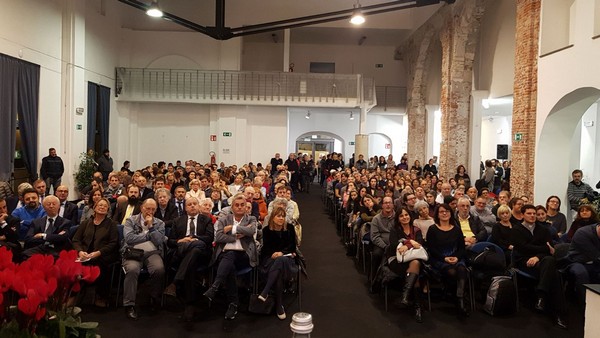
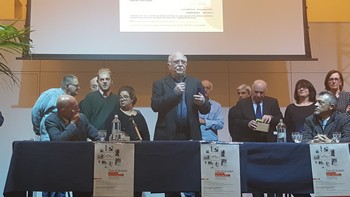 It was a very unique “group photo” taken during a public presentation of the social budget of the Tassano Group in the presence of some of the protagonists and authorities. Over time the Group was transformed from a cooperative into a consortium, and from a consortium into a group of consortia. It is complex and made up of different parts, currently comprised of 33 cooperatives that offer diversified services to 4,700 direct users and 100 thousand indirect users in the northwest region of Italy, which arrives from a brief stretch away at the sea and Mediterranean farmland all the way to the snow-covered mountains of winter. It involves 700 employees formed in the spirit of the economy of communion. “It’s an economic approach that the world doesn’t follow,” Luigino Bruni explained, “but it exists. Businesses who follow it try to destine profits in three directions: a part for creating jobs, a part for helping the poor, and a part for spreading this culture. The Tassano story is a love story made of employees and work that generated wealth and values.”
  It’s a story that began a long time ago when, in 1989, two friends, small local businessmen, Gicaomo Linaro and Piero Cattani, together with 24 volunteer partners adherents to the Focolare Movement, started a cooperative to respond to the many cases of social poverty in the region. The cooperative grew and gradually won the trust of several interlocutors, including public ones, which led to the acquisition of new services. Two years later, the members of Tassano felt that their objectives were in perfect harmony with the Economy of Communion Project begun by Chiara Lubich in Brazil so that it spread solidarity at a global level. They joined the project at once. Little by little, the diversified growth of the different activities and the consequent growth of new specialized cooperatives gave rise to a Consortium of businesses that remain independent administratively, but are united in the experience, all operating with the same spirit in the social, educational and assistance field, with services geared towards the weakest strands of the population, elderly who are alone, the disabled, mentally ill, unemployed, but also families, children and young people, as well as a view towards the maintenance and appreciation of the region. In 1997, Tassano became a Group of Business Cooperatives, with the intent of unifying the difference business and social experiences that already existed, but also to act as an incubator of new production agencies. In the future, all the strategic areas will flow into consortia that will be able to consolidate growth and favour further development. Maurizio Cantamessa, president of the Group, explains: “We’re quite a cohesive group, sharing the same values and understanding at the level of every day work. It was the right moment to group together, to consolidate and start again. The fact of being concentrated on the region is very important, because it favours relationships. We work side by side every day with local institutions every day. Being in the business of serving people, it’s important to be here in person. Business and solidarity together. Even with all the changes, the mission of the Group has always stayed the same: to promote a concept of business dealing geared towards the integral and solidarity promotion of the human person and of society, while not neglecting a strong orientation towards the market, through the individuation of objectives and business development plans that can lead to the creation of new businesses and new jobs. In demonstration of the fact that the values and ideas of the cooperative can be translated into concrete work actions in favour of the region and its citizens.