6 Jan 2018 | Non categorizzato
These three wise men from the East, the Magi who hurried across the desert in search of a small boy, prefigure the march of Christianity to rediscover its innocence. That small boy was a king, albeit a king without lodgings. But they went anyway, walking in by starlight, guided by a star. That is the miracle of the Christ, who forces people out from their fixed spots, peels away from their hearts the interests that turn them to stone, pushes them beyond the perceived boundaries of the sacred so as to have them recommence their search for unity among all people, in every circumstance. And so to his crib they come from every plague of prophet, Hebrew and Greek philosophes, art and literature, speculation and custom, stripping from themselves along the way whatever is particularly idolatrous and wrong, unreasonable and inhumane. And everything gathers around Christ, who is the reason for everything. The Magi brought perfume and treasure from the far reaches of Arabia and Mesopotamia: affects and effects. Love drew them out from far away to bring them close to Christ, who was the poor person par excellence and is forever to be found in the poor. That trek of the Magi represents the effort to draw near from every distance, to rise from the rubbish and with an offering of hearts and material goods, through the deserts of egoism, to arrive at unity with God, because “God became what we are so that we could become what God is,” as St Augustine would say: the one who descended so that others might ascend. But it’s a long trek, and it happens at night, amid trials and tribulations: Truth is never achieved without effort. God is a prize for those who put the effort into finding him: but whoever seeks finds. Igino Giordani, I Re magi, La Via n.97, January 6, 1951, p.4.
5 Jan 2018 | Non categorizzato
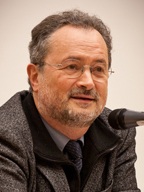
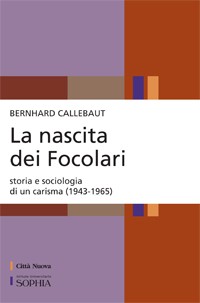 From a small city in northern Italy to five continents: an ample sociological dossier outlines the history of the Focolare, from its birth up to the definitive approval of the Church in 1965. It is a detailed reconstruction, encouraged by the founder of the Focolare herself already in the 1980s, and published for the first time in 2010 in a French edition, and lately translated into Italian by Città Nuova. Piero Coda, Rector of Sophia University Institute, introduces Callebaut’s study in the preface, with these words: “Up to today, there has never been an overall scientific approach to the history of the Focolare […] this current research for the first time constructs and institutes a historical and interpretative dossier of the important phenomenon represented by the Focolare Movement. […] The work is accurate, precise, and as thorough as can be […] exemplary and excellent under the historical profile.” Interviewed by Lorenzo Prezzi for settimananews.it, Bernhard Callebaut (Bruges, 1953) explained the sense of the book: ”I think that the purely testimonial narration, in which the person is strongly felt, is always valid. I think that a book like mine could cancel from my story the beneficial shock experienced in the reading of some pages of Lubich’s first (Meditations) pages that stimulated the actualisation of the messages they contained. On this premise, I think that at a second moment, we have to respect the need to understand, contextualize, link the phenomenon in itself to a previous story and gather some of the future prospects.” With studies in law, philosophy and sociology at the Catholic University of Lovanio, Bernhard Callebaut is currently a professor at Sophia University Institute in Florence, of which he is also Program Director of the Religions in a Global World research group. The first 20 years of the history of the Focolare are fathomed starting from the “enlightenments” of Chiara Lubich, which later became the core of her spirituality. “The charism is always granted to someone in particular, also here,” Callebaut explains. “Only after a certain time, Lubich realised that actually that gift had been bestowed on her and nobody else, at least, not in such a strong, limpid and overwhelming manner. But with time, she realized that also her first companions, who were sent elsewhere – first to Italy, then Europe and the continents – also became in some way, harbingers, multipliers of the charism, ’springs’ in turn. As of today – and in my book it is amply demonstrated – the core of Lubich’s charism is linked to having identified – as a gift – and later developed, and as never before in the two millenniums of Christian life, the meaning of that apex of the passion that constitutes the moment of that cry of abandonment of Man-God.” The history of the Focolare at the start of the story is made up also of a long and suffered wait for the formal recognition of the Church. “At the start of the 1950s the Holy Office examined the papers on the Focolare and initiated a series of meetings with the young founder. To put her and her followers to the test and measure their faithfulness to the Church, they asked her to take a step back, and no longer act as head of the Movement. Her followers would have never hidden who was really the soul of the Movement and there was no leadership crisis during those years, until Paul VI definitively resolved the issue. In 1965 Lubich signed her first letter as president of the Focolare. Today, after a certain time, we are beginning to see that behind her stature as a bearer of spirituality, there was also a rather unusual density of thought.” In more recent years, the charismatic intuition of the founder translates also into a series of concrete proposals as a contribution to the resolution of social and cultural issues. Some of these were Economy of Communion, “which actuates the preferential choice for the poor, and at the same time, values those who are able to contribute to economical life with the not common talent of entrepreneurship,” or the founding of the Sophia Institute, “as an interesting contribution to the debates and ordeals of contemporary thought.” Today, all the members of the Focolare, in some way bring ahead and multiply the charism of Chiara Lubich to fulfill the prayer of Jesus: ‘that all may be one’. And Callebaut concludes: “We need to continue working for some centuries more, it seems.”
 Callebaut Bernhard, Tradition, charisme et prophétie dans le Mouvement international des Focolari. Analyse sociologique, Paris, Nouvelle Cité, 2010, LXXXIII + 537 p. Italian translation La nascita dei Focolari. Storia e sociologia di un carisma (1943-1965), New City – Sophia, Rome 2017, p. 640. Entire interview by Lorenzo Prezzi
4 Jan 2018 | Non categorizzato
The Wrinkles of Disenchantment “After years of marriage I realized that the man living beside me was no longer the one I had gone head over heals for when I was young. But there were the children and life went on. One day a friend said to me: ‘I see you aging badly. Instead of growing in love, the wrinkles of disenchantment have grown.’ It was true, in place of loving and giving, I had insisted on being just and fair. I tried to change my attitude towards my husband and I discovered that he needed me more than ever. Things are different now. There’s a greater love flowing among all of us. (M.F. – Polond) The Pharmacy “The employees of the pharmacy I worked at before, were fired. All of them, except me. The new owners, however, were motivated more by self interest than the good of the customers. The atmosphere also changed quickly. For several months I did what I could to improve the relationships among employees and with customers. It was time well spent, during which I learned to be more merciful. Then, dismissal was also proposed for me. In spite of that, I trusted in providence, which didn’t disappoint: Unexpectedly another pharmacy offered me the position of another employee who had retired.” (C.T. – Hungary) My “Difficult” Patients “For several years now I’ve been working in an institute specializing in patients who are in a vegetable state, usually as a result of an accident. The process of recuperating from a coma is very complex and not even sure to happen. To the relatives who ask if their loved one will wake up, I usually answer that we can’t foresee what will happen, and that only God knows the future. We workers are only the instruments in His hands. It’s impossible to stay indifferent in front of such tragedies. At times my Christian faith has wavered. But I think that these “difficult” patients play an important social role: they gather people together and bring out the capacity of giving in them.” (Elio – Italy) Resurrection “Drugs and prostitution… For two years I stood by my friend, Mario, through his Calvary. He had drifted away from God, but respected the way I lived the faith. When he wound up in the hospital, I visited him faithfully. He asked: ‘Why do you do it? I come from a completely different world from yours!’ During his stay he had time to reflect, and one day he said: ‘I tried to convince myself that God didn’t exist, because it would have forced me to change the way I was living. But now I can’t go on like this anymore. You’re the only person I’m truly happy to have ever met. I would so much like to live like you.’ I suggested that he try to put the Gospel into practice one sentence at a time. I tried to do the same and it worked! Since he trusted me, he agreed to give it a try. It was hard for him to change the meaning of “love” in his mind, which for him meant to prostitute himself for money. It was a difficult journey, filled with failures and new beginnings. One day he went to the Sacrament of Confession. Afterwards he was radiant. Then there was the accident in which he lost his life. God was waiting for him there. But he was already prepared..” (S.V. – Switzerland)
3 Jan 2018 | Focolare Worldwide
 “Without giving it much thought, we had chosen the title together, “Building Bridges,” which could not have been more suitable: we couldn’t distinguish the youths of the wealthier districts from those of the poorer communities. The teams were composed of boys and girls from 10 to 18 altogether. The bigger kids took care of the smaller ones and the smaller ones enlivened the older ones. The participation of the poor communities did not imbue minimally an aspect of social assistance: all benefited from this interaction.” Renzo Megli, who had taken part right from the beginning in the organization of the Olympic games for kids, immediately laid down the foundations and success of the project, and described the preparatory activities with a passionate tone. “It seemed the winds were blowing against it. The idea of perfection and the memory of the “professional” or “semi-professional” sports fields of the previous editions deterred out spirits, blocked our minds, and saddened our thoughts. On the contrary, I was happy because of all the doors that closed on us and the slow and tiring change of direction: the only possibility that remained was to bring the Olympic games to the CEU, the Condominio Espiritual Uirapuru. We started to work on the project, determined to make the event a reality. But the conflicts remained evident; the compasses were still disoriented by old magnetic fields. Stop! We had to choose: shall we go ahead as one or stop? Would it be better to achieve something less perfect, but together, or something perfect in disunity? These will be different types of Olympic games, less professional, and perhaps less “trendy.” But perhaps it is precisely the breeze of the Spirit that is leading us to do something new, and different. We decided to go towards a common north. Even those who first were contrary have started to row in the same direction. Only then did I remember a conversation I had much earlier on with a focolarino who is older than me. He had given me this advice: “To lose an idea you must first possess it, and possibly, it must be really yours, as if it were your child, flesh of your flesh. Imagine a bottle of champagne: it must be full before you can remove its cap and let its bubbles flow.” That was how I felt, “father” to my idea, but ready to lose it. Each of us, upon “losing” our own idea, have become together, “parents” of a better idea, which has been polished along the way. Renzo continued his story: “The CEU Director has promised space and the equipment. All the work we had performed up to then was based on this available place. But then the cancellation arrived: we could no longer use that facility. The “dynamics of losing” and of placing in God all our worries has become almost like a daily event that after a few moments of dismay we took this adversity as a clear sign of the spirit. Inviting the children of the CEU community was the most important thing, but time was flying and the enrollments proceeded slowly, leaving us with a lump in the throat: will we reach a minimum number of participants? We decided to open the enrollments also to those who cannot participate due to economic difficulties. We wanted to entrust ourselves to Providence. Many supporters popped up, and all the expenses, even the unforeseen, were covered. The smile of the numerous CEU children became the icon of our Olympics. An extraordinary joy was evident in all, animators, parents, and players. A child of one of the CEU communities said: “I found my father here.” This was a bigger boy who really had shown him love. Among the participants were also the girls of the Lar Santa Mônica community that hosts adolescent victims of domestic sexual abuse. They had become a bit surly and wanted to go home immediately. Instead they participated up to the end. We saw them leave happy. This transformation was one of the most beautiful victories of our Olympics.”
2 Jan 2018 | Non categorizzato
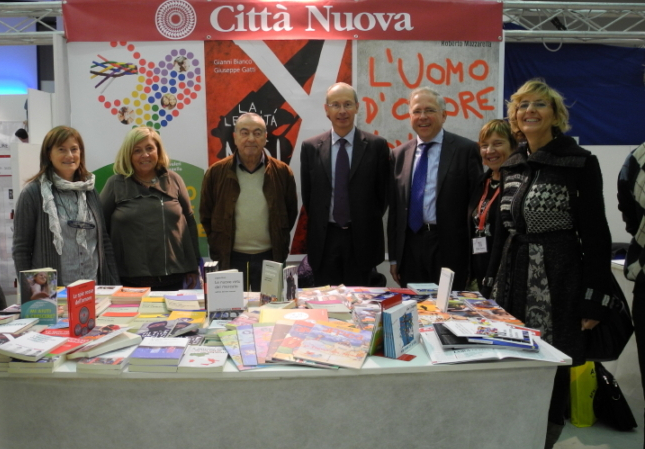 Pisa is known all over the world for its Square of Miracles, UNESCO World Heritage Centre, where the Leaning Tower of Pizza is located. Every year since 2003 the Pisa Book Festival is held in that Tuscan city at the national book show which gathers publishers, writers, translators, illustrators, Italian and foreign artists. It is an ideal setting for sharing ideas, innovative proposals, quality books and magazines, but also writing workshops, seminars, readings and shows. Città Nuova was there again this year with the support of the local Focolare community. “This is fifth year that we have taken part in Pisabook, a truly special edition because of the variety of presentations and the people involved,” explain Rita and Francesco. “For the first time we got to run the workshop in the Junior section where we worked and played with ‘BIG’ and ‘feelings’.”
 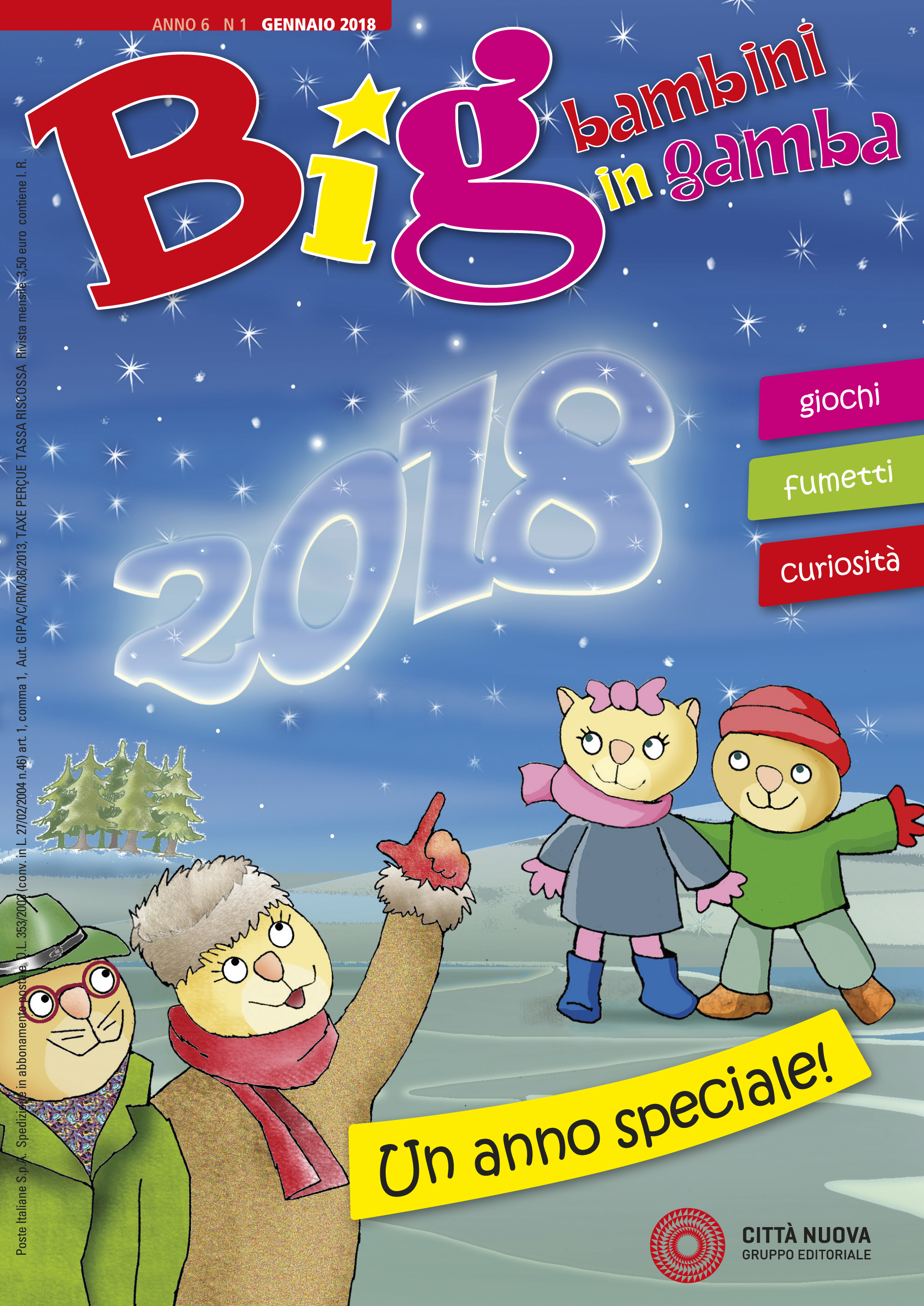 BIG is an Italian monthly children magazine published by Città Nuova. Among the new offerings was a kit that would help teachers discuss the topic of feelings, such as fear, disgust, anger, sadness and happines with children up to ten years old. “During the festival we visited a school on the outskirts of the city where it would be possible to accompany the children in Pisabook’s main office. They were all invited to help promote BIG and now the teachers want to subscribe to the magazine.” Among Città Nuova’s offerings in the Hall was an autobiography of Salvatore Striano, a story of redemption and transformation – from a drug dealer in a suburban criminal district of southern Italy to a writer and actor. In between, ten years of jail time in Madrid and Rome. It is story of salvation through books and the theatre, but mostly through meeting the right people at the right time. In his autobiographic novel, Giù le maschere, (Città Nuova, 2017), a group of disadvantaged and rebellious teenagers from a halfway home discovers a love for theatre and finds on the stage, a road to salvation and redemption. It is a deep story that teaches to look at life, every life, especially the lives of vulnerable youth, with eyes of hope. “During the three presentations of the book and the breaks,” Rita and Francesco explain, “a feeling was created among everyone: Striano opened up and talked about his troubled life. He was particularly impressed by the young people who were there, whom he invited as personal guests to his show in Naples. At the end he remarked: If my friends in prison could see your eyes, your smiles … they would change their lives.” The author had a deep discussion with the teens from the school who had prepared for the event by reading his book. The discussion seemed to have “removed the distances, making everyone feel like they were at home in their living-room.” Now the students are involved in a school project inside several prisons. “Seeing so many people moving to the booth and not going away made Salvatore say that he had never had a similar experience before and that he wants to write more books with Città Nuova. “Lucia Della Porta, creator and director of Pisabook, couldn’t stop thanking us for our contribution to the success of the event! But we thanked her for putting so much trust in us. Many people passed by our booth, we made many contacts and tried to give our testimony. It was also a financial success.” The local Focolare community concluded: Città Nuova is even more ours.
