1 Jan 2018 | Non categorizzato
The title BEYOND ALL BORDERS intends to highlight the boundaries that need to be overcome at personal and social levels. It was chosen with the purpose of opening the minds and hearts of the participants in the Genfest. This eleventh edition aims to inspire participants to feel capable of building a happier and a united world. To breathe, love, work and live with concern for everyone. This is why the Genfest values artistic manifestations, music, dances, expositions, forums, etc., to enable everyone to think differently and to transform life into something more beautiful.
1 Jan 2018 | Non categorizzato
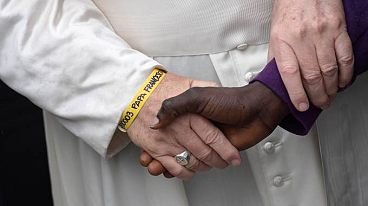
“Men and women, children, young people and the elderly seek a place where they can live in peace. To find it, many of them are willing to risk their lives on a journey that in most cases is long and dangerous, to undergo suffering and hardship, to come face to face with barbed wire and walls that are raised to keep them far from their goal.” On the first day of the New Year, Pope Francis’s greetings are extended especially to the 250 million immigrants, 22 and a half million of whom are refugees. His message is filled with proposals, which are offered to the international community for its analysis and study. Why are there so many refugees and immigrants in the world? Francis recalls: “Saint John Paul II pointed to the growing number of refugees among the consequences of the interminable and horrendous series of conflicts, genocide and “ethnic cleansing” that marked the twentieth century. The new century wasn’t a real turning point. Armed conflicts and other forms of organized violence continue to provoke movements of populations within national confines and beyond. But people migrate for other reasons as well; primarily for a better life.” Those who foment fear in the face of global migrations – perhaps for political reasons rather than building peace – sow violence. “Instead,” the Pope says, “I invite you to see them as opportunities for building a future of peace.” Migrants and refugees never come empty-handed. They “come loaded with courage, abilities, energy and aspirations besides the treasures of their own cultures. In this way they enrich the life of the nations that receive them.” In his usual style, Francis doesn’t limit himself to a list of generic “guidelines,” but presents a complex strategy, comprised of four actions: receive, protect, promote and integrate. Accept primarily means “expand ways of legal entry, do not turn them back to places where persecution and violence awaits them, and balance concern for national security with the protection of basic human fundamental rights.” Regarding protection, Francis recommends that, in respect for the dignity of the person, migrants and refugees should be allowed freedom of movement, opportunities for employment and, in particular, the prevention of exploitation of women and children, “the ones who are most exposed to the risks and abuses.” Promotion stands for the promotion and support of “integral human development.” Among the many tools, he underscores “the importance of ensuring access to education for children and young people at every level of instruction. In that way they will not only cultivate and bring to fruition their own skills, but will also be better able to reach out to others and cultivate a spirit of dialogue instead of evasiveness or confrontation.” Integration is not synonymous with assimilation, the complete sacrifice of one roots and loss of identity; on the contrary, it represents “allowing the refugee and immigrant to take full share in the life of the society that receives them, in a dynamic of mutual enrichment and fruitful collaboration in the promotion of the integral human development of the local communities.” The message contains a clear call to the leaders of States of the whole world. Pope Francis looks forward in 2018, to the global double accord in favour of secure, orderly and lawful migrations that ensure the protection of refugees, inspired “by compassion, long=sightedness and courage, in order to seize every opportunity to advance the construction of peace. Only in this way will the necessary realism of international politics not become surrender to cynicism and global indifference.” Recalling the words of St John Paul II, Pope Francis intends to entrust a message of new hope to the world, even in difficult times: “If the ‘dream’ of a world at peace is shared by many, and the contribution of migrants and refugees is acknowledged, the human race can more and more become a common home.” Read message
30 Dec 2017 | Non categorizzato
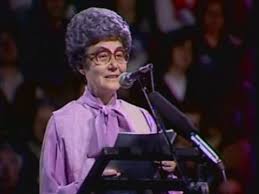
It seems to me that in order to give back to the family its true countenance, in order to restore its splendour, instead of focusing on discussions and directives (…) it’s worth pondering on that luminous and universal example that Eternal Wisdom devised: the family of Nazareth. All present and future families the world over can look to it as a model. And not just families: the individual components of this model can inspire us to know what behaviours and attitudes we should adopt, the relationships and virtues we should cultivate. Every man on earth who is husband and father can always find in Joseph, the Spouse of Mary, the considered father of Jesus, a light, an encouragement, a source of inspiration. In him, one can emulate the same faithfulness in all trials, heroic chastity, strength, silent activity, respect, veneration, protection for the mother of his children, participation in family concerns … And every woman, who is wife and mother, can discover in Mary her own potential, equality with man and her own identity. She can see fulfilled in the Bride of Joseph the desire to also be a protagonist; she can understand how to go beyond the family circle to spread, for the good of many, the riches that are her own: self-sacrifice, the inner strength that gives her confidence, the religious life that distinguishes her from others, the innate need to rise above her situation and to elevate others, radiating light, purity and beauty. Similarly the children will find in Jesus, the son of Mary and Joseph, who together compose a marvellous unity, the two troubling challenges: the need to establish themselves as a generation which can launch a new chapter in history, and the desire to find refuge in their loved ones through love and in obedience. Yes, may the Holy Family, the jewel of humanity it is associated with, which reflects the life of the Trinity, where love generates one God, be before us today, may it stay with us all (…) for the good of the family in the world, of the family in the Church and for the glory of God. From: Chiara Lubich – Messagge to FamilyFest 1981
29 Dec 2017 | Focolare Worldwide
“If it hadn’t been for a group of friends – teachers at a school for street children – I would never have known about this side of my city: the poor. And yet, Saigon – or as they now call it – Ho Chi Minh City, also has it: poverty, disadvantage and suffering. On Christmas and all the big holidays some people like to go out for walks, perhaps around some of the famous breweries, to look for some poor, or better, very poor families who live in stinking rat-infested slums. I thought I had seen all the poverty in Thailand among the Karen refugees and migrants from the mountains in the North, as well as along the dirty canals of Bangkok. But what I saw today in Saigon, in the ‘Milan of Vietnam,’ I had never even imagined. Small rooms with twelve people living inside them, along with three dogs perhaps. I become so nauseous in such places that I could hardly force myself to stay there. But then, the faces of the children lit up, the intense gazes of the mothers looked at us and seemed to say ‘thank you’ when we placed in front of them a sack with 5kg of rice in it. That gaze was all the thanks we needed, along with a will to live and the joy to dry ourselves off after such a drenching rain. And then there are Nativity Scenes in Saigon and Christmas stars over the homes of many families. Some alleyways are lit up, which gives a bit of warmth to the city which is by no means cold, impersonal and indifferent – nor even atheist. You notice the stars and Nativity Scenes, because they’re everywhere and appear on many street corners: they take you by surprise. The ones I found most striking were the ones in the public markets, at night, almost covered under the day’s trash; or else, the ones that were lost along the outskirts of the market, but illuminated by two huge Manger Scenes set up right on the road. Then, on the tops of the houses, at night, there are the fluorescent stars that blink off and on. Returning home tonight, after the visit to the poor, I looked at this scene that had filled me with such a feeling of gratitude: even though far from home, I wasn’t at all missing the real sense of Christmas. Last year Pope Francis said that ‘Christmas is the feast day of weakness, because it celebrates a child, the symbol of fragility, smallness, humility and love.’ Today I understood those words a little more. This night that I now leave behind because it’s already morning, was illumined by the love that I saw among the people that went to help, to lift up, to show their closeness with those who suffer. Once again, the cultural darkness in which we live is illuminated by these living Nativity Scenes, by people who have made that Boy the reason for their lives. And I realized that the real message of Christmas hasn’t died. It’s message of love, tenderness and understanding is alive and I saw it. It was all there in that gesture of taking a small disabled three-year-old and hugging him as close as possible. And that little boy let himself be raised up by that face that unknown face. All the technology of present and future robots, the commercial frontier that everyone is talking about in Asia, will never be able do this miracle: love. Because love is free. Love is never a duty, and nobody can program it or order it. It’s a gift that comes from inside. I saw faces brighten and believe that life, tomorrow morning, will go forward and be more beautiful than yesterday. I don’t miss my Europe this Christmas. Because wherever there is love, there is also my home. Saigon is also my home.”
28 Dec 2017 | Non categorizzato, Word of
The word of life for this month comes from a verse in the Song of Moses, part of the Old Testament in which the Israelites exalt God’s intervention in their history. The song proclaims God’s decisive action for the salvation of this people, on the long journey from their liberation from slavery in Egypt to their arrival in the Promised Land. Although the Israelites encountered difficulties and sufferings on the way, this all happened under the steadfast guidance of God and through the collaboration of men like Moses and Joshua, who put themselves at the service of God’s plan of salvation. “Your right hand, O Lord, glorious in power.” When we think of power, we can easily associate it with the power of might that is often the cause of oppression and conflict among people and nations. Instead, God’s word reveals to us that true power is love, as was manifested in Jesus. He went through all human experience, until death, to open for us the path to freedom and to our encounter with the Father. Thanks to him, God’s powerful love for humankind was revealed. “Your right hand, O Lord, glorious in power.” If we look at ourselves, we have to admit frankly that we are limited. Human fragility, in all its aspects — physical, moral, psychological and social — is a reality we cannot deny. However, it is actually there, in our limitations, that we can experience God’s love. In fact, he wants happiness for all people, who are his children. He is always ready to help those who put themselves humbly in his hands for the sake of the common good, peace and fraternity. This text is a wise choice for this month’s celebration of the Week of Prayer for Christian Unity, considering how much suffering we have inflicted on one another down through the centuries, creating divisions and sowing suspicion, dividing communities and families. “Your right hand, O Lord, glorious in power.” Through prayer, we need to ask the grace of unity, as a gift from God. At the same time, we can build bridges by offering ourselves as instruments of God’s love. During an event held at the World Council of Churches in Geneva in 2002, Chiara Lubich was invited to share her thoughts and experience. “Dialogue is carried out first by putting ourselves on the same level as our partner, whoever he or she may be,” she said. “Then we listen to our dialogue partner, being completely empty of ourselves … This enables us to receive the other person within ourselves and to understand him or her … Because they have been listened to with love, they are ready to listen to what we have to say.” This month, let us take advantage of our day-to-day contacts, to deepen or reestablish relationships of esteem and friendship with individuals, families or groups who belong to other Christian churches. Moreover, why not extend our prayer and action to the divisions within our own ecclesial community, or to those in politics, in civil society or in families? We too can witness with joy to “your right hand, O Lord, glorious in power.” Letizia Magri
