18 Dec 2017 | Non categorizzato
In the year 2000 the General Assembly of the United Nations declared December 18th International Migrants Day. Ten years before, on the same day, it had approved an international convention on the protection of the rights of migrant workers, following a serious road accident in which twenty eight migrant workers had lost their lives beneath the tunnel of Monte Bianco while they were travelling to France in search of work, hidden in a truck. Migrants Day deals with a topic that is not new to the story of the human race, but in recent years it has taken on a global relevance, especially in the West. Last 30th September, addressing an Association that brings together Italian Communes, Pope Bergoglio remarked: “We need a politics that doesn’t leave the people who arrive in our region to be left on the margins,” but for this to happen “there have to be spaces for personal encounter and mutual understanding.”
18 Dec 2017 | Non categorizzato
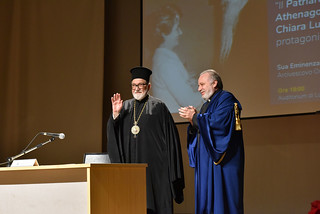
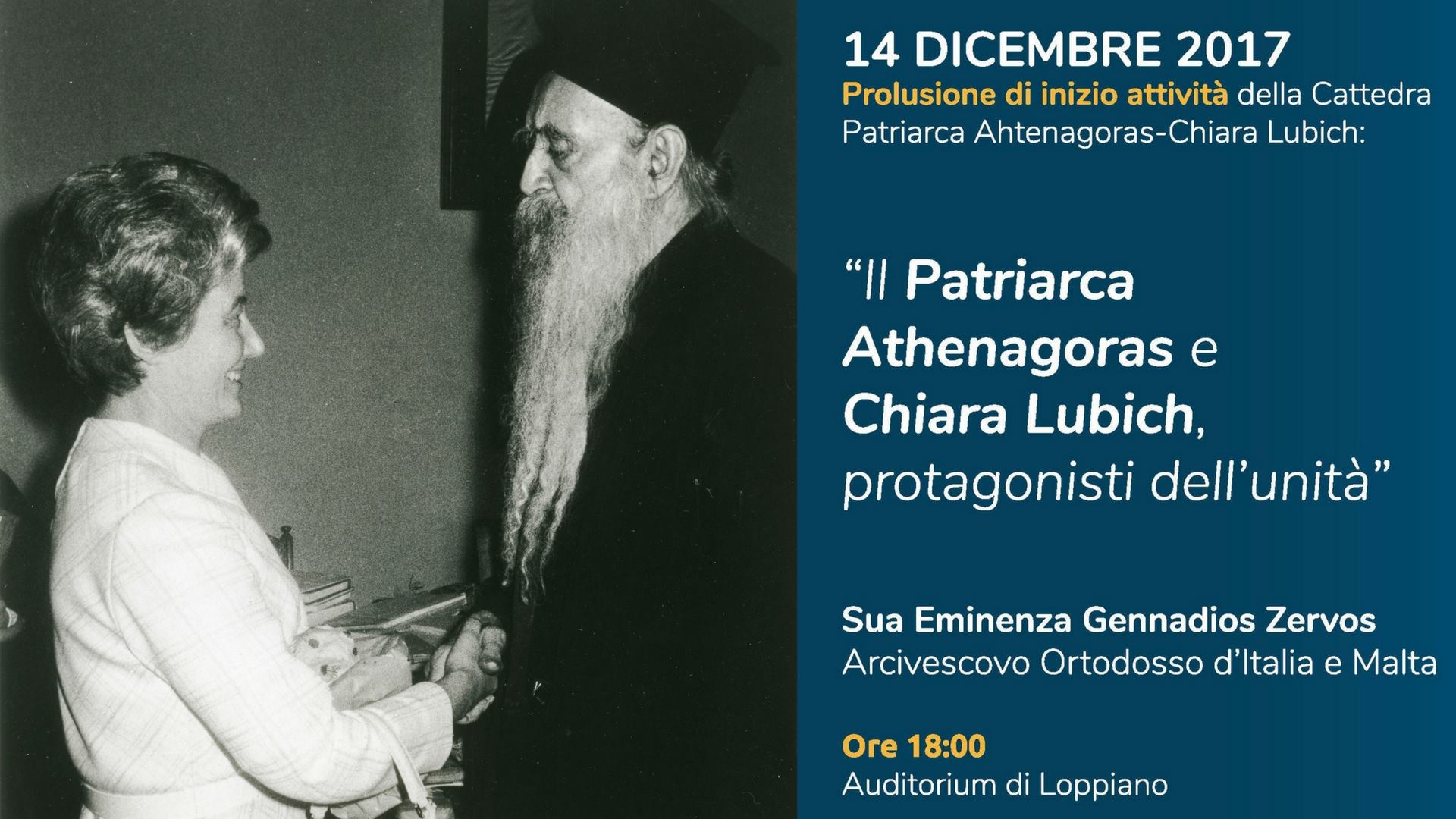 It is quite unique on the academic, international and cultural landscape and against the backdrop of a crisis of the political, social and religious equilibrium in the Near and Middle East, and between the shores of the Mediterranean: the institution of an ecumenical Chair named for Patriarch Athenagoras and for Chiara Lubich that stands as a sign of that Europe which still wants to breathe with “both lung It was inaugurated last December 14th within the context of the international town of Loppiano, not far from Florence and its call to universalism. The nearby city of central Italy boasts of a long tradition of reconciliation between the East and the West that goes back to the middle of the fifteenth century. Instituted jointly by the Catholic Church, represented by Archbishop of Florence, Cardinal Betori, and by the Orthodox Church, represented by Orthodox Archbishop of Italy and Malta, Gennadios Zervos, the Chair will examine the cultural significance and social implications of the ecumenical journey towards the full unity of the Christian Churches of the East and of the West in highly qualified environment like Sophia University Institute (IUS) where reflection and the dialogue of life are strictly united and experienced.
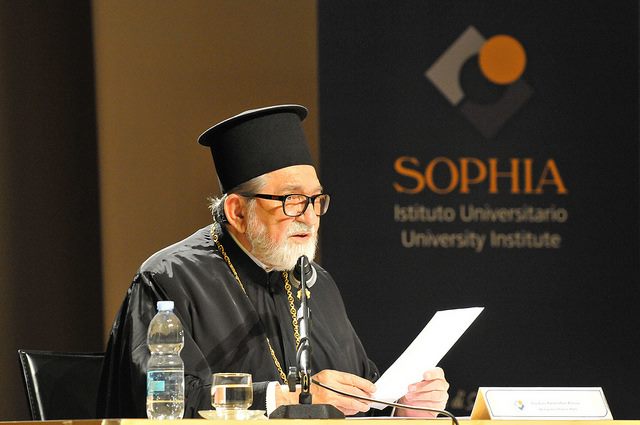
 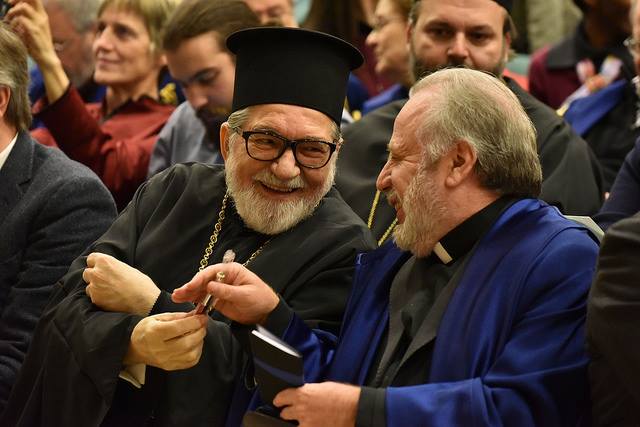 The idea of an ecumenical Chair came up in 2015, when IUS with the approval and applause of Pope Francis, had awarded the first honorary doctorate in the Culture of Unity to the Ecumenical Patriarch of Constantinople Bartholomew I. “On that occasion,” IUS explains, “the desire came out of instituting an Ecumenical Chair named after Patriarch Athenagoras and after Chiara Lubich, which would revisit and actualize that spiritual heritage.” The Chair, of which IUS president, Piero Coda and Metropolitan of Selyvria, Hi Eminence Maximos Vgenopoulos, are co-holders, was inaugurated in the persence of the Metropolitan of Italy and Malta, Gennadios Zervos. “Patriarch Athenagoras and Chiara Lubich are two worthy and blessed personalities that God had illumined,” said the Metropolitan, “to destroy the religious emnities and divisions. With their encounter, they restored the friendship and launched the ‘Dialogue of Charity’.” He went on to say, “I believe that Chiara, with her spirituality, had prepared the two main and most valuable Bridges: the first is Paul VI, the second Athenagoras.”
  Pope Frances sent a message for the occasion: “I rejoice for this praiseworthy initiative, aimed at memorializing the encounter between the Ecumenical Patriarch and the foundress of the Focolare Movement, which fifty years ago marked the beginning of a prolific journey of mutual collaboration and understanding, which boasts of many fruits today, among them, fraternal friendship.” “Such an academic project,” said Focolare president, Maria Voce, “represents an important moment in the ecumenical relations that are in place between the Sister Churches of East and West, and opens fascinating prospectives for the field of study, centered on respectful dialogue, that promises to be even more enriching as a mutual gift on the level of theology and for an anthropology of communion.” The long story of friendship and cooperation with the Ecumenical Patriarchate of Constantinople reaches back to June 1967 when Chiara Lubich first met Patriarch Athenagoras. “It is a great thing to know each other,” the Patriarch had confided to her. “For many centuries we lived isolated, without having brothers, without having sisters – like orphans! The first ten centuries of Christianity were for the dogmas and for organizing the Church. In the ten centuries that followed we had the schisms – the divisions. The third era – this one – is the era of love.” Conferences, classes and a Summer School for young Catholics, Orthodox, Jews and Muslims are scheduled for this academic year. Next March a series of lessons will be given on The Ecclesiology of the Orthodox Church and the Path of Ecumenical Dialogue with the Catholic Church,” for students who would like to contribute to the promotion of the full unity, in service to the encounter between peoples and cultures. Foto Flickr
17 Dec 2017 | Non categorizzato
On Sunday, December 17th, Pope Francis will turn 81. He is in good health and working with great intensity. As everyone knows, he recently returned from a very demanding trip to Myanmar and Bangladesh and is preparing for his 22cnd trip to Chile and Peru in January. Last year, on his 80th birthday, he confided: “For several days a word has been coming to my mind that can sound bad: old age. It frightens. At least it gives a little scare. But when you see it as a phase of life that is meant to give joy, wisdom, hope – then you can start to live again.” With great gratitude for the gift his life has been, all focused on loving God and people, with a special preference for the most weak and marginalized, we wish him our most heartfelt happy birthday wishes. We assure him of our daily prayers as we ask the Holy Spirit to give hims strength and light to carry foward his task with peace for the joy of all. https://youtu.be/WMVIMp7Eg8I
16 Dec 2017 | Non categorizzato
Today the warmth of Christmas makes us all feel more like a family, more one and more like true brothers and sisters who share everything, both joys and sorrows. Above all, we want to share the pain of those who, through various circumstances, are spending this Christmas in direct contact with suffering. … If we look at suffering from a human standpoint, we are tempted to find causes for it either within or outside of us, for example in other people’s wrongdoing, in nature or other things…. We say that accident is John’s fault; that illness is my fault; that painful situation/trial came about because of Jane…. All this can be true, but if we think only in these terms, we forget the most important thing. We lose sight of the fact that God love’s underpins all that happens to us. God wills or permits everything for a higher purpose, which is our own good. So then, what can we say to people struggling with suffering? What Christmas wishes can we offer them? How can we relate to them? First, let’s approach them with the greatest respect. Even though they may not think so, at this very moment God is at their side. Then let’s share their crosses as far as we can. Let’s assure them that we are always with them and praying for them, so that they may be able to take what distresses and causes them pain directly from the hands of God. … Let’s help them bear in mind the value of suffering and remind them of the marvellous Christian principle in our spirituality that helps us see a countenance of Jesus crucified and forsaken in suffering and, by loving him, transform it into joy. Knowing that those who walk in God’s ways cannot escape suffering, our Christmas wishes might be that everyone may know how to welcome all the small or great sufferings they encounter with great love and present them as a gift for the Child Jesus born today, just as the three kings offered their gifts. It will be the best incense, the best gold, and the best myrrh that we could place in the nativity scene. Chiara Lubich, 25 December 1986
15 Dec 2017 | Focolare Worldwide
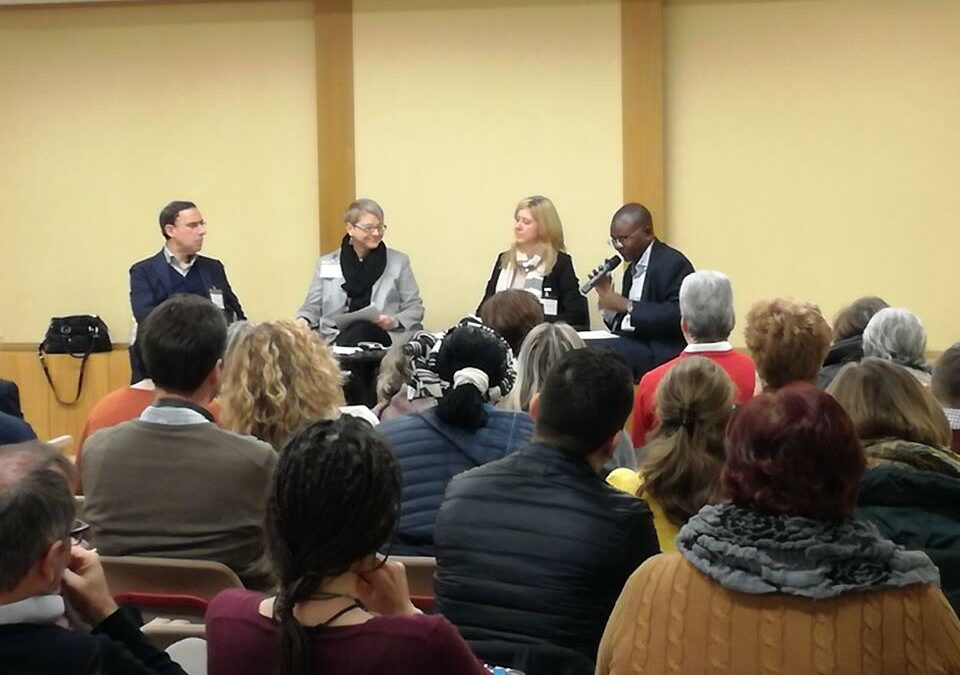
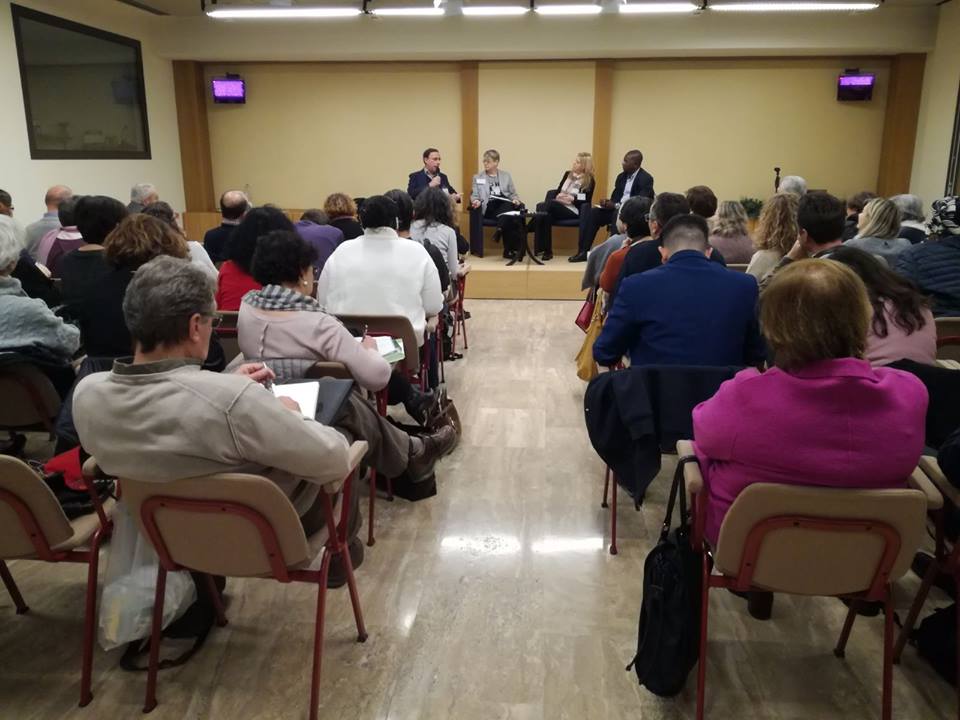 “For as much as Africa is rich, the others seem to benefit more from its riches. In granting contracts to multinationals for the extraction of minerals, for example, there is a play of interests, in which ’compensations’ and ‘compromises,’ ‘agreements’ and ‘thanks’ have as a consequence the exploitation of the producing country, without a real improvement in raising the population’s living conditions.” Raphael Takougang, a Cameroon lawyer of Communion and Law, harshly portrays a picture of the reality of life in Africa today: “Corruption in Africa is not only the work of single citizens, but is above all a consolidated method with which the economic powers “create” and support tyrants as long as these protect their interests, with the silent complicity of the international community.” And it is always the poor who pay for this. Takougang does not limit himself to mere denunciations, but rather, despite everything, shows his optimism ‘because there is a new generation of political leaders in Africa rising up, and has realised that mainly the citizens will have to control the actions of those governing them… to ensure the defense of the African people’s fundamental rights to life, education, health, and spiritual and material wellbeing.” Patience Lobé, an engineer – world head who together with the volunteers are the driving force of New Humanity – during her entire mandates as an officer of the Ministry of Public Works in Cameroon had been seriously threatened: «For the African concept of solidarity anyone who is in need has to be satisfied. For this reason people continually came to my office, to ask for work, or to request a subsidy. During my permanence as head of the office, not one day passed in which I was not subject to temptations or threats. Corruption is a widespread, contaminative virus, difficult to eliminate. Like all viruses, a vaccine is needed in order to eradicate it. The vaccine may be represented by a real change in mentality: education in a culture other than consumerism which considers the owning of goods and possession as the only road to happiness.”
 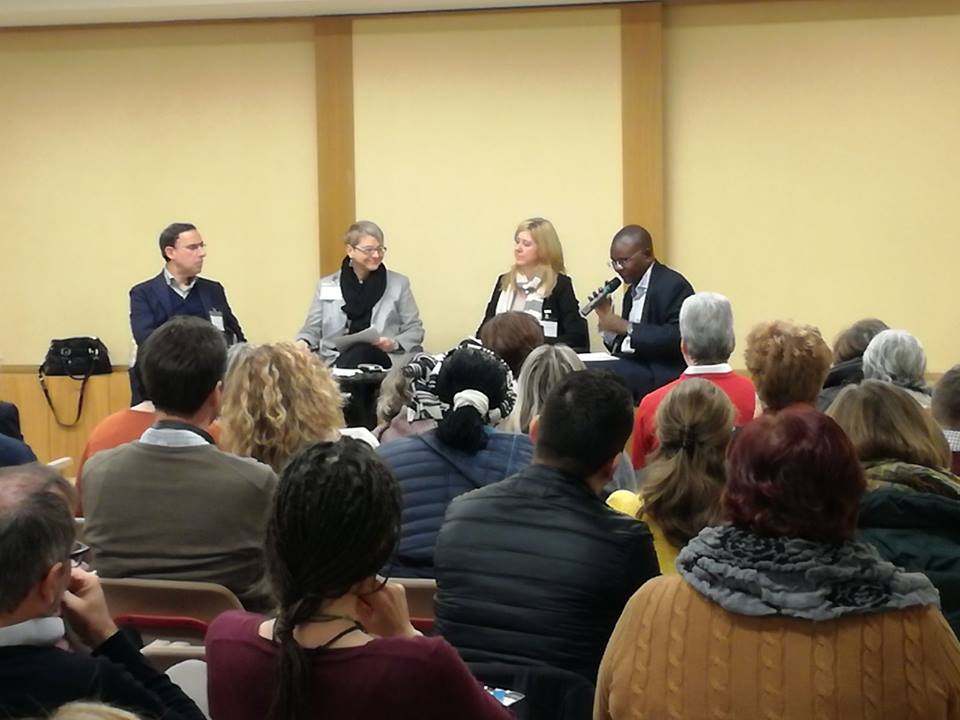 In the same way, it isn’t easy to launch good procedures and practices in the field of the battle against illegal management of public funds. Françoise, French officer in the Ministry of Finance, recounts: “Due to the variety of situations, public services and issues which I have to deal with, it is not always easy to maintain one’s discernment, define the law, sustain good management practices or simply coherence with the principles of honesty (also intellectual), rectitude, cooperation and solidarity with colleagues. But the work experience over the years has confirmed that every time I was faithful to these values, I discovered new horizons, new ways of acting, the situations got solved and unity between institutions and people was possible.” Paolo, director at the Municipality of a big Italian city added: “We mustn’t forget that as public administration employees our primary task is to dedicate ourselves to the good of the community under all aspects, taking on the weight of the related responsibility. Every action must conform to the principles and values without which we couldn’t live together, enhancing human wellbeing and progress of all the citizens.” It is the battle against corruption, therefore, but not only that. The diffusion of good practices, respect for the rights of citizens and their needs, and also reception, and the capacity to create a link with other institutions: these are the great challenges for those working in the Public Administration. The participants of the congress are all convinced of this, and have made it their commitment to continue cultivating these principles daily. The seeds of a culture of lawfulness will silently bring about results in their countries.
