Genfest 1980: Making the World a Family
 I was born in Bergamo,(Italy), the first of four children in a beautiful family with solid Christian roots. At seventeen I was in high school and involved in the parish. I loved school, helping others and going on trips to the mountains. I had a lot of friends and a rich faith experience. As they used to say back then, I was “good kid,” but … I always felt something was missing. I wanted something beautiful, great and true. Italy was going through hard times with assassination attempts by the Red Brigades and a job crisis. My father who was in metalworking, was laid off and later lost his job. The injustice of it all bothered me, as did the social conflict, but I also could feel being made to renew society. I spent hours talking with friends, debating, but it only left me empty inside.
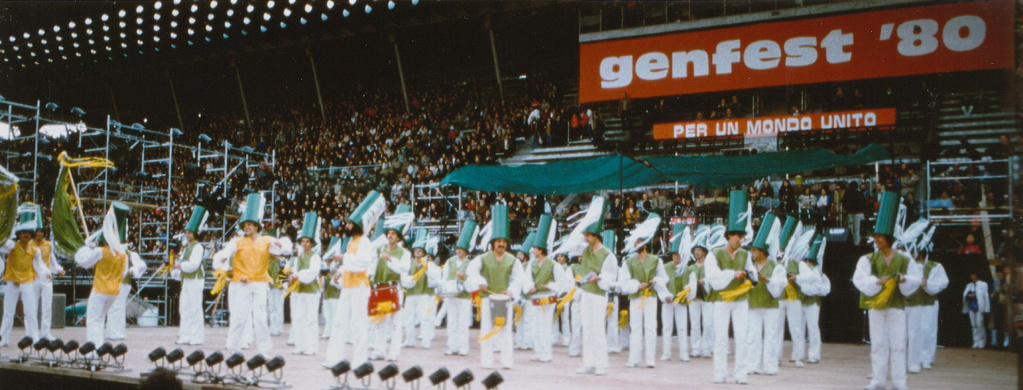
 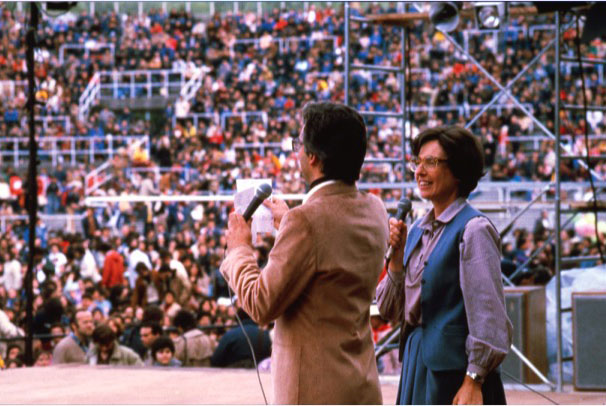 One day, Anita, a girl from the parish, invited me and my sister to the Genfest that was going to be held in Rome. She told me we’d meet thousands of young people from other countries and also the Pope. There was something special about Anita, a special joy and sincerity that shone in her eyes and, like others at the parish – the priest, two catechists and a seminarian – she seemed to have a secret: they were always open to everyone, willing and really able to listen. With a good dose of unawareness my sister and I took off on a bus with a hundred young people from the parish and headed for the Genfest in Rome. We arrived late at the Flaminio Stadium because of an accident and wound up sitting in the last rows on the highest seats where there was no roof – and we were very far from the stage that had a sign that read: For A United World. It was pouring rain, and I was drenched. I began to ask myself why I had ever agreed to such an excursion. But just then some young people from Switzerland who were sitting just below us, offered us some plastic sheeting to cover ourselves with; they offered us some food and binoculars, so we could follow the show more easily. We spoke in different languages, but understood one another right away. I experienced the liberty of love freely given, and a great sense of welcome and acceptance. Despite all the rain, colorful dances took turns on stage. It seemed like I had stepped into another dimension. Forty-thousand young people filled with enthusiasm were flowing in from every corner of the world – all of them giving witness to the Gospel they were really living.
 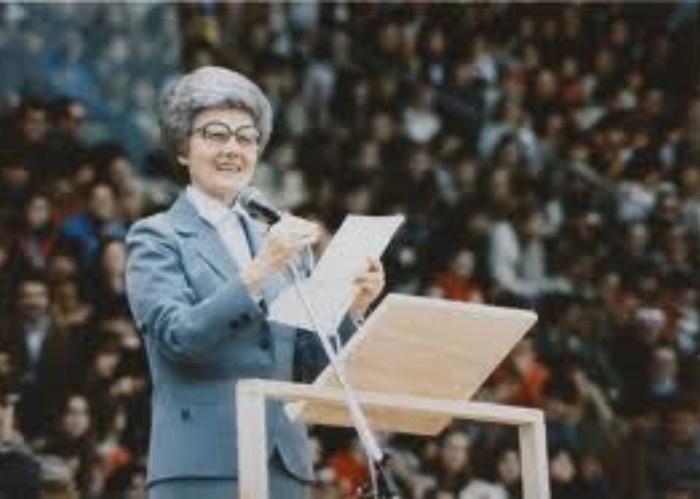 Then a small woman with white hair got on stage. It was Chiara Lubich. I looked at her through binoculars. As soon as she began to speak a deep silence fell over the crowd. I was enraptured more by the sound of her voice than by what she said, by the conviction that emanated from her words, by their power that stood in contrast to her fragile appearance. She spoke of a “moment of God,” and, even though she presented several lists of divisions, breakups and the overall disunity of the human race – she was proclaiming a great ideal: a united world, Jesus’s own ideal. She invited us to bring the divine into the life of society, into the world – through love. Her talk only lasted a few minutes while I found myself being crushed by a feeling I had never had before, which – afterwards – no sorrowful nor difficult event could ever dent in: a united world is possible and I have the amazing possibility of building it with my own life! I had found it! I wanted to live like Chiara, like those young people I was among that afternoon, to have their faith, their push, their joy.
 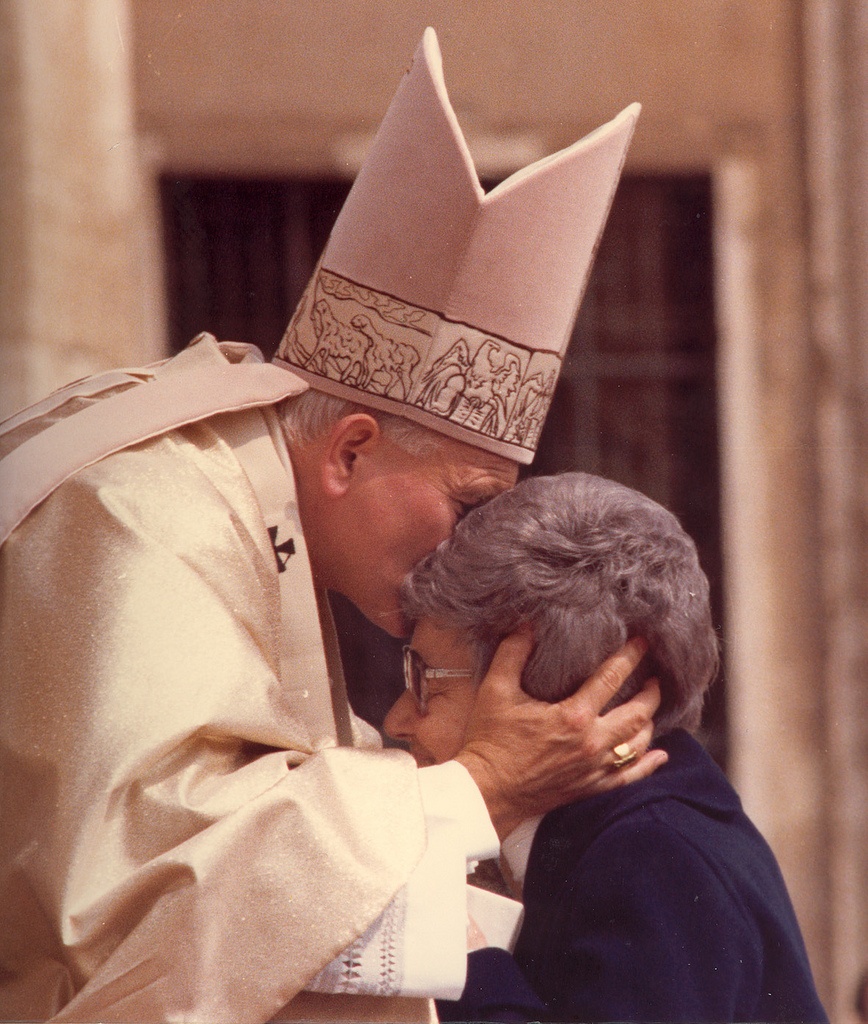 The next day there was a rousing encounter with John Paul II at Saint Peter’s Square. During the return trip home, me – timid as I am – I bombarded the Gen with questions: I wanted to know everything about them! I began to visit them in my city, and the Gen talked to me about their secret: love for Jesus Forsaken in all the large and small sufferings in us and around us. I somehow realized that this was a radical experience of God I was dealing with here, one without half-measures. Jesus Forsaken was calling me to give Him everything, to follow Him. I was filled with an enormous fear: for me it me it was ALL or NOTHING. Strong suffering and pain were never lacking in the months following the Genfest. But the life I had begun with the Gen, the possibility of giving a meaning to pain, the unity among us that was made of concrete love and sharing, helped me to carry on, in spite of every obstacle – in an amazing adventure that widened my heart. I was experiencing that with God among us, all is possible and that the possibility of the unity of the human family was really doable.
Patrizia Bertoncello