
Argentina and Uganda: Two Worlds Meet
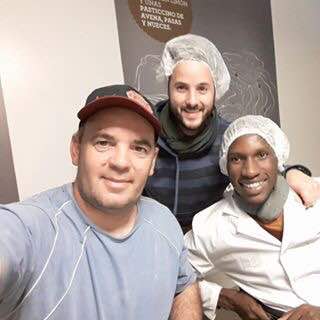 Masaka, Kampala, Entebbe and great Lake Victoria – this is the wide territory that Henry has covered in his country, Uganda, the “pearl of Africa.” He’s gone from the village where he was born, to his economic studies at university in the capitol, to the shores of the largest lake on the continent. It is so large that it counts more than 3,000 islands. This is where the White Nile begins, which then flows into the longest river in Africa, the Nile. Everything is big in Uganda: the parks, the impenetrable forests, the nature reserves. Henry dreams big too. “At Masaka, where I went to university, I noticed how people didn’t have time to cook anymore,” he says. To resolve the problem, Henry started a business to produce meat and fish products. At just 24, together with two others his age, he started the Sseruh Food Processing Company Ltd. in Entebbe. On the other side of the world, in Argentina, another entrepreneur, Gonzalo Perrin, had already started a company some years ago: Pasticcino, which produces cookies for a number of cafeteria chains and coffee roasters. Urged on by the spirit of the Economy of Communion, Perrin moved to the Soladaridad industrial park at Mariapolis Lia, a little city of the Focolare. There he promotes a culture marked by the values of reciprocity, care for the disadvantaged and the environment.
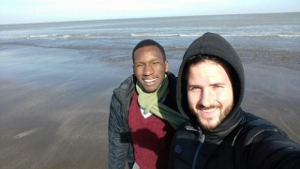
Henry Sserugo and Gonzalo Perrin
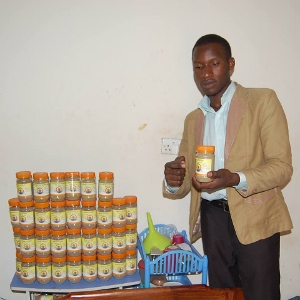
Henry shows the fish products of the Sseruh Food Processing Company Ltd
International Day of Persons with Disabilities
 Established in 1981, the International Day of Persons with Disabilities is celebrated every year on 3 December, with the aim of encouraging and promoting a more widespread and in-depth knowledge on issues concerning differently-abled people, supporting full integration in all areas of life and removing all forms of discrimination and violence. Since July 1993, December 3 has also become the European Day for Persons with Disabilities, on the initiative of the European Commission and in agreement with the United Nations. To celebrate this Day, many countries will organise events in different areas of social life: in the field of education and work, urban planning and the development of new technologies geared towards differently-abled persons, as well as tourism accessible to the elderly.
Dublin: World Meeting of Families with the Pope
Dublin, the capital of Ireland, will host the 9th World Meeting of Families, an initiative inaugurated by St. John Paul II in 1994, and since then held every three years in different international seats. The theme chosen for Dublin is “The Gospel of the Family: joy for the world.” Further to the two recent Synods on the family (2014-15) and the apostolic exhortation, Amoris Laetitia (2016) of Pope Francis, families and those who engage in “family” issues are looking forward to this event which will give prominence to the Christian family and its specific gift of being “joy for the world” and light in the challenges contemporary life poses. The event is being promoted by the new Pontifical Council for the Laity, Family and Life. Alberto and Anna Friso of the Focolare who work with this organization will also attend. But it is the host diocese that is preparing for the meeting with great passion, and has already set in motion a mighty organisational machine for the outlining of the programme, logistics, preparatory catechesis, and reception of participants. Also the Irish ”new families” are full of enthusiasm, and have relayed their willingness to collaborate in all ways with the organizational team created for this purpose by the diocese. During those days they will be happy to welcome to their country, the greatest number of ”new families” possible from all over the world, to live unforgettable moments of in-depth studies, communion and celebrations. Official website Program For info and registrations
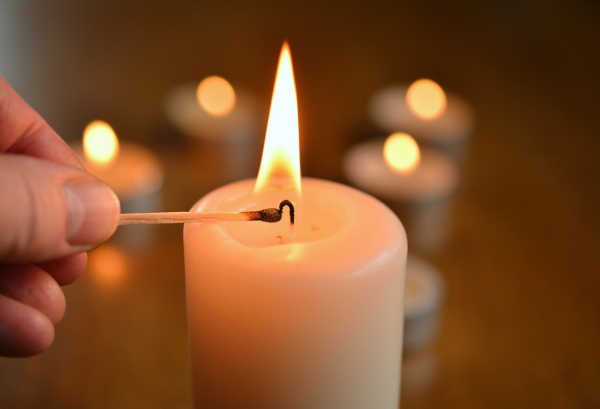
Christmas as a revolution
Since Christmas is considered by most as one of the grand feasts, more sumptuous than sacred, it would be important to reflect on some of the theme aspects of this event, due to which the history of the world was cut into two sections, pre- and post-. Given the infinite importance of such an event, one would expect it to dawn amid grandeur, triumph, sounds and shots, with manifestations of power and the flow of millions of curious people. There is an abysmal contrast between the birth of a powerful figure, as the ancient world dreamt of and the obscure birth of Jesus, ignored by many; it is a contrast which in itself characterises the infinite originality of a Christ-king born of a poor woman in a stable. He really does not seem to be God and neither the most showy of men, but the last among them, immediately set at the most fearful level of degradation. He appears on the lowest rung of the social ladder, in order to immediately see from below all the human beings, and to be able to see with the eyes of the miserable. The start of his revolution does not foresee arrogance, but humility, to draw the sons of God to heaven, starting from those who ate and slept on the ground: the slaves, the jobless, the foreigners, and the scum. Liberty and love were born with that infant: his liberty is liberty of love. This is the immense discovery. Universal love that he taught aims to disperse a system of coexistence made up mostly of political power, abuse of authority, idle usury, despise for work, degradation of woman, and corrosive envy. Logically, for the people embedded in such system that announcement is a folly: good for the prison and the gallows. Blessed are the poor and those who make themselves poor to help the miserable… Just imagine the fury of those who consider money as the utmost good… “It was said to the elders: do not kill. But I say to you; whoever rages against his brother will be judged…” The maxim seemed, and still seems detrimental to the honour of the warfarers and the warfaring industries, while not hating one’s brother means putting an end to brawls, factions and violence. The maxim would picture society as a peaceful coexistence where, instead of shouting and shooting, the people would laugh and eat. Life, in peace, would allow us to make every day, Christmas. And this is the revolution of Christ: to make us be reborn continually against the curse of death. And so the utmost commandment is to love man, which is like loving God. Love the other to the point of giving one’s life for him. This in brief is the meaning of Christmas: a review of the past, and the end of wars, torbid passions, and avarice; the start of universal love which admits no divisions of race, castes, classes, politics…. With his life and death Jesus preached and taught life. And so Christmas can be celebrated also with cake, if it helps to create love, but is celebrated above all with reconciliation, that puts an end to the diseases of the spirit and gives health. It is celebrated in gratitude to Jesus and Mary, who suffered to teach us and help us put an end to our suffering. Igino Giordani, Christmas as a revolution, New City, Rome 1974, n.24, p.18