23 Nov 2017 | Non categorizzato
The Sophia University Institute is pleased to invite you to the Inauguration of the Athenagoras- Chiara Lubich Ecumenical Professorship that will be chaired by His Eminence Gennadios Zervos, Orthodox Archbishop of Italy and Malta entitled: The Partriach Athenagoras and Chiara Lubich, protagonist of unity. Maria Stella Giannetti: Communication – External Relations Istituto Universitario Sophia Via san Vito 28, Loppiano – 50064 Figline e Incisa Valdarno (FI) Tel. +39.055.9051521 – Cell. +39.349 62 72 045
23 Nov 2017 | Non categorizzato
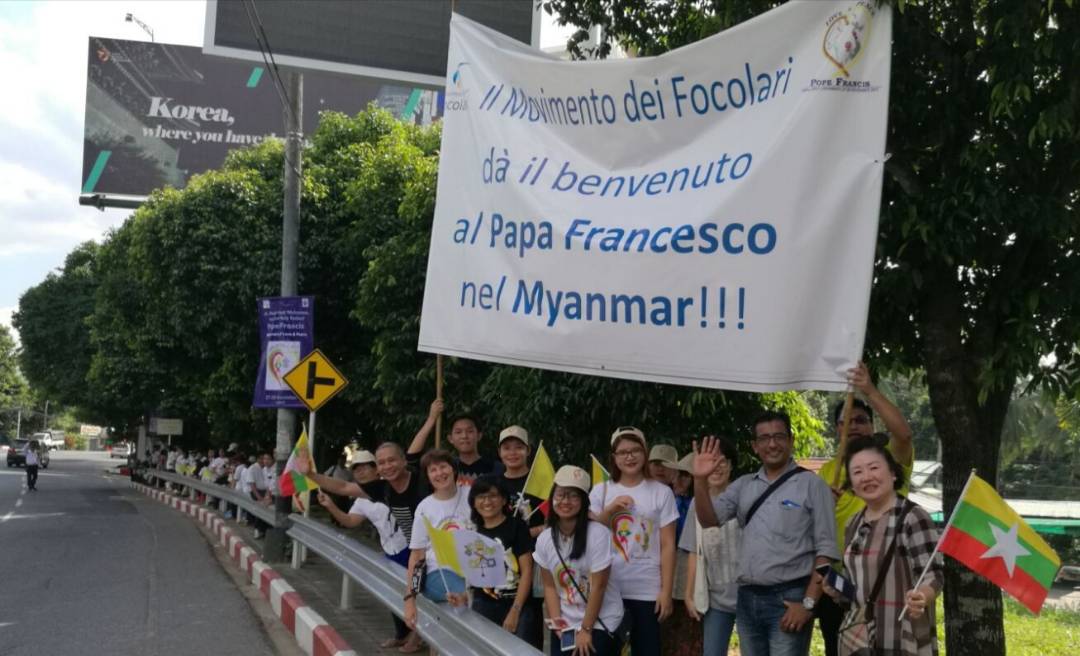
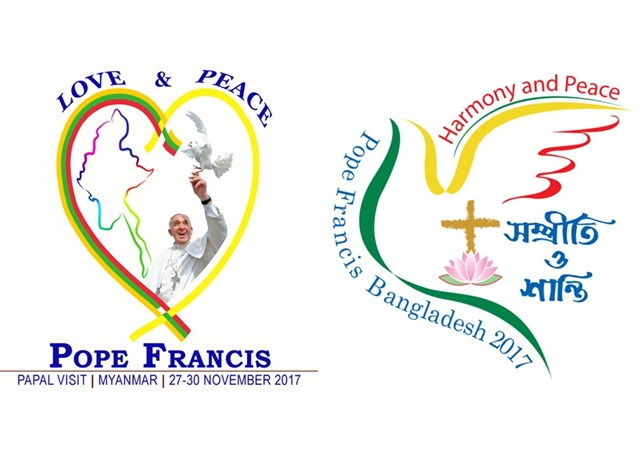 From 26 November to 2 December, Pope Francis will embark on an apostolic voyage to Asia, stopping in Myanmar from 27 to 30 November and in Bangladesh from November 30 till December 2. It will be the first visit of a Pontiff to Myanmar, while in 1986, John Paul II visited Bangladesh, one of the most densely populated and poorest countries of the world. Pope Francis will travel to Dhaka, the capital city of Bangladesh. During his stay, he will meet with prominent political and civil authorities, as well as young Muslim and Hindu religious leaders in order to address major issues such as climate change, migration, the refugee crisis, the future of young people, all in view of renewed hope. The members of the Focolare Movement will be accompanying this intense week long schedule in Asia with prayer for harmony and peace. A video message recorded by Pope Francis in view of the apostolic visit to Myanmar
23 Nov 2017 | Focolare Worldwide
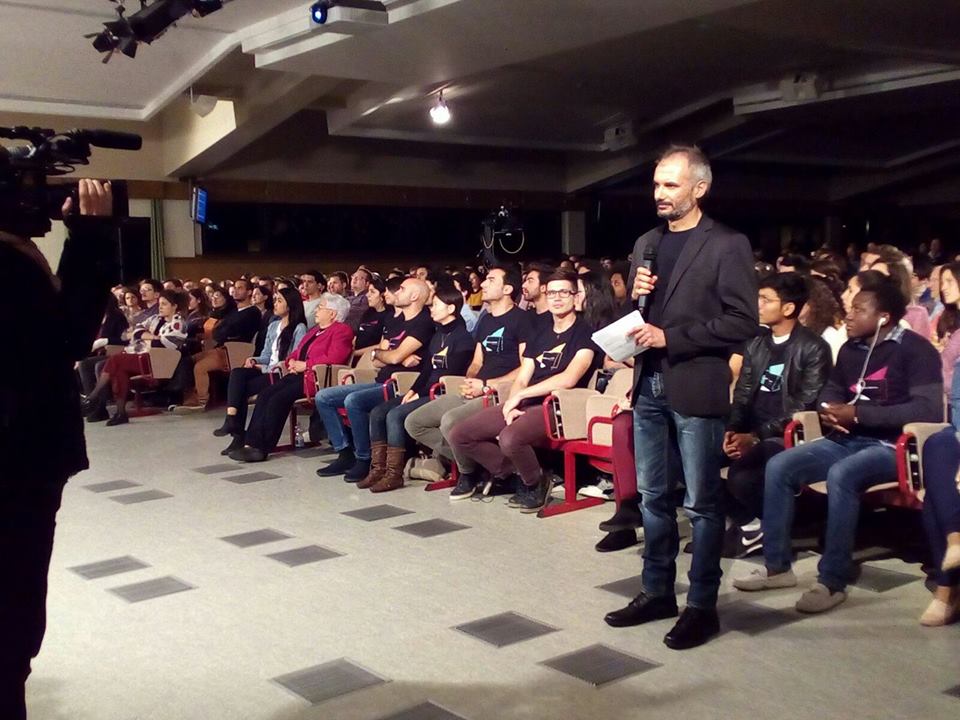
Paolo Balduzzi, TV journalist, presents the “Youth for a united World” during the live worldwide transmission.
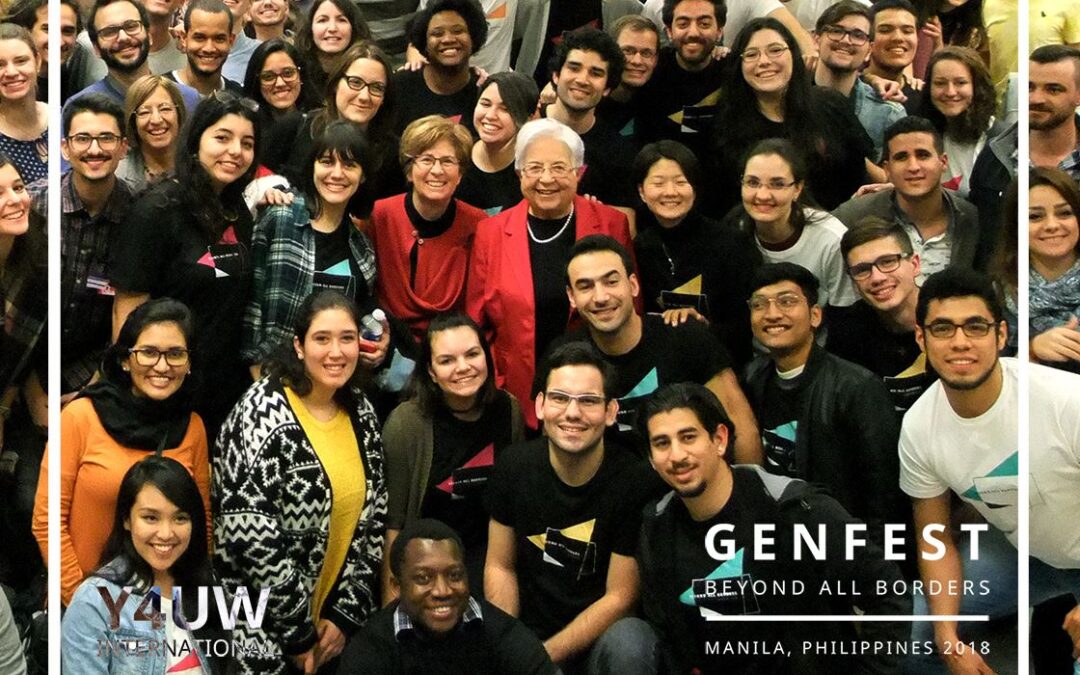
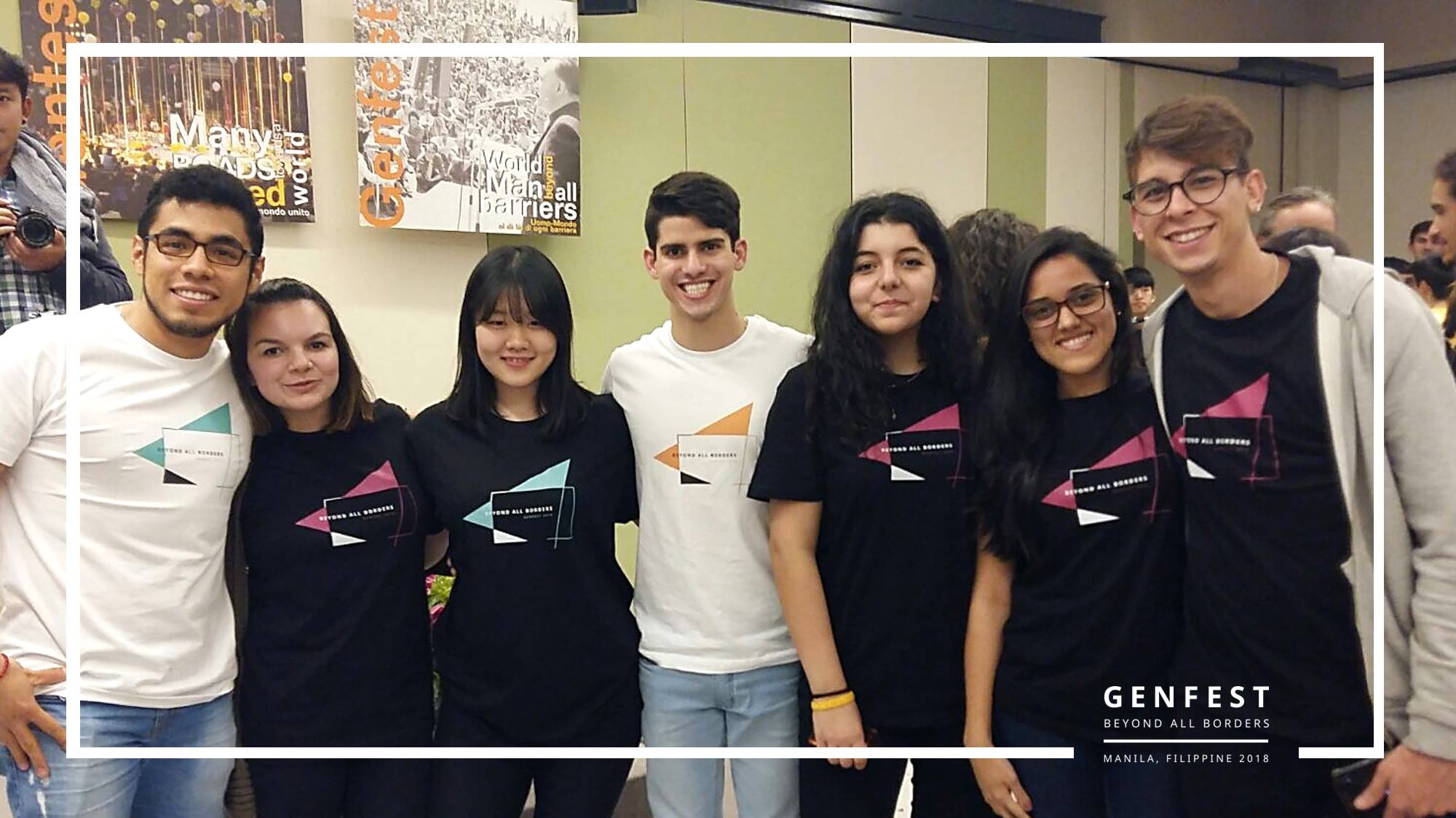 It’s that great idea that was launched by Chiara Lubich in 1987, the idea she bequeathed to the new generations. That year, the Focolare foundress stood in front of a vast crowd of young people and explained to them the reason for the Genfest: “An explosion of fires, not artificial fireworks, but real fires, the fire of God’s love. The goal of ut omnes (“Father, may they all be one” [Jn 17:20-23]) draws near. Jesus wins over and draws people along, leaving behind everything that doesn’t move, like a stream of fresh water that leaves to the sides all the things that can’t be carried ahead in its limpid waters.” Chiara added: “You’ll see the miracles of God’s grace, because God is with us, God is in our midst. He’s the only Powerful One.” Standing among the young people was the current president of the Focolare, Maria Voce. “I’d like to say a huge thank you to the young people.” They’ve made a great act of courage “which seems like the answer of today to the appeal Chiara has launched ever since 1960: ‘Young people of the world unite!’ This appeal still resounds right now, not only for you, but for everyone. The goal of a united world has not yet been reached. The first generation couldn’t do it alone. The second won’t do it alone either, because its purpose is so vast. The idea of a united world has to be passed on from one generation to the next, and all of them united together can hope to bring it to fulfilment.”
 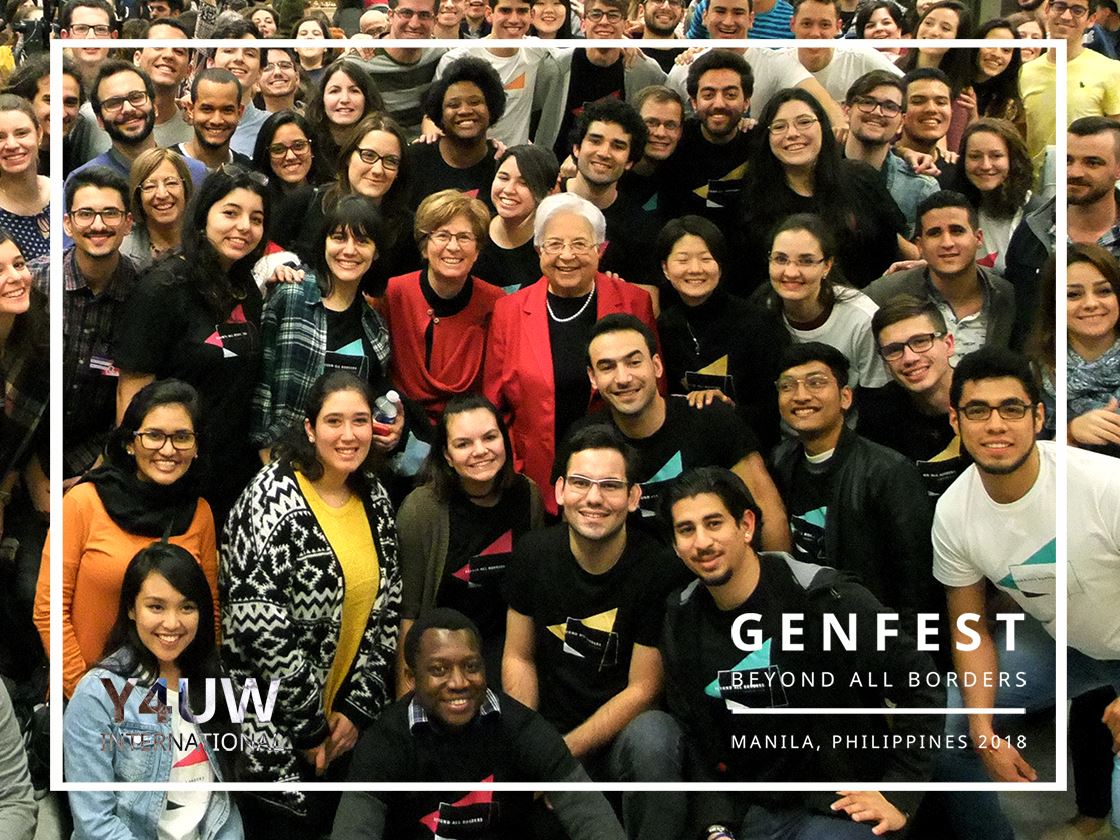 She went on to say: “The Genfest isn’t something that only regards the young, but everyone. That’s why I want to go, and I hope there will be many of us.” Everyone can do something. “Some may say: but I’m sick, I can’t… Offer your pain! Let’s all of us step up. You can help by offering hospitality; you can help the young people to prepare their programmes; you can give financial support for the young people who otherwise wouldn’t be able to attend. Let’s do all we can, whatever it takes. The Genfest is mine, it’s ours!” Before signing off, young person from the Philippines leaves everyone with a triple task: “First: organize a local Genfest. Second: do a concrete project to help at least one young person go to Manila. Third: Buy the T-shirt with our logo.” Find all the details at: Youth for a United World website, and remember this acronym Y4UW. See also: www.focolare.org/en/genfest-2018/
22 Nov 2017 | Non categorizzato
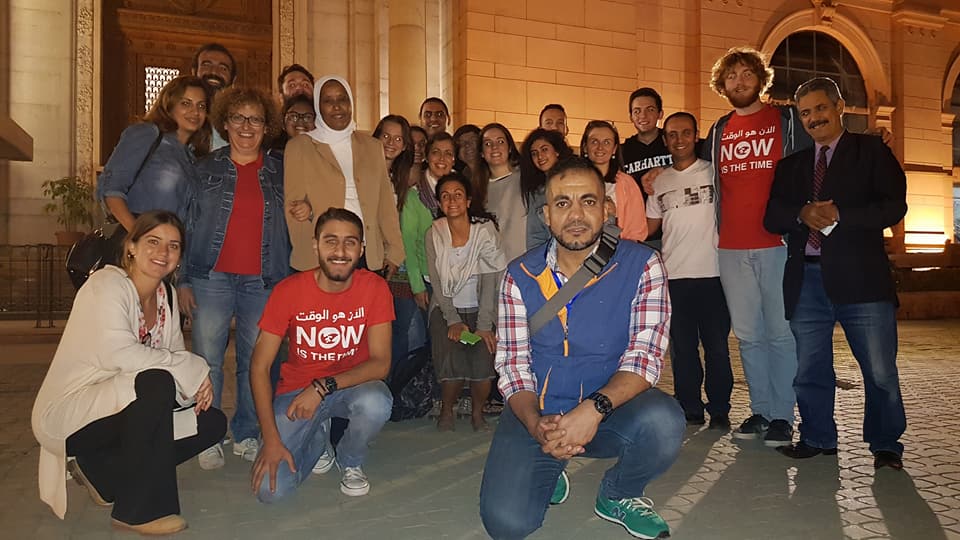 “What will my future be as a young person in my land?” This cry of Nasreen, a young Palestinian, penetrates the hearts of the other young people who listen in deep silence wanting to put balsam on her wounds, still open after years of war and social instability. Emina was seven years old when war broke out in Sarajevo. Her life changed in an instant, but her desire to mature and counter react has been stronger. And Albert from Spain: “My life changed ever since I had an experience of living in a refugee camp in Jordan. I’m no longer the same.” They are young people who are determined to revive the challenges of building the social fabric of peace starting from their own lives.
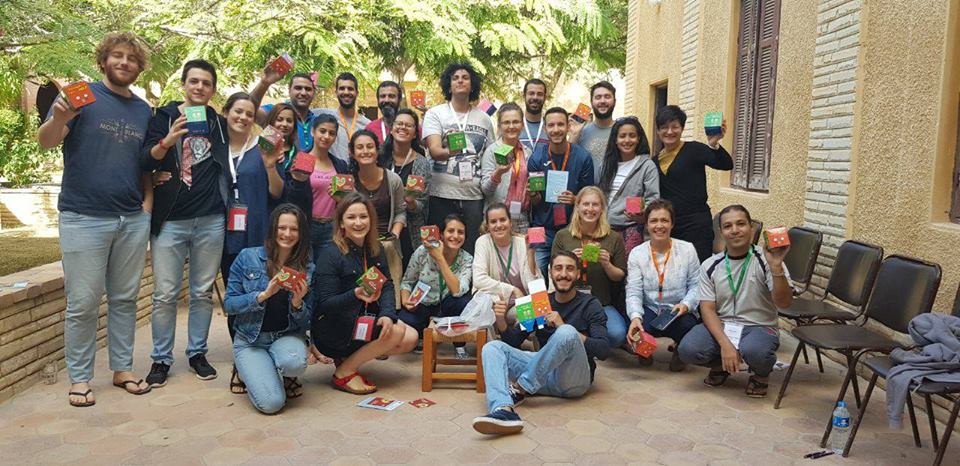
 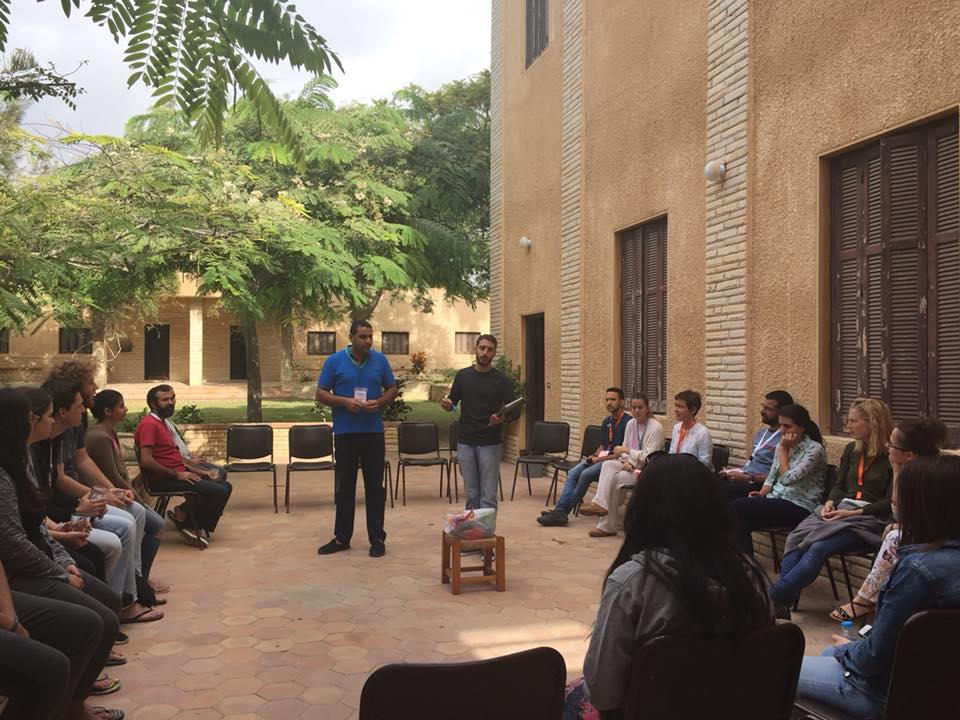 Thirty-two participants took part in the “Host Spot” project, held from 28 October to 2 November 2017 in Alexandria, Egypt. It was promoted by several NGOs and Associations, including New Humanity, “Non dalla guerra”, Caritas in Jordan, Igino Giordani Foundation (Spain), B-Net, Jesuit Culture Center (Alexandria), Ireland Focolare Trust, VACA (Palestine) and Starkmacher (Germany). Starting off from their experience of meeting at a refugee camp in Jordan in August 2016, the young people pursued their initiative by holding two follow-up events in Germany, where they dealt with some of communication techniques, and as a final stage they met in Egypt. Young people from Hungary, Bosnia, Palestine, Egypt, Spain, Ireland, Italy and Jordan spent ten days together in the accomplishment of this innovative project, promoted by the European Community, in order to create connections and to build bridges between youth associations which which have as their aim the quest for peace. Through workshops, in-depth sessions on issues in the Middle East, dialogue between cultures and the importance of the media in communicating migration problems, in a world where one in two refugees is a child, the protagonists of this edition of Host Spot have embarked on a steadfast mission to spread a culture of peace, first and foremost through a training course on current affairs and information seminars on the systems which regulate the media. It was an experience which has allowed the youth protagonists to draw conclusions regarding the activities already undertaken and to plan together how to pursue this valuable collaboration between associations by developing projects and putting new synergies in place.

21 Nov 2017 | Non categorizzato
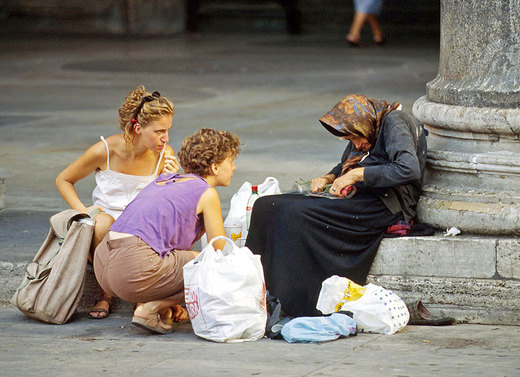
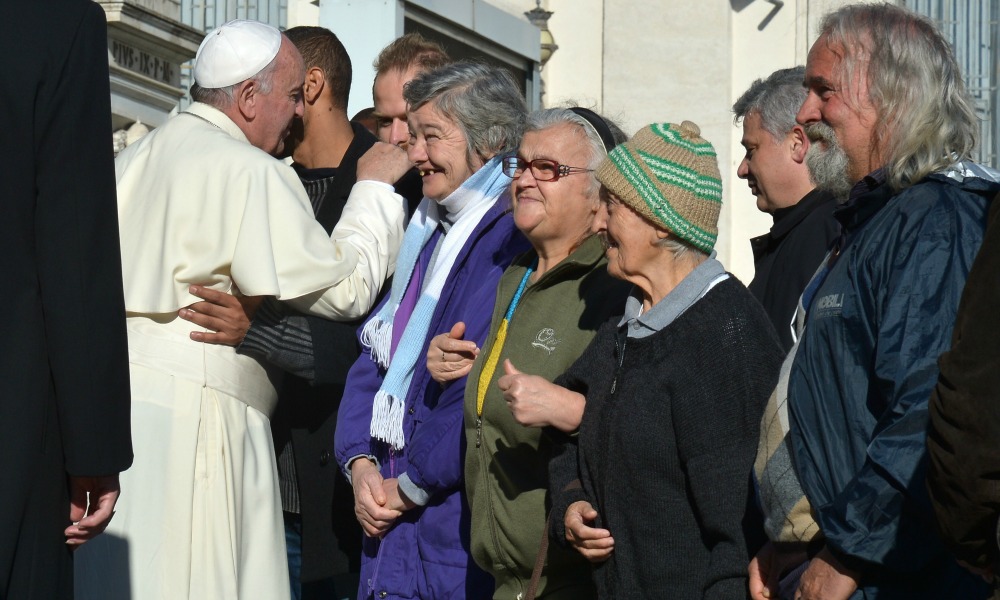 The news that was announced on June 13th by Pope Francis, who wished there to be an international day dedicated to the poor, appeared totally in line with his pontificate that is so attentive to the needs of the vulnerable and discarded by society. The response from associations, movements and institutions, as well single individuals and groups, was surprising. The Focolare Movement in Italy embraced the invitation to “create moments of encounter and friendship, solidarity and concrete help,” to love “not only with words, but with deeds.” “Although we can learn from the poor,” say Rosalba Poli and Andrea Goller who are responsible for the Focolare in Italy, “nonetheless those who have more are called to give.” Not alms, not symbolic gesture to put ones conscience at peace; the invitation is to step out of our comfort zone and our certainties,” as the Pope says, “to go out to meet the thousands of faces of poverty.” In Italy also the phenomenon is a cause of concern. According to a recent government report, nearly 5 million people are living in “absolute poverty.” Eight million and a half suffer “relative poverty.” It is a poverty of a thousand faces: marginalization, unemployment, violence, lack of aid. And mostly isolation, because being poor first of all means being excluded. “The Day of the Poor takes us back to a primary aspect of the Focolare’s spirituality, the communion of goods,” Poli and Goller explain. “It’s a practice that has led to many social projects over the years, inspired by the desire to imitate the custom in the early Christian communities where no one was needy among them. Some of our projects include Arcobaleno Association, which has been active in Milan for more than 30 years; the La Pira Center for you foreigners in Florence; the Sempre Persona Project that helps prisoners to become reinserted into society and offers assistance to their families. Then, the Apriamoci Project from the Trentino More cultural association, such as Facciamo Casa Insieme. Others distribute food, like the l’Associazione Solidarietà in Reggio Emilia, B&F in Ascoli, Associazione Città Fraterna and Comitato Umanità Nuova in Genoa. RomAmor is involved in helping the homeless around the Ostiense Train Stations, whereas other projects welcome refugees in Lampedusa and Ventimiglia. In Pomigliano d’Arco, the Legami di Solidarietà work in an area that is strongly marked by unemployment where mutuality and sharing has made a comeback. Following the earthquake in central Italy, several Solidarity Buying Groups were instituted by the RImPRESA Project to provide on site support for local economic activities that had been damaged in the earthquake. Alongside the consolidated projects, other projects have begun in the north and south of the country, often networking with institutions or associations that work in the social field. The intent is to become stable supporters of those living in poverty. From Milan to Sicily, from Messina to Udine, there are food banks, listening centres, soup kitchens, recycling projects. There is also a home for separated parents, at the city gate of Cagliari. Meanwhile, just a few days from its activation, the App Fag-8 project already has thousands of subscriptions. It’s a technological evolution of the custom of putting ones possessions in common, material things and also talents, ideas. By downloading the app it is possible for someone to share (also in someone else’s account), a material object, a project or one’s own time. It is a tool connected to total local a national networks, that allows one to find out in a short time whether what I’m looking for is available, or if I can answer someone else’s need.
