4 Sep 2017 | Non categorizzato
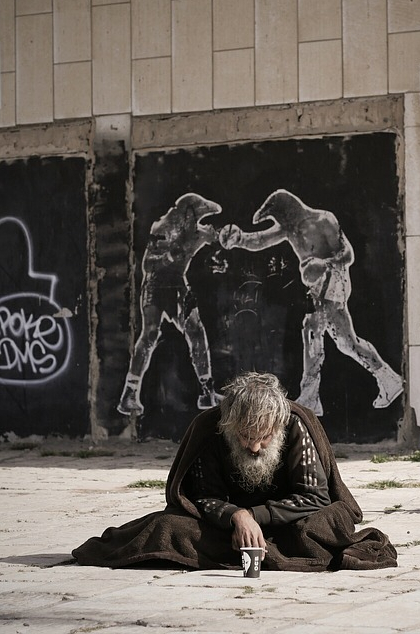
The Drunken Man I saw a rift between a drunk man and a group of kids who were disturbed by him. They suddenly pounced upon and began to beat him. It all happened so quickly. With a lot of difficulty, he managed to get back on his feet. He was spitting blood, and lost two teeth. He became hostile and threatened revenge. Then, it was just me and that despised, badly reduced and discarded man in whom Jesus was asking to be loved. I overcame a bit of fear. What if he turned on me, infuriated as he was? I provided him with hadkerchief to stop the bleeding. Then, I tried to show some concern for him. He told me about his health problems and other woes. I got him the cigarette he was trying to get; but mostly I tried to steer him away from the idea of taking revenge on those boys. It wasn’t easy to calm him down. I was also worried that those guys might come back and there would be more violence. I sat there and listened to him until he decided to go home. O. (Italy) Sick Sometimes I go through moments of rebellion, but then the desire to believe in the love of God and of my brothers and sisters prevails. I try not to let myself be beaten by the suffering. I try not to stop and focus only on me and be a burden on others. When I lost my hair because of the chemo, my friend Bruna said: “Your hairs are counted. Give them to Jesus like flowers, as a sign of your love.” Even my illness has meaning and for that I thank God. Brigitte (Germany) Peace My father worked in a shipyard. During a strike, in the 1980s, he was clubbed to death. After that, our life changed, although I was too young to realize it. We only bring it up with my Mum when some award arrives or on the anniversary of some historical anniversary. She had instilled in us the value of peace and of never taking revenge. Now, as an adult, I know that the value to be transmitted to the new generations is precisely this treasure that comes from God, but begins in me, from me. S. K. (Poland) Surprising Serenity Perfino la bidella, che aveva cambiato modo di rivolgersi a me, è diventata oggetto di nuova stima. A una collega che mi ha chiesto come facevo a mantenermi serena dopo tutto quello che mi era capitato, ho spiegato che come cristiana trovo nella verità una forza e una fonte di pace che mi dà il coraggio di ricominciare. I giorni successivi ero sorpresa io stessa dall’atmosfera distesa che regnava fra tutti.I had forgotten to inform the school office that I was going away with the children, and when I would return. Therefore, upon our return, a series of rebukes would be awaiting. It was humiliating to admit my mistake in front of my colleagues and director, also because they were all looking on me with hostility, even the ones who had always been so pleasant towards me. But drawing strength from the Gospel, I accepted defeat, trying to tranform it into love for everyone. I imagined how I would feel if I were in their shoes, and I understood their disapproval. Even J.L. – Ungheria
2 Sep 2017 | Non categorizzato
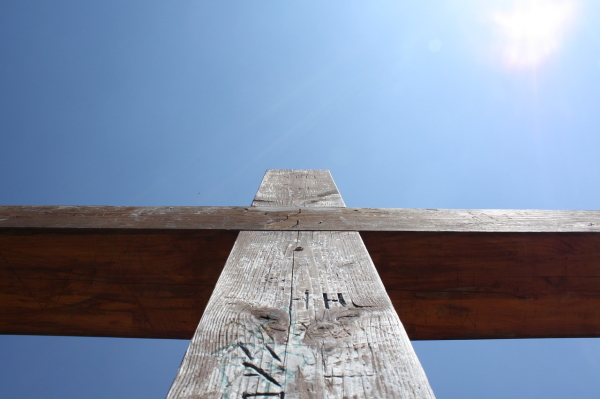
“That all may be one,” Those are amazing words! I believe it is impossible to think of words more beautiful and sublime than these. They make you dream of a world different from the one around us. It stirs your imagination to wonder what society would be like if this great ideal were fulfilled. Imagine a world where people love one another and where everyone shares the same feelings, where prisons have disappeared and the police are no longer needed. Imagine newspapers that do not report bad news – which is now out of fashion – but ‘golden news’ about divinely beautiful and deeply human events. It is a world where people sing, Yes, where they play, study, and work, but everything is done in harmony, where everyone does what they do to please God and their neighbours. I think we shall only see this world in Paradise. Yet Jesus spoke those words for us here, on earth. … I opened the Gospel and found another phrase that seemed uncannily like this one, as though a secret bond exists between it and our motto. It says, “When I am lifted up from the earth, I will draw all people to myself.” (Jn 12:32). “When I am lifted up from the earth…”. So Jesus did not make us “all one” through his wonderful words or his extraordinary miracles. The Cross was his secret. It was His suffering that solved the problem of making us all children of God and one amongst us. Could suffering, then, be the way, the key, and the secret to bringing unity among all people? Could it be the way to transform a boring and often wicked world into one that is joyful, shining with love and a foretaste of heaven? Yes, it is. As far as we know, the saints, who were genuinely intelligent, placed great value on suffering and the cross. They attracted huge numbers of followers and often left their mark on history — continuing to do good in future centuries. When I was a small child, a priest told me, “There is an empty place on the cross.” Turning over the crucifix that was on his table, he showed me the back and added, “This place is for you!” Okay then! If this is how it is, we are ready! What are we waiting for? In any case, large or small sufferings, accepted well or badly, will always be part of our life. We do not want to be opportunists! We are Christians! Is Jesus on the cross? I want to be there too. I will accept all the little crosses in my life joyfully. Yes, joyfully, even if I shed some tears. Nevertheless, deep down in my heart, I will tell Him who is listening to me: “I am happy. By suffering with You, I can help you draw all people to Yourself. In this way, we shall draw closer to the day when your great desire, ‘That all may be one,’ shall be fulfilled.”
Chiara Lubich
From “Conversations with the Gen” 1966-1969, Citta’ Nuova, Roma, 1998 pp 35-36
1 Sep 2017 | Focolare Worldwide, Senza categoria
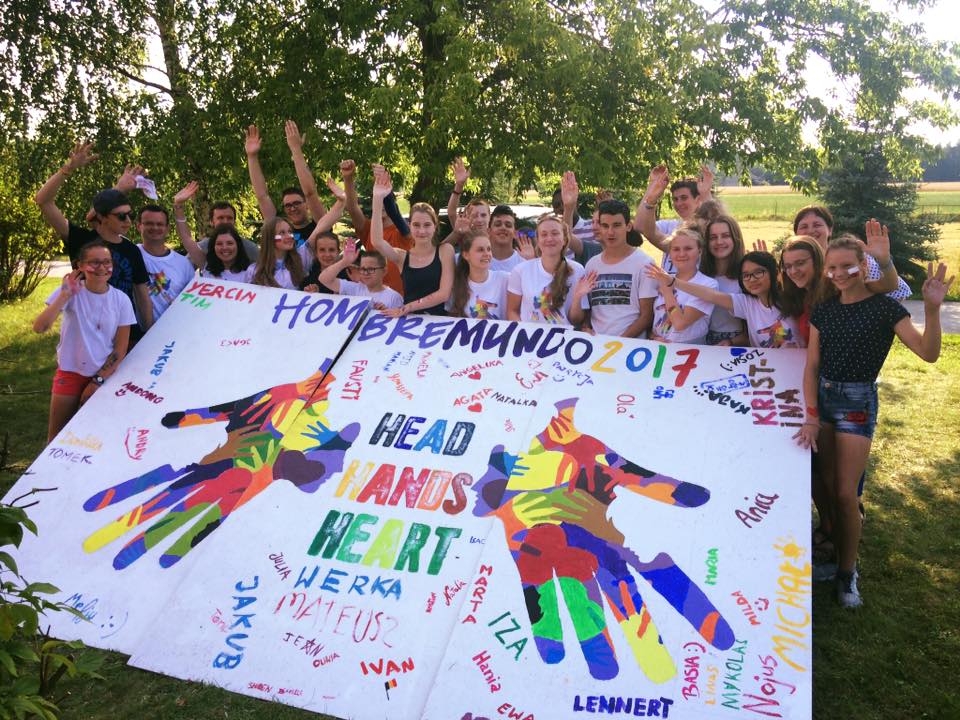 From Central and South America, to Europe, Afica and Middle East, fifty laboratories for forming people who are open, inclusive, world citizens who wish to offer the wealth of their own cultures while being open to that of others. Every three years the Focolare’s Teens for Unity hold a series of international workshops in which they can be formed in a culture of fraternity as the antidote to division, intolerance and hate. Each workshop had two phases. The first phase consisted in learning to know and respect the other’s culture as one’s own. The second, to take concrete action, especially in the most needy peripheries with the most disadvantaged people: the homeless, orphans, immigrants and Rom. In Lithuania, the teenagers of the workshops – which included groups from Switzerland – visited a hospital for the disabled and mentally ill where they managed to engage a girl who was usually unresponsive to any kind of stimulation. In the small European state of Škofia Loka, Slovenia, their goal was to engage the homeless. In Bratisslava, German and Slovak teenagers volunteered to clean the shores of the Danube, where they collected six tons of trash. There were also concerts, flashmobs, and folk festivals on several public squares of Eastern Europe which caught the curiosity and intererst of the media. Several teenagers were interviewed on national television at Mariapolis Faro. The Mariapolis in Croatia was turned into an international microcosm with 280 teenagers from 22 nations, and twelve translations for teenagers from such places as Palestine, Israel, Lebanon, Jordan, Syria and Venezuela. “When I talked with the guys from Venezuela,” says a girl from the Holy Land, “I found out that there are problems in every country. We’re at war, but at least we have food to eat. In Venezuela, they don’t even have any. So, I brought a basket and suggested that we put what we had in common.” Another teenager: “From now on, when someone asks me how many brothers and sisters I have, I’ll say 280!” “A group of girls arriving from the United State lost their luggage at the airport. The luggage was located and returned to them a few days later. In the meantime – used as they were to always having everything they needed – they experienced what it’s like to depend on the love (and clothing) of others. In Serbia, the workshop opened in Cardak, an hour drive from Belgrade. The teenagers were hosted at a state institute, in a wooded area where hundreds of refugees had recently passed from the Balkans: a simbol of beauty and suffering in the tormented march toward the unity of peoples, Churches and religions. They also experienced the diversity of religions – many of them Christian and Muslim – and of different traditions – among them Catholic, Orthodox, Lutheran, Evangelical and Anglican. Some didn’t confess any particular creed, but everyone felt perfectly integrated.
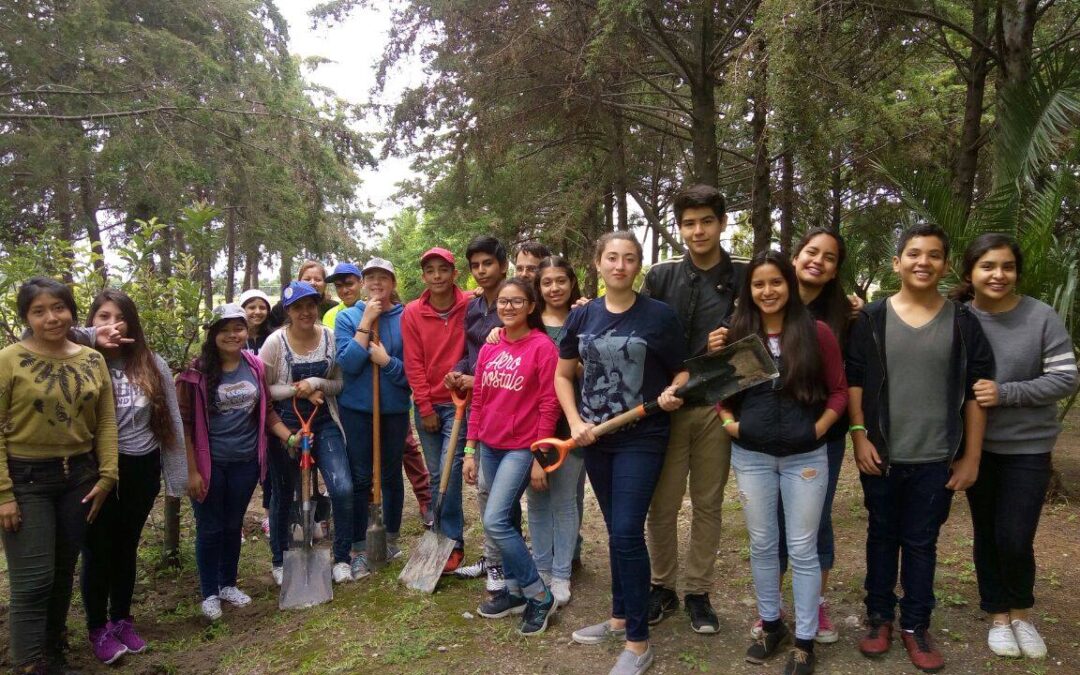
 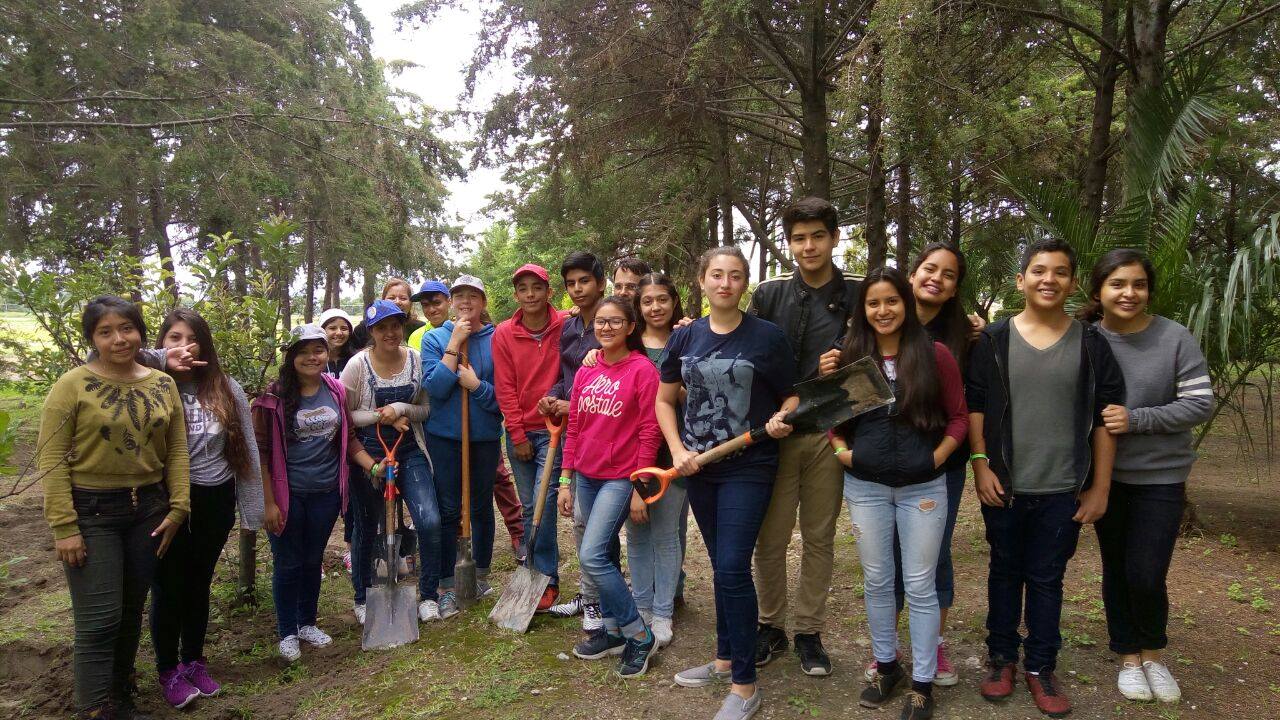 At Paztún, in the Maya Kapchikel region of Guatamala, the workshop from Central America gathered 160 teenagers from Panama, Costa Rica, Honduras, El Salvador and Guatamala, along with some teenagers from the Quiché ethnic group in Santa Lucia Utatlán. The indiscriminate chopping down of entire forests – a real wound to the land – urged them to plant on a stretch of public land, thousands of fur trees that were donated by the state.In the Southern Cone, Global Citizen took on the color of social action with projects that favored knowing one another and valuing the richness of the South American people. In the workshop at Cunaco. Educational and recreational workshops were held in Chile, along with solidarity projects. In Paraguay there were seminars, visits to Guaraní communities of Ita and a day with the teenagers from Barrio Vida, a social centre animated by the Focolare periphery of Motevideo. It included activities for children, workshops, sport tournaments and games for the public. In Argentina they shared in the life of their peers from the Island of Margherita, in the region of the Tigre, north of Buenos Aires on the Rio de la Plata.
31 Aug 2017 | Focolare Worldwide
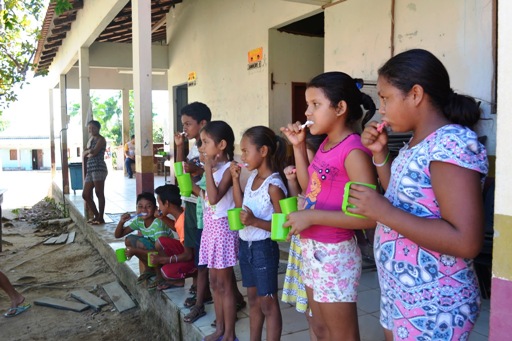
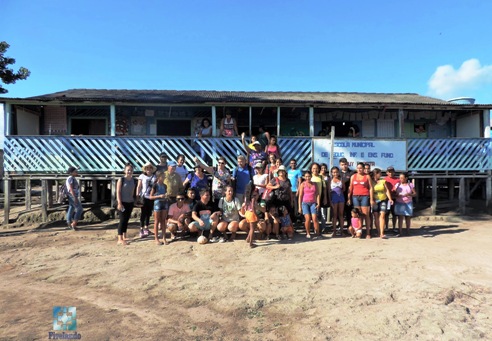 Óbidos, on the left bank of the Amazon River, about 682 miles from the capital, Belem, is a city of almost 50,000 inhabitants. There is only one hospital, which is run by the Third Order of St. Francis and absolutely insufficient to assist the most serious cases. After an appeal of the Brazilian Conference of Bishops, for some years now a big group of doctors, nurses and common people, have undertaken journeys to bring healthcare and support to the population, especially in the river communities. The Amazon Project is now known to many. Upon reaching Óbidos in July, the “missionaries” of this year consisting of about 40 people from various parts of Brazil, gathered during the recent Run4Unity of Belém, and enjoyed the cooperation and hospitality of the local families. Preparations for this event took several months, and dispatches were made – by air and river – of 15 big boxes of medicine, dentistry material and toys. The Mayor hosted four participants, placed at the disposal of the missionaries, a boat and a coach which was used to visit the communities in the interior of the “ribeirinhas” (three communities that never receive medical care and rarely go to the city), and paid for the services of a cook during their stay. The first community encountered were the 2,000 people living in an area next to a “lixão” (dumpsite). The group stayed there for three days. Much more than the figures (8 days, 611 medical checkups and 221 dental checkups) the remarks of the protagonists, doctors and local people stand out. A woman who was treated for a strong headache, returned after a few days to breathe that atmosphere which she described as “the air of paradise.” At the end of the “treatment” her headache had almost disappeared. Eliane comes from São Paulo: “Before coming here, I gathered information on the internet. But here, things are a completely different thing, a lesson I shall remember all my life. After the trauma I underwent – referring to the recent death of her husband – I thought I would remain indifferent to any other pain. Instead, I now am full of ideas and a great desire to help!” Tiago, a youth from Óbidos is participating for the second time in the Project. Since he couldn’t buy a pair of eyeglasses, a collection was made: “Seeing so much generosity made me want to do something myself!” Ana Carla (doctor): “I realised that our reality is not the worst one! Upon listening to some mothers that their son had never been visited by a doctor made me think: I may not be able to solve the problem, but I can love, listen, give comfort, or a drug. This is already something. I don’t feel tired, but my weariness lies in having to ask: “What does your child eat?” and hear them answer: “flour.” Amanda is studying medicine: “I now see medicine with another vision: in front of me is the sick person and not only his illness. We cannot be satisfied only by prescribing a drug, we have to treat the person.” Ereh is a boy from Óbidos: “It is difficult to live in this situation. Mateus and I do volunteer work with children.” Solange (Belém): “When I heard about the Project, I was very interested and I asked my family’s permission to participate. I only received criticisms, but when I got here, I found a family environment which I didn’t expect. I was surprised to see the youths who, in the month of July, give up their holidays.” Also Marcos is a student of medicine: “I found myself in the impossibility of resolving serious situations, since I didn’t have the means to cure them, but only give relief. We must have the courage to make a hands-on experience and help the youths who have turned to stone in their city. Drug addiction is not the only vice, but there are others: remaining closed up in ourselves, in one’s own ego.” Victor (Santarém): “in the name of the entire Amazon, I thank you all who have left your zones to come to our peripheries.” The Project now proceeds with the diffusion and gathering of useful material and finances, so that more can be done next year.
30 Aug 2017 | Focolare Worldwide, Senza categoria
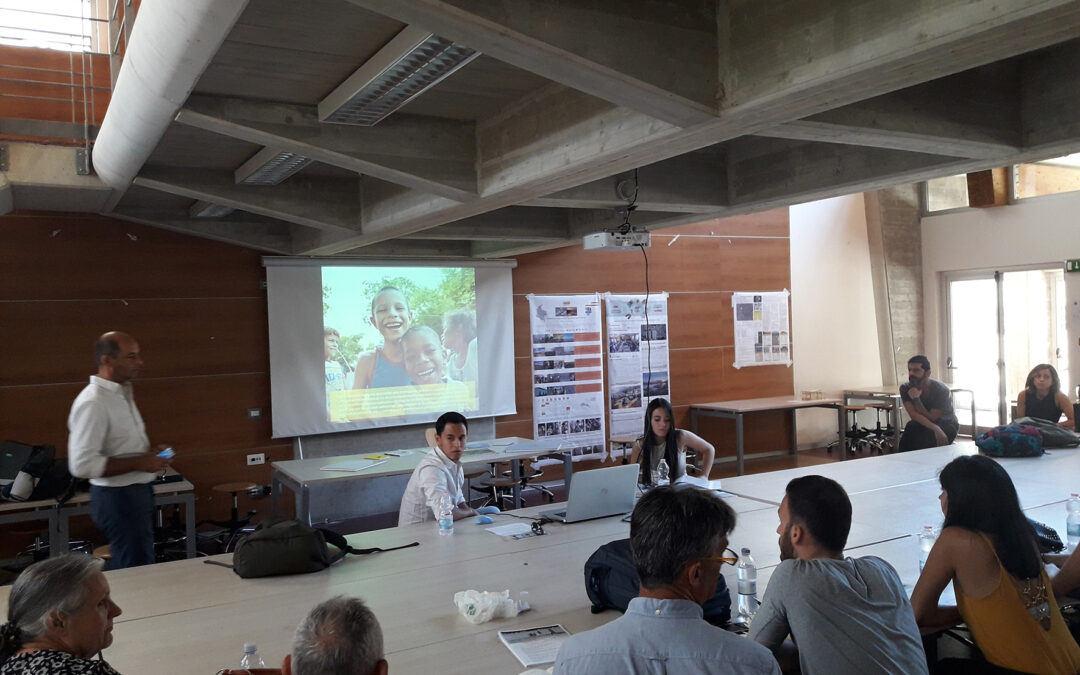
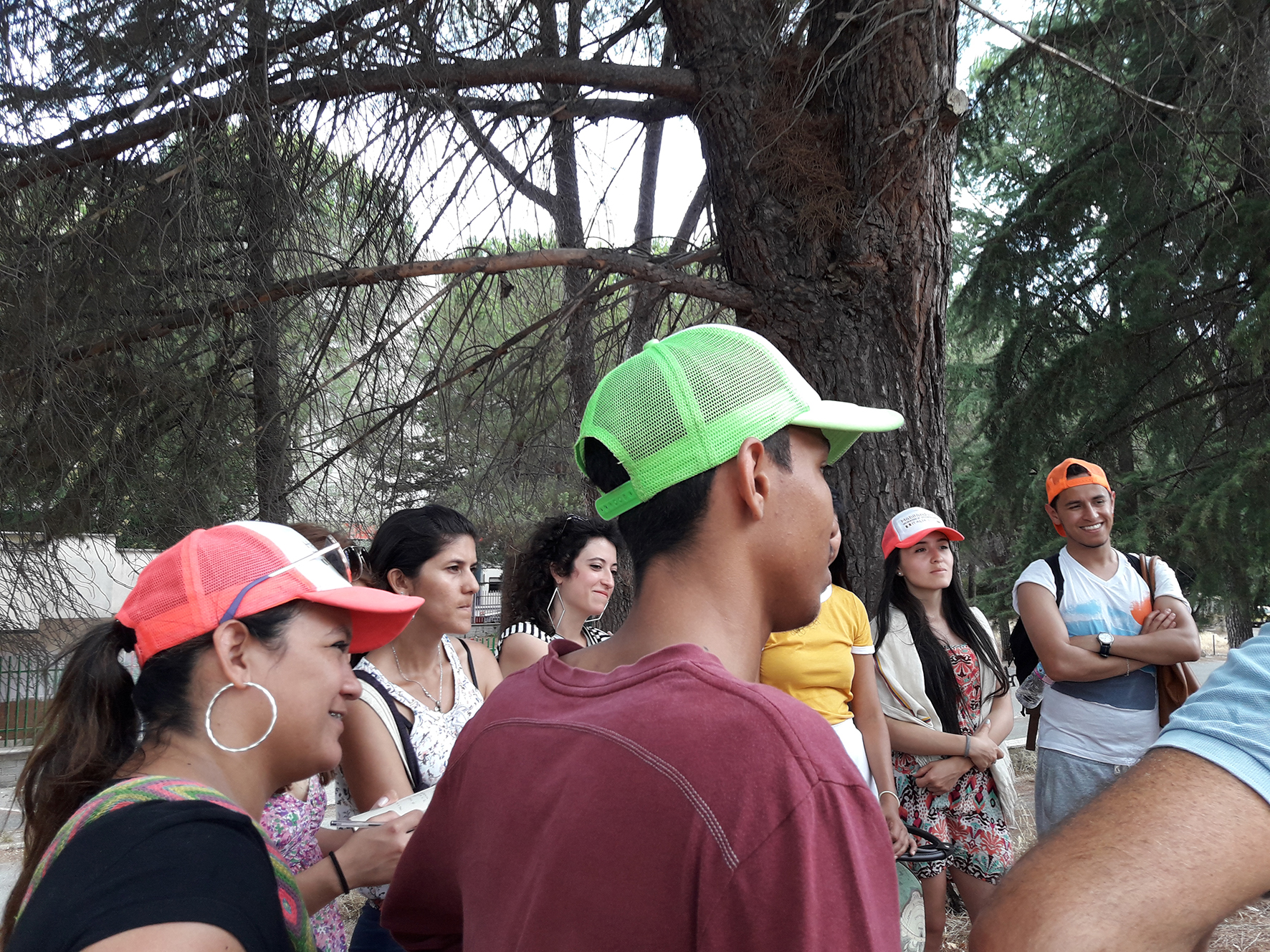 To inhabit a place in just two weeks, a place that is geographically and culturally far away from your home. This was the challenge of Habitandando: to build new bridges between, and on the other hand, a young and contrasted people, whose richness and inequalities are reflected also in its territory – made of megalopolises and immense regions. However, how do you build a bridge between Italy and Colombia in just fifteen days? How can you get to inhabit a place, to become familiar with it as if it were your home? Travel as a method therefore: to get to know a place by experiencing it, using as a testing ground for generating new and challenging ideas. And even this year, the experiences were the most diverse: crossing Central Italy by car, to distinguish how landscapes change from the coast to the mountains; living at Piazza del Campo in Siena, to observe how a public space has been functioning perfectly for centuries; walking for many hours around the centre of Rome, to distinguish each epoch in the thousand layers composing the city; exploring Tor Bella Monaca, a neighbourhood in the Roman periphery where failed architecture projects add up to a fragile social condition.
 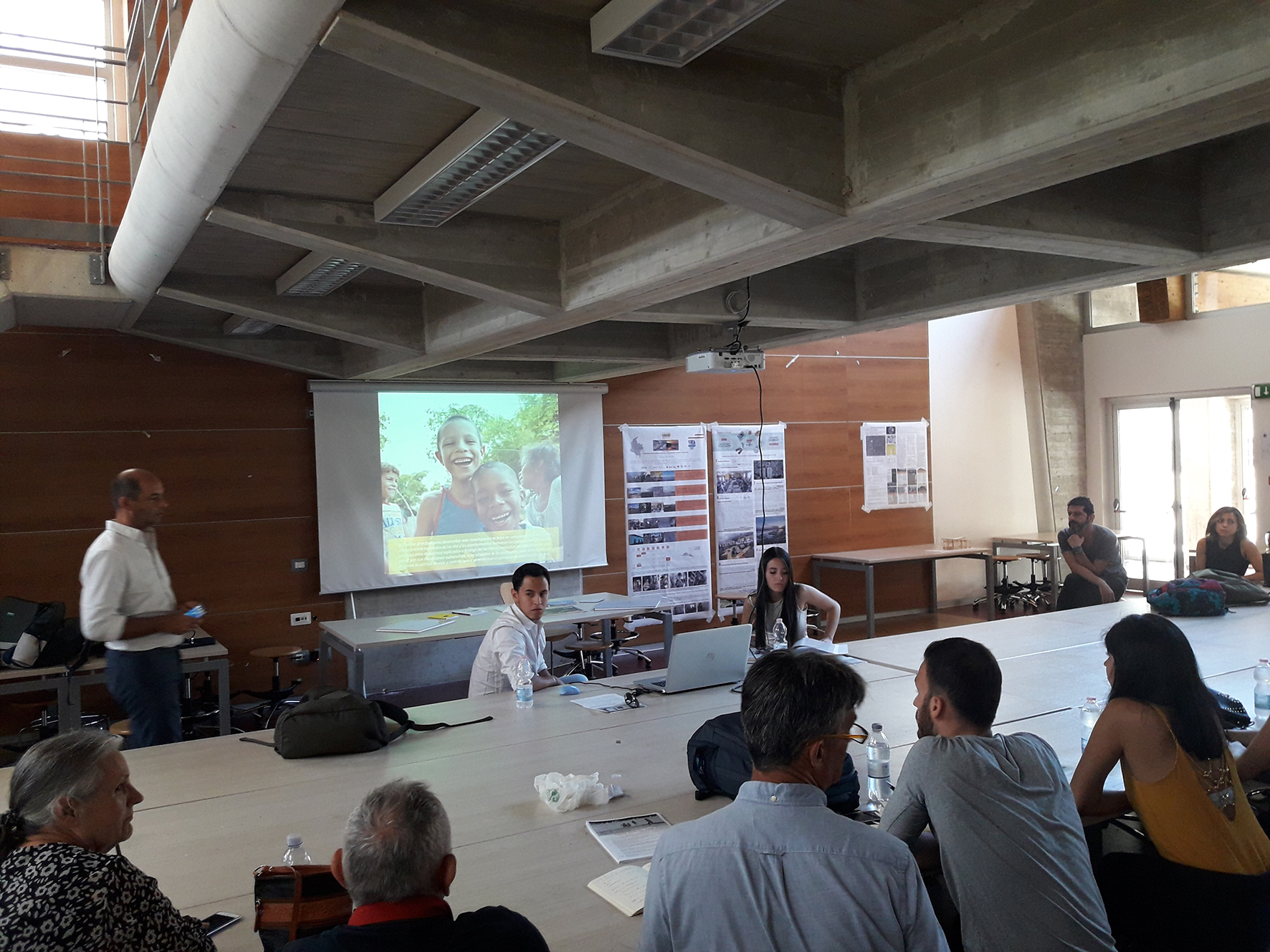 The travel is the method and the territory is the classroom. Each stage of the travel was devoted to a specific issue: for example, the Tuscany countryside explains territory and landscape, the Amalfi Coast shows both the antique and the modern, the towns hit by earthquakes in Central Italy show the relationship between memory and catastrophe. Having the territory as classroom allows first-hand observation of each issue, but is it’s not simply a way of going beyond the simplistic explanations by tourist guides and school textbooks. Rather, it is an occasion to incrementally build by yourself the knowledge on a given place. In fact, the participants were asked to focus on each place that they visited by writing pieces for different audiences, taking photographs with different communicative aims, developing their own explanations on specific settings and phenomena. Day by day, the first ingenuous reactions leave space to deeper reasonings. Maybe Tor Bella Monaca, the neighbourhood in the Roman periphery, provides the most interesting example: the initial skepticism (“Is this a poor and degraded neighbourhood? If only all poor places in Colombia were like this!”) is replaced by all the new ideas that it can generate. The participants’ disorientated looks of the first days were gradually replaced by more relaxed ones, once a relationship was established with the visited places and also the challenges facing them. The tension between memory and innovation were the guiding thread behind this year’s initiative, and this emerged also from the comments made at the end of the travel. For a Colombian student, Italy carries with her centuries of history but does not know how to manage such heritage, does not understand how nowadays heritage can interact with the demands of the habitat. These reflections were developed in the last days of the travel, spent in Montefalcone Appennino, It was the beginning of a think-tank which can yield varying results, but which already demonstrates what can be achieved through a new way of studying the habitat, by going out of the classrooms into the territory, inhabiting it on the move so to speak: to inhabit a place is not just to know it, but also to start imagining it differently from what it is right now. Compiled by Dialogue in Architecture
