4 Jul 2017 | Focolare Worldwide
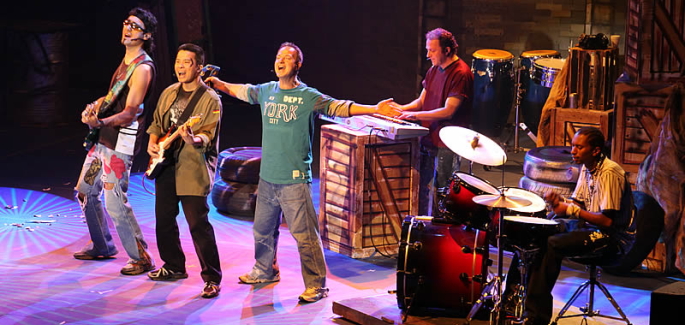
Every life bears hope within. Even in the dark tunnel of addiction a light can still shine. In 1983 in the city of Guaratinguetá, in the State of Sao Paolo (Brazil), Nelson Giovanelli, encouraged by Fr. Han Stepel, a German Franciscan friar, approached a group of drug addicts. The young Nelson won their trust and one of them, Antonio Eleuterio, asked him for help to be able to get out of the drug ring. Those were the first steps of the big Fazenda da Esperança family. In 1989, Iraci Leite and Lucilene Rosendo, two girls of the same parish, following Nelson’s example, left everything to dedicate themselves totally to this new mission. In 2007 Pope Benedict XVI visited the Pedrinhas community in Brazil, at the Aparecida shrine. Since then the Fazenda da Esperança’s mission has spread worldwide. The operators of the current 118 Fazendas diffused in 17 nations are volunteers, often with a background of drug and alcohol addiction, and who, after rehabilitation, felt God’s calling to become in turn, harbingers of hope for those who have plunged into the same dark pit. In the first days of May 2017, 60 volunteers of various Fazendas of the world went to Assisi, the city of St. Francis and St. Claire, and to Loppiano (Italy), to start a new “hope mission” through the roads of Europe. For two weeks, they were accompanied also by the international band, Gen Rosso. Germany, end of May. Some members of the band recount: “every morning, a caravan of cars and minibuses set out for a new destination, within an area of 400 kilometres: schools, communities, groups, and jailhouses. The boys and girls of the Fazenda share their past experiences, triggering and answering the question they are posed. Above all they light up hope: if they were able to make it, why can’t I do the same? These are stories of drugs, desperation, solitude, fear, crime, and jails. When the darkness becomes absolute, a light shines out: God loves me, just as I am, in the conditions I have reduced myself to. What do they hold on to, in order to be reborn? It is to the “Word of life,” and mutual love, the daily nutriment to get up on one’s feet and start again. An explosive message which flies to the sound of words, and also to the rhythm of music and dance steps, increasingly involving all. At first, all this generates simple curiosity and moments of doubt. Then the uncertainty melts away and smiles appear on the faces of many of the youths, up to when a heartfelt exchange of ideas occurs. Also today, the message of hope has pierced the hearts of many.” The tour Every Life Has Hope has travelled kilometres across various cities and regions, testifying to the presence of God in society today, and the chance for all, nobody excluded, to start again. In the jail of Bielefeld, the “caravan” encountered a hundred prisoners, and in Arnsberg, in north Germany, the members of the Shalom movement On Pentecost day in Koln, there was a stopover in a parish community, and in the afternoon, a meeting with the Caritas was held. Invited by the Auxiliary Bishop, the band sang the mass in the Cathedral, offering the song “I was there,” composed specifically for that occasion. In Gut Hange there were celebrations for the first five years of the opening of a women’s Fazenda. Furthermore, there were visits to homes for wayward tramps and terminally ill people, and meetings with students and drug addicts hosted in a public structure, with a congregation of nuns who dedicate their lives to accommodating girls with serious problems. The tour also made a stopover in Belgium at the community in Peer, a town that will soon open a new Fazenda. After two intense and joyful weeks, the Fazenda group will proceed to Berlin and Poland, while Gen Rosso will return to Loppiano to prepare for their next tour with the musical “Campus” in Apulia (southern Italy), where there will be the inauguration of a new Fazenda. Once again, together, they will light up new hope.

3 Jul 2017 | Focolare Worldwide, Senza categoria
 How many times must we forgive? “Three years ago my elder brother came to the house and offended my wife while I was away at work, When I returned home I got very angry, but together, we decided not to react. We then discovered that his daughter, who at that time, was living with us, returned to her house saying that she had to prepare lunch by herself. Besides, to our great surprise, my brother started to recount to the other people in our community that we had insulted him and that he would have forgiven us only if we asked his pardon. At this point this was just too much for us and for a year we no longer spoke to each other. One day I remembered that Jesus had taught us to forgive seventy times seven, in whatever situation we would encounter and even pray for our enemies. So, on the last day of the year, I organised a meeting of reconciliation, in the presence of all the enlarged family. . I was the first to speak, I told the members of the family that we were not there to give long speeches, or to judge one another, but simply to ask my elder brother’s forgiveness and that we were sorry for having offended him. Then I got up and knelt in front of him, in a gesture of humility and goodness of heart, two Christian virtues. The members of the family, including my brother, were so surprised and taken aback by this gesture, and none of them dared to speak. After a few minutes he told me that he had forgiven me. We returned home happy and serene for having re-established peace among our families. (Christopher and Perpetua Idu – Africa) Pearl of great price I was living through a really hard marriage. My husband developed an alcohol addiction due to having served in the Army. Shortly after coming back to England and eating fairly normally again, he developed a duodenal ulcer, which gave him appalling abdominal pain and appeared to be incurable. It was then that he discovered alcohol as an effective pain killer. I lived through this horrific time with him. I only speak of all this because I need to describe how I found myself physically and mentally at the end of my tether. I spoke with various doctors and professionals but they were unable to help either him or me. I hadn’t yet discovered Alcoholics Anonymous. A year or so later we met the Focolare Movement. At the event I ended up writing to someone in the Focolare community that I really respected and trusted. I told him about the impossibility of our lives. His response was: “Thank you for sharing with me your ‘pearl of great price’..”’ I was aghast. How could all the huge difficulties that I had described to him be called my ‘pearl of great price’? It took me years to begin to understand how to turn suffering into love, to ‘let go’ of everything I thought was necessary in order to be accepted socially; to make things tidy and whitewashed. To be honest, to be able to say my ‘yes’ rather than ‘no’. I began to understand the innumerable things that make up one’s ego! Now in my old age I am beginning to discover or rather I have a ‘murmur’ of what it is to experience what ‘melt down’ means. It’s an absolute surrender, allowing God to wrap me in his arms and to let him do all the work. Before he died, my husband had a direct experience of Jesus’ love and never drank again. Also I was released from depression. All this has taken years, most of my life really. But it certainly was and is my ‘pearl of great price’ – truly. Source: New City (London)

1 Jul 2017 | Non categorizzato
“Contemplating the immensity of the universe, the extraordinary beauty and power of nature, my mind rose spontaneously to the Creator of it all, to a new sort of understanding of the immensity of God. It made a new and strong impression on me; I felt like falling on my knees to adore, praise, and glorify God. I felt a great need of this, as if it were my actual vocation. It was as if my eyes had been opened, to understand as never before who it is that we have chosen as our ideal; or rather, who has chosen us. I saw that he is so great, so great, so great, that it seemed impossible that he thinks of us. This impression of God’s immensity stayed in my heart for several days. Now, saying, “Hallowed be thy name,” or “Glory be to the Father and to the Son and to the Holy Spirit,” is different for me: it has become a need of the heart. (Rocca di Papa, 22.1.87) “… Contemplating perhaps an endless stretch of sea, a high mountain range, an impressive glacier or the night sky dotted with stars. What majesty! The immensity of it! And through the dazzling splendour of nature, we would find our way to its author: God, the King of the universe, the Lord of the galaxies, the Infinite. … He is everywhere: beneath the sparkle of a glittering stream, within the blossoming of a flower, in a bright dawn or a red sunset, on a snow-covered peak. Nature is rarely preserved in our concrete cities, built by human hands in the midst of the noise of the world. Yet, if we want, a glimpse of blue sky between the skyscraper peaks is enough to remind us of God; a ray of sunlight, which does not fail to pierce even through the bars of a prison, is enough; a flower is enough, a meadow, a child’s face. … This will help us go back into the midst of humanity, which is where we belong, strengthened, as Jesus certainly was when having prayed all night to the Father on the mountainside under the starry sky, he went back among people to do good. (Mollens, 22.9.88) From Chiara Lubich – “Cercando le cose di lassù” [Seeking the things that are above]– Città Nuova Editrice, Roma 1992, pagg. 5 – 111,112.
30 Jun 2017 | Non categorizzato
 Ecumenism is important for peace. Can you explain why and how? “Ecumenism is important for peace because ecumenism is unity. Unity is peace. Unity means being one heart and one soul. It means loving. It means sharing belongings, sorrows, joys. This is what generates peace. What is peace? Peace is not the absence of bombardments. It’s not just a signed truce. This is not what peace is all about. Peace is the unity of hearts. Ecumenism serves to build and to spread this union of hearts and therefore it serves peace; it takes peace ahead. When Christians show they are united, they certainly have more impact. Together they can embark on peace initiatives, especially since peace is continually threatened. They can help put into practice the sharing of goods in the world, give help to those who flee from war-torn countries in search of a better life, show welcome. But they can only help if they are united. And if they are united, they can instigate the necessary steps for the realization of peace filled.” What contribution does Pope Francis give to the ecumenical movement and what kind of style is he communicating to the Churches? “I saw his commitment the very first moment he appeared on the balcony when he presented himself to the world as the Bishop of Rome. It was the Pope’s first contribution to the ecumenical journey of the Churches. His is an ongoing commitment; this is evident in his desire to reform the Church by leading it towards greater collegiality and participation, both of the pastors and of the faithful, as well as in engendering mutual humility and acknowledgment of the past errors. It’s a process that goes in the direction of the ecumenical journey.”
 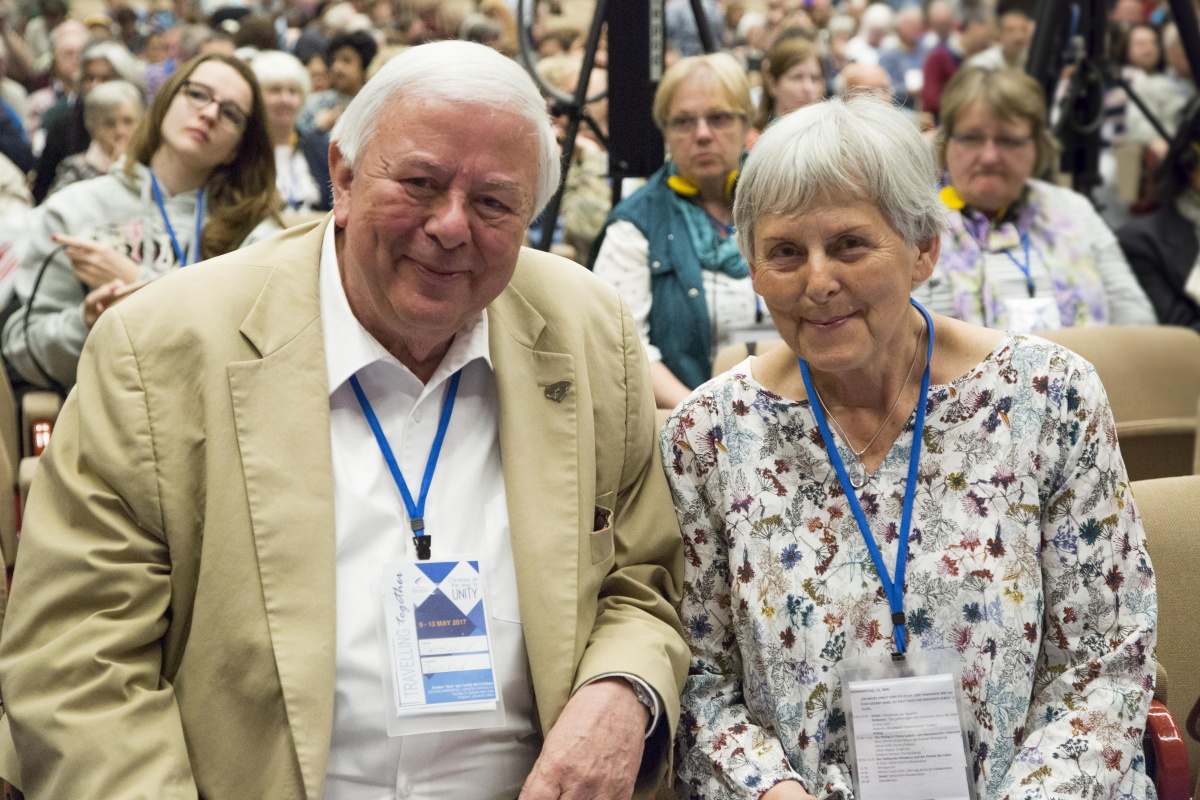 The participants at the Ecumenical Week 2017 attended the General Audience at the Vatican, during which Pope Francis spoke of Mary, the Mother of Jesus, as a the one who remained alongside her son throughout his Passion. Is Mary a model of the ecumenical journey? “I would say ‘yes’, because Mary is a mother; she was the Mother of God and Mother of Jesus and, therefore, mother of all human beings. And surely a mother wants to see her children united. She tries her best to bring her children together, to help them recognize that God had come down from heaven for them. She wants them to love one another, not to quarrel or speak badly about each other; she helps them find new ways to understand each other. Mary gives us a hand in this. And then I believe that Mary helps us to remain standing underneath the cross, through the example of her own desolation. It seems to me that there, underneath the cross, she herself lost her greatest treasure and she wants to teach us to lose something too, to lose the richness which every Church has in order to embrace the richness of all the others. If Mary was able to lose her Son, the we can lose an idea, the recollection of past wounds, which we still carry within us, in order to be builders of unity.” Interview by M. Chiara Biagioni – Source: S.I.R See Part 1
29 Jun 2017 | Non categorizzato
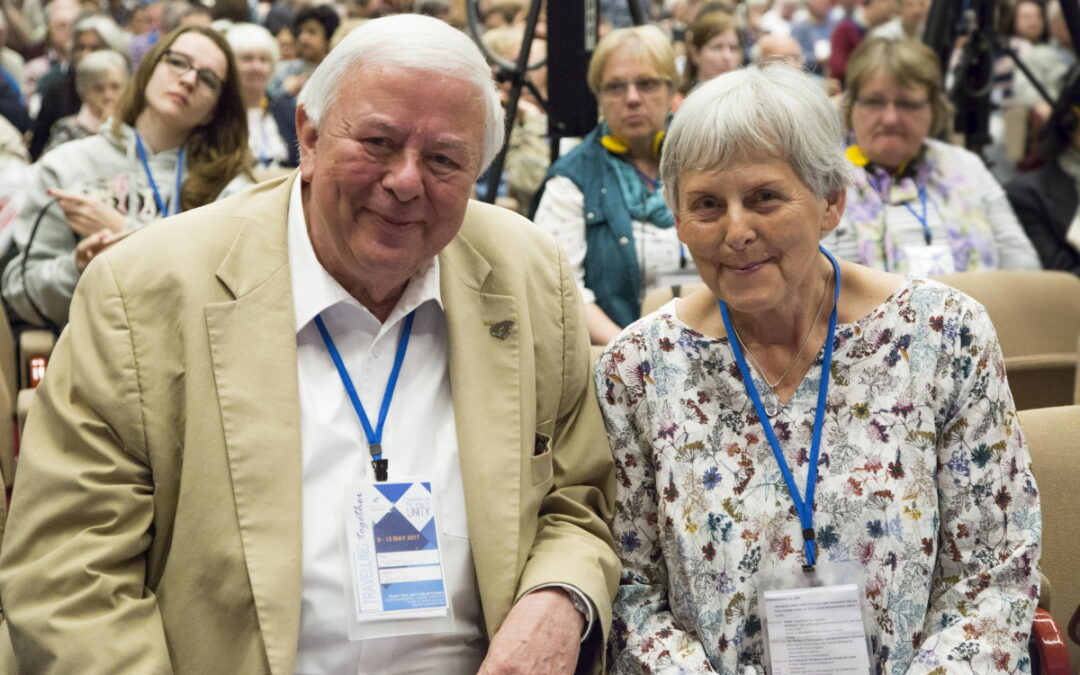
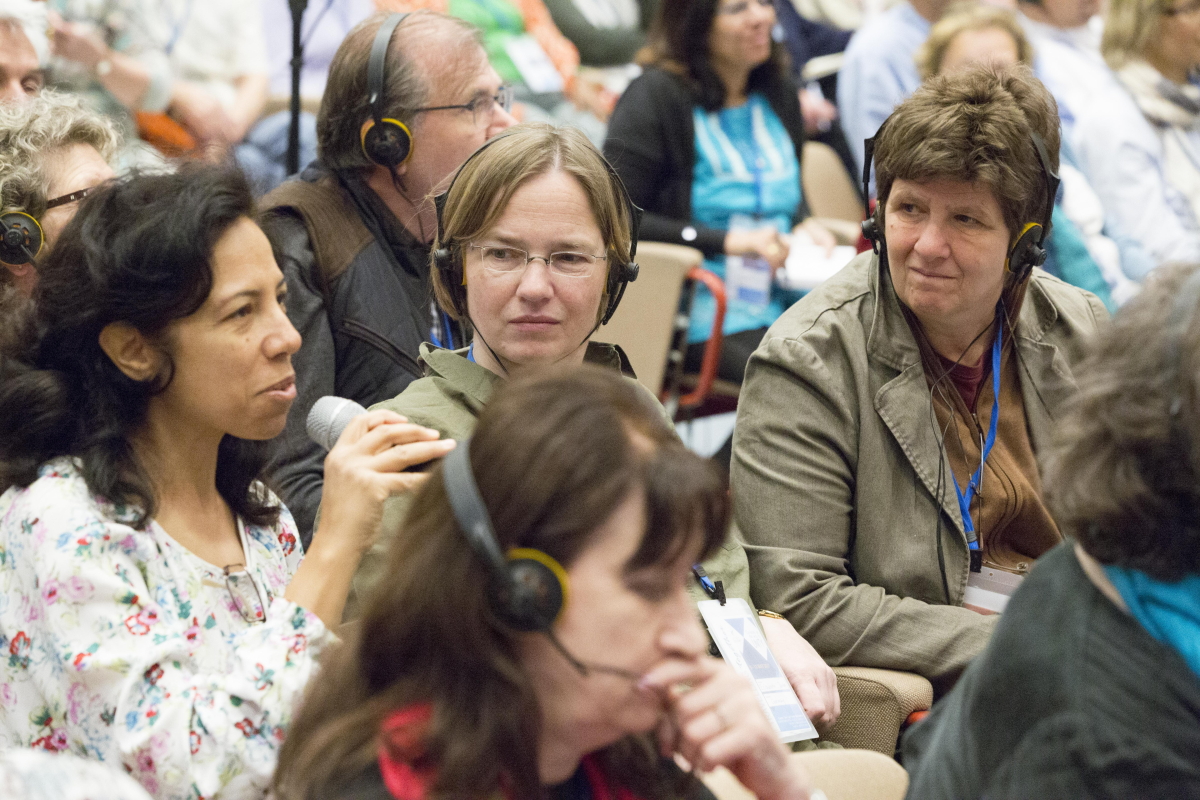
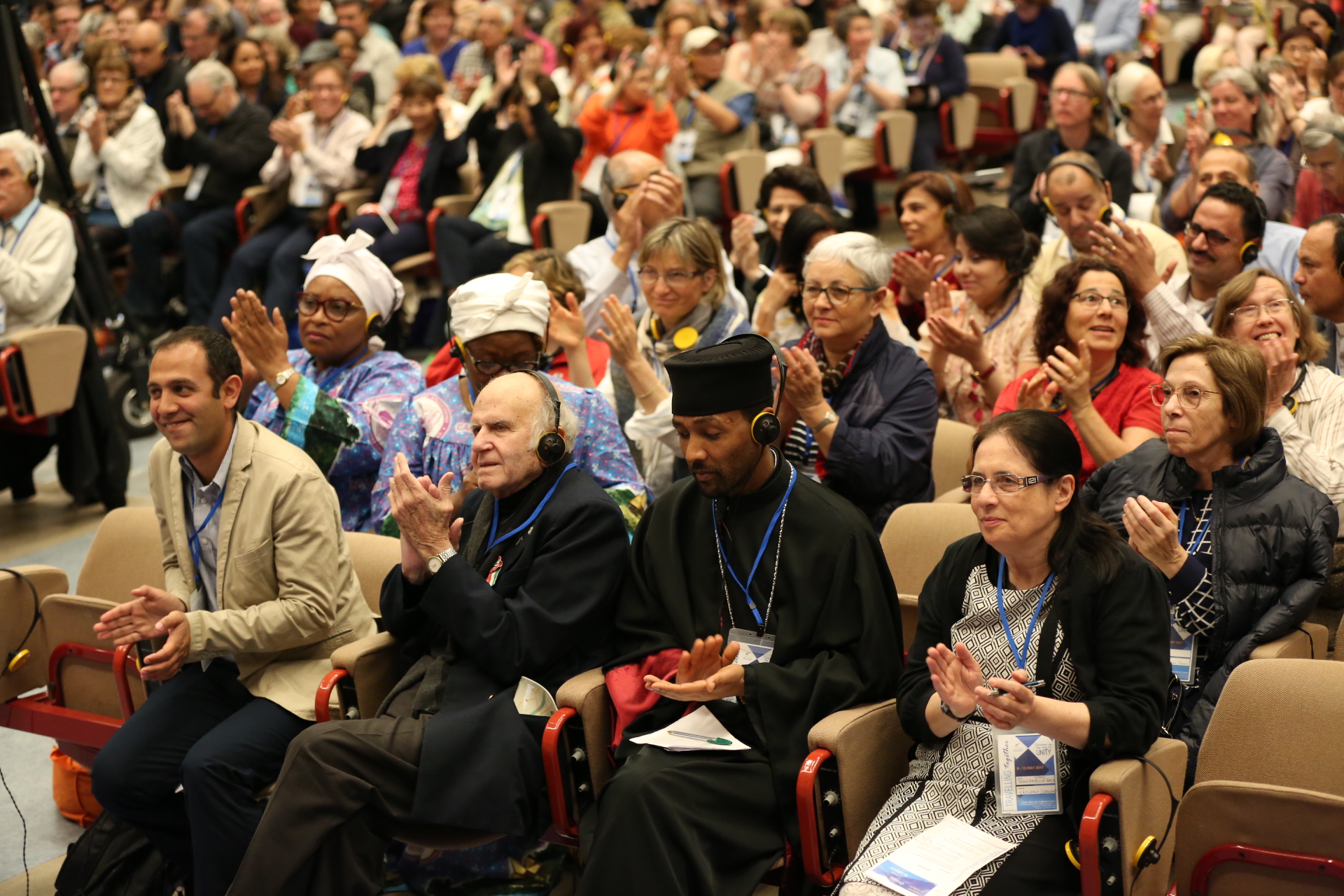 “The Revolution of the Gospel. A return to the Gospel and the Life of the Gospel in the World.” The putting into practice of the Word of God today as the early Christians did, contains therein the ecumenical journey that began 50 years ago by Chiara Lubich and taken ahead by the Focolare Movement all over the world. It is a journey in which Christians of all Churches fully partake in as seeds of peace in a world wounded by wars and divisions. Maria Voce, president of the Focolare Movement spoke about this recently. We met her at a press conference with journalists of various newspapers, at the end of the 59th Ecumenical Week, which took place at the international Mariapolis Centre in Castel Gandolfo during 11-13 May. The hall was jam packed. There were about 700 Christians belonging to 69 Churches and ecclesial communities, from 40 countries around the world. The translation booths were in full swing with 17 different language interpreters. The participants were of all ages and races, and the clothes they wore showed their different backgrounds and affiliations. A highlight of the Ecumenical Week was the recital of the prayer for unity in the Catacombs of St Sebastian in Rome, in the very place where the first Christians and martyrs used to meet. Here, they made the so-called ‘Pact of Mutual Love’ through the exchange of the sign of peace, asking forgiveness for the harm inflicted in the past and so that “renewed by love, we take this witness lived between us to our communities in our countries, and in our society”. “We have built so much together,” commented Maria Voce. “Now it is about accelerating the pace, so that communion is full and visible. We need to go forward.” The world yearns for universal brotherhood as never before. Do you think it is possible? Is it possible in this century? “I know it’s possible, though I can be sure it will happen in this century. One thing is certain that we will reach this goal, because it is God’s wish. God wants the whole human family to be a family of brothers and sisters. And if God wants it, then this plan of unity for humankind will be fulfilled. Perhaps it won’t succeed in this century. But what’s important is that that we take the steps that God asks of us today, and today God asks us to work in this direction and as Christians to at least recognize each other as brothers and sisters. In the ecumenical world, one perceives the suffering of Christians belonging to different Churches of not being able to participate in the same Eucharistic celebration. How do you respond? “It’s undoubtedly a suffering for everything. However, we believe that the presence of Jesus in the world is not limited to a Eucharistic presence. Jesus is present in the world in so many ways. He is present with his love; he is present in the people around us because we recognise Jesus in every neighbour; he is present in the poor, in those who guide us in the Church’s magisterium, and in the various Churches and institutions. We, as the Focolare Movement, feel that two things are particularly important. The first is that suffering is the presence of Jesus in the world. Jesus has taken upon himself all the sufferings of humanity, and hence the pain of division. It is a suffering that Jesus himself endured when he was crucified and abandoned. The second thing, which is of utmost importance, is contained in the words of Jesus: “Where two or more are gathered in my name …”. He did not say gathered in the Eucharist, but rather he said “in my name”. And what does it mean to be united in the name of Jesus? It means to be united in reciprocal love which he brought on earth. So where two or more are united in his name, there is his presence. This presence of Jesus in the world is in a way proof that we already live a true communion, and therefore we could also say: “Who can separate us from the love of Christ?” While it’s not possible to receive the Eucharist together, we can’t but receive the love of God, we can’t but live this love among us in the hope that one day we can arrive to that full communion which will be added to the communion that we already live.” (to be continued) Interview by M. Chiara Biagioni – Source: S.I.R See Part 2
