26 Jun 2017 | Non categorizzato
After the arrival of the “Pilgrim Cross” where the World Youth Jubilee 2019 will be held, Archbishop José Domingo Ulloa Mendieta, O.S.A., launched the initiative in which, on the 22nd day of each month “prayers will be said together” for this important event. The prayer of last 22 June was entrusted to the local Focolare communities. At the conclusion of the Mass, the Archbishop placed the “Pilgrim Cross” in the hands of the Focolare young people along with the icon of Our Lady. “It was beautiful to receive and carry the Cross of the World Youth Jubilee,” the young people wrote, “and we took the opportunity to tell the Archbishop that he could count on us; and he answered: “I do count on you. It was a celebration of the family of the Church!”
26 Jun 2017 | Non categorizzato
In 1987 the General Assembly of the United Nations called for a World Day Against Drug Abuse and Illicit Trafficking to be observed on June 26, callinng attention to one of the worst dramas of our planet and to voice support for all the efforts to combat it. According to the 2016 Report of the United Nations Office on Drugs and Crime, 250 million people between the ages of 15 and 64 had made use of drugs in the preceding year. The campaign is aimed towards everyone, but particularly young people who often talk about the “rocking effects” of drugs while forgetting the many “negative effects”. The use of drugs is worrisome and represents a wound on society that threatens public health both in terms of prevention as well as care and treatment of the negative effects of drug use.
26 Jun 2017 | Non categorizzato
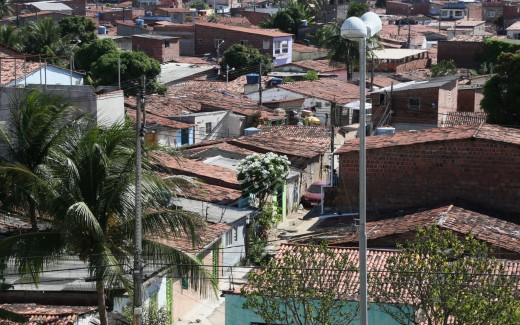
On the island of Santa Teresina “When you live in a state of extreme poverty, or you fall into inertia, or else the only alternative is violence. From the charism of unity I’ve learned that I could become an agent of social transformation in my local environment: trying to work for the local residents, helping to rebuild a mocambo, finding potable water for families. Two years later I was elected president of the St Teresina Citizens Association. I continued the work begun by my predecessors, made sure there was transparency in the public administration, making it clear that if each of us helped the other, God would help us all.” (J. – Brazil) The tax agent I’m a tax agent. It’s a difficult job that I’ve always tried to carry out as a service to the country. I tried to see and serve Jesus in every person, trying to create a relationship with each person. Several years back I was assigned to the Investigative and Executive Department. In practice, I had to convince people who were outside the law, to pay the taxes so that they wouldn’t be sanctioned. It’s quite difficult and requires a good dose of patience. Little by little I gained the respect of the people with whom I was in contact, many of whom because aware of the need and benefit of staying within the rules.” (A.N. – Kenya) Contagious solidarity “Years ago, a social worker friend had asked us to host a seventeen-year-old for a week, who was nearly blind. For various reasons he wasn’t able to stay at the Institute nor to return home with his parents. After talking it over with our boys, who were already teenagers, we decided together to say yes, even though the decision would involve a bit of sacrifice for each one of us. The house was already small for our four children, who were students and in need of space. Miriam came to stay with us and, with the help of everyone, inserted herself so well that she helped out at one of our children’s birthdays that was happening in those days. It turned out to be not only one week, but three. We remember it as one of the powerful experiences of our family. That experience of offering hospitality was still helpful many years later. Our married daughter and mother of two boys, hosted a maladjusted boy who, for Easter, would have been left alone at the Institute. Another one of our sons, now married with three boys, welcomed him for Christmas dinner, along with his mother-in-law, who was sick in the mind. Solidarity is contageous.” (H.G. Austria)
25 Jun 2017 | Non categorizzato
In the light of the Christian faith, humankind is shown to be the image of God. The Old Testament teaches that God made humankind in his own image and likeness. This origin in God confers upon humankind’s raggedness, woundedness and spirit a beauty that is above human. This beauty becomes even greater in Christianity, because humankind is seen not only as the image of God, but also as God’s creation and worthy of the Creator, the artwork is worthy of the artist. The Omnipotent could not but create beings worthy of Him. In humankind, He created a masterpiece that makes one dizzy to behold, bestowing upon him an admirable form to last and to generate, an intelligence to enlighten, a heart with which it could project itself on its fellow beings, a soul to evade the limits of time and space, with the angels in Eternity. Humankind fell, it’s true, abusing its freedom; but it’s also true that the most exalted prodigy of Divine Love came attached to that Fall: Redemption through the Blood of Christ. Seen in this way, humankind – albeit a poor wretch you zoom by on the sidewalk, or a native who lives miles and miles away – is such a grand being, such a noble being, such a divine being that you should want to kneel down whenever you were in its presence, to tremble and be overwhelmed, as you recognized in it the majesty of the One who imagined it and made it the prodigy of Creation, the object of the supernatural life in the life of nature. It immediately becomes clear what such a vision does in you. It makes it impossible and absurd for you to exploit human beings, to degrade them, to tamper with them, to supress them, without violating the work of God, without affecting the very patrimony of the Creator. Humankind is Son of God, and any offence against the son is an outrage to the Father: murder becomes an attempted God-killing, tantamount to killing God in effigy. Humankind barters its dignity when it bends to evil. And among the sins is the pride that is put in place of humankind’s humble gratitude at realizing it is God’s masterpiece. From pride comes exploitation, which is an antisocial impetus; whereas, Christian humility creates service and, also in this, humankind is a copy of that other Son of Man who came not to be served, but to serve. And herein comes the welding of the individual to society: its integration, its expansion. Humankind does not exist in the abstract: fathers exist, citizens exist, believers, and so on…the social animal exists. Only that human beings enters into society boosted by. Because human beings love, they come out of the shell of their egos, they expand, they integrate – in the life of the others. By the mere fact that human beings love, he and she already reveal that they are naturally Christian. Christianity then lifts up and supports this love, saying that love takes the person into society, saying that the vital principle of society is love: without which society, rather than protection, compliment and joy of the human person, becomes a constriction and a mutilation of a person. It can become a threat to human dignity. Social exploitation begins when you no longer love humanity; when you no longer respect its dignity; because you see the muscles and you don’t see the spirit. Igino Giordani, La società cristiana, (Rome: Città Nuova, 1942), 32-36.
24 Jun 2017 | Non categorizzato
Today, 24 June, marks the end of the Ramadan, the period of 29 or 30 days during which the Muslims recall «the month in which the Koran was revealed as a guide for humanity and which is a clear proof of the right way and salvation» (Koran, Sura II, verse185). During this period, fasting from dawn to sunset constitutes the fourth of the five pillars of Islam. The spiritual meaning of fasting accompanied by prayer and meditation, sexual abstinence and renunciation in general, according to many theologians, refers to the capacity of man to self-discipline himself, exercising patience and humility and remembering to help the more needy and those who are less fortunate. Ramadan is, therefore, a sort of exercise in purity against all worldly passions, the benefits of which will fall on the faithful all year round.
