20 Jun 2017 | Non categorizzato
June 20: Pope Francis visits two Italian towns,Bozzolo and Barbiana, “to pay homage to Fr Primo Mazzolari and Fr Lorenzo Milani, the two priests who today offer us a timely message. I thank those, especially the priests, who will accompany me with their prayer,” said the Pope at the Angelus on Sunday, 18th June. The visit to the tombs will be a significant gesture as both priests had reputations of being anti-establishment and therefore marginalised. They were precursors of the Second Vatican Council and forerunners of the Church of the Poor, as Pope Francis himself pointed out, holding them up as examples to follow.
20 Jun 2017 | Non categorizzato
In 2000,on the occasion of the 50th anniversary of the Convention related to the status of refugees, the UN established that this Day would be celebrated each year on 20 June. The aim of this assigned day is to make the public aware of the condition of migrants. This concerns millions of people who are forced to escape from wars and violence, leaving their loved ones, homes and all that are part of their life. Behind each one there are stories that are worth listening to, full of suffering, humiliations and the desire to rebuild a future. The Projected Global Resettlement Needs 2017 report affirms that in 2017 the forecasted number of people in need of resettlement will reach 1.19 million, 72% more than in 2014. Along with voluntary return to their countries, this is one of the best solutions for the refugees, including integration into the host societies.
20 Jun 2017 | Non categorizzato
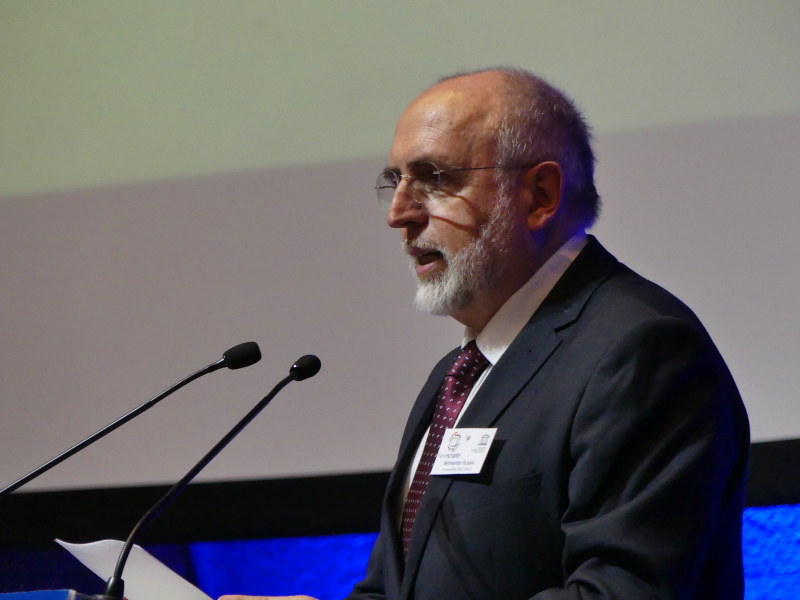
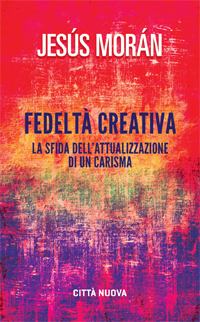 With a radio transmission emceed by Alessandro De Carolis, Radio Vatican journalist, the author dialogued with Fr. Julián Carrón (president of the Communion and Liberation Fraternity) and Maria Grazia Vergari (vice president of the Adult Section of the Catholic Action). Here are some excerpts of the interview that Giorgia Bresciani, journalist of “InBlu Radio,” held with Jesús Morán on 30 May: G. B.–The presentation of your book was the occasion to experience a moment of dialogue and fraternity between the ecclesiastic movements. In the Pentecost of 1998, John Paul II and at that time, Cardinal Ratzinger initiated a joint pathway of communion between all movements. What do you think happened that day and what point of that journey have we reached? J.M.–I think that 29 May was really blessed by the Holy Spirit, and was a grace for us. I remember that Feast of the Pentecost of 1988 vividly, and it was one of the most beautiful days of my life. It seemed as if the first Pentecost had become a concrete reality, due to the presence of many people, and an unforgettable day! I had arrived from Chile where I was living. It was effectively a historic moment, an ecclesial event because for the first time, the new movements had gathered in St. Peter’s Square all together. It was a fundamental encounter between the charism of Peter and the charisms created by the Holy Spirit in our epoch. It was like going public, giving visibility to the ecclesial charisms, and an “acknowledgement” of this fact. Since then the journey has progressed with ups and downs. This experience extended also to ecumenical levels and saw the creation of “Together for Europe.” We thus committed ourselves to the unity of all Christians. Then there were other joint encounters between the movements. Over the years, however, some of the founders passed away, and obviously this slowed things down: the deaths of Fr. Giussani, Chiara Lubich and other leaders, had an impact because this reality of unity and communion of the movements had been decisively their idea. An occasion like that of 29 May is a push to continue their work. We are now in a post-founding phase and have to restart from that “prophecy.”And the presentation of my book is oriented in that direction. G.B.–You mentioned the death of some founders. Precisely you, Maria Voce, and Fr.Carrón, are in that “post-founding period,” the “second phase” which is a tricky one: you have a complex and exciting task. In the light of your position, what do you think an ecclesial movement needs most in this phase? J.M.–I believe that the “post-founding” phase isalso a charismatic one.There are different types of graces from those bound to the founding moment, and lies in the perspective of the incarnation: the great challenge is that the charism, following the trail of the founder, increasingly becomes “history.” It is thus a phase of service to the Church and to humanity. This calls for a different kind of maturity. We have to work together, bringing to light personal and community talents, because when the founder is present, the light of the charism is very strong, and the founder “incarnates”it almost by herself. Now God wants us to start up our charismatic intelligence and our forces. And we have to do it together! This is the great challenge. This is what I tried to say with this concept (already used by John Paul II) of “creative fidelity”: faithfulness to the charism, and at the same time, capacity for innovation and creativity, always a fruit of the Holy Spirit, and greater insertion into the Church and society.

19 Jun 2017 | Focolare Worldwide
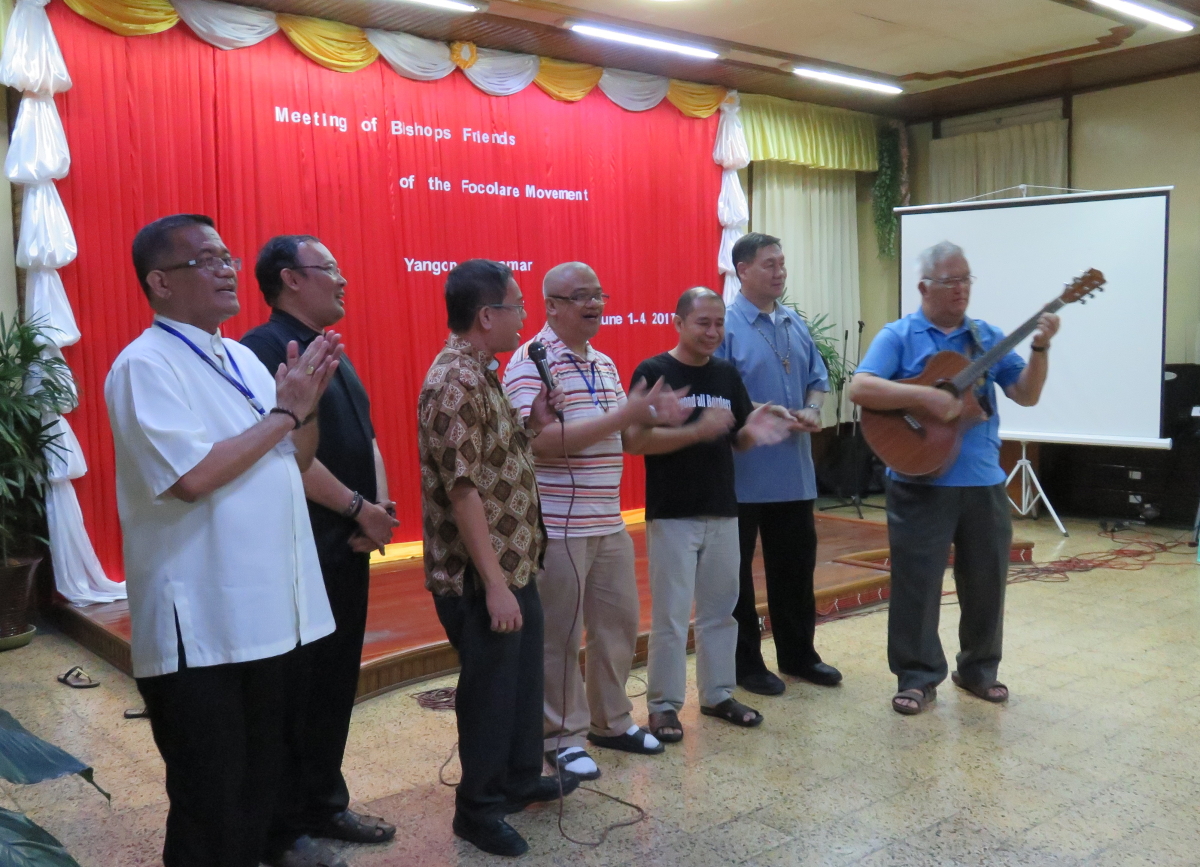 “That all may be one. We were born for these words of unity, to contribute to making it a reality in the world.” The words of Chiara Lubich, commented on by Bishop Felix Liam, President of the Episcopal Conference of Myanmar, on the first day of the meeting (1- 4 June 2017), well evidenced the aim of the convention held this year in Yangon, Myanmar, a country in Southeast Asia, on the western side of Indochina. These conventions held every year at international, ecumenical and regional levels,began about 40 years ago on the initiative of Chiara Lubich and Klaus Hemmerle (1929-1994), then Bishop of Aachingen, (Germany).. In Yangon, with a strong presence of the episcopate of Myanmar (19 bishops), there was a warm family atmosphere. Among the 31 participants,a good number came from the Philippines, India, Malaysia and South Korea. In communicating his experience on his encounter with the spirituality of unity, Cardinal Francis Xavier Kriengsak of Bangkok, moderator of the bishop-friends of the Focolare, invited the bishops to discover and deepen one of the fundamental points of the spirituality of unity: Jesus crucified and abandoned, and place it in the centre of their lives in order to become instruments of communion in the Church and humanity. This was also testified to by the experience of the members of the local community of the Focolare who had prepared to welcome the bishops in the best way possible. But also some bishops, like the Irish Bishop Brendan Leahy, see in the mystery of Jesus forsaken, the “countenance of mercy, key to dialogue and unity, and pathway to the sanctity of the people.” The life of Bishop Klaus Hemmerle was conveyed through a PowerPoint presentation and brief videos that showed the amazing fruitfulness of love for Jesus Forsaken even in the most “critical” situations. The themes on Evangelisation and Inculturation in the spirituality of unity were very actual and trigged particular interest in a country which is mostly Buddhist.
 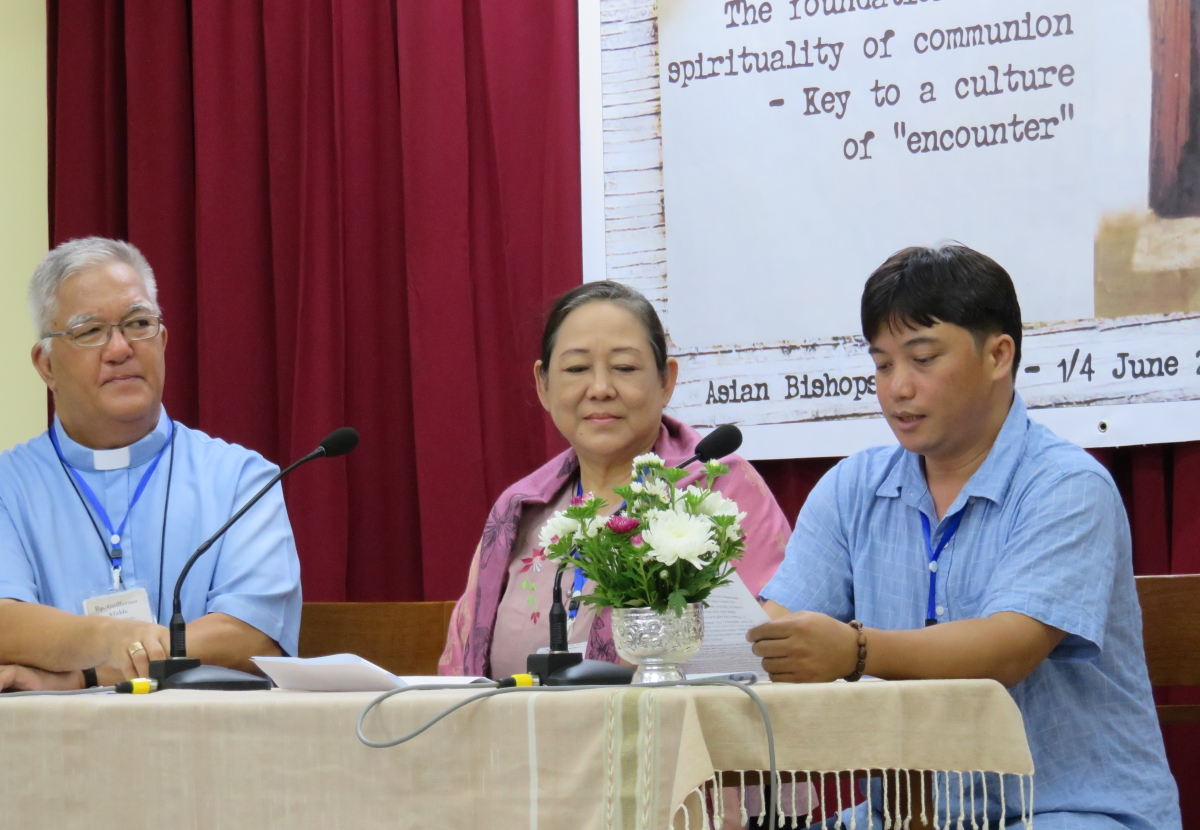 The story of Chiara Lubich and the Movement she had given life to, along with the experiences of the members of the local community, was very moving. Cardinal Carlo Bo, archbishop of Yangon said: “I was very impressed by the story of the charismatic and prophetic life of the founder of the movement. More than ever the Church needs movements like the Focolare. While the arrogance of power divides people according to colour and race, Chiara created a global communion for worldwide peace.” Bishop Matthias (Myanmar) commented: “When one usually participates in the meeting of bishops, we listen to many things, but on an intellectual level. Instead, here we talk about life and we see happy people.»And Bishop Isaac (Myanmar):“The life of a bishop is not easy, and we ourselves often feel abandoned. Now that I have met Jesus Forsaken, I will have the strength and the light to go ahead.” From Korea, Bishop Peter added: «It is the first time for me to participate in a meeting of bishops. Here I saw people who try to love Jesus Forsaken in every difficulty; people who are behind the wings, try to serve all of us,» referring to the members of the local community of the Movement. Openness to cultural and interreligious dialogue was assumed in the golden colours of the Pagoda of Shwedagon, the most important and renowned in the capital, and in which the relics of the four Buddhas are jealously guarded. The visit to this sacred place on the hill of Singuttara, to the west of Royal Lake, was a symbol of respect for the Buddhist soul and the culture of the place. At the top of the Pagoda, a banner-like anemoscope scattered with precious stones, displays the direction of the wind. If sufficiently supported, its fluttering is accompanied by the sound of tiny bells. The Myanmar bishops are certain of which direction the wind is blowing: in the direction of unity, towards a Church which is increasingly a witness of “communion”.
18 Jun 2017 | Non categorizzato
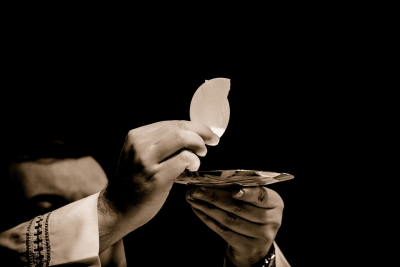
“A piece of bread, transformed by Jesus to satisfy the hunger of every heart: this is Jesus’s story reduced to the bare bones. It’s ours: the little path for his love, love strong in weakness.” (From an article, May 1980) “Every time we celebrate the Eucharist, what takes place is not only a pleasant communion with others in the spirit of Jesus as a mere idea or feeling. No, every time we celebrate the Eucharist the most radical wall of existence is brought down, the wall of death; what happens to us is pure gift, gift that is truly conferred to us. It’s proximity, proximity within which the mutual distances – both interior and exterior – are obliterated. In the Eucharist, not only do we become one body with each other, but we become His body for the world. For anybody who is truly permeated by the Eucharist this world and this society can no longer remain indifferent. They now have this dynamic in them, dynamics of God who offers himself, who gives himself, who carries with humanity as something of his very own and intimate to him, all that humanity carries, all that it does.” (Conference, August 31, 1977) “What’s important is not only that we have the Eucharist here in our community. We retain the spirit of Jesus only if and when we concretely love the other’s community as our own, if and when our communities open beyond the barriers that separate them and if in the midst of the communities lives the Lord.” (From an article, May 1979) Source: La luce dentro le cose, Klaus Hemmerle (Rome: Città Nuova, 1998), 190, 186, 187, 192.
