
17 Jun 2017 | Focolare Worldwide
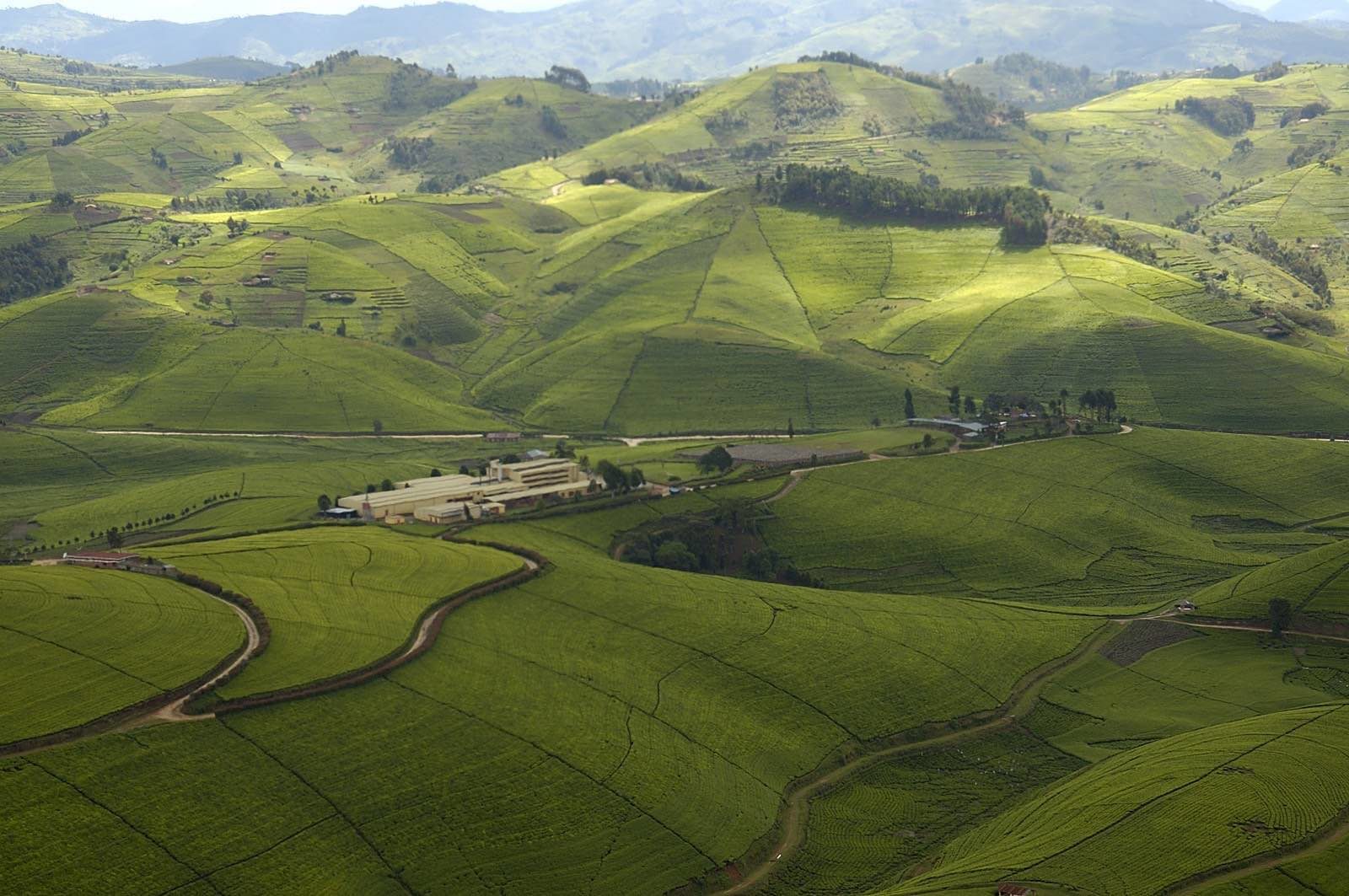 My path began on the last day of the Rwandan calendar, the day in which we remember the massacre that happened in 1994. I know that Jesus Forsaken can give meaning to every human suffering, especially the ones that leave the deepest wounds in our hearts. I sense a profound bond between the sacrifice of Jesus and the pain and suffering of the Rwandan people. Under the guidance of Father Telesphore, a local priest, he became acquainted with the capital city of Kigali known for its attractiveness. The signs of economic growth, however, can especially be seen in the centre of the city which looks like a European capital. But not far from the modern buildings there are the common folk, bound to agriculture and selling their products at market: fruit, vegetables, chickens, and so forth. Due to my white skin and tall stature, my presence doesn’t go by unnoticed. I encounter many surprised faces, but it’s enough to offer a greeting of “muraho” or a smile and the ice melts into a nice smile. We visit the main cities of the country by car, stopping now and then to give someone a ride. I was particularly struck by one young woman around 20 years old. Behind her pretty smile was a painful story. Fr Telesphore tells me that her parents were killed in the 1990 genocide. She had just been to their tomb where she went to pray. She and her young brother have been visiting Father Telesphore since they were young. They found a family that filled them with love. I met many other people in situations that were similar to theirs. We spent Saturday at the seminary school of theology which takes in 130 seminarians from around the country. At the Mass, which was imbued with Rwandan culture, I was very touched by the Thanksgiving After Communion with songs that engaged the whole assembly. It was like a sacred rythm, not perfectly synchronized, but incredibly harmonic. At one seminary we held a “school” for seminarians who wanted to know about the spirituality of unity. Right from the start, Father Telesphore clarified for everyone that “this school is not run with books, but with life” and that “we’re here to build the unity Jesus desired, through our reciprocal love.” The Gospel love among everytone could be felt in very strong and concrete ways throughout the meeting. After a basketball match, I found myself asking who had won? The answer: everybody. Where there’s love, competition becomes an occasion to live the Gospel. We focused on the mystery of Jesus Forsaken, which is one of the points of the spirituality of unity. We were all moved by the testimony of two priests, one from Rwanda and the other from Burundi, lands that are marked by mutual misunderstandings. But through love towards Jesus in his abandonment, those misunderstandings gave way to unity between the two priests. One of the seminarians spoke for everyone: “When you speak with the heart, you touch us in the heart.” The last days were dedicated to meeting with families and young people, but also other people who share the ideal of fraternity. We concluded with a pilgrimage to the Shrine of Our Lady, which was not far from the seminary. We wanted to thank her for this trip and for the immeasureable gifts we all recevied. (Armando A. – Brazil)
16 Jun 2017 | Senza categoria
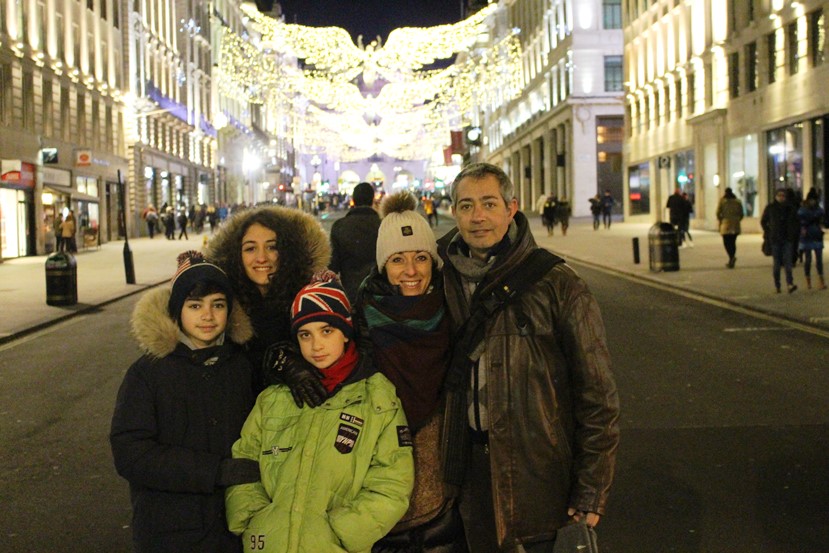
When we started seeing each other, Hani and I were very much aware of the differences that existed between us, especially with regards to doctrine. But we felt that our love was stronger than any difference; this gave us the courage to believe that there was a special plan of God for our marriage that went beyond us. Through the spirituality of the Focolare Movement, which we had both got to know in our youth, we learnt that in order to reach unity we had to aim at what unites us – which is considerable – rather than looking at what divides us. Of course, when we go our separate ways for Sunday Service, it’s always a suffering, as when unintentionally we might refer to “us” and “you” in our discussions, or when our human reasoning wants to criticise the Church of the other. When this happens, we realise that unity isn’t built once and for all, but that each day God asks us to choose to love the church of the other as our own. Furthermore, we have learnt that each time we experience disunity, it’s an opportunity for us to offer this pain to God for the complete unity among Christians. There are times, however, in order to live unity more fully among us and in our family, when we might attend either one Church or the other all together, and to take part in some of the spiritual practices, such as fasting for example. An important moment for us was the baptism of our first child. We discussed the issue at length, but we could not decide which was the right thing: whether to have a Catholic or Orthodox baptism. While the Sacrament was the same for both Churches, the consequences would have been profoundly different. Hani, in fact, is a deacon and he was temporarily removed from his Church because of his mixed marriage. A Catholic baptism for our child would have put him in a difficult situation. We found it hard to make a decision, but then I realized that I should consult my bishop about it. I went to him and told him the whole situation. I felt welcomed by him and listened to in depth. The bishop was grateful that I had sought his advice and he assured me that he would understand and support any decision that Hani and I took, following our conscience. At that point, it was clear to me that, for the sake of Hani and his Church, it was best to have an Orthodox baptism. On this occasion, as in many others, it was not a question of making compromises, but to discern God’s will in that circumstance. Naturally this entails making an extra effort, which sometimes costs blood, sweat and tears, also with the children who, when still little, could not understand why they could receive Communion in the Orthodox Church, but not in the Catholic Church. In fact, in the Orthodox Church, the sacraments of communion and confirmation are administered simultaneously during baptism. We went through a rather difficult time last year with our eldest daughter, who was then 15 years old. She started demanding to be more independent and was being aggressive about it. We were unprepared for this sudden change. There were daily quarrels, often quite heated. We wanted to protect her from situations which we considered precarious, but the more we checked up on her, the more she rebelled. I spent so many nights crying for this daughter I felt I no longer knew. It was not easy between us either, because I thought the way Hani handled the situation was not optimum and so we argued a lot. But in all this confusion, we always tried to be faithful to some practices that seemed important to us, such as praying all together, or having the humility to ask pardon when necessary, even with the youngest ones. At a certain point, we realised how important it was to maintain unity between us. We decided to show complete trust in her. The situation improved significantly at home, which confirms that even in a mixed marriage it’s possible for the married couple to “be one in God” and to give this witness to the children and the world around us.
15 Jun 2017 | Non categorizzato
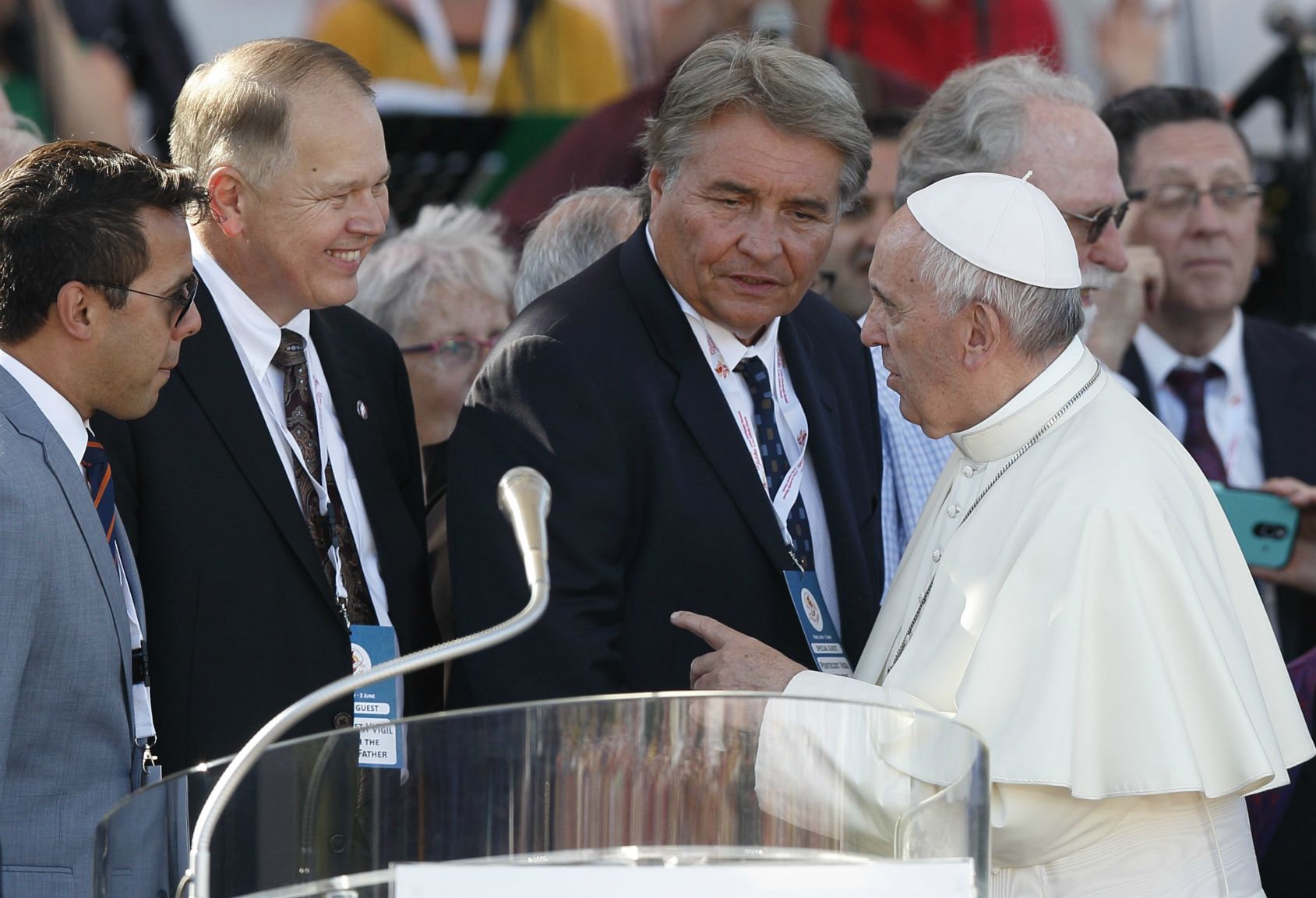
At the Vigil of Pentecost at the Circus Maximus in Rome
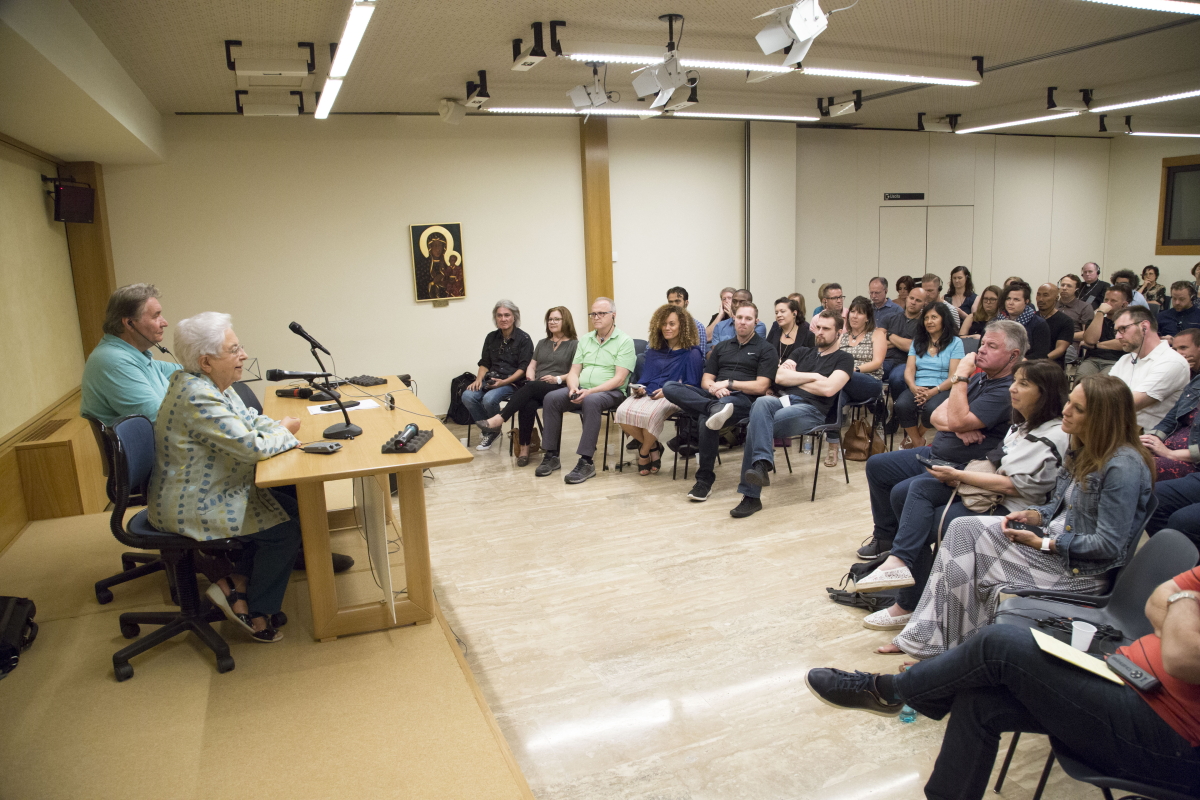
Photo credit: © CSC Audiovisivi-Caris Mendes
14 Jun 2017 | Non categorizzato
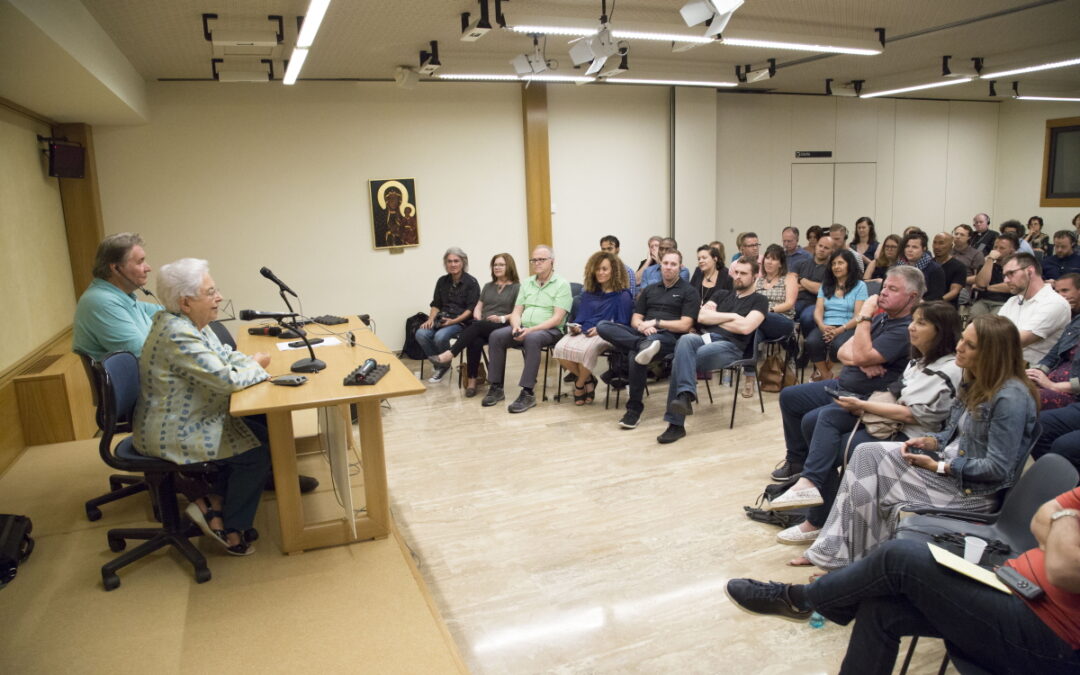
The website is up in preparation for the 2018 Synod of Bishops on “Youth, Faith and Vocational Discernment”. The site contains a questionnaire in five languages, to facilitate the widest participation of all the young people in the world, not only to receive information of the event, but also to interact and take part in the preparation.” “Let your shout be heard, let it resound in the communities and make it reach the pastors,” Pope Francis exhorted the young people. He went on: “Saint Benedict reccommended that abbots to consult the youngest members before any important decision because, “it is often to the youngest that the Lord reveals the best solutions.”
14 Jun 2017 | Non categorizzato
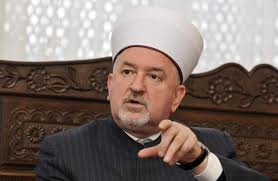
“A recipe for success doesn’t exist, but there is a recipe for failure. The recipe for failure is violence ‘in the name of Allah’”. With these words, the Grand Mufti Emeritus of Bosnia Herzogovina turned to the Muslims of Europe with an appeal. He made it on the day after the bloody attacks in London and Manchester. Like Chiara Lubich before him, and presently Maria Voce, Mustafa Ceric was once the honorary president of Religions for Peace. “This is not my faith. This is not the Allah I believe in. My faith is never the knife, it’s never terror. My Allah is Loving and Merciful. […] “I confess that I have never felt so confused and so helpless in trying to explain what is happening inside and outside my community of faith. I console myself with the thought that these are the actions of extreme minorities, just a political game by great powers to gain Muslim wealth.” The Grand Mufti had been awarded the Felix Houphouet-Boigny UNESCO Peace Prize in 2003 and the Sternberg Prize of the International Council of Christians and Jews “for his outstanding contribution to the understanding of the faith.” In 2007 he received the Theodor-Heuss-Stiftung Prize for his Contribution to the Dissemination and Strengthening of Democracy and in 2008 the Eugen Biser Foundation Prize for his efforts to promote understanding and peace between Christian and Islamic thought. Mustafa Ceric used strong words: “My faith community has many problems. The biggest one is that of delegating to others the solutions of our problems. Instead, my Community of Faith, my Ummah, must solve its problems within itself before solving the problems around it.” There are those who claim that the attacks against innocent civilians in Manchester or London are more important than the ones in Palestine, in Kabul, Mosul, Sa’an and Misurata, said Ceric. “They aren’t more important, but certainly more dangerous for the Muslims in Europe, the majority of whom have escaped from Muslim countries to seek peace and safety for their children in Europe. The peace and safety they have experienced up until now are threatened. After Manchester, London – and even before that, Berlin and Zurich – “the European Muslims have to be strong and clear not only about condemning violence ‘in the name of Allah’, but also about taking concrete measures against any form of abuse of Islam. They need to have a clear voice, a united and irrevocable voice in the struggle against the violence that is supported ‘in the name of Allah’. It is no longer a matter of individual goodwill of individuals or groups that work for interreligious dialogue. It is an existential problem for Islam and for the Muslims in Europe.” The Grand Mufti therefore launched an appeal to the Muslims of Europe to “gather together immediately around a “common word” between us and our neighbours independent of their faith, race or nationality, to swear an oath to God, to themselves and to their own neighbours in Europe: an oath to love and promote peace, security and cooperation in accordance with what we are obliged to do by our culture and Islamic faith. We must swear that we will do everything that is necessary to fight together against violence towards innocent people. We present-day generations of European Muslims owe it to our descendants who have no blame.” “This is no longer the time to hesitate!” The Mufti vehemently expressed his hope and desire for a change. “There’s no room for calculation! There are no longer excuses for putting it off, nor justifications for waiting! There is no salvation in silence! There is no future for Islam nor for Muslims in Europe if not in coexistence and in tolerance with our European neighbours!”
