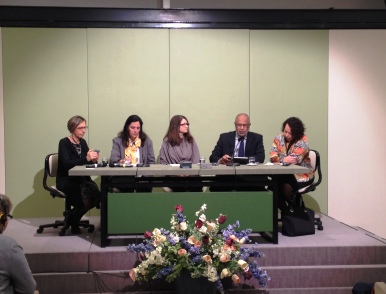
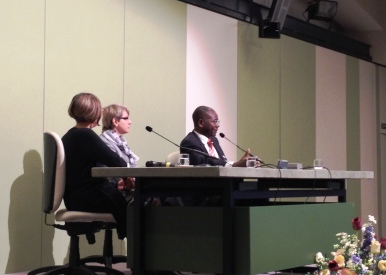
The Democratic Republic of the Congo (DRC) has been passing through a very delicate phase in its politics since last November 14th when the Premier Augustin Matata Ponyo was dismissed, following an accord in October that prolonged the mandate of President Joseph Kabila. Kabila should have terminated his office last December 19th, but his coalition, along with part of the opposition, has decided to continue on until next elections in April 2018. This was the heated context in which the Congolese Political Movement for Unity (PMU), which is inspired by the values of the spirituality of Chiara Lubich, was formed last October 29th. “During this period, the Church and its Bishops Conference is working to avoid chaos in the country,” say Damien Kasereka and Aga Ghislaine Kahambu from the local Focolare Movement. “The launching of the PMU at this moment is really an answer to a need. We’re glad to see members of the Movement more involved in politics, especially the young people who are convinced that things can be different. In spite of everything, we don’t lost hope.” On December 3rd the PMU was officially introduced at the multi-purpose meeting hall of the Moyi Mwa Ntongo Medical Centre in Kinshasa. The Le potentiel newspaper devoted a long article to the event, titled “Love and Brotherhood in Society: the Launch of a Mass-Awareness Movement”. “Far from being a political party, the PMU is a network of reflection and action for the promotion of brotherhood in the political life of the Congo. Its initiators are convinced that universal brotherhood is the basis and the key for positive change in society, especially Congolese [society] whose anti-values are finding it hard to die out,” the newspaper wrote. The event was attended by university researchers, teaching staff, journalists, religious, medical doctors, graduate students, social activists and other professionals. The meeting underscored the importance and opportunity being offered by the PMU in the DRC, since it promotes “doing politics in favour of unity” which is so needed at this difficult moment in time. The National Deputy Dieudonné Upira, one of the initiators of the PMU in the DRC, affirmed: “We’d like to raise a generation of young people who are not afraid like us. Obviously, we have not done much for this country. Perhaps we weren’t trained and this is the reason behind our fear. Therefore, we want to train the young people who are interested in doing good, so that they will be prepared to denounce, announce and renounce. Young people who, in front of the bipolarization of the Congolese political sphere, are able to say: “We must work for our nation.” A young person with training can influence society with his or her way of acting.” Ex-Deputy Georgine Madiko, who was among the initiators, also said: “We’ll begin periodic university courses that will allow young people to receive training through modules. [Then,] we’ll spread like a spider web covering the whole country and all the academic fields. This spider web will serve – if not in eradicating – at least in mitigating the wrong in our society and in promoting the good.” It will begin with a group of 59 people. At the conclusion, Aga Ghislaine Kahambu thanked everyone: “Your presence shows that you want our country to change. You don’t need a crowd to change society. Each one of us can perform positive actions. Now, we no longer want these actions to be isolated.” Gustavo Clariá
Sonia is fromSlovacchia; she’s five and goes to nursery school. One day she told her mom that she had found a friend in school. “And what’s her name?” “I don’t know, she doesn’t speak. I approached her since I saw she was always alone and nobody wanted to play with her.” Sonia’s mom usually fetches her for lunch. But the teacher said: “Let her stay! She helps us with a gypsy girl who at first did not speak at all and now, thanks to her, has started to talk and cooperate with the others.” When she returned home her mother asked: “Did your friend say something to you?” “No, but she smiles when I tell her I like her.” Her mother remained silent. And the child said: “You know, love warms up each one of us.” From Cameroon Kevin wrote: «One day in school during the break I asked one of my schoolmates if he had anything to eat. I was hungry and had nothing. He refused. The day after, I brought a piece of bread and when he came to ask me, I in turn refused. The next day, upon throwing the love dice it said: “Love your enemies.” I thought of that classmate. In school I tried to speak to him but he didn’t answer. So I sat in front of the house, waiting for him and when he came by, I called out to him, went up to him and when I asked why I shouldn’t speak to him anymore, he answered: “You refused to share with me the bread you had.” I immediately said, “Let’s make up!”and handed him some guava fruit I had with me. And so we started to talk and became friends again.» From Italy, Marco recounts: «One day at the nursery, the children made fun of me because I’m fat. I was sorry they did that and sometimes I cried. So I went to the Nun and instead of accusing them I told her of my sufferings. I understood that I had to forgive them and did so, because a Gen4 is one who, like Jesus, forgives and loves all.» Carmen lives in a slum at the outskirts of Mexico City. Often in the evening her uncles returns home drunk. Carmen is scared and hides herself. «But the other evening I didn’t hide – she says – I waited for him and helped him enter. I wasn’t scared because I knew that Our Lady takes care of me.» E Bartek, fromPoland: «At the children’s party I received a gift from Teacher Ela, a chocolate bar and a lollipop. In my class there a girl called Asia, whom nobody likes. I remembered that in the morning upon throwing the dice, it said: “Love your enemies” and so I gave Asia the lollipop and half of the chocolate. She was surprised and thanked me, and then left. Now we have become big friends.» «In the centre of Naples (Italy), the “Baby Jesus” we make and offer to people is really selling quickly and many gather around the stand if only to say that they wish to join the initiative. A teacher, an agnostic, who has many problems, held Baby Jesus in her hands and looked at it: “This will be my Christmas!” A child ran home, emptied out his piggy bank and came with all his coins to buy his own Baby Jesus.» By the Gen4 Centres
The objective of the convention was to «Review the various professions involved in the sector of justice – magistrates, lawyers, chancellors, university professors, prison staff, law enforcers – and discover the path to be pursued together, with the active participation of all the “actors” of the multifaceted relationships involved». The international congress promoted by Communion and Law (CeD) and New Humanity, was held last 26 and 27 November in Castel Gandolfo (Rome). The presence of a film director in a meeting on justice may have seemed to be quite unusual, but in his moving testimonial, Fernando Muraca succeeded in describing the experience of a prison staff in the Penal Institute for Minors of Catanzaro (Southern Italy). This was a documentary filmed entirely by the youths of the Institute, and the fruit of a commitment translated into a “cinema project” that transformed the young inmates not only into actors, but into people who have given a new meaning to their existence. Muraca is also the author and director of the film The land of Saints in which he faces the reality of the mafia’s organized crime. During the two days of intense dialogue among the various operators working in the field of justice, the discourse oftentimes stressed the concept of human dignity, and the intrinsic and inestimable value of every human being, in the conviction that also legal relationships can be lived in the spirit of fraternity and the quest for true justice. The rich and varied programme also deepened particularly current themes such as the protection of unaccompanied minors and political asylum applicants, relationship with jailees and protection of the victims. Dr. David Shaeed (magistrate in Indianapolis), Atty. Alba Doto (Boston), Atty. Endy Moraes (Fordham University, New York), and Dr. Luciane Barzotto Cardoso (magistrate of the Federal Court of Porto Alegre, Brazil), reviewed the current laws in various parts of the world, and elaborated the methods of pursuing the research and study paths initiated for some years now, also enriched by concrete implementations. Among the speeches was the video presentation of Maria Voce, Focolare President, the first woman lawyer of the Court of Cosenza (Italy), entitled Justice and the common good in the perspective of universal brotherhood. In a passage of her speech, Maria Voce explained: «Today, in the light of this “piecemeal World War III,” the tragic destructions, wiping out of every right and respect for peoples living in war territories, and closure of the borders to migrants, fraternity is the only answer, and the commitment we are called to give is to build it even with small actions, infinitesimal drops that may, however, enlighten the night.».The working sessions according to professional sectors evidenced the need to facilitate a confrontation within the various professions without losing sight of the entirety, to develop a dialogue among the operators and share know-how and experiences of the various activities developed in the field of Law. A significant note was the presence of the youth and the deep involvement of students. One of the most heartfelt testimonies was that of Roberto (former convict), and Alfonso, who has been working for some years in the Rebibbia Jail (Rome) to give a concrete hand to the families of the prisoners. Roberto did not hide his emotions in presenting his experience before such a qualified public, and ended by requesting the civil community to facilitate and promote the difficult employment and social reinsertion of ex-convicts. The next event will be for the youth in the Summer School 2017. Patrizia Mazzola

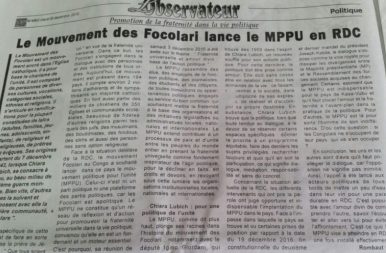
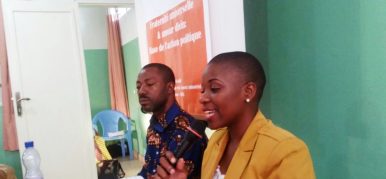 The Democratic Republic of the Congo (DRC) has been passing through a very delicate phase in its politics since last November 14th when the Premier Augustin Matata Ponyo was dismissed, following an accord in October that prolonged the mandate of President Joseph Kabila. Kabila should have terminated his office last December 19th, but his coalition, along with part of the opposition, has decided to continue on until next elections in April 2018. This was the heated context in which the Congolese Political Movement for Unity (PMU), which is inspired by the values of the spirituality of Chiara Lubich, was formed last October 29th. “During this period, the Church and its Bishops Conference is working to avoid chaos in the country,” say Damien Kasereka and Aga Ghislaine Kahambu from the local Focolare Movement. “The launching of the PMU at this moment is really an answer to a need. We’re glad to see members of the Movement more involved in politics, especially the young people who are convinced that things can be different. In spite of everything, we don’t lost hope.” On December 3rd the PMU was officially introduced at the multi-purpose meeting hall of the Moyi Mwa Ntongo Medical Centre in Kinshasa. The Le potentiel newspaper devoted a long article to the event, titled “Love and Brotherhood in Society: the Launch of a Mass-Awareness Movement”. “Far from being a political party, the PMU is a network of reflection and action for the promotion of brotherhood in the political life of the Congo. Its initiators are convinced that universal brotherhood is the basis and the key for positive change in society, especially Congolese [society] whose anti-values are finding it hard to die out,” the newspaper wrote. The event was attended by university researchers, teaching staff, journalists, religious, medical doctors, graduate students, social activists and other professionals. The meeting underscored the importance and opportunity being offered by the PMU in the DRC, since it promotes “doing politics in favour of unity” which is so needed at this difficult moment in time. The National Deputy Dieudonné Upira, one of the initiators of the PMU in the DRC, affirmed: “We’d like to raise a generation of young people who are not afraid like us. Obviously, we have not done much for this country. Perhaps we weren’t trained and this is the reason behind our fear. Therefore, we want to train the young people who are interested in doing good, so that they will be prepared to denounce, announce and renounce. Young people who, in front of the bipolarization of the Congolese political sphere, are able to say: “We must work for our nation.” A young person with training can influence society with his or her way of acting.”

 From
From