Christmas is also on the way for the displaced victims of the earthquake in Central Italy. We know that you are working in during this after phase of the earthquake. What are you doing?FrancescoTortorella explains: “AMU and AFN have coordinated with the Focolare Movement in Italy, to carry ahead their work during the after phase of the earthquake. Since August, there have been three site surveys in the regions that were hit, to examine the possible ways of intervening. The first intervention that we identified was that of supporting the families that run small agricultural businesses, along with the farm regions that suffered damage.” After a feasibility study, you came up with the comprehensive project. What is it?“We called it RImPresa and it consists of two activities,” Paola Iacovone explains. “The first activity, which will be carried out by the Abbraccio Planetario from Castelli Romani, Italy, and the Bread and Fish Foundation from Ascoli Piceno, Italy, will consist of 4 joint purchasing groups which, through a web portal, will purchase products from the small businesses that were hit by the earthquake, which will provide long-term support to entire families.” There are also many agricultural businesses that were damaged by the earthquake and are finding it hard to start up again. Are you also working on this front? “Yes. The Italian Associazione Italiana Imprenditori per un Economia di Comunione (AIPEC), which we work with is promoting the second activity of RImPresa,” Tortorella adds, “which is only concerned with supporting families with small agricultural and breeding businesses, by providing machinery or small infrastructures. All of it is carried out in coordination with the Italian Civil Protection Agency that has the full picture of the businesses that were damaged and of the assistance that is distributed.” “We’re a small drop in the ocean along with many others,” Paola concludes. “We’ve received many contributions up until now part of which had been destined to help finance the RImPresa Project. There are still funds to carry out other projects that will begin in the next few months. The contributions continue to arrive, so this fund will probably grow in the next few weeks.” Best wishes for a happy Christmas! Gustavo Clariá To collaborate:
All contributions that are deposited in these two accounts for this cause will be jointly administered by AMU and AFN. Except for cash donations, Italian taxpayers can get deductions and allowances from income, in accordance with the regulations for non-profit organizations, to up to 10% of income and the € 70,000.00 annual limit. Tax benefits are provided in many European Union countries and other countries of the world in accordance with local regulations.
Upon receiving the news of the death of Bishop Javier Echevarría, prelate of the Opus Dei, yesterday 12 December, the Focolare Movement conveys its heartfelt condolences. Most grateful for his life spent at the service of the Church, Bishop Echevarría, the second successor of St. Josemaría Escribá de Balaguer, founder of the Opus Dei, the Focolare Movement is particularly united in prayer and friendship with the Opus Dei family worldwide.
“Your Holiness, the Focolare community of Bari salutes you with great affection! We are so gladdened by your visit to our city, which is a bridge between East and West and has a special ecumenical calling. Your presence encourages us to work even more at the service of the full and visible unity among Christians, and for the protection of Creation. The charism of unity that you love so much, spurs us on to work in our own environments as apostles of dialogue who are aware that only unity, love and brotherhood will be able to respond to the challenges of today’s world.” This was the welcoming message from the local Focolare community in Bari as it welcomed the Ecumenical Patriarch Bartholomew on his December 5-6 visit to their city for the feast day of St. Nicholas. It is a “highly significant ecumenical event,” said representatives of the diocese, “that puts the Church of Bari-Bitonto on the map and contributes to dialogue between the Catholic Church and the Orthodox Church.” On December 5th, at the Basilica of St Nicholas the Patriarch gave the opening address for the beginning of the 2016-2017 academic school year of the Pugliese School of Theology, and received the Saint Nicholas Prize from the Ecumenical Institute. He had been awarded the Prize in recognition of his 25 years of ecumenical efforts as a “patient and courageous artisan of the culture of communion.” Pope Francis sent a congratulatory message that was read during the award ceremony in which he praised the efforts of the Patriarch for “the promotion of ever greater communion among those who believe in Christ.” In his keynote address entitled, Adriatic and Ionian Seas of Communion, Bartholomew reflected on the idea of communion, beginning from its theological significance as koinonia, as a “common participation of grace, love and communion in the life of God, that becomes experience itself of ‘being in relationship’.” He also remembered the Great Council of Crete held in June 2016 when “Our Holy Orthodox Church manifested its “communion” [emphasising the word] by unanimous decision of all the Patriarchs of the auto-cephalous Orthodox Churches.” He also underscored the need for an economy of solidarity, saying that “there needs to be an economy of communion which is all embracing and which does not create social discontent in the host country.” On December 6th, at the conclusion of the solemn Eucharistic celebration, presided by Archbishop Franco Cacucci in the same Basilica, Patriarch Bartholomew gave a second talk: “We have also come as pilgrims to the tomb of this great saint,” he said, “to invoke his intercession, his prayer and his support in our Patriarchal service, to thank God with him, for our 25 years of service to the unity of the Church, on St Andrew’s Throne; but also to be strong witnesses to the need of encounter among the disciples of Christ so that the world may believe, and we may one day not so far away, break the Bread of Life together and drink from the same Chalice of Salvation.” Fausta Giardina and Roberto Lago, from the Focolare in Puglia, write: “We’re breathing in a beautiful ecumenical atmosphere in our city during these days. The Patriarch’s visit and the special celebrations have been heartfelt by everyone.” The Focolare’s friendship with the Patriarch is longstanding. On October 26, 2016, Sophia University Institute, Loppiano, conferred its first Honorary Doctorate in the Culture of Unity to Patriarch Bartholomew. On that occasion he said: “One of the ideals of the Focolare Movement is the unity of the Church. Chiara Lubich and her collaborators did much work. She made 23 visits to [Patriarch] Athenagoras in Constantinople. Then she began to visit Dimitrios and then me. In 2008, I visited Chiara at the Gimelli Hospital a few days before her death. I’m sure that she’s with us this evening, with her spiritual presence and with her prayer. She rejoices with us and prays for the unity between our Churches.”
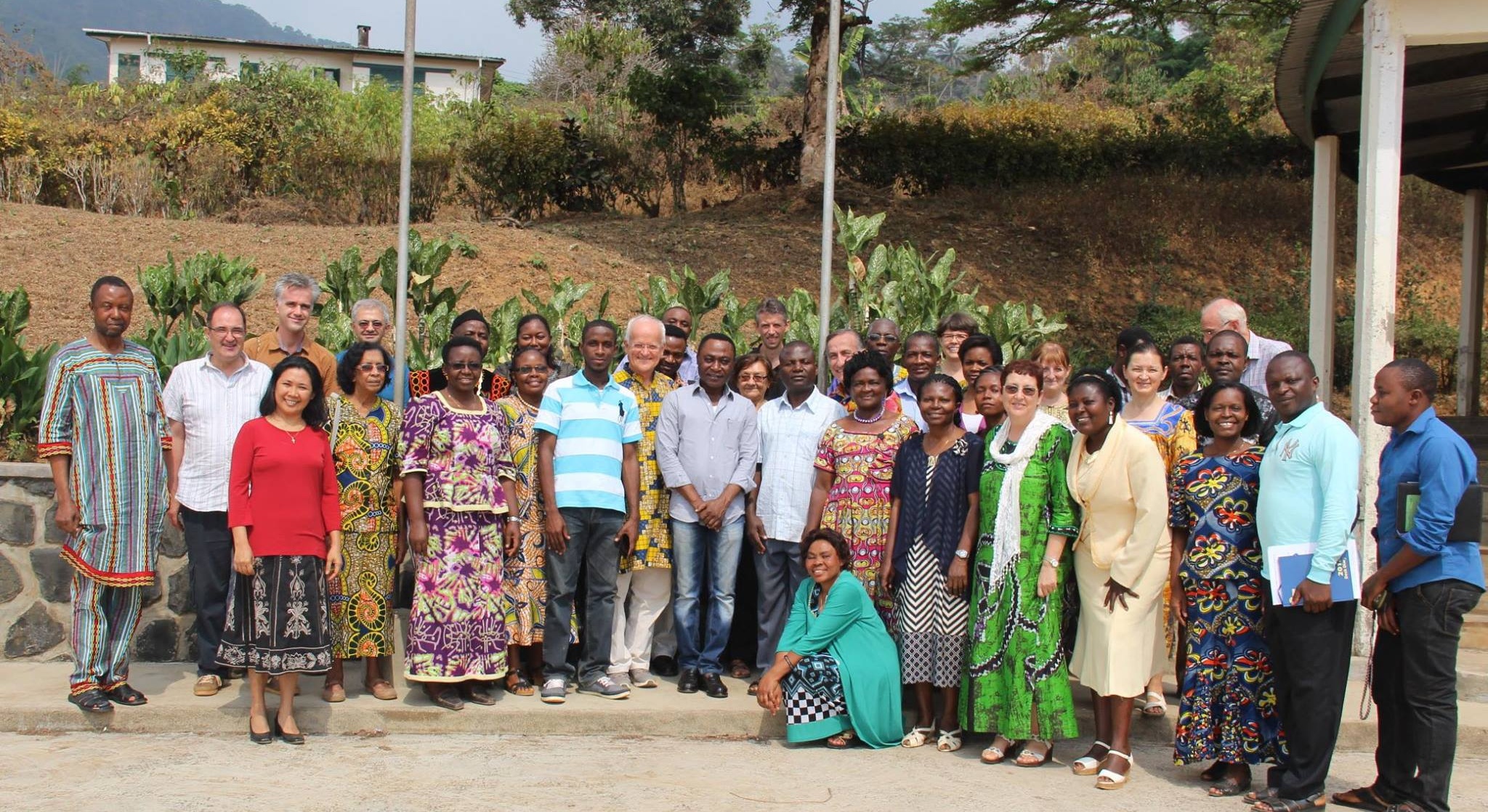
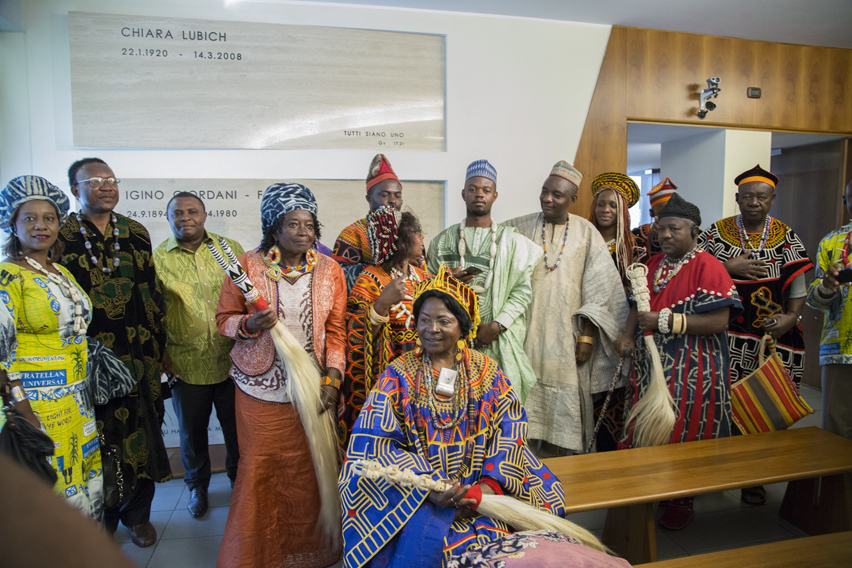
“Through the Focolare Movement, God has visited the Bangwa people (…).They have lived the pact of mutual love with the Bangwa people and taught them the spirituality of unity and universal brotherhood (…).They have reduced the infant mortality within these years from close to 90% to almost zero; they have tirelessly worked hard to eliminate the deadly Tsetse Fly that made Fontem look like the valley of death; thousands of Lebialem people would not have had a good education without them; good health facilities have been at our door steps all these years (…).Now is the time to celebrate the love of God for all the Lebialem people”. These quotes are taken from the letter written by Mgsr. Andrew Nkea, Bishop of Mamfe to announce the year 2016 as a Jubilee year of thanksgiving to God for the arrival of the Focolare Movement amongst the Bangwa people. In this letter, one finds a prayer to be recited daily together the Bishop’s words that highlight the most important moments of these 50 years of history and recall the protagonists and all those who gave their lives towards them. It also expresses the feelings of the Fons – the kings of the territories of this region -,of persons holding positions of responsibility and of the entire population. The first focolarini doctors arrived in Fontem in 1966. The state of emergency of the Bangwa people became a priority for the whole Focolare Movement. Chiara Lubich paid her first visit to Fontem that same year and she was given a great welcome by the king, Fon Defang, important personalities and the whole population. She visited Fontem another two times. In May 2000, when she addressed all the Bangwa, gathered in the wide open space in front of the Fon’s palace, she said: “I feel that I cannot leave you without having made a solemn pact with you. A strong and binding pact of mutual love. It is a sort of oath by which we promise to be always fully at peace with one another and to be always ready to make peace and start again whenever our promise is broken”. This jubilee year will come to its end with a solemn celebration to be held from the 14 to 17 December 2016. The Fons and other heads of institutions have been actively involved in the preparation of this celebration, which was presented to the Prime Minister, Philémon Yang at Yaoundé last October. Since then, it is being recognized as a national event. The programme includes: the success of Our Lady Seat of Wisdom College, which, with 500 students per year, is among the best five pre-university institutions in the anglophone Cameroonian system; life and work experiences of the Focolare Movement in Fontem; an International Conference on Interreligious Dialogue between Christianity and the African Traditional Religion, in these last 50 experience among the Bangwa people. Today, the inculturation of Christianity seems to have become more obvious.Martin Nkafu, the African philosopher and theologian, director of the department of Human and Social Sciences in the International Research Area at the Pontifical Lateran University in Rome, says: “Christianity has not changed the people’s mentality; a Bangwa who adheres to Christ keeps his personality, his culture, and has an integrated vision of reality; and as Pope John Paul II said in Nairobi in 1982, this allows him to be authentically African and deeply Christian”.Among the initiatives achieved during this year, one finds the Fons’ pilgrimage to Rome. They came last September to celebrate the Jubilee of Mercy with Pope Francis and to visit the places of Mafua Ndem, “the queen sent by God”, as Fon Lucas Njifua of Fontem called Chiara Lubich on her last visit to Cameroon. A competition, entitled “God’s intervention in the history and life of the Nweh Mundani people” has also been organized and promoted throughout the year among students in all primary and secondary schools. 4000 people were involved in this project, which included poetry, songs, literary compositions and quizes; 700 students from 21 schools participated through their various works. This event mobilizes and brings together even the Bangwa people who during the last years left Cameroon. A Development Commission, with members in Cameroon and in other countries, has started to dialogue with State bodies in view of concrete actions regarding education, health, youth and women’s status. This 50th anniversary celebration is being followed by the Focolare Community world-wide. The president, Maria Voce has closely accompanied the preparation for it, while Jesús Morán and the Central council members responsible for Africa will be present in Fontem. Sources:Press releases (SIF)
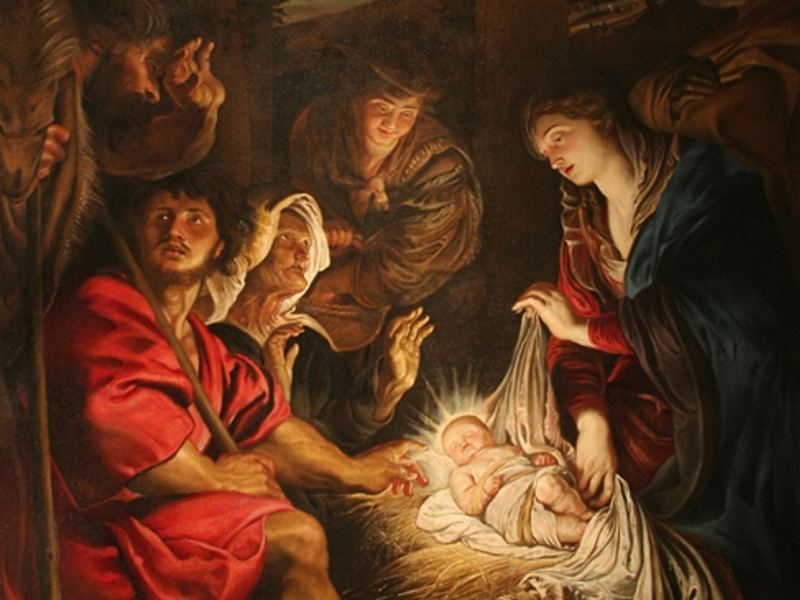
For the ancients Christ was a king. But the real Christ was outside normal schemes. He was born in a stable among shephereds and beasts, and his mother was the daughter of peasants. Whereas other sovereigns loomed from above, stepping down from carriages and thrones to rule, he came from below, from the lowest class, to serve. He was under everyone so that he could be the universal servant: His kingliness consisted of service. Everything is simple and enchanting as a fairy tale in this birth of a boy child in the middle of a windy night, in the middle of the nights of time. And everything is tragic and revolutionary, because this birth foreshadows a scaffold. This son of the king, son of God, comes forth from humble beings in a makeshift shelter, like some refugee pushed away by farthing folk and unnoticed by the wretched: this is by no means a new revolution. When the Saviour appeared, a great light lit up the night.The night remains, but so does the light. It’s always Christmas in the Christian world, and Christmas brings joy amidst tears still today. When God descends among us, we re-ascend to God; He humanizes and we are divinized. The meeting point is His heart. Jesus was born in a stall to demonstrate that he could also be born in our heart that is sometimes a rather squallid place. And whenever he’s born in our heart the angels rise to sing as they did over the stable that night while the moon shone in the night and peace rained down on the earth. In a similar way, the Word – Reason – incarnates among us today and can transform a stall into a Heavenly anti-chamber. Igino GiordaniLe Feste S.E.I. (1954) p. 36.

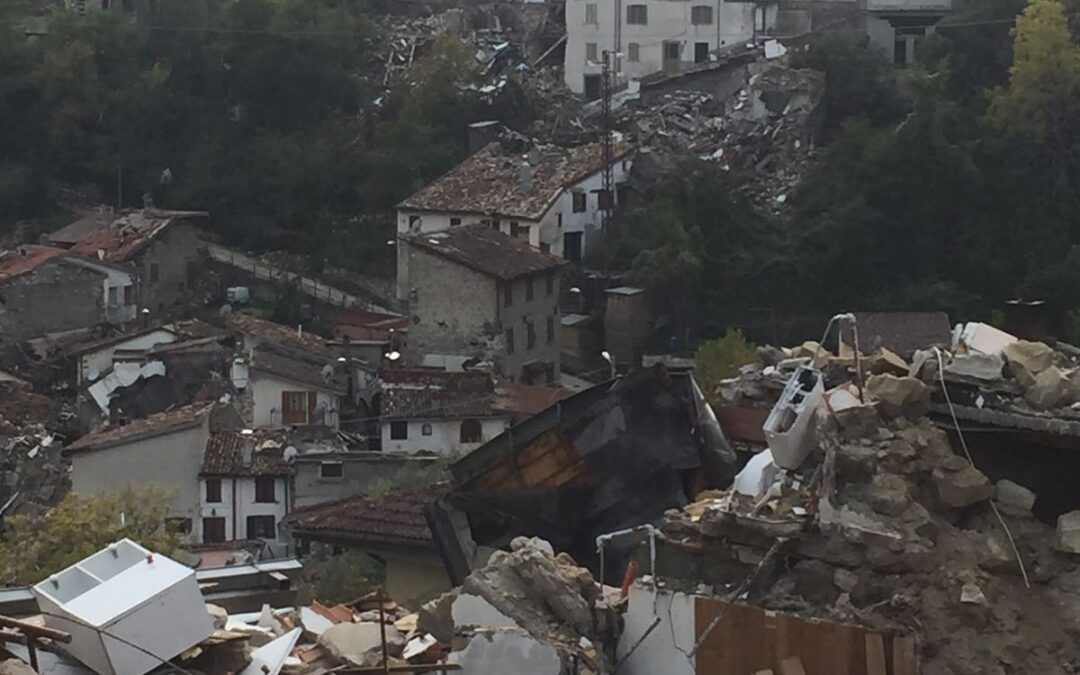
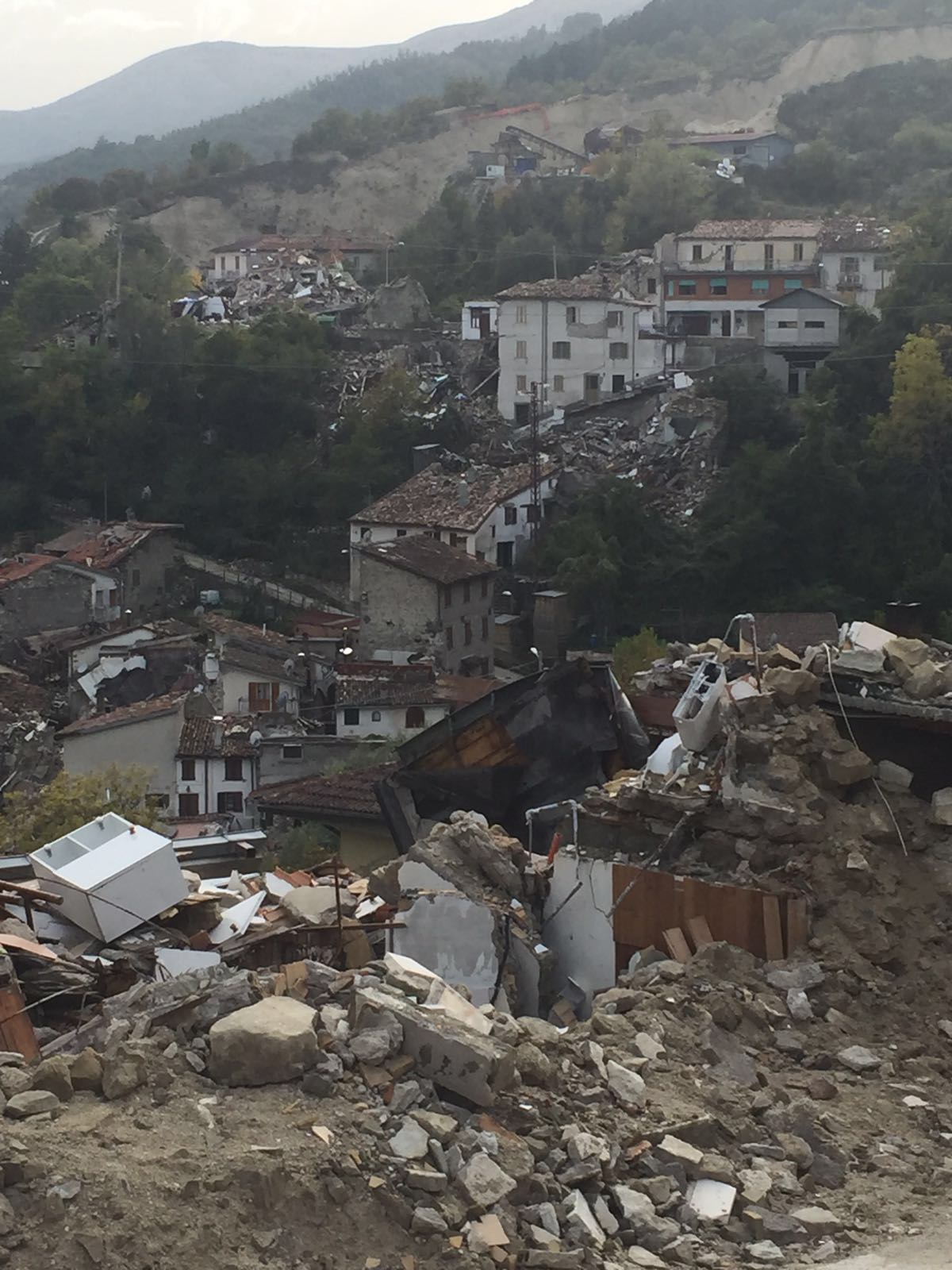 Christmas is also on the way for the displaced victims of the earthquake in Central Italy. We know that you are working in during this after phase of the earthquake. What are you doing? FrancescoTortorella explains: “AMU and AFN have coordinated with the Focolare Movement in Italy, to carry ahead their work during the after phase of the earthquake. Since August, there have been three site surveys in the regions that were hit, to examine the possible ways of intervening. The first intervention that we identified was that of supporting the families that run small agricultural businesses, along with the farm regions that suffered damage.” After a feasibility study, you came up with the comprehensive project. What is it? “We called it RImPresa and it consists of two activities,” Paola Iacovone explains. “The first activity, which will be carried out by the Abbraccio Planetario from Castelli Romani, Italy, and the Bread and Fish Foundation from Ascoli Piceno, Italy, will consist of 4 joint purchasing groups which, through a web portal, will purchase products from the small businesses that were hit by the earthquake, which will provide long-term support to entire families.” There are also many agricultural businesses that were damaged by the earthquake and are finding it hard to start up again. Are you also working on this front? “Yes. The Italian Associazione Italiana Imprenditori per un Economia di Comunione (AIPEC), which we work with is promoting the second activity of RImPresa,” Tortorella adds, “which is only concerned with supporting families with small agricultural and breeding businesses, by providing machinery or small infrastructures. All of it is carried out in coordination with the Italian Civil Protection Agency that has the full picture of the businesses that were damaged and of the assistance that is distributed.” “We’re a small drop in the ocean along with many others,” Paola concludes. “We’ve received many contributions up until now part of which had been destined to help finance the RImPresa Project. There are still funds to carry out other projects that will begin in the next few months. The contributions continue to arrive, so this fund will probably grow in the next few weeks.” Best wishes for a happy Christmas! Gustavo Clariá To collaborate: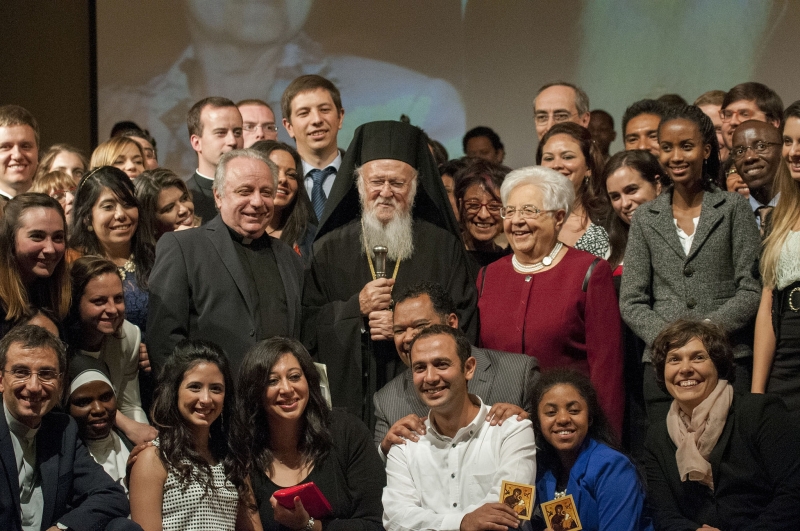
 “Through the Focolare Movement, God has visited the Bangwa people (…).They have lived the pact of mutual love with the Bangwa people and taught them