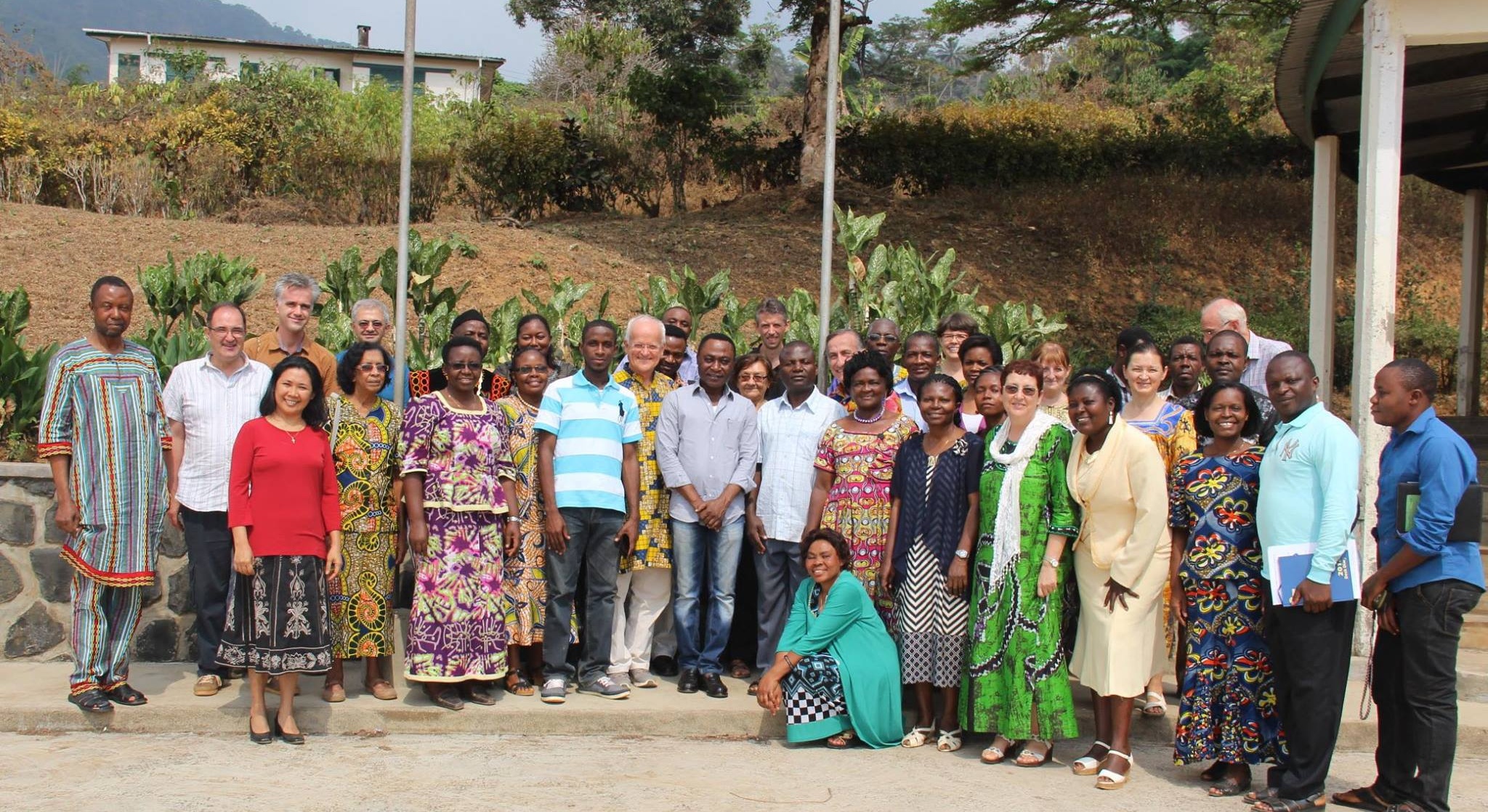
“Through the Focolare Movement, God has visited the Bangwa people (…).They have lived the pact of mutual love with the Bangwa people and taught them the spirituality of unity and universal brotherhood (…).They have reduced the infant mortality within these years from close to 90% to almost zero; they have tirelessly worked hard to eliminate the deadly Tsetse Fly that made Fontem look like the valley of death; thousands of Lebialem people would not have had a good education without them; good health facilities have been at our door steps all these years (…).Now is the time to celebrate the love of God for all the Lebialem people”. These quotes are taken from the letter written by Mgsr. Andrew Nkea, Bishop of Mamfe to announce the year 2016 as a Jubilee year of thanksgiving to God for the arrival of the Focolare Movement amongst the Bangwa people. In this letter, one finds a prayer to be recited daily together the Bishop’s words that highlight the most important moments of these 50 years of history and recall the protagonists and all those who gave their lives towards them. It also expresses the feelings of the Fons – the kings of the territories of this region -,of persons holding positions of responsibility and of the entire population. The first focolarini doctors arrived in Fontem in 1966. The state of emergency of the Bangwa people became a priority for the whole Focolare Movement. Chiara Lubich paid her first visit to Fontem that same year and she was given a great welcome by the king, Fon Defang, important personalities and the whole population. She visited Fontem another two times. In May 2000, when she addressed all the Bangwa, gathered in the wide open space in front of the Fon’s palace, she said: “I feel that I cannot leave you without having made a solemn pact with you. A strong and binding pact of mutual love. It is a sort of oath by which we promise to be always fully at peace with one another and to be always ready to make peace and start again whenever our promise is broken”. This jubilee year will come to its end with a solemn celebration to be held from the 14 to 17 December 2016. The Fons and other heads of institutions have been actively involved in the preparation of this celebration, which was presented to the Prime Minister, Philémon Yang at Yaoundé last October. Since then, it is being recognized as a national event. The programme includes: the success of Our Lady Seat of Wisdom College, which, with 500 students per year, is among the best five pre-university institutions in the anglophone Cameroonian system; life and work experiences of the Focolare Movement in Fontem; an International Conference on Interreligious Dialogue between Christianity and the African Traditional Religion, in these last 50 experience among the Bangwa people. Today, the inculturation of Christianity seems to have become more obvious.Martin Nkafu, the African philosopher and theologian, director of the department of Human and Social Sciences in the International Research Area at the Pontifical Lateran University in Rome, says: “Christianity has not changed the people’s mentality; a Bangwa who adheres to Christ keeps his personality, his culture, and has an integrated vision of reality; and as Pope John Paul II said in Nairobi in 1982, this allows him to be authentically African and deeply Christian”.Among the initiatives achieved during this year, one finds the Fons’ pilgrimage to Rome. They came last September to celebrate the Jubilee of Mercy with Pope Francis and to visit the places of Mafua Ndem, “the queen sent by God”, as Fon Lucas Njifua of Fontem called Chiara Lubich on her last visit to Cameroon. A competition, entitled “God’s intervention in the history and life of the Nweh Mundani people” has also been organized and promoted throughout the year among students in all primary and secondary schools. 4000 people were involved in this project, which included poetry, songs, literary compositions and quizes; 700 students from 21 schools participated through their various works. This event mobilizes and brings together even the Bangwa people who during the last years left Cameroon. A Development Commission, with members in Cameroon and in other countries, has started to dialogue with State bodies in view of concrete actions regarding education, health, youth and women’s status. This 50th anniversary celebration is being followed by the Focolare Community world-wide. The president, Maria Voce has closely accompanied the preparation for it, while Jesús Morán and the Central council members responsible for Africa will be present in Fontem. Sources:Press releases (SIF)
For the ancients Christ was a king. But the real Christ was outside normal schemes. He was born in a stable among shephereds and beasts, and his mother was the daughter of peasants. Whereas other sovereigns loomed from above, stepping down from carriages and thrones to rule, he came from below, from the lowest class, to serve. He was under everyone so that he could be the universal servant: His kingliness consisted of service. Everything is simple and enchanting as a fairy tale in this birth of a boy child in the middle of a windy night, in the middle of the nights of time. And everything is tragic and revolutionary, because this birth foreshadows a scaffold. This son of the king, son of God, comes forth from humble beings in a makeshift shelter, like some refugee pushed away by farthing folk and unnoticed by the wretched: this is by no means a new revolution. When the Saviour appeared, a great light lit up the night.The night remains, but so does the light. It’s always Christmas in the Christian world, and Christmas brings joy amidst tears still today. When God descends among us, we re-ascend to God; He humanizes and we are divinized. The meeting point is His heart. Jesus was born in a stall to demonstrate that he could also be born in our heart that is sometimes a rather squallid place. And whenever he’s born in our heart the angels rise to sing as they did over the stable that night while the moon shone in the night and peace rained down on the earth. In a similar way, the Word – Reason – incarnates among us today and can transform a stall into a Heavenly anti-chamber. Igino GiordaniLe Feste S.E.I. (1954) p. 36.
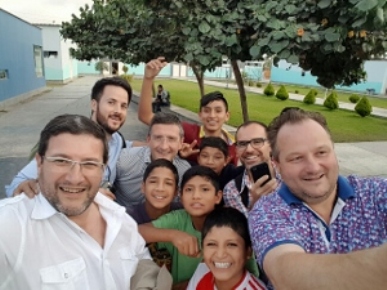
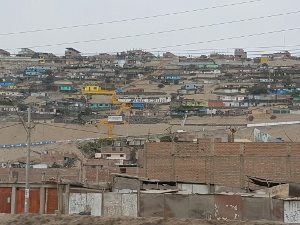
Lying at the outskirts of Lima is a district that takes its name from the pre-Inca Sanctuary built in Pachacamac (in the quecha language meaning ”god who created the earth”). «We got here with the objective of starting up a business run according to the practices of the Economy of Communion (EoC), the profits of which are able to support a rehab center for children saved from the streets and with drug addiction problems, » recounted Germán Jorge of the EoC Argentina. The Mundo Libre Institute is the only one of its kind existing in Perù today. It has been awarded international recognition for the professionalism with which it has performed its activities, but despite the possibility to host 100 children, today it supports only 40 due to lack of resources. Its foundress, Marilú Gonzalez Posada, has lived for 32 years with this objective. Her great concern regards the Institute’s sustainability, a problem common to all the social organizations that are unable to survive only on the generosity of people and international cooperation. One of the laboratories of Mundo Libre produces typical Peruvian sweets: the “chocotejas.” «The business plan we are working on, specifically involves this project to be implemented at the end of 2017, together with Solidarpole (which promotes different solidarity business projects and has proposed that the Economy of Communion be the choice) and AMU Luxembourg (that offered finances for the renovation of a barn and purchase of machinery). We now have to coordinate the resources. It is a challenge to EoC that has a lot to offer, and a communion which is not “imposed” but “generated” in response to a first free decision. This is what we have tried to do with each person we encounter along the way this week.». When the armed Spanish arrived on horseback in these lands to conquer the Pachacamac Totem – the indios who had never seen horses before, believed they were the gods who had come to replace their god, and did not counter with any resistance. History has left its mark on their culture. «We could see this in the relational difficulties. So our main commitment was to give room to all, in the effort to break the logic of the “European conquistador” (or the descendants of these), and of passive and underdog aborigines. As the days passed, and on the basis of relationships of trust which slowly developed, we started to overcome these relational dynamics and build new rapports of reciprocity.» The «Formulation of the “Business administration guidelines” helped in setting the person at the core of economic activities, without foregoing professionalism and the efficiency necessary to reach the targets. After passing days together, our interlocutors at the Mundo Libre Institute said that they already felt part of the Economy of Communion project, which in a sense, they had already unconsciously put into practice and which they now want to propose to their own employees and also educate the youth in these principles. ‘This is our challenge in 2017’». «The horses not originating from Perù, had to develop the capacity to walk on sand in these desert zones. Throughout these 500 years an equine breed has developed with the characteristic concentric-circles gait which allows them to move freely in these environments. We are like the first horses and are making a big effort to learn how to live the “culture of giving” in communion. But if we develop these abilities, many others will slowly follow in many parts of the globe. They will carry this new culture in their blood, and will succeed in changing the world.» Gustavo Clariá
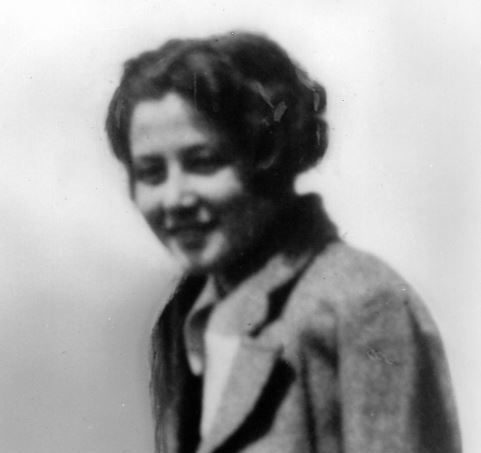
“I was 19 years old and had a great thirst for God.” Her thirst was so strong that every time she met a priest she would tell him: “Talk to me about God.” Urged by that thirst she intended to study at the Catholic University, but since her family did not have the financial means, she participated in a lottery to obtain a scholarship, but she was one point short. “I remember the cry I had, because I was thinking that at the Catholic University they would talk about God. And I recall that in the midst of that cry as I sat in the lounge with my mother, I heard someone inside me say: “I will be your Teacher.”A few months later she went to Loreto with a young women’s group that she belonged to. There is a very large shrine located there in central Italy which is said to contain the little house of Nazareth where the Holy Family lived. Chiara recounts that when she stepped into that little house, something extraordinary happened within her. “I was overcome with emotion, such great emotion that it seemed like was being crushed by the Divine that I contemplated all around me. The idea had come alive inside me that Jesus had perhaps walked over there, that those walls had listened to the echo of Mary’s songs, Joseph, the Annunciation, the angel…. the feeling was so alive that all I could do was cry.” That cry was provoked “by the weight of the Divine that crushed down on me.” She said that during the days in Loreto, “whenever I could, I escaped” to the little house and experienced the same strong sensation that God was opening a new path that had to do with that sacred place with the Holy Family that dwelled there. On the day before her departure, Chiara went to the Shrine and found it filled with people. She stood in the back of the church and, in that moment she heard the voice of God in her heart: “A host of virgins will follow you.” Over the years, she would realize that these were the first signs of the new path that the Lord was preparing: the focolare.Four years later, in 1943, something else happened, a simple but decisive event. Her mother asked Chiara’s younger sisters to fetch some milk, but it was cold outside and they didn’t want to go. She didn’t ask Chiara because she wanted her to study, but Chiara felt urged to love, and offered to go get the milk. “Along the way,” she says, “I felt as if God was saying to me; Give yourself to me, give your whole self to me.” I stopped surprised. I went to get the milk, then returned home and wrote a very fiery letter to a priest,” in which I recounted to him what I was feeling in my soul. At that time, when someone wanted to consecrate themself to God, they were advised to do it for a certain period of time and then renew each year until it became a more and more certain commitment. Chiara was so determined in that letter and so taken by God’s love, that she managed to convince the priest to give her permission to consecrate herself to God for life. It was December 7, 1943 when she went alone to early morning Mass, as a “big storm was raging.” “I had the impression that the world was against me,” Chiara would recall. “A small pew had been prepared for me near to the altar, and I had a small missal in my hand. They made me recite the formula that I give myself totally to God forever. I was so happy, I didn’t realize what I was doing, because I was young. Only after pronouncing the formula I had the impression that a bridge had fallen behind, that I could never turn back because now I belonged all to God. And there one tear fell on the small missal. But the happiness was just immense!” Chiara concluded her recount of that December 7, 1943, which marks the beginning of the Focolare Movement: “I marry God, so I expect everything possible good thing. It will be a divine adventure. I marry God! And later we saw that it had really been just that.” Gustavo Clariá
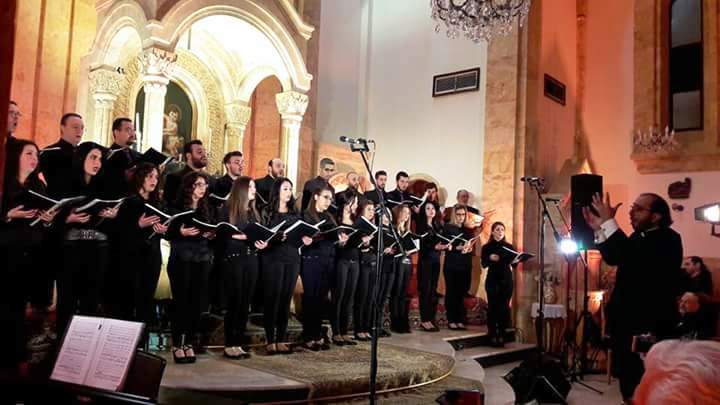
I attended for the first time, a classical music concert in the midst of a battle. It happened in Aleppo, where, surrounded by death, a voice of peace arose among many others that announced war, to comfort the hearts of the people and make them momentarily forget the cold and death. It was like a chapter of a modern tragedy that resembled Greek mythology. In a fully packed Church and with very few tools, Father Elias Janji with the Naregatsi choir and the pianist played some pieces of Verdi, Mozart, Vivaldi and Karl Orf, elevating our spirits to another horizon, despite the polar chill that has invaded Aleppo these days.. And to think that not too far away, the tragedy continues with missiles launched from Eastern Aleppo over the Western zone, killing school children and innocent people, while in the Eastern part of the city, the Syrian army continues to attack. Thousands of people (an estimated 60,000 up to today) managed to escape from East Aleppo and take refuge in the Western zone. They tell of how many have been taken as hostages and that some of those who were shot in their backs while escaping, were killed. Others escaped amid the gunfire, carrying their grandmas or other elderly relatives on their shoulders. The people were relieved since they could finally return to their own homes that were liberated in these days while the army took hold of the city’s water pumping station, even if it was mined. Water is forecasted to return to the city in a month’s time, after the technicians have completed their work. Thus a chapter of the tragedy will end, though there will surely be many more. December 4 is the feast of St. Barbara, the young girl martyred in the first centuries of Christianity, pierced with a sword by her father since, as a follower of Jesus, she had refused to adore another God. It is a great feast for the Christians of the East, adults and children who, despite the war, gathered together to honour her in a masquerade and recount her story in song – a story which despite the centuries passed – has not changed very much. We can’t help but wonder, what has remained of man and his dignity?What will happen now? Will the war in Aleppo end, and bring back serenity to the people who have suffered so much, even if they will find a great part of the city destroyed? The population is weary and wants the conflict to end. But the armed groups refuse to accept defeat and want to fight to the last, despite the appeal of the UN special envoy, Staffan De Mistura, to all the groups to leave the city and spare the lives of the people, who would otherwise pay a heavy price, according to the logic of war! How can we forget that in the end, it is Man since each one, whether good or bad, is an image of God, though this image is buried under a thousand vices and wickedness. With Christmas now at our doorstep, let us therefore remind ourselves that this feast should not only be a remembrance of a past fact celebrated with the usual festivity. The arrival of the “Prince of Peace” should also change the hearts and gestures of all of us, because these become tiny stones in the construction of a better world we all dream of. From Aleppo, Pascal Bedros

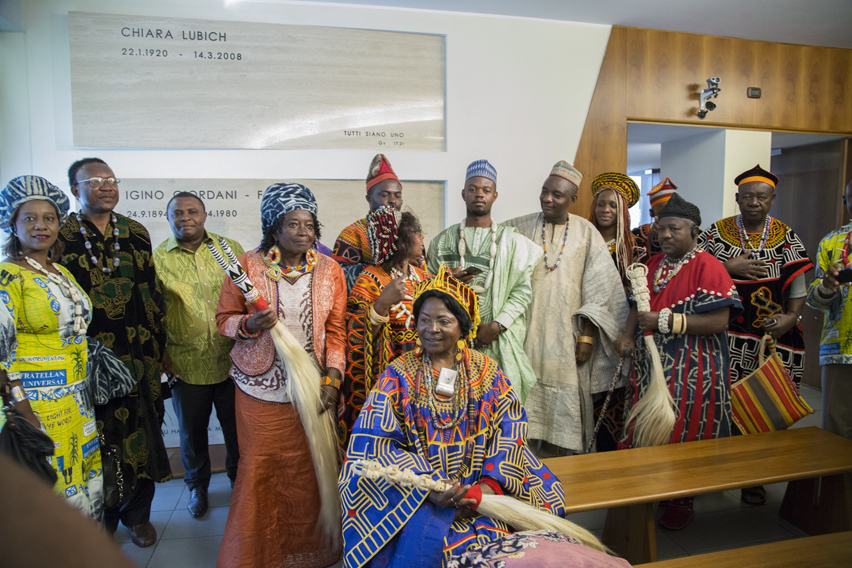
 “Through the Focolare Movement, God has visited the Bangwa people (…).They have lived the pact of mutual love with the Bangwa people and taught them the spirituality of unity and universal brotherhood (…).They have reduced the infant mortality within these years from close to 90% to almost zero; they have tirelessly worked hard to eliminate the deadly Tsetse Fly that made Fontem look like the valley of death; thousands of Lebialem people would not have had a good education without them; good health facilities have been at our door steps all these years (…).Now is the time to celebrate the love of God for all the Lebialem people”. These quotes are taken from the letter written by Mgsr. Andrew Nkea, Bishop of Mamfe to announce the year 2016 as a Jubilee year of thanksgiving to God for the arrival of the Focolare Movement amongst the Bangwa people. In this letter, one finds a prayer to be recited daily together the Bishop’s words that highlight the most important moments of these 50 years of history and recall the protagonists and all those who gave their lives towards them. It also expresses the feelings of the Fons – the kings of the territories of this region -,of persons holding positions of responsibility and of the entire population.
  The first focolarini doctors arrived in Fontem in 1966. The state of emergency of the Bangwa people became a priority for the whole Focolare Movement. Chiara Lubich paid her first visit to Fontem that same year and she was given a great welcome by the king, Fon Defang, important personalities and the whole population. She visited Fontem another two times. In May 2000, when she addressed all the Bangwa, gathered in the wide open space in front of the Fon’s palace, she said: “I feel that I cannot leave you without having made a solemn pact with you. A strong and binding pact of mutual love. It is a sort of oath by which we promise to be always fully at peace with one another and to be always ready to make peace and start again whenever our promise is broken”. This jubilee year will come to its end with a solemn celebration to be held from the 14 to 17 December 2016. The Fons and other heads of institutions have been actively involved in the preparation of this celebration, which was presented to the Prime Minister, Philémon Yang at Yaoundé last October. Since then, it is being recognized as a national event. The programme includes: the success of Our Lady Seat of Wisdom College, which, with 500 students per year, is among the best five pre-university institutions in the anglophone Cameroonian system; life and work experiences of the Focolare Movement in Fontem; an International Conference on Interreligious Dialogue between Christianity and the African Traditional Religion, in these last 50 experience among the Bangwa people. Today, the inculturation of Christianity seems to have become more obvious. Martin Nkafu, the African philosopher and theologian, director of the department of Human and Social Sciences in the International Research Area at the Pontifical Lateran University in Rome, says: “Christianity has not changed the people’s mentality; a Bangwa who adheres to Christ keeps his personality, his culture, and has an integrated vision of reality; and as Pope John Paul II said in Nairobi in 1982, this allows him to be authentically African and deeply Christian”.
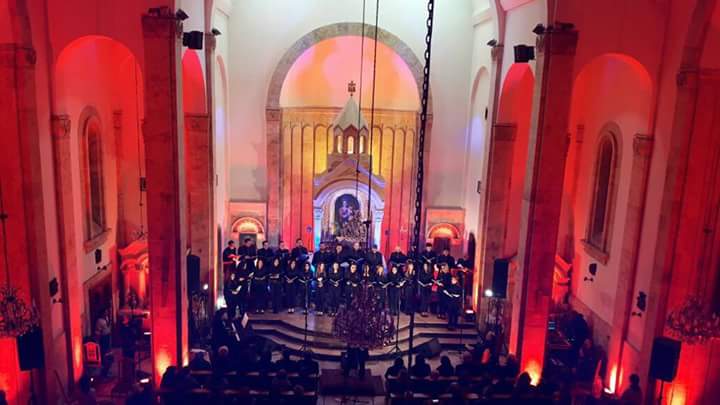 I attended for the first time, a classical music concert in the midst of a battle. It happened in