Some years ago, my husband and I took over a small mechanics company with six employees and many clients. It was a small dream come true also for the fact that we could in this way, ensure a business future for our children. Though the clients assured us that nothing would change, we came up against the harsh reality of a self-run business already in the first six months of work: discontinuity, bureaucracy and also some subtle attempts at corruption. It was important for us to do things legally and ignore these requests, but due to this attitude and the crisis of the automobile sector, in the span of a year we saw that the company’s turnover had been reduced to half. We thus found ourselves with lots of debts and without any resources, and as a consequence had to face the most difficult choice of firing most of the workers, giving them the time to find new jobs. We were also forced to sell the machinery to be able to give them their benefits. We took it all as a failure but didn’t give up. Around us the Focolare community of which we have been a part for some years, supported us with prayers and we entrusted ourselves to God to guide us in our decisions. Divine Providence did not tarry, and the occasion came up to change our business sector, which would give more warranties for continuity: my father gave us a sum with which to face the most urgent things; one of our sales agents leased a machine to us without charge; and the suppliers allowed us to make deferred payments. So we slowly recovered. The most important result of that period was that our children had grown up with the concept of giving more value to the important things of a sober lifestyle, and experienced God’s love through many small but important signs. And this strengthened our family bonds. The year 2009marked the start of the global economic crisis, and so we too felt the effects. At times we were overcome with discouragement but went ahead despite the immense difficulties that gave no certainty to the future. However, we confided in Providence which amazed us on many occasions, for example, that time when we were so worried because we hadn’t received even one order! I asked the volunteers of my group, with whom I share the Focolare spirituality to pray, and towards noon the fax machine started printing out 72 pages of orders! We really touched the power of prayer with our hands, and the concrete love of God for us. This summer, one of our clients who used to commission some occasional jobs, assigned an important job to us, that lasted a few months but which gave future prospects of huge orders and, therefore, the economic serenity we had always dreamed of. Towards the end of this job we discovered that the pieces produced would be used in the heavy artillery industry. We recalled the images of desperation of the many refugees escaping from wars in their countries. The decision to stop working for this company was a difficult one, since we could have ensured work for many months. But we had no doubts whatsoever. What made us happier is the fact that our son who had started working with us, fully agreed with our decision, and we are certain that God’s providence which we have experienced so many times over the past years, will not fail us.
The preamble to the Constitution of UNESCO declares: “Since wars begin in the minds of human beings, it is in the minds of human beings that defenses of peace must be built.” This November 15th, Chiara Lubich and the Focolare Movement’s efforts in favour of peace, will be remembered at the headquarters of UNESCO in Paris, France. We offer some thoughts of Igino Giordani about peace. He had first-hand experience of two world wars. “Social wounds are called wars and disagreements. They tear at the social fabric leaving wounds that are unable to be healed. Ancient souls yearned for peace: “if you want peace, prepare war,” said the Romans. But in the spirit of the Gospel, true peace is never obtained by war, but by the sprouting of a peaceful disposition and by a harmony of minds. You don’t commit evil to obtain good. “If you want peace, prepare peace.” Here again, you bring about renewal by building peace, not with weapons, but with love that revives life. When love is on the move it generates brotherhood, equality, unity. It vanquishes envy, arrogance and discord. It gathers people together into one family and one mind. Human life is sacred. Do not kill! Do not take revenge! Love your enemy! No retaliating. The portion of humanity that followed Christ understood the angelic message of the Gospel that was sung on the night of his birth: ‘Peace on Earth’. One lover of peace is all that is needed. Jesus opposed the generals and bloody heroes with peaceful ones, victorious over themselves, inspirers of peace within themselves, among citizens and foreigners…. He created a new and more difficult heroism: that of avoiding war in all of its forms, forever breaking the dialectic between pardon and remission. This peace is the fruit of love which requires us to love even our enemies, even those that bear false witness against us. It prevents fractures, or it heals them. In the regimes of love, discord is an absurdity, a negation, and those that provoke discord certainly place themselves outside the spirit of Christ: and outside they remain until harmony has been restored.” Source: Igino Giordani, Il messaggio sociale del cristianesimo, (Rome: Città Nuova, 1935 and 1966) p 360-368.
Hungary had been invaded by Soviet troops following the 1956 uprising. In response to the appeal of Pope Pius XII, Chiara Lubich wrote a letter that became the Magna Carta of a new calling in the Focolare Movement: the Volunteers of God, men and women who live the spirituality of unity and are especially committed to bringing the presence of God into society. Last October, a total of 1,840 participants from the wale of Italy, came together in Castel Gandolfo, Rome. “There’s a lot of desire to step up for our country, to overcome the fragmentation and to create a network of best practices that can provide mutual support. Now, it’s more necessary than ever before to give an intergenerational concrete response to the challenges of those that suffer in society.” This was the comment of one of the young participants that summarizes the three days of intense work. Focolare Movement president, Maria Voce, sent a message at the opening of the meeting in which she encouraged them to bear witness to the charism of unity in its more concrete expressions, keeping their gaze fixed on Jesus’s prayer “that all may be one” (Jn 17:21). The meeting continued with a series of reflections and testimonies on the central theme for the entire Movement this year: “Jesus Forsaken:God’s aperture on the world, and the world’s aperture on God.” The testimonies were very moving. The voices of Pina and Tanina trembled as they told about their daily acts of heroism welcoming the thousands of refugees that have disembarked at the small island of Lampedusa in recent years: “We feel that these African brothers and sisters are our own until the time comes when we have to let them go. When they leave and disperse to many parts of the world we’re filled with emotions and concern for what still awaits them.” Journalist Riccardo Balaarm told how the painful experience of his disabled son led to a commitment among the National Paralympic Swimmers to promote the testimony of free swimmer and silver medallist Arjola Trimi from Rio, Brazil. In the afternoons 150 groups discussed 35 topics: formation, social and political involvement; economy, health and ecology; art etc. These are all things that the Volunteers are called to deal with in their daily lives, through which they strive to fulfil their vocation as “first Christians of the twentieth century” as Chiara Lubich liked to call them: lay men and women that live the Gospel with the same fervour of the first Christians, committed to spending their lives for the building of a united world (Jn 17:21). A solemn moment was the signing of the act of initialization of the promotion of the Canonization Process for Volunteer Domenico Mangano from Viterbo, in the presence of Fr Andrea De Matteis, Vicar and Chancellor of the Diocese of Albano. https://youtu.be/EDCfdVUGa6s
It might have been the presence of Pope Francis and of the highest representatives of the World Lutheran Federation. It might have been the moving words of the Joint Declaration being read in the Cathedral of Lund. Or it might have been the large turnout by the people. The fact is that the success of the 500th Anniversary of the Lutheran Reform went beyond every expectation. “Christ wants us to be one so that the world may believe,” Lutherans and Catholics proclaimed, convinced that “their way of relating with one another does have an effect on their witness to the Gospel.” The Declaration looks to the future and to daily life: moving beyond ourselves, our communities, our churches, to take action together “in service, in defence of human dignity and human rights, especially of the poor, working for justice and rejecting all forms of violence.” They agreed to work together “in welcoming the stranger and helping all those who have had to flee from war and persecution, to defend the rights of refugees and those seeking asylum.” They agreed to work together for the protection of Creation “that suffers from exploitation and the effects of insatiable greed.” The Declaration became global in its final appeal to Catholics and Lutherans of the whole world that “in every parish and Lutheran and Catholic community” they might be “courageous and creative,” completely forgetting conflicts of the past so that “the unity among us might guide our collaboration and deepen our solidarity.” The Lutheran Reform in Sweden was introduced for simply political reasons. King Gustav Vasa took control of the Church, and it was only in the year 2000 that the separation between Church and State took place. Over the course of the centuries Lutheranism acquired many characteristics that were then had a reflection on nations. But beyond the history of individual nations, today are witnessing the “Unity Reform” that is overwhelmingly desired by both the Catholic and Lutheran Church. This reform is also destined to become part of popular culture. It is founded on 5 commitments: 1) to begin from the perspective of our unity, not from the perspective of divisions; 2) to allow ourselves to be continually transformed by the encounter with the other; 3) to take concrete steps in seeking full visible unity; 4) to rediscover the power of the Gospel; 5) to offer a common witness to God’s mercy. Such commitments enable us to bear witness to the beauty of being Christians in diversity, because of the fact that what unites us is much more than what divides us. This has always been the guiding belief behind the long friendship between the Focolare and the Lutherans. Antje Jackelen, the first woman archbishop of the Lutheran Church of Sweden was interviewed by us regarding the contribution of the movements. She said that “they are ecumenical in their very design, so that with them any prejudices have already been beaten.” She also said that this week’s event “is also the result of 50 years of dialoguing and working together.” That afternoon at Malmö Arena in front of a crowd of 10.000 people, Pranita from India, Hector Fabio from Colombia, Marguerite from Burundi, Rose from South Sudan and Antoine from Syria shared their testimonies. They were able to demonstrate more than a thousand speeches the collaboration among the Churches through common efforts for the protection of Creation, social justice, children, the poor, farm workers and the victim of war. The Pope concluded: “These stories inspire us and give new motivation to our desire to be always more united. When we return home let’s take with us the commitment to do one act of peace and reconciliation each day, in order to be courageous and faithful witnesses of Christian hope.” JOINT STATEMENTon the occasion of the Joint Catholic-Lutheran Commemoration of the Reformation ( From Vatican radio)
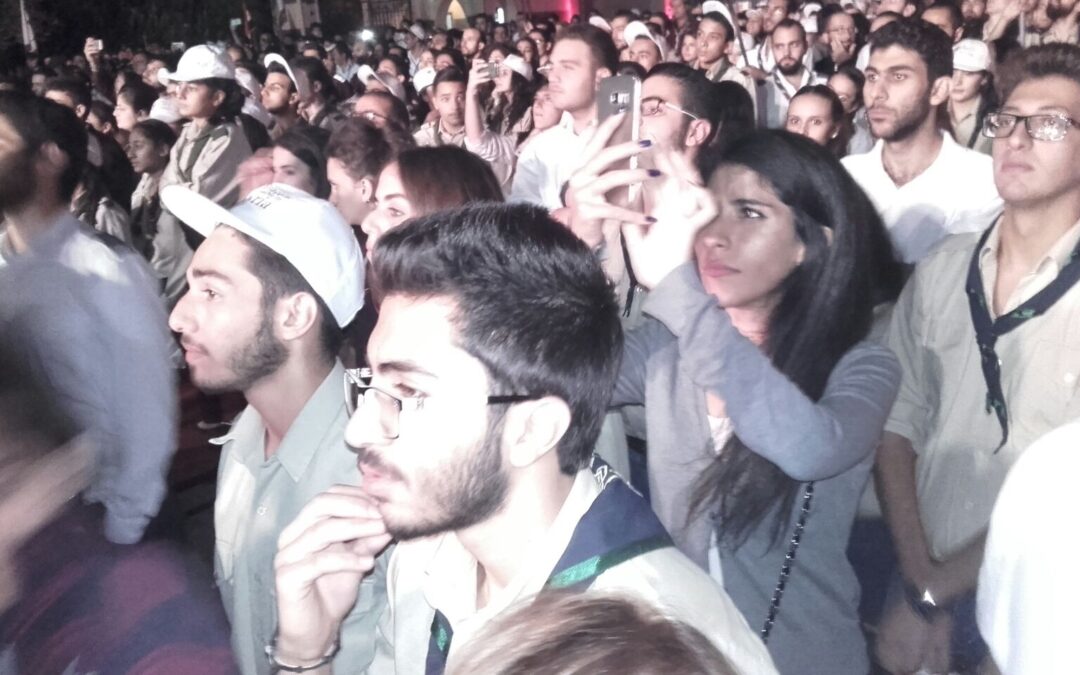
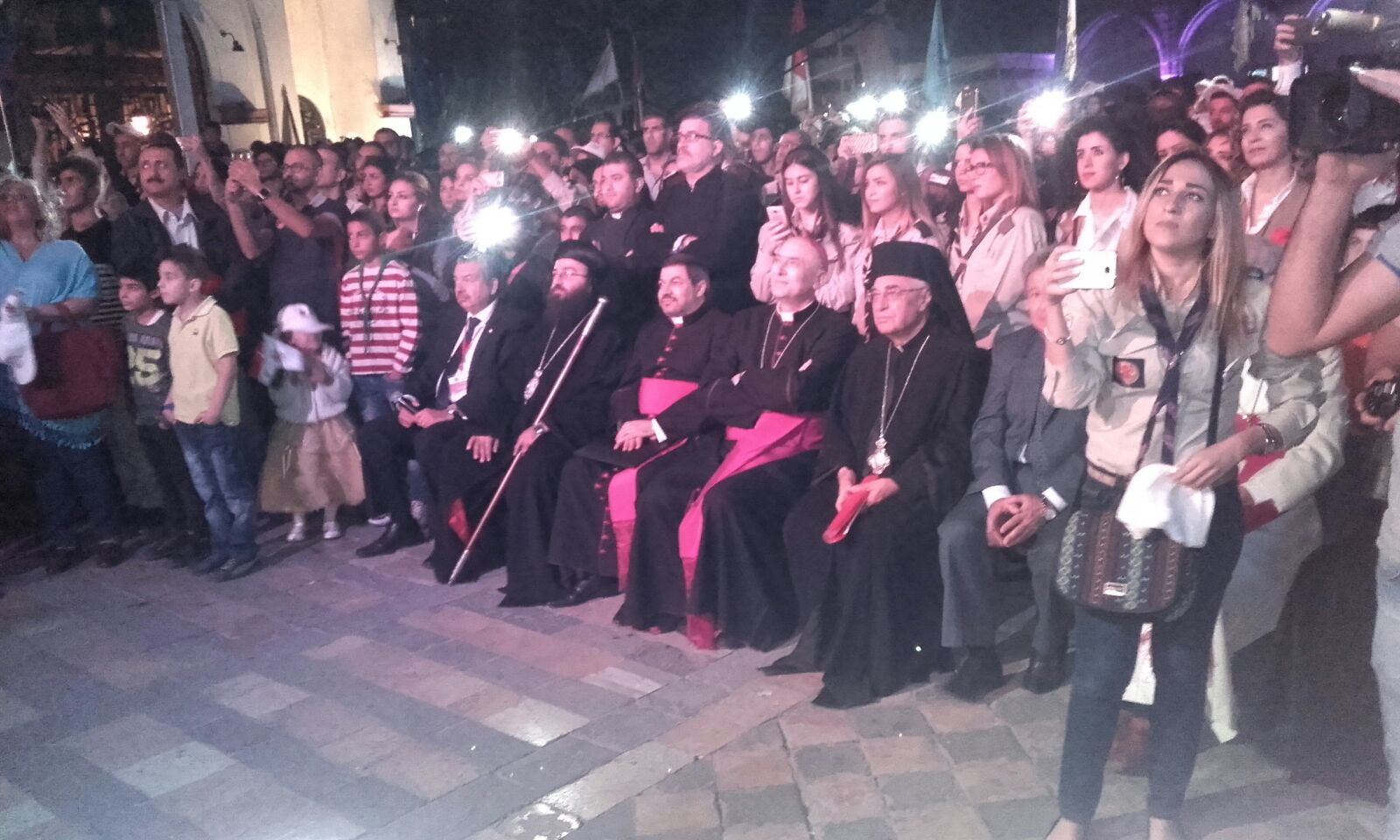
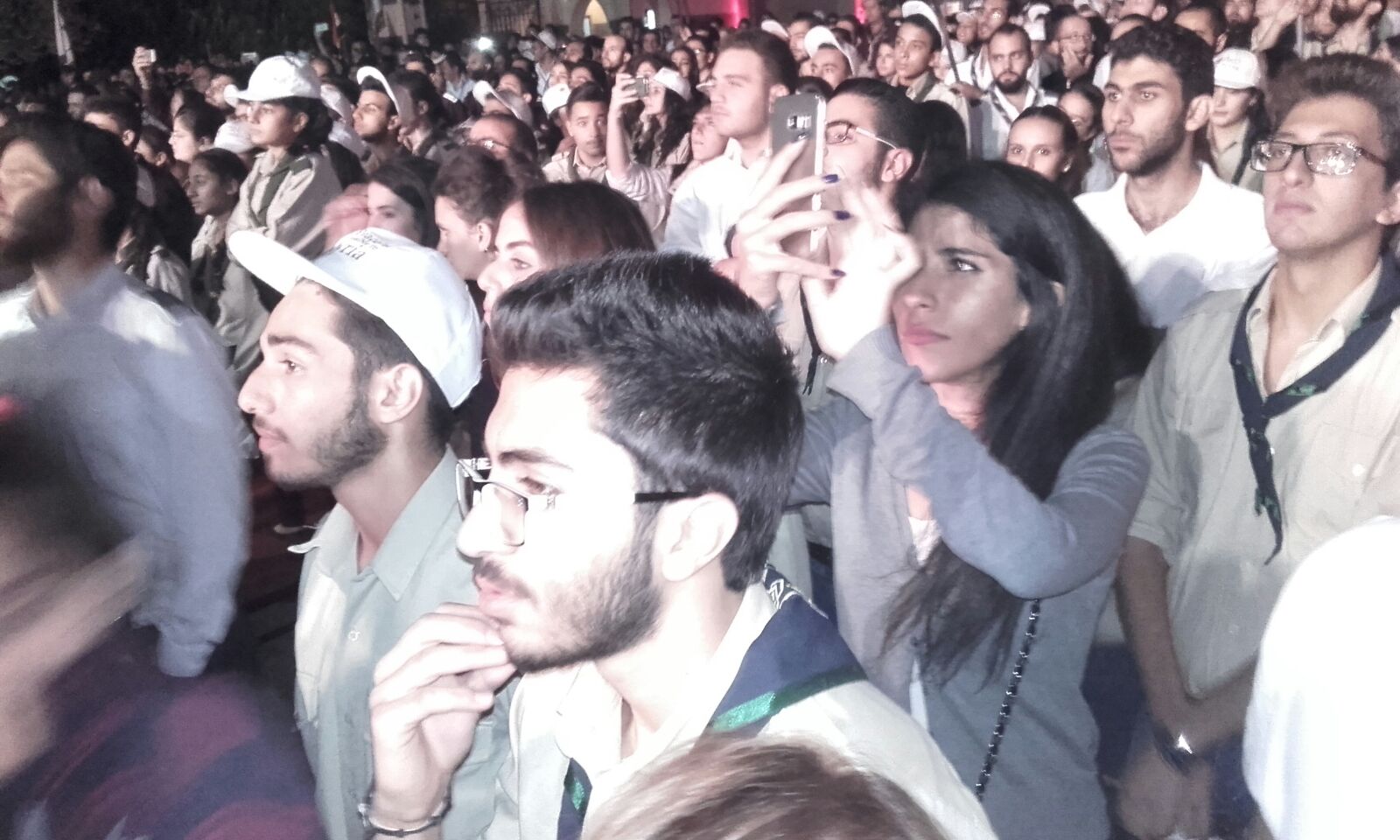
Greatly committed to assisting the civil population martyred by war that has dragged on for five years now, last 31 October, Caritas Internationalis called for a world day of prayer for Syria. Simultaneously, Pope Francis and other religious leaders prayed together for peace in the Middle East and particularly for the Syrian people, when they gathered in Sweden for the opening of the celebrations for the 500th anniversary of the Reform. «While the people are suffering, incredible sums of money are spent to supply the combatants, and some of these countries that furnish the arms are also those that advocate peace. How can we believe in those who caress with their right hand and strike you with the left??» This was Pope Francis’s admonishment in his impelling video message in support of the campaign promoted by Caritas Internationalis. After encouraging all to live the Year of Mercy with determination, the Holy Father forcefully underlined that “peace in Syria is possible,” and invited the church groups, parishes, and communities to promote all possible awareness campaigns «to spread a message of peace, unity and hope». And added: «After prayer, let works of peace ensue».Many communities responded to the Pope’s appeal, especially the Christian community of Damascus, which gathered in prayer last Sunday, 30 October, believing in the force of prayer in asking for the gift of peace. Some members of the Focolare community who took part wrote: «We were there in the midst of a fully packed Church: the faithful of all the churches, Catholics, Orthodox and Evangelicals, the Apostolic Nuncio and some bishops. In those moments, more than ever, we felt the force of prayer, that unity is tangible, and there is strong hope that peace will soon be established. At the end of the prayer, the scouts coming from all over Syria presented some documentaries on peace in the square, and with songs, made us experience a moment of joy, with fireworks and launching of balloons.»“Syria: peace is possible,” was thus Pope Francis’s invitation to all the faithful and people of good will; and an invitation to address «those who are involved in peace negotiations so that they take these agreements seriously and commit themselves to facilitating the humanitarian aid.» And he concluded: «Let’s join forces at all levels, to make peace in our beloved Syria possible.» Consult the Caritas Syria site (http://syria.caritas.org/)where all the materials to sign up and diffuse the peace campaign for Syria are available. #peacepossible4syria

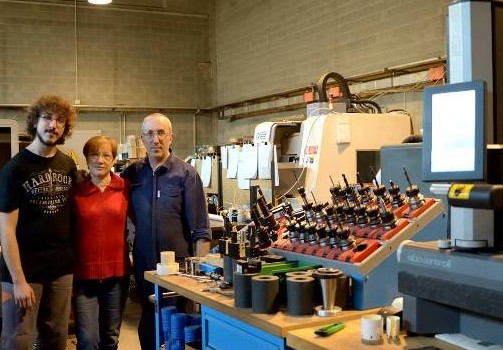
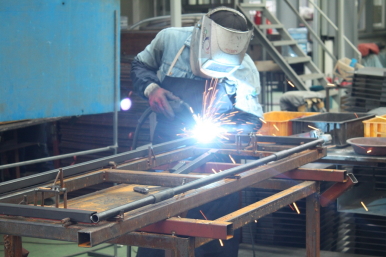 Some years ago, my husband and I took over a small mechanics company with six employees and many clients. It was a small dream come true also for the fact that we could in this way, ensure a business future for our children. Though the clients assured us that nothing would change, we came up against the harsh reality of a self-run business already in the first six months of work: discontinuity, bureaucracy and also some subtle attempts at corruption. It was important for us to do things legally and ignore these requests, but due to this attitude and the crisis of the automobile sector, in the span of a year we saw that the company’s turnover had been reduced to half. We thus found ourselves with lots of debts and without any resources, and as a consequence had to face the most difficult choice of firing most of the workers, giving them the time to find new jobs. We were also forced to sell the machinery to be able to give them their benefits. We took it all as a failure but didn’t give up. Around us the Focolare community of which we have been a part for some years, supported us with prayers and we entrusted ourselves to God to guide us in our decisions. Divine Providence did not tarry, and the occasion came up to change our business sector, which would give more warranties for continuity: my father gave us a sum with which to face the most urgent things; one of our sales agents leased a machine to us without charge; and the suppliers allowed us to make deferred payments. So we slowly recovered.
 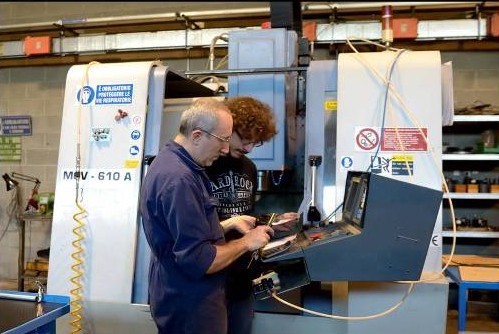 The most important result of that period was that our children had grown up with the concept of giving more value to the important things of a sober lifestyle, and experienced God’s love through many small but important signs. And this strengthened our family bonds. The year 2009 marked the start of the global economic crisis, and so we too felt the effects. At times we were overcome with discouragement but went ahead despite the immense difficulties that gave no certainty to the future. However, we confided in Providence which amazed us on many occasions, for example, that time when we were so worried because we hadn’t received even one order! I asked the volunteers of my group, with whom I share the Focolare spirituality to pray, and towards noon the fax machine started printing out 72 pages of orders! We really touched the power of prayer with our hands, and the concrete love of God for us.
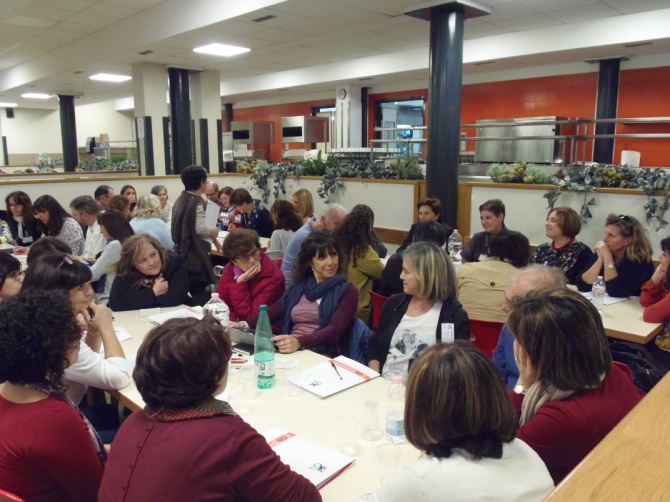
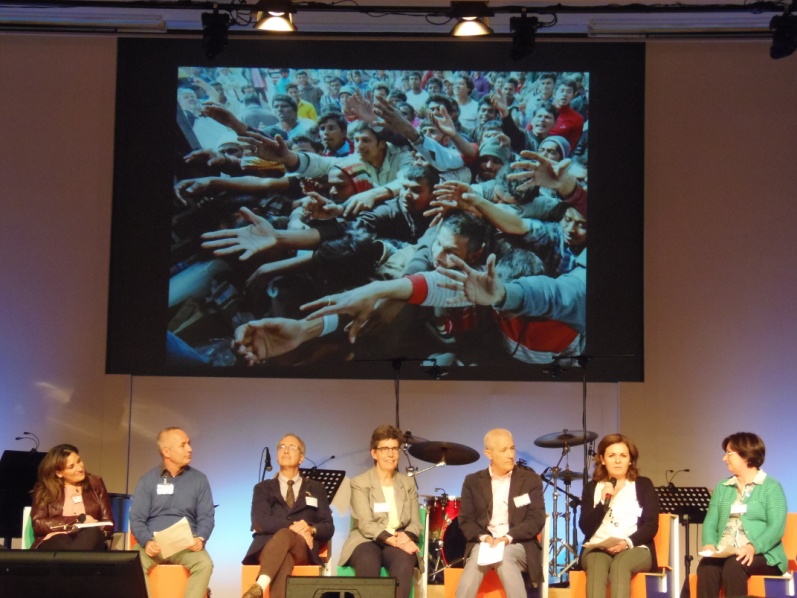
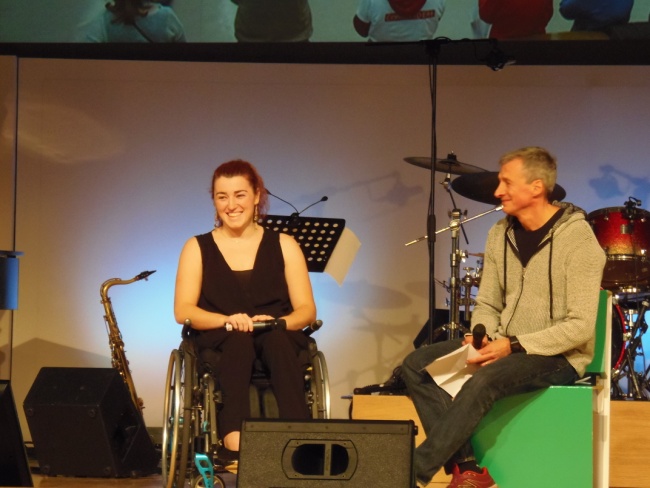 God’s aperture on the world, and the world’s aperture on God.” The testimonies were very moving. The voices of Pina and Tanina trembled as they told about their daily acts of heroism welcoming the thousands of refugees that have disembarked at the small island of Lampedusa in recent years: “We feel that these African brothers and sisters are our own until the time comes when we have to let them go. When they leave and disperse to many parts of the world we’re filled with emotions and concern for what still awaits them.” Journalist Riccardo Balaarm told how the painful experience of his disabled son led to a commitment among the National Paralympic Swimmers to promote the testimony of free swimmer and silver medallist Arjola Trimi from Rio, Brazil.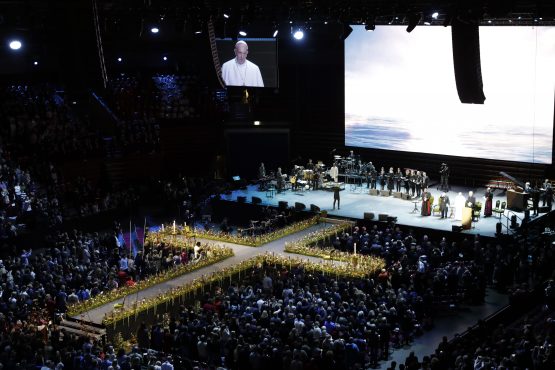
 Greatly committed to assisting the civil population martyred by war that has dragged on for five years now, last 31 October, Caritas Internationalis called for a world day of prayer for Syria. Simultaneously, Pope Francis and other religious leaders prayed
 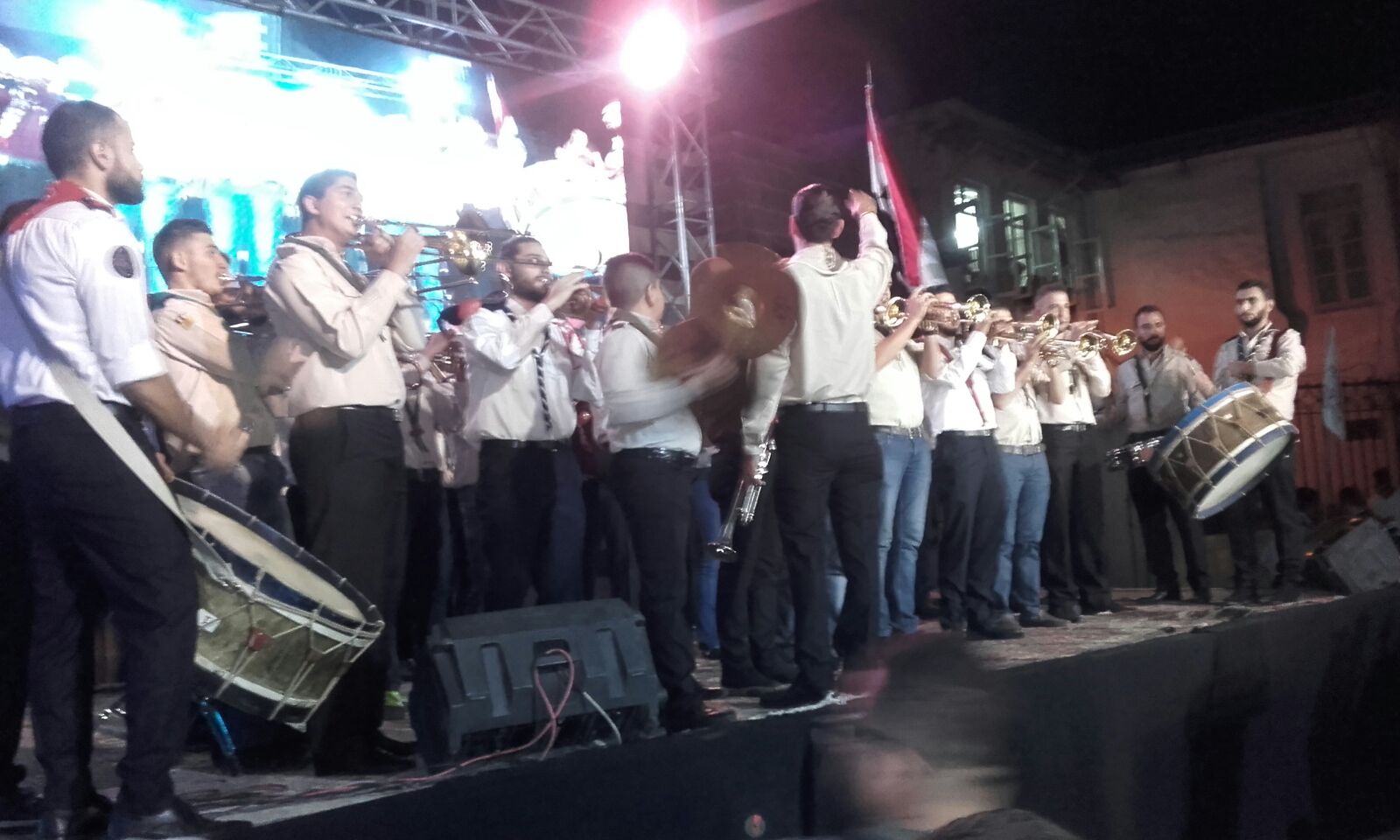 Many communities responded to the Pope’s appeal, especially the Christian community of Damascus, which gathered in prayer last Sunday, 30 October, believing in the force of prayer in asking for the gift of peace. Some members of the Focolare community who took part wrote: «We were there in the midst of a fully packed Church: the faithful of all the churches, Catholics, Orthodox and Evangelicals, the Apostolic Nuncio and some bishops. In those moments, more than ever, we felt the force of prayer, that unity is tangible, and there is strong hope that peace will soon be established. At the end of the prayer, the scouts coming from all over Syria presented some documentaries on peace in the square, and with songs, made us experience a moment of joy, with fireworks and launching of balloons.»
  “Syria: peace is possible,” was thus Pope Francis’s invitation to all the faithful and people of good will; and an invitation to address «those who are involved in peace negotiations so that they take these agreements seriously and commit themselves to facilitating the humanitarian aid.» And he concluded: «Let’s join forces at all levels, to make peace in our beloved Syria possible.» Consult the Caritas Syria site (