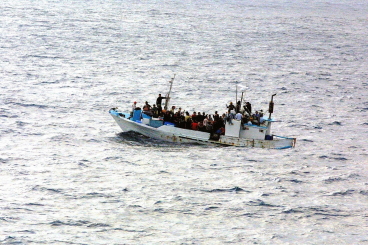
The city of Como has risen to the headlines because of the notable influx of refugees that have been forced by barbed wire walls to divert their routes across Switzerland, as they travel to the countries of northern Europe in search of fortune, or reunion with their family members that arrived before them. The distance is very short, but the many border controls are rigorously imposed. There is a growing number of men, women, children and unaccompanied minors who are camped out waiting for an opportunity to evade border inspections. Bishop Coletti asked everyone to accept the challenge of welcoming, directing his appeal especially to the Church community that it might put into practice the Acts of Mercy during the Jubilee of Mercy which is an occasion for sharing and growth. “We took it as an appeal to us,” say the members of the local Focolare community, “and we immediately got to work, offering our services to the Diocesan Caritas that is on the front lines in organizing the assistance effort. There was a huge response from our community network that also includes people who are close to us: relatives, friends and acquaintances. We collected food, blankets and other basic necessities. We took turns covering the work schedule, providing showers and meals, distributing food, cooking and cleaning. In the evenings we serve up to five hundred meals. The faces we meet are disoriented, frightened, grateful and, at times, suspiscious. It’s hard to communicate with people who speak a foreign language. But just being there, tired and sweaty, offering a plate of food with a smile, trying to understand from their gesturing whether our guests are happy with the meal – makes us feel like we’re part of one big family.” One person from the meal service writes: “I was struck by the faith, the intensity of the Coptic Christians as they prayed before and after the meal.” And then: “In the eyes of our refugee brothers who we accompany to the showers and serve at table, we see Jesus who responds to us: ‘It’s Me!” Then; “After an evening of serving, when we meet with the other volunteers to share our experiences, your heart is bursting with emotions and positive resolutions.” On the patronal feast of the city of Como it was a special afternoon in the crowded basilica, with the bishop and civil authorities, with the full participation of Eritrean, Ethiopian and Somali Christian refugees, along with a representation of 500 volunteers. “The Gospel reading about the Final Judgement, in Italian, English and Tigrinya was very moving,” they reported. “Colomban Missionary Father Claudio, who belongs to our community and spent more than 30 years in those countries and knows their languages, has been working for weeks in the camps. The bishop entrusted their spiritual wellbeing to him, placing his very basilica at the complete disposal of the refugees. Jesus came to visit us today in these refugee brothers and sisters. And we want not only to accept Him, but to respond into the future in concrete ways.” Source:Movimento dei Focolari Italia
While undertaking their work regarding the migration phenomenon, and with active participation in the opinion debate in confrontation with ideological battles, a group of journalists and communication experts of various European regions (Italy, Hungary, Germany, Slovenia and Austria) are trying to open an original path towards narratives and interpretation and for journalists and also other professionals. Similar symposiums which gather media professionals have been held up to now in some troubled areas such as Budapest (Hungary), Athens (Greece), Man (Ivory Coast), and Warsaw (Poland). These meetings are promoted by NetOne (an international chain of professionals which works at the service of dialogue and peace among peoples). The aim is to establish a network of collaborators comprising of journalists and other media and communciation experts, NGO representatives, academics and social workers, to better understand the phenomenon in order to interpret it and to provide adequate narrative and communication tools. As of today, the experience has led to the growth of a mutual interest and way of listening (among journalists, between journalists and experts, and between journalist and migrants); the style used helps to understand the historical, cultural and political backgrounds underlying migrations. The professional symposiums were lately held in the migratory hot spots: Budapest (Hungary), Athens (Greece), Man (Ivory Coast), and Warsaw (Poland). The next on the agenda will be in Beirut (Lebanon) from 24 -27 November, Brussels (Belgium) from 26-28 January 2017, and in Chiaramonte Gulfi and Pozzallo (Italy) from 4-5 November 2016. The forthcoming session will be in Beirut-Ain Aar (Lebanon) from 24 – 27 November.
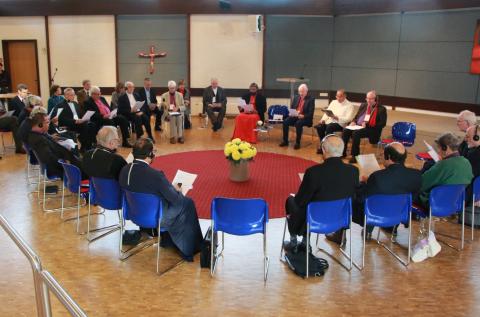
Five hundred years after Luther’s Reform, in the ecumenical village of Ottmaring (Augsburg), the 35th international meeting was held by 25 bishops of various churches that draw inspiration from the spirituality of the Focolare Movement. The reflections on the points of spirituality of the charism of unity, praying together, and celebration of the various liturgies, set the basis for deep encounters and dialogues that left an indelible mark in the participants. The theme of the meeting, “Jesus Forsaken foundation of a spirituality of communion“ guided the entire convention which the bishops wished to conclude together with the Carmel community located next to the Concentration camp of Dachau, for a confrontation with one of the most painful phases of humanity’s story. A new perspective opened and gave hope to all: “For me, the trip to Dachau was like visiting a shrine to Jesus Forsaken. I met God there, in His abandonment”, said Jesús Morán, Co-President of the Focolare Movement. And the Maronite BishopSimon Atallah of Lebanon added: “Next to a place of suffering and hatred, we found a place of love.” One of the peak moments of the meeting was the ecumenical liturgy in the evangelical church of St.Anne in Augsburg. Also present was Bishop Emeritus Christian Krause, one of the main signers of the “Joint Declaration on the doctrine of justification”, on 31 October 1999 in the same place. The group of bishops took this occasion to formulate a message for the opening of the celebrations for the 500th anniversary of the Reform, which was held in the Swedish city of Lund. They also sent a delegation. The mayor of the city of the “Pax Augustus,” Kurt Gribl, upon welcoming the bishops underlined how «The Focolare Movement, and in particular, the group of bishops, represent confessions that do not deny the differences.» And seeing a tight bond between the city of Augsburg and the commitment of the ecumenical community of bishops, added: «You and your example demonstrate that it is possible to coexist peacefully and spiritually, and this encourages us to move onwards in collaborating as a city of peace.» To seal this deep friendship and spiritual bond, the group then gathered in the evangelical church of St. Ulrich. It is by now a tradition during these ecumenical meetings, for the participating bishops to formulate a solemn promise, to support one another in prayer and life, sharing worries and sufferings, and joys and conquests of their brothers. «The cross of one becomes the cross of the other, and the desire of one becomes the desire of the other», states the “Pact of mutual love,” which all signed. The next bishops’ meeting promoted by the Focolare Movement will take place in 2017 in Poland.
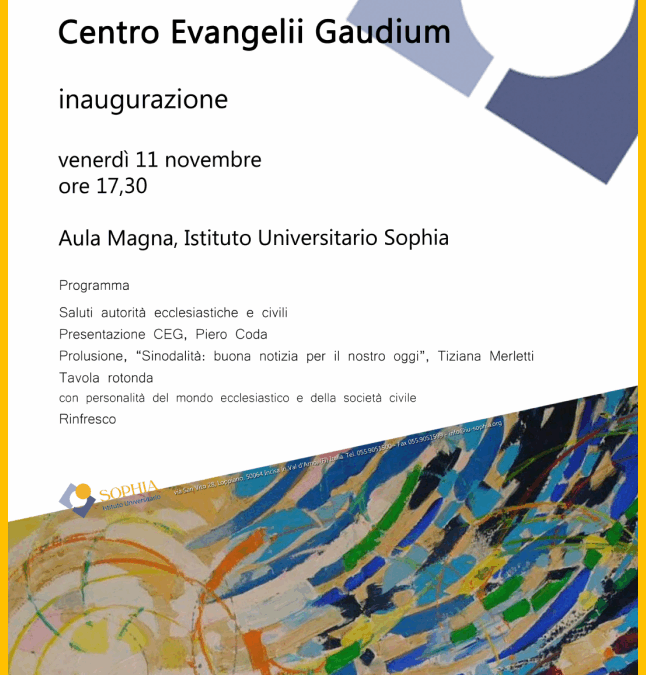
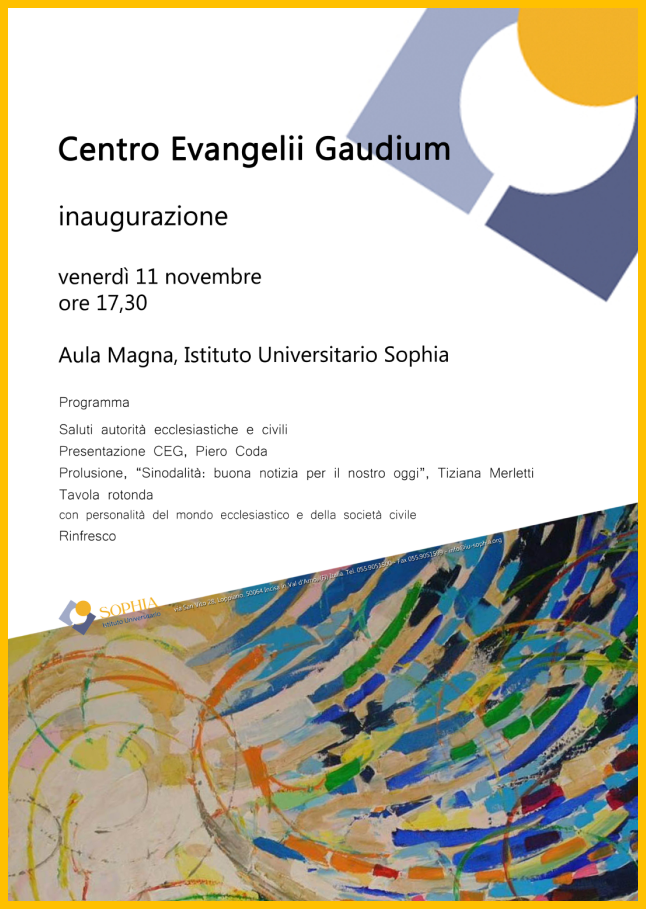
A new “laboratory” promoted by SUI in collaboration with the Focolare Movement Centres of Formation and Pastoral Action: Focolarini Presbyters & Deacons Centre, Volunteer Priests & Deacons Centre, the Gens Centre, Centre for Religious, Centre for Consecrated Persons, the Segretariat of the Parish Movement and the Secretariat of the Diocesan Movement. The Centre is intended to respond to Pope Francis’s invitation to the Church in Italy to take up his Joy of the Gospel Apostolic Exhortation to give content and direction to the work of pastoral renewal that is necessary for the evangelization that the Church is called to in order to “go out” to the existential peripheries of our time. The courses, seminars, workshops and stages that will be activated by the Centre will be directed towards priests, consecrated people, pastoral workers, lay people in ecclesial and social environments and, above, the young. They hope to contribute to this demanding and urgent task, engaging the spiritual impulses and experiences that have emerged from the charism of unity of Chiara Lubich. The mission of the Joy of the Gospel Centre (JGC) is to promote and support formation, research and study in the fields of Ecclesiology, Pastoral Theology and the Mission, Spiritual Theology and Theology of the Charisms and life of the Church today as it goes out on mission. The innauguration will begin with a from Cardinal Joao Braz de Aviz and Archbishop Vincenzo Zani. It will include a presentation of the Centre by the president of IUS, Piero Coda, and a keynote address on the main points of Pope Francis’s Apostolic Exhortation by Dr Tiziana Merletti, Superior General of the Franciscan Sisters of the Poor. Then there will be a roundtable with people from the world of culture, like Massimo Toschi and Damiano Tommasi. “The challenge is to manage to contribute something to that paradigm change in the culture and the relationships among ecclesial and civil communities,” said Piero Coda, “which out times ask for and which the prophecy of Pope Francis forcefully tells us that the moment has come to give a hand in fedelity and with creativity.” Press Conference presenting the Joy of the Gospel Centre of Higher Formation” (CEG): November 8, 2016; 11:30 at Toscana Oggi – Via dei Pucci 2, Florence. Moderator: Father Giovanni Momigli, CEG collaborator. Presentors include: Father Emilio Rocchi, Secretary of the Joy of Gospel Centre, Dr Sergio Rondinara (Epistomology and Cosmology Instructor at IUS)******************************************************Info: relazioni.esterne@iu-sophia.org – www.iu-sophia.org Sophia University Institute – Via San Vito 28, Loppiano – 50063 Figline e Incisa Valdarno (FI) ITA Tel. +39 055 9051500 – Fax +39 055 9051599
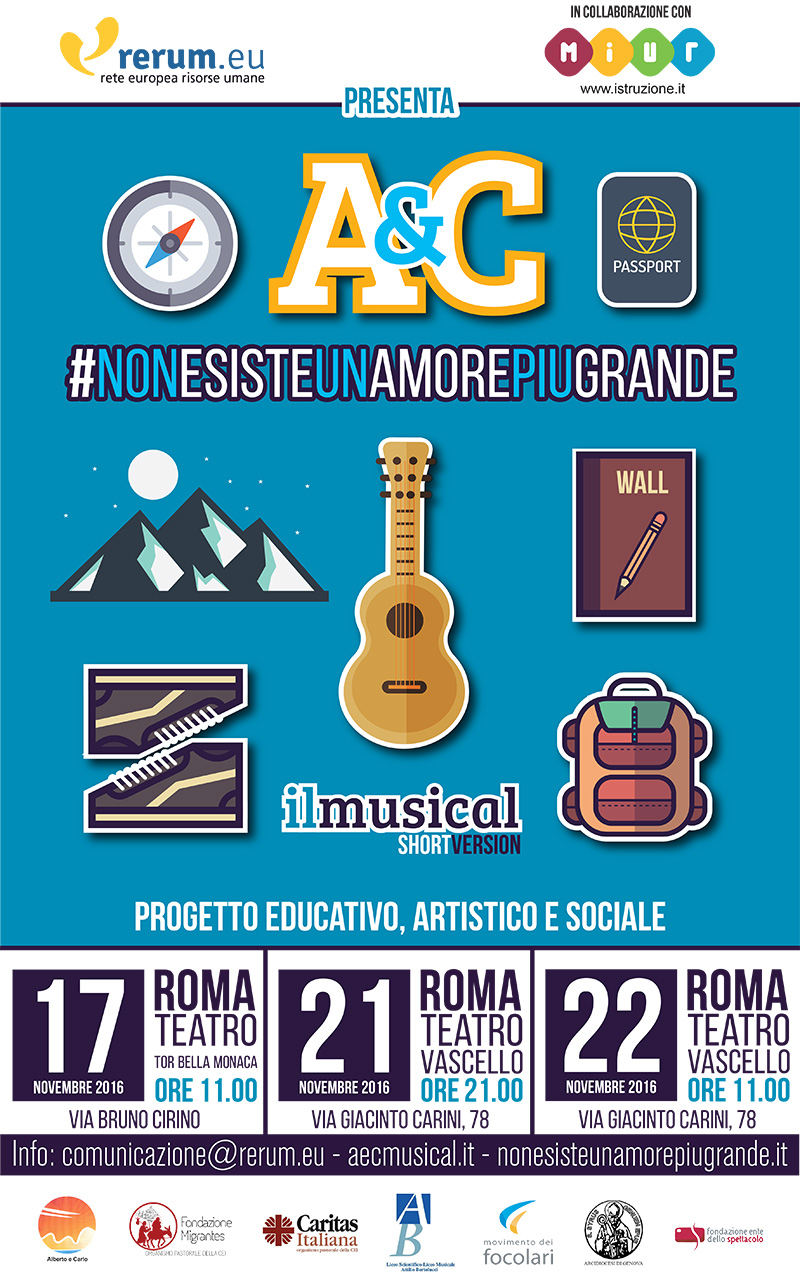
Finally, the staging of the musical production dedicated to the story of Alberto Michelotti, Carlo Grisolia (A&C) and their group of friends with their passions in life (sports, music, friendships), who would meet at the “Wall,” a small square at the outskirts of Genoa at the turn of the 1970s. It is the story of teenagers who committed themselves, against a backdrop of difficulties and sharing, the harbour, the place of confines, transitions, and encounters, especially among the youths, since those disembarking are mostly young people: kids who knew how to payattentionto the others, spending their time for this cause, and facilitating the encounter between the new and the diverse (which youths, unlike adults, do not fear). Friendship is the “philadelphia” which makes us discover the others deeply, perfectly, and as ontologically equal to us, and which substantiates and makes kinship, solidarity, peace, dialogue and openness a concrete reality. It is the decision to give one’s life for one’s friends that makes us really solid, open, respectful, and proactive. This is the “greatest love of all.” The show, in a first “short version,” will make its debut in November 2016 in two theatres in Rome, on the 17th at “Tor Bella Monaca,” and on 21 and 22 November at the “Vascello” theatre. In connection to this is an interesting and extensive educational and social project that will subsequently be proposed, in collaboration with M.I.U.R.Department for the Educational System and the General Management for the Student, Integration and Participation, the Secondary Institutes, thanks also to the support of the Migrantes Foundation, Italian Caritas, Alberto & Carlo Committee, Focolare Movement,Foundation of the Show Agency, the Bertolucci Parma High School and the Diocese of Genoa. A team of professionals (authors/composers, directors, scenic artists, musical directors, choreographers, light and sound technicians) are the real “coaches” of a young cast of artists coming from various Regions of Italian Secondary and University Institutes. Particularly important is the presence of a young Nigerian boy applying for political asylum, Above all these have been the first to be invited to relive and experience the values conveyed in the story of Alberto & Carlo. Source: rerum.eu

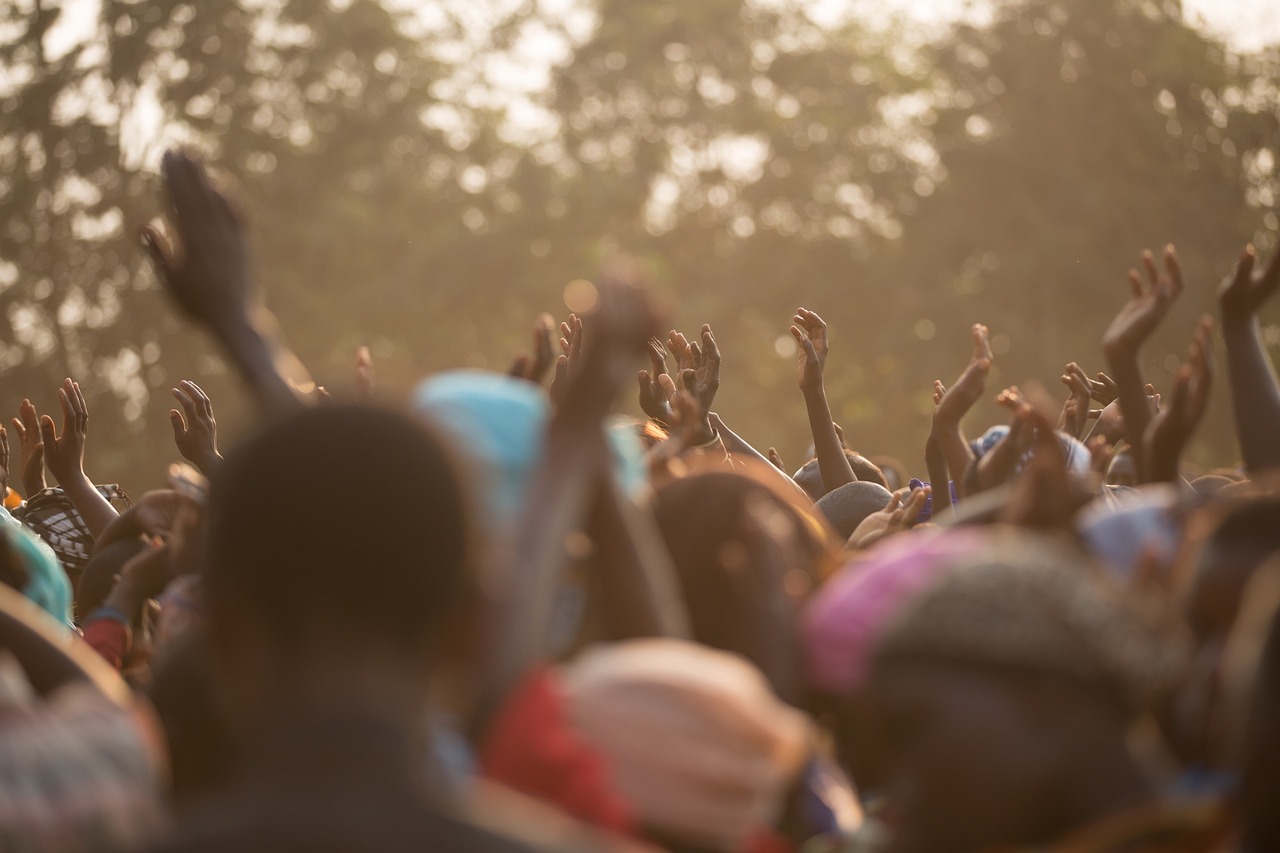 The city of Como has risen to the headlines because of the notable influx of refugees that have been forced by barbed wire walls to divert their routes across Switzerland, as they travel to the countries of northern Europe in search of fortune, or reunion with their family members that arrived before them. The distance is very short, but the many border controls are rigorously imposed. There is a growing number of men, women, children and unaccompanied minors who are camped out waiting for an opportunity to evade border inspections. Bishop Coletti asked everyone to accept the challenge of welcoming, directing his appeal especially to the Church community that it might put into practice the Acts of Mercy during the Jubilee of Mercy which is an occasion for sharing and growth. “We took it as an appeal to us,” say the members of the local Focolare community, “and we immediately got to work, offering our services to the Diocesan Caritas that is on the front lines in organizing the assistance effort. There was a huge response from our community network that also includes people who are close to us: relatives, friends and acquaintances. We collected food, blankets and other basic necessities. We took turns covering the work schedule, providing showers and meals, distributing food, cooking and cleaning. In the evenings we serve up to five hundred meals. The faces we meet are disoriented, frightened, grateful and, at times, suspiscious. It’s hard to communicate with people who speak a foreign language. But just being there, tired and sweaty, offering a plate of food with a smile, trying to understand from their gesturing whether our guests are happy with the meal – makes us feel like we’re part of one big family.” One person from the meal service writes: “I was struck by the faith, the intensity of the Coptic Christians as they prayed before and after the meal.” And then: “In the eyes of our refugee brothers who we accompany to the showers and serve at table, we see Jesus who responds to us: ‘It’s Me!” Then; “After an evening of serving, when we meet with the other volunteers to share our experiences, your heart is bursting with emotions and positive resolutions.” On the patronal feast of the city of Como it was a special afternoon in the crowded basilica, with the bishop and civil authorities, with the full participation of Eritrean, Ethiopian and Somali Christian refugees, along with a representation of 500 volunteers. “The Gospel reading about the Final Judgement, in Italian, English and Tigrinya was very moving,” they reported. “Colomban Missionary Father Claudio, who belongs to our community and spent more than 30 years in those countries and knows their languages, has been working for weeks in the camps. The bishop entrusted their spiritual wellbeing to him, placing his very basilica at the complete disposal of the refugees. Jesus came to visit us today in these refugee brothers and sisters. And we want not only to accept Him, but to respond into the future in concrete ways.” Source: Movimento dei Focolari Italia