In school, the boys and girls use tree trunks as chairs and use their laps as desks. This all happens on the Isle of Idjwi in the middle of Lake Kivu, on the eastern side of the Democratic Republic of Congo. Because of its secluded location, it has been used as a platform for the secret movements of various military troops in the recent conflicts that have affected the country. On the island, many services are lacking such as the supply of electricity and transport. The population moves from the island to the mainland mainly by pirogue which, because of its instability, causes many deaths by sinking or drowning, leading to an extremely high mortality rate. The data gathered shows that in a family of five there is at least one widow or an orphan. The island’s economy is based on farming and fishing. In particular, beans, cassava, peanuts, soy beans and coffee are cultivated. There is also a consistent breeding of chickens, goats, turkeys and pigs. In the last years, however, agricultural production has diminished, among the many reasons for which was the deterioration of soil quality, poor training of farmers, and the absence of seeds and varieties that are more resistant to diseases. Given the economic situation, many young people on the island do not have jobs and career prospects. The four parishes there try to respond to the needs of the local population. Specifically the Bumpeta parish in the northern part of the island that counts about 76,000 inhabitants has been very active in running the primary and secondary schools, and for this has received an award from the Congolese state. Because of the population’s active participation in promoting the schooling of the island’s children and youths, AMU has initiated a project that focuses with conviction on the future of the country, and aims to support the parish of Bumpeta by furnishing the equipment of the Cikoma Institute. It is a high school specialized in pedagogical and social sciences that train the future teachers of the island. It is thus a school that looks to the future but that has to tackle the current backward conditions, and a population that is struggling to rise above poverty. The school is attended by about 900 boys and girls, divided into 14 classes. In some there are makeshift desks, in others practically everything is lacking. The project will chiefly equip the school with the 308 missing desks. Currently many students still use tree trunks as chairs and their knees as desks with the consequence of a serious deterioration in their posture. The desks will be built by a Congolese carpentry shop and in this way the project will help support the local production activities. The population of Bumpeta takes active part in carrying out the project and will primarily take charge of transporting the desks on the Island. Source: AMU online
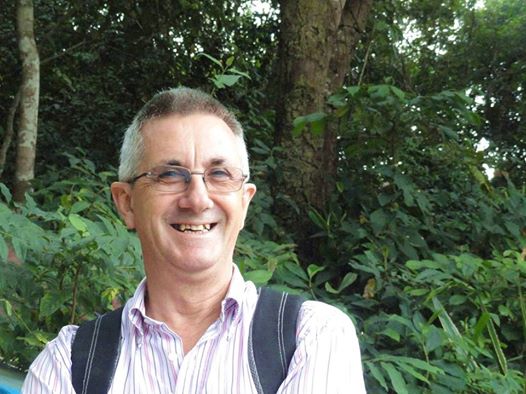
Sensitive to social problems, as a youngster in Portugal, Paulo fought poverty and human degradation in Lisbon’s poorest quarters. Unwilling to tolerate such inequality, he decided to fight with a group of extremists but soon realized that he couldn’t go along with everything they stood for. Still open and in search of answers he distanced himself from them. He met some young people from the Focolare and learned that they also wanted a revolution, the revolution of the Gospel that leads you beyond yourself and your comforts and places you at the service of others. This process led Paulo to make an even more courageous decision. When he finished his studies in economy, he felt called to leave everything and become a disciple of Jesus and, after a period of formation, he entered a focolare community as a consecrated member of the Movement.In 1977 he was transferred to Africa: first to Nairobi, Kenya and then to Kinshasa, Democratic Republic of Congo. Paulo shared joys and sorrows with his new brothers and sisters, challenges and enthusiasm as well as the love and wisdom that the Congolese so much appreciated in him. On one feast day they compared him to the hummingbird, a totem symbol that represented the joy of living, likeability, the ability to adapt and to know how to respond quickly to stimuli, resilience and the light-heartedness that is able to outdo negativity. Paulo managed to enculturate himself so well with the African people that he became a true son of Africa. It was as a son of Africa that the people of Congo wished to honour him and bid him farewell as they learned of his sudden death on September 12, 2016. Masses, periods of mourning and prayer vigils were held in several parts of Congo while the funeral was being celebrated in Portugal. “We wanted to testify to all that Paulo had shown us in his life,” they write from Kinshasa. “Therefore, after the Masses that were celebrated in several places in Congo, on the weekend we continued, not weeping over Paulo, but celebrating with Masses of thanksgiving and testimonies. It is what is required by Congolese culture. We bid him farewell with dance, a typical drink and a small cake. In Kinshasa the ceremony was held on the campus of the Petite Flamme School, one of the social projects that Paulo had taken part in. After several testimonies, a traditional ceremony took place in which he was added to the list of the ancestors. A hole was made in the earth – which is usually made in front of the departed person’s home – and some palm wine was poured in as the following words were pronounced: “Here we all are to thank you for the time we spent together. And since you lived according to the teachings of the ancestors, behold, our clan now takes you as a model. We promise to live as you lived. We know that you have reached the village of the ancestors. We ask you to come now and share in this palm wine with us as a sign of our good memories. We hail you and ask you to greet all our dear ones that are in the village of the ancestors.” “How is it possible not to hear in these words an ancient expression that hearkens the communion of saints…” asked the focolalrini from Congo. “… an expression of the ancient wisdom that harks back to the communion of saints that joins earth to Heaven … and the love that continues to join us after death?” Paulo was so deeply enculturated with the Congolese that they wished his final farewell to be an expression of ancient traditions and the Gospel. Love prevailed over the fact that a strong young man should die – which is traditionally a sign of evil manoeuvring because of that man’s enmity, his guilt that had to be avenged.” The words of one couple were particularly meaningful: “With your arrival there above we feel that we’re not poor anymore; on the contrary, we’ve become even stronger. You were truly close to all of us, a true apostle of unity, a great seeker of God that knew where to find Him: in your sisters and in your brothers.”
October 23rd will mark the 60th anniversary of the 1956 uprising. This anniversary holds strong memories for the Focolare, especially for one of its main branches: the Volunteers. But are the ideals of the 1956 uprising linked to something that belongs to the past, to the story of Hungary? Or should the 60th celebrations be an opportunity to renew and to put into action those values for which thousands of people gave their lives for? Here is a glimpse into historical facts related through the personal testimonies of those who have kept up their Christian commitment to society and who are faithful to the most genuine values pursued in 1956, starting off from the evangelical choices that they made. Videos with subtitles (select language) https://www.youtube.com/watch?v=F-m85VMcI8g https://www.youtube.com/watch?v=bpxqy-fYHc8
https://youtu.be/_fE7VtbWsbA Toward a Unity of Nations and a Unity of People
“I am honored to be here in the United Nations, this worldwide organization which brings together 185 member States, “united” for the main purpose of “maintaining international peace and security”.
This purpose, as stated in its charter, is pursued through respect for the fundamental rights of persons and nations, economic collaboration among all countries and the social development of each nation. Its activities have been aimed at eliminating the many scourges afflicting humanity: war, the arms race, the denial of the fundamental freedoms of each member of the human family, as well as hunger, illiteracy, and poverty.
This, we know, is the new concept of “peace and security” that has been entrusted to the United Nations: peace no longer intended as the absence of war, but as the result of conditions which generate peace.
It is therefore an organization deserving of our praise. And not only does it have the approval of the world community; it also has heaven’s blessing, if we believe the statement of Jesus Christ, Prince of Peace: “Blessed are the peacemakers for they will be called children of God” (Mt. 5:9).
I come to you today, representing a Movement which is actively present in practically all the nations of the world. And although it is much smaller and less well- known, it still has something in common with this great and celebrated organization.”
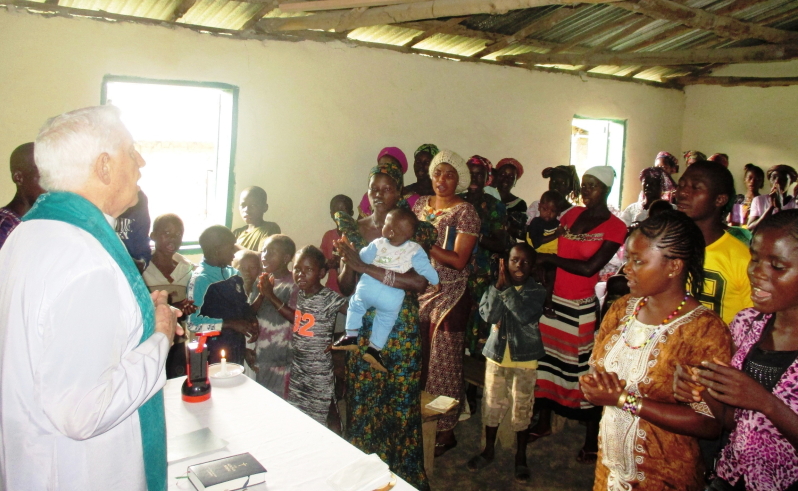
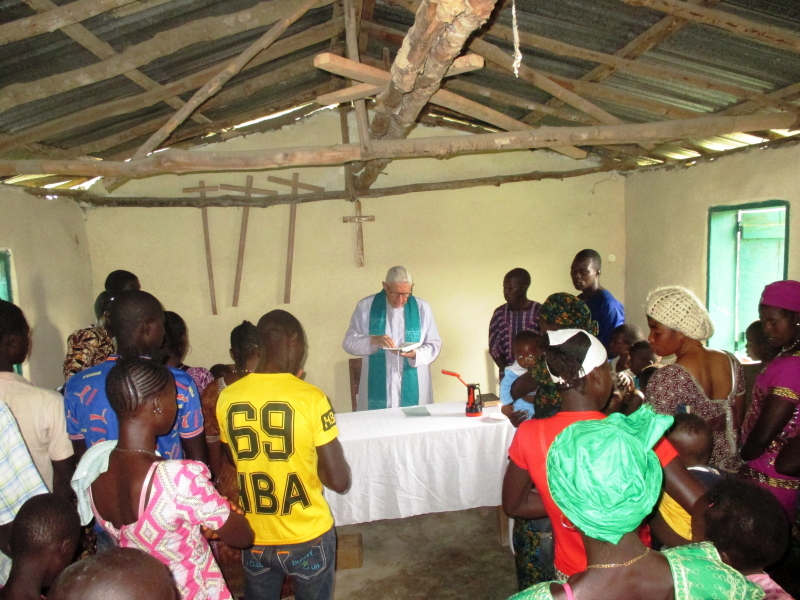
The first initiative of the Evangelii Gaudium Centre, created in Loppiano (Florence) to become the “Church that goes out,” is a qualification course in collaboration with the Sophia University Institute entitled, “Wake up the world.” This compelling slogan describes precisely Consecrated Life that will “Wake up the world,” in which consecrated persons with their radical choice of life, concur to restore true fraternity and communion in the world. It is the story of Fr. Antonio Guiotto in Sierra Leone: a Xaverian missionary. He had adhered to the spirituality of the Focolare ever since he was a student, and is now celebrating his 50th anniversary of priesthood, most of which was spent in the African country, and out of which around ten years (1991 to 2001) were in the frontline of a terrible civil war which terrorized and devastated Sierra Leone. And though like other foreigners he could have returned home, Fr.Antonio decided to remain in Kabala to share with its people all the events, helping them to continue believing in God’s immense love, despite everything. Very soon, he and Fr. Carlo, a congregation brother who also lived the Focolare spirit, created a small group that tried to live the Gospel and share their life experiences: a flicker of hope that lit up amid so much hatred and violence. But also Kabala was invaded by the rebels, and so the two religious – foreigners, and easy prey to kidnappers – took refuge in the woods. Despite the dangers, his people helped them with food and water, and in turn were supported by the light and hope which the two religious instilled in all. When there was no longer any imminent danger, they opened their homes since the missionary house had been completely destroyed. The family that hosted them shared the little they had, and the two religious gave a hand in the house and with the children. After a month, the couple asked to become Christians and for the children to be baptized. In the meantime, however, the situation started to worsen again. Squads of rebels roamed all over Sierra Leone and the two Fathers had to move to Freetown. It was a forced transfer which became an occasion to sow the Gospel also in the capital. In 2000, an attempted coup d’etat further put their lives at risk, so much so that the Italian Ambassador decided to transfer them immediately to Guinea on a small plane. Despite these adversities, the spirituality of the Focolare transmitted with their lives, progressed in great leaps. The minute they could, a three-day Mariapolis was organized with 170 people, among which was also the Bishop of Makeni. «I can truthfully affirm – wrote Fr. Antonio – that the promise of Jesus that “Whoever has left their home, brothers and sisters, father or mother, children or field in my name, will receive the hundred fold,” had fully come true. In my mission I found that fathers, mothers, brothers and the hundredfold in this life was a deposit for that which would come. New Christians were born, many couples were married in church, and new Focolare communities arose in Freetown, Makeni, Kamabai, Kabala, and also in the remote villages. New churches and Catholic schools were built. After a period passed in Italy, the Lord has now granted me the grace to return to my beloved Sierra Leone to continue to give my life for my people.» From October 2016 to March h 2017, the course of the Evangelii Gaudium Centre addressing educators, tutors and students of missionary pastoral theology, will provide monthly, a two-day session during which the lesson will alternate with practice exercises, in order to become – as the brochure says – “experts of communion” who like Fr. Antonio, “wake up the world.” The October session concluded with around 20 enrollees, and the second will take place from 13 to 15 November. The course directors are two personages of great academic experience in Rome: Sr. Tiziana Longhitano sfp*, Rector of the Pontifical Urbania Universityand Fr. Theo Jansen ofmcap*, Professor of the Pontifical Antonianum University. *For info and course enrollment in Loppiano “Wake up the world”: Sr. Tiziana cell. +39.329.1663136, Fr. Theo cell. +39.338.6845737.

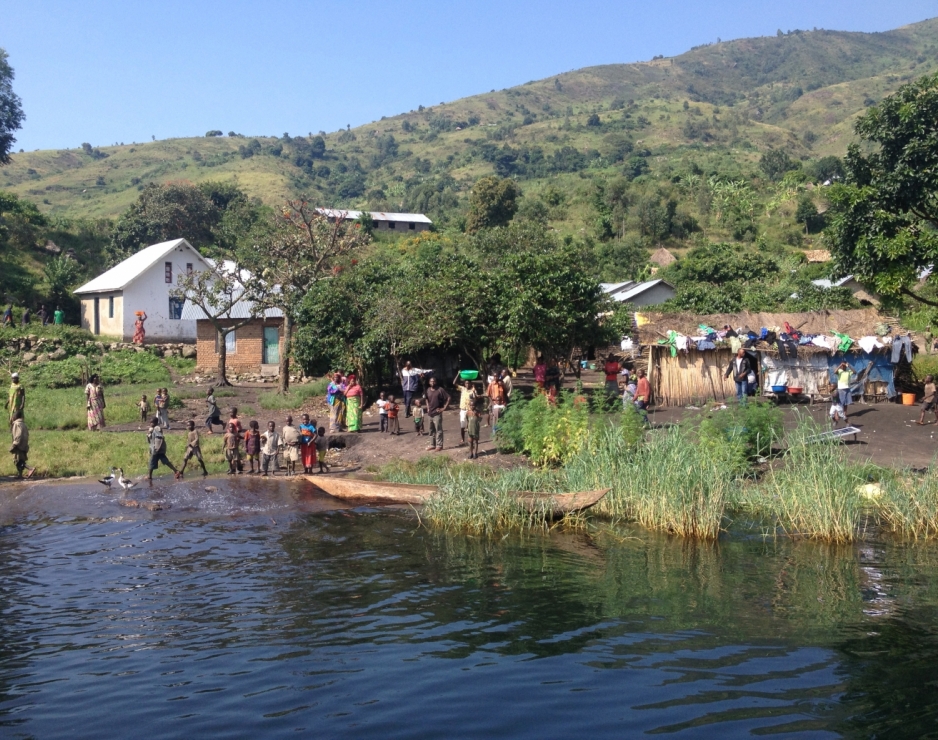 In school, the boys and girls use tree trunks as chairs and use their laps as desks. This all happens on the Isle of Idjwi in the middle of Lake Kivu, on the eastern side of the Democratic Republic of Congo. Because of its secluded location, it has been used as a platform for the secret movements of various military troops in the recent conflicts that have affected the country. On the island, many services are lacking such as the supply of electricity and transport. The population moves from the island to the mainland mainly by pirogue which, because of its instability, causes many deaths by sinking or drowning, leading to an extremely high mortality rate. The data gathered shows that in a family of five there is at least one widow or an orphan. The island’s economy is based on farming and fishing. In particular, beans, cassava, peanuts, soy beans and coffee are cultivated. There is also a consistent breeding of chickens, goats, turkeys and pigs. In the last years, however, agricultural production has diminished, among the many reasons for which was the deterioration of soil quality, poor training of farmers, and the absence of seeds and varieties that are more resistant to diseases. Given the economic situation, many young people on the island do not have jobs and career prospects.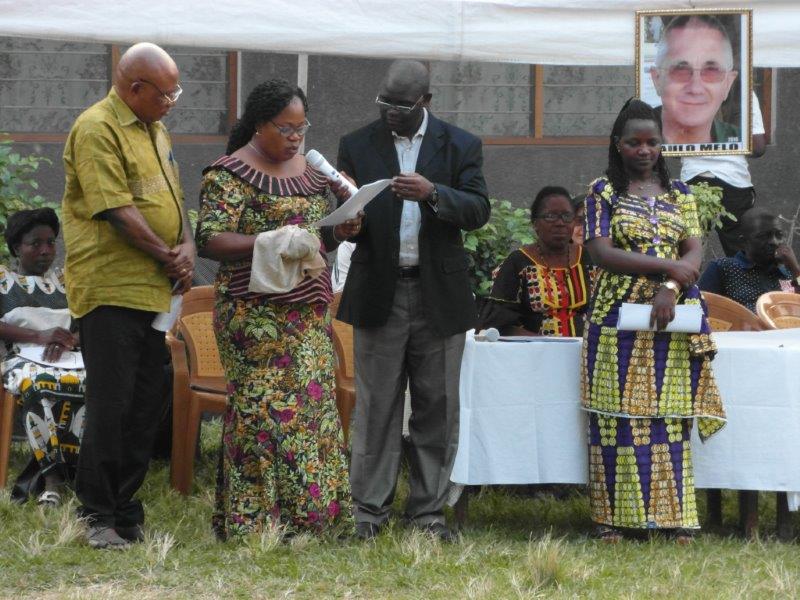
 Sensitive to social problems, as a youngster in