Selfless giving and receiving was the experience of theYouth for a United World from Managua, Nicaragua, during their visit to the small Focolare community of La Cal, a village that rises 1200 metres above sea level near the coffee capital of Jinotega. Armed with some bags of clothing, food, medicinals and toys that were all gathered by the community in Managua, they reached Jinotega after a 3-hour bus ride. Then they drove for 8 km in a pick-up until the road became too rough to travel on. It was still another kilometre and a half through a forest fraught with stones, crevasses and deep slopes that made the trek impossible even for the horses, and the young people had to continue on foot. “You could never imagine the wonderful welcome we received,” the young people report. The village of La Cal was in unstable condition. Its wooden houses teeming with children were without electricity, running water or medical supplies. There was a small shop in the village with some basic relief-items, a small school with one classroom, one teacher and a tiny chapel for when a pricst arrived for Mass. If not for the solar panels that were recently installed, the whole village would be in complete darkness. There were also two medical doctors with the Youth for a United World. One of them, a dentist who began the day with a presentation on oral hygiene to thirty children who so happy to use a tooth brush and toothpaste for the first time in their lives. At lunchtime one family wanted to offer some very warm and delicious tortillas, as the young people gathered the small children for games. In the afternoon presentations were offered for adults on parasite prevention. The very intense day concluded with a reading of the Word of Life, a deep spiritual moment that enveloped everyone. We were all very moved when an elderly man wished to give his blessing to the young people. This was followed by the distribution of goods that the young people had brought for them. They were offered an ex-chicken coop to sleep in that night. “It was so moving for us,” they write, “to spend the night in an ex-chicken coop just like the men in the first focolare whose house was an ex-chicken coop. In the morning, after a good breakfast that had been prepared by the women of the village, we were invited to return again soon and left for Jinotega. We went to the cathedral to thank God for the experience that had changed us so much, that had allowed us know such generous people who live their daily struggle with such dignity and joy of knowing God’s immense love for them – and for having had constructed in the midst of those mountains another small piece of universal brotherhood.”
The objective of the convention to be held in the Mariapolis Centre at Castel Gandolfo (Rome), is to review the professions or activities of magistrates, lawyers, chancellors, prison staff and law enforcers, and discover the path to be pursued together to achieve justice, involving all the “actors” of the multifaceted relationships involved. On Saturday afternoon, there will be separate sessions according to professions or work fields, developed to help these pathways: magistrates coordinated by Dr. Gianni Caso, President Emeritus of the Court of Cassation Section; lawyers coordinated by Atty. Orazio Moscatello of the Court of Bari and Dr. Fiorella Verona of the Court of S. Maria Capua Vetere; court personnel coordinated by Concetta Rubino, Chancellor in the Court of Naples; prison staff coordinated by Dr. Sebastiano Zinna, former director of the UEPE in Rome and Dr. Salvatore Nasca, Director of UEPE in Florence; and law enforcers coordinated by Dr. Pasquale De Rosa, former official of the Ministry of Defence. The convention is undergoing accreditation procedures by the Council of the Lawyers’ Roll of Velletri (Rome) for the recognition as a professional development course. Program Enrolment and bookings open up to 15 November 2016: prenotazioni@comunionediritto.orgEnrolment form
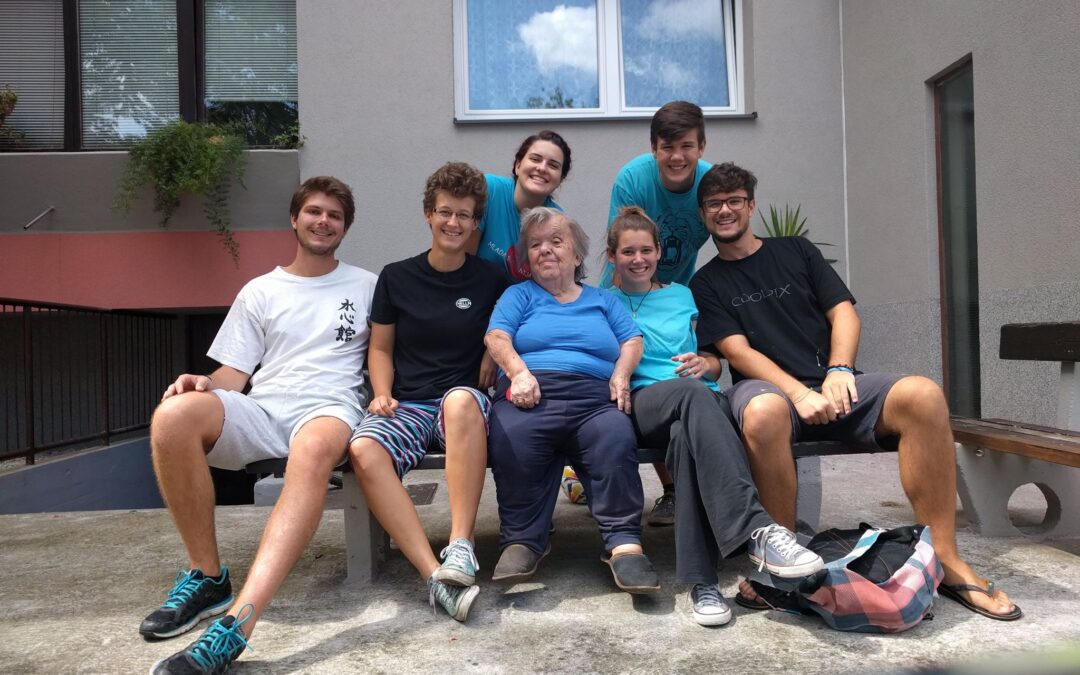
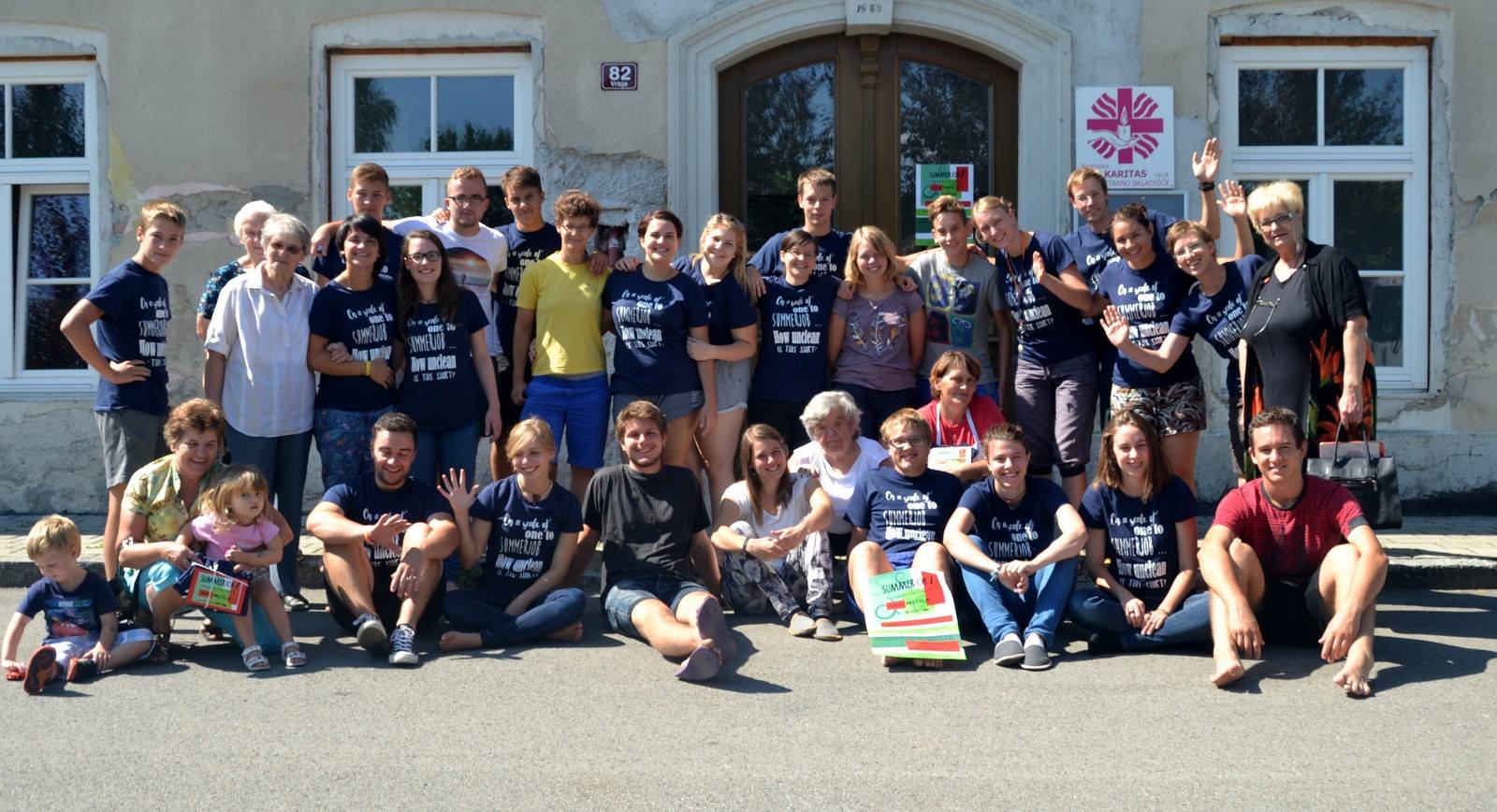
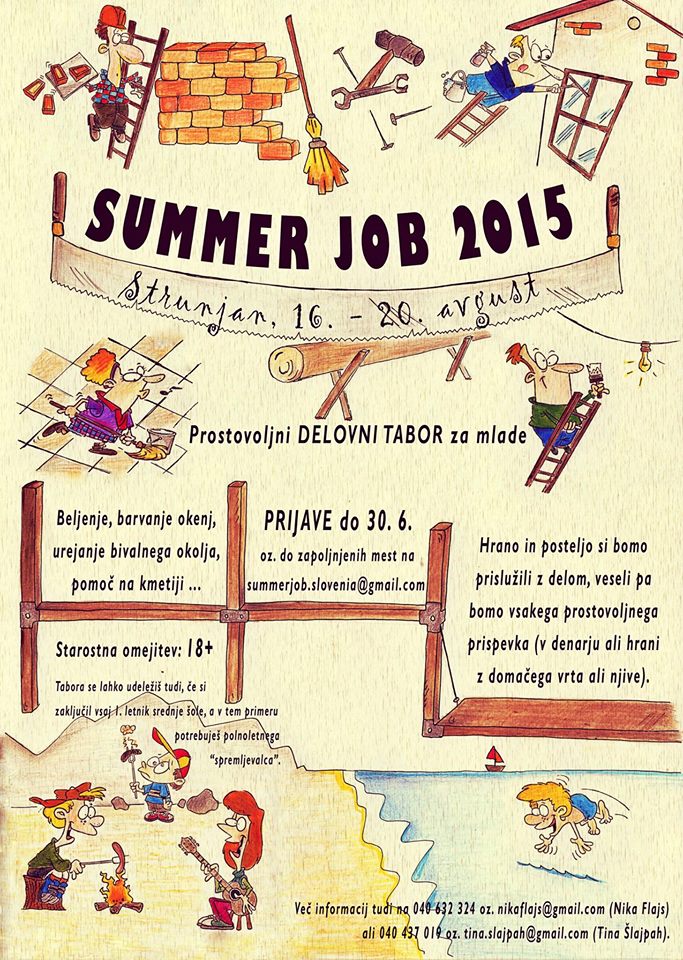
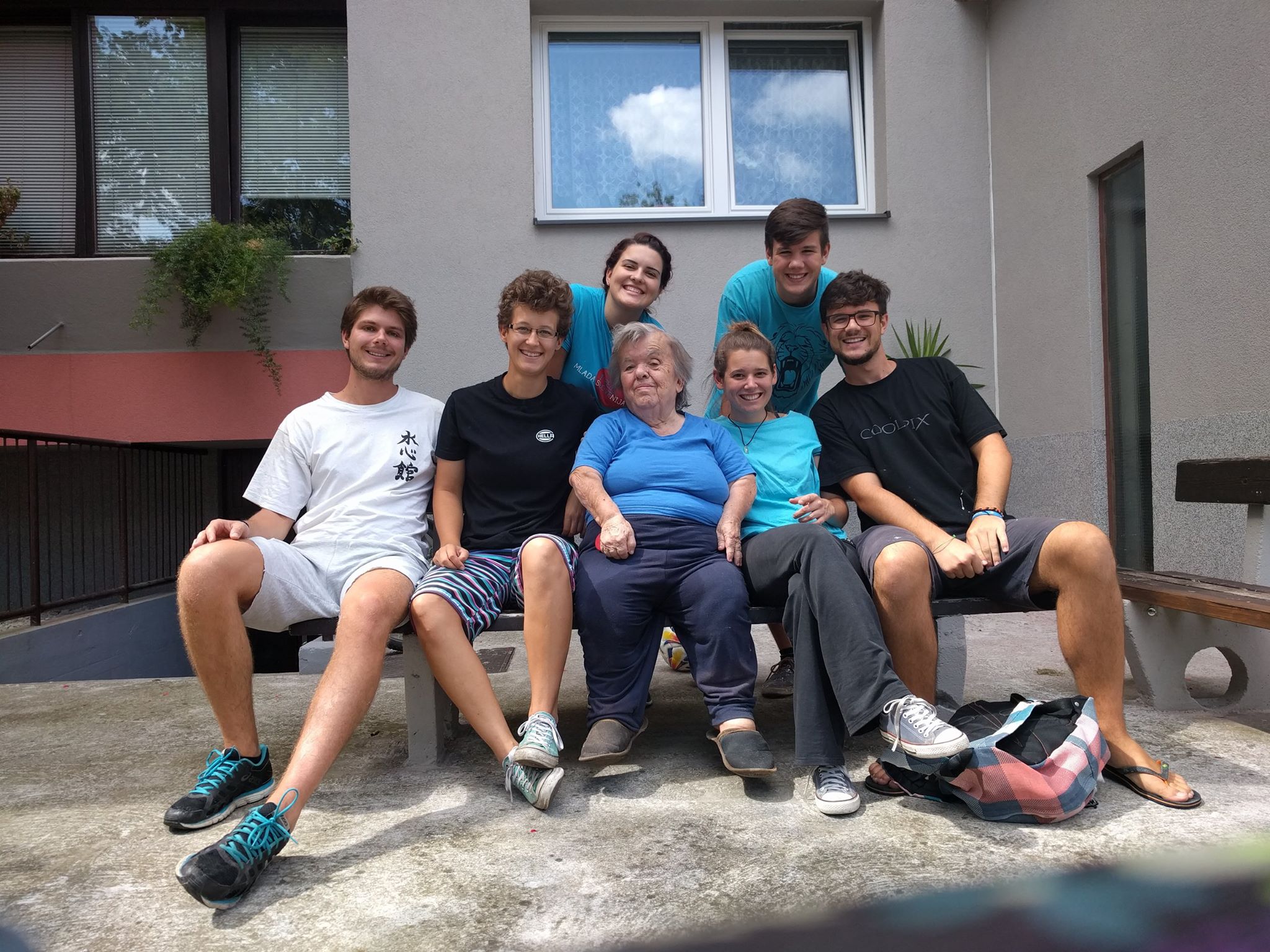
The International Day for the eradication of Poverty was commemorated on 17 October. It was instituted by Father Wresinki in 1987, when he organized a great human rights demonstration in Paris. Poverty is manifested in various ways, incarnating situations, places and entire populations. We will never get used to the fact that there are human beings who cannot enjoy a life worth living. In winter the Youths for a United World of Slovenia dedicate themselves – among other activities – to organising “Summer jobs,” in a summer work camp: in pursuit of the needs of the place, to make various contacts with the mayors, bishops, parish priests and persons of a given locality, to see how they can give their own contribution during summer, to help people in need. This year, in collaboration with the local Caritas association, people and families who needed very concrete help were sought out. They organised an end-of-summer event from 15 to 20 August in Vrbje, a small village close to Celje. This third edition saw the opening of nine work sites. About 40 people dedicated themselves, seven hours a day, to many activities such as work in the fields, renovation of the courtyard of a house, construction of a chicken coop, restructuring of a disabled woman’s home, preparing aid for the population of Macedonia struck by floods or whitewashing the house of a woman living in miserable conditions. This was all a specific way of putting fraternity into practice, weaving deep relationships with the local folks, and restoring to many, that dignity they often feel to have lost. The decision to share some of the situations and try to bring relief to those who live at the outskirts of society is a demanding choice which requires time and energy, but it is above all the choice to give of oneself that started up the initiative. Some of the participating youths wrote about their deep impressions: «It was precisely the more difficult jobs that made us understand how most of the time, relational problems lie at the roots of poverty. For example, with a woman, even if our work had already been defined, we spent more time on the first day, only in getting to know each other, so she could trust us. Only later did she allow us to work on her apartment which needed all sorts of things». There was a lot of time for listening, speaking with many and having an exchange of experiences, worries, and future projects. All this came about in an atmosphere in which all helped each other in utmost readiness, and as a consequence, with the fullness of joy. But the Summerjob did not only consist in work: in the evening everyone shared the experiences lived during the day, and these were solemn, engaging moments that bound and united the participants more and more. Other impressions were: «Upon saying goodbye on the last day with the “employers” we suggested having coffee together to see the photos of the summer camp. It was a mystery what we managed to build in just four days. It was a really impressive moment! Just to think that in the end, the person who receives more is always the one who gives with joy. See the page on facebook of the Summerjob Slovenia 2016
Representatives of the Brazilian Methodist Church and the Baptist Church of the Philippines will also attend. The head moderator will be Cardinal Francis X. Kriengsak Kovithavanij, Archbishop of Bangkok.The theme chosen for this year: “Jesus crucified and abandoned as the basis of a spirituality of communion,” in an atmosphere of fraternal communion and reconciliation, in the context of the 500th anniversary celebration of the Reform. The meeting’s agenda will include theological and spiritual discourses in the light of the spirituality of the Focolare, liturgical celebrations of the various Christian traditions and many sessions of exchange and communion among the participants. Moreover, they will visit the Dachau concentration camp and some important sites of the Reform. An important moment will be the ecumenical rite in the Church of St. Anne in Augsburg on 26 October. The celebration will focus on the memorial of the “Joint Declaration on the Doctrine of Justification” with which the Catholic Church and the Worldwide Lutheran Federation had put an end to mutual judgements and anathemas. On Thursday, 27 October, the bishops will be received by the Mayor of Augsburg, Dr. Kurt Gribl.
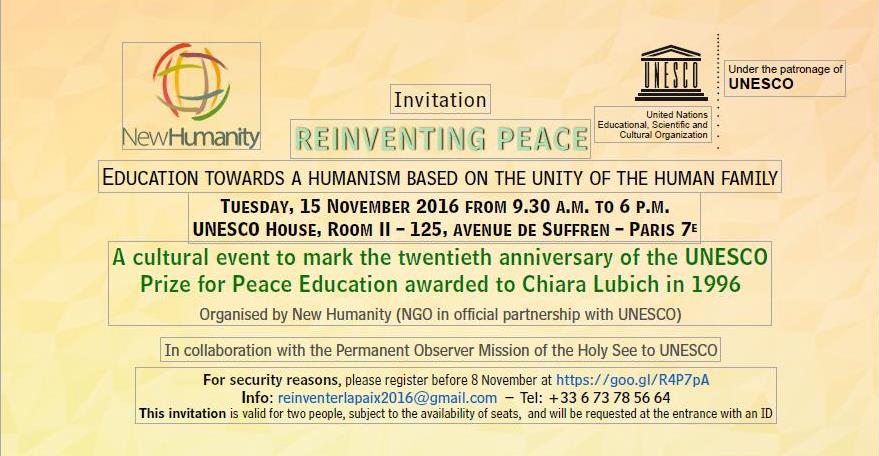
The wars which for too many years have been devastating continents that are only sea distance away from Europe have come into our home, and now terrorism has become the last frontier. And it is in France, one year after the terrible massacre at the Bataclan that the challenge of peace is being relaunched. On 17 December 1996, in Paris,Chiara Lubich received the UNESCO Prize for Peace Education in recognition for a life spent in the dissemination of a culture of unity and peace and the formation of thousands and thousands of people of every race and latitude. The Focolare Movement has been present at UNESCO through its New Humanity NGO. The General Management of UNESCO and the Holy See’s Permanent Observer wished to reaffirm and testify to their commitment to unity and peace by proposing a day of reflection and testimony in five areas: Education, the Common Good, Justice, Ecology and Art. Theme of the eventLast April, at the United Nations in New York, Maria Voce proposed focusing on radical dialogue in the search for peace. She was speaking at a debate on the promotion of tolerance and reconciliation: “[Dialogue] is risky, demanding, challenging, aimed at severing the roots of misunderstanding, fear and resentment.” The challenge of dialogue is timelier than ever. It is the starting point for creating the mosaic of peace, one day at a time, one tile at a time. It is the way to build a planet where there is a mutual recognition of identity and diversity, the mending of the social fabric, new attention to the needy, to justice, to human dignity and to sharing the world’s goods. The very word peace draws its deepest meaning from its Sanskrit root pak, which means join, unite. Committing oneself to reinventing peace means creating connections that will require the involvement of human, intellectual and institutional resources. It means calling upon the world economy, international law and peace education at all levels. It means valuing cultural diversity, that is, the invaluable identity of every people. It means equipping the new generations for a culture of dialogue and encounter. It means facing up to the refugee crisis concretely. It means protecting the environment, opposing corruption and promoting the rule of law at every level. It means halting the increase in military spending and the arms trade. It means coming up with a new security plan, stability and cooperation for the Middle East. Program and speakersThe event will be attended by members of the diplomatic world, experts on international relations and the peace process and representatives from New Humanity and the Focolare Movement. The first session, titled Chiara Lubich, Peace Education, will be introduced by representatives from UNESCO and by Msgr Francesco Follo, Permanent Observer of the Holy See. This will be followed by presentations from Maria Voce and Jesús Morán, president and co-president of the Focolare Movement. The second session – Five paths for peace education on five continents – will carry on with examples of best practices from around the world. In the afternoon there will be an open session titled Dialogue, the remedy for the world’s problems, which will be opened by former Italian Prime Minister, Enrico Letta, and current president of the Jacques Delors Institute. Then there will be two moments of discussion on religions, economy and politics.

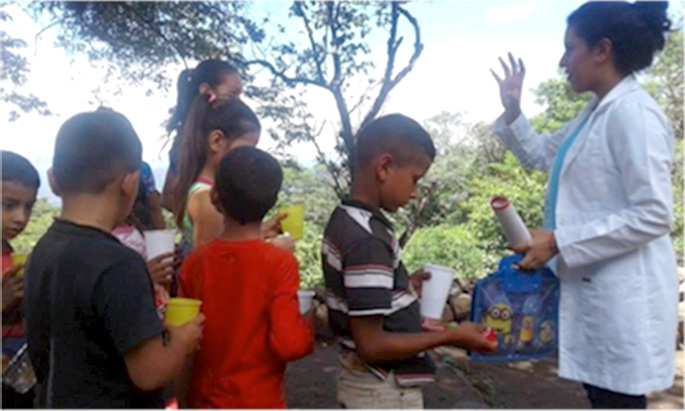
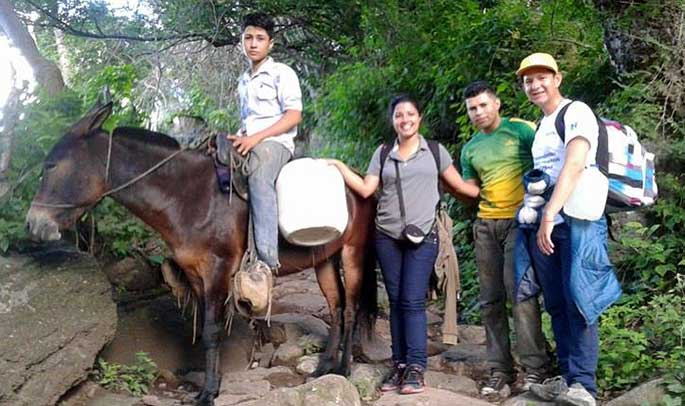 Selfless giving and receiving was the experience of the Youth for a United World from Managua, Nicaragua, during their visit to the small Focolare community of La Cal, a village that rises 1200 metres above sea level near the coffee capital of Jinotega. Armed with some bags of clothing, food, medicinals and toys that were all gathered by the community in Managua, they reached Jinotega after a 3-hour bus ride. Then they drove for 8 km in a pick-up until the road became too rough to travel on. It was still another kilometre and a half through a forest fraught with stones, crevasses and deep slopes that made the trek impossible even for the horses, and the young people had to continue on foot. “You could never imagine the wonderful welcome we received,” the young people report. The village of La Cal was in unstable condition. Its wooden houses teeming with children were without electricity, running water or medical supplies. There was a small shop in the village with some basic relief-items, a small school with one classroom, one teacher and a tiny chapel for when a pricst arrived for Mass. If not for the solar panels that were recently installed, the whole village would be in complete darkness.