Elisa with the entire family – a twin brother, an elder brother, daddy, and the grandmothers – just a few weeks earlier, had been to theMariapolis – the Focolare’s summer gathering – with about a hundred other people. It had been an occasion to know each other, share life experiences, and take a step ahead together. Everyone remembers Elisa who before leaving, with her gay and contagious ways had shot a video of the impressions of her group with the help of her twin brother. “The Mariapolis is an experience that leaves its mark in one’s heart forever. I hope to go to the Mariapolis always,” she had texted her mother upon returning home. Instead, Gabriele, her little 8-year-old cousin, in mid-June had participated for the second consecutive year in the little “Gen4 congress.” It was an enchanting three-day event with the little kids who understand “the things of God” better than anyone else. A photo shows him in the role of an angel playing a trumpet upon the passage through the Door of Mercy, together with all the other boys. In the morning of 24 August the news of the earthquake arrived, and also the anguish: Elisa, Gabriele and their grandmothers were under the ruins and all feared the outcome for those who were missing. A chain of prayers immediately started like a tam-tam, but in the evening it was confirmed: they didn’t make it. Their families immediately gave an unwavering testimony: “Their faith in God’s love was such that even in this immense suffering, they enlightened us with renewed determination to live for that which does not pass”, wrote Maria Voce, President of the Focolare, to the stricken communities and families, the day after the earthquake. Meanwhile the Focolare communities throughout the world and Italy had launched the rescue system.
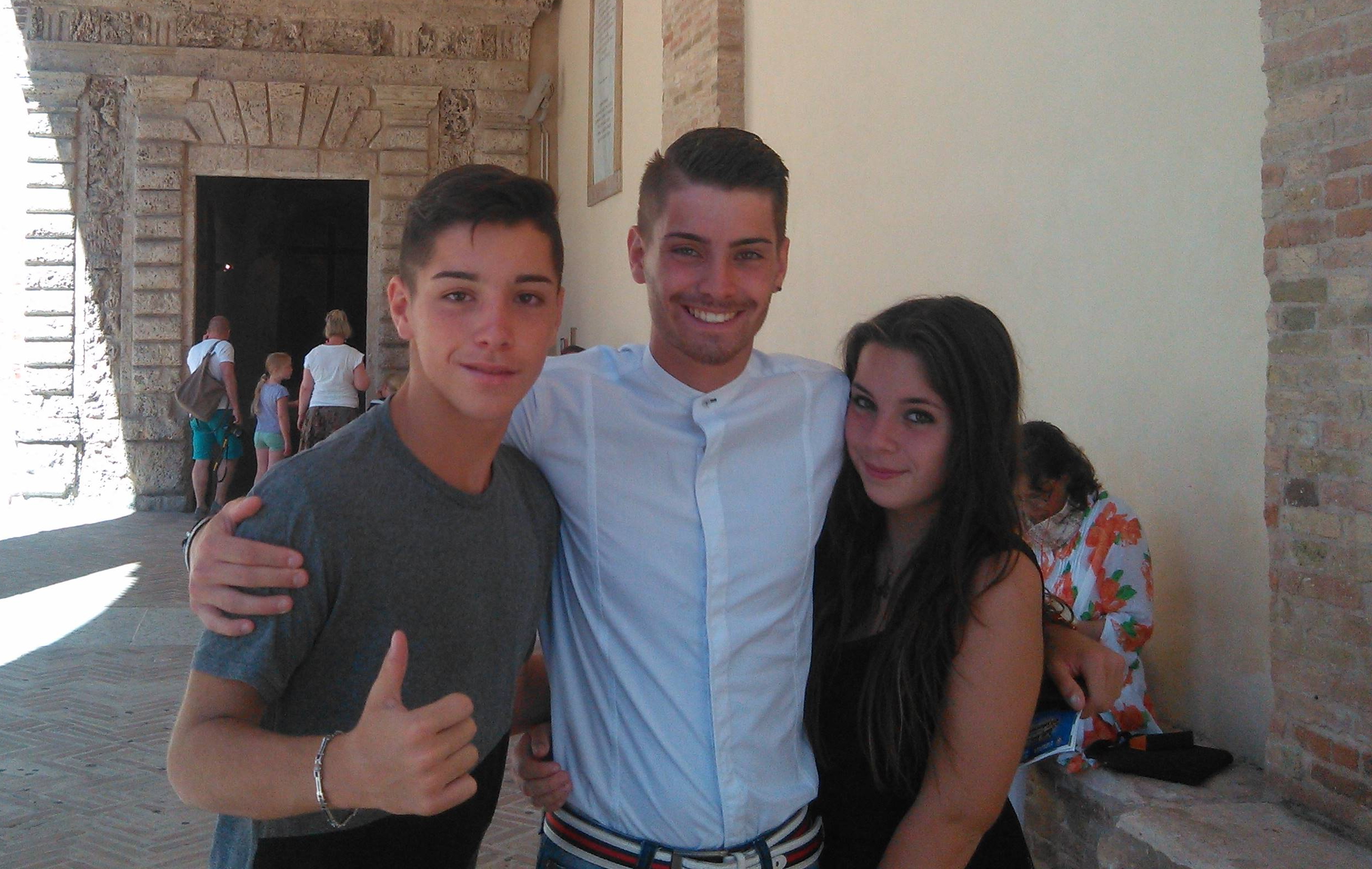
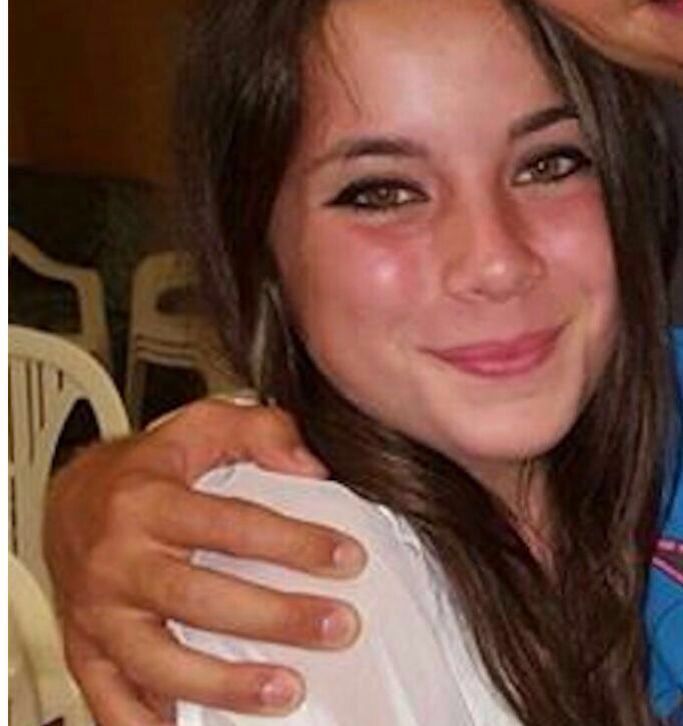
Elisa with her two brothers
The pain was also incomprehensible for many of their peers, schoolmates, and the Children for Unity, who had met Elisa in the summer camps and shared unforgettable experiences with her. But the testimonials they tried to give together, is that of a love that is stronger than death itself. One of them wrote: “Ciao Elisa, I dreamt of you last night. We were at the Stop ’n’ Go summer camp, where we had met and became friends. I wanted to greet you for the last time. You were still wearing the bracelet I had made for you. I told you that you were so lovely, and since it seemed I underestimated your beauty, I had to remind you of it once again. After this dream, I awoke and felt more serene, I know you are in Heaven.” “I regret all the naughty tricks I played on you,” her twin brother wrote, “Remember when in grandfather’s house, you took the blame in my stead? Now the ruins of this earthquake have sent me further from you. Please, my little angel, protect me from above.” “But I can’t imagine that you are no longer here! Elisa had picked out my name during the Guardian Angel game at the summer Mariapolis of 2014» wrote Fr Marco Schrott, who knew the family of Elisa and Gabriele for years and always had a special relationship with them. “Being my Guardian Angel, I saw her hovering around me and she beat me in doing all sorts of good deeds for me. At home, on WhatsApp, in Church, in the Stop ‘n’ Go playground and in every circumstance, there was always a remark which reminded us we were mutually guardians of one another. You know how it ended? Of course, now someone else will have to take her place in playing with the smaller ones, and console them in her stead. Elisa could only multiply, and not disappear.”
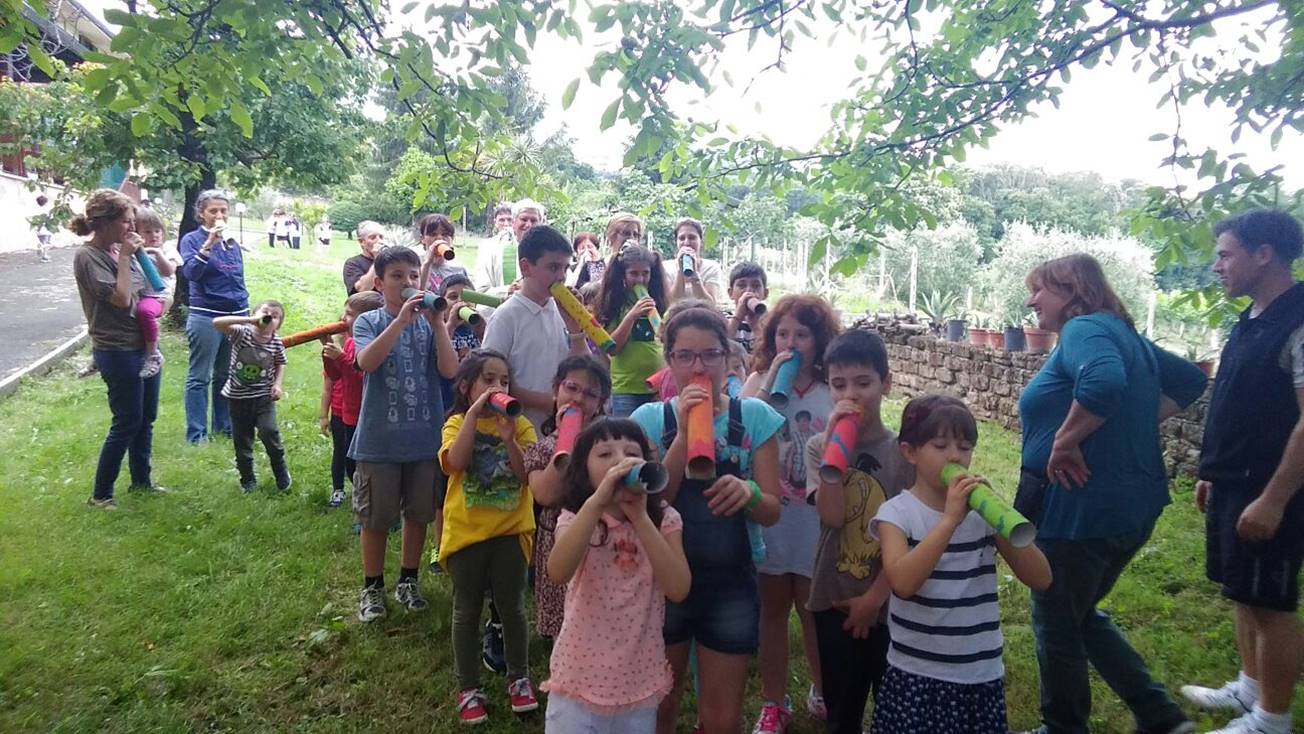
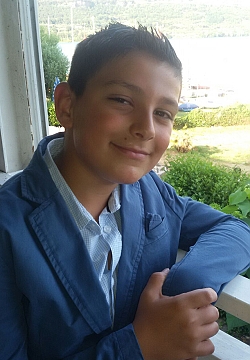
Gabriele at the Mariapolis
As to Gabriele, Fr Marco again writes: “Those eight nominal years of his existence were totally full of joy. That child knew how to play and with everyone. He would invite us, propose, organize and carry out each game in a perfectly correct way, as if it was his only task. Like everyone else on holiday, he had a notebook with the homework from school and to finish it, he had to fill up five pages each day. But because he played so much he hadn’t done so. After his dad urged him on the phone to finish the pages that were still missing, he immediately delved into it. He had always been a disciplined boy: he loved to play but his attitude in not cheating in games was the same towards prayer and all the other tasks at home and away from home. As to the seriousness with which he took part in the processions, I now see that it was the fruit of a mature faith. So it is no wonder that I saw a long line of people queuing for confession after his funeral. I saw the faces of friends transformed, overcome with pain, struck by an evangelical electric shock and who wished to change their lifestyles, opening themselves to faith.” Though Elisa and Gabriele had wanted to stay with the two grandmothers for just another night, they had prepared their suitcases before falling asleep, in order to be ready for the trip home the day after. That was an eternal day for them.
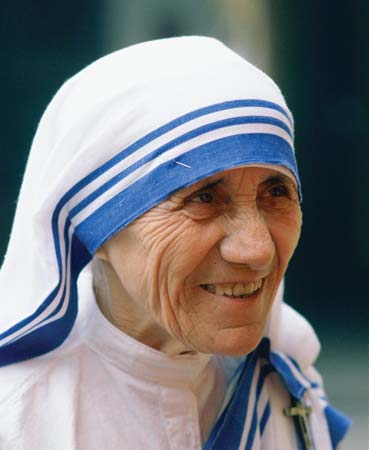
“Mother Teresa is … a great teacher of the art of loving. She truly loved everyone. She didn’t ask her neighbour if he or she was Catholic, Hindu, Muslim, etc. … Undoubtedly, Mother Teresa was the first to love. She went out looking for those entrusted to her by God. Mother Teresa saw Jesus in every person, perhaps in a way no others did. Her motto was: “You did it for me.” Mother Teresa made herself one with everyone. She made herself poor with the poor and especially in the same way as the poor. … She didn’t accept anything that the poor couldn’t have as well. We know, for example, that she and her sisters do without having even a simple washing machine, something that many people do not understand. They say: “Nowadays!” But she did not want one because the poor don’t have them. She took upon herself and identified herself with the wretchedness of the poor, their grief, their sickness and death. Mother Teresa loved everyone as herself, to the point of offering others her own ideal. For example, she invited the volunteers who spent a period of time serving in her Work to seek out their own “Calcutta” when they went home to their countries. She said: it is because there are poor people everywhere. Mother Teresa certainly loved her enemies. She never stopped to dispute the absurd accusations they made against her, but she prayed for her enemies. Yes, in her we can see “the art of loving” lived to perfection. She was … a queen of charity.” Chiara Lubich Message during a Conference Call on 25th September 1997.
Reead more: The magnificat of Mother Theresa of Calcutta as received by Chiara Lubich – Press releases SIF– 1° Settembre 2016
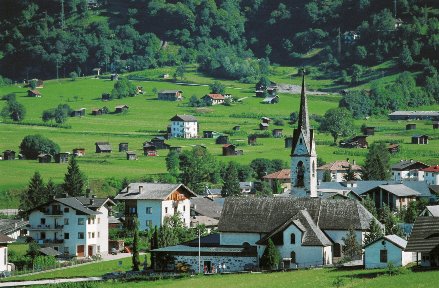
In 1959 the last of the earliest Mariapolises (cities of Mary) was held in Fiera di Primiero, Italy. The Mariapolis is probably the Focolare’s most characteristic event in which young and old people of all backgrounds spend several days together for an experience of fraternity in the light of of the universal values of the Gospel. Nowadays Mariapolises are held every year in an increasing number of countries, presenting the Golden Rule in a variety of cultural settings. On August 22, 1959 when the Cold War was in full swing and setting the Western Bloc in opposition to the Soviet Bloc, people from 27 countries who were attending the Mariapolis decided to consecrate themselves and their people of their nations to Mary. Their act of consecration was recited in nine languages and made that small “people” at the Mariapolis realize that the life of unity which was revealed and experienced in Primiero was destined to spread throughout the world. Today’s “clash of incivility” and the chaotic relations between states highlights the significance of that 1959 proposal. On August 27-28, 2016 the newly assembled Municipality of Primiero hosted a conference titled “Peoples in the Human Family”, which had as speakers Lawyer Gianni Caso, honorary president of the Supreme Court and Vincenzo Bonomo, director of the Law School at the Pontifical Lateran University. Nowadays we do not talk about peoples, but rather of states. The peoples of the world are the result of natural combinations. They own the right of self-determination; whereas, states even come to deny the existence of indigenous peoples in order not to recognize their right to self-determination. It is preferable to speak of “civil society” which, at best, can have an opinion. Peoples do not have an opinion: they have a right to self-determination and expect that right to be upheld. “Peace among peoples is the order that is willed by God,” Chiara Lubich said.And she entrusted the peoples of the world to Mary, not the states. She entrusted them to Mary as their defender, because the peoples of the world have the right to be defended. “Now, we no longer have a Cold War,” Bonomo acknowledges, “but there is a cold peace which is perhaps worse, because it is peace or a presumption of peace that is not based on shared values.” What remains today of that 1959 consecration? The proclamation of those principles is still as timely as it ever was as we try to find our way on the difficult geopolitical landscape of today’s world. For the speakers at the conference it remains the method for interpreting the facts; it remains an important means of the vision of a united world, which does not abolish the differences but celebrates them. Today there is a desire to rediscover the prophetic values that were sanctioned during that August of 1959, and the people at this year’s conference have shown zeal and determination to do that. One local politician, the Mayor of the Municipality of Primiero said that the Mariapolis of Primiero should not merely be a tourist attraction for the valley but, with its values, finally change our life.” There is need to make Chiara Lubich’s legacy grow and change Primiero into a laboratory of brotherhood among peoples. This process has also been seen in the recent not-so-easy unification of four municipalities: Fiera di Primiero, Siror, Tonadico and Transacqua. They represent four small “peoples’ that for the sake of the common good chose communion. Those that who had lived that experience 50 years ago talk about “having planted seeds that still need watering.” During the discussions a connection was made between the “Spirit of Assisi” with its relationships among religions and the “Spirit of Primiero” with its relationships among the peoples of the world. On the morning of Sunday, August 28, 2016 the 1959 act of consecration was recited again in the same crowded church of Fiera di Primiero. It was a festive sign of a newer, deeper and more responsible idea of what peace means. By Roberto Di PietroSource:Città Nuova
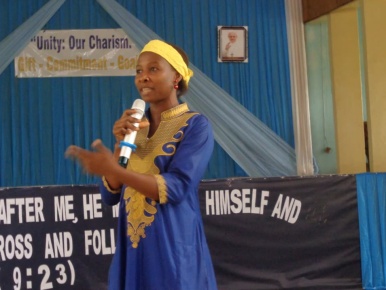
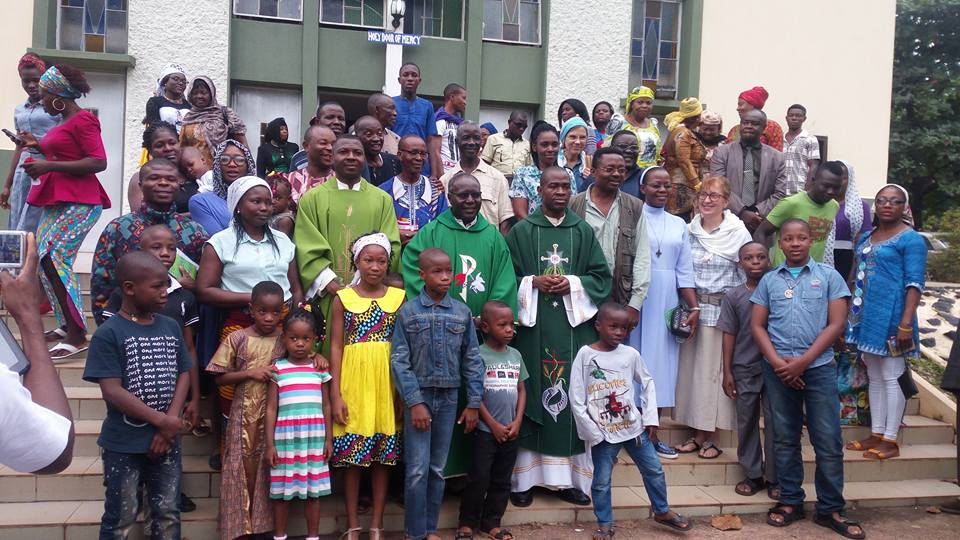
On July 2 – 7, 2016, four hundred people gathered, far from all the spotlights, for an intense experience of communion among young and old, children, priests, members of other Christian Churches and other Religions. Good deeds never make a lot of noise and the media is often more interested in news about violence, abuse of power, kidnappings and bombings. But Nigeria also has another side: the place where the Mariapolis was held, for example, Brigard National Seminary of Enugu, the largest Roman Catholic major seminary in the world. This says much about the faith that is lived so intensely in that land. The Mariapolis opened with a group of fifty young singers who presented a medley of Gospel hymns that had a lot harmony and rhythm. Suddenly the group divided as a number of couples emerged in traditional dress from the different regions of Nigeria. Each of them was identified as they crossed the stage amidst cheers and clapping. The scene closed with everyone in the hall on their feet and singing the National Anthem. There was an explosion of joy that seemed to echo the Bishop’s invitation during his homily to live out the theme of the Mariapolis with the “energy and imagination that is so common to the young.” This year’s theme was Unity: Gift, Commitment and Goal. Unity is a value that is dear to the Bishop because it is “so needed here in Nigeria.” Bishop Callistus Chukwuma Valentine Onaga of Enugu then encouraged everyone to live unity with three objectives in mind: solidarity, subsidiarity and the common good. With such a high start, the topics regarding Focolare spirituality and its concrete application to daily life fell on fertile ground. The testimonies were particularly effective and at times quite moving. They were presented by couples and single people who were committed to living the Gospel in both their daily adventures and misadventures. The witness of a member of the Pentecostal Church and young Muslim was particularly significant and helped in understanding the concepts that were being presented. Afternoons were dedicated to a wide variety of workshops that highlighted how unity can improve the life of individuals and of society. One group discussed the treasures and the challenges of family life; another reflected on how to live unity in the midst of the nation’s current problems. Other workshops offered people the opportunity to acquire some new skills: a mini-course on electricity, another for beauticians, hair stylists, and so on. These were greatly appreciated and seen as a gift that reminded everyone of Chiara Lubich and her Economy of Communion project. “It’s not a matter of wealthy people being philanthropic,” she had remarked in 1999, “but of sharing among equals, mutual giving and receiving.” Everybody wished to seal their proposal to live unity by walking together through the Holy Door at the Seminary Chapel in order to embrace the grace of this special Year of Mercy and to renew their commitment to be merciful to one another and to all. Video of the Mariapolis in Enugu https://vimeo.com/181015319
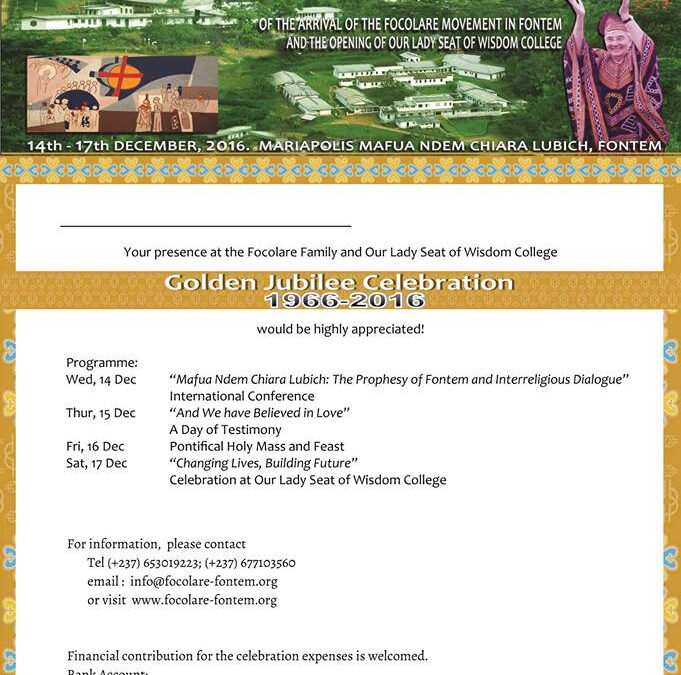
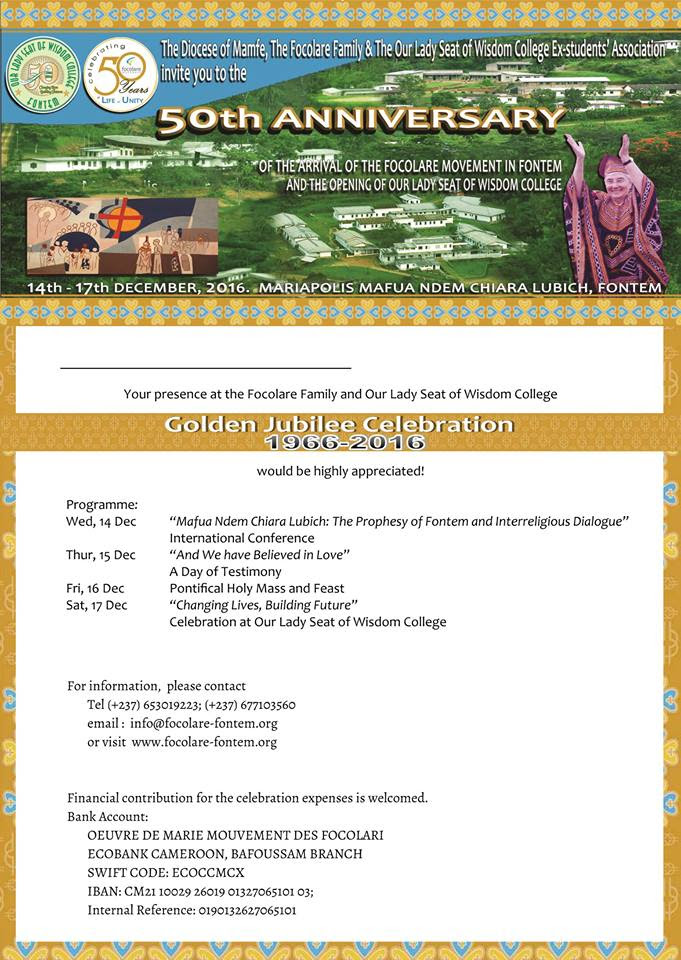
The diocese of Mamfe, the Focolare family and the Alumni Association of the school, “Our Lady Seat of Wisdom,” are extending an invitation to all for the 50th anniversary celebration (1966-2016) of the arrival of the Focolare Movement in Fontem (Camerun) and the opening of the school. The celebrations will be held at the “Mariapolis Mafua Ndem Chiara Lubich” (Fontem) from 14 to 17 December 2016. For information: info@focolare-fontem.org Web site:www.focolare-fontem.org

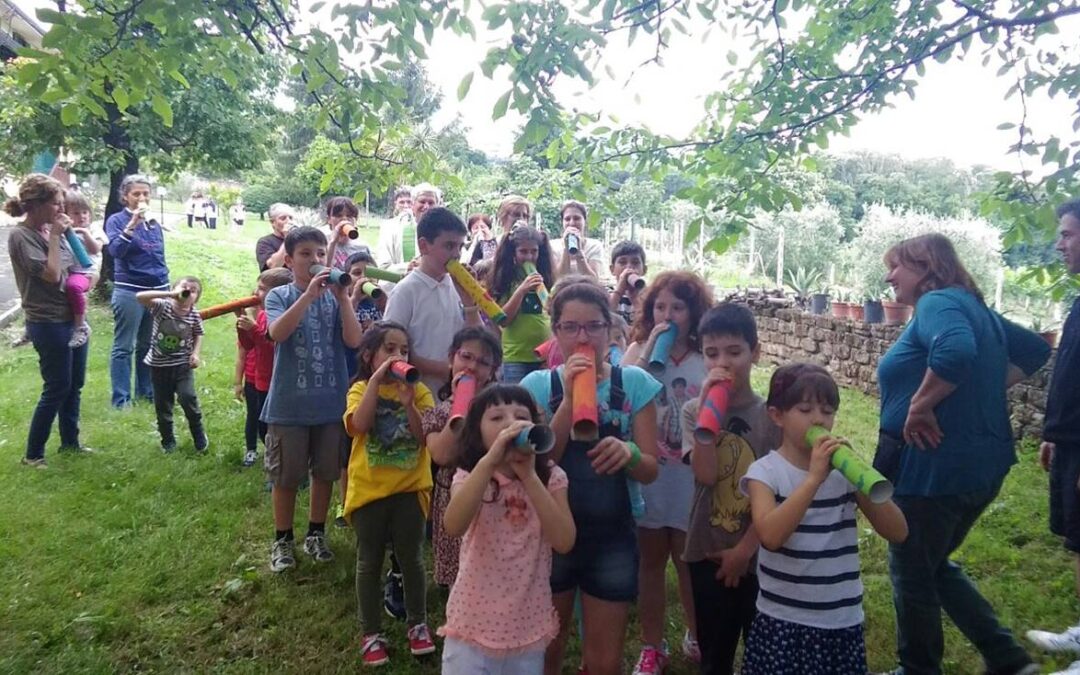
 Elisa with the entire family – a twin brother, an elder brother, daddy, and the grandmothers – just a few weeks earlier, had been to the Mariapolis – the Focolare’s summer gathering – with about a hundred other people. It had been an occasion to know each other, share life experiences, and take a step ahead together. Everyone remembers Elisa who before leaving, with her gay and contagious ways had shot a video of the impressions of her group with the help of her twin brother. “The Mariapolis is an experience that leaves its mark in one’s heart forever. I hope to go to the Mariapolis always,” she had texted her mother upon returning home. Instead, Gabriele, her little 8-year-old cousin, in mid-June had participated for the second consecutive year in the little “Gen4 congress.” It was an enchanting three-day event with the little kids who understand “the things of God” better than anyone else. A photo shows him in the role of an angel playing a trumpet upon the passage through the Door of Mercy, together with all the other boys. In the morning of 24 August the news of the earthquake arrived, and also the anguish: Elisa, Gabriele and their grandmothers were under the ruins and all feared the outcome for those who were missing. A chain of prayers immediately started like a tam-tam, but in the evening it was confirmed: they didn’t make it.
  Their families immediately gave an unwavering testimony: “Their faith in God’s love was such that even in this immense suffering, they enlightened us with renewed determination to live for that which does not pass”, wrote Maria Voce, President of the Focolare, to the stricken communities and families, the day after the earthquake. Meanwhile the Focolare communities throughout the world and Italy had launched the rescue system.