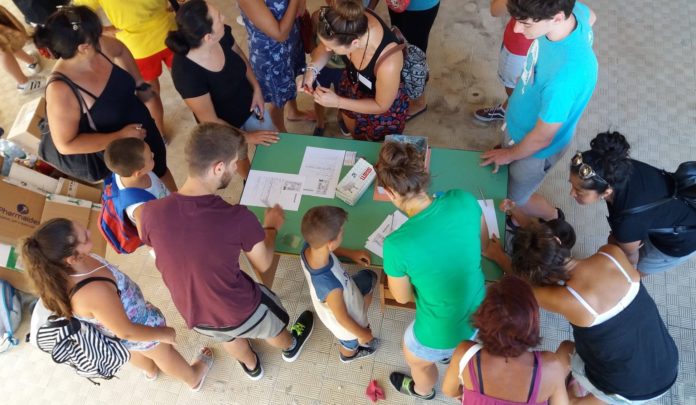
There was must festivity on August 14th at José C. Paz, fifty kilometres from Buenos Aires, Argentina. It was the 10th anniversary of a social centre that hosts the activities of the Juntos Por El Barrio Programme (Together for the Quarter), which is a social project that focuses especially on children, teenagers and their families. Even though the building is ten years old, the project began its work long before and, as is often the case, it was the people from the quarter that had initiated and carried it out. When Francis, the Pope from Argentina, invited everyone to take care of the peripheries, he was probably thinking about settlements like the barrio where the social centre is located. It is a residential settlement that was haphazardly put up behind some buildings by families that had moved to the city in search of fortune. Unfortunately, that fortune was nowhere to be found. The overwhelming unemployment made them even poorer and more vulnerable to every sort of threat: marginalization, alcoholism, drugs, violence and prostitution. And the ones most threatened were the many children and teenagers that spent most of their time on the streets. In 1999, with the support of the Focolare that had a meeting hall nearby, some local residents got together to do something for the newcomers. First they tried to identify the main issue for the barrio. It turned out to be the need for a safe place where children and teenagers could be welcomed and taken off the streets. This is how the “Juntos Por El Barrio” Project was begun. An academic support programme was set up in a makeshift classroom. Seeing how successful it was, receiving distance support from the Focolare’s New Families non-profit association (AFN onlus), many other projects were begun. With the help of donations from outside the country a building was constructed where the activities could be carried out. The centre quickly became a meeting place and a point of reference for the entire barrio.It was therefore necessary to celebrate, also because the quarter is really changing face. At Juntos Por El Barrio there are currently a variety of activities, many of them geared towards the young, but also towards people of all ages: food and nutrition, preventive health, sewing, literacy, artisan and screen printing workshops, classes for gardeners, hair-stylists, tailors and recreational activities. More than 70 families are supported by the project, and the centre is visited by 200 people every week. The 220 people that took part in the August 14th celebrations – including a hundred children – were spurting happiness from every pore. They all felt like protagonists not only of the feast, but also of their own liberation. Perhaps because they felt like they were part of a process in which what comes into light is not giving and receiving, but reciprocity.
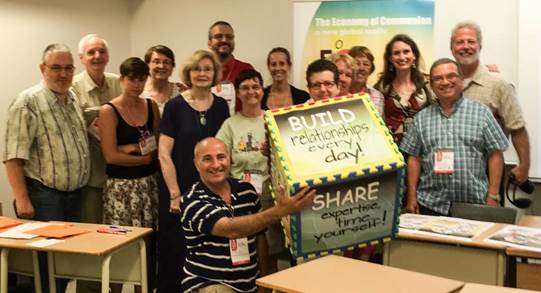
Courtesy Week at Yvonne’s school in Toronto, Canada, received a surprise visit from a Minister of the Canadian government who wanted to know more about how the students had used the Cube of Love to change the atmosphere in their classrooms, increase service and attention to others and alleviate bullying. That Peace Project received an award as one of the most exemplary practices in the school district and was adopted by other schools with the encouragement of the Minister of Education. In North Riverside, Illinois, USA, Carol began a social project called “The Art of Caring for Each Other”, which was adopted by the public administration and transformed foreigners and suspicious neighbours into a community marked by welcome and sharing. These are just a few of the best practices that the Focolare’s New Humanity Movement presented at the World Social Forum in Montreal, Canada during the second week of August. Projects, studies, social action and artistic performances helped to imagine that “Another world is necessary, together it becomes possible!”. It was the title chosen for this 12th edition of the worldwide workshop which originated in Porto Alegre, Brazil, 2001, as a response to the economic forum that was held by world economic leaders in Davos, Switzerland. The Social Forum provides an independent space to diverse expressions in civil society that are trying to bring change in the areas of human rights, economy, renewable energy and democracy. The Humanity Movement’s three public workshops at McGill University of Montreal and Quebec were an expo of best practices from the social, economic and political fields that have been influenced by Chiara Lubich’s charism of unity. Jean Charles Bitorirobe from Burundi, now a Canadian citizen, wanted to help heal the wound of ethnic conflict that still divides Hutu and Tutsi in his country and also in Quebec. “Our centre is meant as a cultural centre for all Burundians regardless of their ethnic roots. In February we gathered more than 420 people to share experiences, our sad baggage from the past and traditional customs that should no longer continue to divide our people. Our inspiration is the charism of unity.” Jean Claude also began a soccer team, a Kirundi language and dance class, a fundraiser for 150 mentally disable children from Burundi and a supper of typical dishes and traditional music. “Some people immediately thought we were thinking of starting a political party, but we only want to work for unity, and the ambassador expressed acknowledgement and appreciation of our work.” Cameroon politician and point of reference for the thousands of women Volunteers of the Focolare Movement, Patience Lobè, brought the workshop to a close. She had received death threats and was the target of several assassination attempts for having denounced corruption in the Public Works system in her country. “I felt I had to fight for justice. I don’t know if this is because it is part of my nature, but I do think that God uses us as his instruments.” As a civil engineer she earned a good salary, but the poverty all around her would not let her rest, and so this courageous woman created professional development centres that have led to jobs and cooperatives like the organic chicken farm that is now showpiece of the industrial edifice of the country. “Hunger and poverty are first of all a problem of values, but if we put ourselves together we can create the change and be people that do something new.” And that is totally in tune with the job description of the Social Forum.
Guitar, drums, acoustic bass, piano, saxophone and the voices of Gen Rosso. Twenty songs from 50 years of music-making: Un’altra umanità, Nascera, Costellazioni, and more. An acoustic and multi-cultural concert in three languages: Italian, Spanish and English. Below are the dates and locations of Gen Rosso’s tour in Spain: September 16, Teatro Jacinto Benavente de Galapagar, Madrid September 18, Teatro Fernández Baldor de Torrelodones, Madrid September 21, Auditorio Fundación Caja Rural de Granada September 23, Gran Teatro de Cáceres Sepember 24, Teatro Auditorio Riberas del Guadaíra, Alcalá de Guadaíra, Seville September 27, Vigil of Mercy at 20:30, Parish of San Pedro Poveda, Jaén September 29-30, Borja Hall, Valladolid October 2, Auditorio Colegio La Sagrada Familia, the Marists, Cartagena, Murcia Gen RossoInternational Performing Arts Group is known for its internationality and the personal commitment of its members to spread a message of universal brotherhood and peace in favour of a more united world.
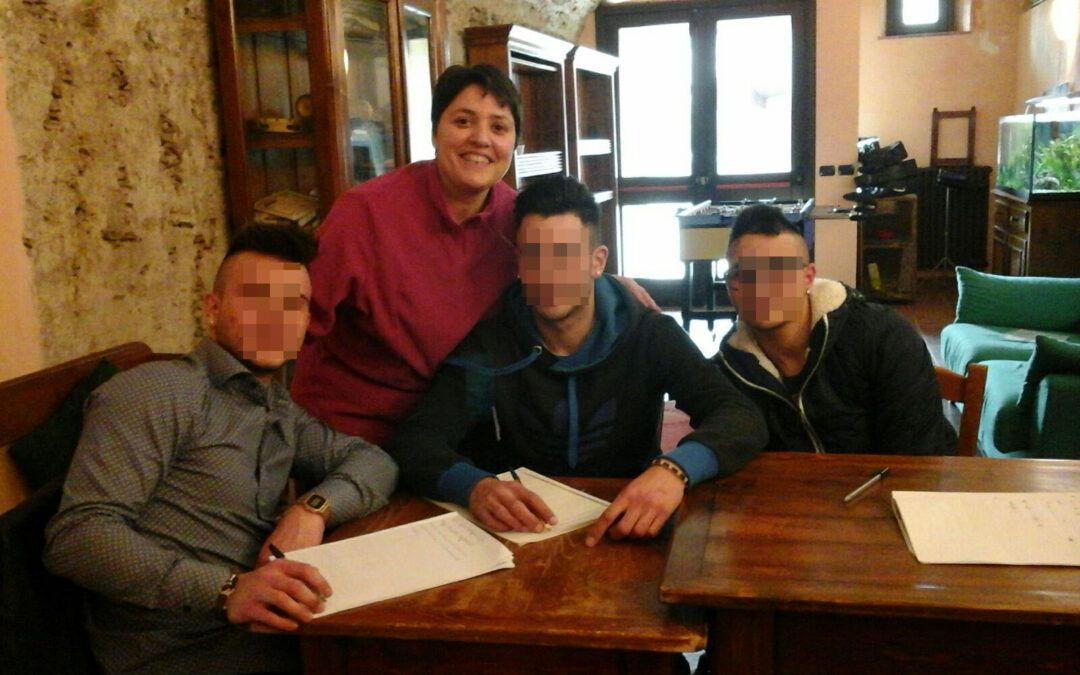
“I come from a simple family in the province of Naples. In my town, my father, a special deacon of the Eucharist, was in charge of the sick and the poor, who had in some way become members of our household. I was14 when dad passed away due to a tumour. I suffered so much, and in that time I didn’t believe that God was taking care of us, as he had always said. I threw myself into my studies, with the objective of earning lots of money to build a house of my own.At the age of 20 God appeared once more in my life: a group of friends had invited me to a meeting of which I honestly remember nothing; the only thing that pushed me to frequent succeeding ones was the joy I saw amongst them, and which was lacking in my life. I excelled in my studies, and had many friends but was not happy like them. I wanted to get to know more about this God they spoke to me about, and after a few years, also what I wanted to do with my life. I was introduced to my congregation almost by chance. To be sincere, I didn’t hold the nuns in great esteem. In my region the convent is still regarded as an escape from the world: and this certainly was not the life I wanted! I am a joyful, happy person and l love being with people. I had a degree and also many boyfriends. But in this religious family I found the love of my life – God, to whom I couldn’t say no. This was the house I had sought ever since I was an adolescent, but now with an addition: I was no longer alone, but had other sisters who loved Jesus, like me. My religious family – the Franciscan nuns of the Poor – had met the Focolare Movement at the turn of the 1960s. That period had been a painful one for the Congregation due to many internal problems. Our charism – to see Jesus in the poor and treat his wounds – in contact with the spirituality of unity, had taken on a new light and the Gospel with its message of mutual love was the answer to all that pain. The nuns created a Youth Centre so that the young girls could find their aim in life. Upon returning to the source of our charism, we also understood that the poor are not only in the sick, but in every suffering person. Today in Italy we care for the homeless, and the women who decide to escape from the trafficking of migrants, and work with the Caritas. We offer our help and consultancy also in the framework of the families: new unions, separations and divorce. We also work in the prisons and with minors, etc. Over the last six years I have worked as a teacher in Messina – I have a degree in Educational Sciences – in a therapeutic community for youths subjected to the control of the Juvenile Courts. I used to visit them to help them discover their importance in society. They would often say: “When you are with us, we feel the presence of something beautiful and good, could this be Jesus?” Recently, my superiors received a request for someone to work under a permanent contract, in the prisons of the Philippines and with street kids. I was assigned the job since the experience I have acquired in this field could be of great help. I have already said yes to God and do not want to back out just now. In September I shall leave for six months, to see if I can give my contribution there.”
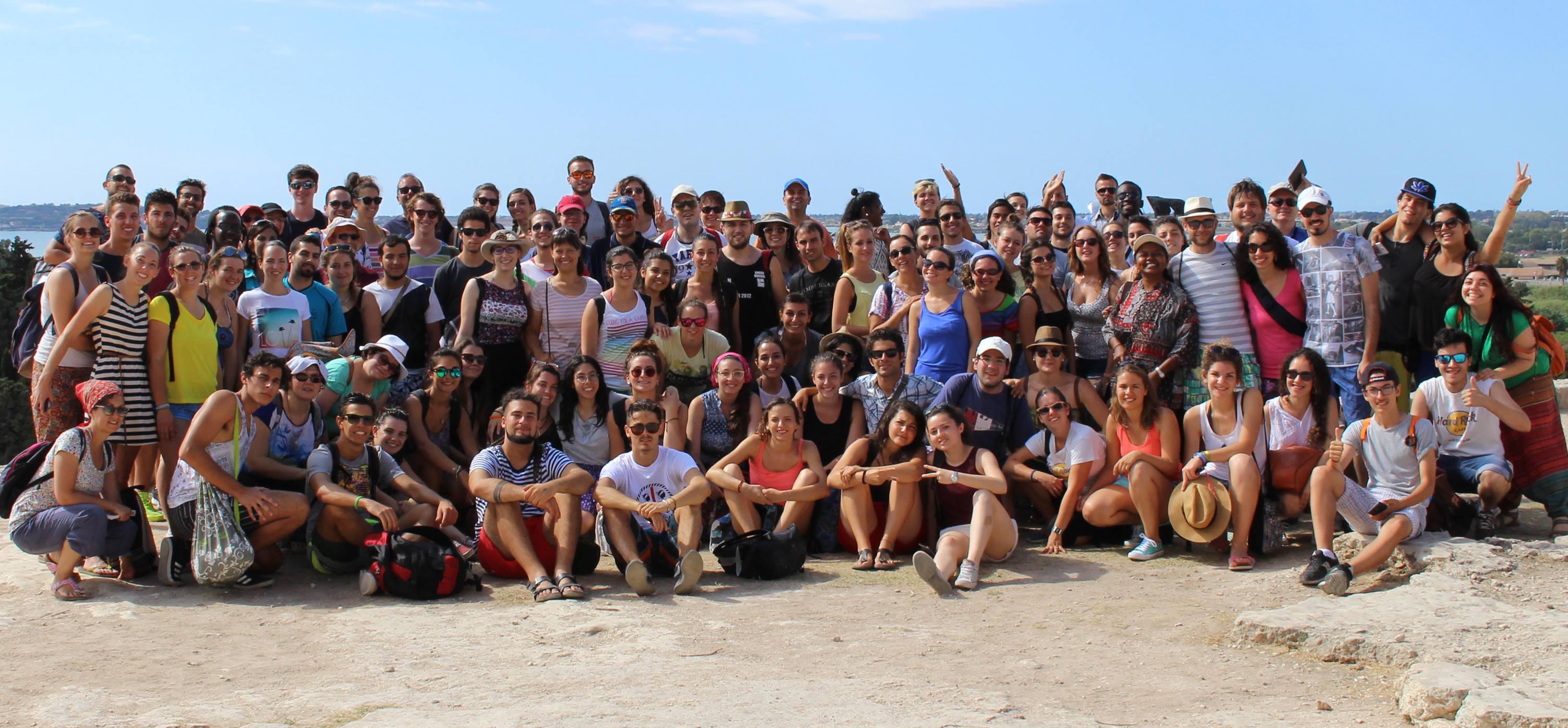
“Now let’s not call this an alternative vacation,” insists 21 year-old Nahomy Onate. “Many of us are regulars here on the Campus and so it’s no extraordinary experience for us but part of our life.” Nahomy comes from Reggello, Italy, close to the Focolare’s international town of Loppiano. She is actively involved in the Syracuse Summer Campus that was organized by young people from the Focolare. The local gazette reported “Youth For A United World Encounter Syracuse’s Peripheries”. This will be the third consecutive year that the neighbourhoods of Akradina, Tika and, this year, Grottasanta have hosted this experience which focuses on building relationships and acknowledging the human dignity of every person. A hundred and twenty young people from 17 Regions of Italy spent 10 days together, animating the peripheries with workshops on dance, journalism, theatre, drawing, and more. Over a hundred children and teenagers between the ages of 6 and 13 took part. “I had already been here for the second edition of the project and knew more or less what to expect. I was also familiar with the disadvantaged situation of this neighbourhood. But the moment we got here, the general attitude of everyone really struck me: we were willing and ready to give of ourselves for 10 days. And that’s what happened.” Nahomy explained that what was new this year was Grottasanta, another disadvantaged and at-risk neighbourhood of the city. “When we arrived in front of the school where we would be conducting the activities with the children and teenagers, the scene before me really shocked me: The shiny sea seemed to frame the once grand and now run-down palaces that stood like symbols of the social degradation that had taken place. Education is often the first thing to give a sense of dignity to a human being, but the conditions of that school just didn’t allow it to provide anything to anyone. Yet beyond the gate were mothers, teachers and children who welcomed us with huge applause and with much hope for change in their eyes. This was all it took to make us realize that despite the short time we had at our disposal, we had to place all our bets on this most fragile part of society and give all of ourselves. This is what each one of us did, establishing close fraternal relationships with each one of them. Following a very harsh argument between two little boys, my eyes were opened to the daily reality in which they live: Violence, taking revenge and indifference are the ‘values’ they are raised on. In front of that situation which had been created, we tried to explain to them that it was better not to respond to violence with more violence, that there are other ways, even though no one had ever shown them those ways. ‘Let’s quit acting like the mafia,’ said one of the boys, ‘I don’t want to see violence and revenge in this neighbourhood any more. Now, we’re changed.’ It only took a few days inside a whirlpool of mutual love for this boy to pronounce those words to his peers. The seed that we had been planting and watering over these three years and during those few days was growing. We were leaving something in them. We realized that they were the future and that it’s always possible to change and be different, to be better. In those neighbourhoods of Syracuse you find only one of the many peripheries of Italy, and we no longer want to ignore so many situations that are happening even in our own cities, places in the world that are losing their values, their love and their courage. I returned home a bit nostalgic and sad: I miss each of the children, but I also feel charged and full of their love, their smiles and their will to change their world.”

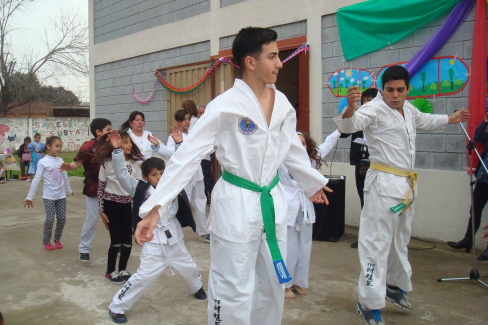
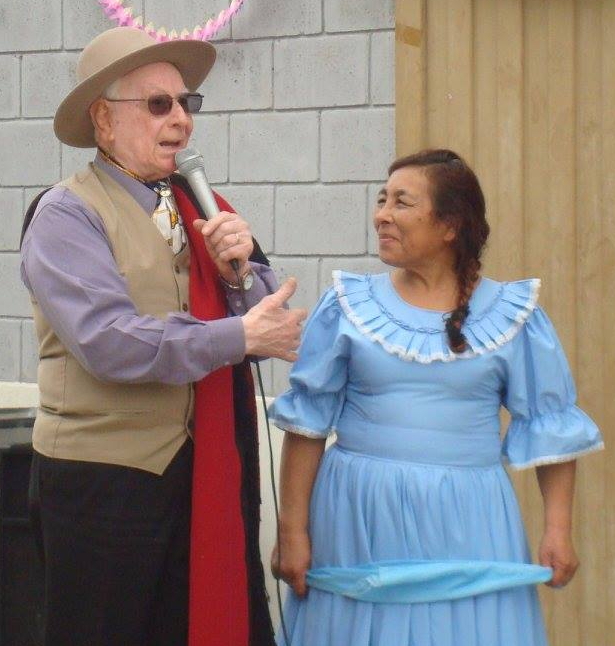 There was must festivity on August 14th at José C. Paz, fifty kilometres from Buenos Aires, Argentina. It was the 10th anniversary of a social centre that hosts the activities of the Juntos Por El Barrio Programme (Together for the Quarter), which is a social project that focuses especially on children, teenagers and their families. Even though the building is ten years old, the project began its work long before and, as is often the case, it was the people from the quarter that had initiated and carried it out. When Francis, the Pope from Argentina, invited everyone to take care of the peripheries, he was probably thinking about settlements like the barrio where the social centre is located. It is a residential settlement that was haphazardly put up behind some buildings by families that had moved to the city in search of fortune. Unfortunately, that fortune was nowhere to be found. The overwhelming unemployment made them even poorer and more vulnerable to every sort of threat: marginalization, alcoholism, drugs, violence and prostitution. And the ones most threatened were the many children and teenagers that spent most of their time on the streets.
 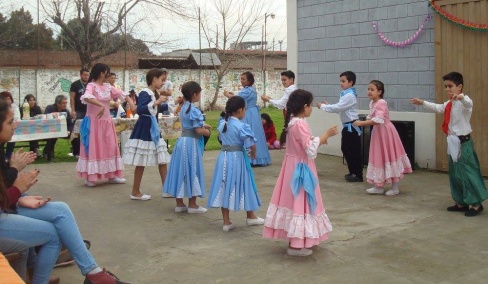 In 1999, with the support of the Focolare that had a meeting hall nearby, some local residents got together to do something for the newcomers. First they tried to identify the main issue for the barrio. It turned out to be the need for a safe place where children and teenagers could be welcomed and taken off the streets. This is how the “Juntos Por El Barrio” Project was begun. An academic support programme was set up in a makeshift classroom. Seeing how successful it was, receiving distance support from the Focolare’s New Families non-profit association (AFN onlus), many other projects were begun. With the help of donations from outside the country a building was constructed where the activities could be carried out. The centre quickly became a meeting place and a point of reference for the entire barrio.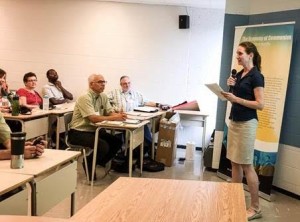
 Courtesy Week at Yvonne’s school in Toronto, Canada, received a surprise visit from a Minister of the Canadian government who wanted to know more about how the students had used the
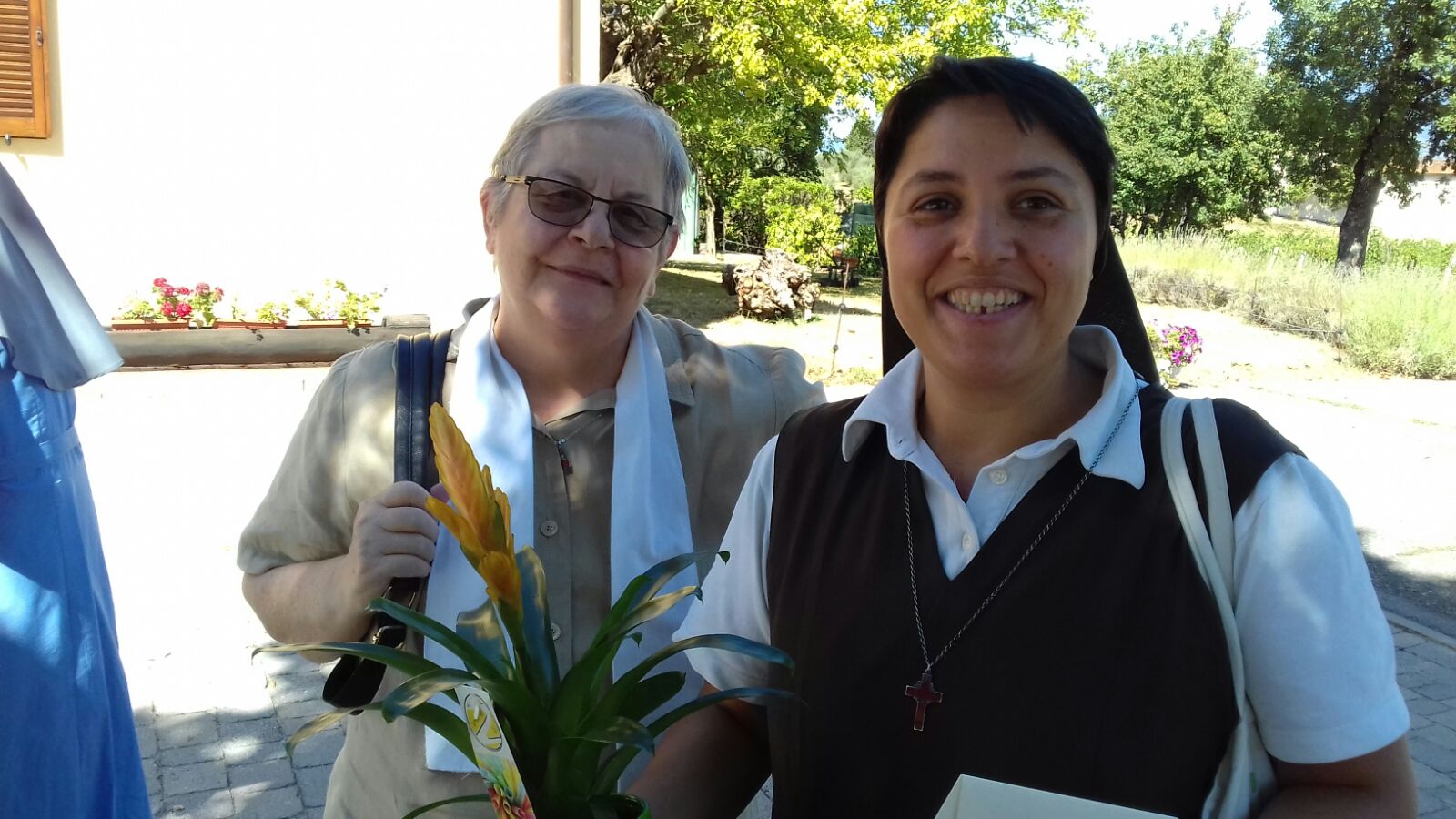 “I come from a simple family in the province of Naples. In my town, my father, a special deacon of the Eucharist, was in charge of the sick and the poor, who had in some way become members of our household. I was14 when dad passed away due to a tumour. I suffered so much, and in that time I didn’t believe that God was taking care of us, as he had always said. I threw myself into my studies, with the objective of earning lots of money to build a house of my own. At the age of 20 God appeared once more in my life: a group of friends had invited me to a meeting of which I honestly remember nothing; the only thing that pushed me to frequent succeeding ones was the joy I saw amongst them, and which was lacking in my life. I excelled in my studies, and had many friends but was not happy like them. I wanted to get to know more about this God they spoke to me about, and after a few years, also what I wanted to do with my life. I was introduced to my congregation almost by chance. To be sincere, I didn’t hold the nuns in great esteem. In my region the convent is still regarded as an escape from the world: and this certainly was not the life I wanted! I am a joyful, happy person and l love being with people. I had a degree and also many boyfriends. But in this religious family I found the love of my life – God, to whom I couldn’t say no. This was the house I had sought ever since I was an adolescent, but now with an addition: I was no longer alone, but had other sisters who loved Jesus, like me. My religious family – the Franciscan nuns of the Poor – had met the
 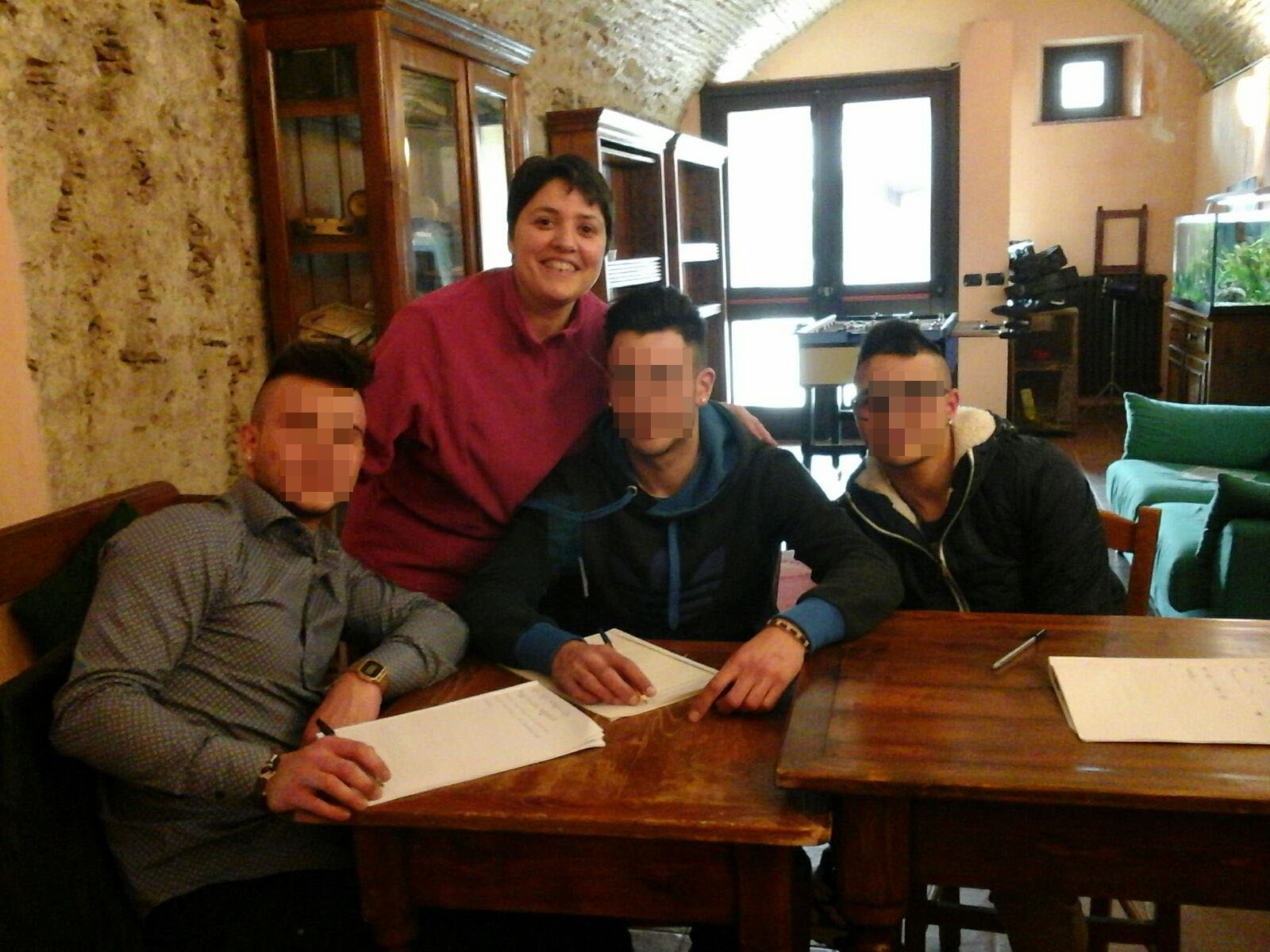 Today in Italy we care for the homeless, and the women who decide to escape from the trafficking of migrants, and work with the Caritas. We offer our help and consultancy also in the framework of the families: new unions, separations and divorce. We also work in the prisons and with minors, etc. Over the last six years I have worked as a teacher in Messina – I have a degree in Educational Sciences – in a therapeutic community for youths subjected to the control of the Juvenile Courts. I used to visit them to help them discover their importance in society. They would often say: “When you are with us, we feel the presence of something beautiful and good, could this be Jesus?” Recently, my superiors received a request for someone to work under a permanent contract, in the prisons of the