
Luminosa Award for Unity
Dr Tarunjit Singh Butalia

Dr Tarunjit Singh Butalia
Monday and Tuesday 19th and 20th of September 2016: different arrivals in Rome Wednesday 21st September 2016: Participation in an Audience with the Holy Father – Pope Francis in the Vatican – after the Audience, visit of the Tomb of Saint Peter the Apostles and the Popes – Visits of some selected holy sites of Rome Thursday 22nd September 2016: Touristic visit of Rome – Catacombs, Colosseum and Basilicas of Rome. Departure to Loppiano (Florence – first Focolare Citadel in the World created by Chiara Lubich) night at Loppiano. Friday 23rd of September 2016: Visit of Loppiano and meeting with the inhabitants of Loppiano Saturday 24th of September 2016: Departure from Loppiano to Trento – Chiara’s native town and citadel. A stop in Florence town – touristic visit. Night at Trento Sunday 25th of September 2016: Visit of Trent and inhabitants, Institutions, Municipality (Mayor) and Bishop of Trent. Monday 26th September 2016: departure from Trento to Rome – a touristic stop at Venice. Night in Rome – Castel Gandolfo . Focolare International Mariapolis Centre. Tuesday 27th September 2016: visit to the tomb of Mafua Ndem Chiara Lubich, at the Focolare Headquarters in Rocca di Papa. A meeting with the Centre of the Focolare Movement. Wednesday 28th September 2016: Departure and end of the Pilgrimage.

The fruits of the Word “For years now, three of us have been asking the new parish priest to talk more about the Word of God. So he arranged for us to hold a meeting before Mass every Sunday. The more we strived to put the Word into practice, the more people kept asking to participate. In a few months, we formed a big group. There was a strong family relationship among the frequent participants, and in the parish the atmosphere started to change. Now we were no longer satisfied only with prayer and individual efforts to be good Christians, but were involved in a journey where each one tried to reach the goal of sanctity with the others. We strongly felt the presence of Jesus at our side and in our midst, and this started to show its effects: besides the joyful discovery of a new image of the Church, we began to feel the need to also share material things with the less fortunate, and support the disadvantaged families, disoriented youth, and people who needed to rediscover God’s love. And this was not only within the framework of the parish.” (Lucio – Italy) The forgotten Christmas bonus “I was at the market when I remembered that my parents didn’t have any money, so I did the shopping also for them. On my way home, I noticed a girl crying in the street: she was hungry and her family – she told me – had nothing to eat. After consulting my husband, Antonio, we decided to bring to that family half of our monthly groceries. The next day our neighbour’s daughter came to confide that her father had gone away to look for work and no longer returned. Also they, with many children, had nothing to eat. I said to myself: “Enough of all this, we have already done our part!” But when Antonio reminded me that we still had not given what was necessary, once again we divided the remainder of our supplies. By then there was no money left for the shopping, but every day we received some help from someone. At the end of the month my salary was double. It was not a mistake: I had forgotten about my Christmas bonus.” (B. P. – Brazil) Tradition with a new heart “As a tradition in our society, particularly in the villages, the men do not help in the housework, and the women go to work even when they are sick: they do not consider themselves as victims and neither do the men feel cruel. It was so also in my house. If my wife was doing some chore and was reading a book or watching TV, it never occurred to me to get up if our son was crying: it was her task. When with the help of my Christian friends, I realized that the others had the right to receive my love and help, I felt I had to start especially at home. One day, when my wife who was preparing breakfast had to tend to the baby, I set the table for her. When she returned, she was surprised but did not make any remarks. But when I ironed my own shirt to go to the office, it was simply too much for her…. So I told her about the beauty of being the first to love and doing to others what we want others to do to us. Now there is more harmony in the family.” (W.U. H. – Pakistan)
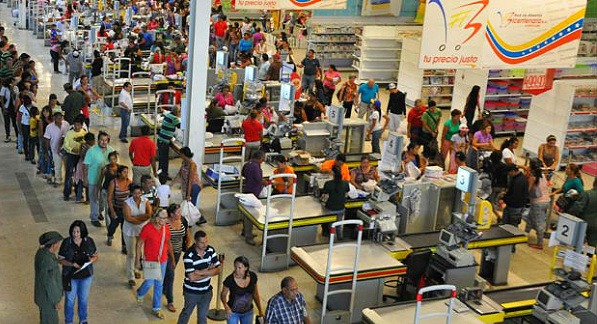
The news reaching us from Venezuela is not at all comforting. Furthermore, the Latin American Country is not only exhausted but also divided. In this framework, the Focolare community is making every effort to create reconcilement and solidarity, sharing all they have. The community of Colinas de Guacamaya (Valencia), after asking themselves in what way they could face this time of social, political and economic crisis that is reaching its peak, has responded by doubling their commitment to putting into practice the Gospel’s new commandment of mutual love, starting from the small daily gestures. One of them wrote: «Today, while I was buying 12 rolls of toilet paper at the supermarket, I thought of the many people here in Venezuela, who can find none on the shelves even if they had the money. I called a friend who was happy with the news and she asked me to get some for her. In turn she asked me if I needed anything, and so I told her that there was no more soap in the house. “Ah – she answered – I can give you some, and what’s more, you can take with you also some bananas which my son has just brought.” Once again I experienced concrete love, and when it circulates, that promise, “give and you shall be given,” which Jesus talked about, becomes a reality.» Those are simples acts, but also extreme ones, if we consider that for a stolen mango, people get to kill one another. Another woman recounted: «At the start of the day I met someone who was looking for cooking oil, and since I had some, I shared it with her; after a while I met another person who needed an injection, and so I administered it with great care. Much later a woman came knocking: her little girl had a bad case of flu and needed the nebulizer which luckily I had, and which I had already lent to many people. While passing by a friend’s house, I took the opportunity to ask if she needed anything: “Yes, some detergent for the laundry,” she said. I ran home to get mine and halved it with her. Since my husband works on the night shifts, in the evening some member of the community keeps me company. Having received an act of solidarity, I took the opportunity to prepare the dinner, knowing that there were those who did not have enough food. Upon examining my day before falling asleep, I feel a great joy: we have lived for one another, and together helped each other to live the Gospel. Tomorrow will give me another opportunity to see in every person that passes me by, the special presence of God.» The problems of the country are so great that these daily narrations may appear to be naive, or insignificant, like small drops in the ocean, and we all hope that solutions may come at the political, economic and social levels. Mother Theresa of Calcutta affirmed that “what we are doing is just a drop in the ocean, but if we fail to do this, the ocean would have a drop less.” It seems that this small community of Venezuela also has the same conviction.
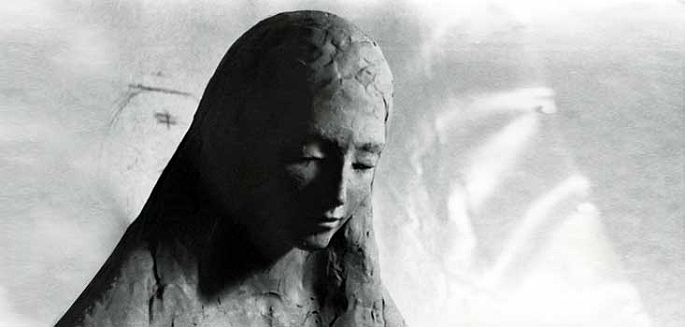
Ave Cerquetti, ‘Bella Accoglienza’ – Rome, 1961