3 Oct 2022 | Senza categoria
15 projects selected for the Seed Funding Program, a micro-financing programme that supports and encourages significant and promising integral ecology initiatives worldwide. The Focolare Movement, FaithInvest and MundellEarth support the project.. Today the world is facing a complex social and environmental crisis, and people are mostly eager to find solutions to deal concretely with this problem. Acting for the good of our “common home”, as Pope Francis likes to call the earth, listening to “the cry of the poor, of the planet and of the new generations”. The Focolare Movement has also decided to play its part and has realised to be responsible for studying in depth the problems afflicting the world and to engage itself in concrete actions. With this desire to find strategies from an integrated approach, the Seed Funding Program (SFP) was born in partnership with FaithInvest and MundellEarth. The SFP is a micro-financing programme that aims to sustain and encourage significant and promising initiatives in different parts of the world towards the realization of local ecological plans within the Focolare communities to journey together towards an integral ecology. From the Philippines to Argentina, of the 33 projects that responded to the call, 15 were selected to receive the funding and develop their work with environmental and social aspects in their communities. The projects are youth-led, with intergenerational efforts, placed in their local communities, oriented towards integral ecology and motivated by spiritual values. During the SFP Kickoff meeting that took place on September 3rd, all the participants were able to be inspired by each other’s projects – from recyclable carpentry cooperatives to the integral formation of the youth. A great moment of sharing was also attended by Catherine Devitt (Faith Plans Programme Manager of FaithInvest) John Mundell (President of MundellEarth) and Etienne Kenfack (Focolare Movement Advisor for the ‘Physical Life and Nature’ aspect).
Ana Clara Giovani and Bianca Carvalho
Here are the projects Get to know more here: https://www.new-humanity.org/es/project/seed-funding-program/
10 Sep 2022 | Non categorizzato
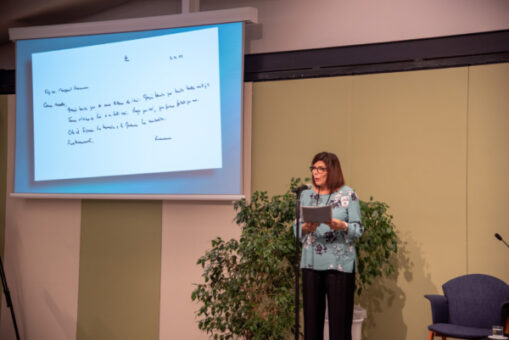
In addition to the joy of being together again in person after the pandemic, an unexpected and affectionate greeting from Pope Francis has arrived to those with overall responsibility for the Focolare Movement around the world, who are meeting from 10th to 23rd September. “I am grateful for so much good news. I am close to you personally, and to all of you. I assure you of my prayers, please pray for me too.” These were the Pope’s words in reply to a letter from Margaret Karram, President of the Focolare Movement, with which she chose to open the meeting of those responsible for the Focolare Movement in the world, together with its General Council. The President told the 104 people at the meeting that a few days ago she had felt urged to write to the Pope, to thank him for his constant closeness to her and to the Movement, hoping to give him joy. In her letter dated 6th September, among other things, she told the Pope: ‘A year and seven months have passed since I was elected President, and I confide in you that it has been a very demanding time with many challenges to be faced and many decisions to be made. I have understood more and more your words referring to the ‘pruning’ which is necessary for growth and, as I renewed my choice to embrace Jesus crucified and forsaken in this pruning, I perceived that I became more humble, I felt greater hope, and that my unity with you, Your Holiness, was ever stronger, together with the certainty that God is at work. At the same time, I witnessed a great fruitfulness and, in individuals and communities, I witnessed steps in spiritual growth being taken. I also saw greater care for the ‘least,’ and many tangible actions to help those who suffer the most’. Margaret concluded by assuring the Pope of the prayers of everyone in the Movement. She was very surprised when the following day she received this handwritten reply from Pope Francis:
7.9.22
Ms Margaret Karram My dear sister, Thank you very much for your letter to me yesterday. I am grateful for so much good news. I am close to you personally, and to all of you. I assure you of my prayers, please pray for me too. May the Lord bless you and may Mary protect you. Fraternally, Francis 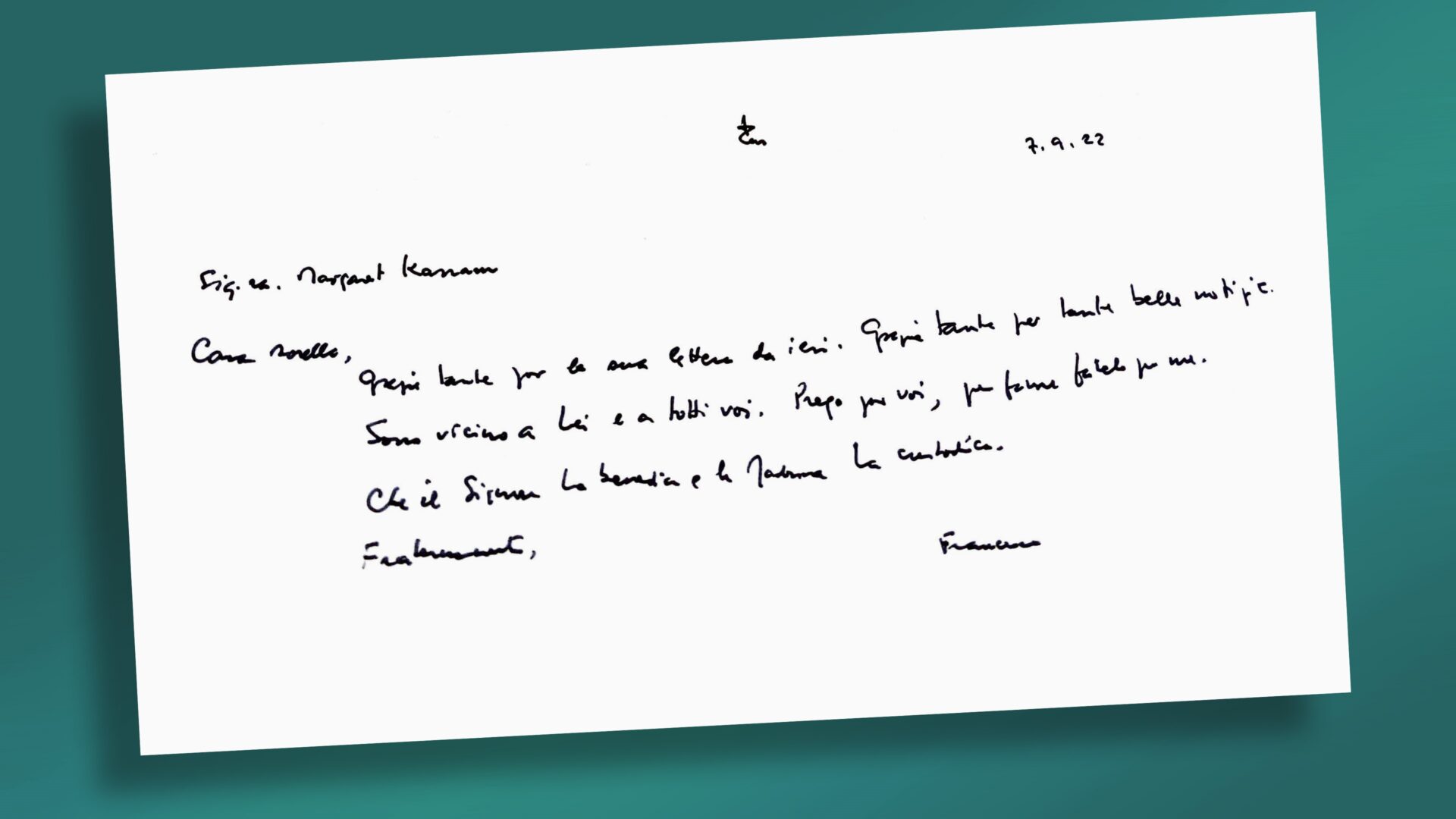
5 Sep 2022 | Non categorizzato
On 2 June 2000, the first conference on ‘Communication and Unity’ was held, in which Chiara Lubich presented to those attending, the model of the ‘great communicator’: Jesus in the moment of his forsakenness, the mediator between humanity and God. She then listed the guiding principles of communications inspired by the charism of unity. It is unthinkable that a new communication be imposed from above, by some international agency or institution. It will come rather from the experience of communicators who have God-Love as a model for communication and as a paradigm for professional relations. Guiding principles of our communication—And indeed it is God-Love that those of us who are involved in communication seek to draw upon. They have developed out of their daily experience an original way of communicating. We present it here as a small contribution to the body of research being developed today. The first thought: for them communication is essential. The effort to live the gospel in everyday life, the experience of the Word of Life, has always been indissolubly united with communicating it, describing the various steps and the results, since it is a law that we love others as ourselves. They believe that what is not communicated is lost. So life generates light, both for those who speak and for those who listen, and it seems the experience is fixed in eternity. They have almost a vocation for communication. The second thought: to communicate, we feel the need “to make ourselves one” as we say, with the one who is listening A third thought: emphasize the positive. It has always been our way to put what is good into light, out of a conviction that it is infinitely more constructive to point out what is good, dwelling on the good and positive aspects, than to stop at the negative, even though whoever is in a position of responsibility has the duty at the proper moment to point out errors, shortcomings and failures. Finally: the person matters, not the media, which are merely an instrument. Bringing about unity first of all requires the indispensable means, which is the person, St. Paul’s new self, who has welcomed the mandate of Christ to be leaven, salt, light of the world.
Chiara Lubich
(Chiara Lubich, Essential Writings, New City Press, New York, and New City London 2007 p. 295-296)
1 Sep 2022 | Non categorizzato
As part of the programme of activities for United World Week 2022, the preparation team from Cochabamba (Bolivia), in coordination with the ‘Casa de los Niños’ in the same city, organised a visit to the rural community of Carpani 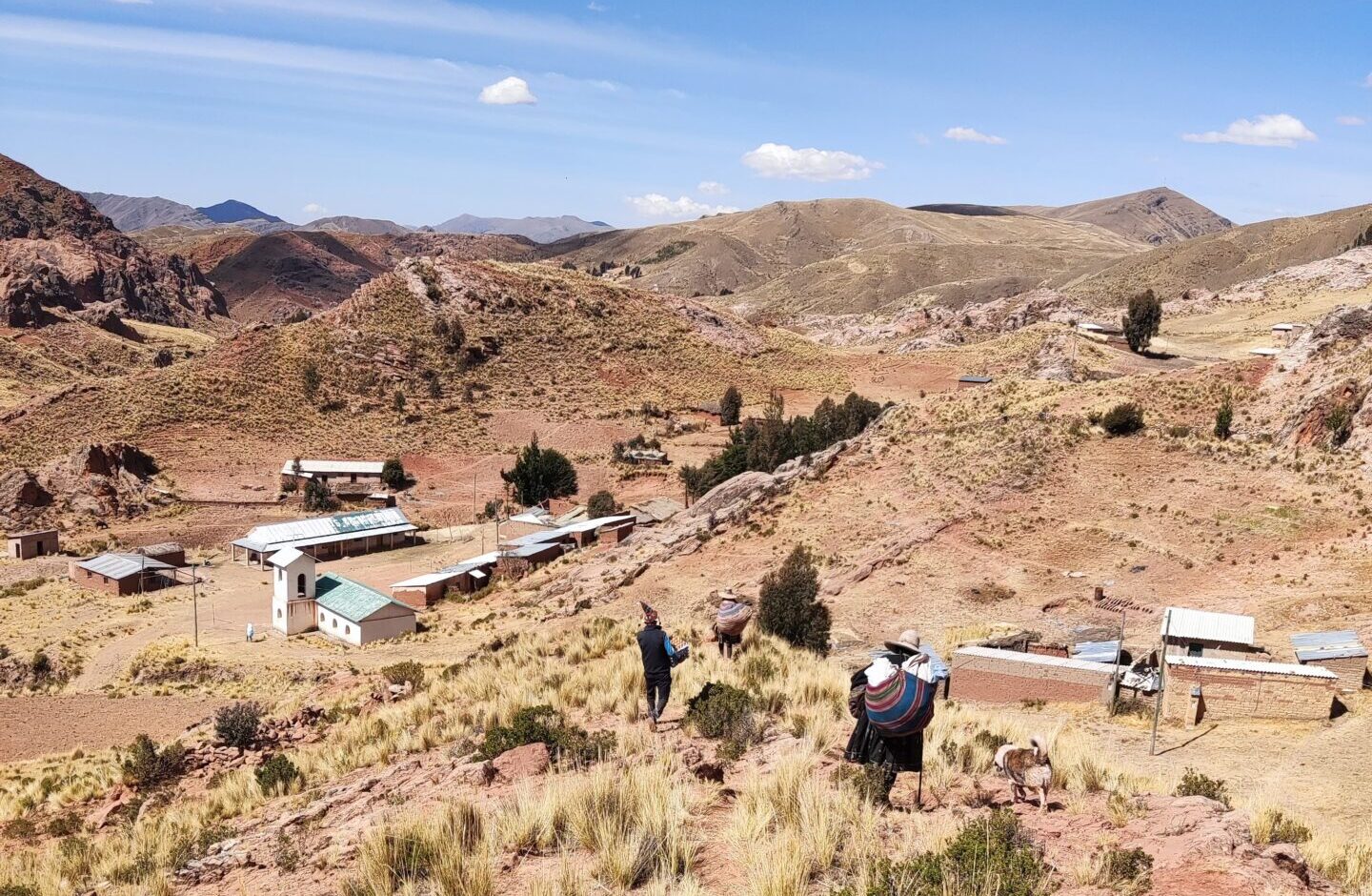 Carpani is a small town of 250 inhabitants, located in the Bolivian highlands (3,900 metres above sea level), between the departments of Cochabamba and Oruro. The invitation to visit the village was addressed to young people in particular but also to anyone else who was interested in joining. To get to the small town of Carpani (135 km from Cochabamba), we travelled for three hours on a mostly tarmaced road along an uphill mountain path. We then continued on a dirt track for about 15 km, and finally we followed a minor diversion, on a small road, to reach the village of brick and adobe clay houses nestled in the mountains. “The preparatory phase of the trip involved getting various goods, such as food and school materials for the small school which has just one multi-grade class,” says Aristide, head of the ‘Casa de los Niños’ (www.lacasadelosninos.it). Unfortunately, it has been neglected by local and national authorities who even withdrew the teacher’s salary but it has been receiving support from the ‘Casa de los Niños’ for many years – which also takes its inspiration from the charism of Unity – which tries to meet some of the many needs of the small population, sustained by a meagre production of potatoes and by grazing its small flocks of sheep.” Thanks to the support of the Focolare Movement community in Cochabamba, it has been possible to meet a large part of the needs that the Carpani community leader had told them about in advance.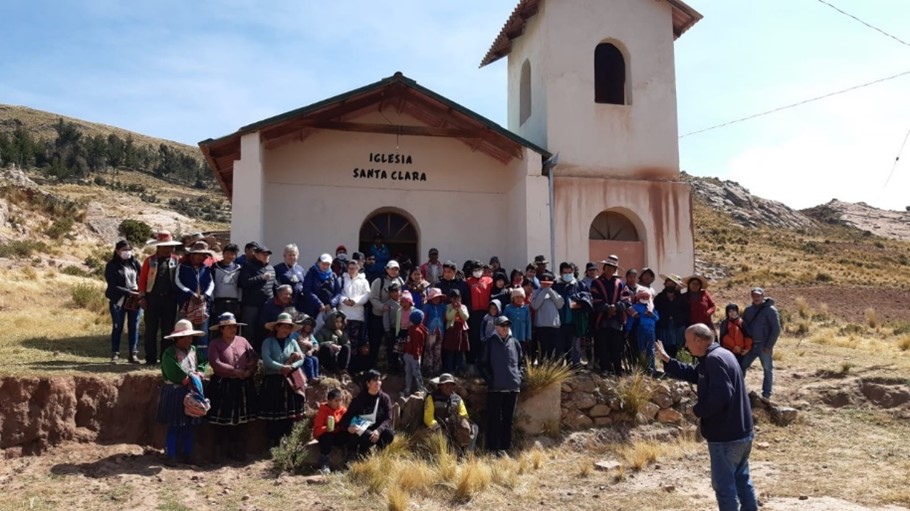
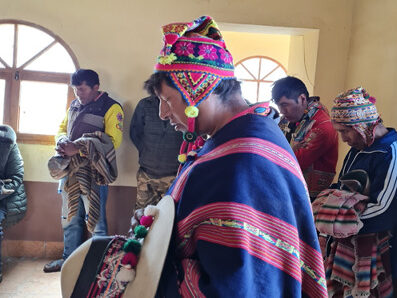 “The programme prepared for the day of the visit,” continued Silvana Verdún, “was very simple: community prayer in the small chapel, in the region’s native language of Quechua, although everyone also understands and speaks Spanish, followed by a moment of dialogue with the villagers, divided into groups of men, women and children.” “It was an experience of great mutual giving, and we all felt like brothers and sisters listening to each other and supporting each other, in the same simplicity and human warmth that characterises these people, as pure of heart as the sky and as untouched as the mountains that surround them,” said Franc Moura. The finishing touch to the community meeting was unmissable – the moment for sharing an outdoor lunch. We prepared a communal table with all the dishes that each participant had brought, and they offered us the fruit of their labour: “potatoes a la wathia”. This is a cooking technique typically found in rural communities, which consists of digging a hole in the ground, the depth of which depends on the amount of food to be cooked; the cavity and the boulders extracted are heated with embers of firewood and charcoal. Once the right temperature is reached, the food is placed inside the hole and covered by the hot clods for a certain amount of time. These were beautiful moments that are etched in our hearts. A family from Cochabamba, on their first trip to Carpani, wrote: “We had an unforgettable experience as a family. When we returned home we sat down to talk about it and the conclusion we drew was one of absolute happiness. We were very happy to meet all of you volunteers and the community of Carpani. It was a real blessing and we would like to continue participating in other activities. Thank you for the opportunity”. The ‘united world’ also advances in little Carpani!
By Orlando José Zurita Vilte – Bolivia (from Ciudad Nueva Interamericana) Foto: © Franc Moura
29 Aug 2022 | Non categorizzato
“In his first ‘Angelus’ message in Rome on 17th March 2013, Pope Francis said: “We don’t hear Jesus speaking words of contempt, or condemnation, but only words of love and mercy.” In fact, mercy and forgiveness are characteristic Christian virtues that we can practice every day with all the brothers and sisters we meet. What makes mercy so powerful that it triumphs over justice (cf. Lk. 1:54)? And why does Jesus consider this virtue so important that he makes it a condition for personal salvation? As Pope John Paul II clearly explained, mercy is “an indispensable dimension of love; it is, as it were, love’s second name.”[1] … This theme is found again in the prayer of the Our Father: “Forgive us our trespasses as we forgive those who trespass against us.” We could say that there is a law written in heaven in which our sins our remitted to the extent that we forgive our brothers and sisters. The theme of mercy and forgiveness pervades the entire Gospel. Actually, Jesus’ goal is what he revealed to us in his final prayer the night before his passion: to unite all people, to make all humanity one big family whose model is the Trinity. The whole of his teaching tends to give us, through his love, the tool for achieving this exceptional fellowship among ourselves and with God. And mercy is the utmost expression of love, of charity, that which completes it, which makes it perfect. Let’s try, then, in all our relationships, to live this love for others in the form of mercy! Mercy is a love that welcomes every neighbour, especially the poor and needy. It is a boundless, abundant, universal, and concrete love. It is a love which encourages reciprocity, which is the ultimate goal of mercy, without which there would be only justice, which serves to create equality, but not fraternity. People often talk about denying forgiveness to those who have committed serious crimes; revenge is called for more than justice. But once every attempt has been made to compensate for the damage done, we must make way for forgiveness, which is the only way to heal the personal and social trauma produced by wrongdoing. “Forgive and you will be forgiven” (Lk. 6:37). Therefore, if we have been offended or treated unjustly in any way, let’s forgive and we will be forgiven. Let’s be first to show kindness and compassion! Even if it seems difficult and requires great courage, let’s ask ourselves, in front of every neighbour: what would his or her mother do? This thought can help us to understand and live in accordance with the heart of God.
Chiara Lubich
(Chiara Lubich, in Parole di Vita, [Words of Life] Città Nuova, 2017, pp. 632/4) [1] John Paul II, Dives in Misericordia, n. 7
