
20 Nov 2018 | Focolare Worldwide
 With a simple language like that of Jesus who used common terms that anyone could understand, to explain his kingdom, Sándor began his account of how he tried to incarnate the Gospel in everything he did. A group of farmers was formed around him that met regularly to their each other’s joys, pains and progress… They felt they had a mission. Their relationship with nature, such a source of wisdom, was a gift they could share with people living in the city. This simple little spark led to meeting with city mayors. From the meetings between mayors and farmers the need arose for creating an alternative to the globalization that sanctions and extinguishes so many traditions and values. In September 2016, they held a meeting which included experiences and presentations by specialists, with the goal of finding a way to give a soul to the area, beginning from the countryside. Some 350 people took part in the gathering, including 20 mayors. The 2cnd meeting was held last September in the Hungarian Municipality of Újkígyós, in the South East of the country where, despite the freezing weather, 500 people attended. 27 stands were set up to sell cheese, handmade rugs, honey, small furniture and marmalade… With gratuitousness and much generosity the farmers from many communes, boroughs and villages, offered the best of their culinary and artisan products. They also brought horses and gave rides to the children. It was a real feast for the population.
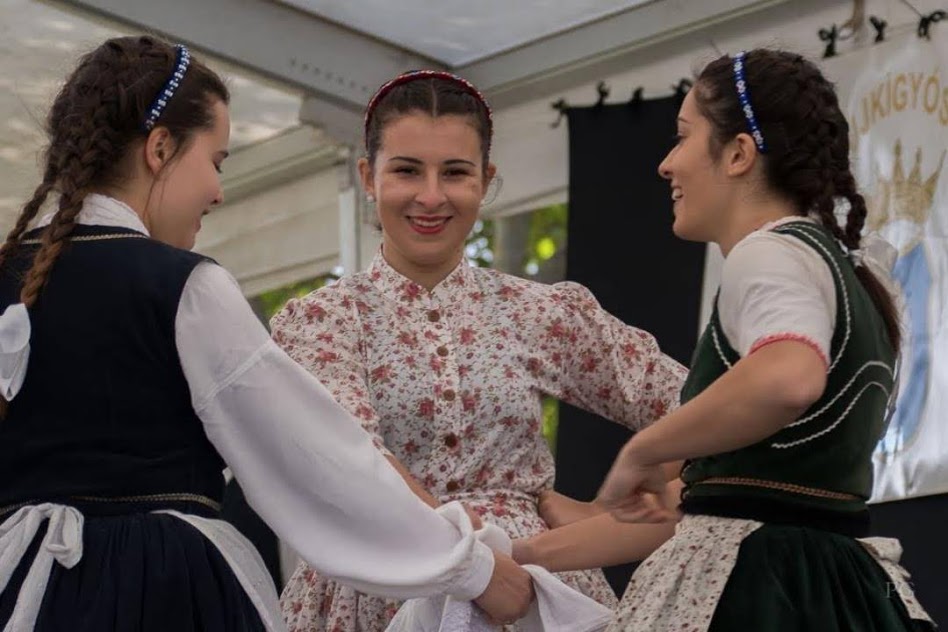
  The conference speakers included specialists in the fields of ecology, agriculture, noise pollution, farming, as well as researchers and university faculty who were all joined in strong and genuine friendship. This was not only the secret to the success of the project, but also the realizable path for making a contribution towards authentic fraternity. Even the local Mayor, who brought folkloristic groups, confided that he was seeing a “new soul” in the community. The parish priest underscored the efficacy of evangelizing in this way, which he experienced there. One of the organisers told me: “We didn’t have any political or institutional support: it was all a gift. The whole event didn’t cost a single penny: from the chairs, to the tents, to the tables. Here, as you can see, we’re all like brothers and sisters, because out in the villages, human relationships are the winning force. There is another kind of relationship between people in the city. They form circles, common interest groups, entertainment spots…but the people are isolated. They don’t know the people in their own condominium building. The farmers, because of their contact with nature, nurture a religious soul that knows the value and the cost of everything around them, and they acknowledge the sacredness of every human being, which is what Pope Francis continually calls us to do. This meeting seems like a small step, not only for the Church itself, but also for the society.” Franciscan Friar, Csaba Böjte, OFM, from Transylvania, Romania, also spoke at the event. He is famous beyond his homeland in Hungary and Eastern Europe where he and his volunteers provide a home for 1992 children and teenagers in difficult family problems. Currently there are 82 homes, and they welcome 2500 children. Sándor’s work is a pebble dropped into the ocean, but the circle is widening. Tanino Minuta
19 Nov 2018 | Non categorizzato
On 20 November 1959 the UN General Assembly adopted the Declaration of the Rights of the Child and approved in 1989, the International Convention on the rights of infants and adolescents. Based on the harmonization of different cultural and juridical experiences, the Convention enunciated for the first time, and in a coherent way, the fundamental rights to be recognized and guaranteed for all the children of the world. The document stated the four key issues: the lack of denunciation, greater interest, life and survival and development, and lastly, listening in all the decision-making processes. The Convention also provides for a control mechanism on the work of the States that have to present a periodic report on its implementation in their territories. According to UNICEF, every year millions of children continue to be victims of violence, abuse, abandonment, exploitation, wars and discrimination. A lot has been done, but still more must be done to achieve a concrete application of these principles.
17 Nov 2018 | Non categorizzato
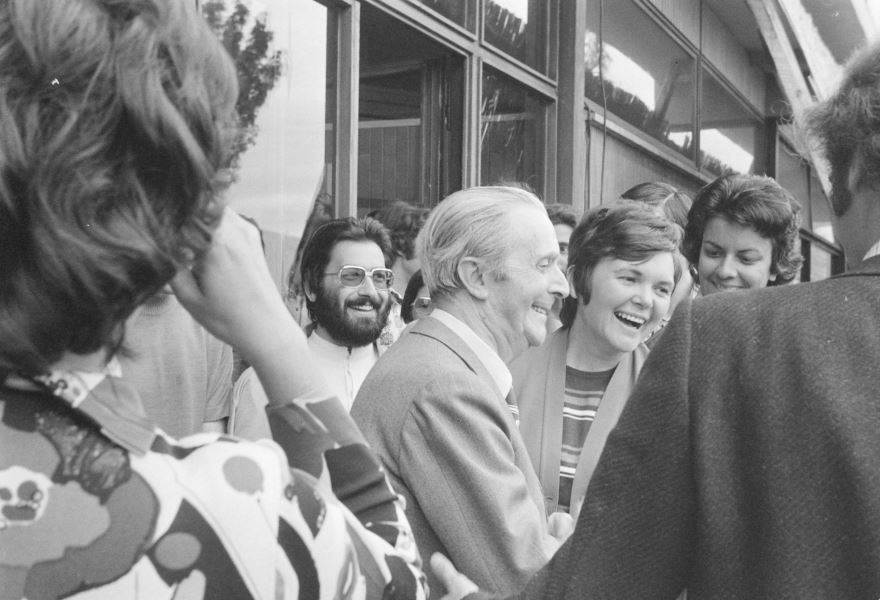
Igino Giordani during a visit to Loppiano
16 Nov 2018 | Non categorizzato
The World Day of the Poor will be celebrated on Sunday, 18 November. It was established by Pope Francis in 2016, at the end of the Jubilee of Mercy with the title “This poor man cried and the Lord heard him” (Ps 34.7). In his message for that occasion the Pope wrote: “This Psalm allows us today, to immerse ourselves in many forms of poverty, and understand who are the real poor towards whom we should direct our gaze. […] What does the poor man’s cry express if not his suffering and solitude, disappointment and hope? We may wonder: how come this cry, that rises up to God’s presence, is unable to reach our ears and leaves us indifferent and passive? On a Day like this, we are asked to seriously examine our conscience to understand if we are really capable of listening to the poor.” On the occasion of the 2nd World Day of the Poor, we are again invited to open our own homes, and share our meals in a simple and fraternal way, as a sign of solidarity and comfort to the many forms of poverty we can all see with our own eyes.

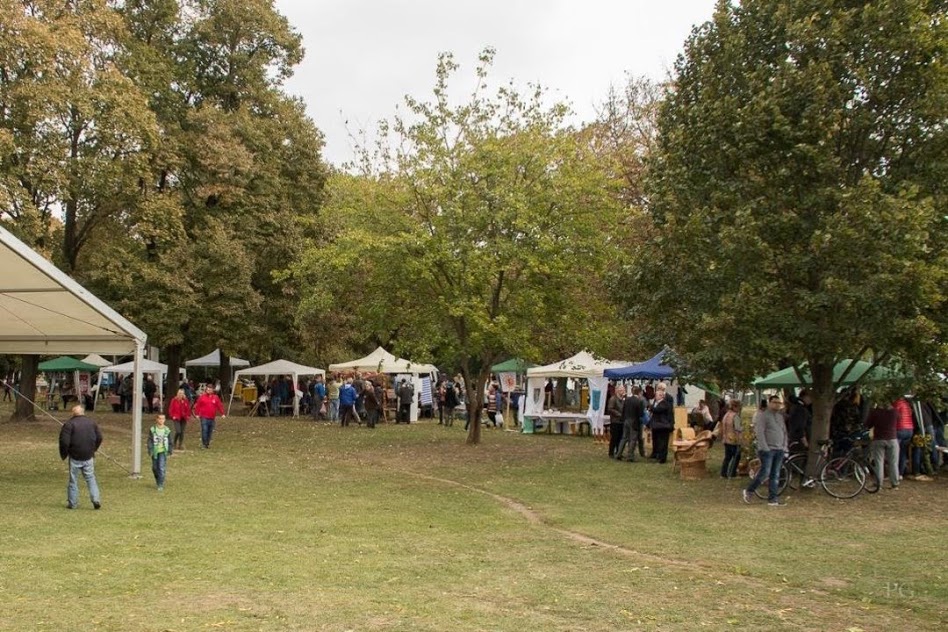 With a simple language like that of Jesus who used common terms that anyone could understand, to explain his kingdom, Sándor began his account of how he tried to incarnate the Gospel in everything he did. A group of farmers was formed around him that met regularly to their each other’s joys, pains and progress… They felt they had a mission. Their relationship with nature, such a source of wisdom, was a gift they could share with people living in the city. This simple little spark led to meeting with city mayors. From the meetings between mayors and farmers the need arose for creating an alternative to the globalization that sanctions and extinguishes so many traditions and values. In September 2016, they held a meeting which included experiences and presentations by specialists, with the goal of finding a way to give a soul to the area, beginning from the countryside. Some 350 people took part in the gathering, including 20 mayors. The 2cnd meeting was held last September in the Hungarian Municipality of Újkígyós, in the South East of the country where, despite the freezing weather, 500 people attended. 27 stands were set up to sell cheese, handmade rugs, honey, small furniture and marmalade… With gratuitousness and much generosity the farmers from many communes, boroughs and villages, offered the best of their culinary and artisan products. They also brought horses and gave rides to the children. It was a real feast for the population.
 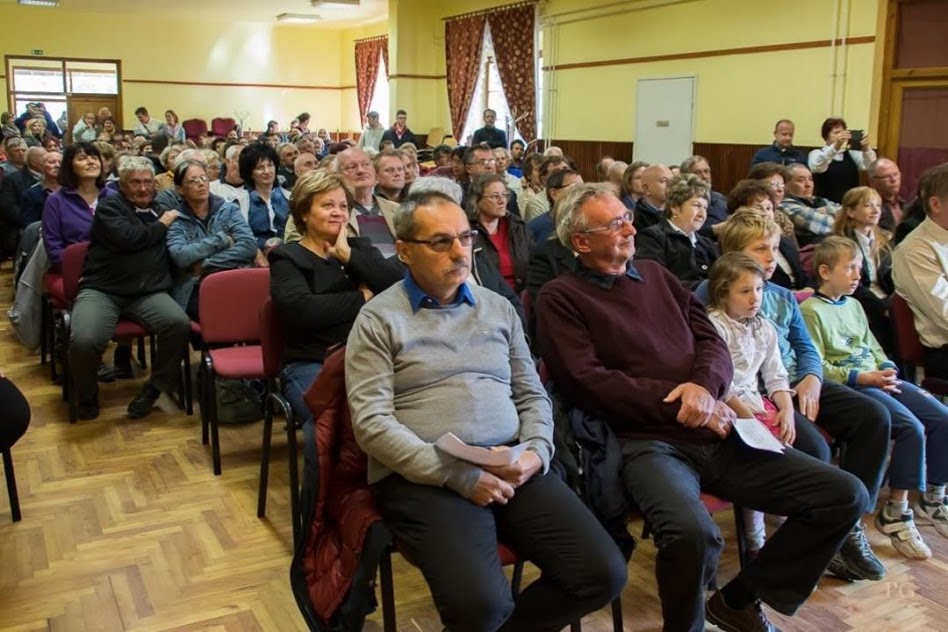 The conference speakers included specialists in the fields of ecology, agriculture, noise pollution, farming, as well as researchers and university faculty who were all joined in strong and genuine friendship. This was not only the secret to the success of the project, but also the realizable path for making a contribution towards authentic fraternity. Even the local Mayor, who brought folkloristic groups, confided that he was seeing a “new soul” in the community. The parish priest underscored the efficacy of evangelizing in this way, which he experienced there. One of the organisers told me: “We didn’t have any political or institutional support: it was all a gift. The whole event didn’t cost a single penny: from the chairs, to the tents, to the tables. Here, as you can see, we’re all like brothers and sisters, because out in the villages, human relationships are the winning force.
  There is another kind of relationship between people in the city. They form circles, common interest groups, entertainment spots…but the people are isolated. They don’t know the people in their own condominium building. The farmers, because of their contact with nature, nurture a religious soul that knows the value and the cost of everything around them, and they acknowledge the sacredness of every human being, which is what Pope Francis continually calls us to do. This meeting seems like a small step, not only for the Church itself, but also for the society.” Franciscan Friar, Csaba Böjte, OFM, from Transylvania, Romania, also spoke at the event. He is famous beyond his homeland in Hungary and Eastern Europe where he and his volunteers provide a home for 1992 children and teenagers in difficult family problems. Currently there are 82 homes, and they welcome 2500 children. Sándor’s work is a pebble dropped into the ocean, but the circle is widening. Tanino Minuta