16 Nov 2018 | Focolare Worldwide
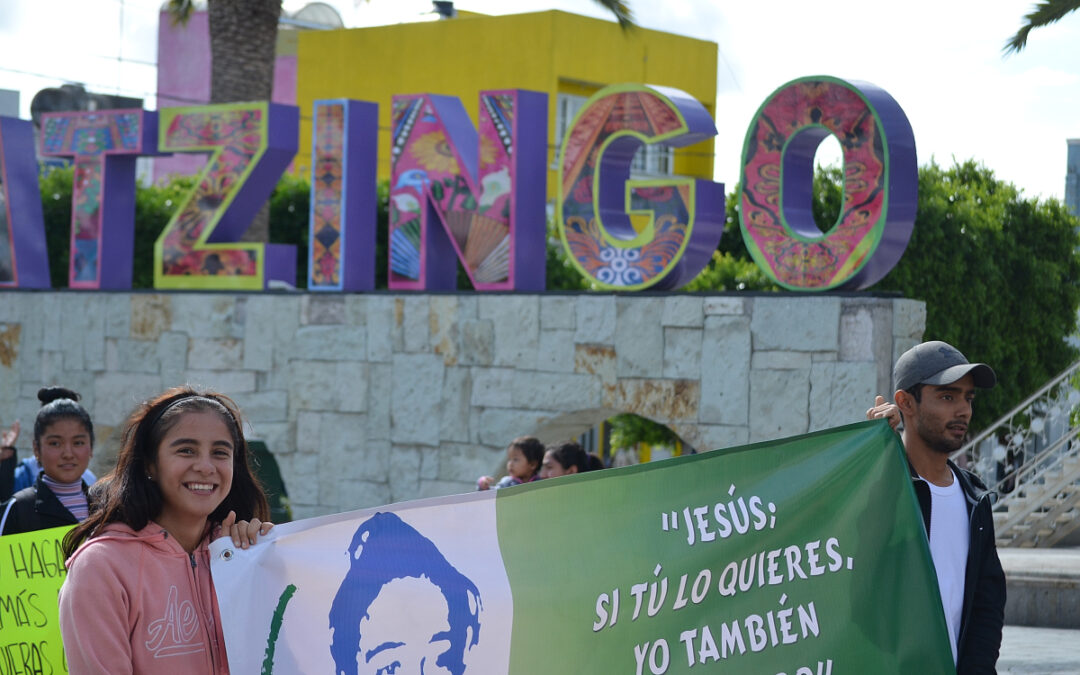
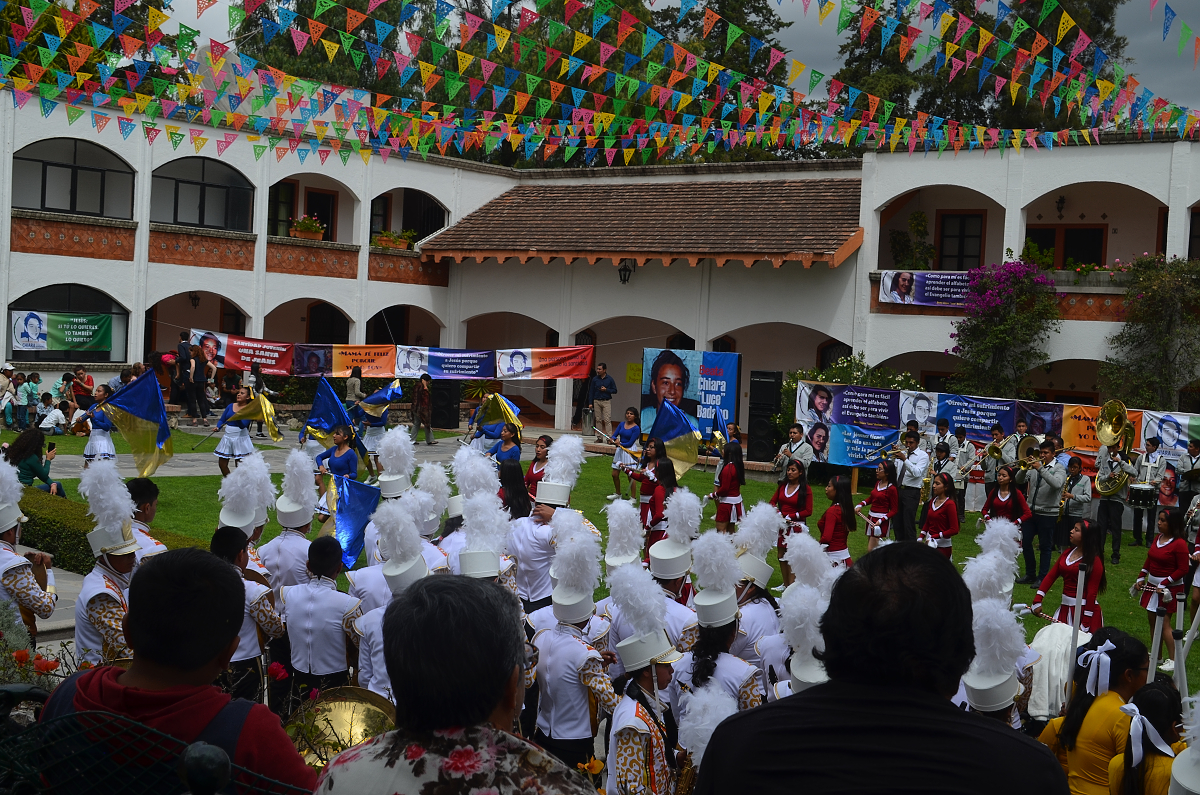 On October 20, just a few days before the date of Chiara Luce Badano’s feast day, which has now been set as October 29, there were 300 children and teens who lined the streets of Acatzingo, in the Mexican state of Puebla. They were there early in the morning to honor Chiara Luce, who they call “blessed for our times.” The celebration began with music and dance marked by joy and more than a few decibels, organized by the Focolare community and including five local school groups. In 2012 a chapel had been dedicated to the young Badano at “El Diamante”, the Focolare’s little town that is the beating heart of the community there. Since then there has been a contagious call to a full and joyful following of the will of God – “a splendid design that, little by little, reveals itself,” according to Chiara Luce’s words. It is a call that reaches many young people each year, engaging “heads, hearts, hands.” Inspired by the words of Pope Francis, who during the recent synod held up many young people as models of holiness, these children displayed thoughts and moments from Chiara Badano’s life in an atmosphere of friendship and celebration.
 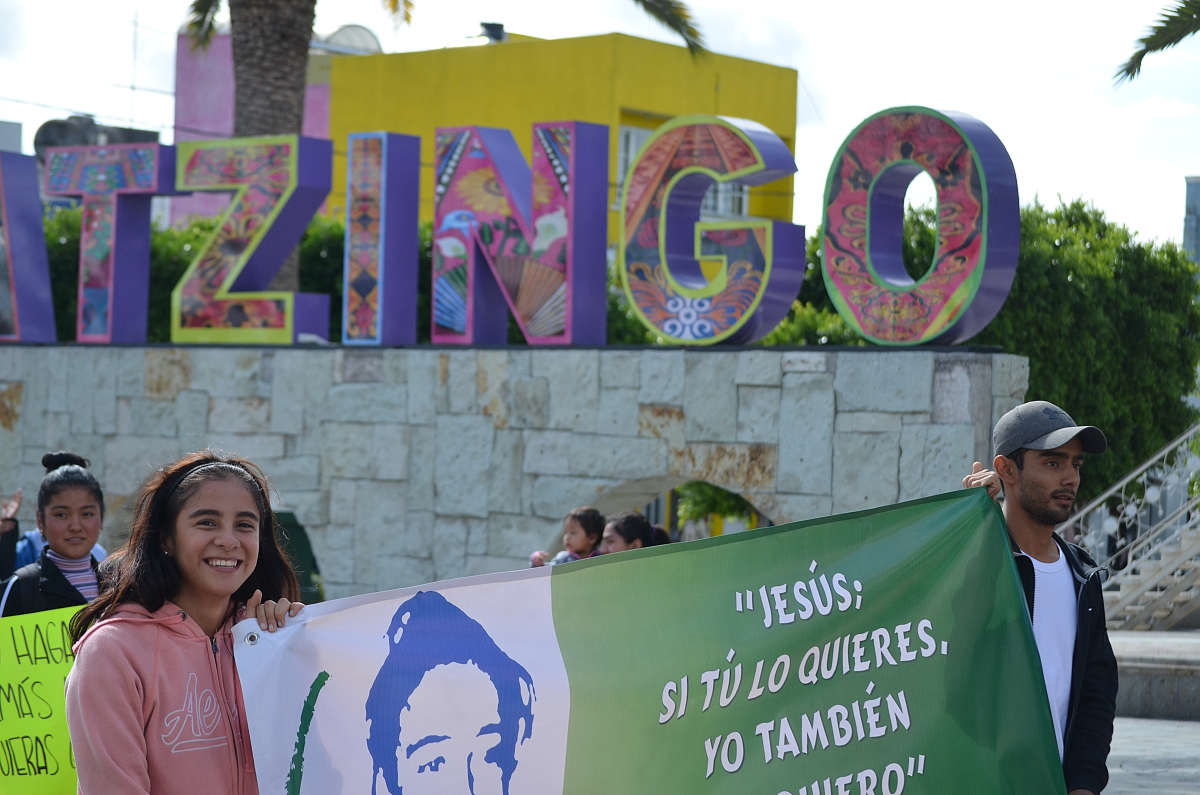 Just a few miles from El Diamante in the city of Acatzingo, which has suffered a wave of violence in past months, those watching were invited to roll the Cube of Love. Like in many countries of the world, this highly symbolic act is an invitation to individuals and society to take on initiatives of peace. The celebrations then continued at El Diamante, with dance, music, theatre, the sharing of experiences and games, with more than 500 attending. It had been put together by the young people from the school of formation there. “Chiara Luce is for us a beacon that urges us to live for a great ideal.” Other schools and colleges in Acatzingo have already signed up for future celebrations. Mariapoli El Diamante, 20 ottobre 2018
15 Nov 2018 | Non categorizzato
Every year, since 2002, a World Day has been dedicated to philosophy. By proclaiming the Day, UNESCO has underscored the value of philosophy for the development of human thought. Ex-General Director Irina Bokova, went on to say: “Philosophical reflection is a calling back to humility, to reflection and reasonable dialogue, to build solutions together to the challenges that are beyond our control. […] The more the difficulties are large, the more philosophy is useful for giving sense to the questions of peace and sustainable development.” On this Day, all UNESCO partners – national governments, public organisations and institutions, NGOs, universities, schools, along with citizens and associations – are called to a free, collective, reasonable and informed reflection on the challenges of our times. “Philosophy’s genuine value,” said Moufida Goucha, ex-director of the ‘Human Safety, Democracy and Philosophy,’ Section, “is to establish a dialogue that should never interrupt over the essential,” along with the task of restoring, “a large portion of human dignity, whatever our conditions.”
15 Nov 2018 | Focolare Worldwide
According to the latest estimates more than 440 thousand, of the more than 2 million and 300 thousand people, who fled Venezuela from 2014 until now, have crossed the Peru border. They arrive after a very exhausting journey, uncertain about their future and surrounded by many dangers, including the recent need to cross a river by boat. “If the water is too high, and they can’t manage it, they’re loaded onto the shoulders of a man who naturally wants to be paid.” Once again Silvano from the focolare community in Lima writes: “Right from the start of this forced exodus “we have been accompanying an ever increasing number of people. Up until now, there are sixty whom we follow closely, not only spiritually, but also professionally and on a purely human level.” The situation is extremely difficult for those who arrive: “They only have the clothes on their backs. They’re cold because spring has begun and the temperatures are falling. We see the emotion in their eyes when they see the clothing that has been collected for them through a communion of goods.” The Focolare has two welcome centers in Lima, along with the Centro Fiore at Magdalena del Mar in the province of the capital. “Three family units are being hosted here, including the family of Ofelia who many Venezuelans in Peru call “the mother.” In the first quarter of this year,” Silvan recounts, “we came into contact with a psychologist, Irene, who has already been here a few months. She was invited to our operating centre, which is the focolare house, along with her parents and a few friends. She got to know the spirit behind the Focolare and, aware of the needs of her many fellow-countrymen, offered her services as a professional psychologist. A small project was immediately begun in response to the Gospel promise: “Give, and it will be given to you.” After a workshop on the topic of feelings, which was given by Irene at the end of July and a second one a few weeks later, we opened a consultancy service at Centro Fiore of Magdalena del Mar. “The “Project of Emotional Growth for Vulnerable Populations” was begun, to respond to the massive migratory situation that we are facing. In the presentation of the project, which is geared towards the most fragile members of the group such as women, children, youth and elderly, it is written that ‘providing tools for facing the situation and integrating’ into the Peruvian community is imperative. Therefore, this Project enters into the objectives of the Focolare, to “collaborate in the building of a more united world under the guidance of Jesus’ prayer to the Father that all may be one (Jn17:21), respecting and appreciating diversity, using dialogue as the method, and the constant effort of building bridges and relationships of fraternity among individuals, peoples and cultural groups.” The most common cases that have already been treated include anxiety and depression over the precarious situations, the constant concern for survival, mistreatment and developmental problems. The project provides support, information, education, and training courses, workshops on feelings and emotions, self-esteem, love of others and of oneself.” Several of the people have found employment, others are still searching, and others are planning to return to their own or to another country. “Up until now 35 sessions of psychological care have been recorded. This service continues to be offered for free to Venezuelan immigrants.”
14 Nov 2018 | Non categorizzato
Replay streaming: http://collegamentoch.focolare.org/
14 Nov 2018 | Focolare Worldwide
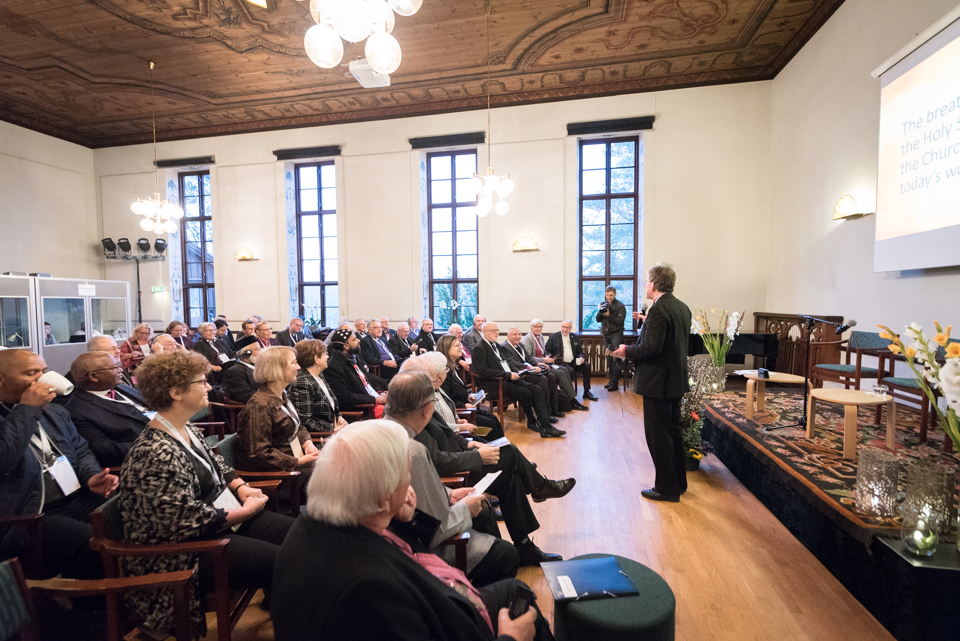
 How does the Holy Spirit work in today’s Church? Does it still make sense to talk about an ecumenical journey at a time marked by fragmentation, complexity, scandals and humanitarian challenges even for Christians? Two years after the Lund event, that gave a new impetus to the ecumenical dialogue, 40 Bishops of various Churches, from 18 different countries, met in Sigtuna, Sweden. This conference, promoted by the Focolare Movement, was held from 6 to 9 November and its theme was “The Breath of the Spirit, the Church in today’s world”. Maria Voce, president of the Focolare Movement, Jesús Morán co-president and representatives of the Focolare Community in Sweden also attended this conference. Maria Voce spoke about “The Breath of the Spirit, soul of the Church, in the experience and thought of Chiara Lubich”, while Jesús Morán presented present-day challenges from the perspective of the spirituality of unity. This conference, which has come to its 37th edition, owes its origin to an experience of synodality and communion, which John Paul II had proposed to Klaus Hemmerle, Bishop of Aachen.
 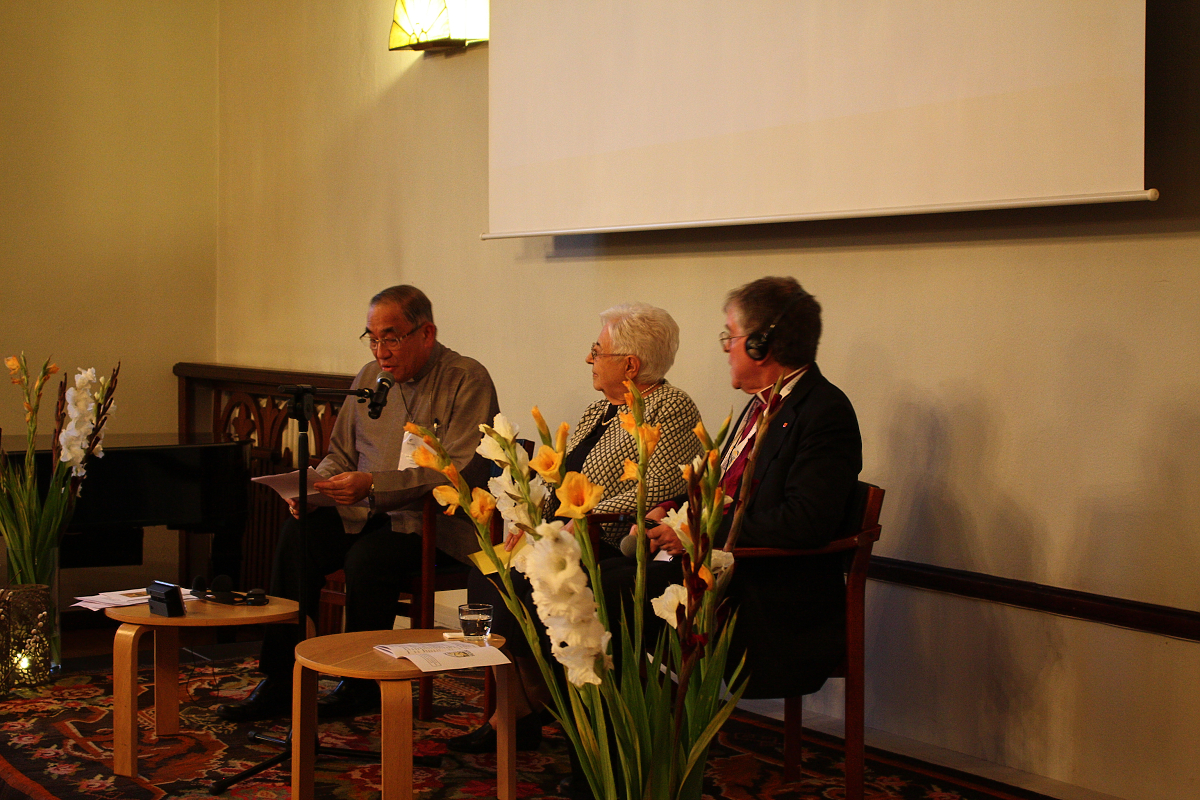 “In addition to our different recounts, we wanted to give ample space to dialogue and sharing about the ecumenical challenges we live in our countries and continents”, said Cardinal Francis Kriengsak Kovithavanij, Archbishop of Bangkok and moderator of the conference. Mons. Brendan Leahy, the Catholic Bishop of the diocese of Limerick, Ireland dealt with the important theme of reconciliation. While speaking about the power of forgiveness in the context of the scandals that hit the Irish Church, he said: “The Spirit urges us not to be robbed of hope (see Rom 8). Discouragement is a great temptations, but the Spirit keeps our hope alive and helps us restart to live a new committment in the Christian adventure of unity and reconciliation”. The Anglican Bishop Trevor Williams, an Irish man, spoke about his experience as a pastor. For several years he has been having under his care the ecumenical community of Corrymeela, in Northern Ireland, who has contributed much towards the path of reconciliation between the different factions in conflict. “Reconciliation is not an option; it is a necessity if we want peace to last. We live in a world of “they” and “we”. But in truth there is only “we”. Revealing this truth is work of reconciliation, work of the Holy Spirit”. The German Evangelical-Lutheran pastor Jens-Martin Kruse shared his pastoral experience in Rome, an ecumenical laboratory that functions also thanks to Pope Francis. The Archbishop Antje Jackelén, Primate of the Church of Sweden, Cardinal Anders Arborelius, the Catholic Bishop of Stockholm, and Bishop Munib Younan, former president of the Lutheran World Federation, who presided over the historical ecumenical liturgy in Lund together with Pope Francis in 2016, spoke about the journey of common reflection that continues after the 500 years commemoration of the Reformation. “I assure you the Holy Spirit guided us and continues to guide us towards an ecumenical springtime. It is up to us now to reap the fruits of unity. Today we say: let us journey together as living witnesses in our fragmented world so that the world will believe.” One of the highlights of this conference was the ecumenical prayer in the ancient Church of Sigtuna and the signing of the “Pact of Unity”. With the signing of this Pact, the Bishops committed themselves to journey along the path of effective and affective communion, “to love the Church of the other as one’s own”. This commitment was sealed with one’s own signature and a fraternal embrace. Stefania Tanesini
