20 Oct 2018 | Non categorizzato
If we are united, Jesus is among us. And this has value. It is worth more than any other treasure that our heart may possess; more than mother, father, brothers, sisters and children. It is worth more than our house, our work, or our property; more than the works of art in a great city like Rome; more than our business deals; more than nature which surrounds us with flowers and fields, the sea and the stars; more than our own soul. It is He who, inspiring his saints with his eternal truths, leaves his mark upon every age. This too is His hour. Not so much the hour of a saint but of Him, of Him among us, of Him living in us as we build up — in the unity of love — his Mystical Body and the Christian community. But we must expand Christ, make him grow in other members, become bearers of Fire like Him, (that dissolves the human side of us into the divine which is Charity lived out). Make one of all and in all the One. It is then that we live the life that He gives us, moment by moment, in charity. The basic commandment is brotherly love (see 1Pt 4:8). Everything is of value if it expresses sincere fraternal charity. Nothing we do is of value if there is no feeling of love for our brothers and sisters in it. For God is a Father and in his heart he has always and only his children. Source: Centro Chiara Lubich
19 Oct 2018 | Focolare Worldwide
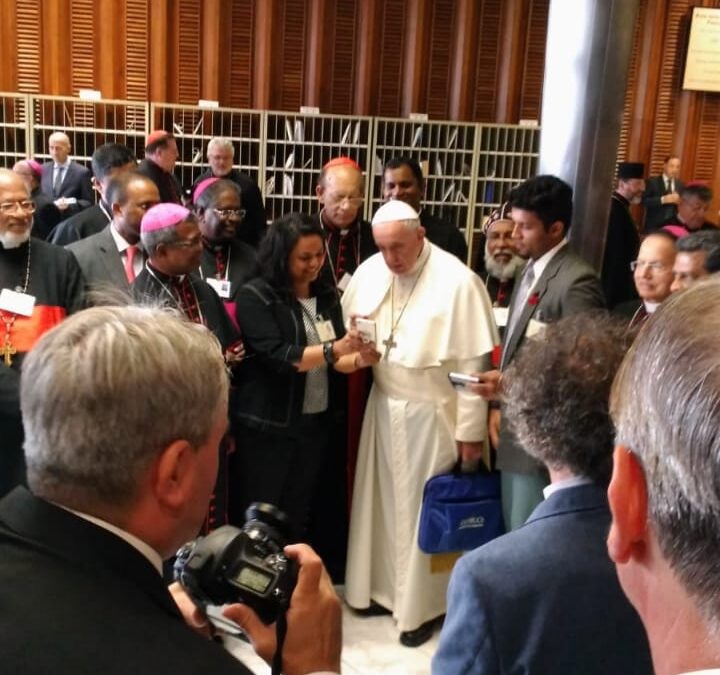
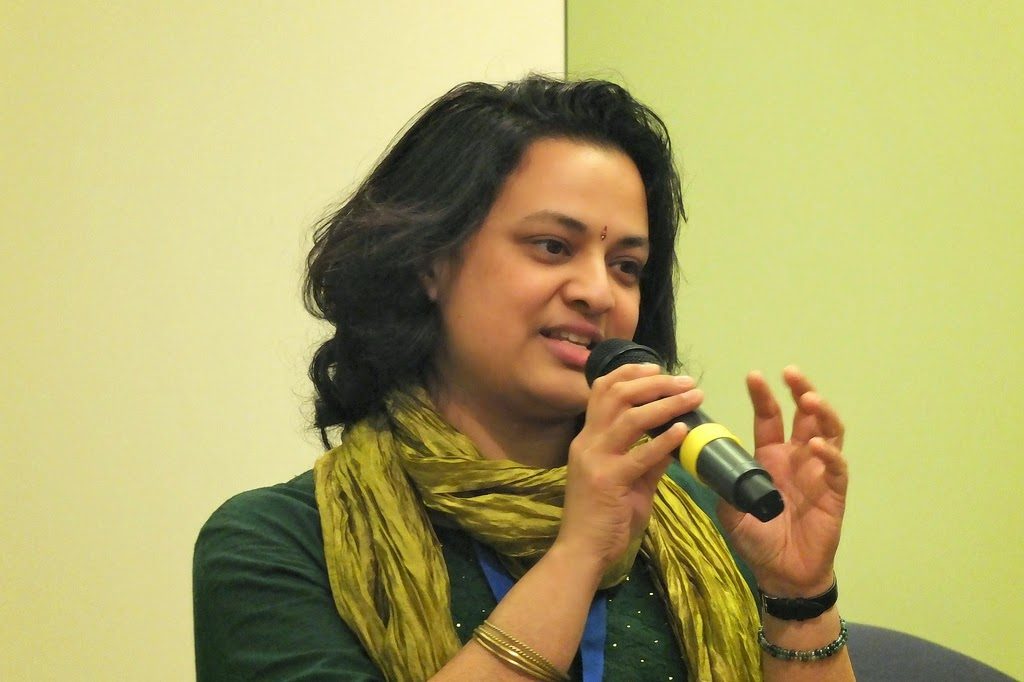 Cherylanne (Doni) Menezes is from Mumbai. She is part of the delegation of 11 members representing India at the Synod on Youth, underway in Rome up to 28 October. Raised in a family that is very active in the district parish, and within the context of a multi-religious community, after her studies in economy and business Cherylanne started to work in the field of management. But her broad range of interests led her to acquire a Master’s at the Sophia University in Loppiano, Italy, where she wrote a thesis on Hindu-Christian dialogue in the Focolare Movement, where still today she is committed with the young people of her country. I met her during a break during the synodal works. The Indian delegation is headed by Cardinal Oswald Gracias, Archbishop of Mumbai, and is composed of 9 bishops (of the Latin, Syro- Malabar and Syro-Malankar churches) and another lay person, Percival, President of the Indian Catholic Youth Movement. Cherylanne is attending the Synod as a representative of the Focolare Movement in India. She has met Pope Francis twice, together with the delegation. The first was at the start of the works (“Also the Hindu youths of the Focolare Movement are praying for you and for this event,” she said to the Pope, who reacted with a happy exclamation) and the second when the Synod had already started.
 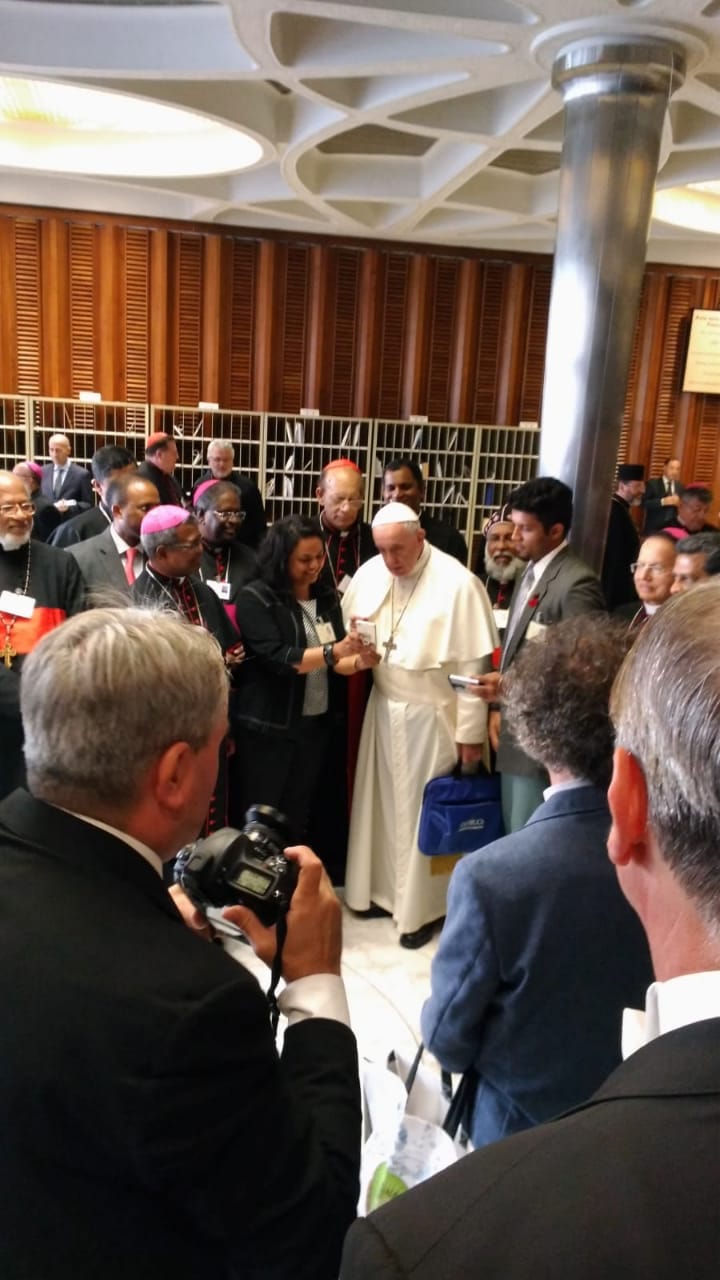 The new appointment was for 17 October. The delegation arrived on time, at the entrance of Aula Nervi, at 4 p.m., together with that of South America. The afternoon session started at 4.30, and half an hour earlier Pope Francis met the single groups, in a joyful and informal personal encounter that was an integral part of the Synodal spirit. Percival gave the Pope a sandalwood cross bearing the image of the Good Shepherd, work of a Hindu artist. “I have also letters for you, Holy Father” Cherylanne added. The letters are wonderful, full of affection of the youth and families of India. Among these were also those of two youths, a Hindu and a Muslim. Besides talking of themselves, they put down in writing the promise to pray for the Pope and the Synod. “Yes, because this is the Synod of all the youth,” Cherylanne explained. On consigning the cross and the letters, Cherylanne dared to ask: “Holy Father, would you like to answer with a video-message to these two young people?” “Certainly,” the Pope answered. She took out her cell phone and the Pope turned to look right into the screen. “I want to thank you for your greeting. I greet you too. I pray for you, and ask you to pray for me. We are one in friendship. Unity is always superior to the wars. Work for unity among peoples, respect the identity of one another, whatever religion you profess. May the Lord bless you… Pray for me!” The very short video captured a last frame, the smile of Pope Francis, and the mission ended successfully. Taking a shoot of Pope Francis’ greeting with one’s own cell phone is not something that happens every day, I said. “It wasn’t an act of courage – she said – I just grabbed the opportunity, Pope Francis is always so easy to approach.” How is the experience of the Synod coming along? I asked. “We are experiencing a moment of insight in which the Holy Spirit is at work, and renews everything. The experience which the disciples on the road to Emmaus had lived well describes what we are experiencing. The Church is becoming aware not only of its challenges, but also of its internal wealth and potential. I see a growing convergence in our ideas, here at the Synod, and the urgency to walk together, youths and bishops, clergy and laity, religious movements and associations, in order to go towards the world together and demonstrate our love in action.” Chiara Favotti https://vimeo.com/296453712
18 Oct 2018 | Focolare Worldwide
The next event with the Friends of “Together for Europe” is going to be held in Prague, the land of the Hussites, the Prague Spring and the Velvet Revolution. The vast history of the Czech people will serve as the backdrop for the conversation among participants. It is a troubled history, marked by grand idealistic and spiritual re-awakenings and by a search for truth and justice that often ended in disappointment. Thus was the case of the three examples just mentioned: the Hussite Movement that began after the death of the priest Jan Hus, who was burned at the stake in 1415 and considered a martyr for the truth by his followers. Unfortunately, the wars that followed didn’t deal in truth, but in the lust for power and they completely devastated the country. Likewise, many centuries later, in 1968, the main actors in the Prague Spring, with the enthusiastic support of the whole country, wanted to install a Socialist regime with a human face, free of all the lies and cruelty of the recent past. Unfortunately, this hope was crushed under the wheels of armed tanks and ended in general resignation. Then came the Velvet Revolution in 1989, which many still remember. It was brought forward by its main protagonist, Vaclav Havel: “Love and the truth must win over the lies and the hate.” But no one expected the hard battle that followed: the spiritual values that were so strongly felt during the mass demonstrations in the public squares slowly dwindled as they were substituted with the pragmatism of the “technology of power.” The President of the Republic’s banner bears the words: “The Truth Wins.” However, two words were removed from the original version of that slogan: “The Truth of God Wins.” We’re sure that his truth will win before the end of the story.
Jiři Kratochvil
18 Oct 2018 | Non categorizzato
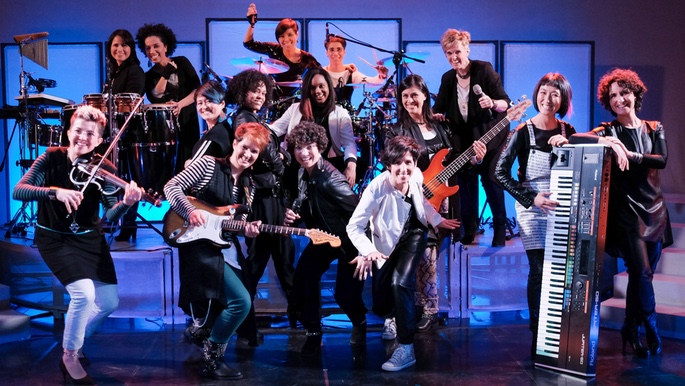
Rome: Partecipation in the event “Quando la Carità ti chiama”, (When Charity calls you), promoted by the Vincentian Family as part of the “Finding Vince 400” (FV400), International Film Festival. Auditorium Conciliazione. GenVerde Tours
17 Oct 2018 | Non categorizzato
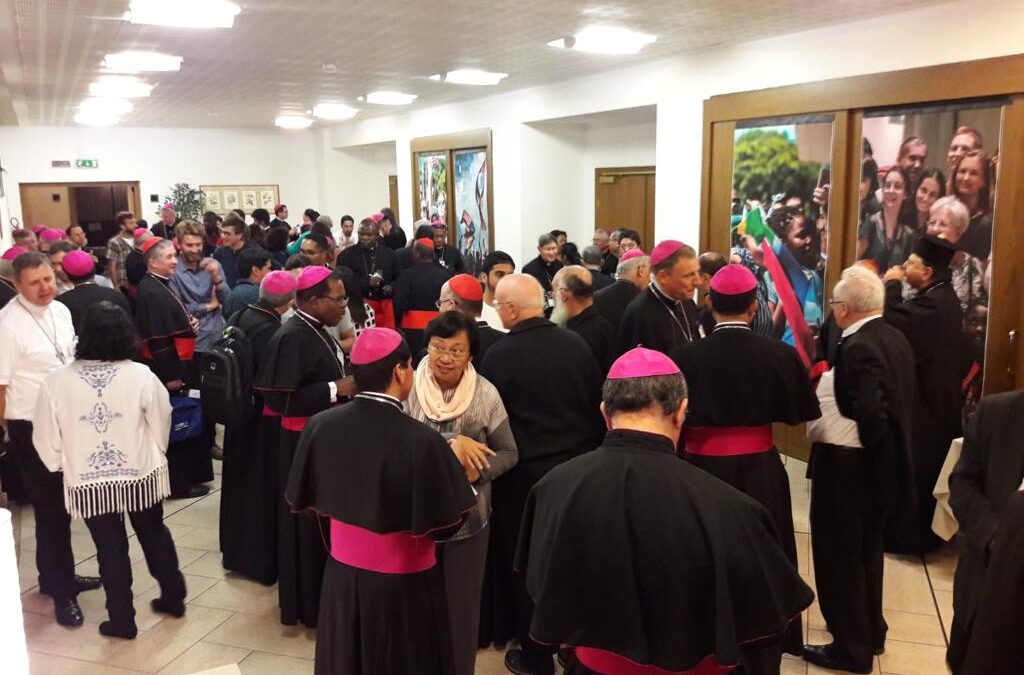
Conversations in different languages could be heard amid the tastefully and simply set tables. For three evenings, the young people of the Focolare acted as hosts in a hall, close to where the works of the Synod will carry on up to 28 October. After a warm welcome, the three dinners revealed to be the right occasions for the exchange of ideas, informal sharing and mutual interaction. During dessert, there was a presentation of the recent international Genfest held in Manila and some experiences, and stories of commitment and coherence to boost closer contact with the synodal Fathers, in line with a meeting held a day earlier, where they express queries, uncertainties, choices, in the hope that the Synod would propose some answers. In the second soiree, František from Czechia took the floor. His words highlighted a genuine passion for politics and concrete commitment in view of the next European Parliament elections emerged with the request, “Please support me with your prayers, so that I may always be faithful to the choice of serving my people, without any personal interest.” A similar story came from Nicola. She is 33 and a pediatric therapist in a university hospital. “I engage in rare pathologies and pediatric insurgence, and therefore I am always in contact with situations often at the brink of death. The difficulty at times lies in communicating to the relatives, the prognosis and life expectancies of the child. In these moments, I entrust myself to God, so that he may help me find the right words and attitude. Cynical detachment is a due form of survival, but we mustn’t lose the human dimension. Every day for me is like a gym in which to love and serve God.” Then it was Nicola’s turn. “Practicing this profession – he explained – means living at the limit between faith and reason; in these years I have learned what suffering is, and what it means to live immobile on a bed, attached to the mechanical lung for breathing. At times my faith is harshly put to the test, but then I have no time to reflect, being ’forced’ to see to the people I have before me, and loving them. This is really a countenance of Jesus Forsaken. If I manage to welcome him poor and miserable as he is, this fills up the void. I have to face many situations.  The families of the eastern countries are at times the most desperate since they do not have adequate healthcare systems, both from the economic and clinical standpoints that can help them. This is why they undertake hope journeys to our hospitals in search of treatments, which in some cases imply great expenses, given that these are issued only to Italian citizens. These situations lead us to reflect that at times, being born in one part of the world is just a matter of luck. It is in these cases that God reveals his grandeur and asks you to do the impossible. We certainly must not break the laws but we can try to help in other ways, for example, proposing strategies to limit at best the deformity of the joints, or trying to stand by and be of help.” Time had flown. It seemed like the guests did not wish to leave. The challenge of a deep and reciprocal listening between generations, the reason for the Synod itself, had also taken the form and consistency even in a dinner. And the dinner ended with the words of the song dedicated to Mary, the silent response of utmost love. By Chiara Favotti and Gustavo Clariá